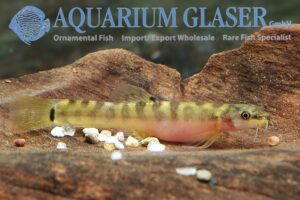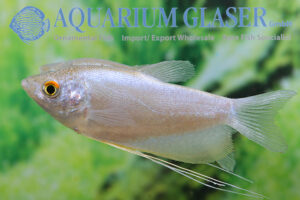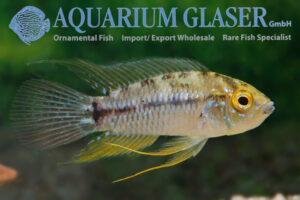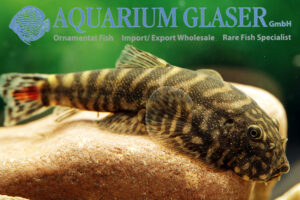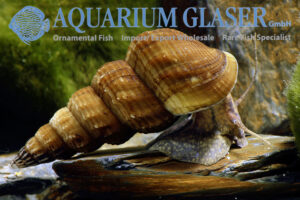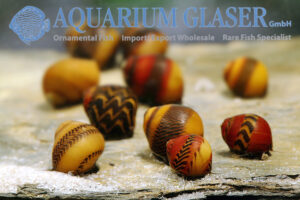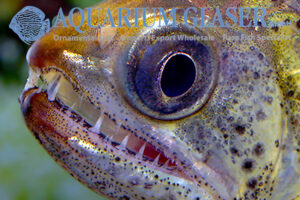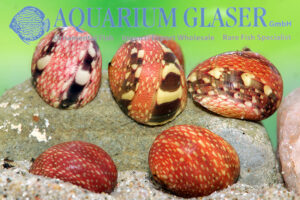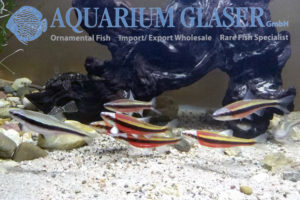

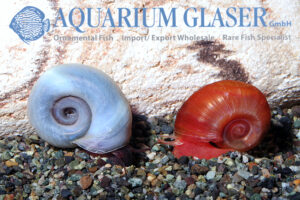
Ramshorn snails have been popular since the beginning of aquaristics (around 1850), as they consume algae and eat leftovers, but usually leave the plants alone. In addition, as lung breathers, they are not additional oxygen consumers. In the past, it was natural to have the native species Planorbarius corneus in the tank, which coped very […]
Fish Archive (3164)
-
-
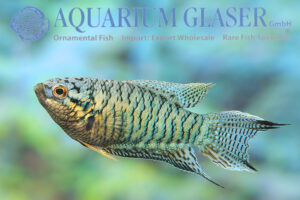
Macropodus “Blue Tiger“
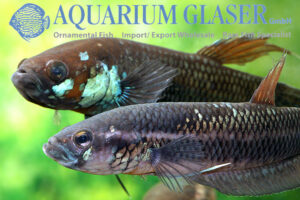
It is only very recently that we have begun to realize that the diversity of species of paradise fish (Macropodus) is much greater than we thought possible. Basically, three main groups can be distinguished in this genus, whose representatives are at home in China, Vietnam and Korea: Round-tailed paradise fish (M. ocellatus and related species), […]
-
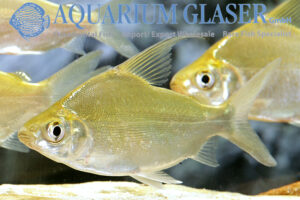
Cyphocharax abramoides
The genus Cyphocharax comprises 48 species and has a very wide distribution in South America. However, only one species has become known aquaristically, namely C. multilineatus (https://www.aquariumglaser.de/en/09-characoids-tetra-relationship/cyphocharax-multilineatus-4/). This species is attractively marked. However, the majority of Cyphocharax species offer little incentive to keep them in the aquarium, as they present themselves as silver-colored, colorless animals […]
-
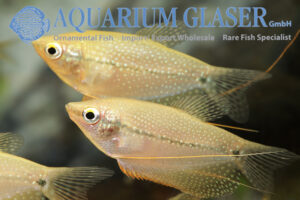
Trichogaster leerii WILD JAMBI
Wild-caught pearl gourami (Trichogaster leerii or Trichopodus leerii) are hardly ever available on the market. In fact, the exact distribution of this gourami species, which is present in the hobby since 1933 and has never disappeared since then, is more anecdotal than scientifically known. It is certain that this species is found on the Malay […]
-
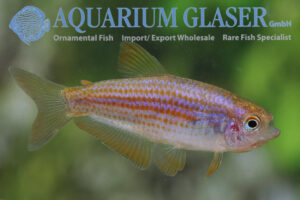
Inpaichthys parauapiranga now available!
Finally we received the eagerly awaited Inpaichthys parauapiranga offspring. They are beautiful, already sexually mature animals. We took the pictures for this post of exactly these specimens. They are already wonderfully colored, and this will certainly increase with well acclimatized animals. For pictures of the parents see here: https://www.aquariumglaser.de/en/fisharchive/coming-soon-inpaichthys-parauapiranga/ For our customers: the animals have […]
-
Moenkhausia cosmops
After many years, we have once again received one of the most extraordinary tetras in Brazil: Moenkhausia cosmops. This species was only scientifically described in 2007. Until now it has only been known from the upper reaches of the Rio Paraguai and Rio Tapajos basins in the state of Mato Grosso: Rio Juba, Rio Juruena, […]
-
Synaptolaemus latofasciatus
Finally we managed to import again some specimens of this unusual “striped sock” from Venezuela. The species – there is just the one in the genus Synaptolaemus – was long known under the name S. cingulatus, until Britzki et al. discovered that the species described as Leporinus latofasciatus by Steindachner in 1910 was identical with […]
-
Pelvicachromis subocellatus “Moulondo”
The dwarf cichlids of the Pelvicachromis genus, in the form of P. pulcher, are the most popular cichlids from Africa. They are colorful, relatively peaceful, adaptable and have a very interesting family life. Pelvicachromis have a mother-father family in which the more colorful female is responsible for caring for the spawn laid in a cave […]
-
Oryzias latipes “Sparkled Blue”
The popularity of the numerous varieties of medaka (Oryzias latipes) continues unabated. Currently, so-called “sparkled” morphs are increasingly being offered. These are animals with scattered striking silver-white shiny scales. Depending on the basic coloration, “sparkled” is then offered as orange, grey or even blue. „Blue” is special in that the fish do not have a […]
-
Chindongo elongatus (formerly Pseudotropheus elongatus)
The former large genus Pseudotropheus is currently divided into four genera: Pseudotropheus, Maylandia, Tropheops and Chindongo. The type species of the genus Chindongo, C. bellicosus, which was described together with the genus in 2016, is one of the most combative mbuna of all. The species name “bellicosus” means “belligerent”! Chindongo includes the species C. ater, […]
-
Ageneiosus inermis
Already in 1766 this catfish was described by Linné. It is one of the most widespread species in South America. It has been reported from Argentina, Bolivia, Brazil, Paraguay, Ecuador, Peru, French Guiana, Guyana, Suriname, Uruguay, Colombia and Venezuela. In the course of the centuries many synonyms accumulated: 12 times this species was described under […]
-
Poecilia vivipara
Only very rarely do we get this pretty livebearer. The species was scientifically described as early as 1801, is the first ever known livebearing toothcarp, is genus type for Poecilia and is said to have a huge distribution area in South America, from Venezuela in the north to the Rio de la Plata in the […]
-
Eirmotus furvus
The delicate and sensitive barbs of the genus Eirmotus are very poorly researched. The first discovered species – E. octozona – was described on the basis of a single specimen that came from the trade. It allegedly came from Bung Borapet in Thailand. Since then, no Eirmotus has ever been found in Thailand. Instead, they […]
-
Nandopsis haitiensis (2)
A few weeks ago we introduced you to the cichlid Nandopsis haitiensis, which is very rarely on sale. Unfortunately, we were only able to illustrate this post with pictures of the somewhat inconspicuously colored juveniles (https://www.aquariumglaser.de/en/fisharchive/nandopsis-haitiensis-2/). However, we have set a few animals aside and they have now developed so well that they are already […]
-
Maylandia callainos Blue/Blue
The zebra cichlids of Lake Malawi (genus Maylandia, synonym: Metriaclima) are still very popular due to their bright colors. In nature, many species are polychromatic. This means “multi-colored” and means that highly differently colored individuals can occur within a population. In M. callainos, the males are cobalt blue (“cobalt zebra”) and develop an intense, brilliant […]
-
Oreichthys crenuchoides
The Hifin barb is a very unusual representative of its kind. The original home of this small species, which only grows to 3-4 cm long, is in the north of India, in Assam and northern Bengal. There it inhabits slowly flowing waters. The males of O. crenuchoides develop a huge, sail-like dorsal fin. This fin […]
-
Mesoheros festae (formerly: Cichlasoma festae)
The magnificent, large (males up to 35 cm, females up to 30 cm) tiger cichlid (Mesoheros festae) used to be a fairly frequent guest in the aquarium. Together with Andinoacara rivulatus (formerly: Aequidens rivulatus), it was one of the top exports from the Pacific side of Ecuador. M. festae was called “Red Terror”, A. rivulatus […]
-
Hyphessobrycon pyrrhonotus JUVENILE
There are three species of the so-called bleeding heart tetras. They all have a pink to cherry-red spot in the middle of the front half of the body. Adult specimens of Hyphessobrycon erythrostigma (upper Amazon, imported from Peru, see https://www.aquariumglaser.de/en/09-characoids-tetra-relationship/hyphessobrycon-erythrostigma-2/), H. socolofi (Rio Negro catchment, Brazil, see https://www.aquariumglaser.de/en/09-characoids-tetra-relationship/hyphessobrycon-socolofi-var-green-2/) and H. pyrrhonotus (also Rio Negro catchment, […]
-
Annamia sp. (= Vanmanenia sp.) Vietnam
From time to time we receive the beautiful, large hillstream loaches Annamia normani (see https://www.aquariumglaser.de/en/fish-archives/annamia_normani_en/) from Vietnam. Recently we received again a shipment of very similar specimens, but they differ clearly from the A. normani we know well by the very contrasting tail fin. Since all specimens (over 50) show this feature, it cannot be […]
-
Helostoma temmickii GREEN
The kissing gourami (Helostoma temmickii) is a very popular ornamental fish for larger aquaria due to its unusual “kissing” behavior. Almost exclusively the pink-colored breeding form is available in the trade (see https://www.aquariumglaser.de/en/25-perchlike-fishes/helostoma-temmickii-2/), as this variant is bred in huge quantities as an edible fish. The pink form is much easier to see than the […]
-
Hemiodus immaculatus
Caught! In the past, a few feather tetras of the species Hemiodus immaculatus came to us as bycatch together with the very rarely imported species Argonectes longiceps (https://www.aquariumglaser.de/en/09-characoids-tetra-relationship/argonectes-longiceps-2/). Both fish look very similar and apparently form a symbiotic relationship in nature. How exactly this symbiosis works, however, is still completely unexplored. Now we have once […]
-
Apistogramma bitaeniata “Putumayo”
Apistogramma bitaeniata is already one of the most beautiful Apistogramma species of all, but the local variant from the Rio Putumayo in Peru goes one better. The males with their huge fins are truly breathtaking. The females look almost underdeveloped in comparison. And yet all this splendor serves only to impress the delicate sex… The […]
-
Parotocinclus haroldoi
Perhaps the prettiest and at the same time most suitable otocinclus for aquaristics is Parotocinclus haroldoi. Concerning the coloring – yellow-white, shining spots on black underground – the species resembles the adonis pleco (Acanthicus adonis), remains however with maximally 4 cm (male) and at all-highest 5 cm (female) much, much smaller. Until now this species, […]
-
Rubricatochromis exsul ( = Hemichromis exsul)
The red jewel cichlids (Rubricatochromis, formerly classified as Hemichromis) are without doubt among the most beautiful fish in the world, at least some of them. If they weren’t such excellent parents, who regard every other fish in the aquarium as an enemy of their young and beat them up as a precautionary measure during the […]
-
Silurus glanis
The Wels catfish or Sheatfish (Silurus glanis) was originally widespread from Eastern Europe to Central Asia, but was artificially introduced by humans as a food fish over large regions. It is one of the largest freshwater fish in the world. The current records that are reported speak of animals up to 3 meters long and […]
-
Hoplisoma knaacki ( = Corydoras knaacki)
Hoplisoma knaacki originates from the Madre de Dios region in Peru and belongs to a group of armored catfishes that are very close to the type species of the genus Hoplisoma Swainson, 1838 – H. punctatus (Bloch, 1794). Aquarists are best familiar with the two species H. julii and H. trilineatus from this group, which […]
-
Epiplatys chaperi „Angona“
The panchaxes of the genus Epiplatys are species-rich in tropical Africa. In the most recent scientific overview by Huber (2024), 54 species are recognized. Only two of these species are regularly found in the trade, namely E. annulatus (clown killifish) and E. monroviae (red chinned panchax, this species was previously regarded as a subspecies of […]
-
Gymnotus carapo occidentalis
The banded knifefish (Gymnotus carapo) is one of the first species to be recorded in modern science and was described as early as 1758. It has – according to traditional opinion – an enormously wide distribution in South America, but one should bear in mind that many earlier reports of the species are probably based […]
-
Synodontis nigriventris
By far the most popular squeaker catfish (Synodontis) is the upside-down catfish (Synodontis nigriventris). The species comes from the Congo, where it colonizes the central section of the river (including Pool Malebo, the former Stanley Pool); the settlement area also includes the basins of the Kasai, Ubangi and Kouilou-Niari rivers. It is not the only […]
-
Leiarius pictus
Leiarius pictus is one of the most attractive predatory catfish of all. The large, sail-like dorsal fin in combination with the light-colored band that starts at the base of the dorsal fin and runs diagonally backwards to the belly make it unmistakable. The species is extremely widespread in South America. It has been reported from […]
-
Maylandia emmiltos
The very first Lake Malawi cichlids came from the group of rock-dwelling cichlids, called Mbuna after a local name, in the late 1950s and early 1960s, including a fish identified as Pseudotropheus zebra in 1964. Today we know dozens of species from this zebra complex, which are often only distributed very locally, but sometimes also […]
-
Brochis sp. “Super Schwartzi Hifin Longnose” ( = Corydoras sp. “labrina” or “labrea”)
The characteristics of Brochis sp. “Super Schwartzi Hifin Longnose” are identical to Hoplisoma sp. “Super Schwartzi Hifin CW28”, except that Super Schwartzi Hifin Longnose is a longnose and Super Schwartzi Hifin CW28 is a roundnose. Brochis sp. “Super Schwartzi Hifin Longnose” has usually only appeared in single specimens mixed with the other species from the […]
-
Brochis sp. “CW28 Longnose” ( = pulcher variant)
The characteristics of Brochis sp. “CW28 Longnose” are identical to Hoplisoma sp. “CW28”, but Brochis sp. “CW28 Longnose” is a longnose, CW28 a roundnose. This species is usually sent mixed with CW28, but occasionally also mixed with Brochis pulcher. We have often received this species purely sorted as Brochis pulcher. In the aquarium literature, Brochis […]
-
Hoplisoma sp. “Super Schwartzi Hifin CW28”
The characteristics of Super Schwartzi Hifin CW28 are: Round snout; two thin longitudinal bands, sometimes resolved to dots, running parallel, one above and one below the midline; usually two more thin longitudinal bands are present, so usually four in total; the dorsal fin spine is conspicuously cream-colored; the dorsal fin is conspicuously high in males […]
-
Hoplisoma sp. CW28 ( = cf. pulcher)
The characteristics of CW28 are: Round snout; two broad, parallel longitudinal bands on the bony plates, one above and one below the midline; the dorsal fin spine has a conspicuous cream color. The maximum length is 6-6.5 cm (standard length without caudal fin). CW28 has been known in the hobby since the 1960s. A specimen […]
-
Brochis pulcher
The Rio Purus is one of the major tributaries of the Amazon. Its length is over 3,200 km. The source and upper reaches of the Rio Purus are in Peru, the middle and lower reaches are in Brazil. The Rio Purus is home to numerous ornamental fish, including various armored catfish. A species flock of […]
-
Hoplisoma schwartzi (= Corydoras schwartzi)
This well known, but still beautiful Hoplisoma originates from the Rio Purus system in Brazil. It was named in honor of the exporter Willy Schwartz. In Hoplisoma schwartzi, which belongs to the stocky, round-headed members of the genus, the dorsal fin is marked very slightly differently in each animal, the coloration of the spine ranges from […]
-
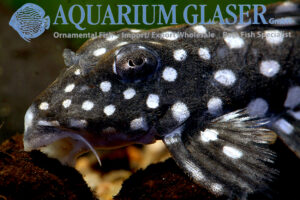
Ancistrus sp. L107
One of the most beautiful Ancistrus of all is certainly L107, which – as far as we know – has still not been scientifically studied. It is a pitch-black Ancistrus with snow-white spots, which is also known as the “brilliant Ancistrus” due to its striking contrast. In contrast to many other similar Ancistrus, this species […]
-
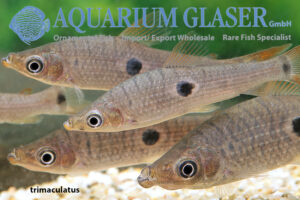
Pseudanos trimaculatus
The genus Pseudanos was separated from Anostomus in 1980 due to numerous differences in the skeleton. At that time, the scientist in charge, Richard Winterbottom, assigned two already known species to the new genus – P. gracilis and P. trimaculatus – and another, which he described as new: P. irinae. The differences between P. trimaculatus […]
-
Epiplatys chevalieri
A killifish jewel reached us from the central Congo: Epiplatys chevalieri. Although this species was introduced into the aquarium hobby as early as 1950 and was even given a popular name (German: Zierhechtling, which means ornamental panchax) at the time, which is by no means common for killifish, it has not become established on a […]
-
Synodontis eupterus
Synodontis eupterus inhabits the White Nile, the Niger and Chad basins and the Volta River. There it is found over mucky and sandy substrate. Nowadays, however, practically all animals in the trade are captive-bred. A striking feature of this catfish, which can grow up to 25 cm long, is its magnificent dorsal fin with elongated […]
-
Rhadinoloricaria andaki
It’s been a while – April 2016 – since we were able to proudly report the first import of a Rhadinoloricaria species from Venezuela. Although the genus was already described in 1974, the only species assigned to it in 2016, R. macromystax from Peru, is considered to be very rare. Since our first import, the […]
-
Pethia nigrofasciata
The black ruby barb (Pethia nigrofasciata) is one of the most popular ornamental fish of all. This beautiful fish, which grows to around 5-6 cm long, is endemic to Sri Lanka (i.e. only found there). There, the species prefers to colonize flowing waters in the southwest of the island, from the catchment areas of the […]
-
Erythrinus sp. Madre de Dios
This magnificent Erythrinus comes from the drainage of the Madre de Dios, which is around 1,100 km long, lies between Bolivia and Peru and is the largest tributary of the Rio Madeira. The genus Erythrinus is in great need of revision. Nobody knows how many species there are and how they can be distinguished from […]
-
Schistura notostigma
With one of our first Sri Lanka imports of wild-caught fish after a long time, we also received Schistura notostigma. Until recently this species was thought to be the only Schistura species from the island, but recently two other species have been described from there, S. madhavai and S. scripta. The easiest way to distinguish […]
-
Trichogaster microlepis ( = Trichopodus microlepis)
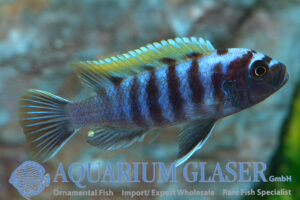
Fish for romantics – does that exist? Occasionally! One of them is certainly the moonshine gourami, Trichogaster microlepis. Its popular name says it all. Although the animal is only silvery-white, its tiny scales give it a very peculiar appearance, as if wrapped in silk. Color always means: communication with conspecifics and bright colors are very […]
-
Apistogrammoides pucallpaensis
The dwarf among the little ones: Apistogrammoides pucallpaensis from the upper Amazon in Colombia and the Rio Ucayali in Peru is one of the smallest cichlid species of all. We obtain our animals from Peru. In the literature, the maximum sizes given are 5 cm for males and 4 cm for females. However, these must […]
-
Gastromyzon sp. SK2 Red Tail
Recently we were able to introduce you to the new Gastromyzon “Bloody Mary” (one of our readers recommended calling it “Lamandau” after the collecting area): https://www.aquariumglaser.de/en/fisharchive/gastromyzon-sp-bloody-mary-2/ As mentioned in the above post, we have received further species, a “Red Tail” and a “Bluel”. The “Red Tail” has been known in the hillstream loach community for […]
-
Nannacara anomala
Here’s another animal from the “been in the aquarium forever but still beautiful” department! Nannacara anomala, the Golden Dwarf Cichlid from Guyana, has already delighted our grandfathers. We currently have exorbitantly colored animals in stock, which we call “Red”. They come from a breeder who has really put a lot of love and ambition into […]
-
L27 Xingu Panaque cf. armbrusteri
The fine systematics of the large (over 30 cm) black-striped Panaque is still only unsatisfactorily studied. Panaque nigrolineatus (L190) from Colombia and Venezuela is certainly the best known by name, and in 2020 a subspecies, usually rather spotted, was described from the upper Rio Guaviare in Colombia (P. n. laurafabianae, L330 see https://www.aquariumglaser.de/en/10-catfishes/l330-scientifically-described-panaque-nigrolineatus-laurafabianae/). Aquarists recognized […]
-
Nemacheilus corica
Amongst the many species* of loach (mainly the genera Nemacheilus and Schistura, but there are more genera) that exist in India, one in particular has proven itself as an aquarium fish: Nemacheilus corica. There are many reasons for this: it remains small (5-6 cm), is peaceful, looks nice, eats all common ornamental fish foods, is […]
-
Yasuhikotakia morleti
What the armored catfish (Corydoras & Co.) are in a South American tank, the clown loaches (Botia & Co.) are in an Asian tank: interesting, beautiful and lively bottom fish. However, much more species knowledge is required for Botia than for armored catfish to avoid unpleasant surprises. Some species, such as the popular true clown […]
-
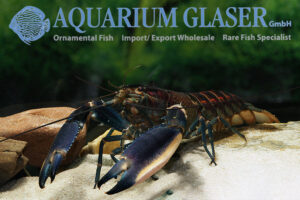
Cherax warsamsonicus (= sp. Hoa Creek)
A species of Cherax that is quite popular in the hobby for at least a decade (we are aware of imports since 2008) is Cherax sp. „Hoa Creek“, sometimes also called C. sp. „Irian Jaya“ or C. sp. „Red Coral“. The exact origin of these crayfish was totally unknown. They appeared in the market often […]
-
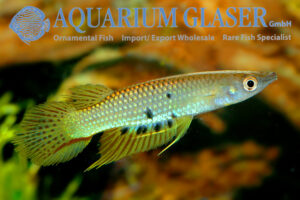
Aplocheilus dayi
The striped panchax (Aplocheilus lineatus, see https://www.aquariumglaser.de/en/18-toothcarps-killis-and-livebearers/aplocheilus-lineatus-wild-2/) from southern India is one of the most popular aquarium fish thanks to its splendid colors, easy care and breedability. It has only one disadvantage: at around 10 cm in length, it does grow quite large. A close relative of the striped panchax from Sri Lanka – the […]
-
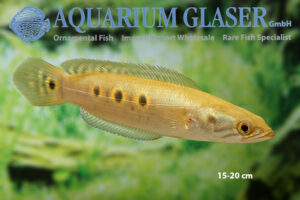
Channa pleurophthalma
We regularly have perhaps the most beautiful snakehead fish in stock: Channa pleurophthalma. This species, which is found on the Greater Sunda Islands of Sumatra and Borneo and inhabits lakes and rivers there, grows to around 40 cm in length. In contrast to most other snakeheads, they like to swim a lot in open water. […]
-
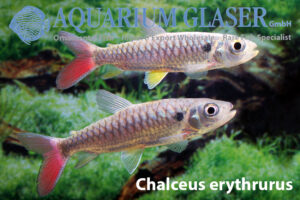
Chalceus erythrurus
Traditionally, a distinction is only made between two Chalceus species, one with a shoulder spot (C. erythrurus) and one without (C. macrolepidotus). The species with the shoulder spot has yellow ventral fins when sexually mature, at least the females. This classification has often led to confusion in the trade, as there are clearly more color-distinguishable […]
-
Sorubim lima
The large-sized species of the spiny catfishes (Pimelodidae) belong as adult fishes to the desired food fishes and not less desired species for fans of predatory catfishes with giant aquariums. As juveniles, these animals often look completely different and have, for example, absurdly long fin processes. The Shovelnose catfishes of the genus Sorubim are with […]
-
Corydoras semiaquilus
Three magnificent Corydoras species from Peru undoubtedly form a closely related group. They are very pointed-headed and comparatively large (around 6 cm, sometimes up to 8 cm) Corydoras, namely C. fowleri, C. coriatae and C. semiaquilus. The independence of C. coriatae is often doubted, as numerous locality variants of C. fowleri have become known and, […]
-
Platy Bleeding Heart Mickey Mouse
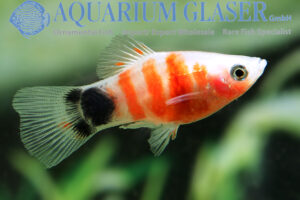
Bleeding Hearts are a breeding form of the platy (Xiphophorus maculatus), which was developed in the 1940s by the famous geneticist Myron Gordon. This breeding form is a cross between a wild platy form, namely the “Ruby-throat”, which occurs in the Rio Jamapa (Gordon collected his original strain near Veracruz) and in the Rio Papaloapan […]
-
Glossamia wichmanni
The mouthbrooding freshwater cardinalfish (Glossamia) are particularly rich in species on New Guinea. Of the total of 11-12 currently accepted species, 10-11 occur on New Guinea, 9-10 even only exist there. Only one species is known exclusively from Australia and another occurs on New Guinea and in Australia, namely G. aprion (see https://www.aquariumglaser.de/en/25-perchlike-fishes/glossamia-aprion-2/) Probably the […]
-
Ptychochromis oligacanthus
The Red List of endangered animal and plant species is getting longer and longer. The cause is almost invariably the destruction of the natural habitat. In the case of freshwater fish, species with a small distribution area are always particularly endangered. In addition to factors such as environmental pollution, deforestation and water extraction for agriculture, […]
-
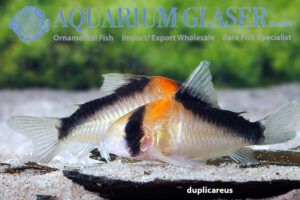
Hoplisoma adolfoi and H. duplicareus (formerly: Corydoras)
We receive these beautiful armored catfish both as captive-bred and wild-caught specimens. Both are currently classified in the genus Hoplisoma. The correct species identification of these animals is still unclear. There are clearly two types, a high-backed one with a very broad dorsal band (duplicareus) and a slimmer one with a narrow dorsal band (adolfoi). […]
-
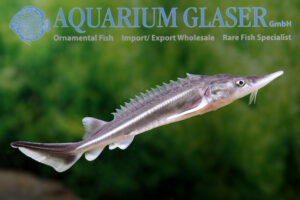
Acipenser ruthenus
The sterlet, Acipenser ruthenus, is one of the smallest sturgeon species. Nevertheless, this fish can also grow to over one meter in length. The largest known specimen is reported to be 125 cm long. Sterlets become usually around 60 cm long. Like all sturgeons, this species is highly endangered due to overfishing and, above all, […]
-
Brotia herculea
The specific name „herculea“ says it all: it is loaned from Hercules, the divine hero of the Greek mythology who had enormous powers. This snail attains a length of almost 10 cm! So the common name „Giant Tower Cap Snail“ is more than justified. The snail occurs naturally in Burma and Thailand where it inhabits […]
-
Coming soon: Inpaichthys parauapiranga
Only a short time after this wonderful new tetra has been given a name can we (almost) offer it. Inpaichthys parauapiranga was scientifically described in February 2024. Peter and Martin Hoffmann have successfully bred it and we will soon be able to offer these offspring. We are already looking forward to it! They are peaceful […]
-
Black-winged dwarf hatchets, Carnegiella marthae and C. schereri
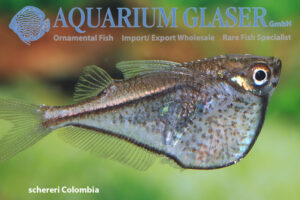
There are two species of black-winged dwarf hatchets in South America. These cute fish only grow to around 3 cm in length. According to scientific data, both species are very widespread (Brazil, Ecuador, Colombia, Venezuela, Bolivia and Peru), Carnegiella marthae has been described from Venezuela (Caño de Quiribana, near Caicara) and C. schereri from Peru […]
-
Chitala ornata
The Asian knifefishes were long known to aquarists as Notopterus species. The American scientist Tyson Roberts revised the Afro-Asian knifefishes (Notopteridae) in 1992 and used the generic name Chitala Fowler, 1934, for the high-backed Southeast Asian knifefishes, also known as thousand-dollar fishes. Only the relatively flat-backed Asian species remain in Notopterus. The actual thousand-dollar fish […]
-
Garra ceylonensis
After 10 years we once again have the sucker barb Garra ceylonensis on offer. This species is endemic to Sri Lanka, so it only exists there. Wild fish from Sri Lanka may only be exported with a special permit. Our suppliers of ornamental fish from Sri Lanka had not previously applied for this permit because […]
-
Teleocichla preta
The cichlids of the genus Teleocichla are very closely related to Crenicichla. They remain relatively small, the T. preta discussed here is one of the largest species with a maximum length of 15 cm. The swim bladder is greatly reduced in Teleocichla. Without active swimming movements, they cannot stay afloat. Ecologically, the Teleocichla could be […]
-
Corydoras ambiacus (now: Brochis ambiacus)
Corydoras ambiacus is one of the longest known species of the enormously diverse armored catfish, which has recently been assigned to the genus Brochis in a major review of armored catfish. The species Corydoras ambiacus was formally described from the Rio Ambyiacu in Peru as early as 1872. At that time, only 5 Corydoras species […]
-
Characidium steindachneri
With 97 described species, 67 of which are considered to be valid by the majority of scientists, the bottom-dwelling ground tetras (Characidium) are extremely species-rich. Unfortunately, there is no complete overview of the genus. Misidentifications or at least uncertainties prevail in both scientific and hobbyist literature. One of the most frequently cited species in the […]
-
Nandopsis haitiensis
Although the current classification of the cichlids from Central America, formerly grouped together under Cichlasoma, has been around for a few years now, many genus names have been slow to catch on in the hobby. The main reason for this is, of course, that the large cichlids of Central America are currently only kept and […]
-
Vittina waigiensis
If there was a beauty contest between the nertine snails: the species commonly known in the hobby as Neritina or Vittina waigiensis would certainly be among the winners! This species, which reaches a shell diameter of 1.5-2 cm and has extremely variable markings, was originally described by Lesson in 1831 as Neritina waigiensis. The animals […]
-
Corydoras have been revised – “new” genus names!
The armored catfish (Callichthyidae) are a species-rich family that occurs exclusively in South America. There are two subfamilies, the callichthyid catfishes (Callichthyinae) and the corydoras-like armored catfishes (Corydoradinae). The latter are particularly species-rich. Currently (June 2024), 231 species are considered to be described, 171 of which are generally recognized as valid; in addition, there are […]
-
Schismatogobius risdawatiae
The dragonet gobies (Schismatogobius) are small species of freshwater gobies, that reach between 3 and 5 cm length. They live in small rivulets near the coast but above the tide on sandy bottoms. Here they burry themselves very fast if necessary. The larvae devolop – as far as this known – in the sea. The […]
-
Rasbora kalochroma
One of the undoubtedly most beautiful Rasbora species is R. kalochroma – and one of the most sensitive. They are typical black water fish which react very sensitively during the acclimatisation phase to increased bacteria contamination, which occurs almost inevitably in “normal” water. When we were now offered youngsters, we took advantage, because young fish […]
-
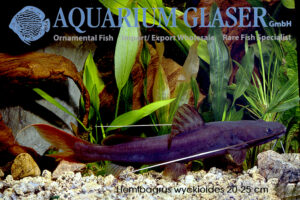
Hemibagrus wyckii and H. wyckioides
These large predatory catfish from Southeast Asia usually grow to around half a meter in length. The maximum length given for H. wyckioides is up to 130 cm and 86 kg in weight, while “only” around 90 cm is given for H. wyckii. They are important food fish and are highly prized for their excellent […]
-
Melanotaenia parkinsoni
Melanotaenia parkinsoni is one of the few species of rainbowfish that are offered relatively regularly in the trade. The home of this maximum 14 cm long, but usually much smaller animal is in Papua New Guinea, in the Central Province. There are only confirmed specimens from the Kemp Welsh River, which is sometimes also referred […]
-
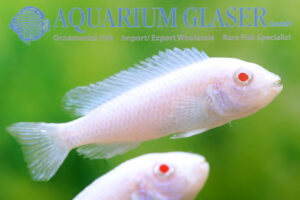
Chindongo socolofi “Albino” ( = Pseudotropheus socolofi)
The question of whether an ornamental fish species is particularly popular can often be answered with “yes” if breeding forms exist. Breeding forms, whose characteristics either do not occur at all in nature or only occur extremely rarely in individual specimens, usually only arise when the natural form is bred on a large scale. The […]
-
Parambassia lala
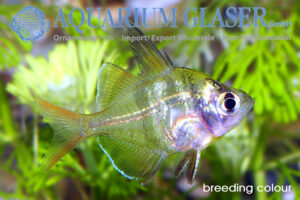
The Indian glass perch (Parambassia lala, often placed in the monotypic genus Pseudambassis) is actually an old acquaintance (first introduction: 1905), but an incredible amount of nonsense has been and still is spread about it. For example, the rumor persists that the species is a brackish water fish. But it is not, it is only […]
-
Opsarius koratensis
Typical open water fish are very rarely kept in the aquarium. There is a simple reason for this: they are usually quite colorless. The Opsarius koratensis, which can grow to a maximum length of 10-12 cm (some sources even state 16 cm), is no exception. However, keeping these fish can still be very rewarding, as […]
-
Geophagus sp. Alto Sinu
In 2016, French aquarists in Colombia discovered a new eartheater, which they named after the place where it was found in the Rio Cauca inlet – a Rio Sinu. However, this Rio Sinu is not identical to the much larger Rio Sinu of the same name in Colombia! For the exact locality see the article […]
-
Gastromyzon sp. “Bloody Mary”
The hillstream loaches of the genus Gastromyzon have developed an enormous diversity of species on the island of Borneo. The ichthyologist Tan first analyzed this diversity in 2006 and described no less than 15 new species in his book “The Borneo Suckers”. Since then, a total of 36 species of the genus have been known […]
-
Melanotaenia fasinensis
The Bird’s Head Peninsula is part of the large island of New Guinea. It is located in the northwest of New Guinea and belongs politically to Indonesia (West Papua). For rainbowfish enthusiasts, it is currently the holy land, as the Bird’s Head Peninsula is a hotspot of diversity for this group of fish. The most […]
-
Canthophrys gongota ( = Somileptus gongota)
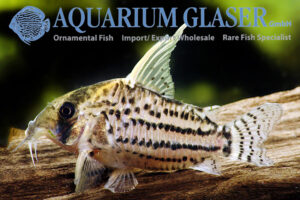
The moose faced loach from India is a very unusual representative of its family. Although there are many loach species that burrow, Canthophrys gongota has perfected this behavior. In its natural habitat, the rivers in the north of Bengal, it lives where the bottom is made up of fine sand. Here it likes to bury […]
-
Tanichthys albonubes Gold-Red
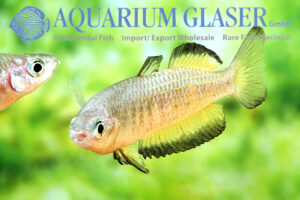
A new breeding form of the well-known white cloud: Gold-Red. It is very interesting that you can recognize all possible intermediate stages of the two parent forms by this not yet completely bred form: the golden white cloud, which shows mostly black pigmentation in the belly area with a basically yellowish body coloration, and the […]
-
Caridina multidentata “Yellow”
After the new breeding forms “Snow” and “Orange” (https://www.aquariumglaser.de/en/31-crayfishes-shrimps-crabs-snails-mussels/caridina-multidentata-orange-and-snow/), the Asian professional breeders have now apparently established a third color form of the Amano shrimp: “Yellow”. The yellow Amano shrimp (zoologically speaking, all Amano shrimps belong to the same species, namely Caridina multidentata) also has no care requirements that differ from the original form. All […]
-
Rineloricaria eigenmanni
There is no consensus among ichthyologists (= fish experts) as to the correct generic name for the whiptail catfish of the narrower Rineloricaria relationship. Some group all species together as Rineloricaria, others divide these fish into Rineloricaria and Hemiloricaria. Rineloricaria in the broadest sense is very species-rich, currently 64 species are recognized and there are […]
-
Hydrolycus armatus Orinoco
Once more we were able to import this breathtaking animal from the Rio Orinoco. Anyone who is interested in this species should take the chance now, because this fish is available only a few weeks each year. For more informations on the species please see https://www.aquariumglaser.de/en/09-characoids-tetra-relationship/hydrolycus_armatus_en-2/ and https://www.aquariumglaser.de/en/09-characoids-tetra-relationship/hydrolycus_armatus_en/ For our customers: the animals have code […]
-
Betta unimaculata
Modern labyrinth fish science began in the 1980s. At that time, enthusiastic labyrinth fish enthusiasts joined together to form international associations. The world opened up to travelers and areas in Southeast Asia could be visited that had previously only been known from maps. One of the first Betta species to enter the hobby at that […]
-
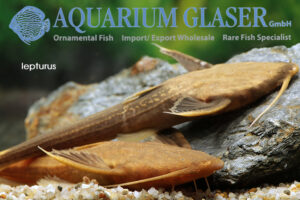
Xyliphius cf. lepturus and X. cf. melanurus
Once again we succeeded in importing some specimens of these strange, naturally almost blind banjo catfish, this time from Colombia. For our first import and further information see here: https://www.aquariumglaser.de/en/10-catfishes/10c-catfishes-remaining-catfish-from-south-america/xyliphius-cf-lepturus/ This time there are apparently two species in the import. Unfortunately, only one specimen probably belongs to the species Xyliphius melanopterus, recognizable by the light […]
-
Hypancistrus inspector “L102, Snowball Pleco”
L102 is one of the plecos that has long been known in the hobby and was given its L number back in 1992. These animals originated from the lower Rio Negro in Brazil and were soon given the popular name “Snowball Pleco” because of the large white spots on a black background. The species was […]
-
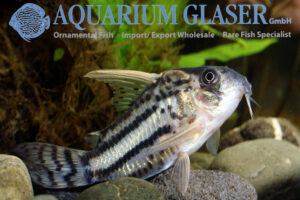
Microglanis “poecilus”
The genus Microglanis consists of small to very small catfish with a maximum length of between 2.5 and 8 cm, depending on the species. All species come from South America. Until 1950, only 6 species were differentiated; currently the number of species is 30, with 17 species alone being described after the year 2000. Only […]
-
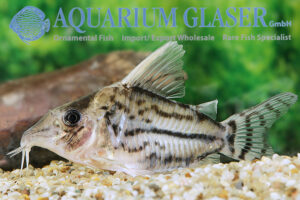
Melanotaenia splendida
The second species of rainbowfish of the genus Melanotaenia that was ever scientifically described was M. splendida. This was in 1866 and the description of the species is based on specimens from the Fitzroy River in Queensland, Australia. The species seemed so unusual to Peters, who first described it, that he even created a new […]
-
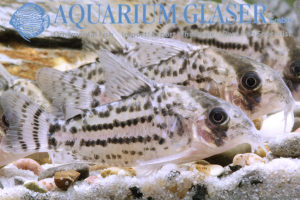
Clithon sowerbianum “Pink Lady”
Like most neritine snails, Clithon sowerbianum, known as the mini neritine snail, is extremely variably colored. As early as the 19th century, a number of variants were therefore scientifically named, but these are no longer considered to be of systematic importance. However, it must be clearly stated that the identification of the 57 accepted Clithon […]
-
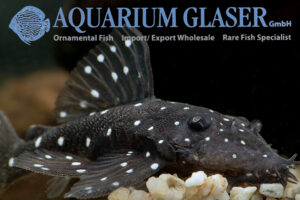
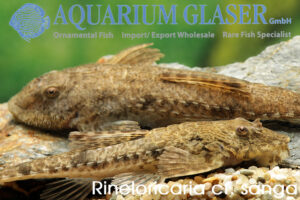
Rineloricaria cf. sanga
We received Rineloricaria from the Brazil-Uruguay border region. The genus Rineloricaria is extremely species-rich with currently 72 accepted species and new species are constantly being added. Unfortunately, there is no complete overview of the genus, making identification extremely difficult. The southern Rineloricaria are also particularly tricky because only a few live observations have been made […]
-
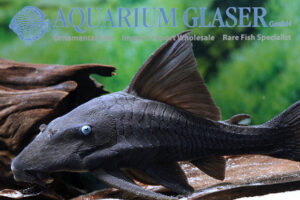
Panque suttonorum ( = P. suttoni)
In the 1980s, the blue-eyed Panque was one of the most common loricariid catfishes on the market. Incidentally, the correct name is Panaque suttonorum. For unknown reasons, the animals are hardly available nowadays. There are a lot of rumors that an environmental disaster is to blame or that a madman has poisoned the river or […]
-
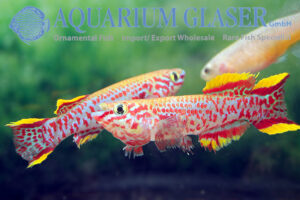
Fundulopanchax gardneri nigerianus
Fundulopanchax gardneri nigerianus is one of the very few species of killifish that are regularly found in the trade. It is highly likely that many of the fish bred today still originate from the old strain from Akure in Nigeria, which was introduced to Denmark in 1957. In 1963 Clausen described Aphyosemion nigerianum scientifically on […]
-
Corydoras reticulatus
We are once again able to offer fully grown Corydoras reticulatus from Peru. C. reticulatus can be easily distinguished from the similar species Corydoras sodalis (see: https://www.aquariumglaser.de/en/10-catfishes/10a-catfishes-corydoras-co/corydoras-sodalis-2/) by the deep black spot on the dorsal fin. The maximum length of C. reticulatus is around 6-7 cm in total, including the caudal fin. The species makes […]
-
Notropis lutipinnis
The small fishes of North America are rather unknown in Europe. Yet the genus Notropis alone includes 91 accepted species! Many of them are very colorful at spawning time. In their native country Notropis species are called “shiners” in the sense of a shining object, so much do the colors of these fish shine. But […]
- « Previous Page
- 1
- 2
- 3
- 4
- 5
- 6
- …
- 32
- Next Page »