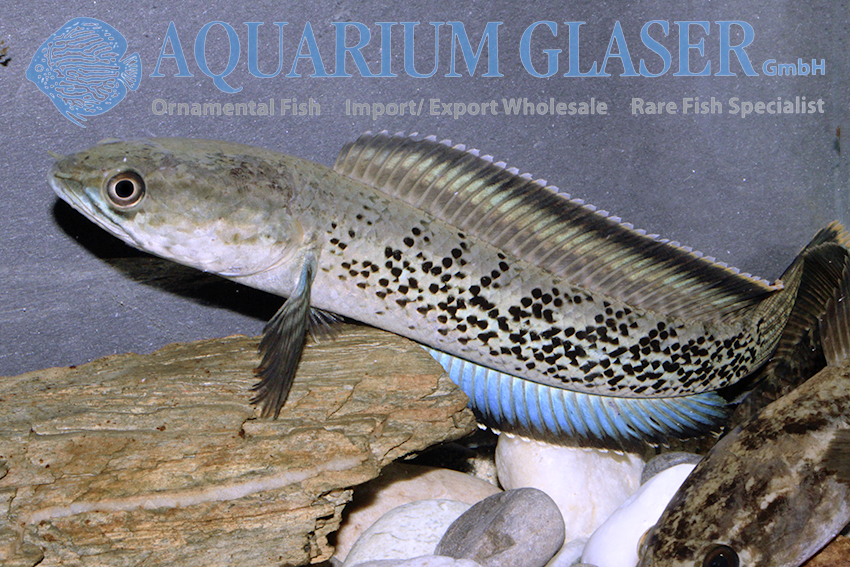
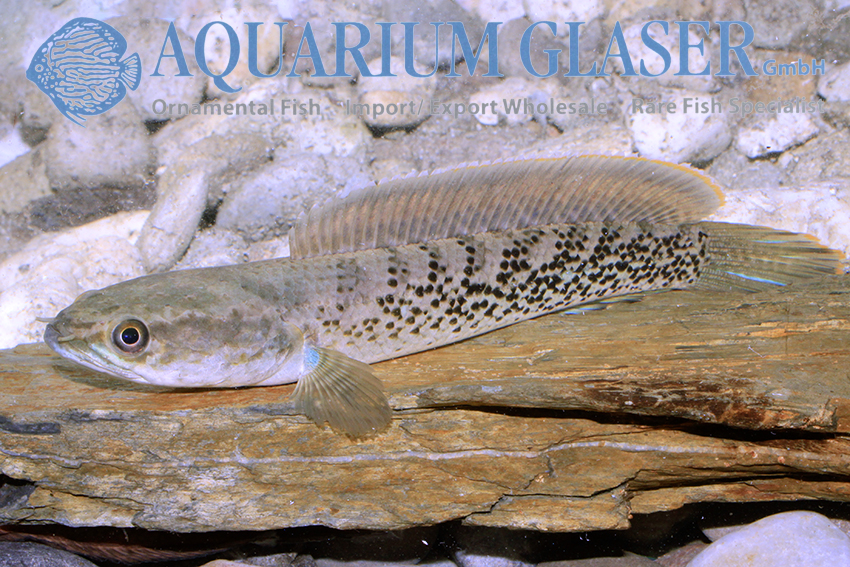
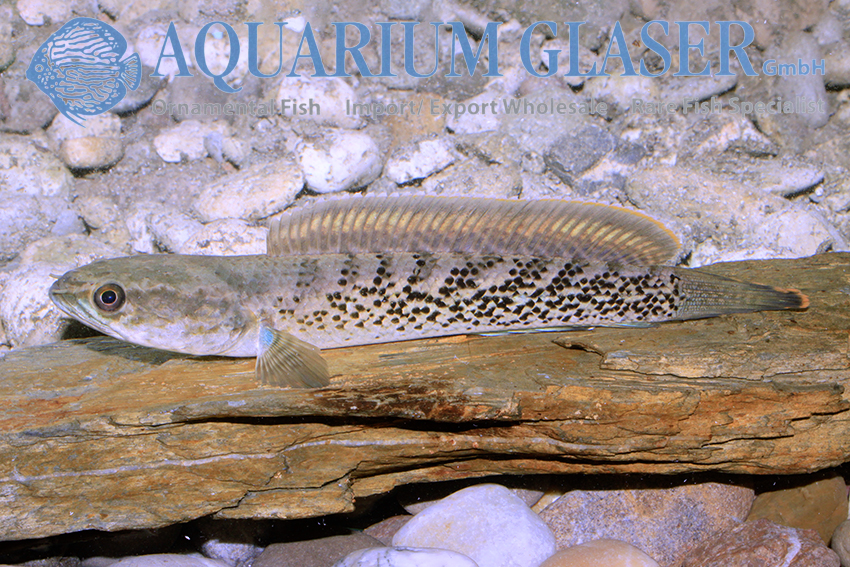
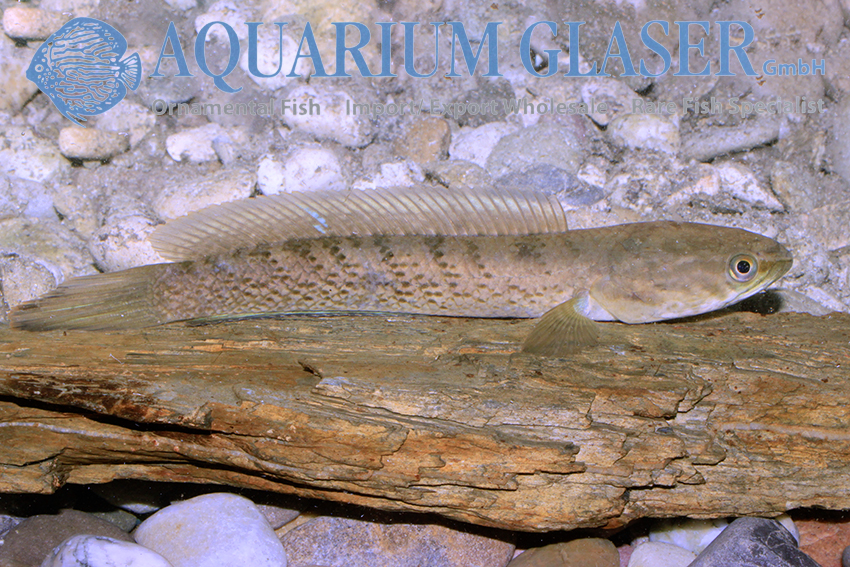
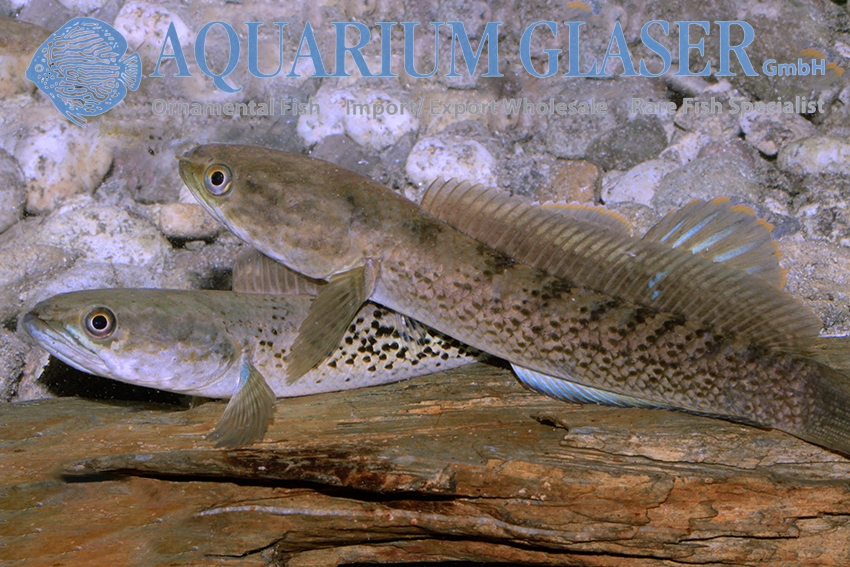
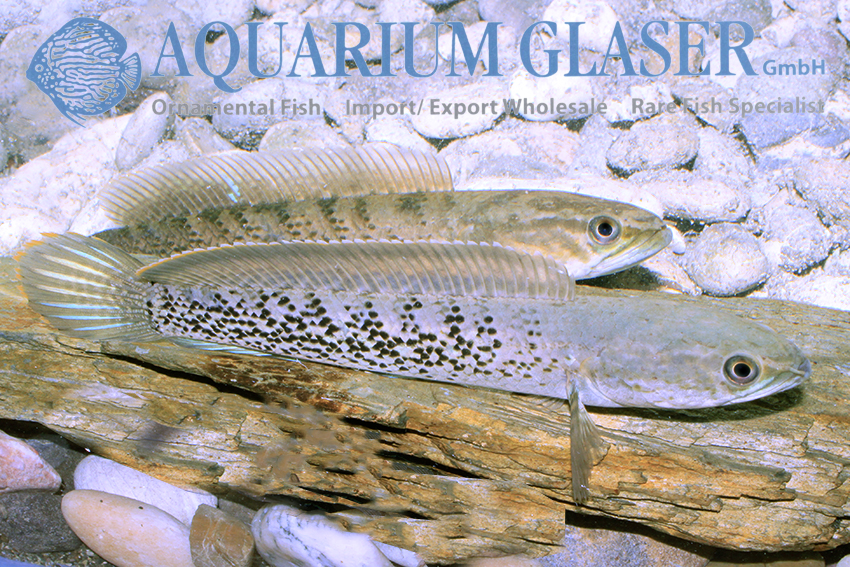
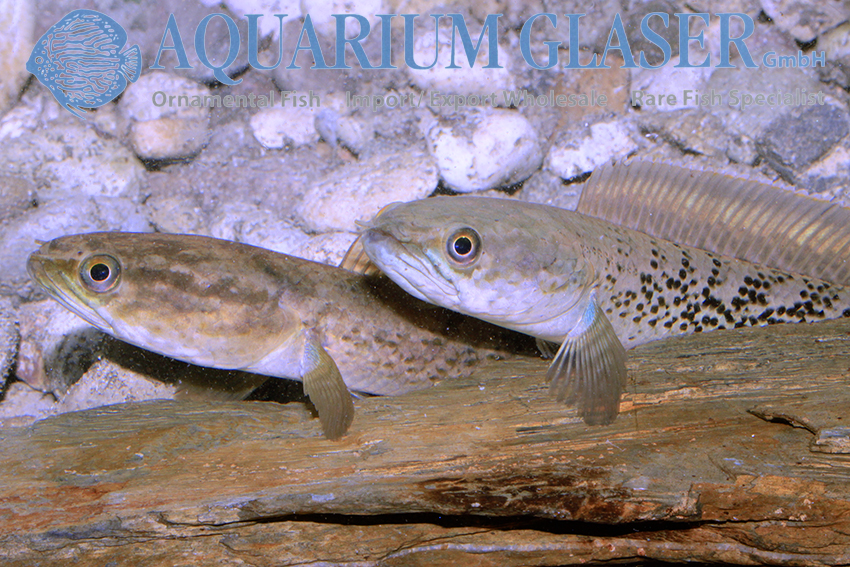
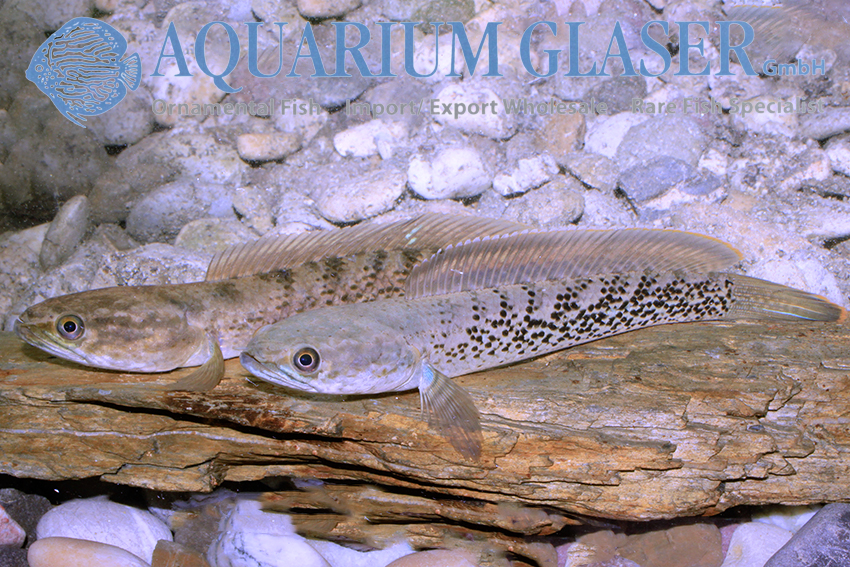
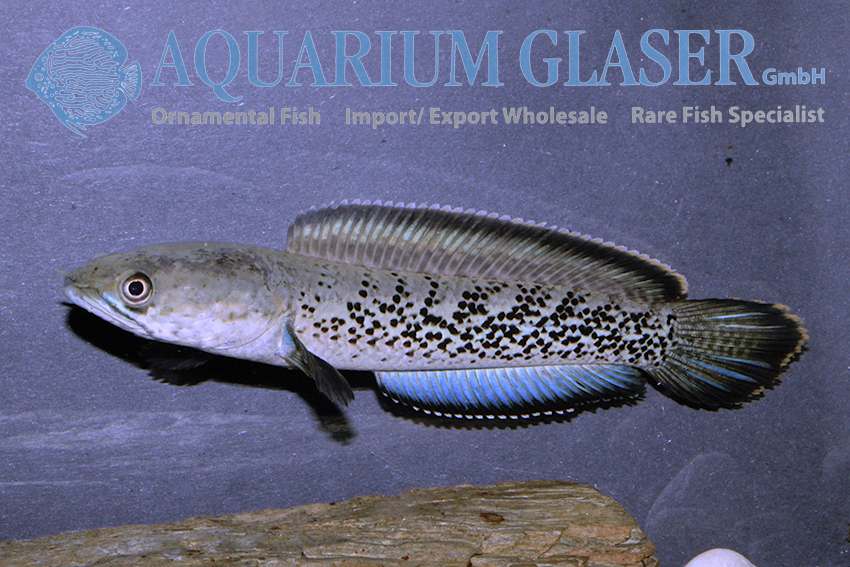
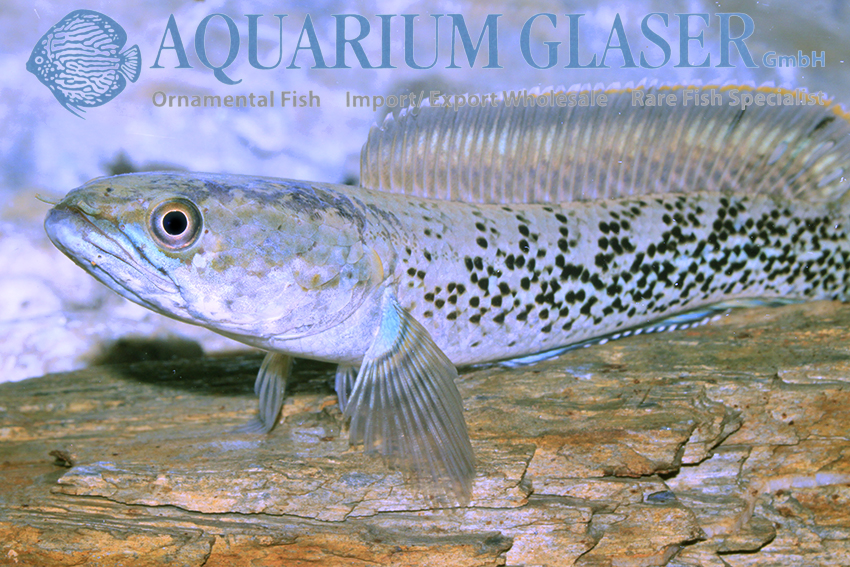
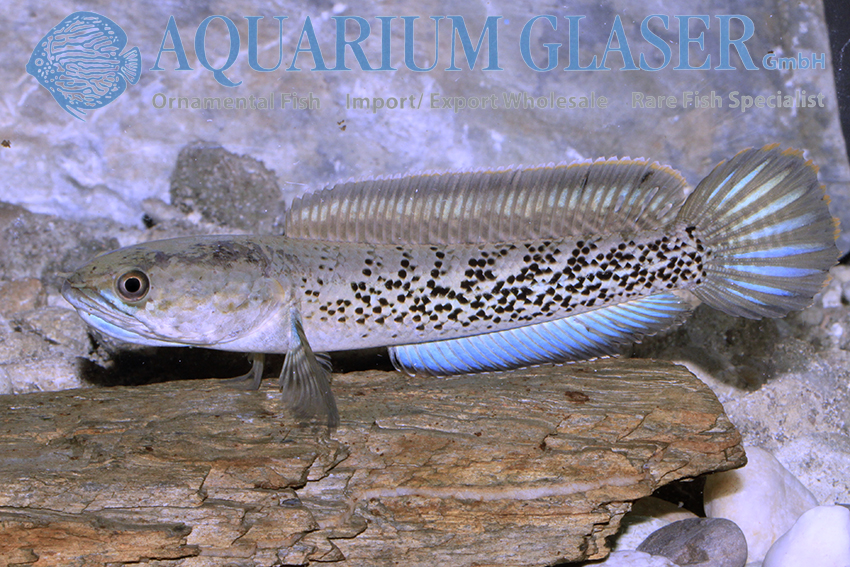
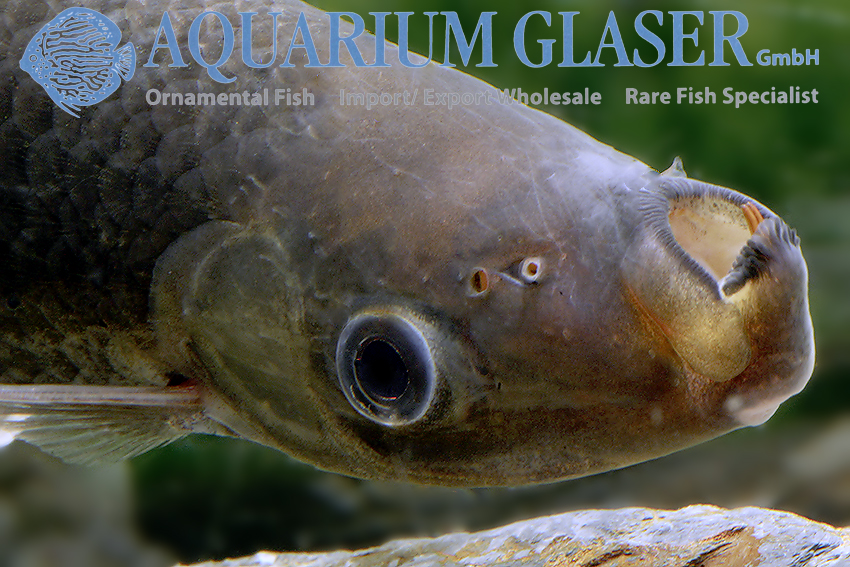
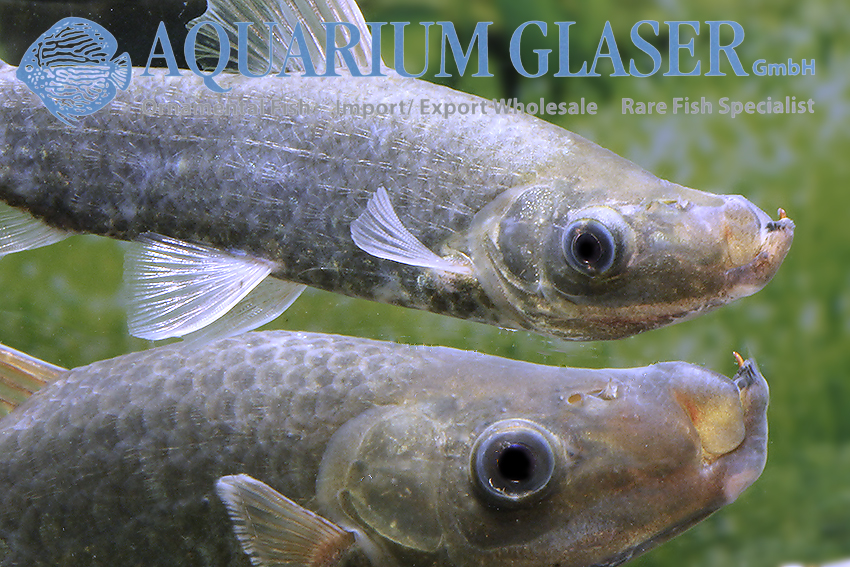
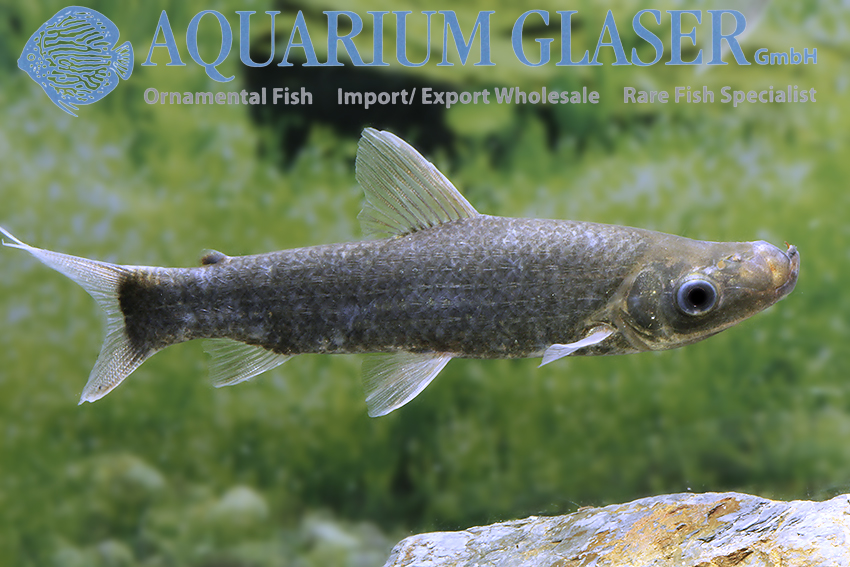
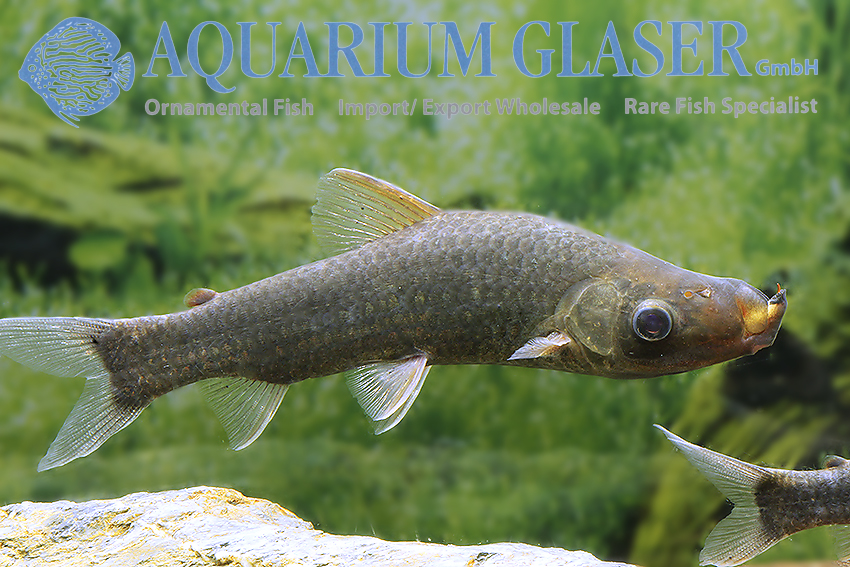
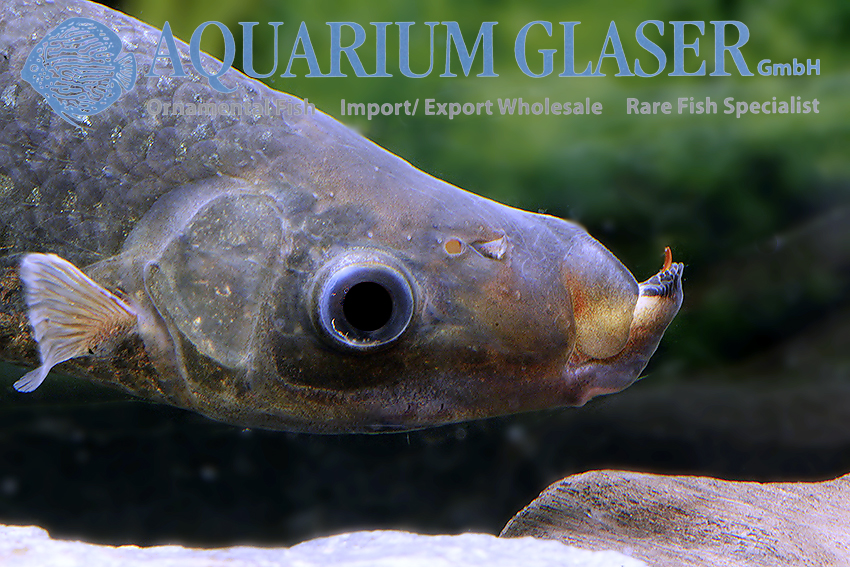
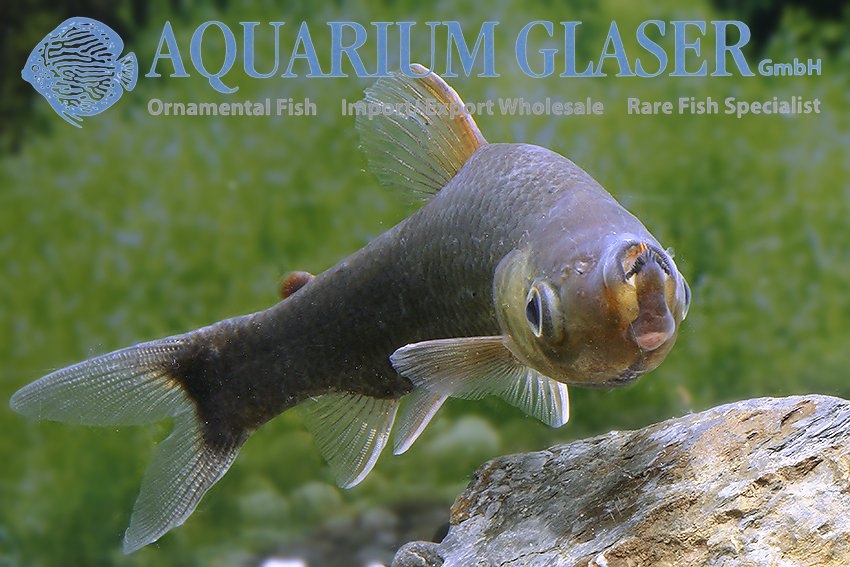
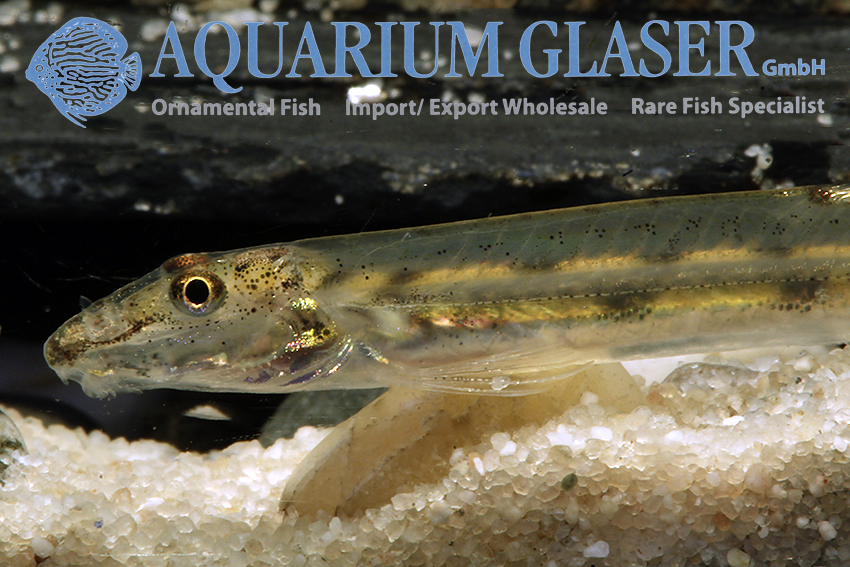
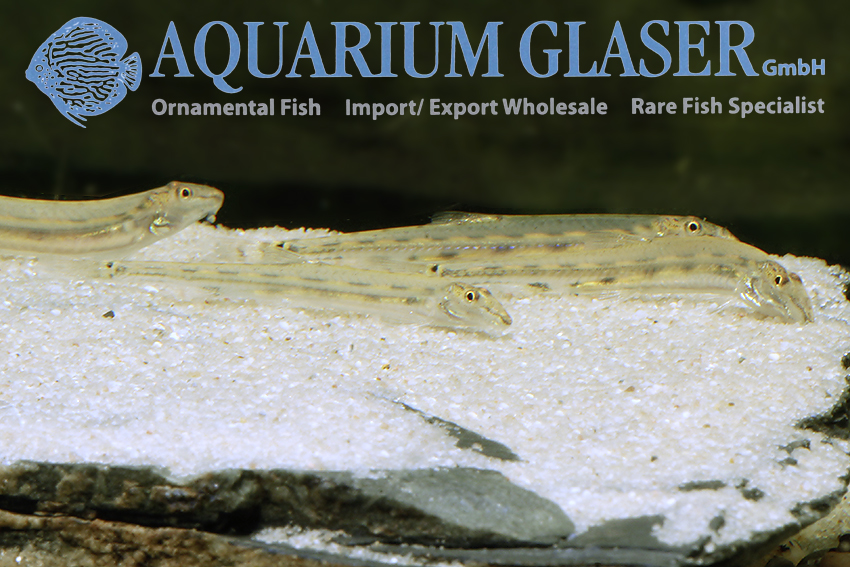
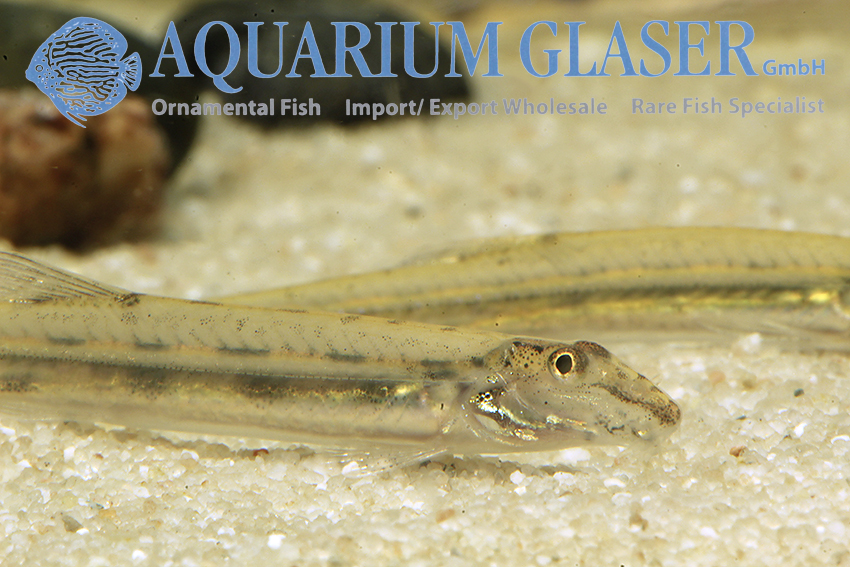
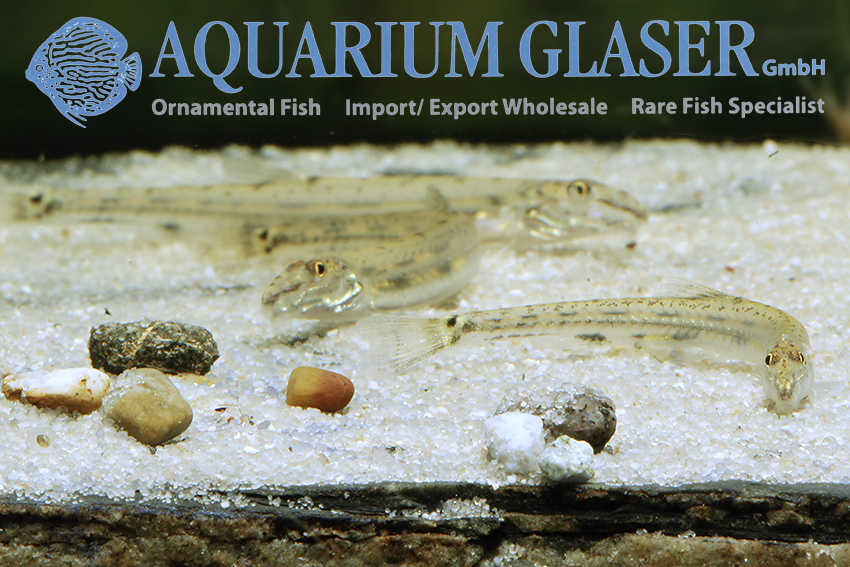
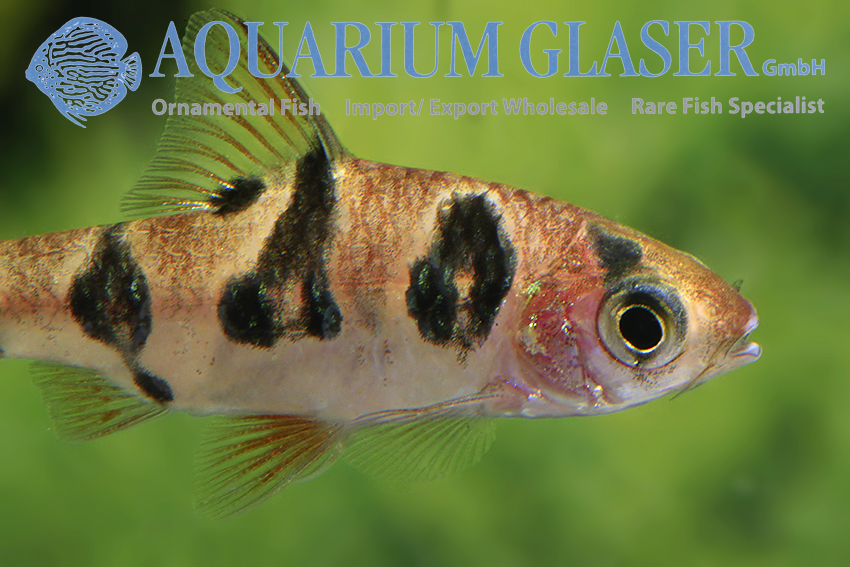
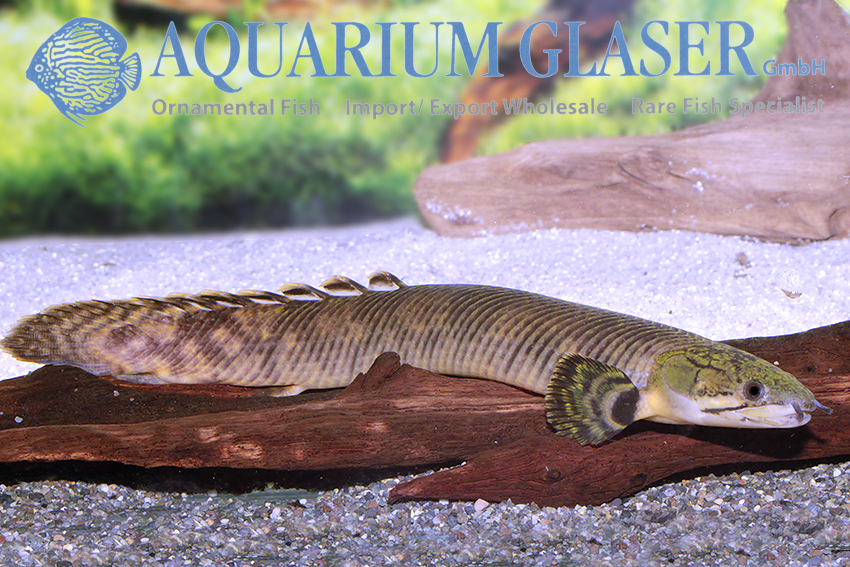
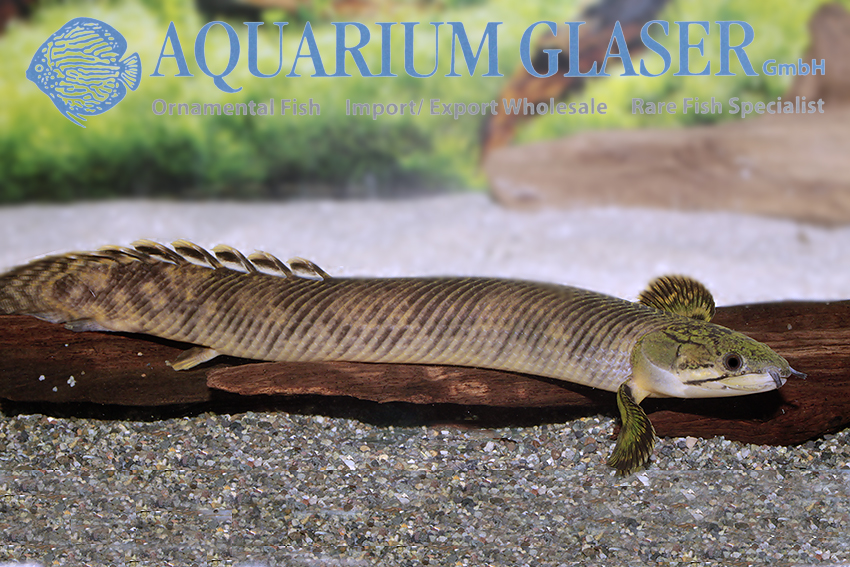
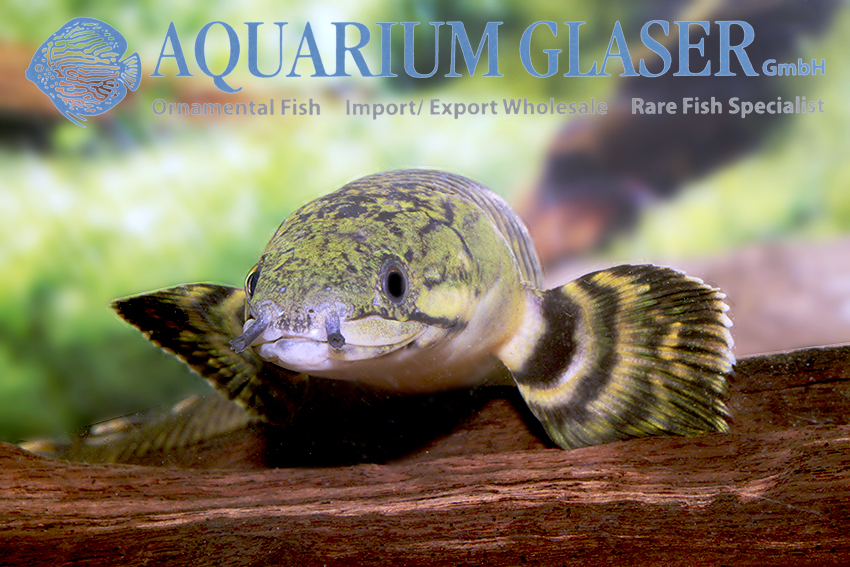
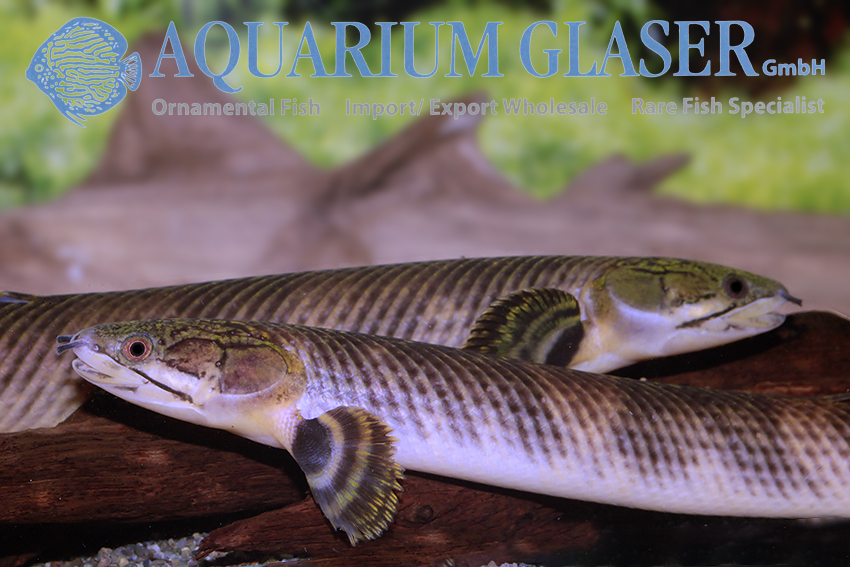
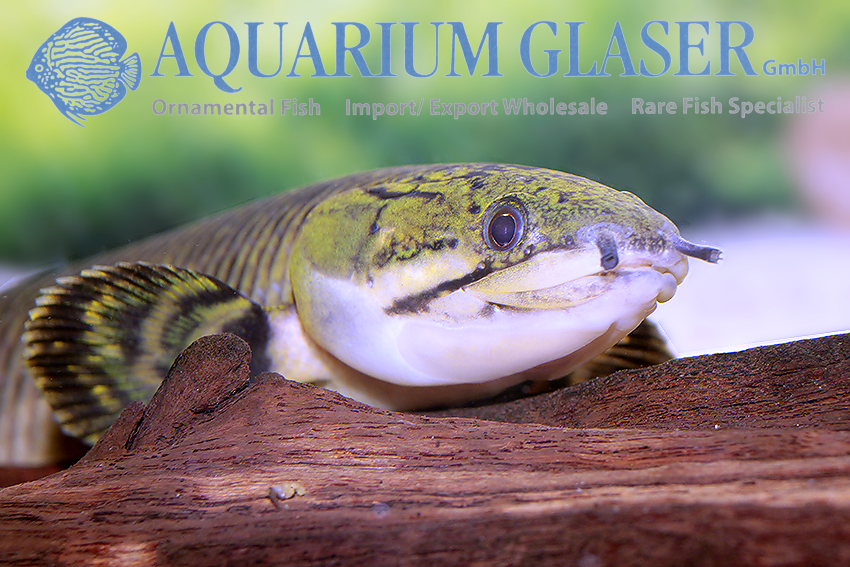
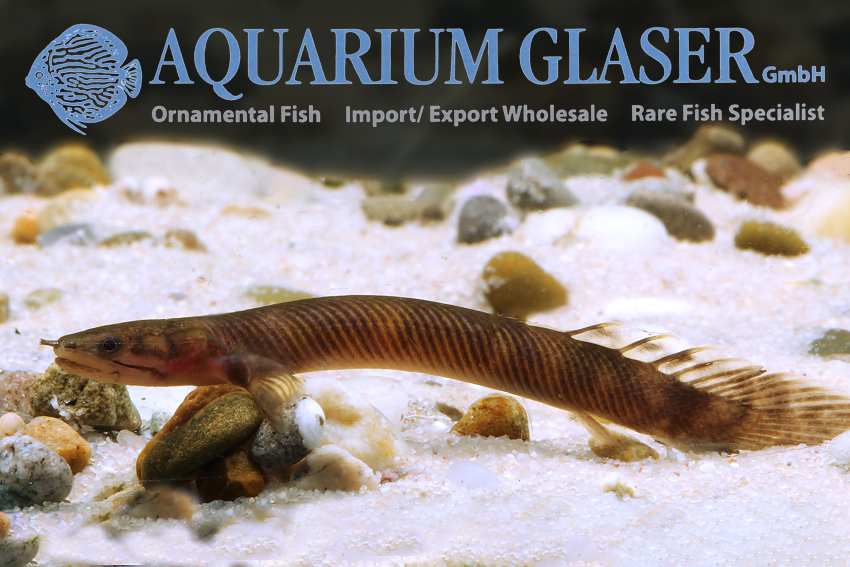
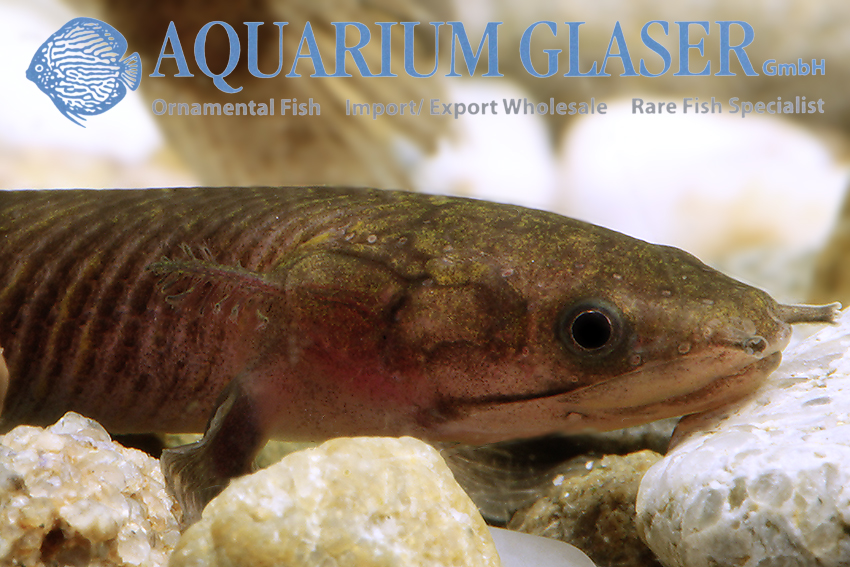
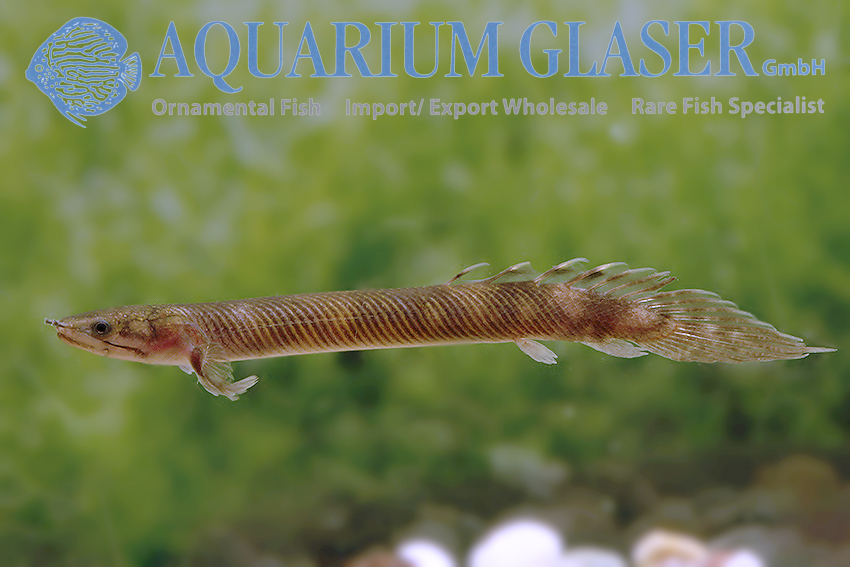
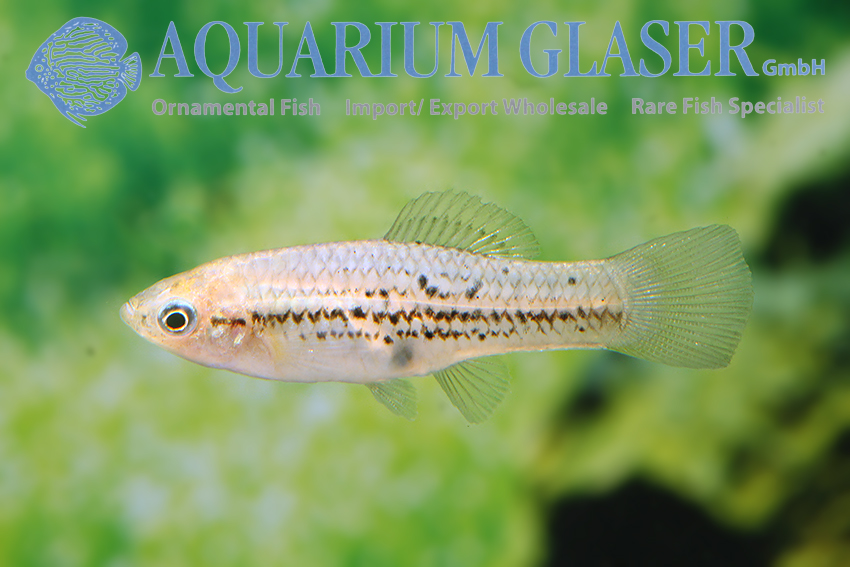
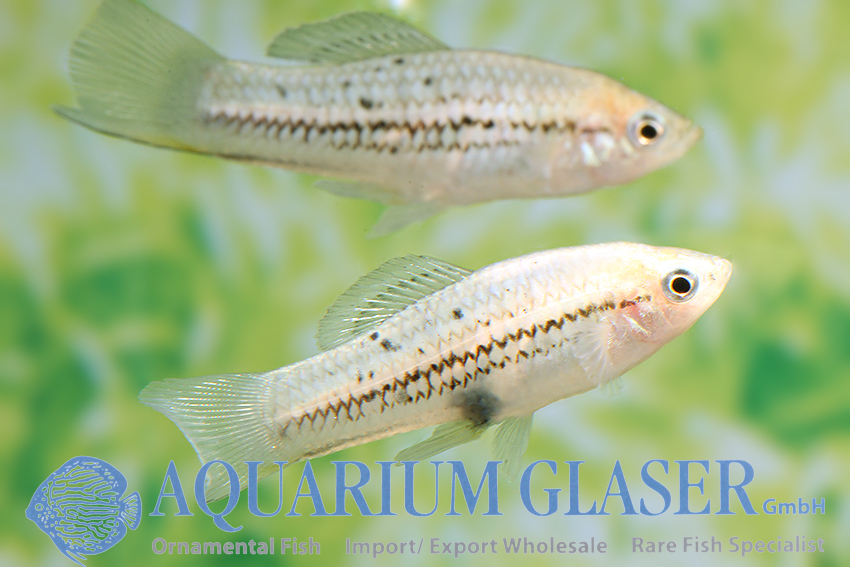
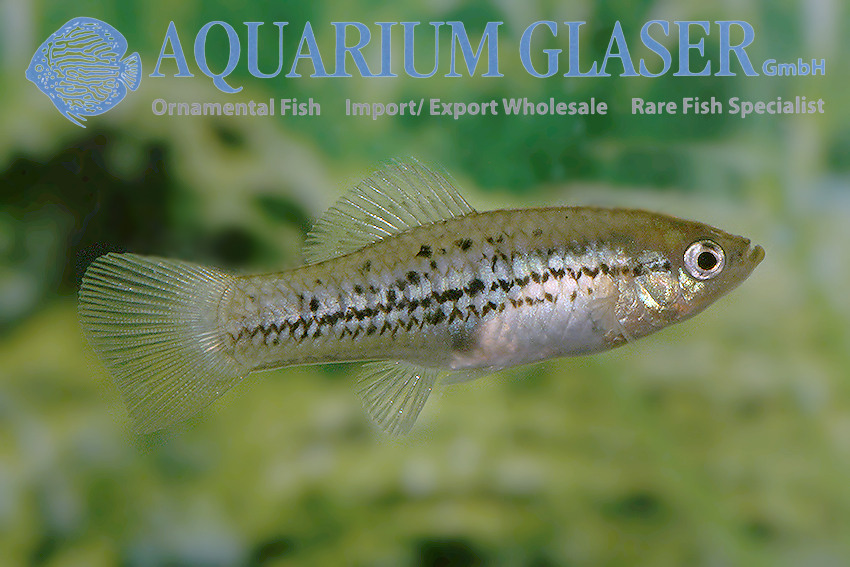
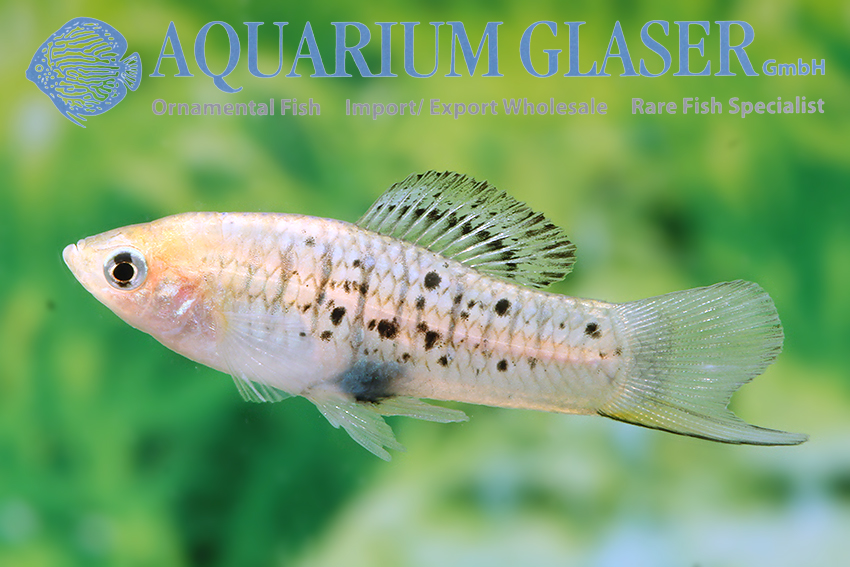
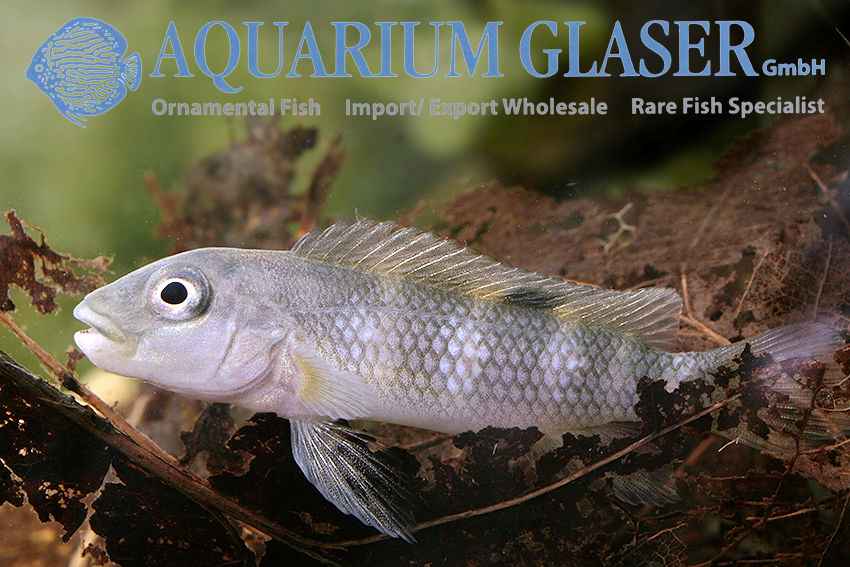
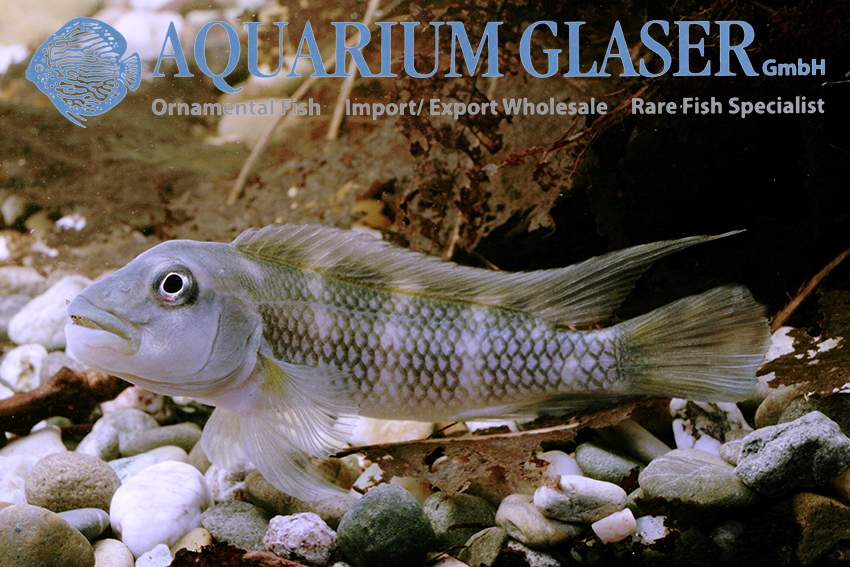
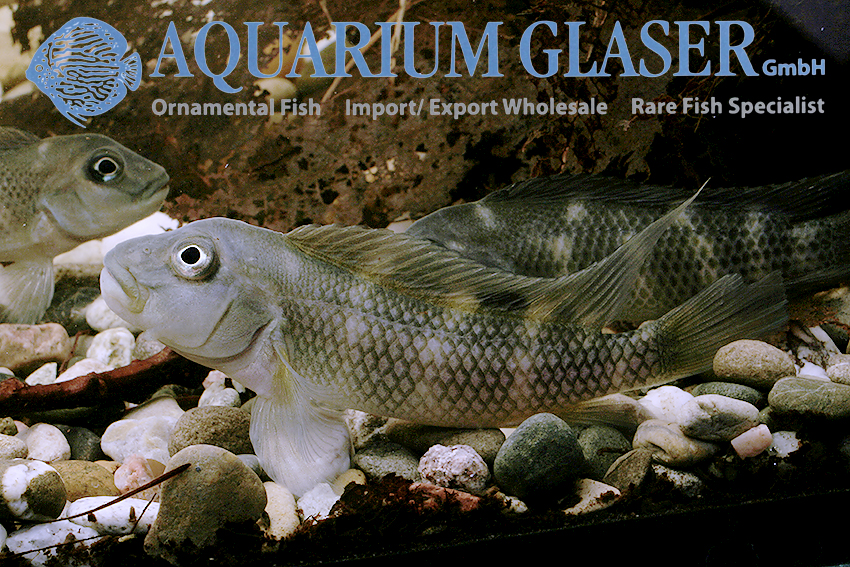
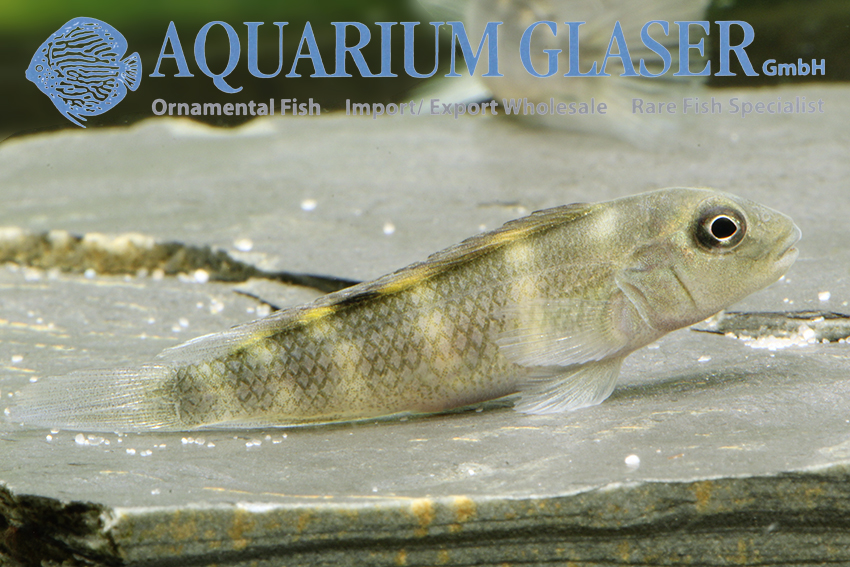
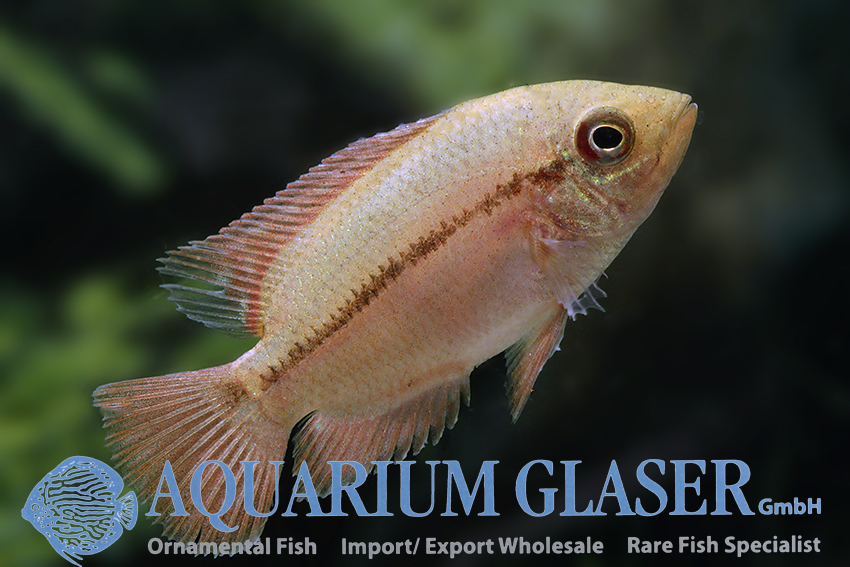
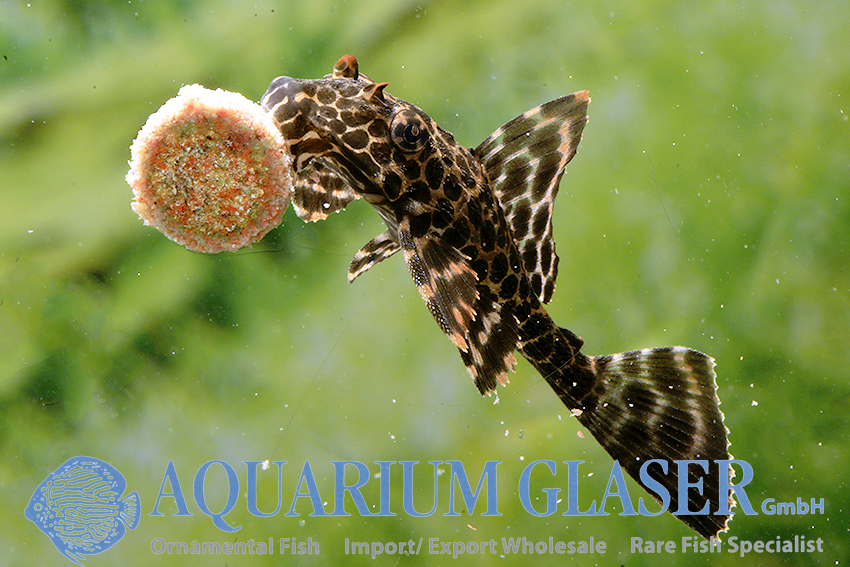
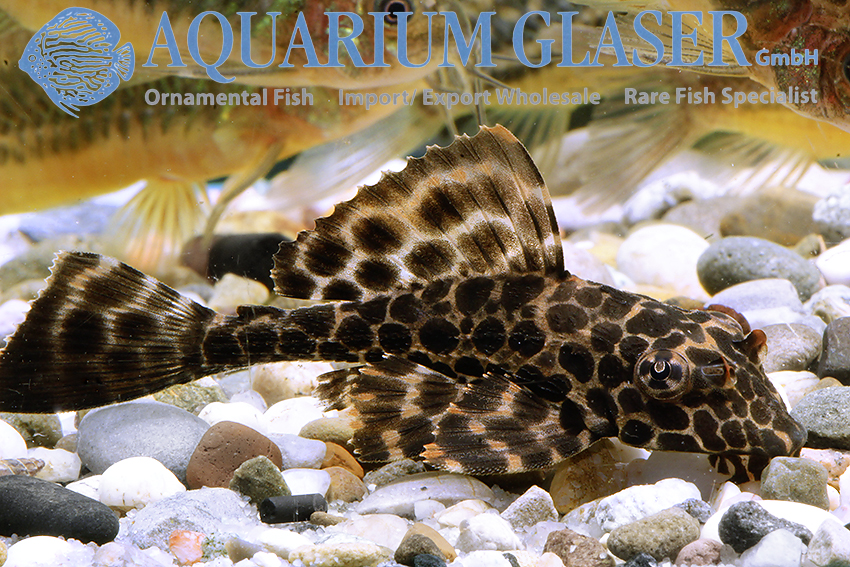
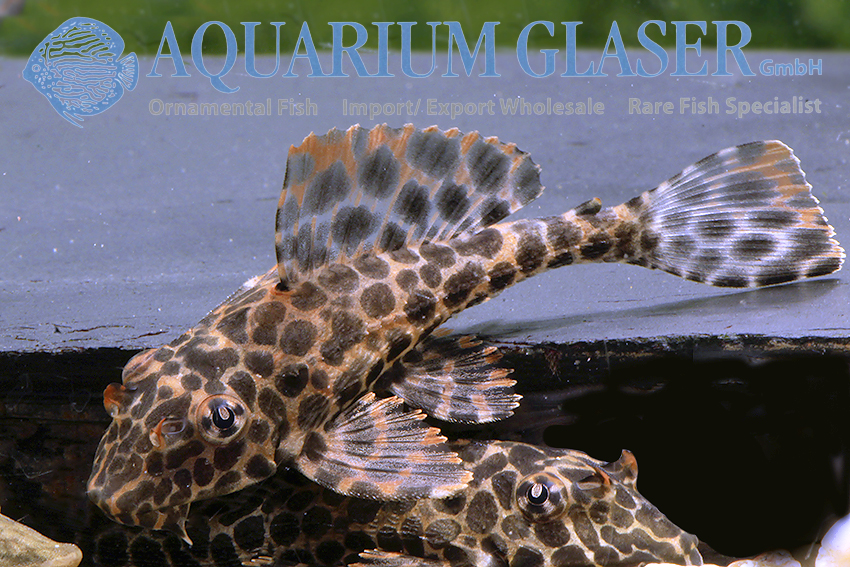
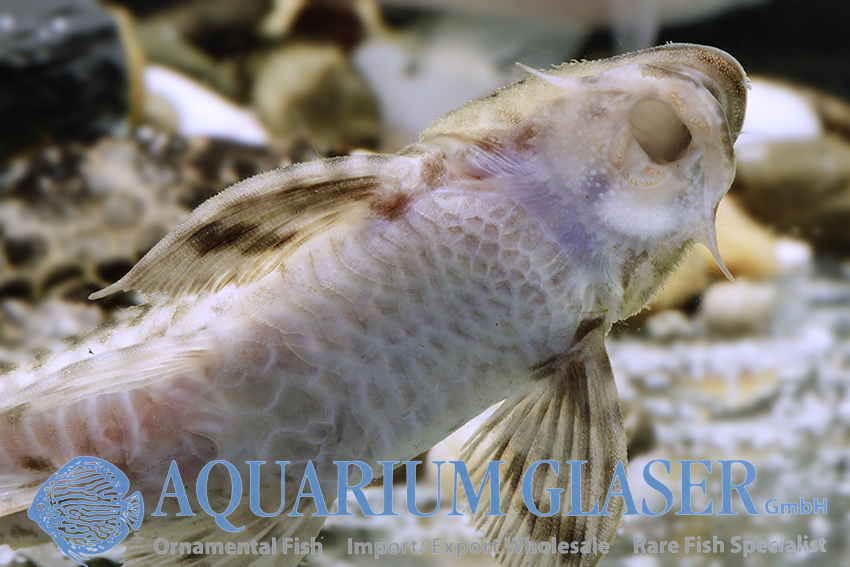
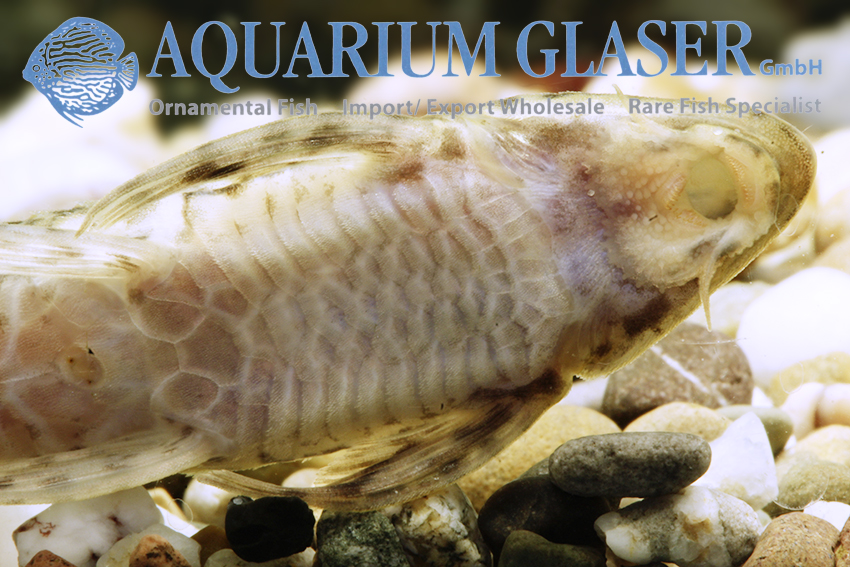
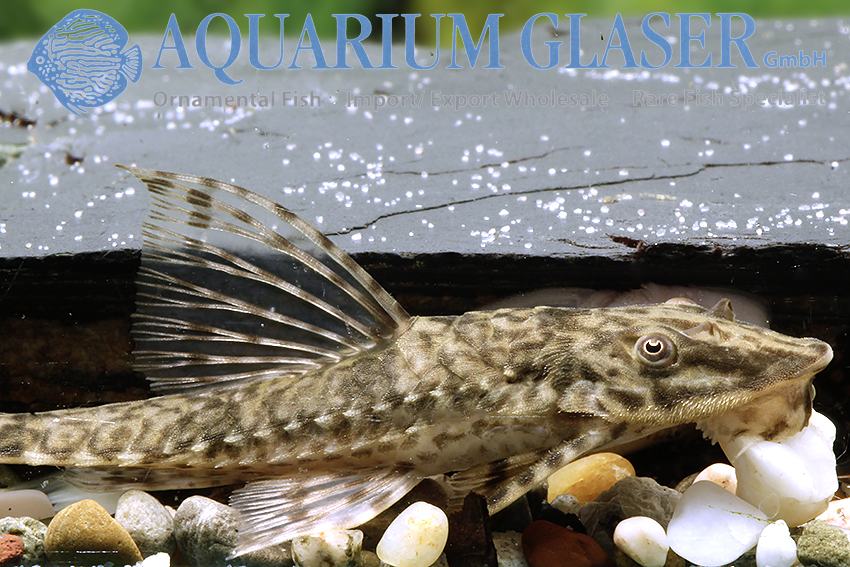
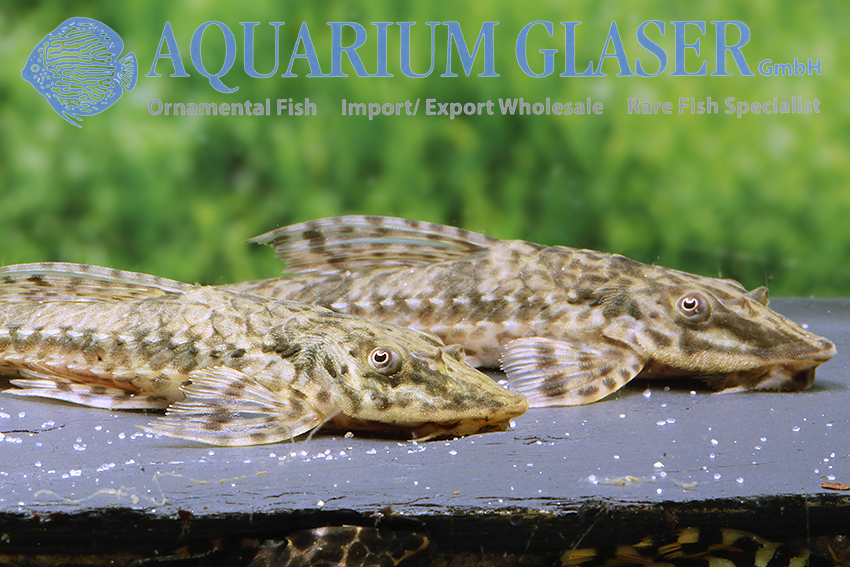
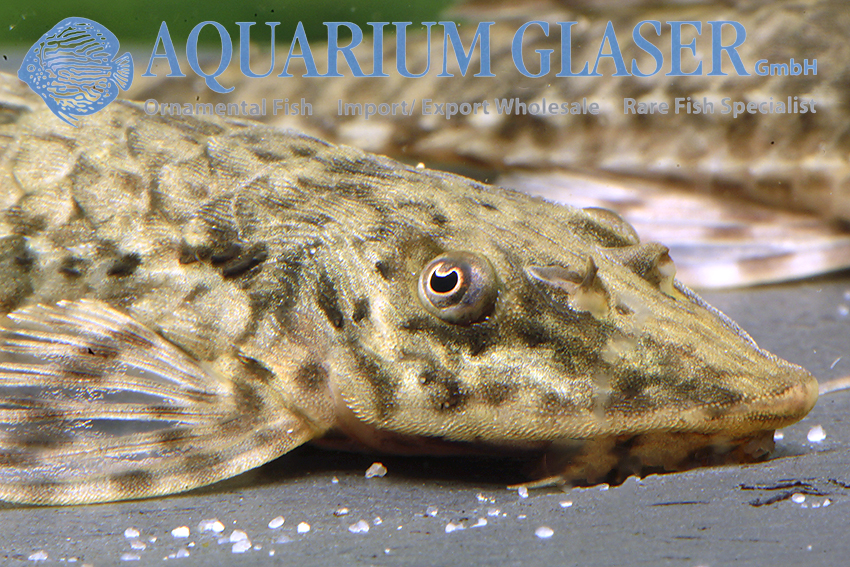
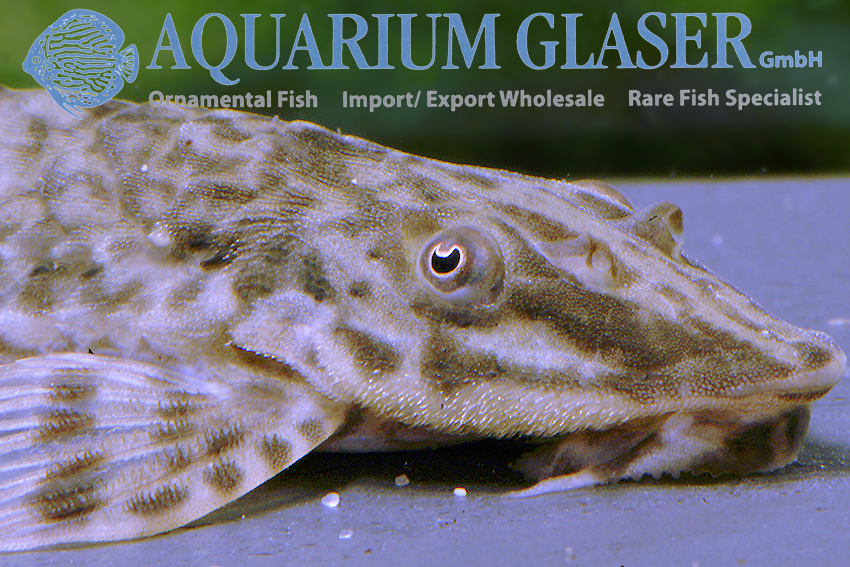
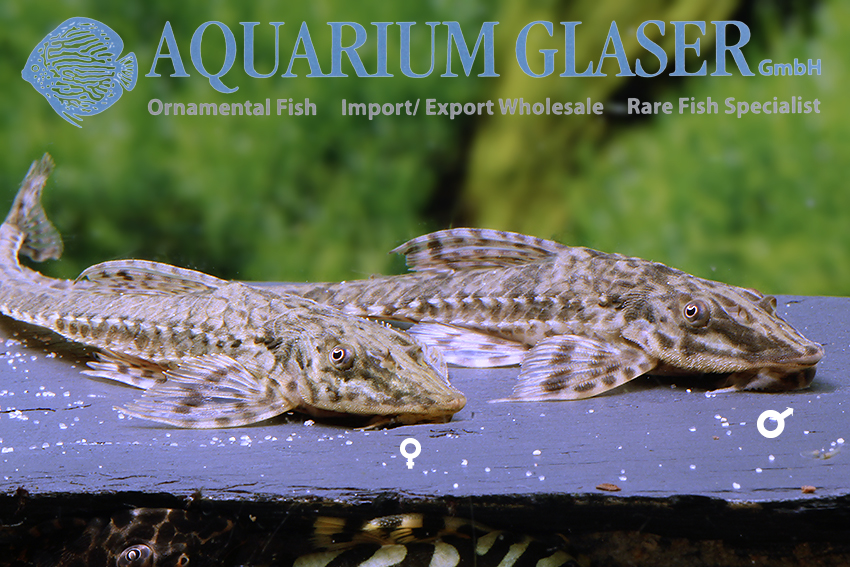
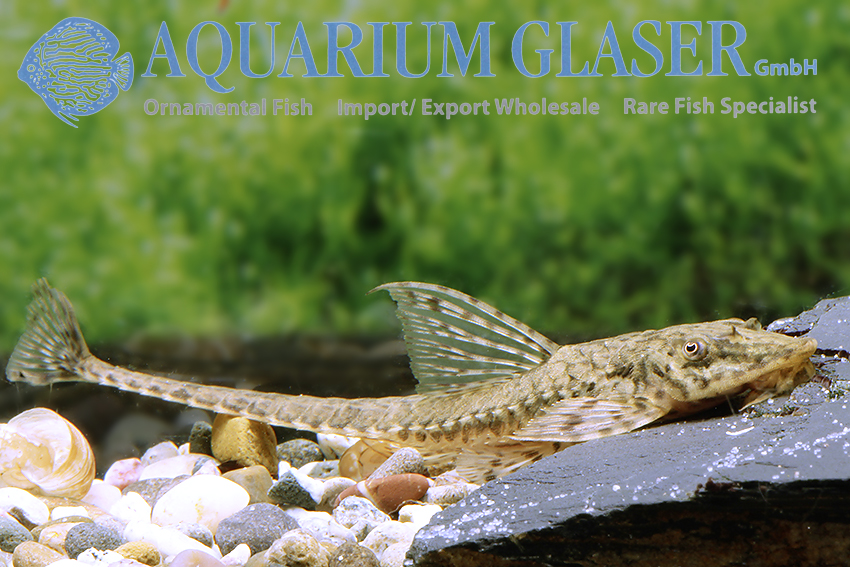
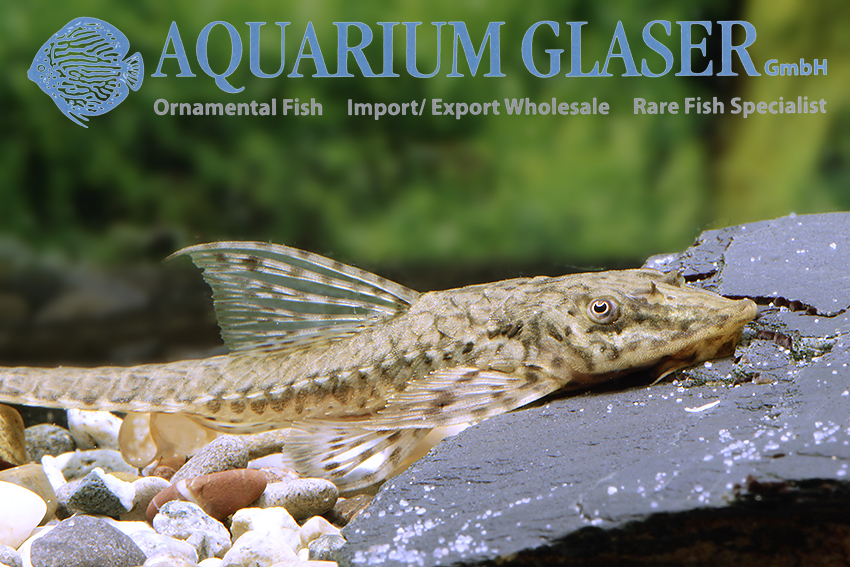
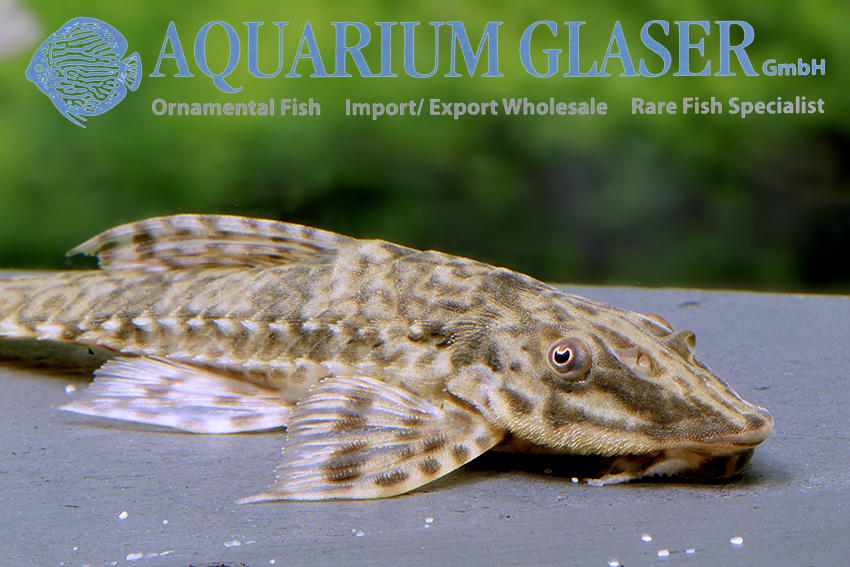
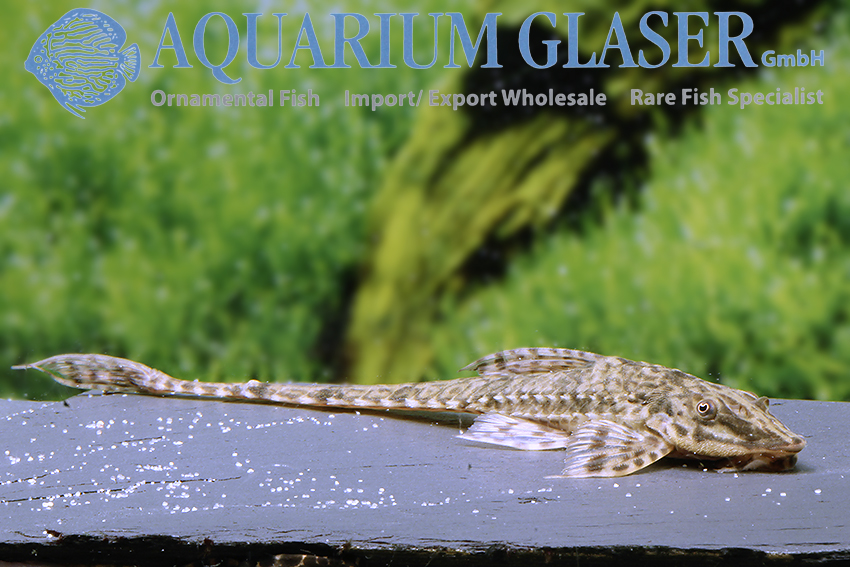
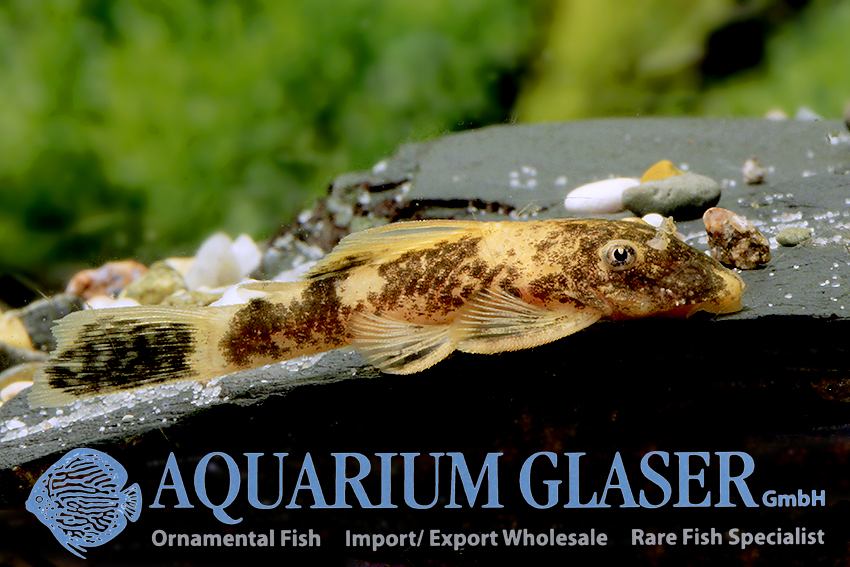
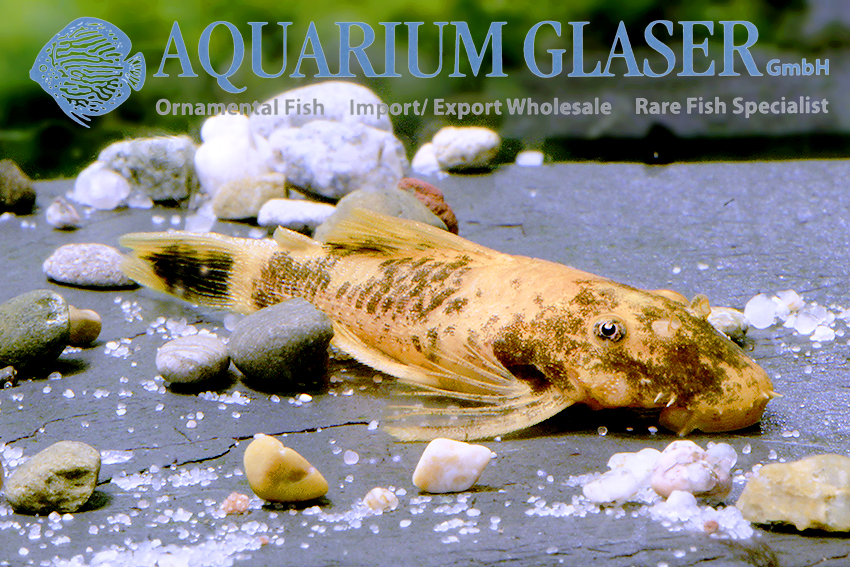
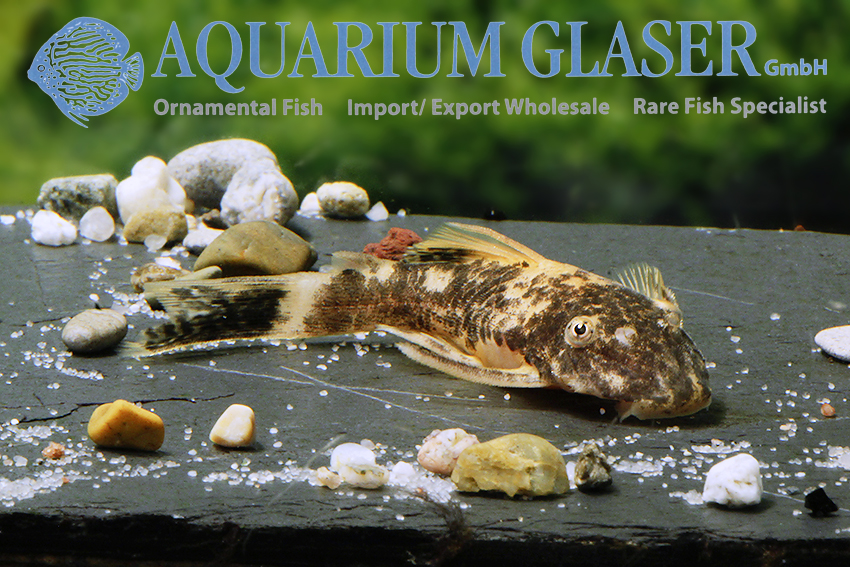
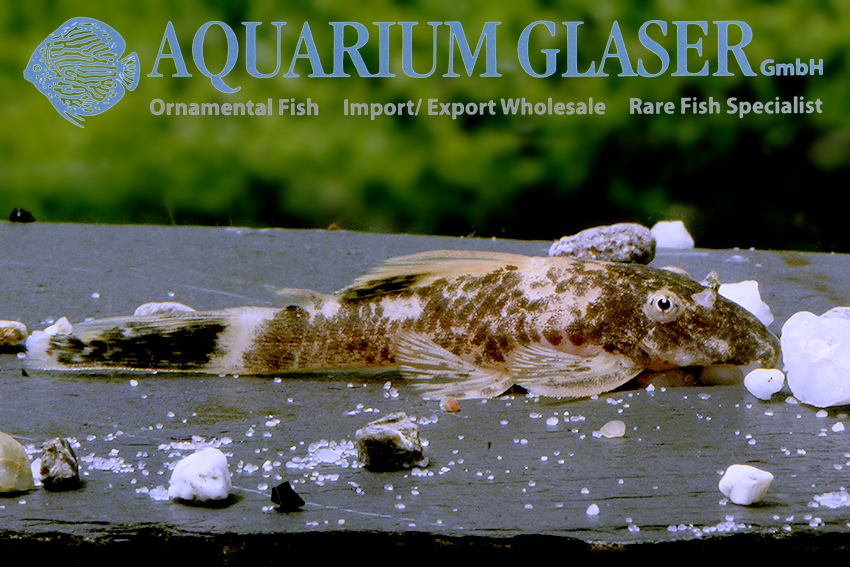
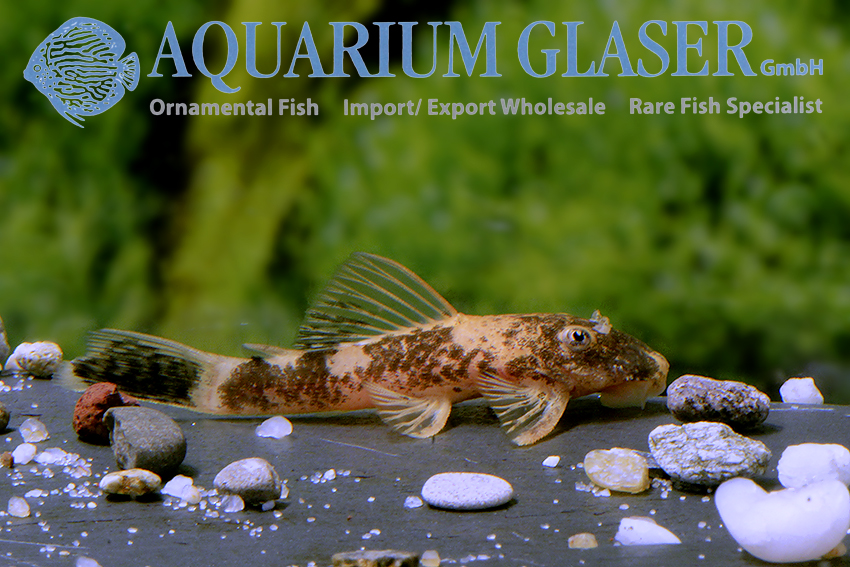
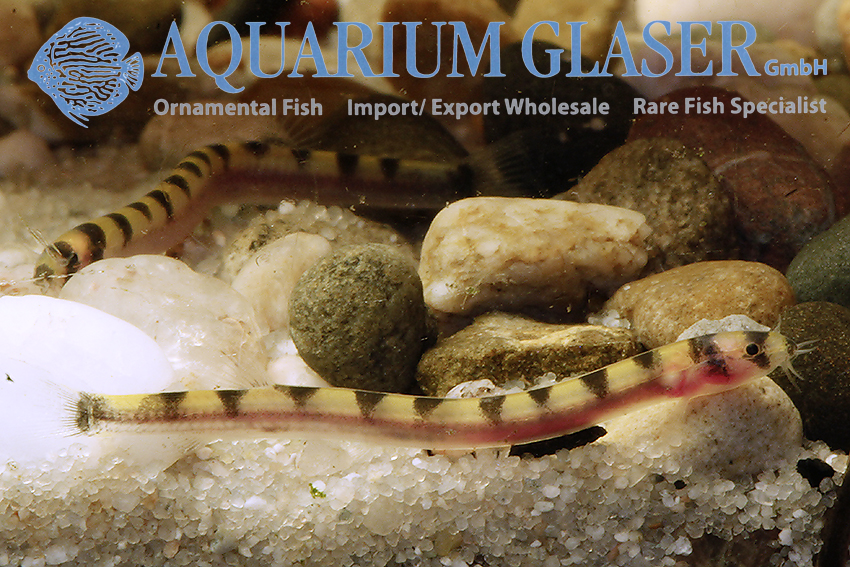
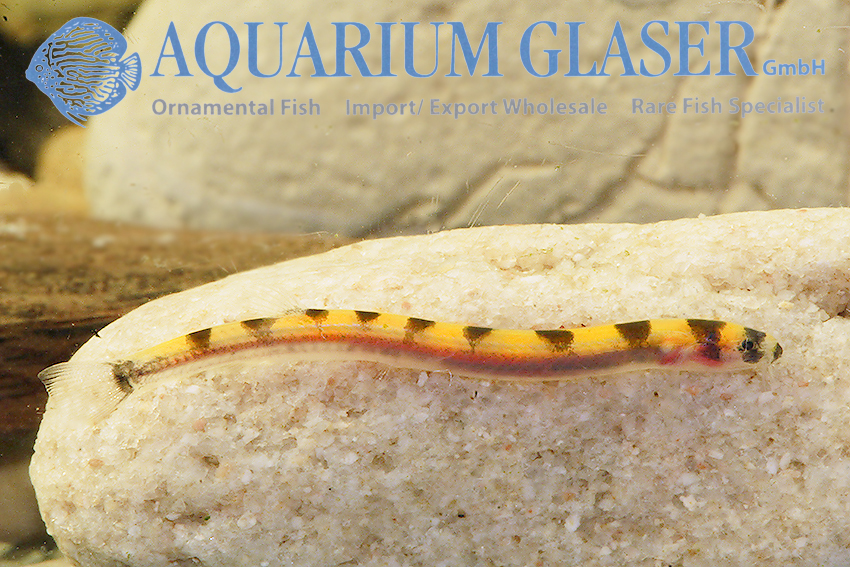
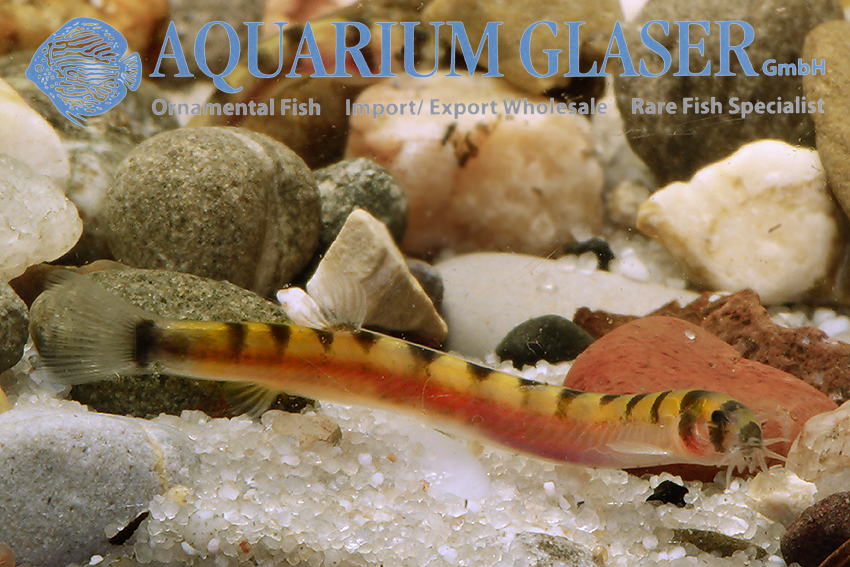
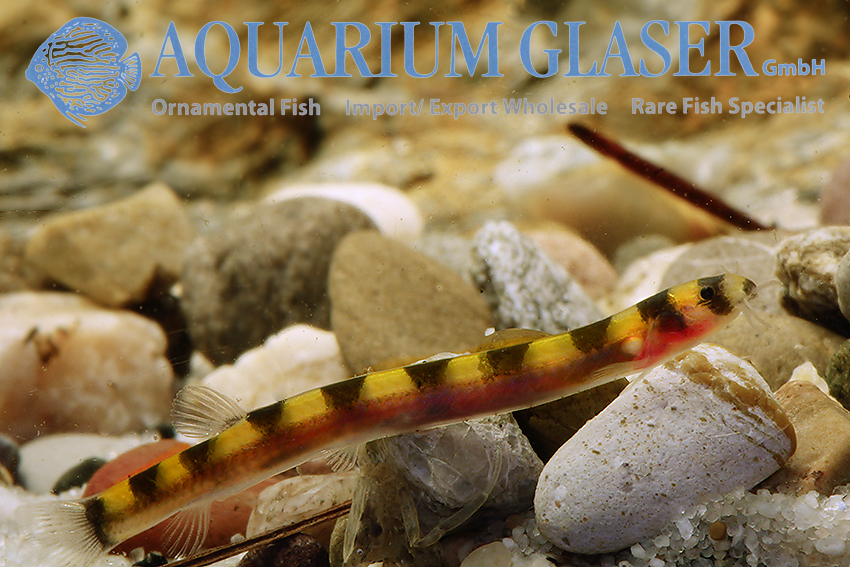
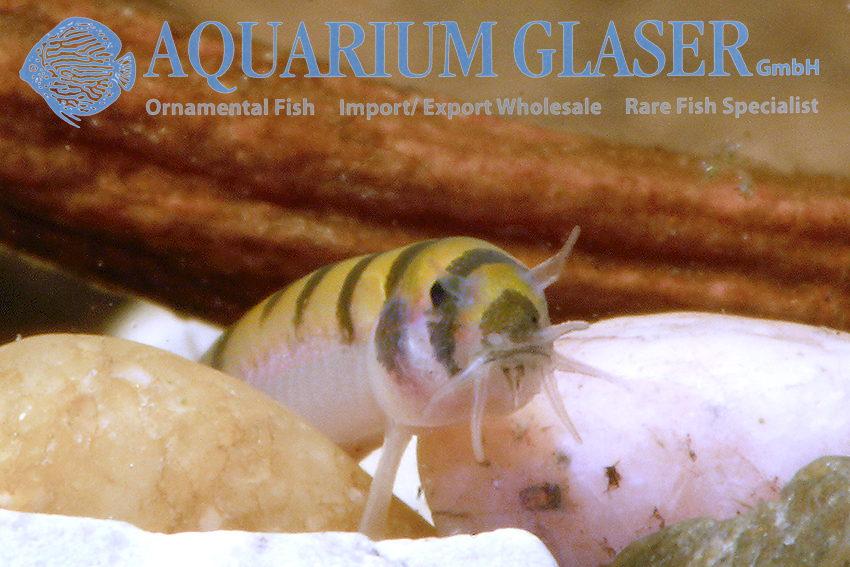
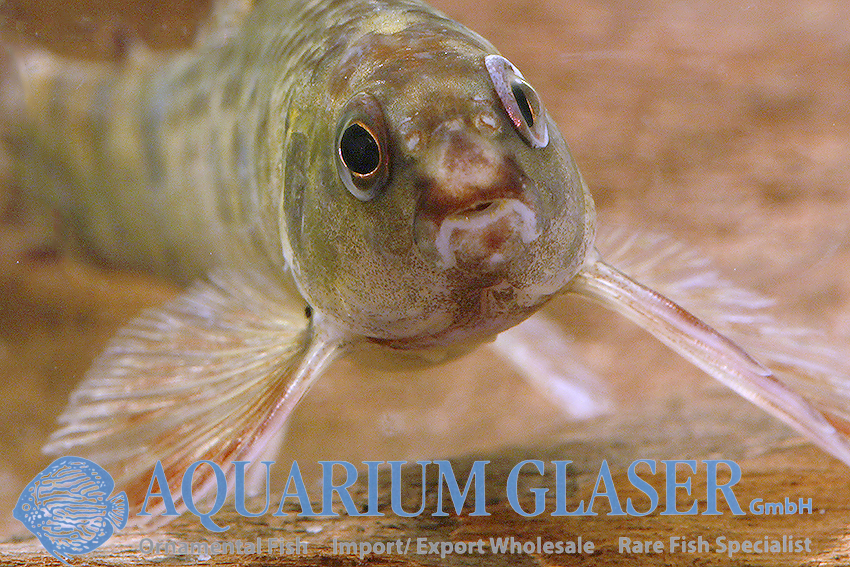
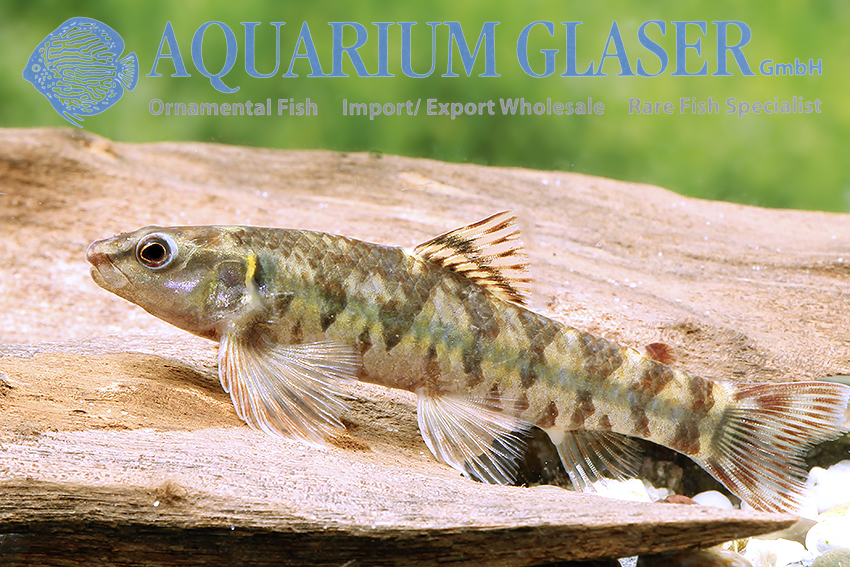
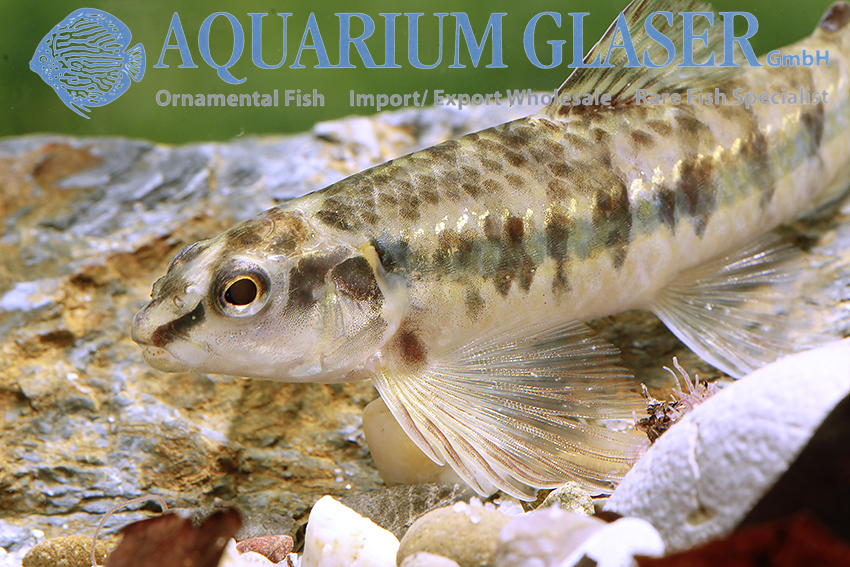
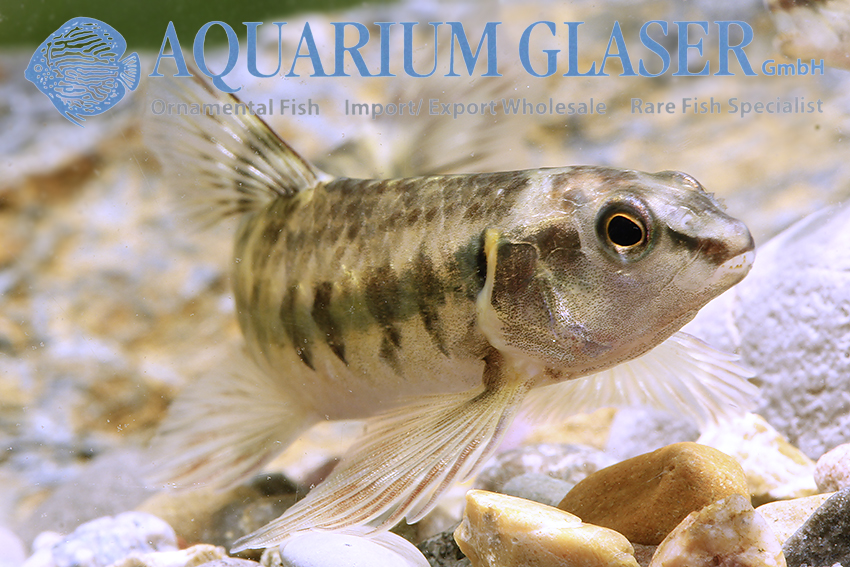
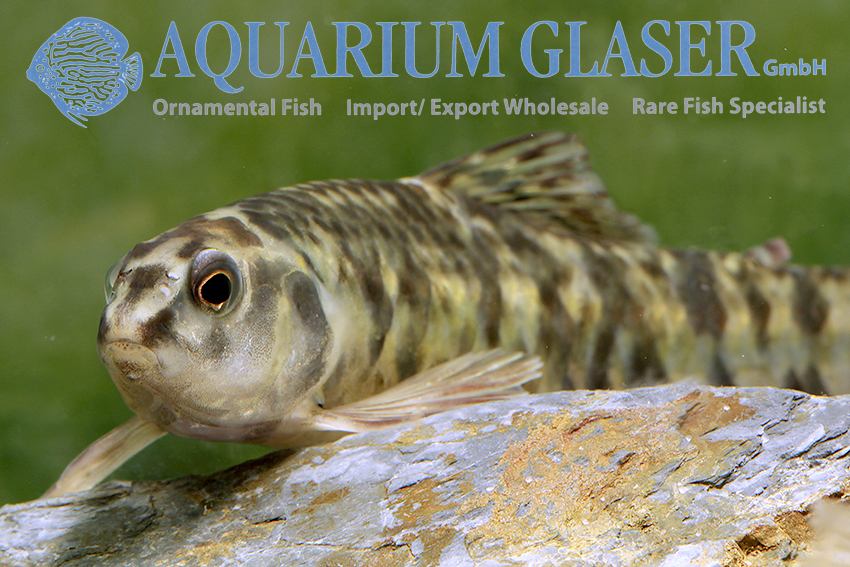
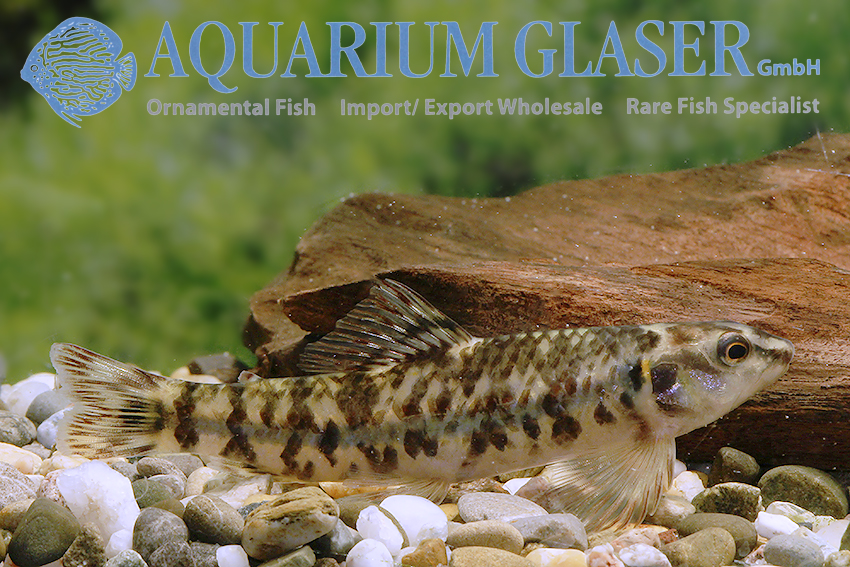
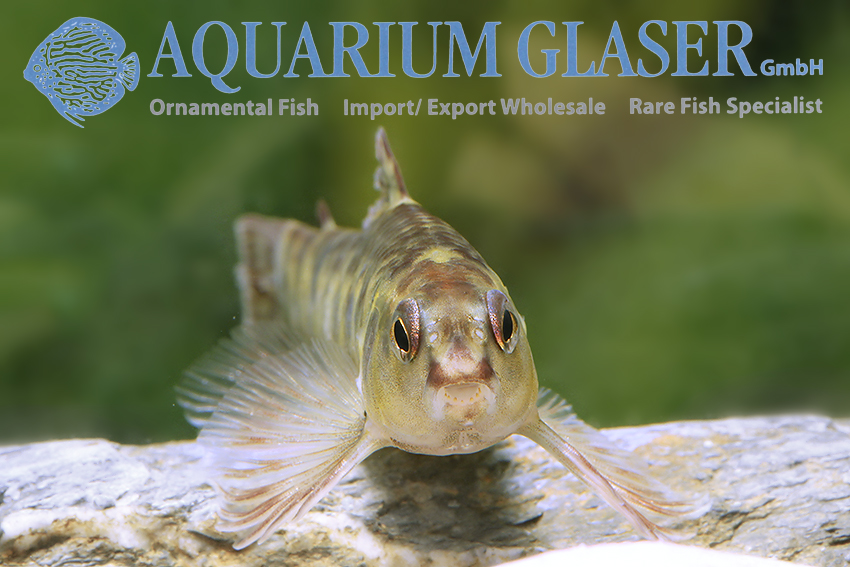
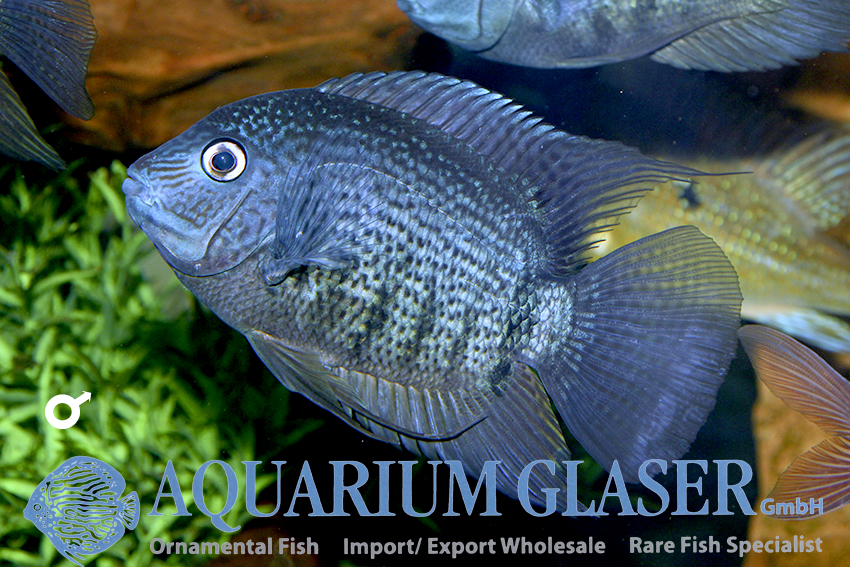
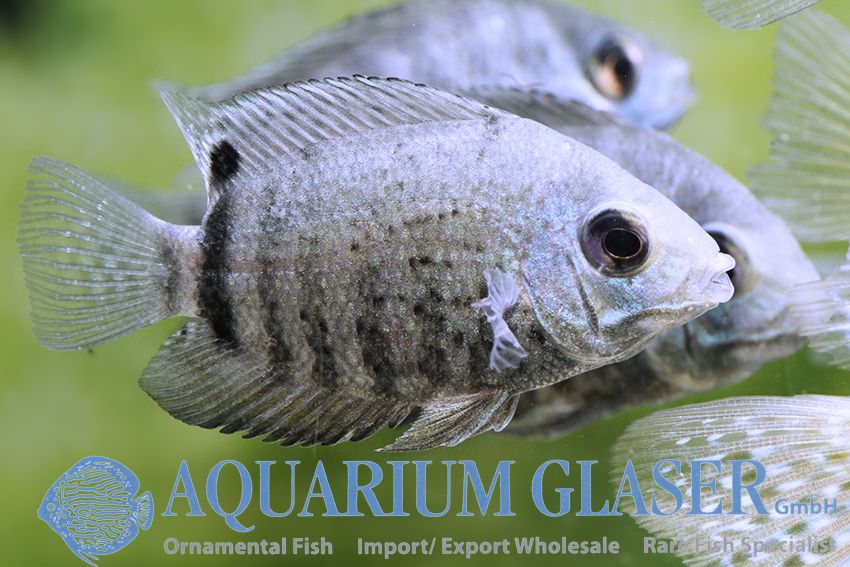
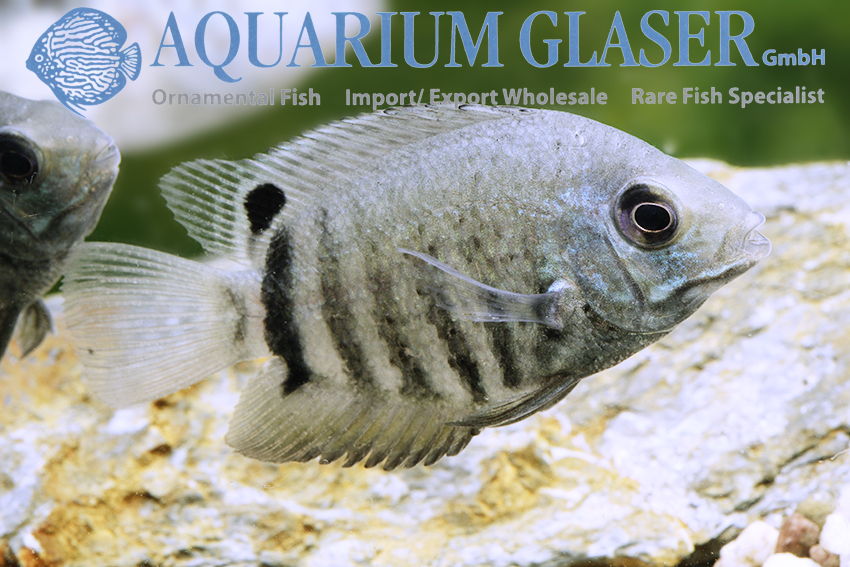
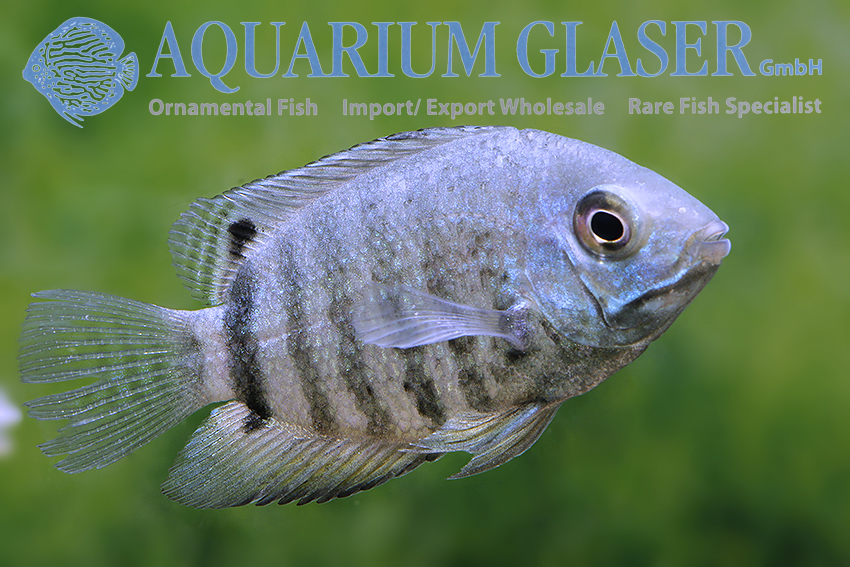
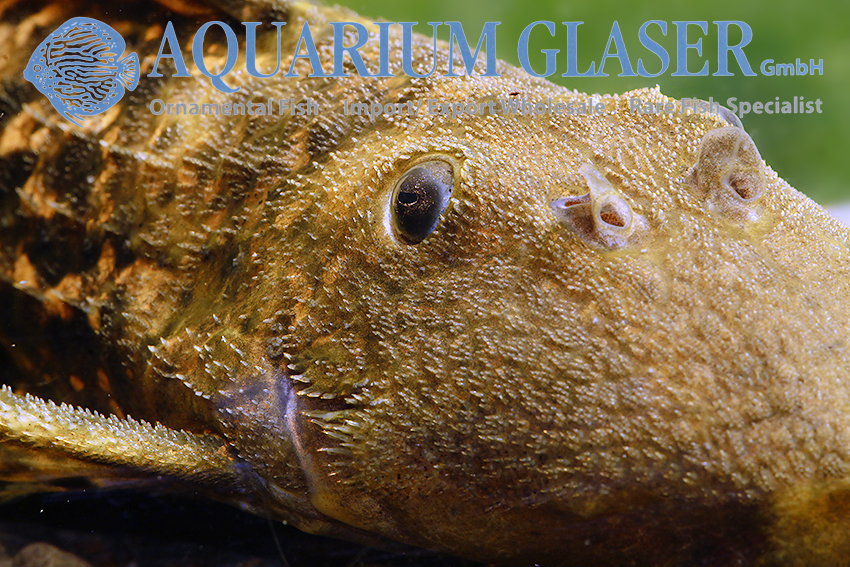
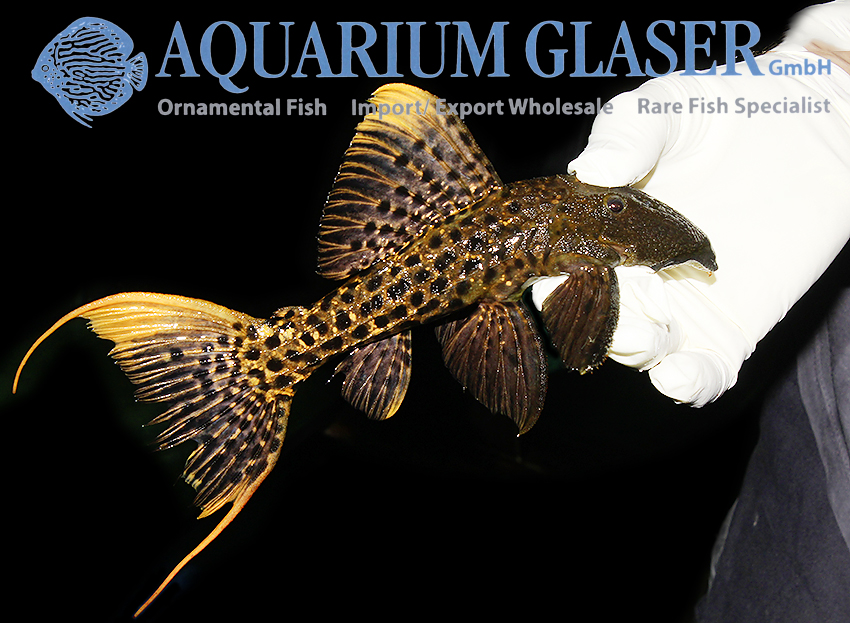
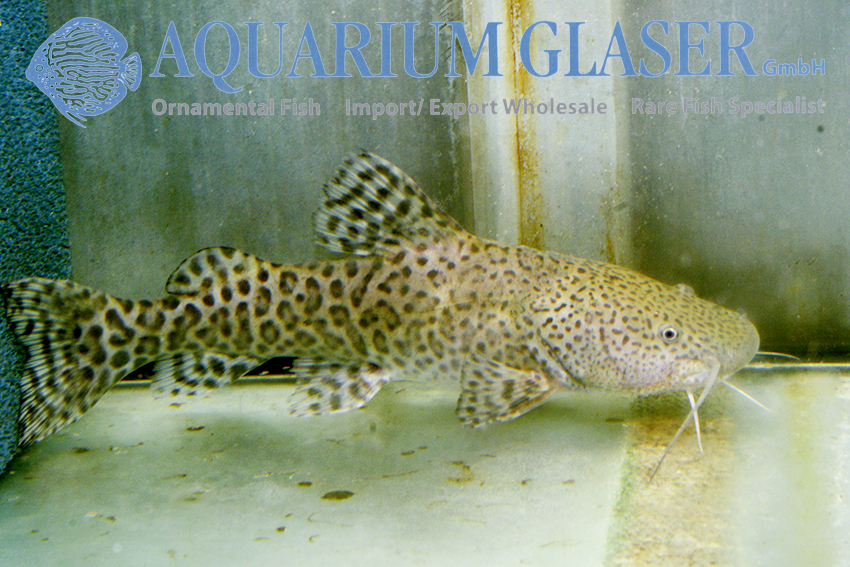
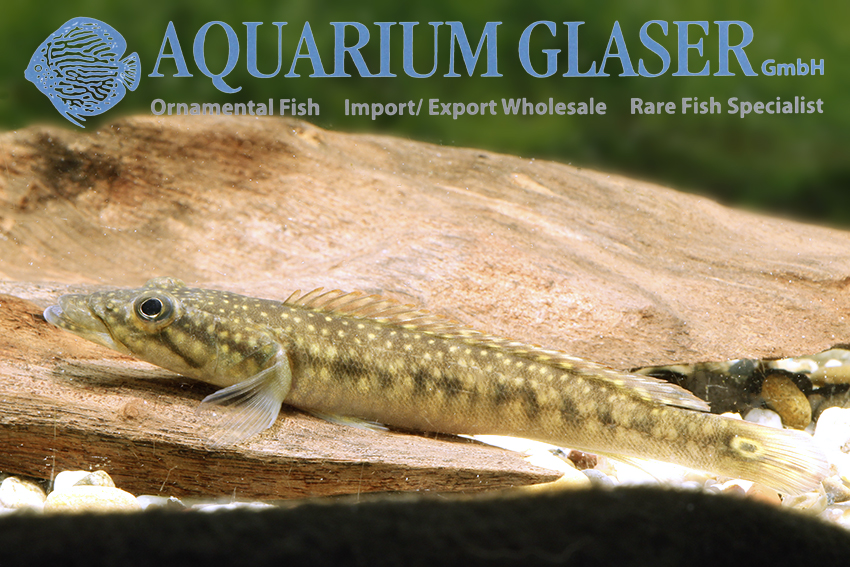
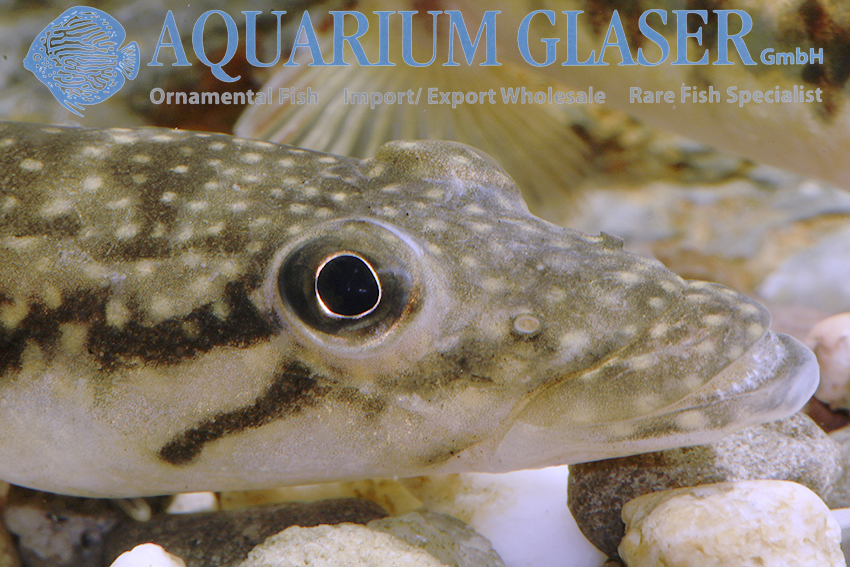
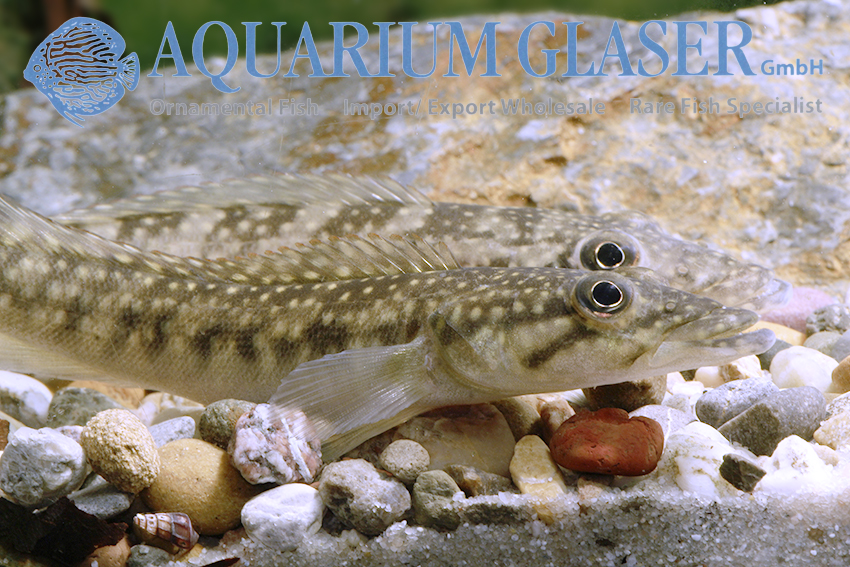
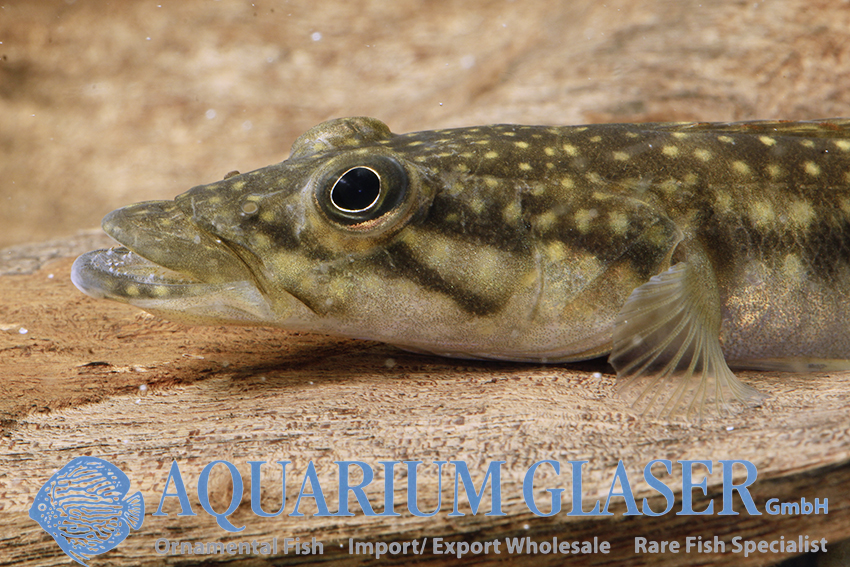
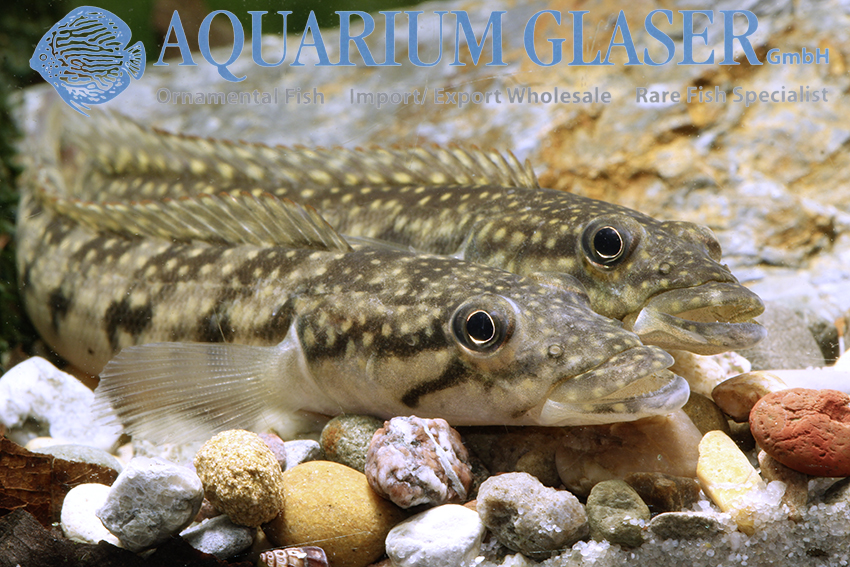
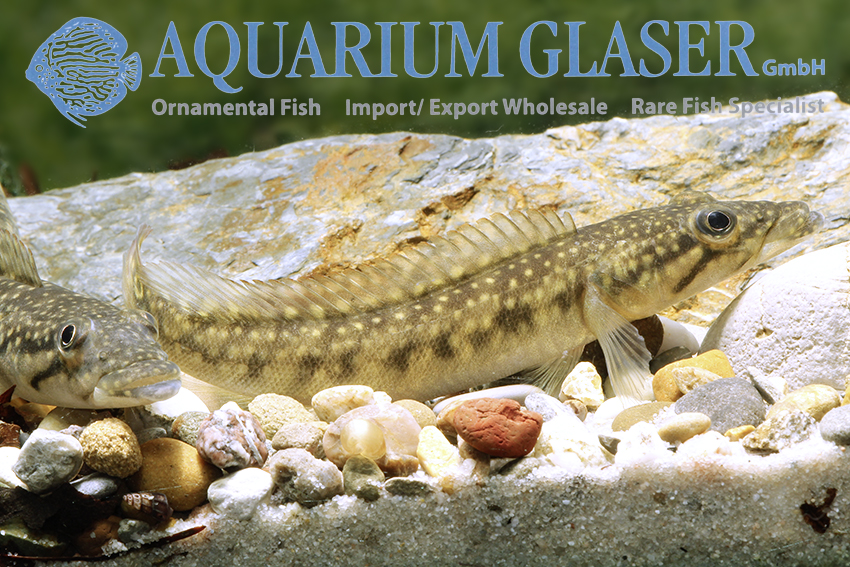
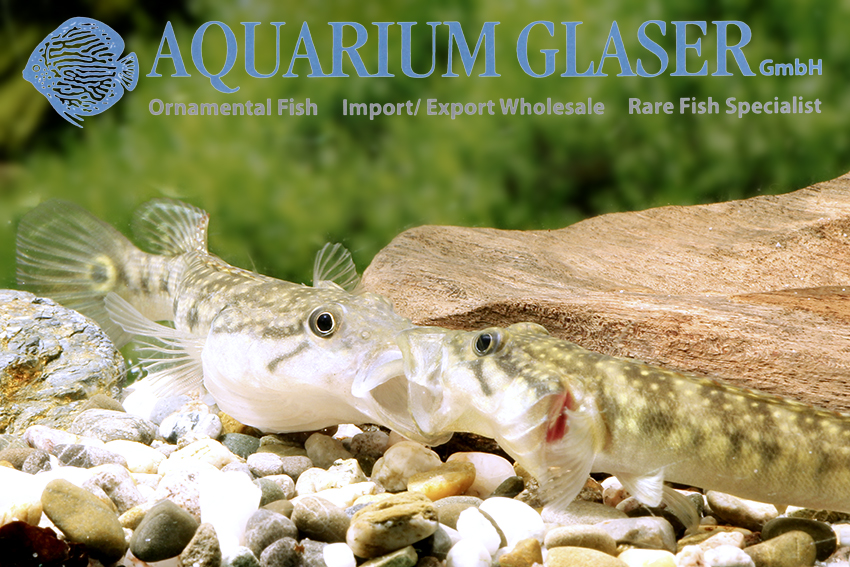
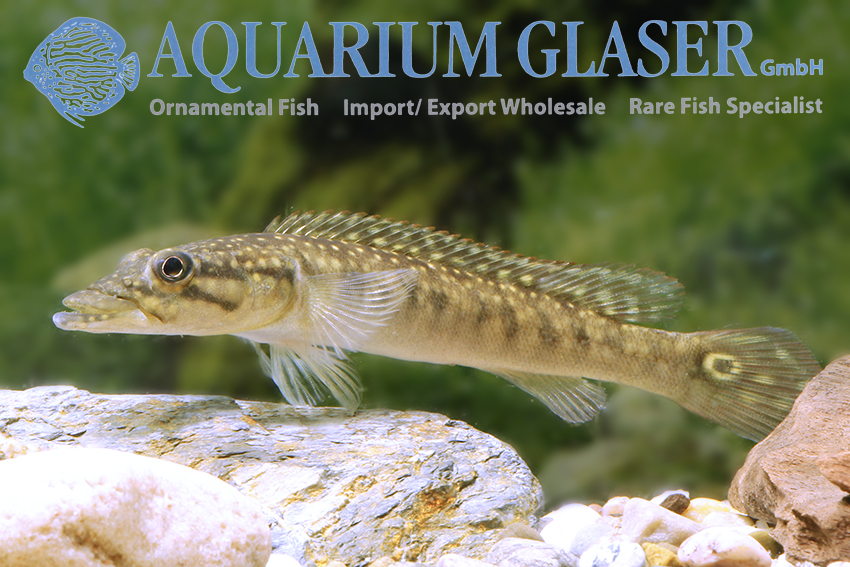
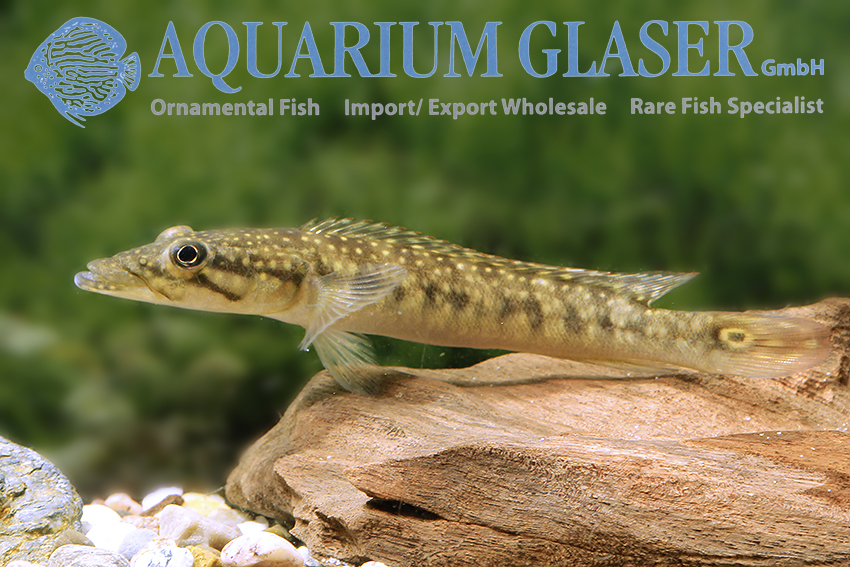
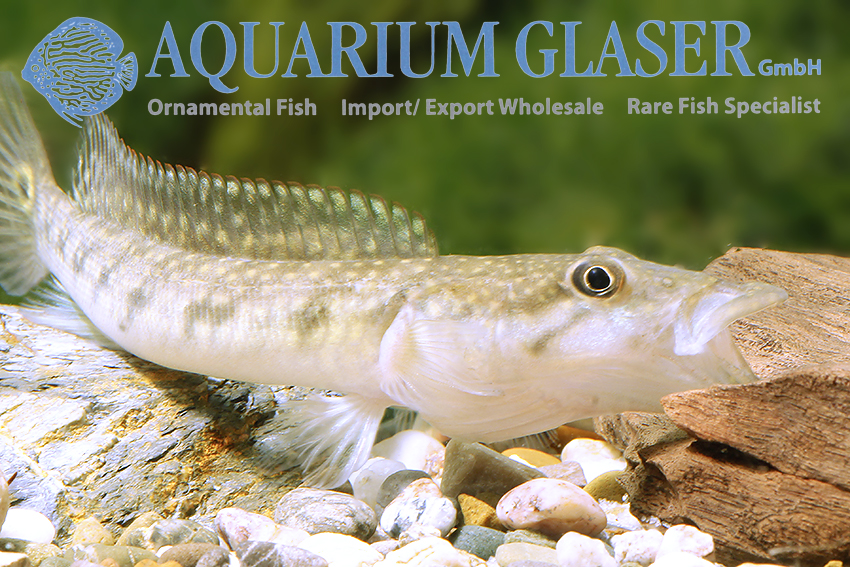
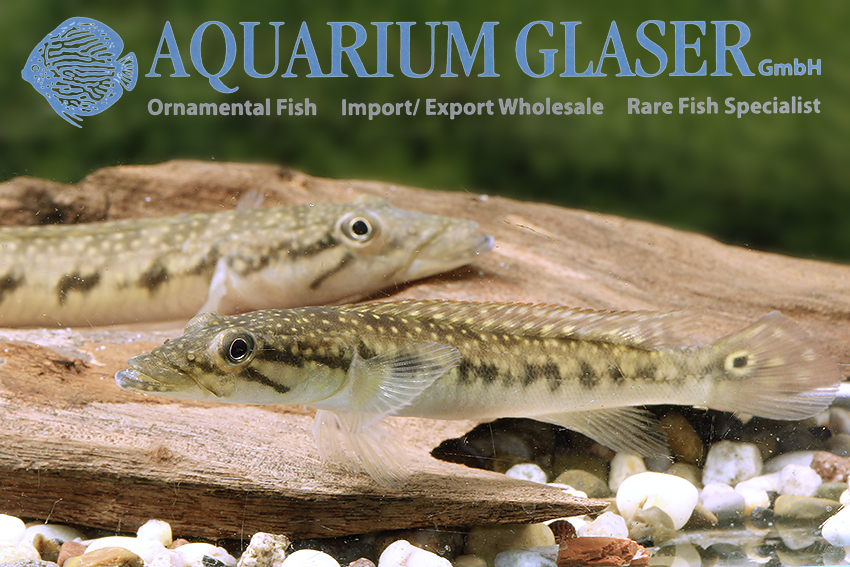
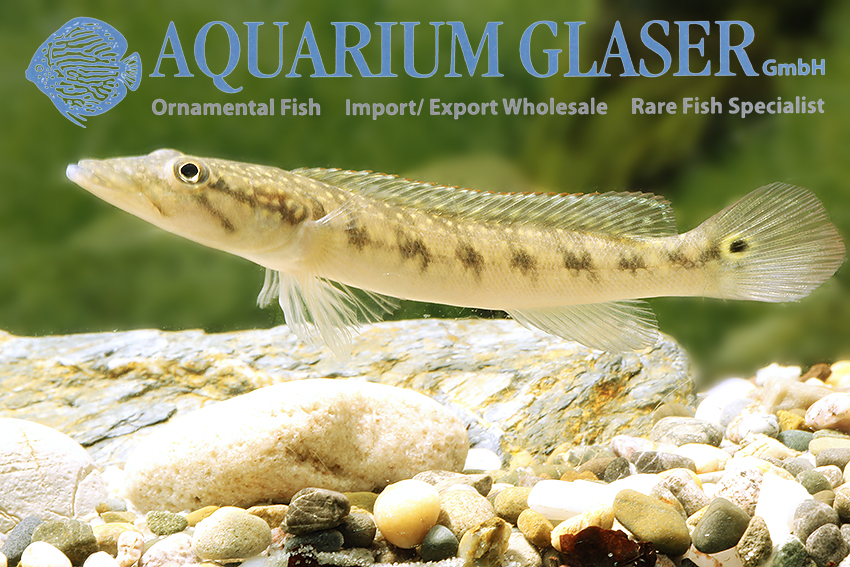
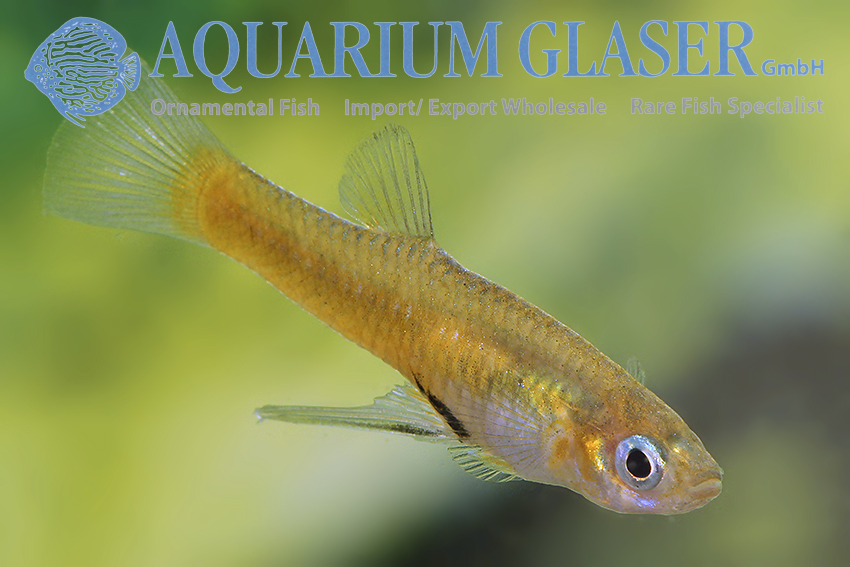
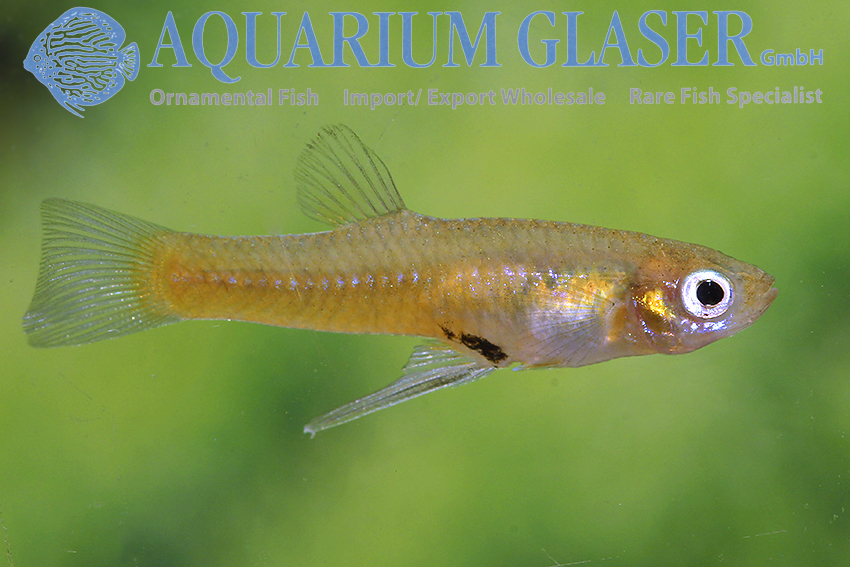
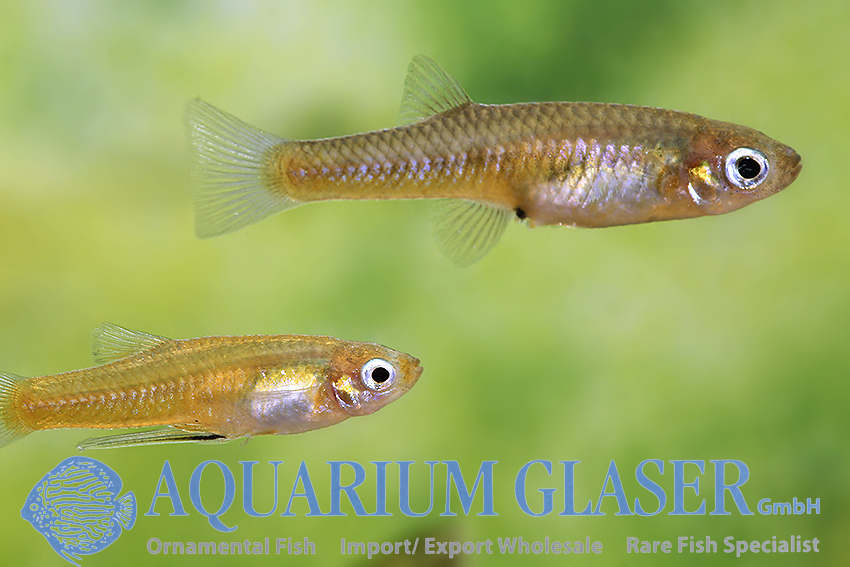
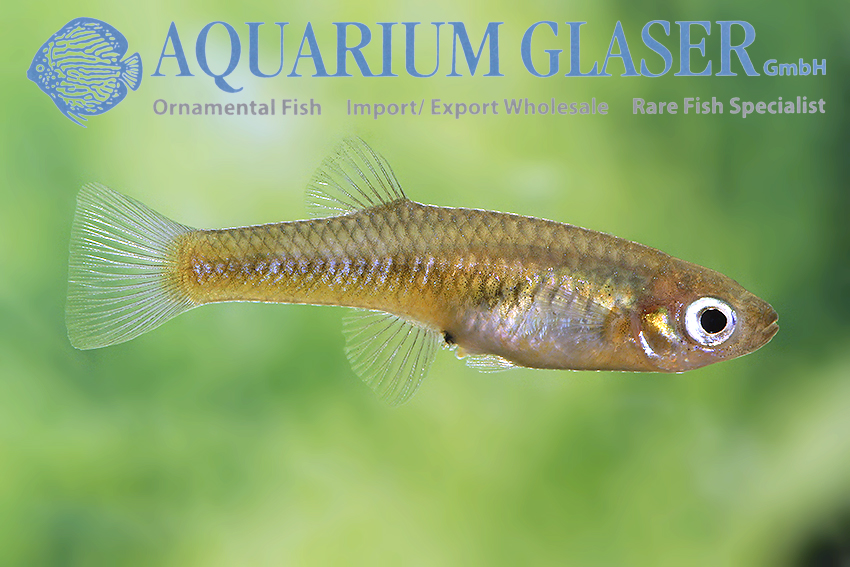
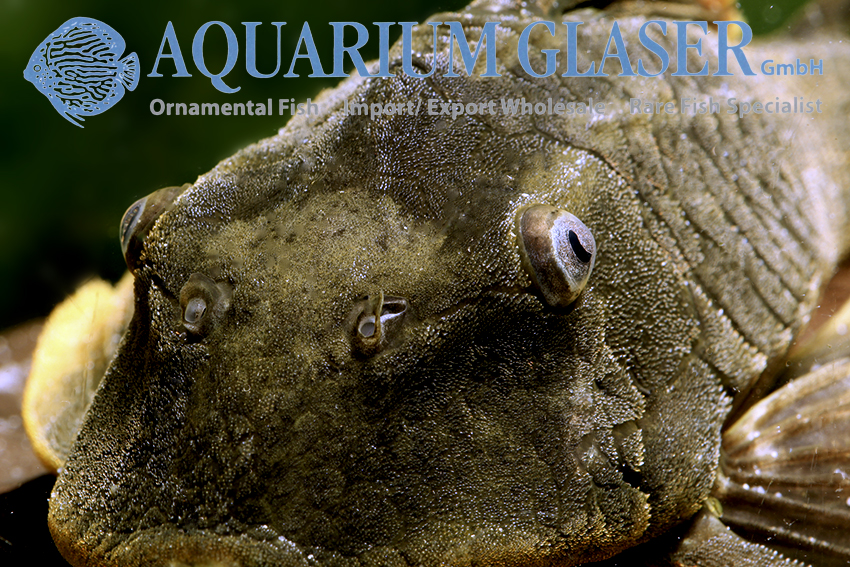
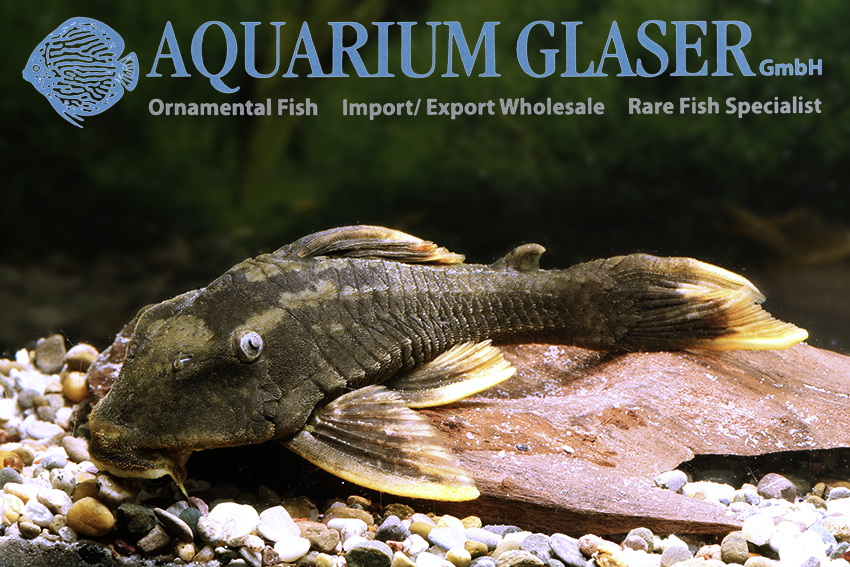
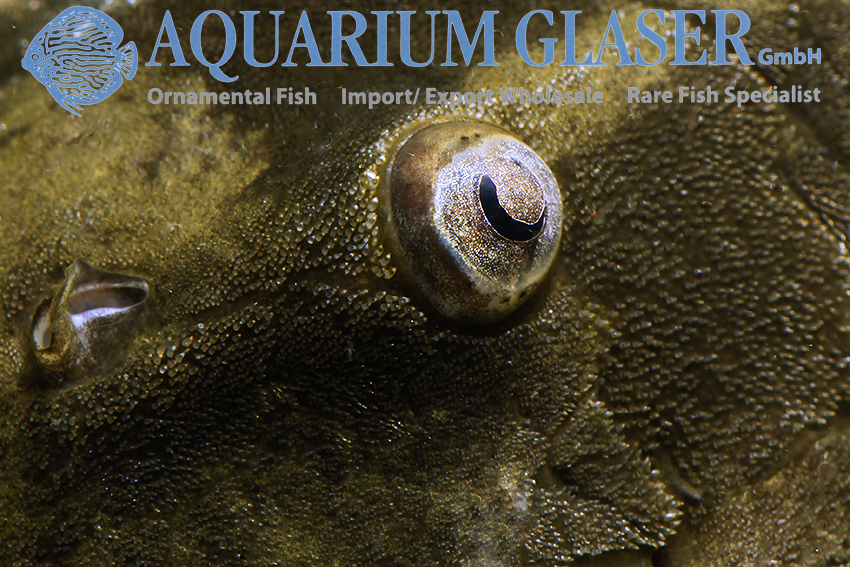
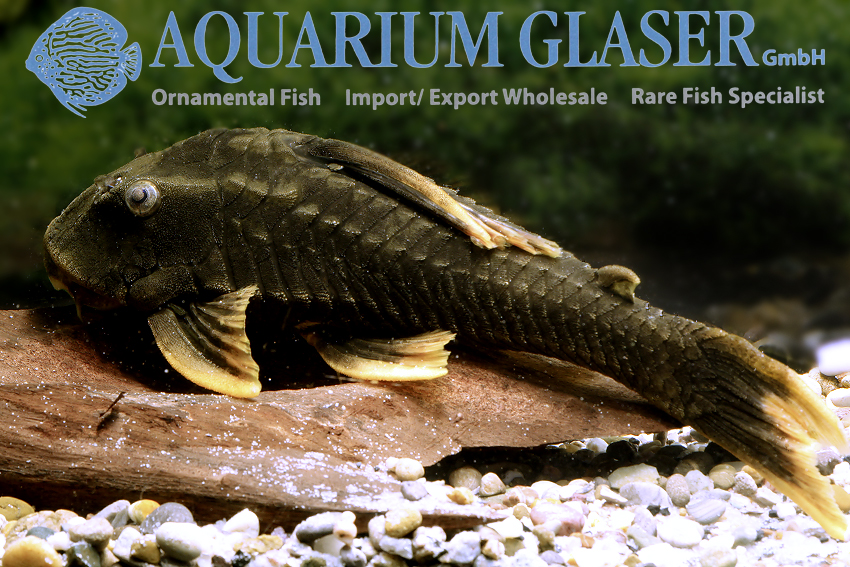
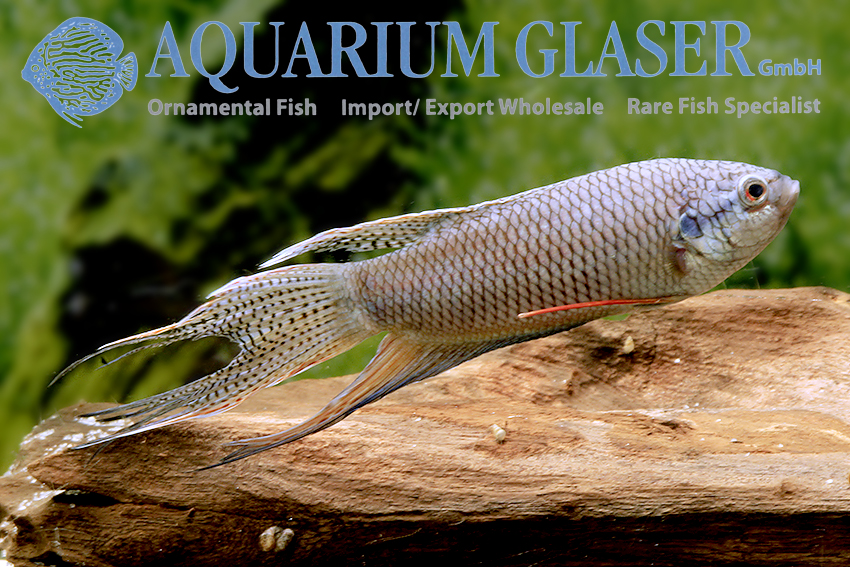
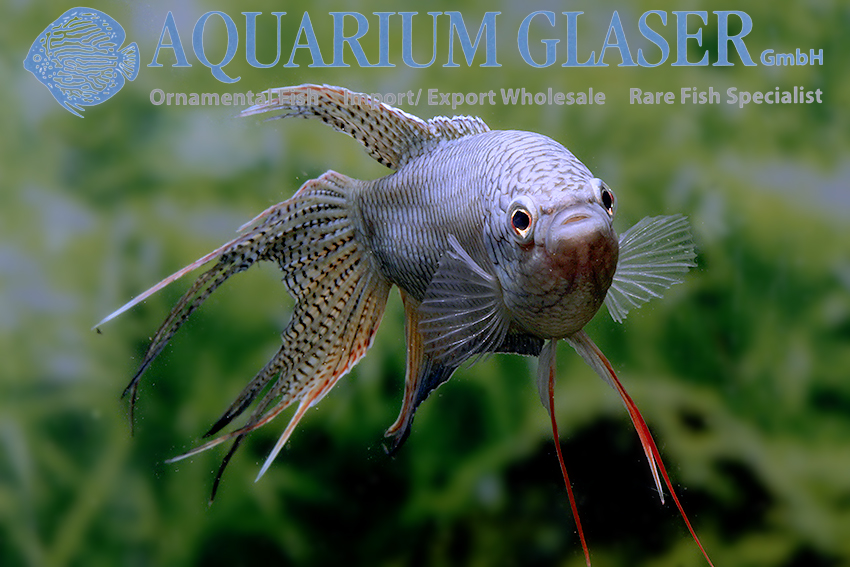
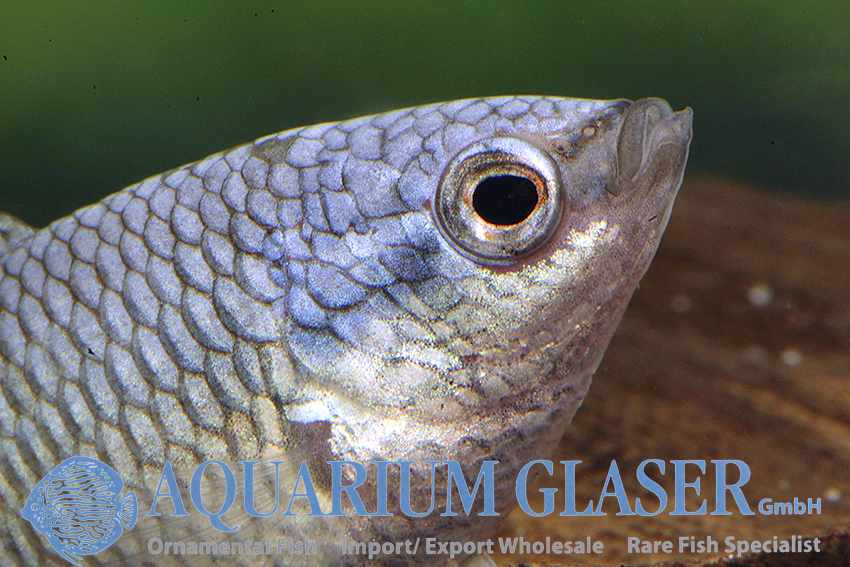
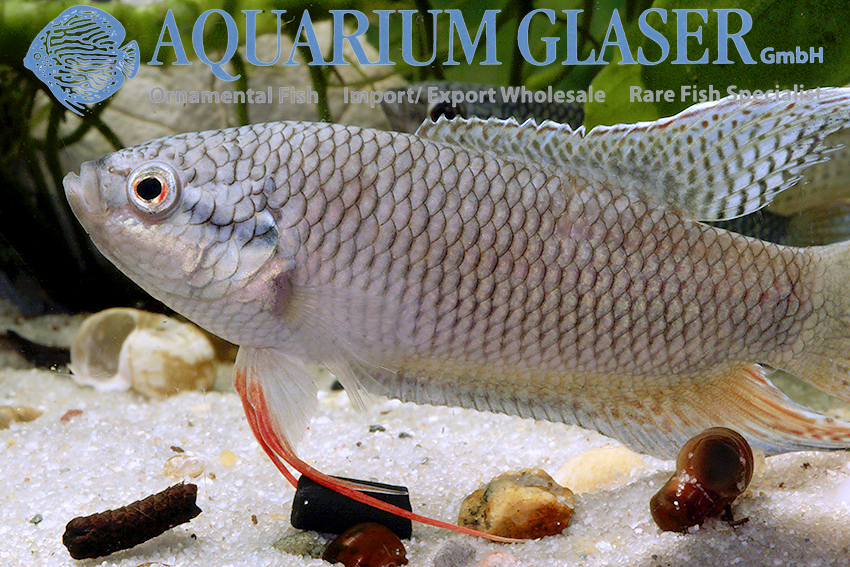
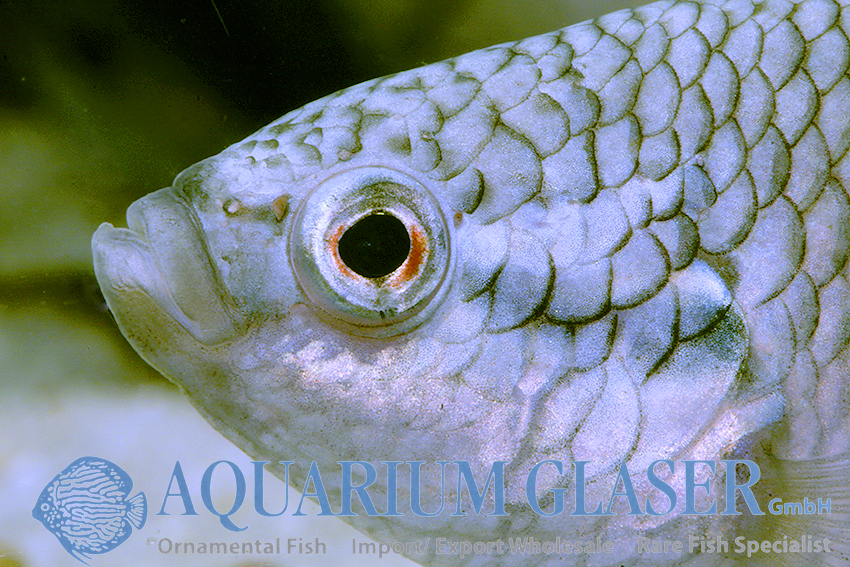
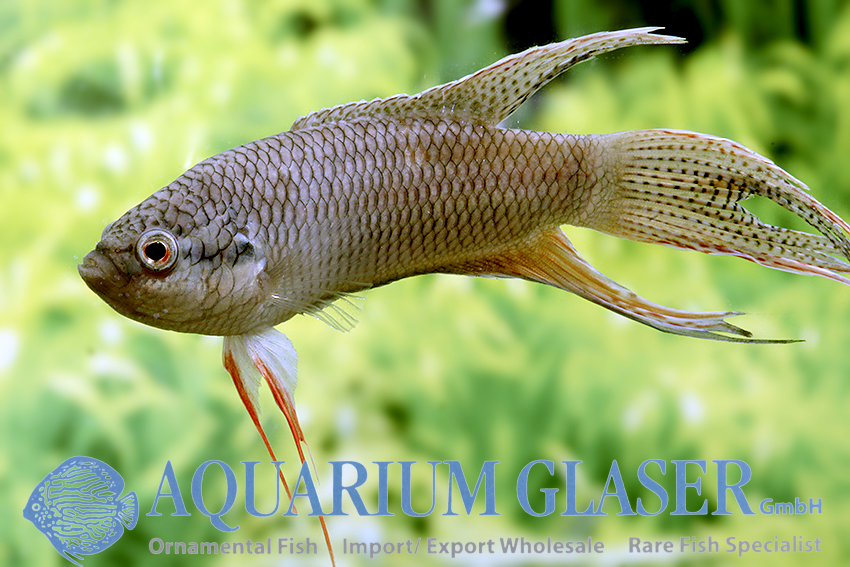
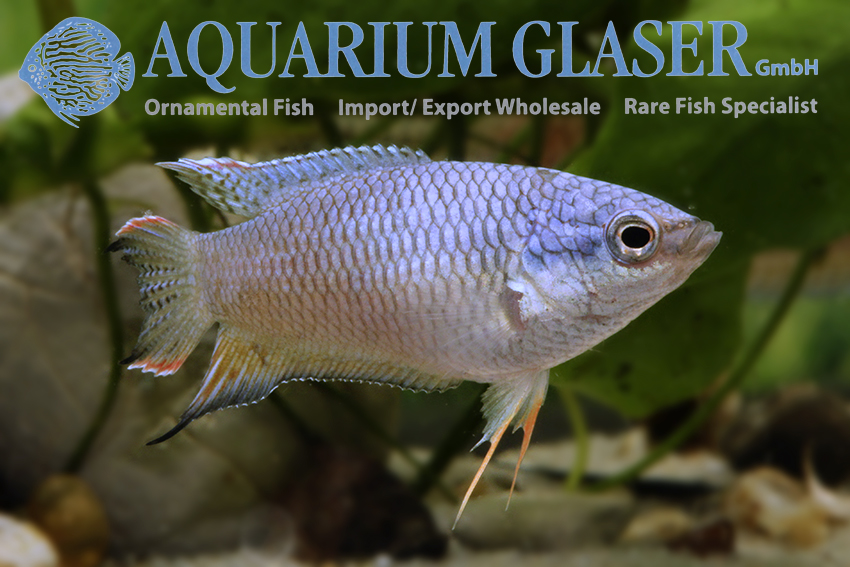
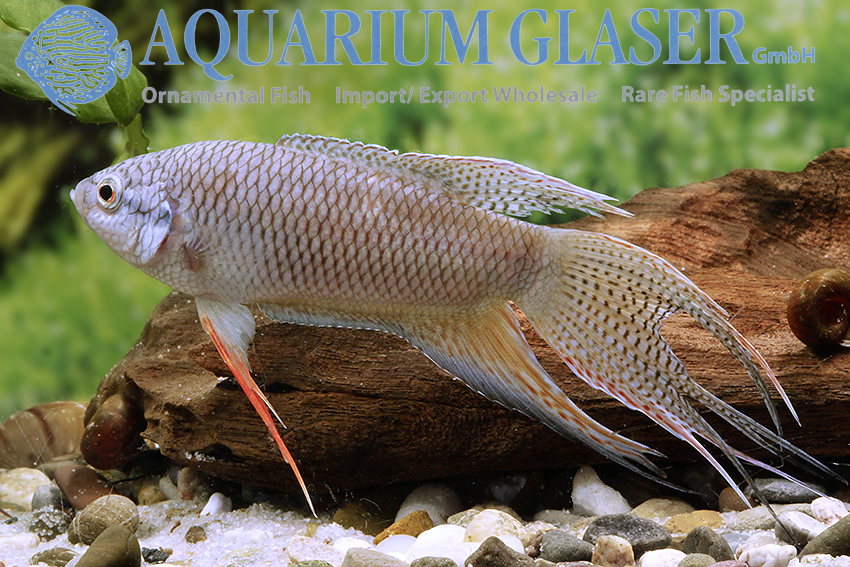
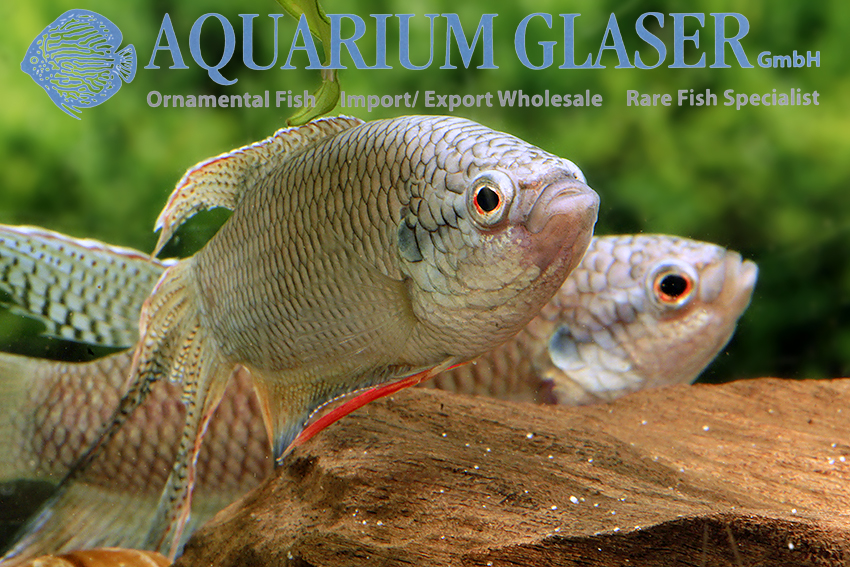
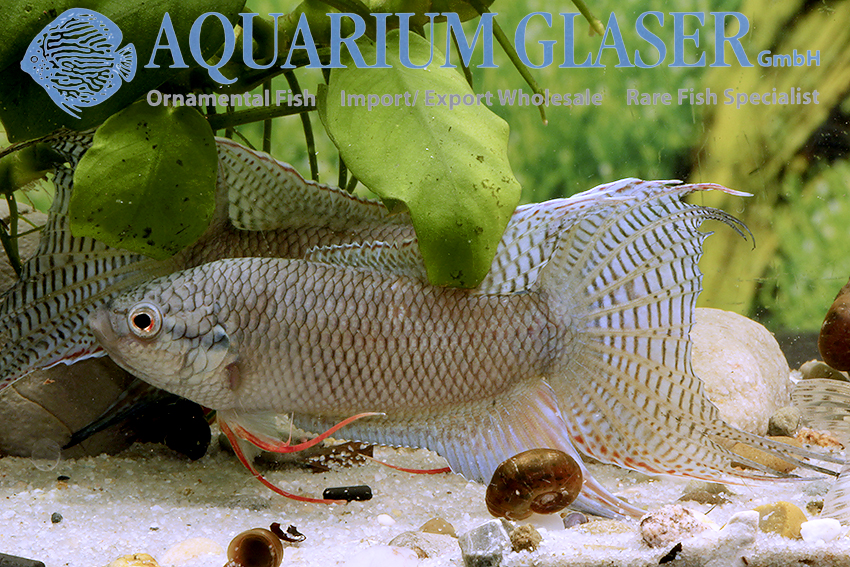
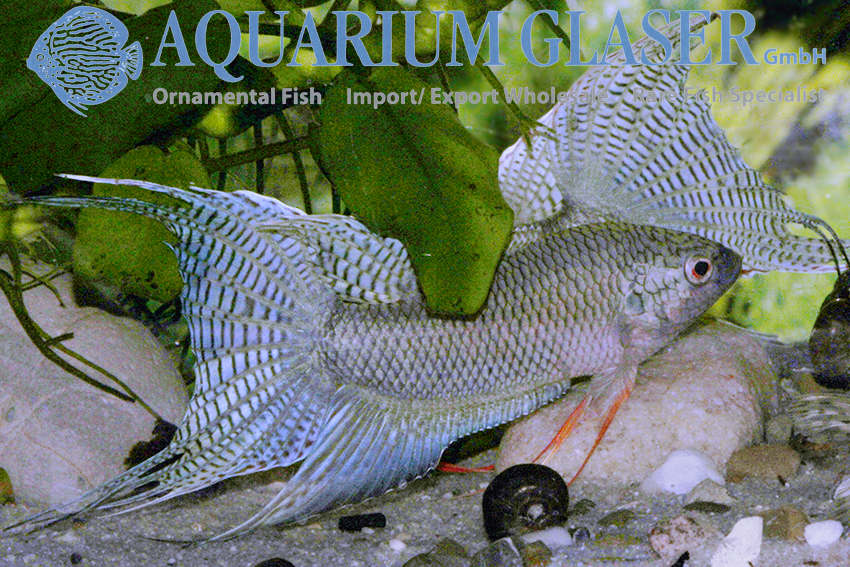
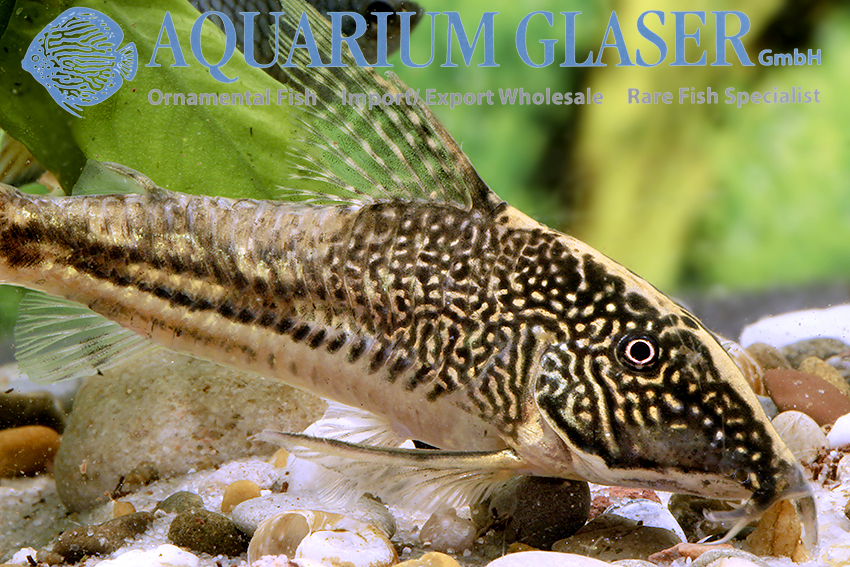
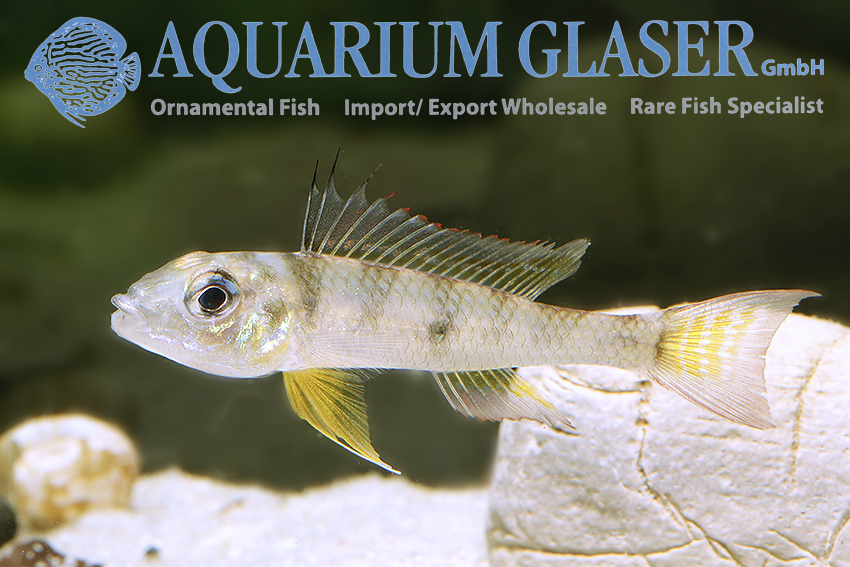
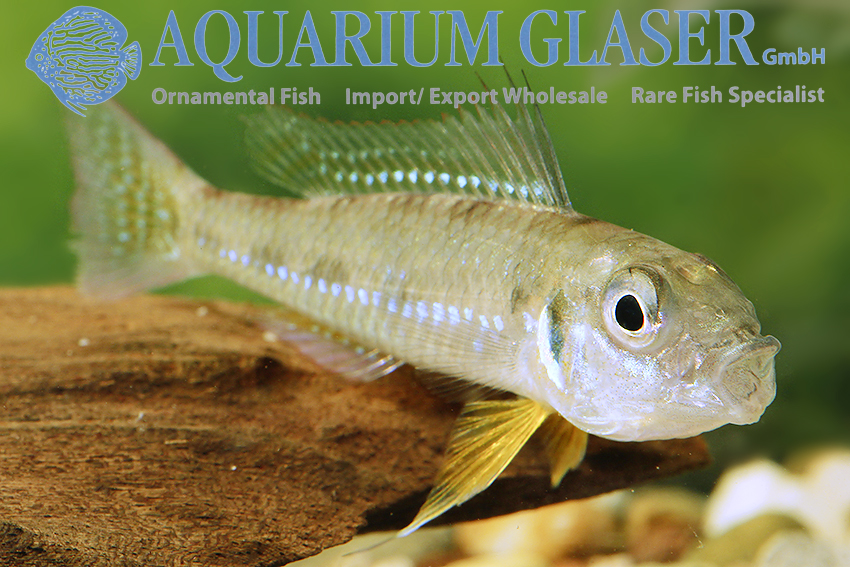
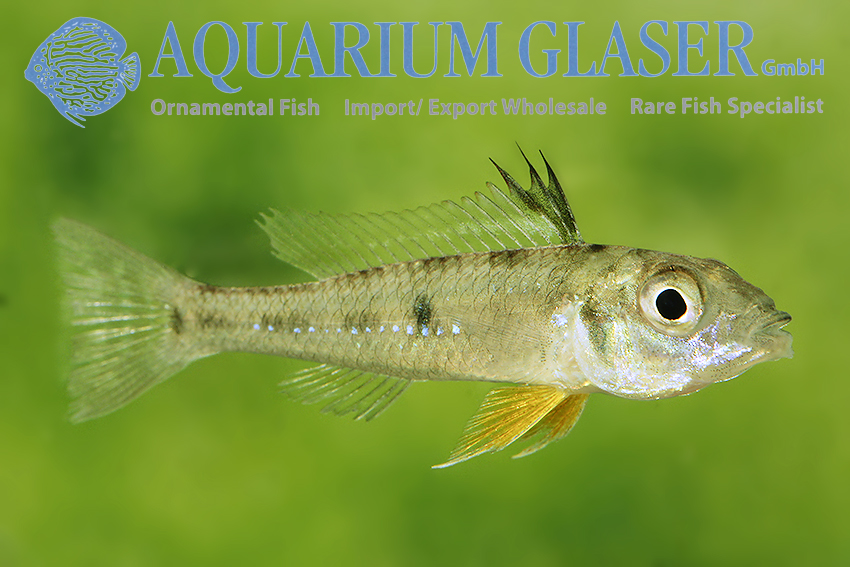
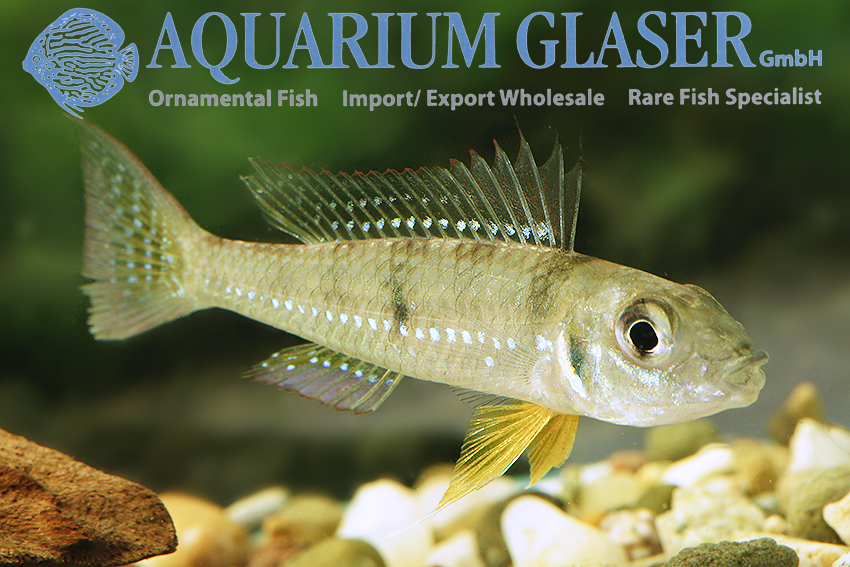
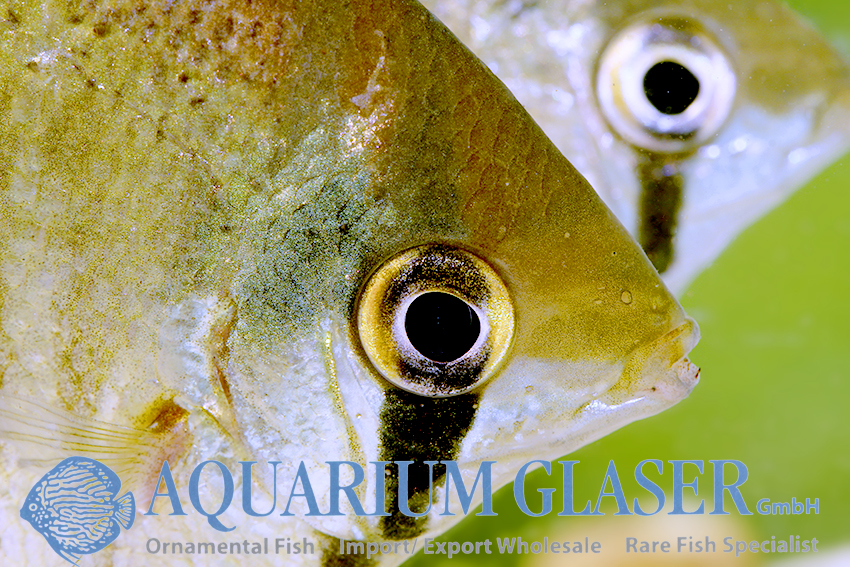
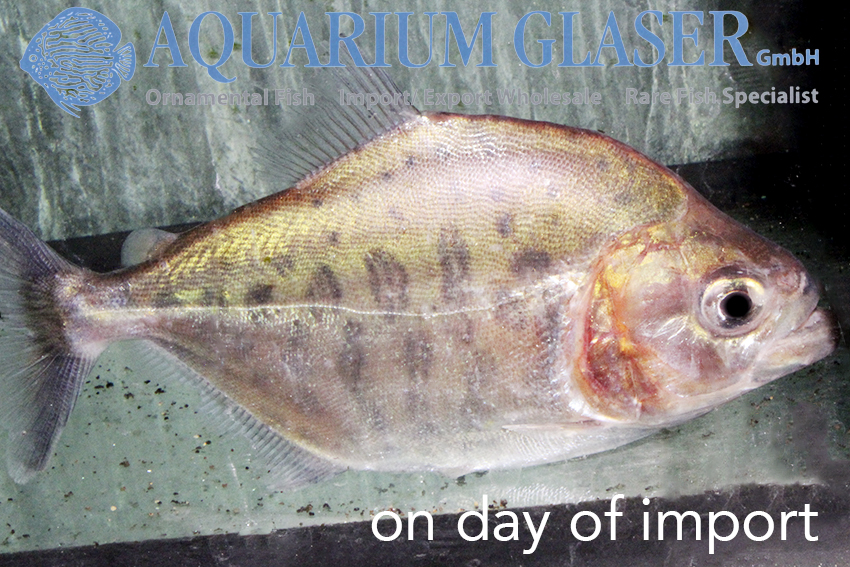
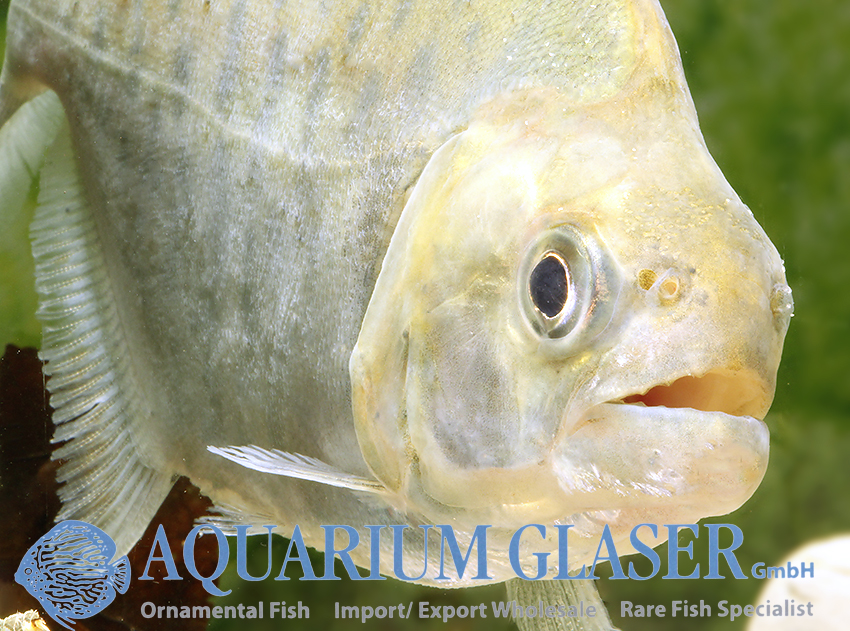
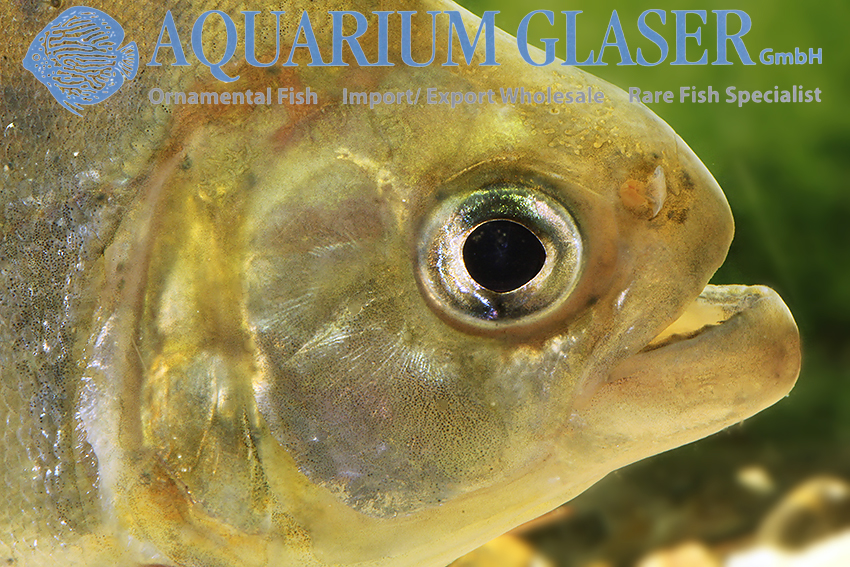
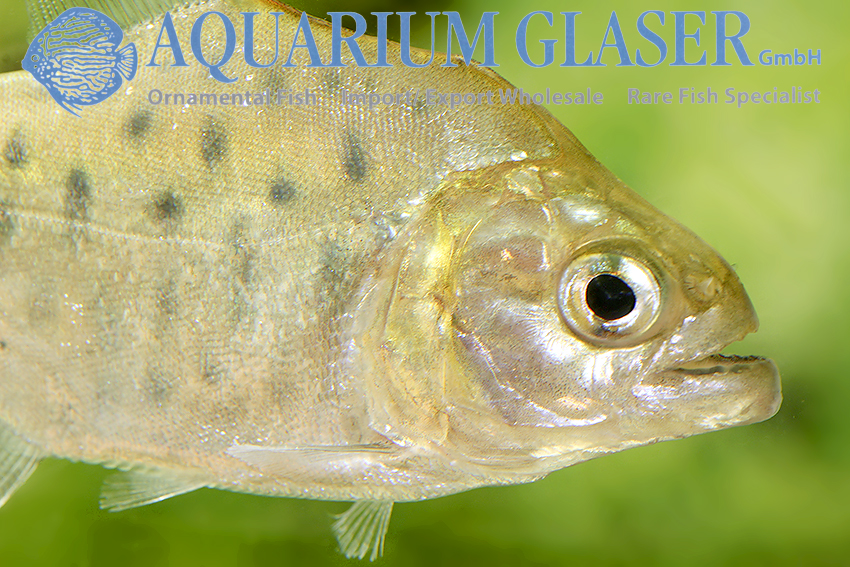
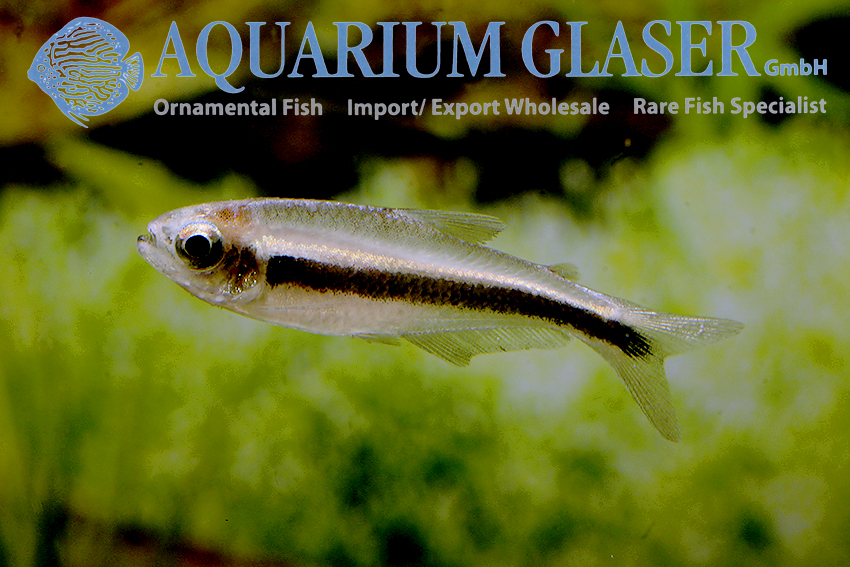
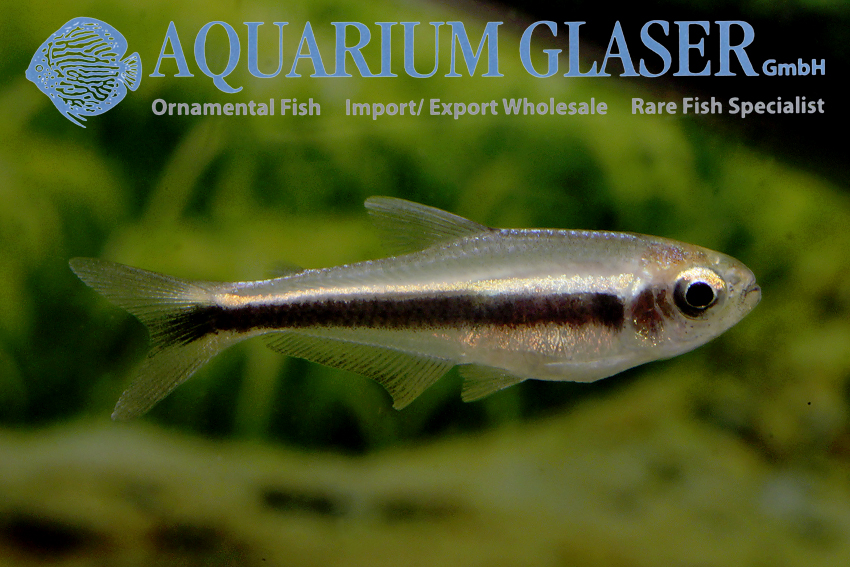
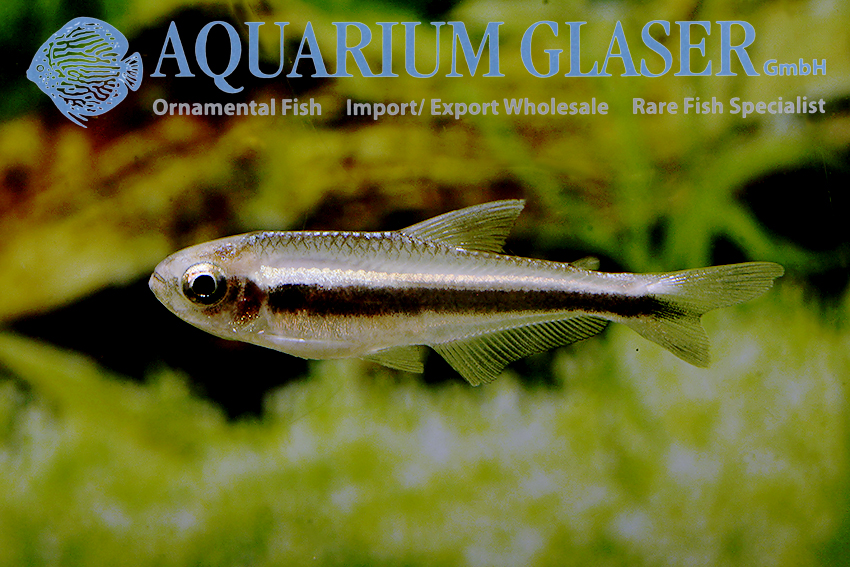
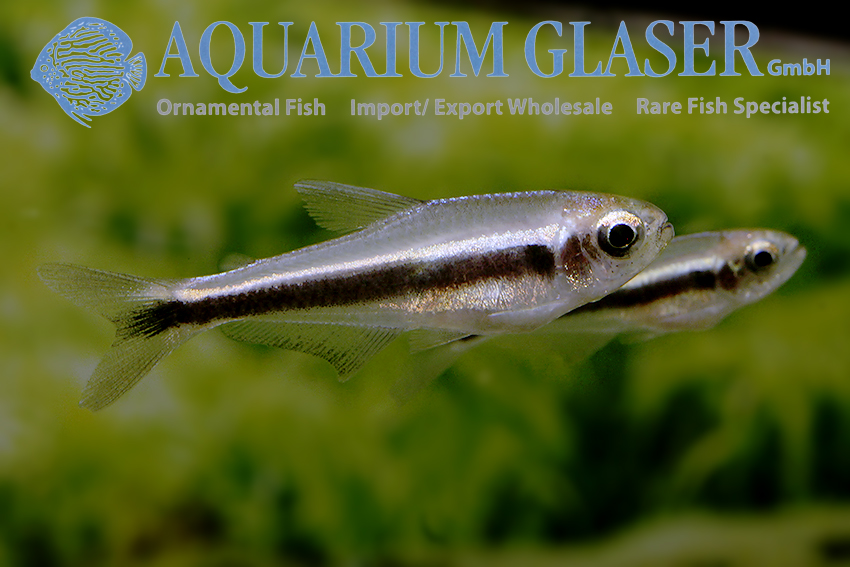
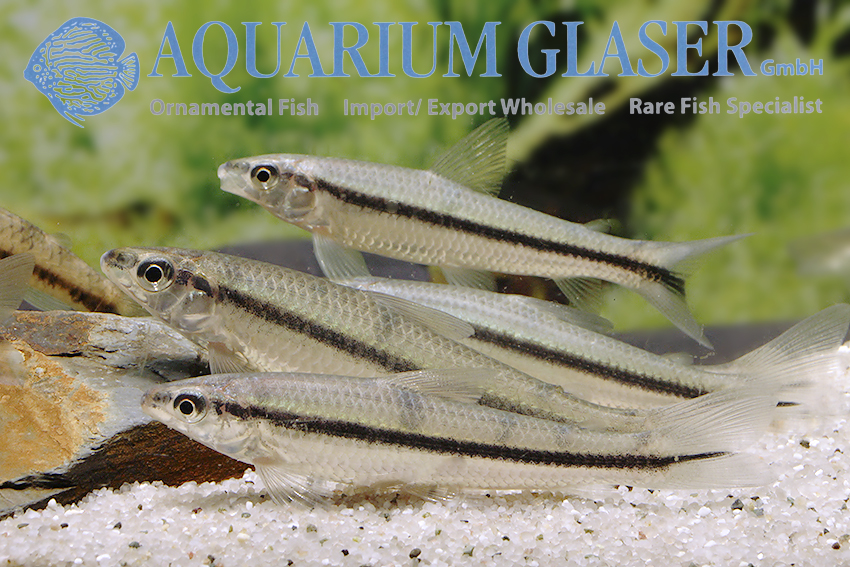
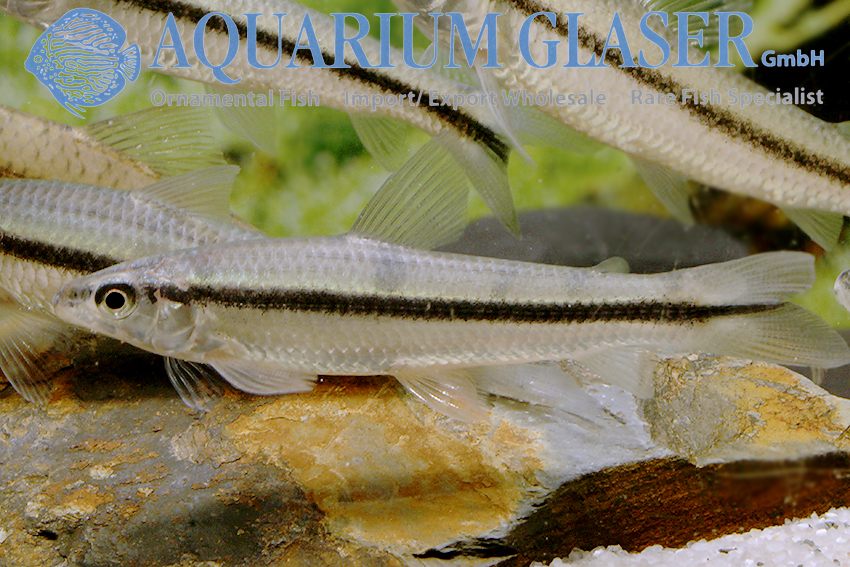
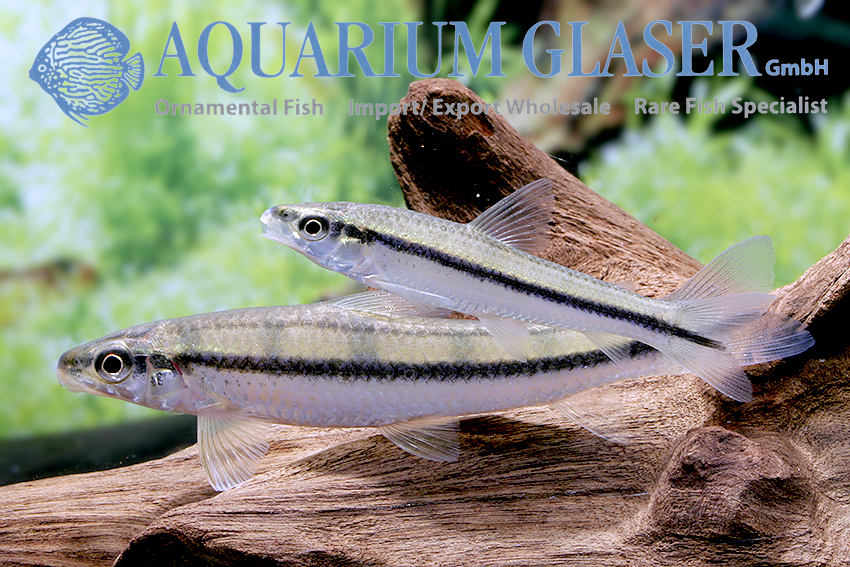
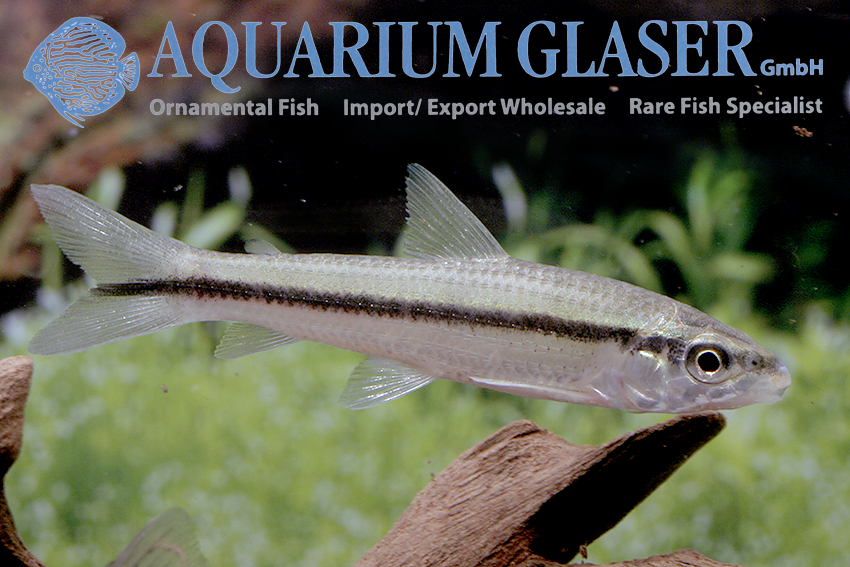
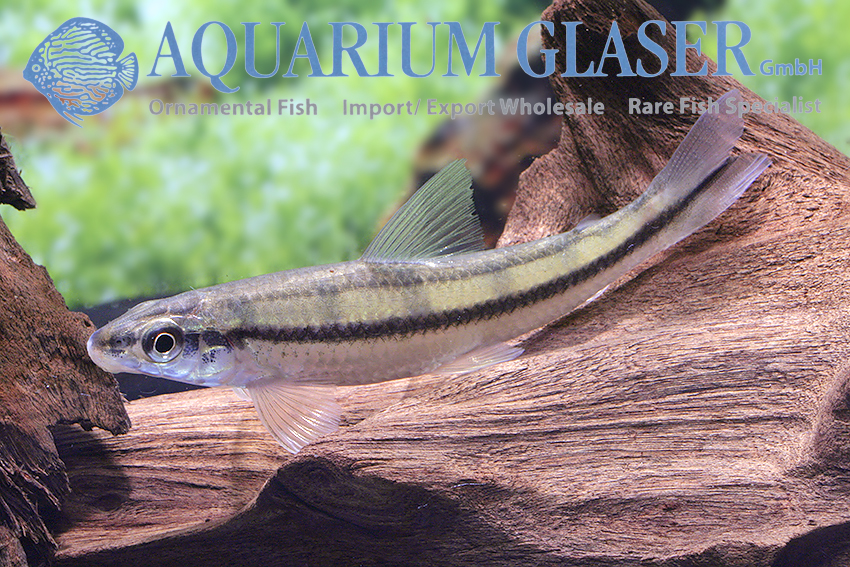
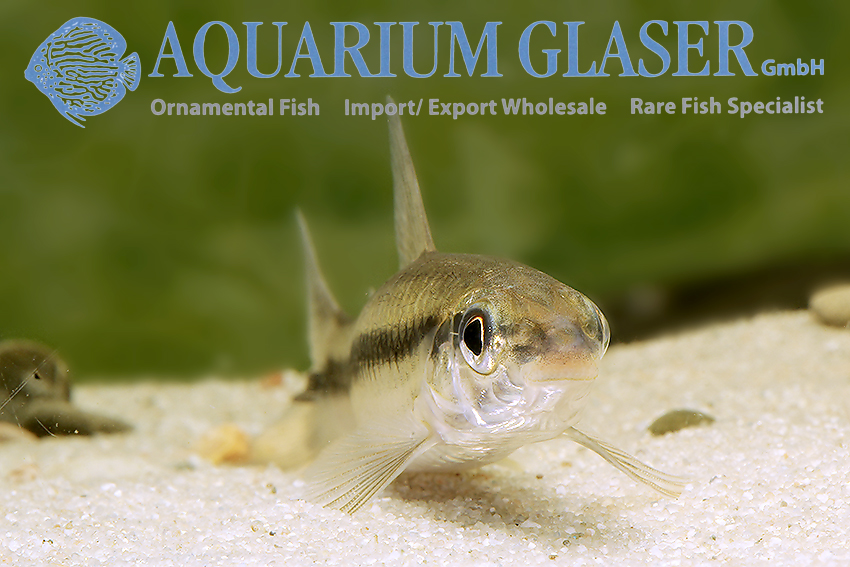
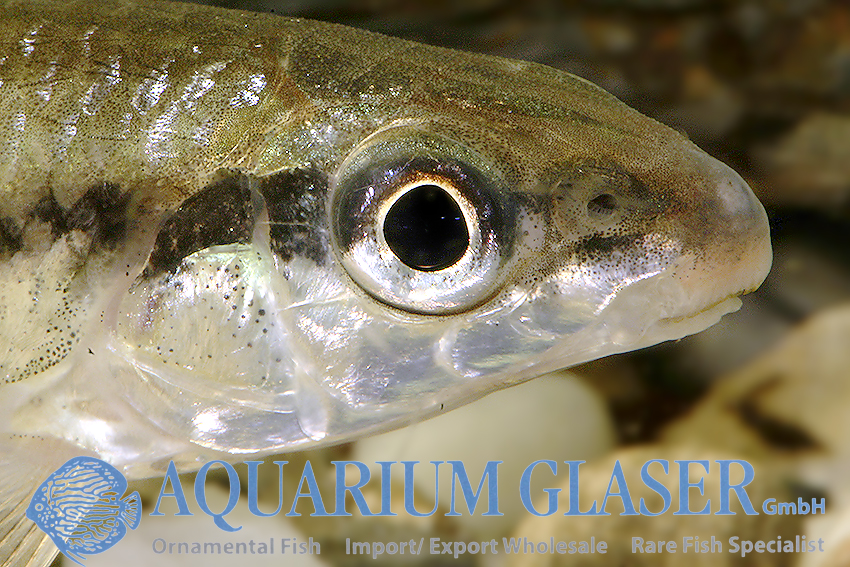
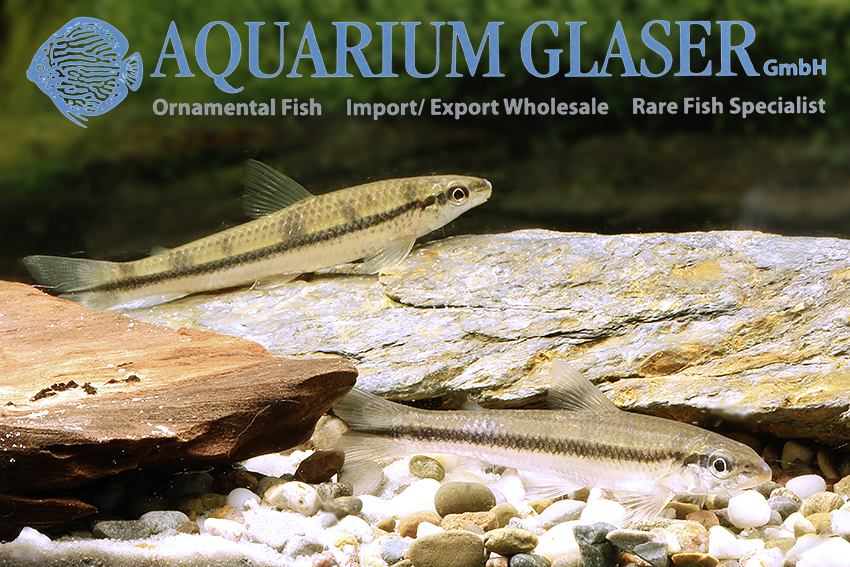
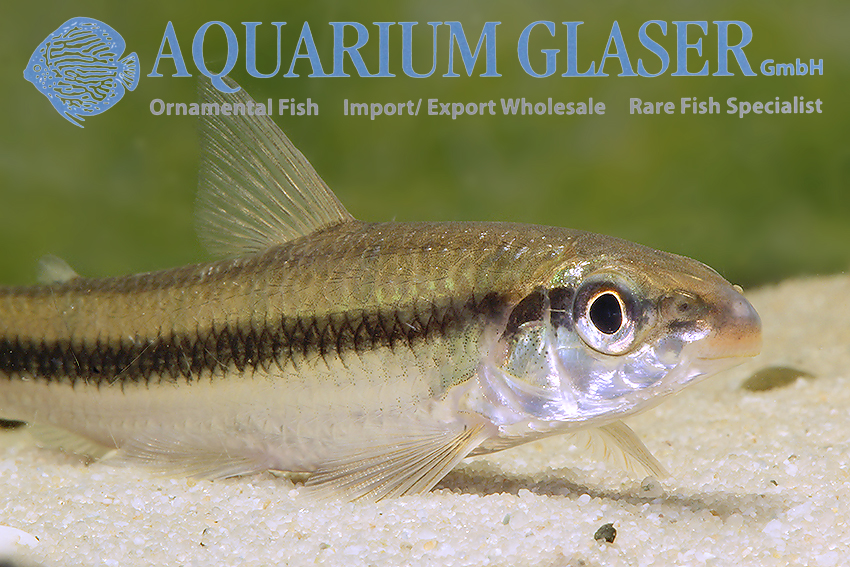
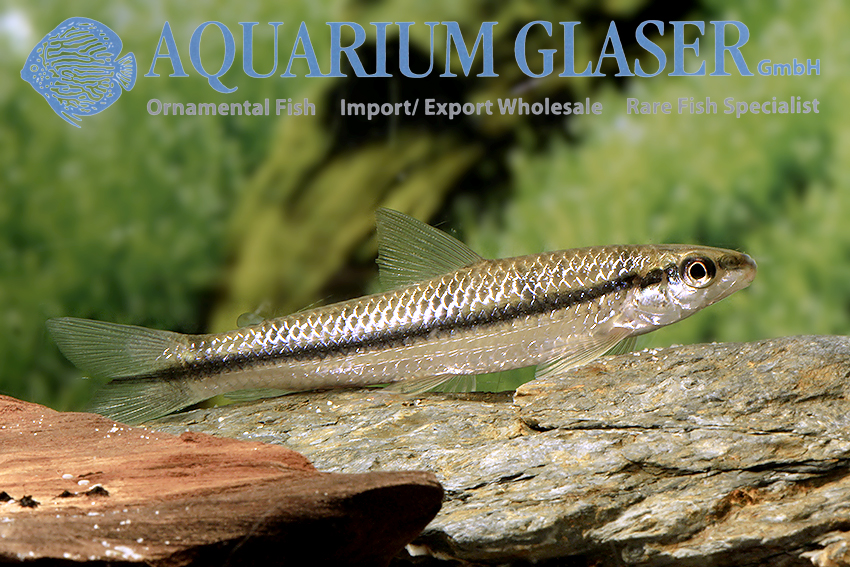
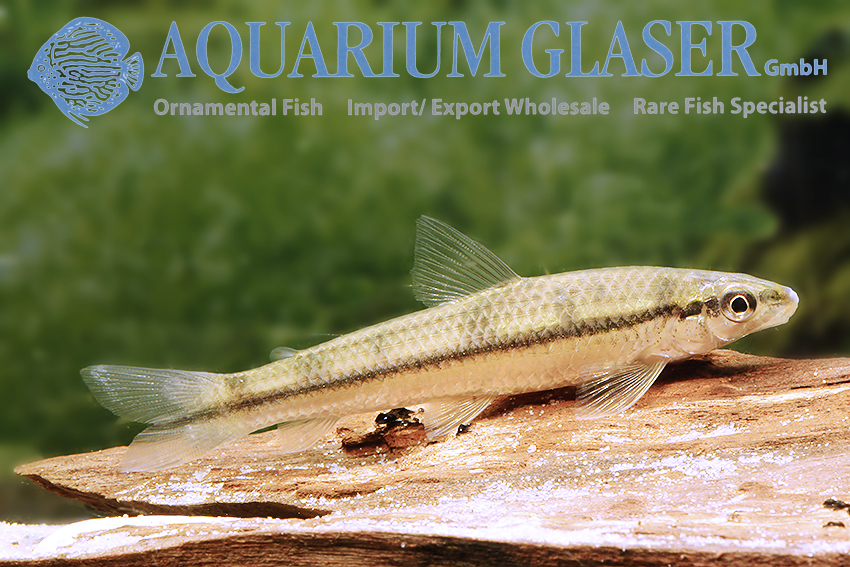
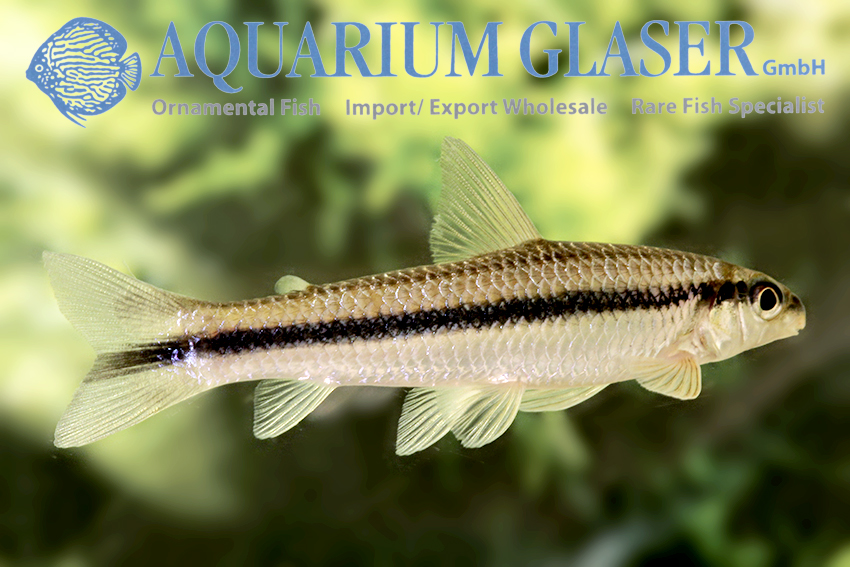
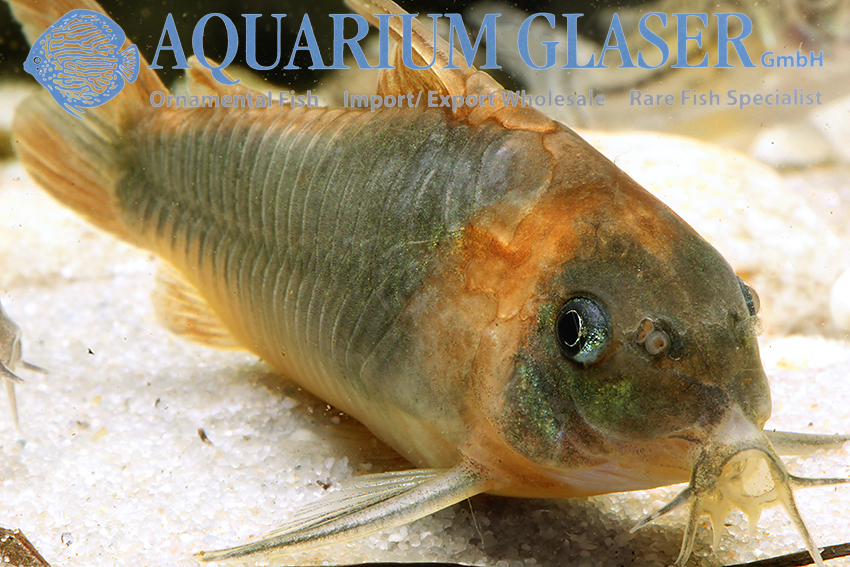
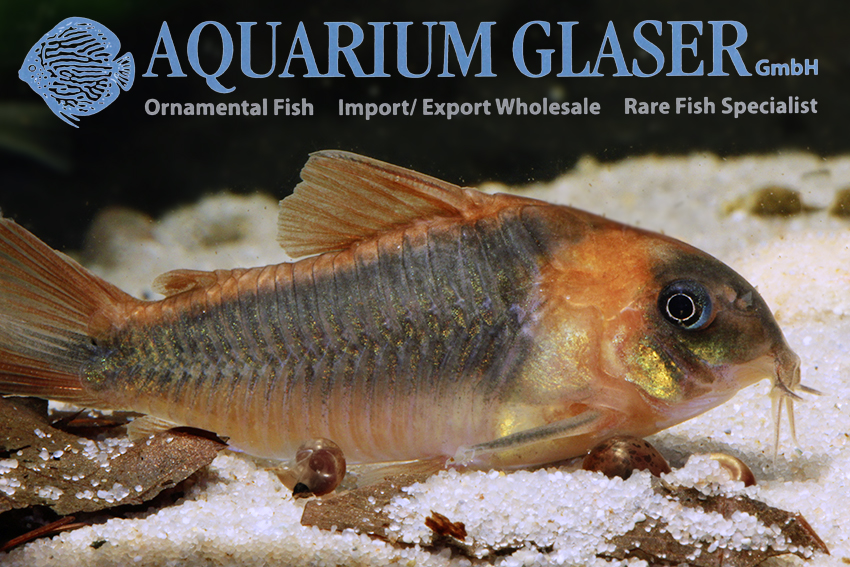
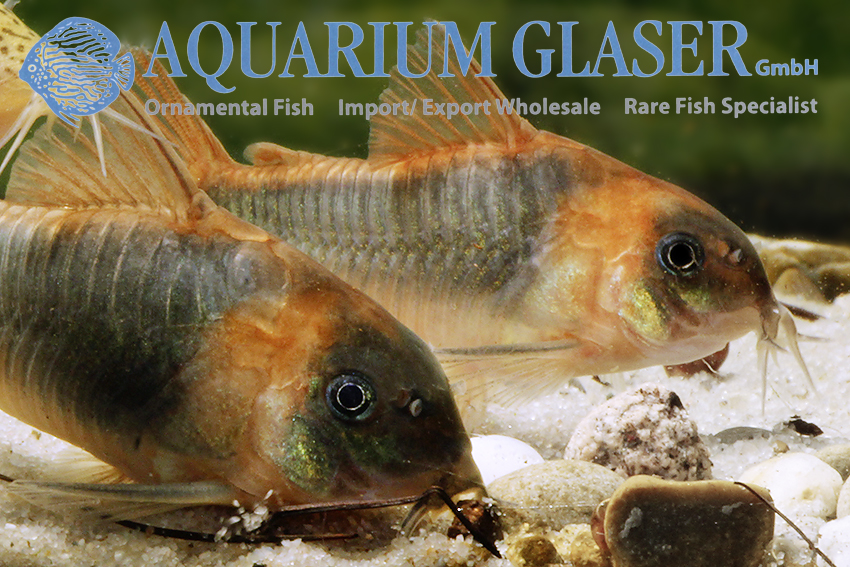
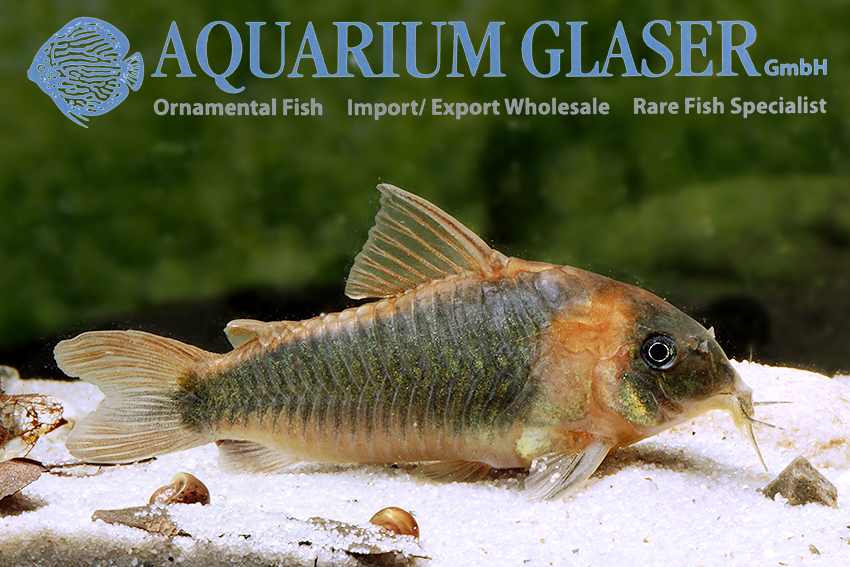
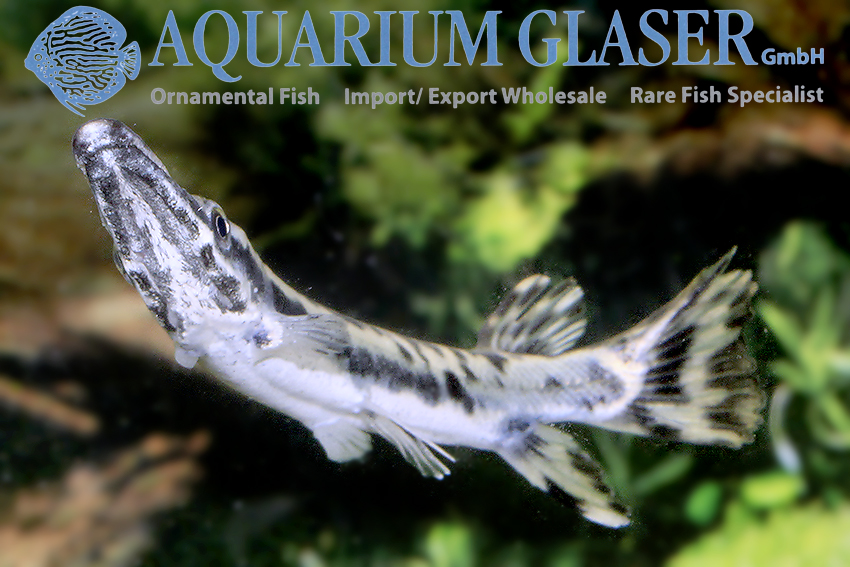
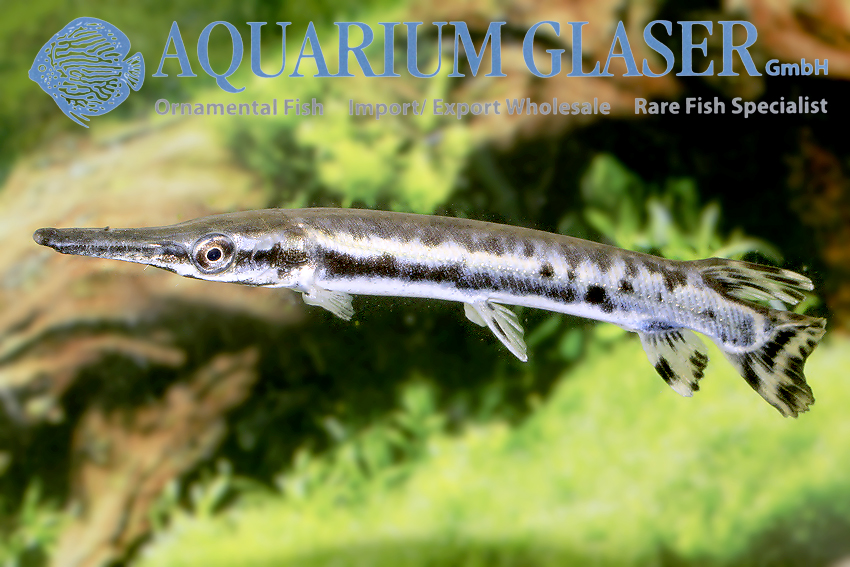
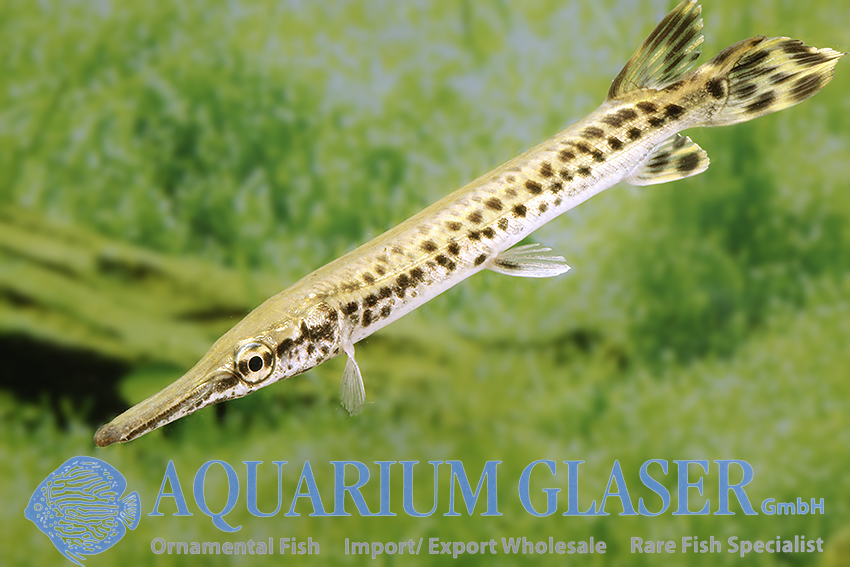
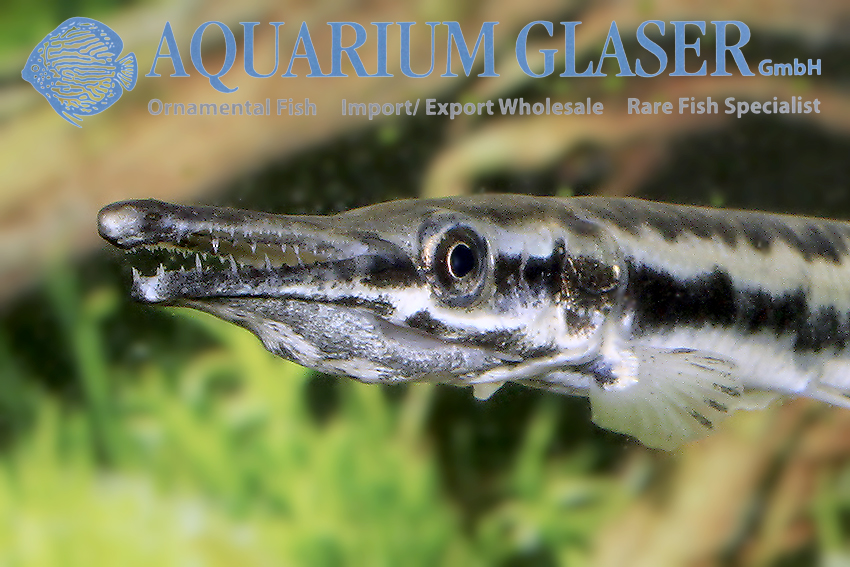
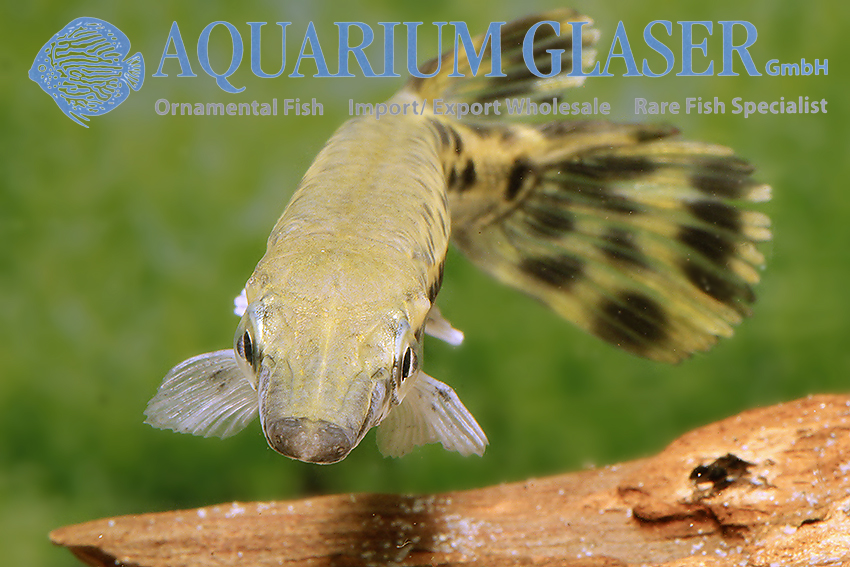
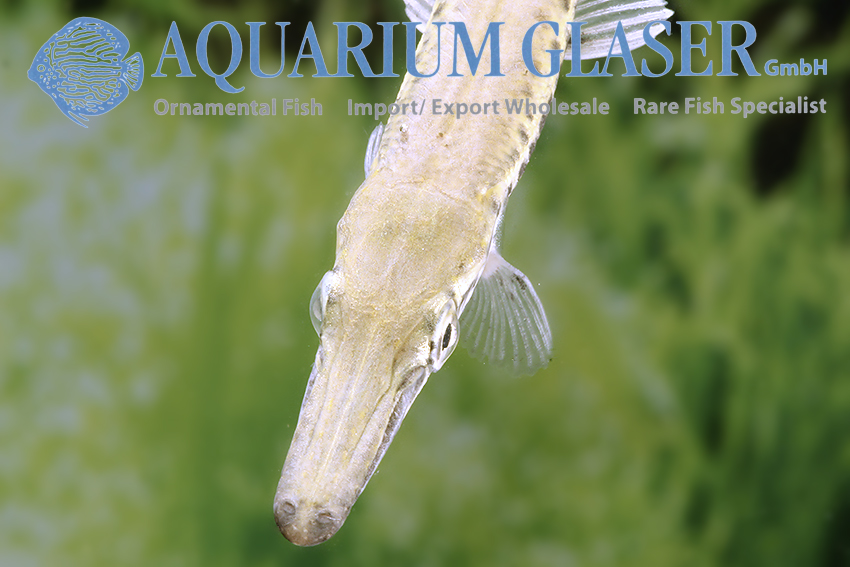
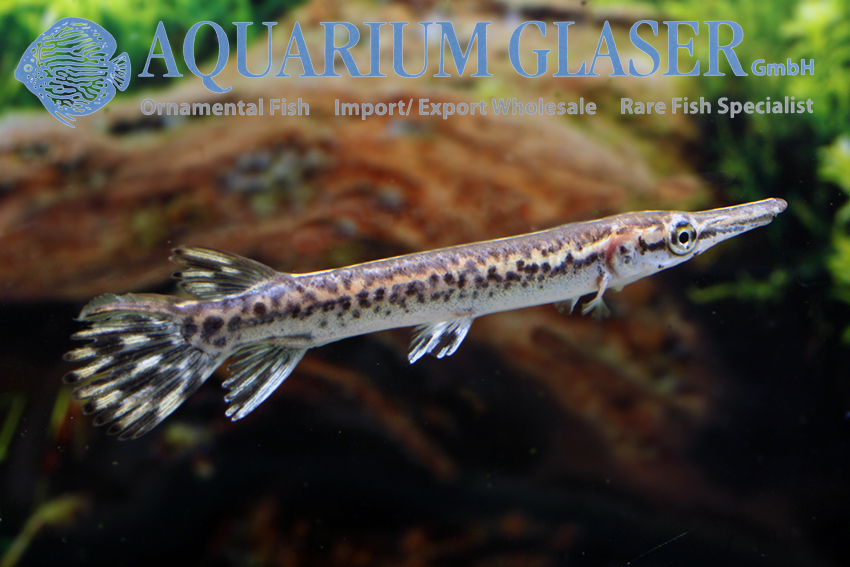
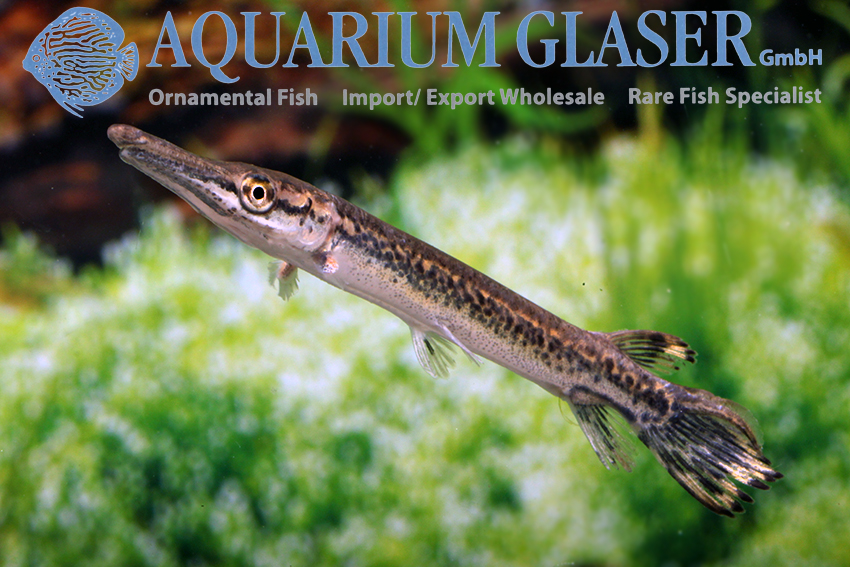
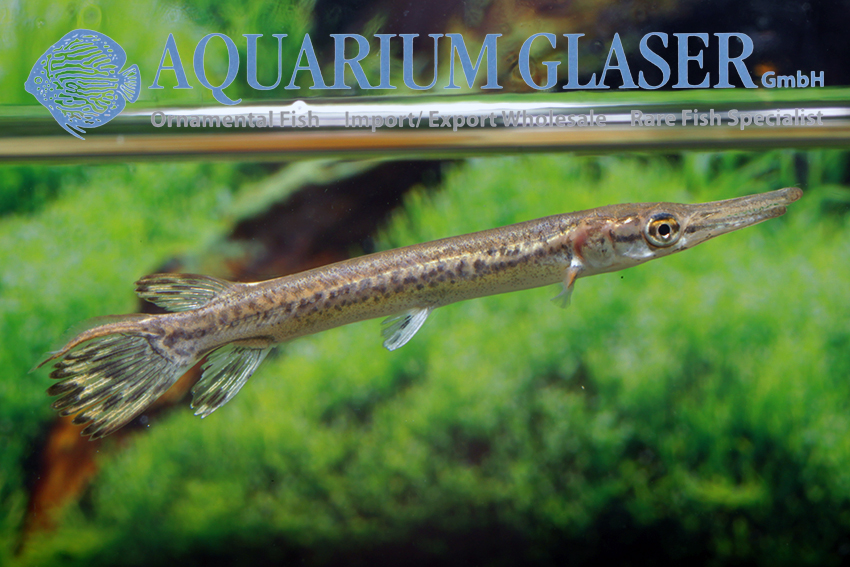
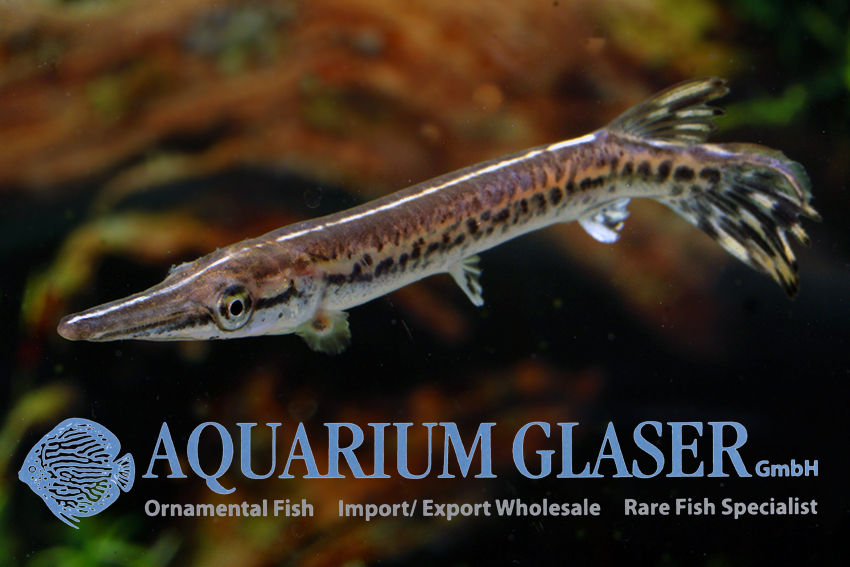
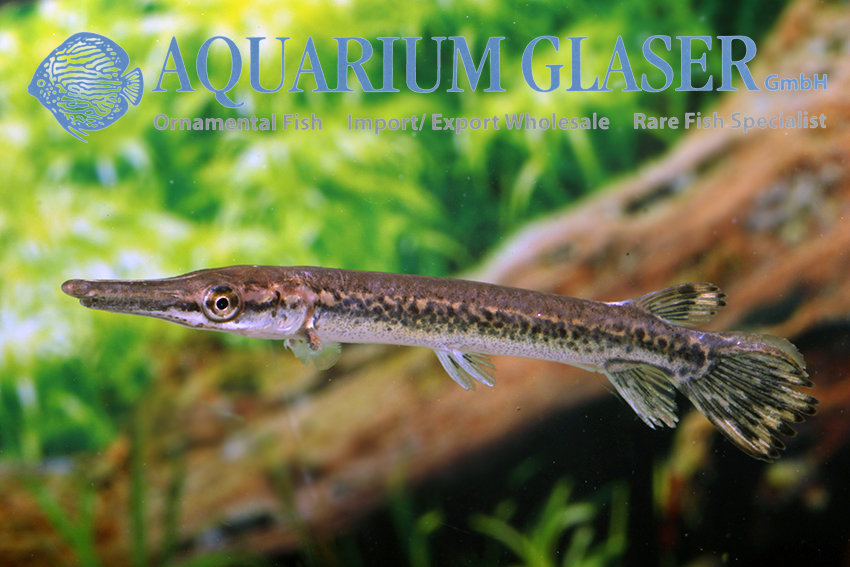
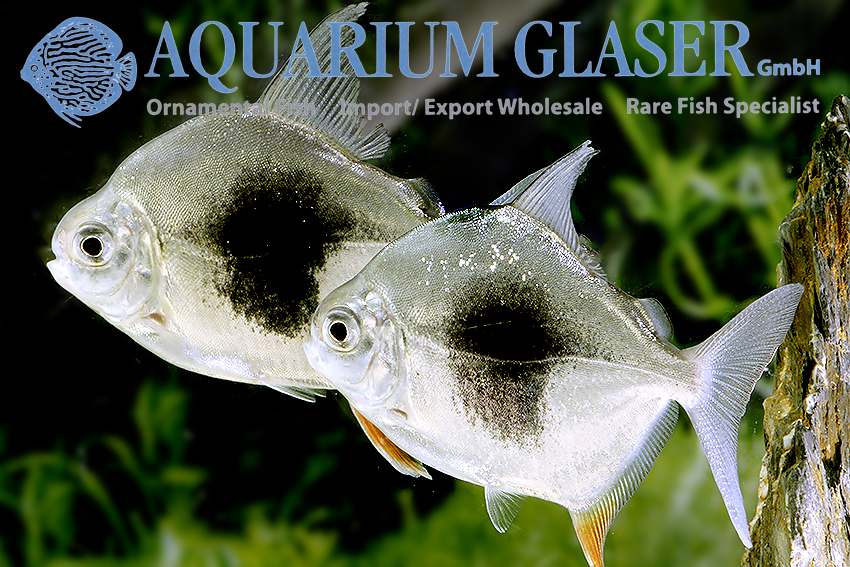
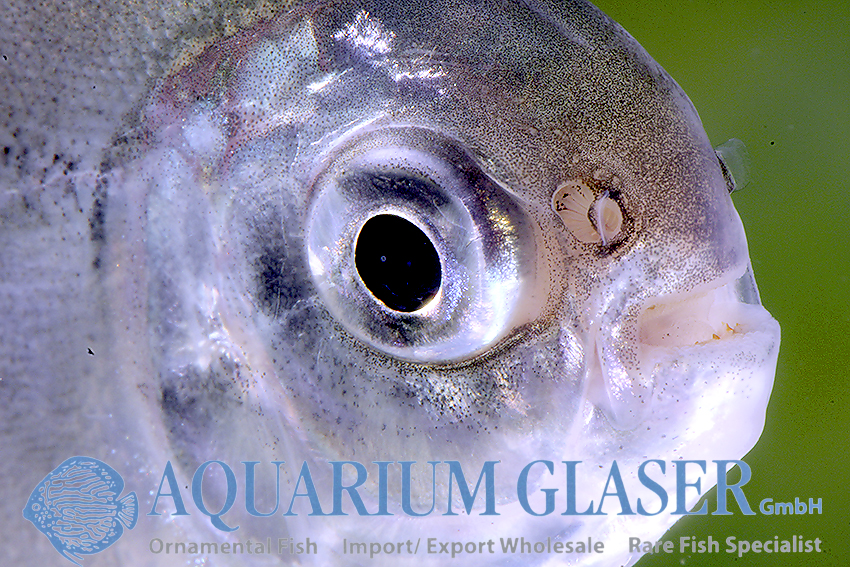
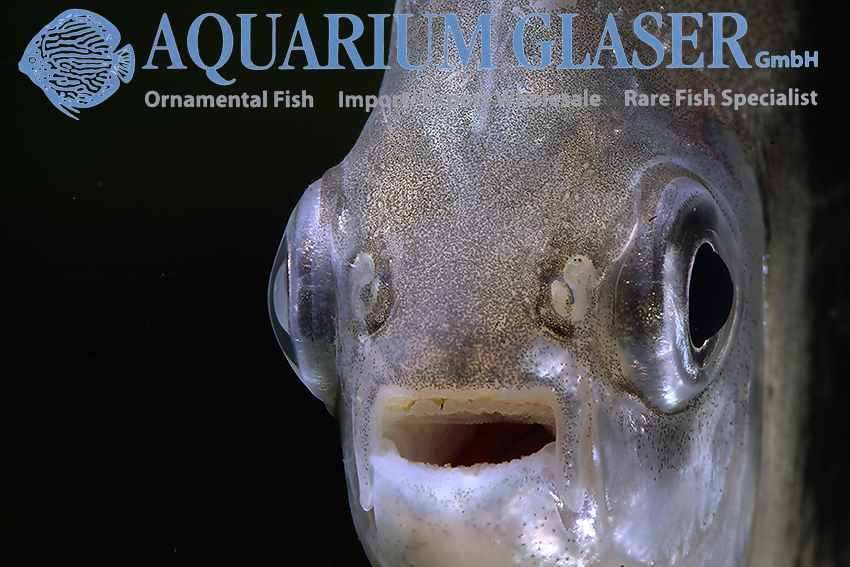
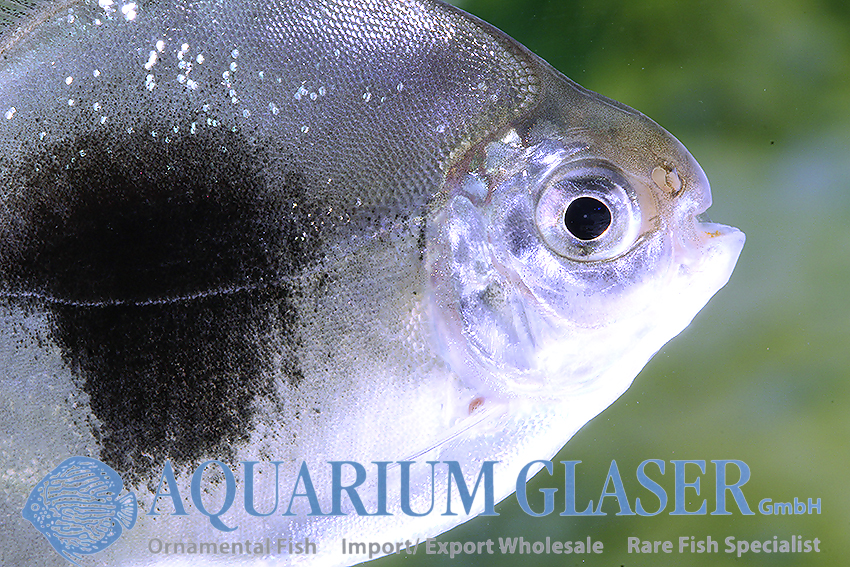
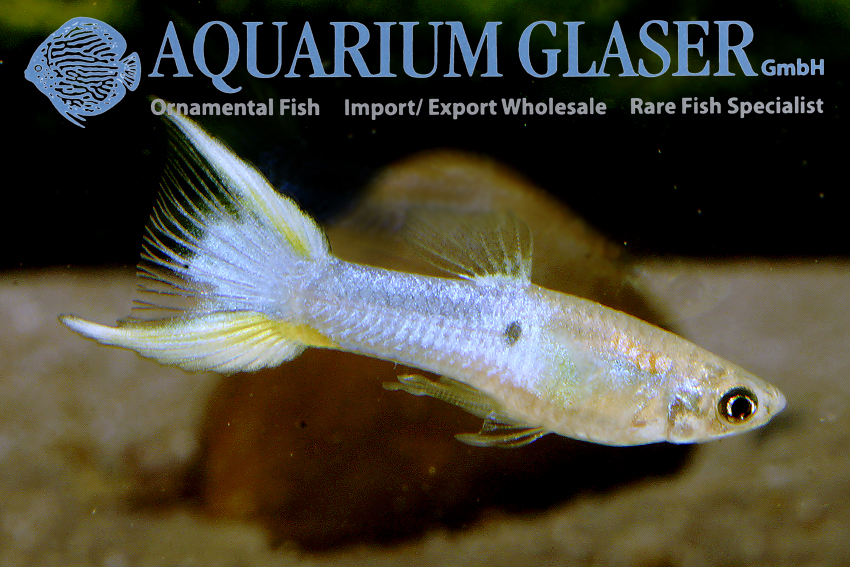
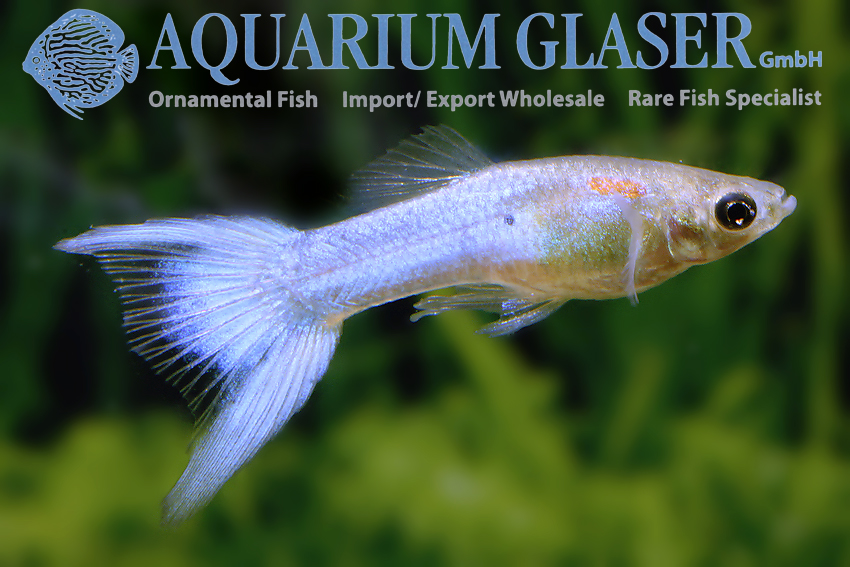
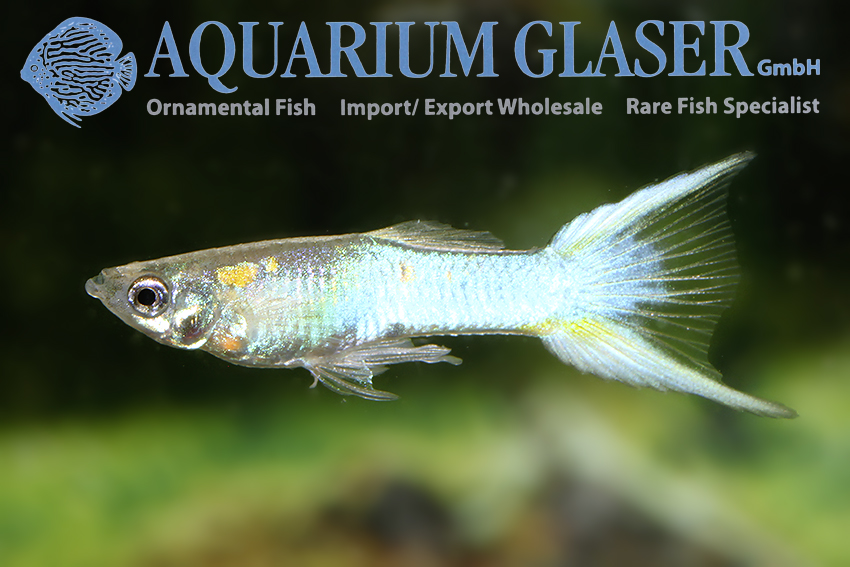
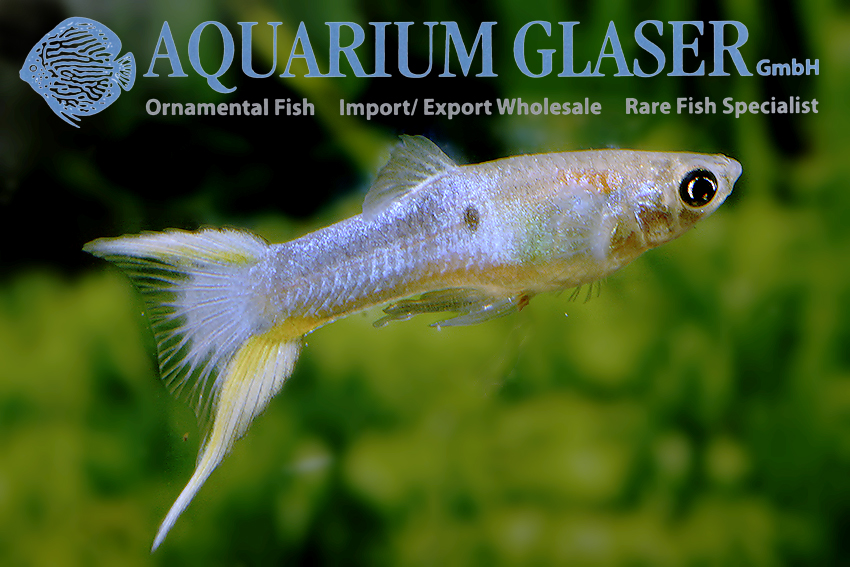
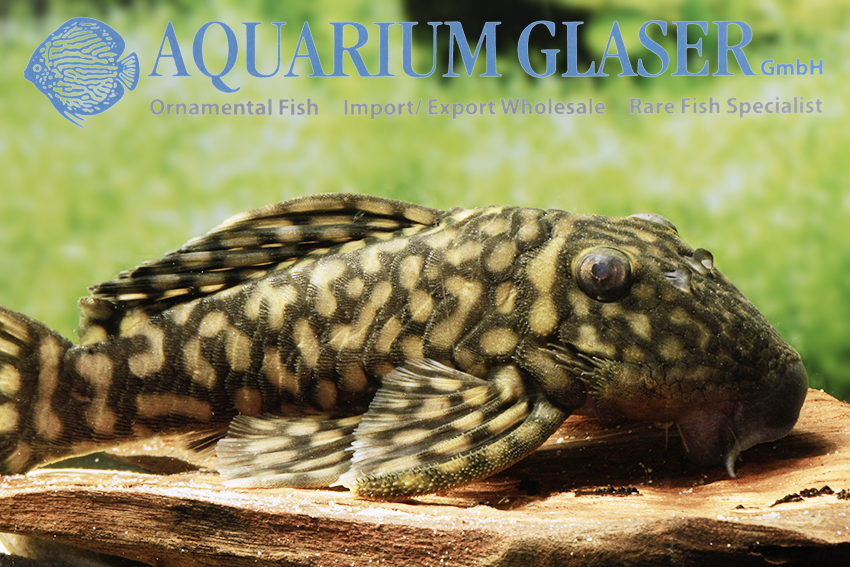
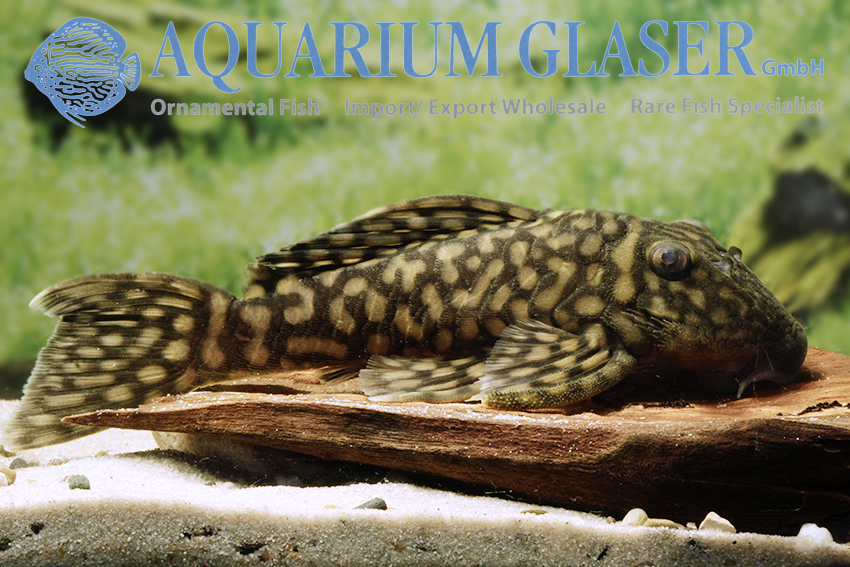
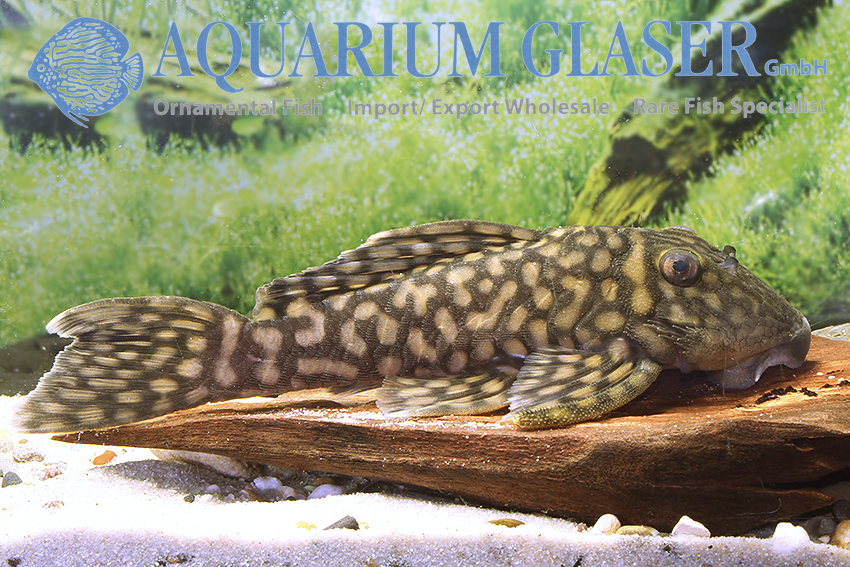
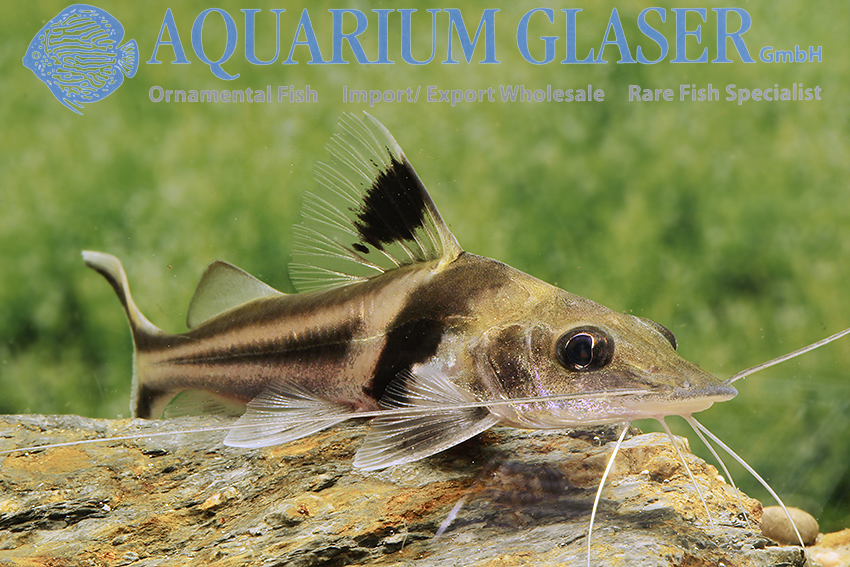
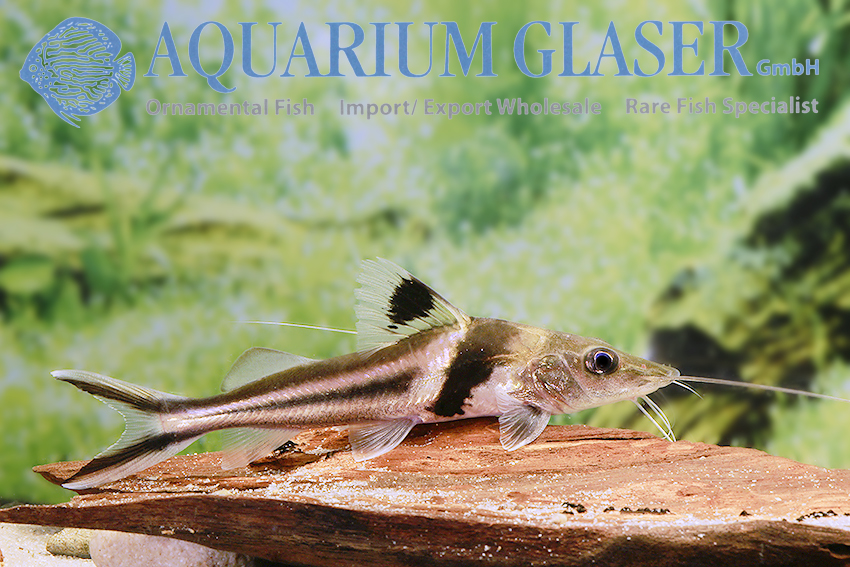
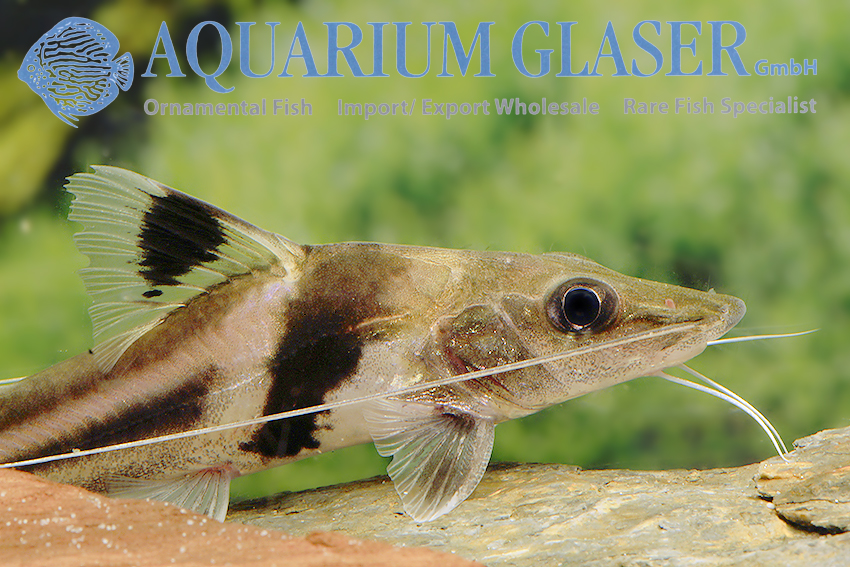
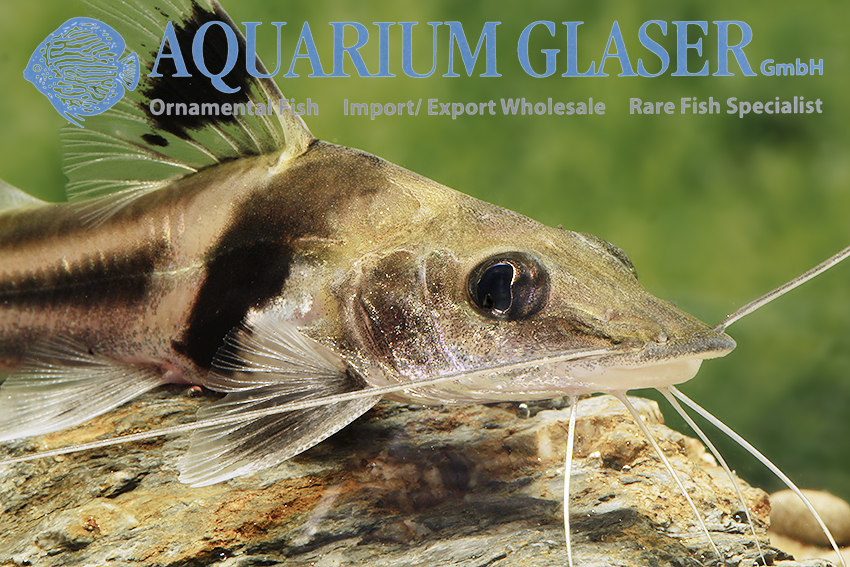
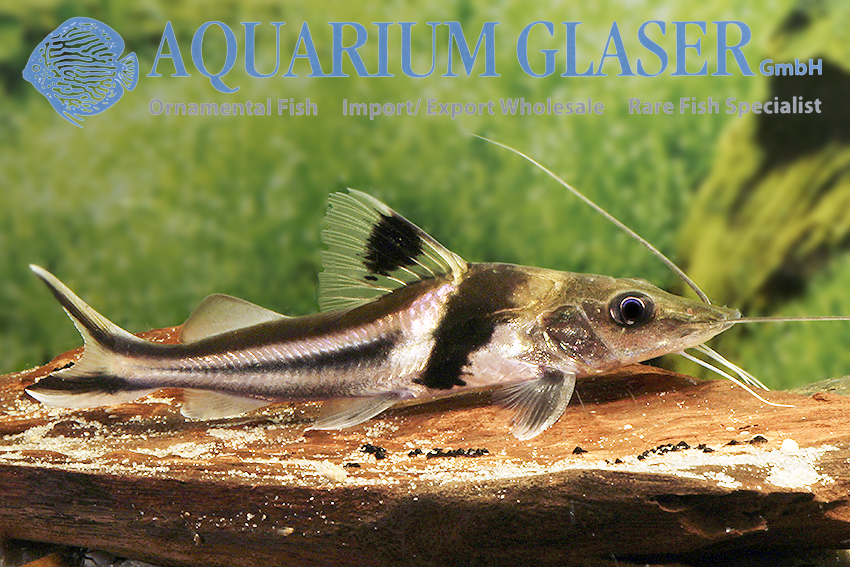
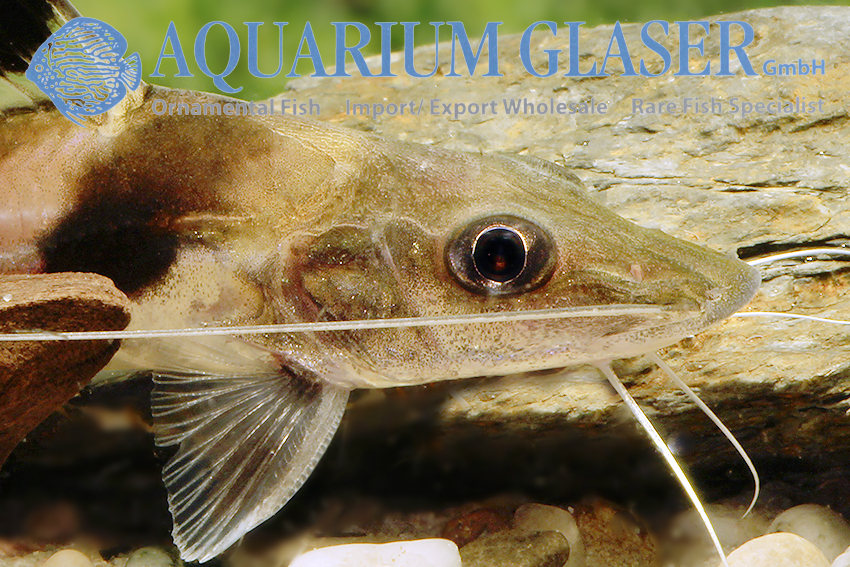
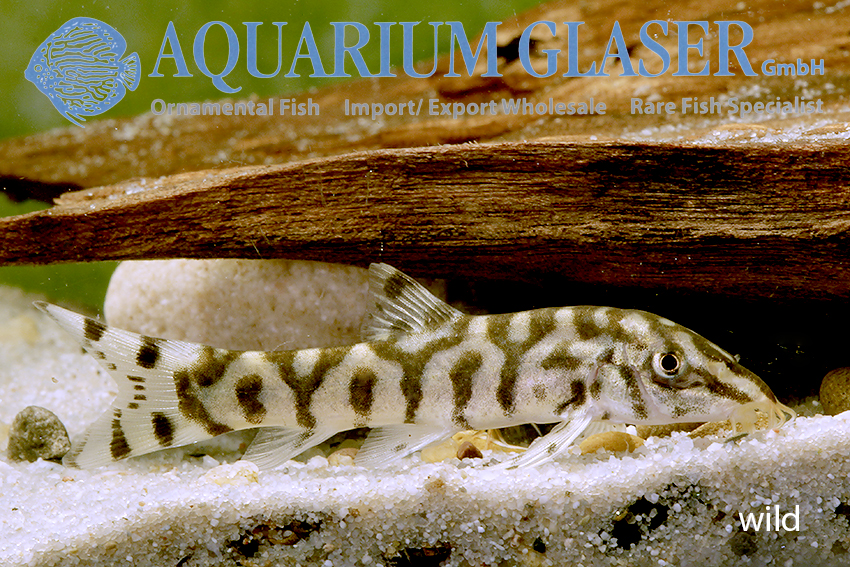
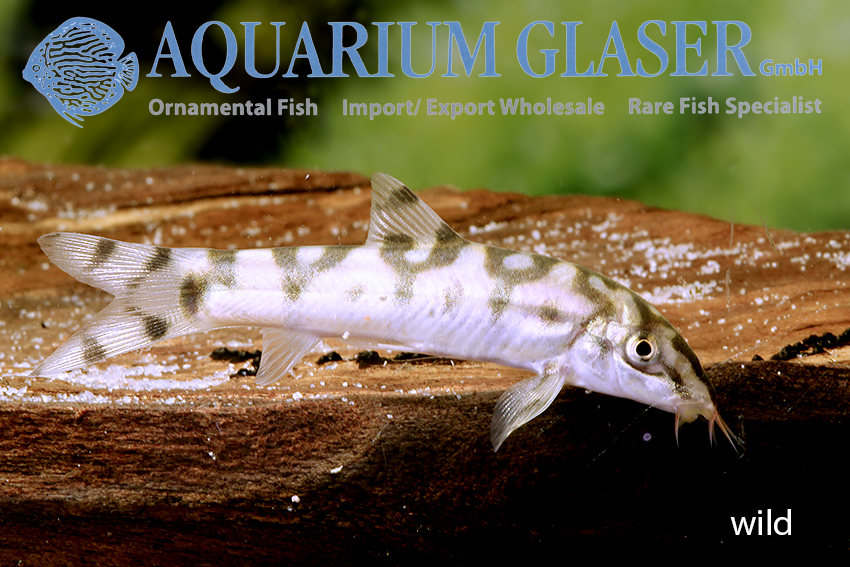
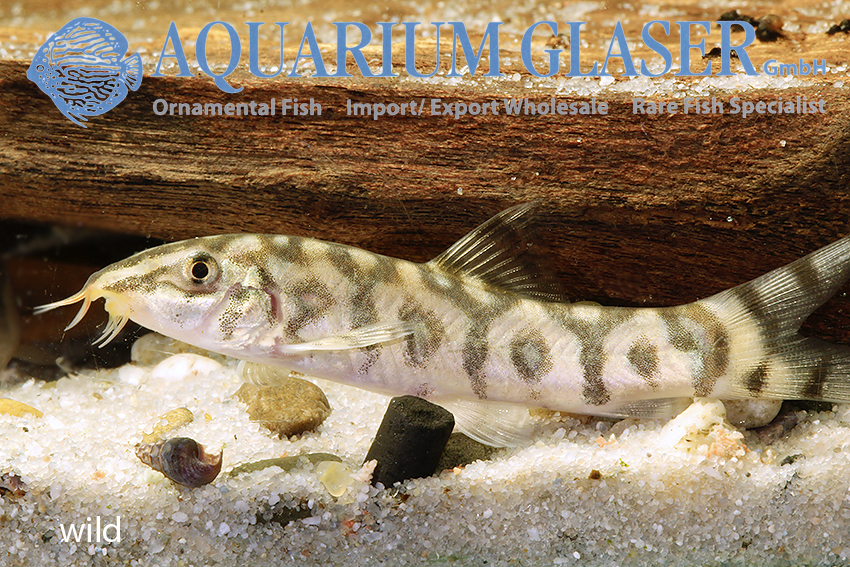
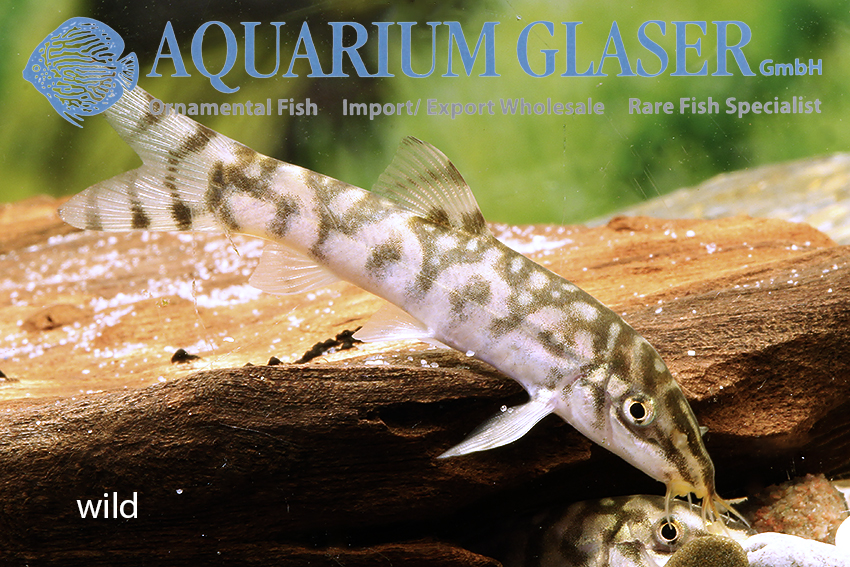
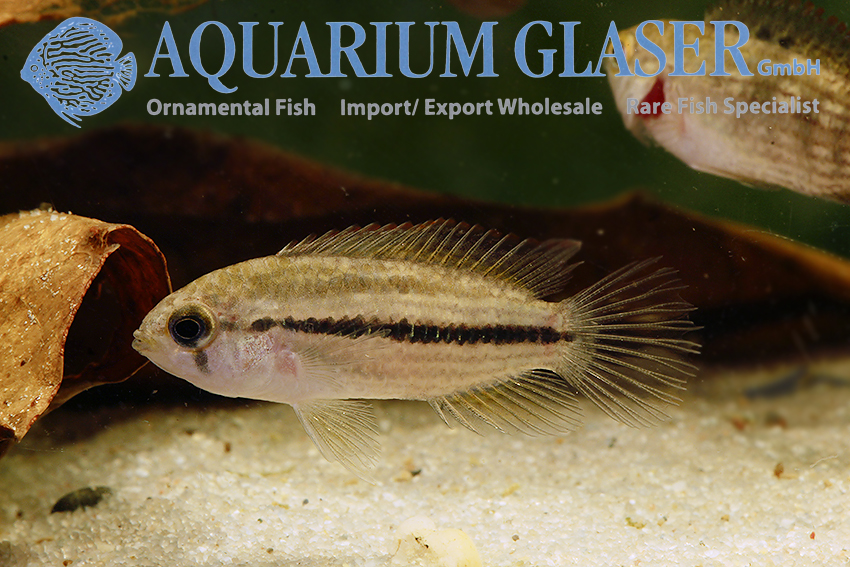
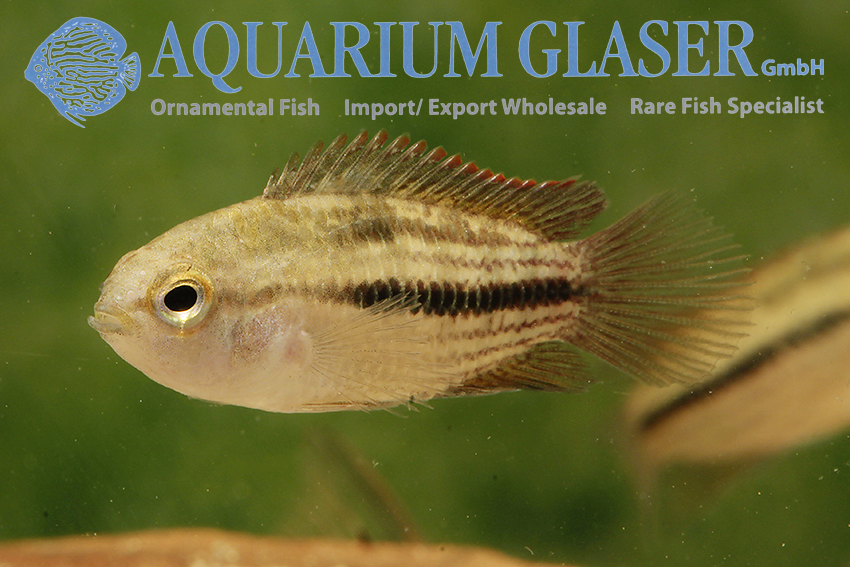
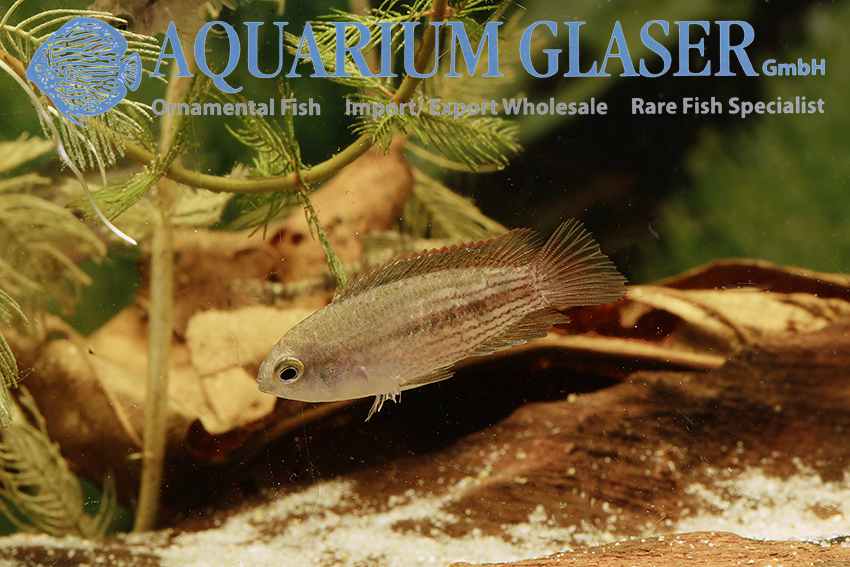
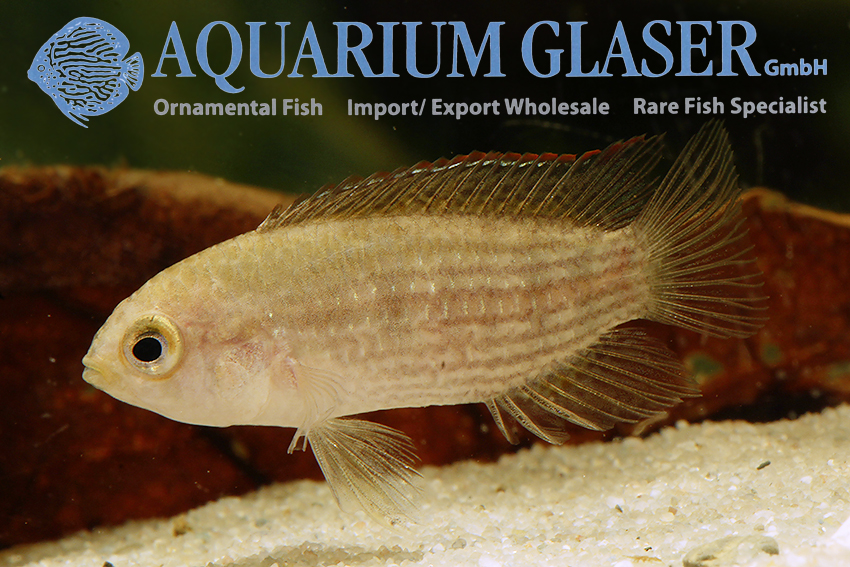
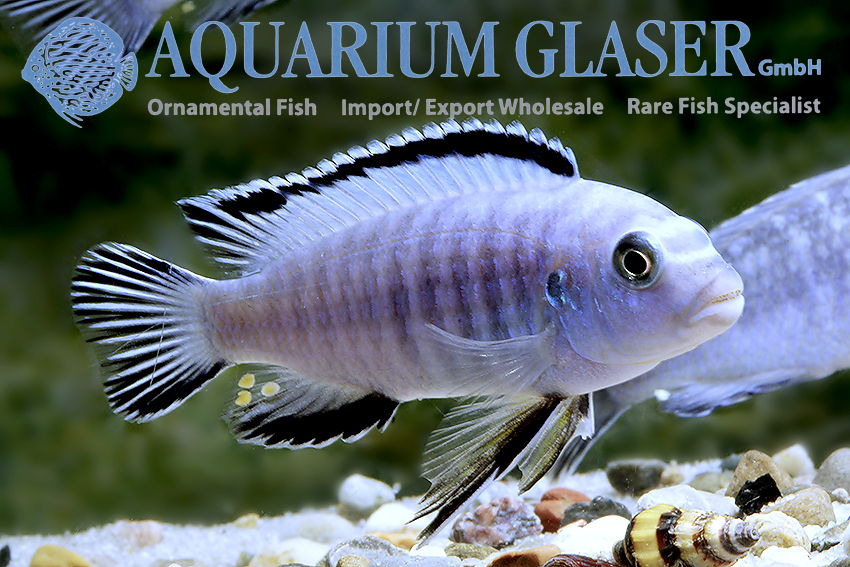
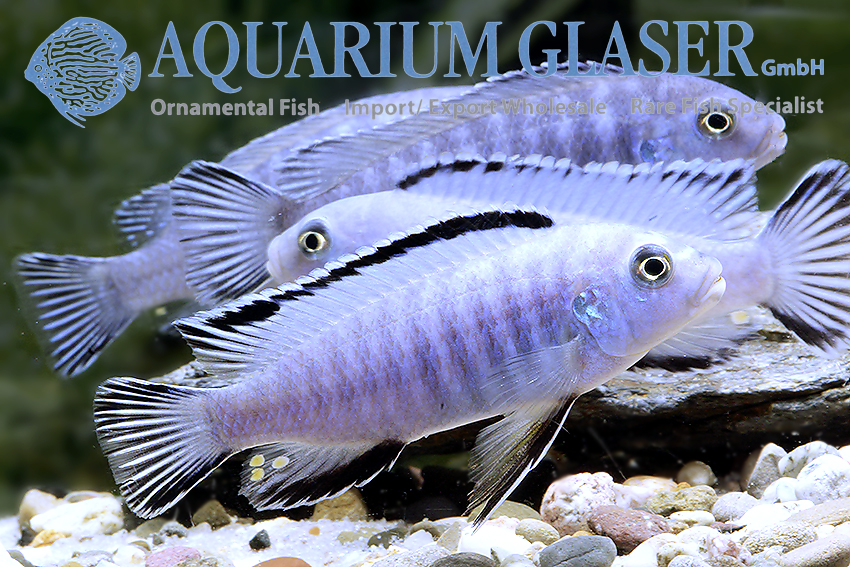
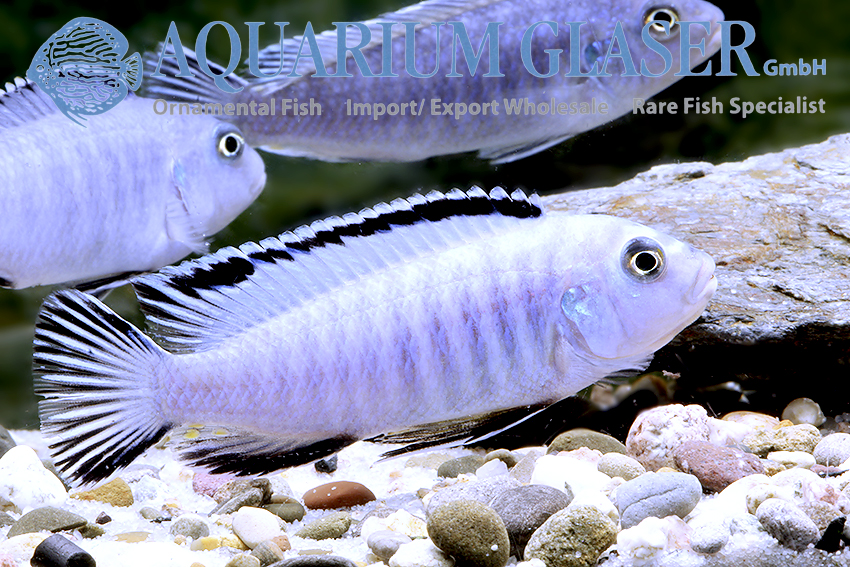
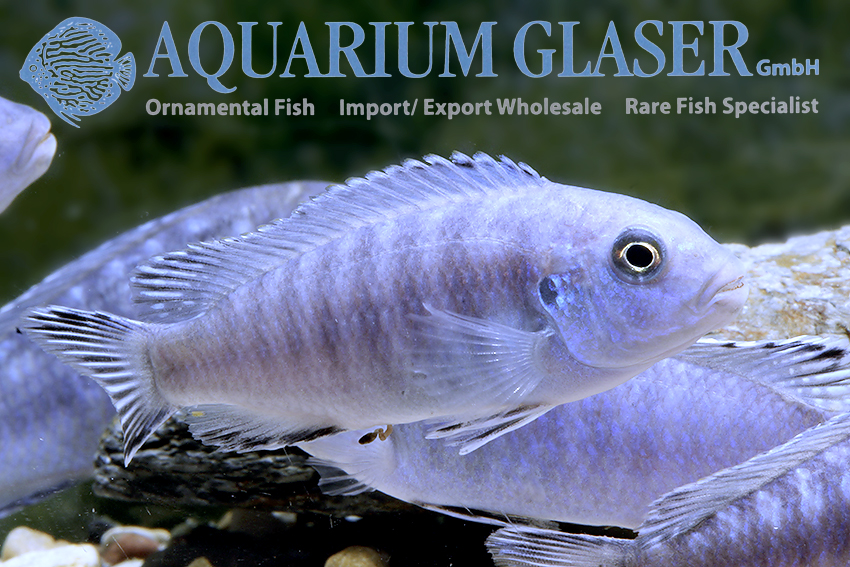
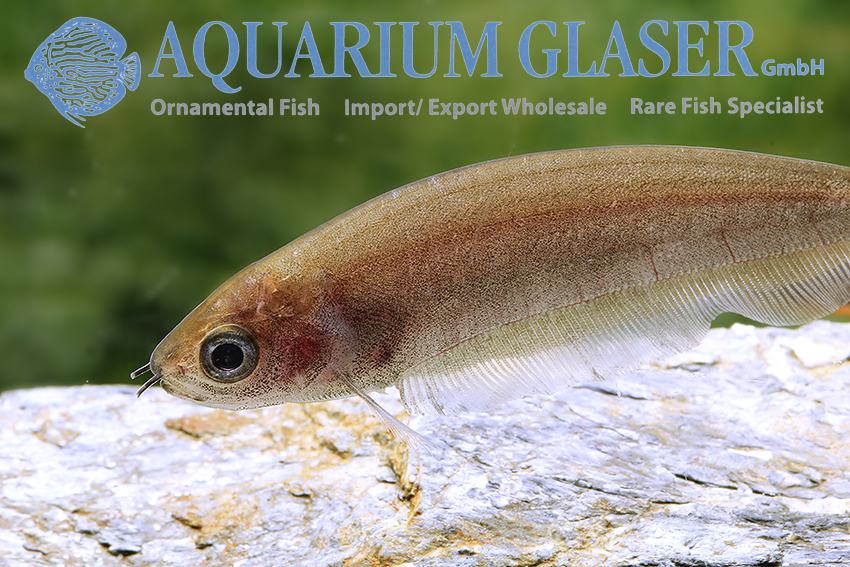
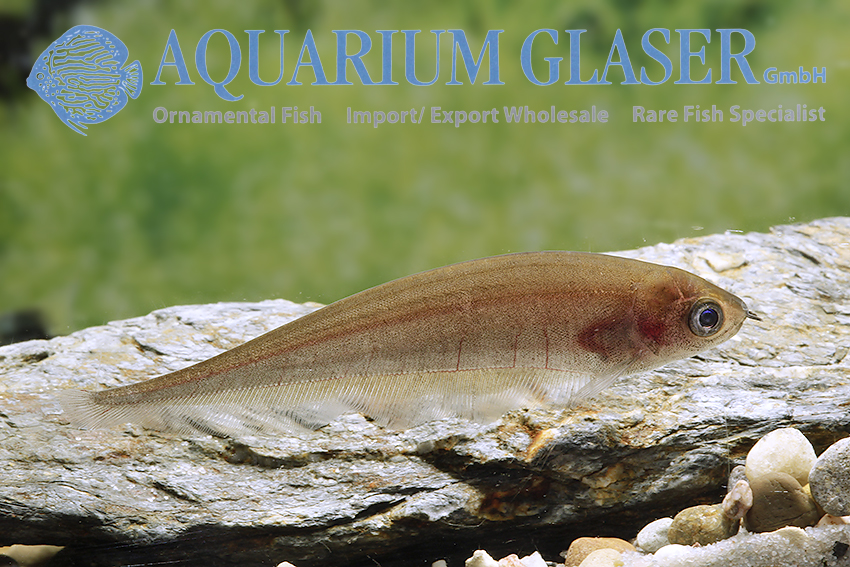
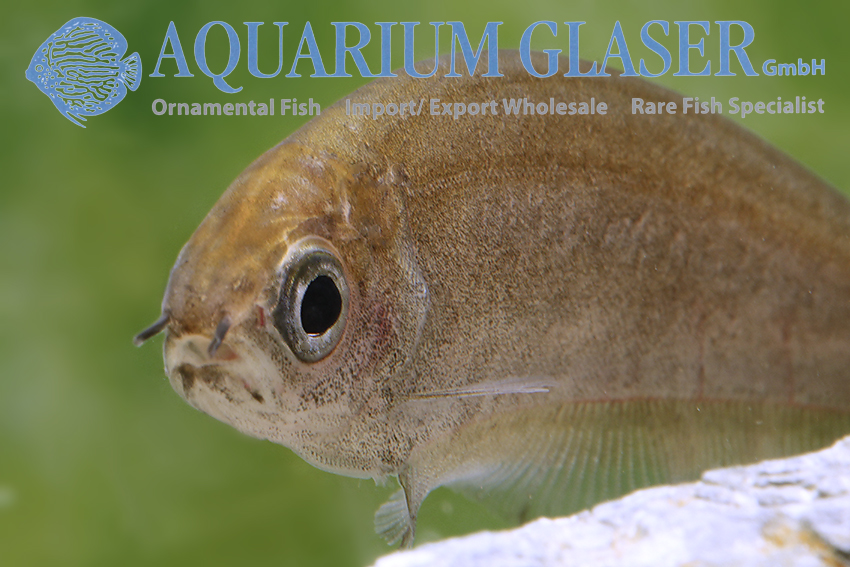
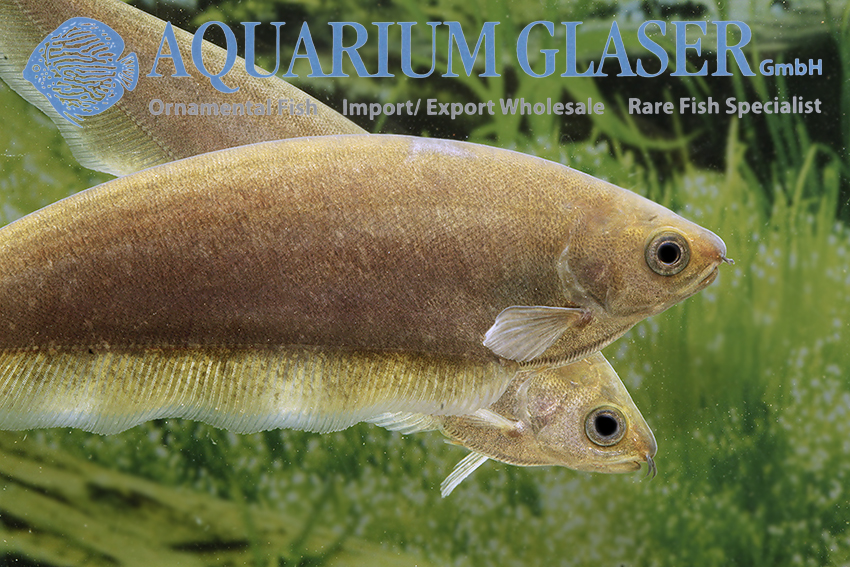
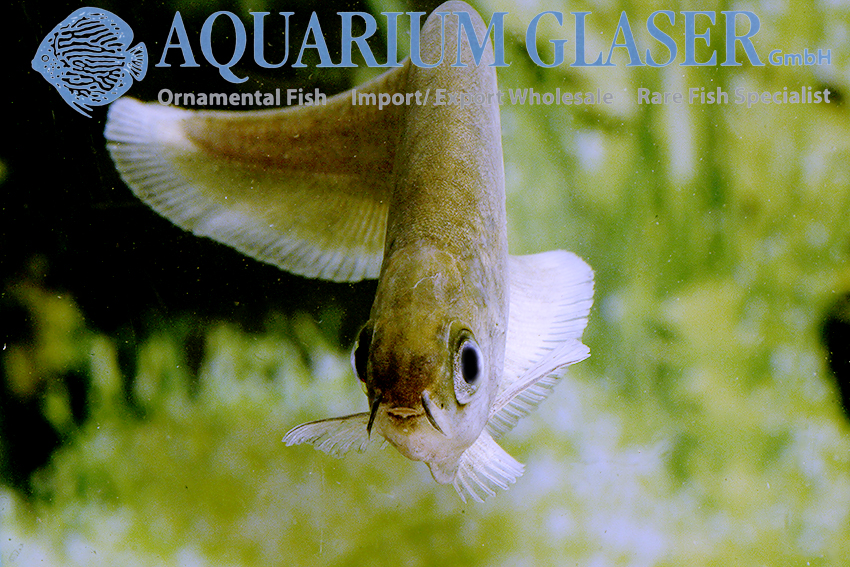
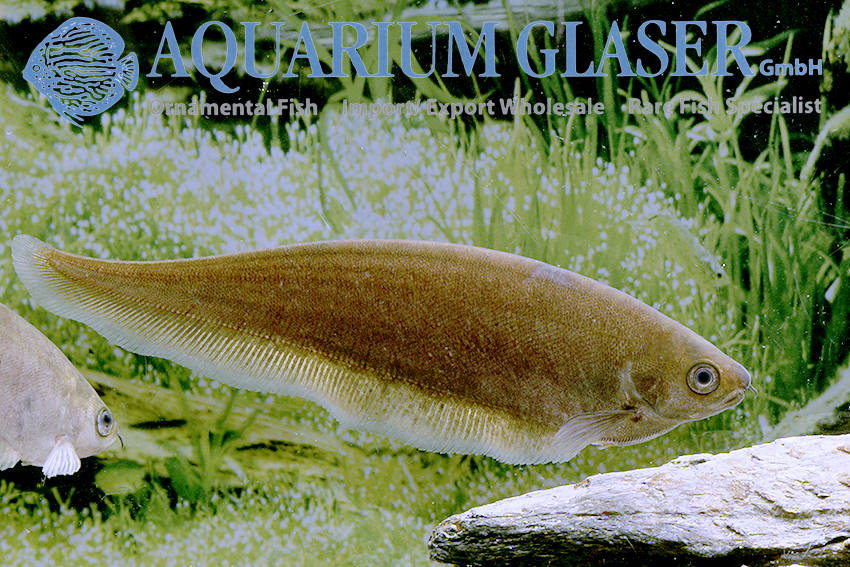
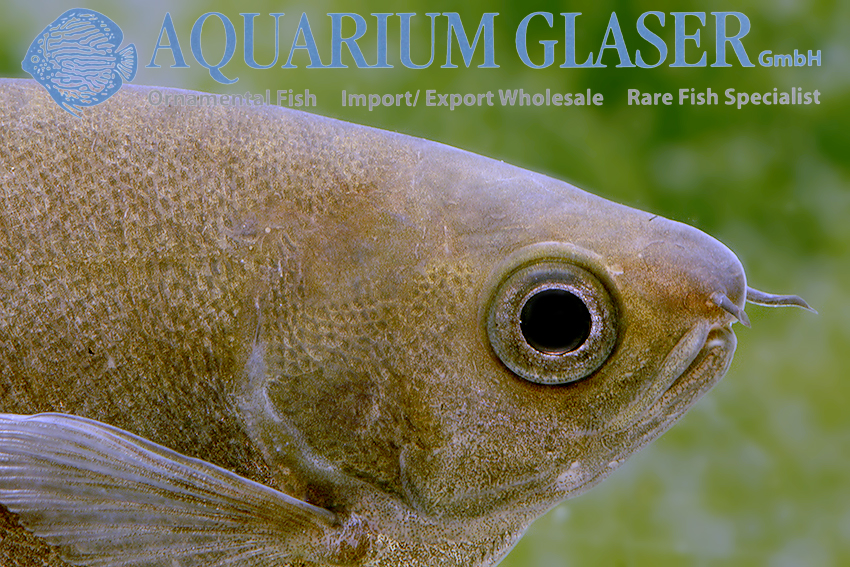
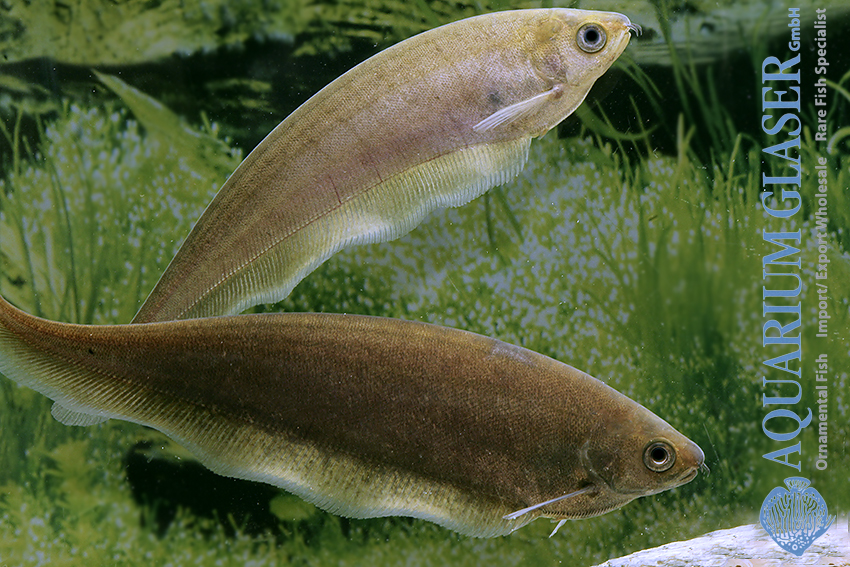
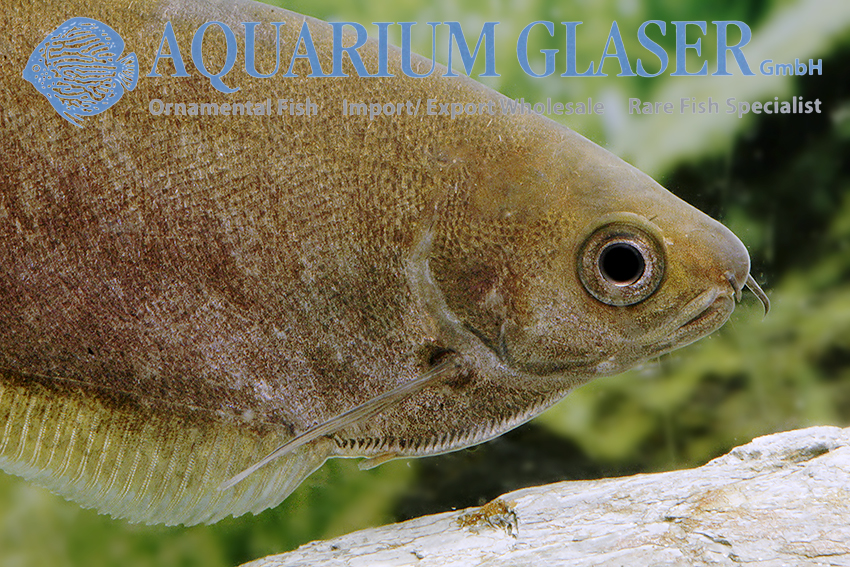
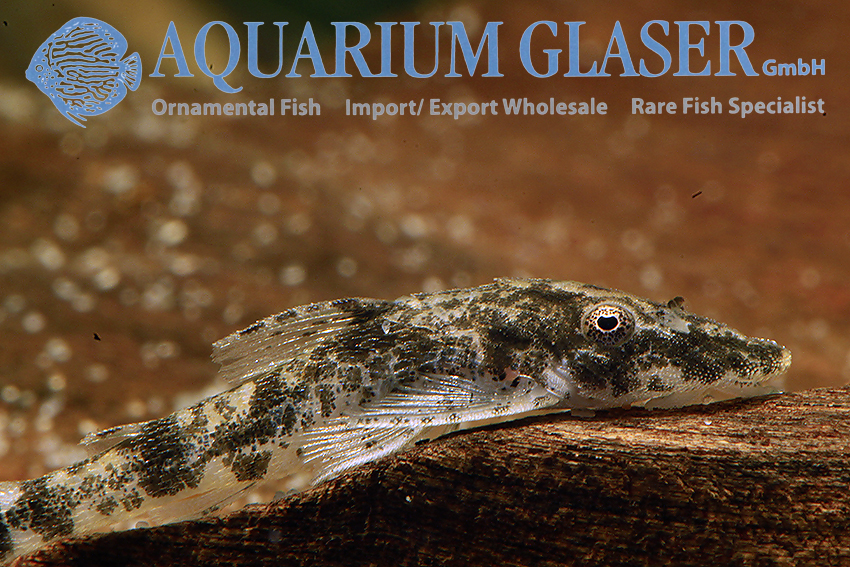
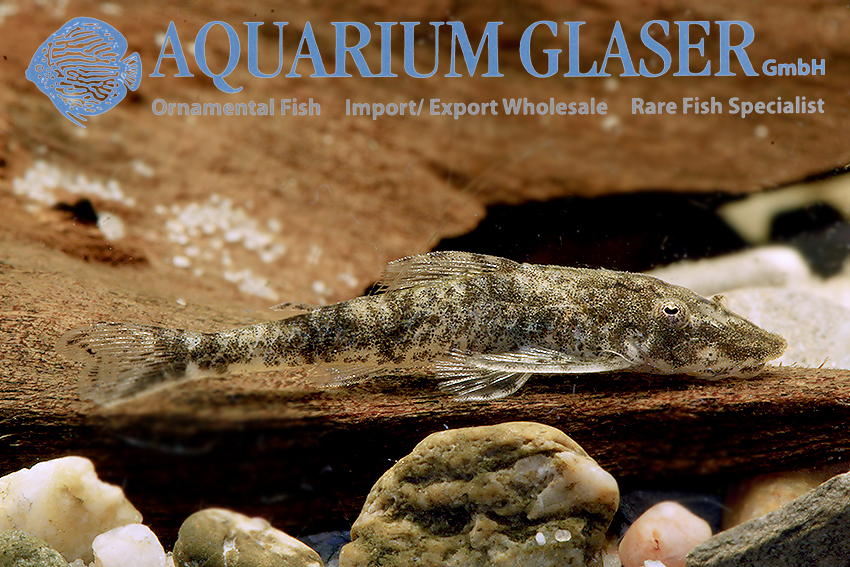
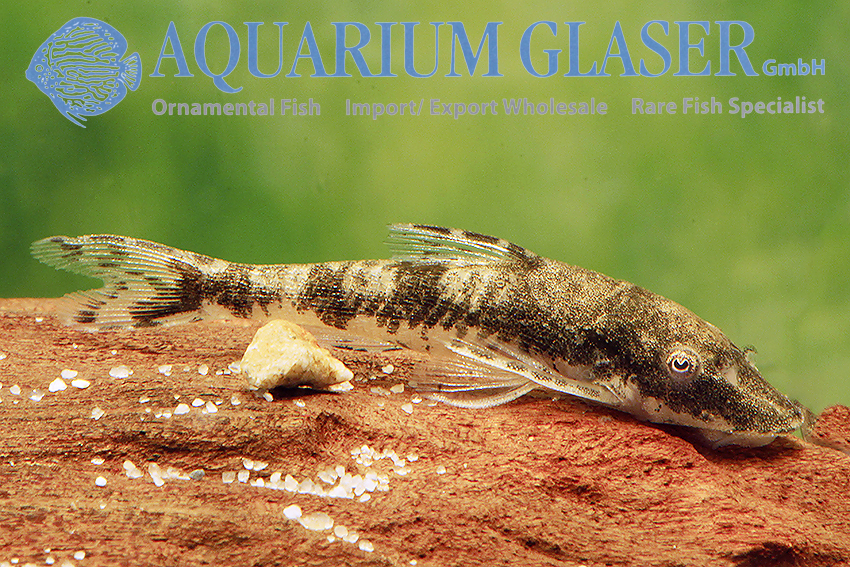
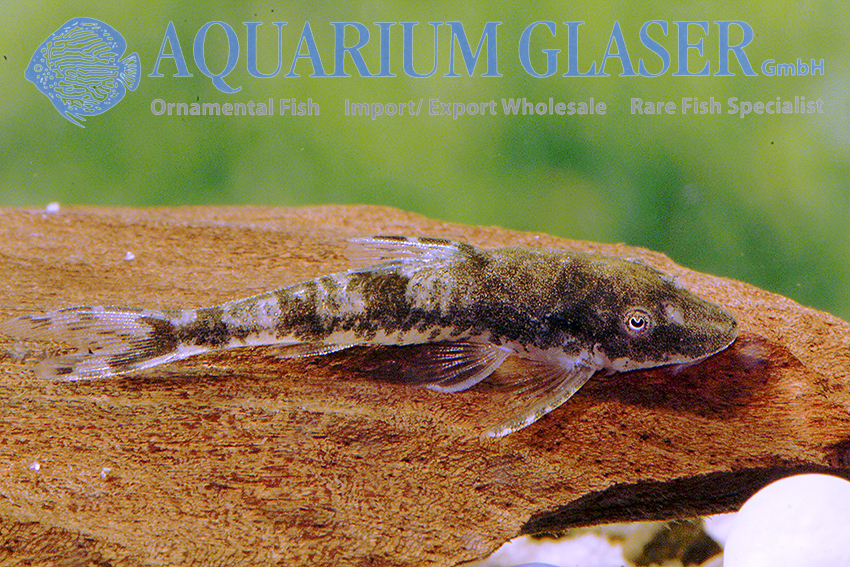
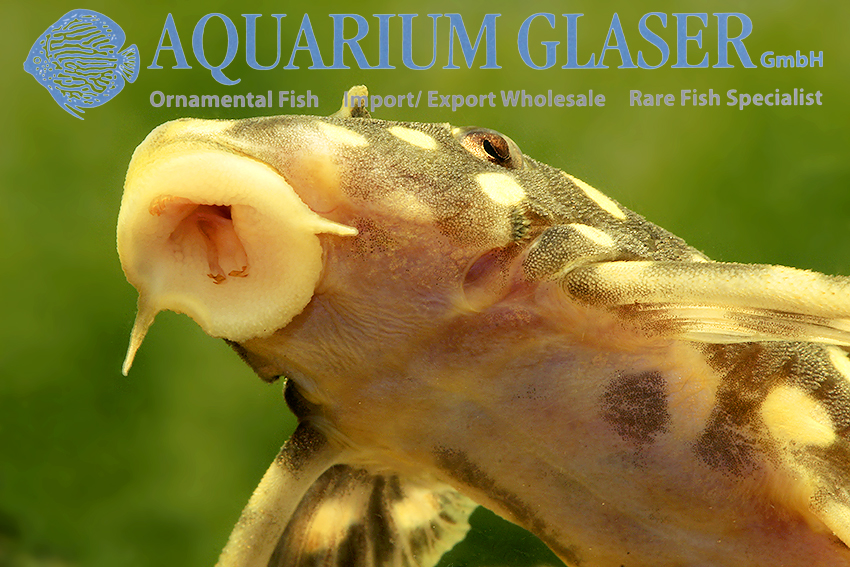
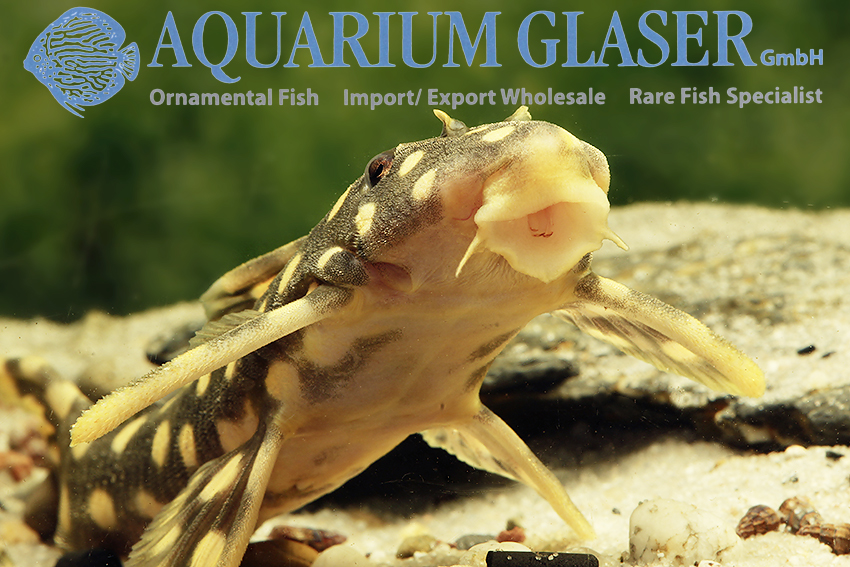
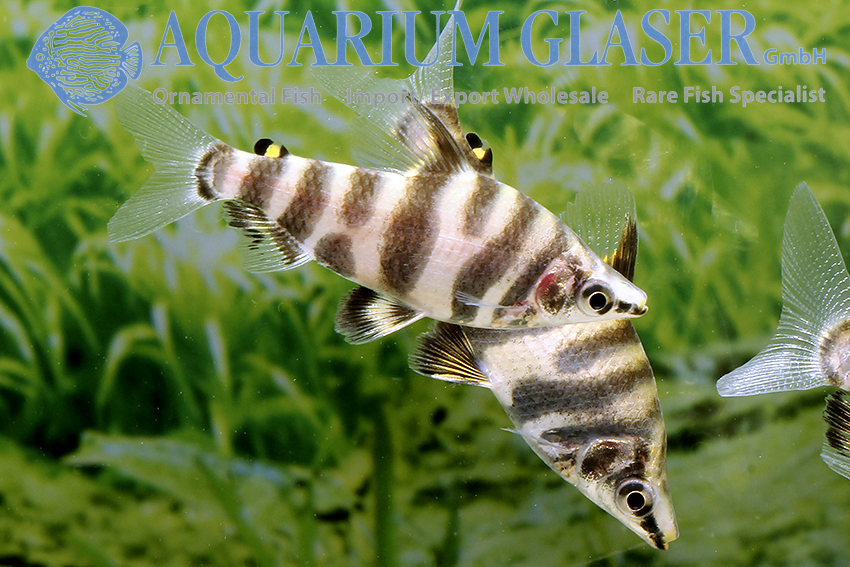
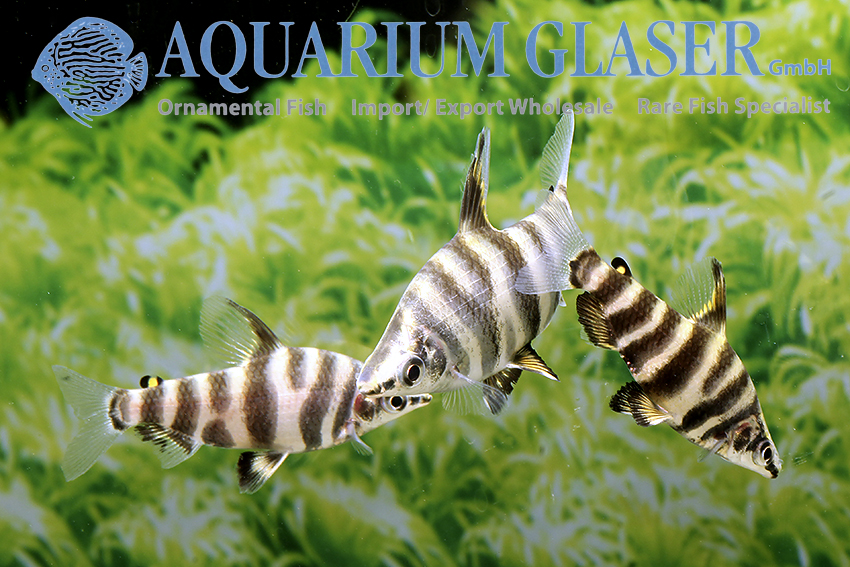
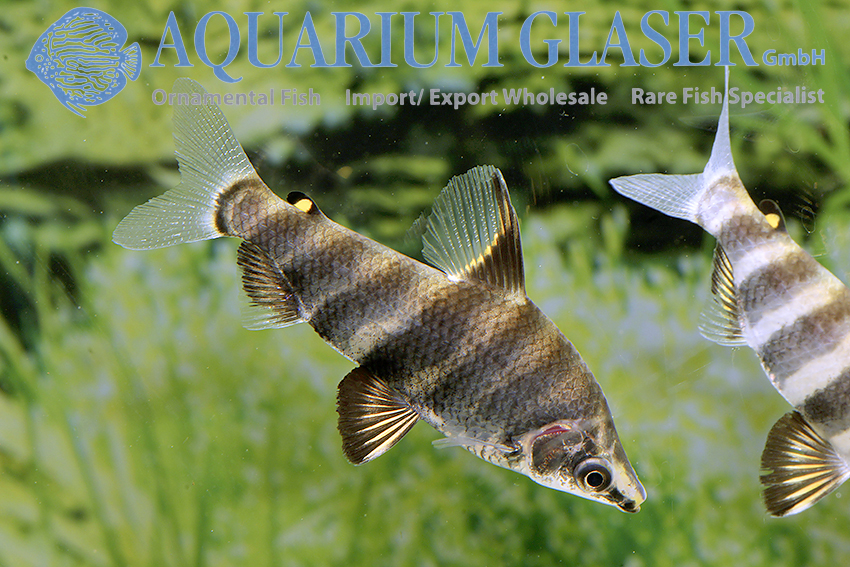
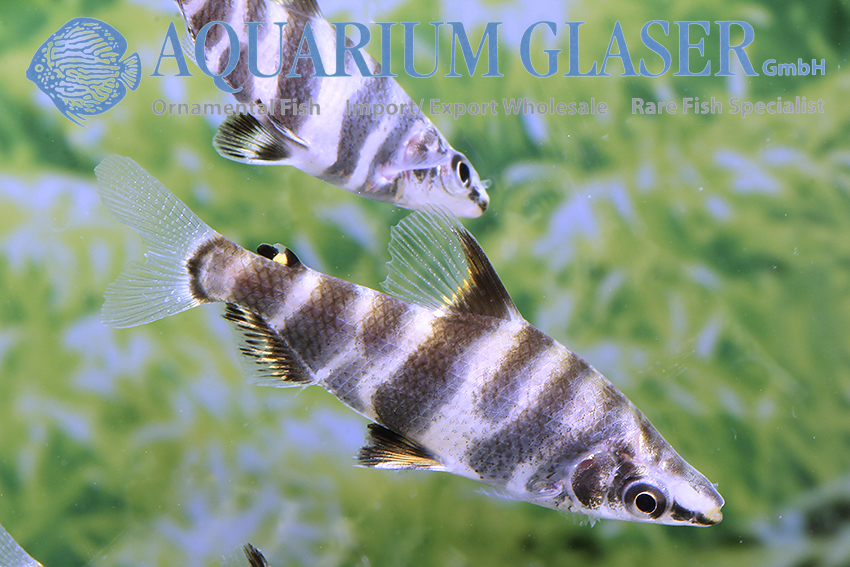
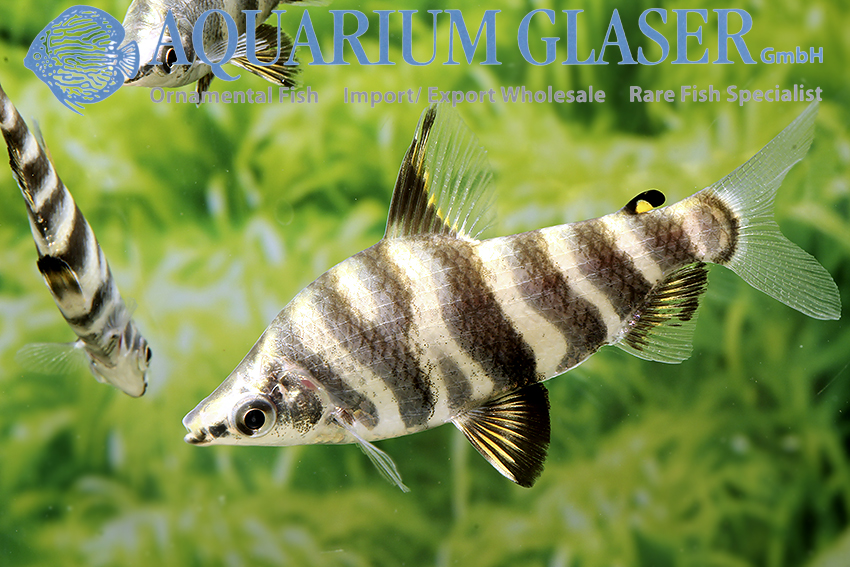
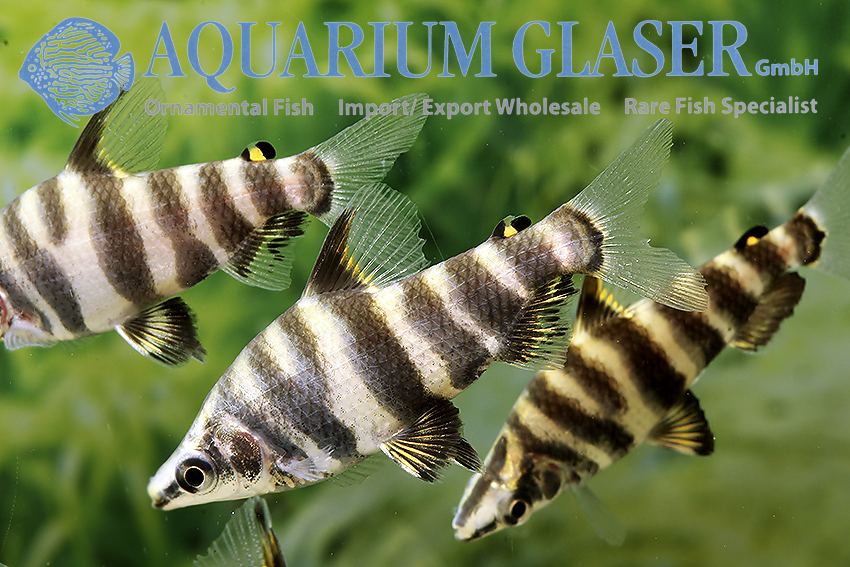
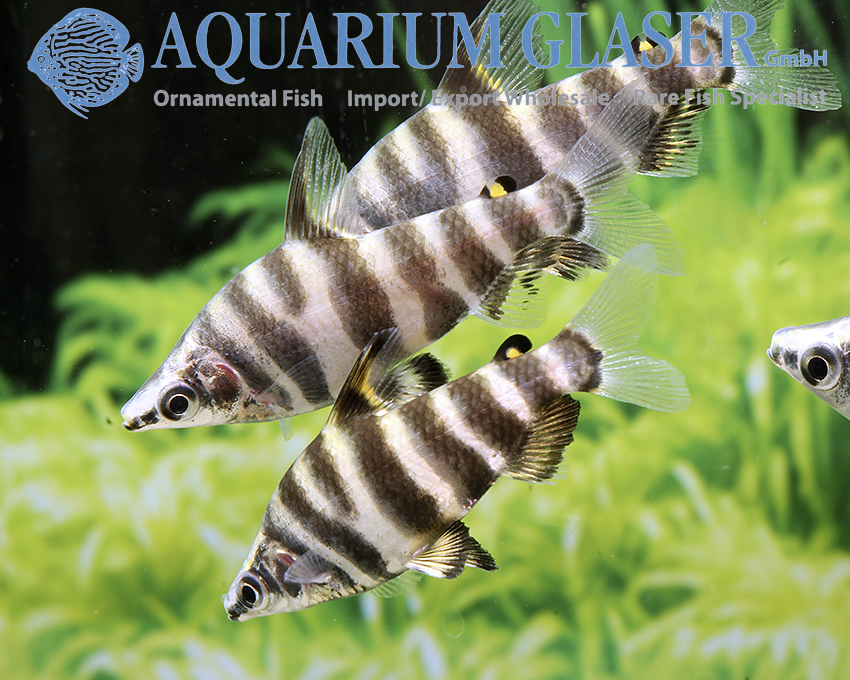
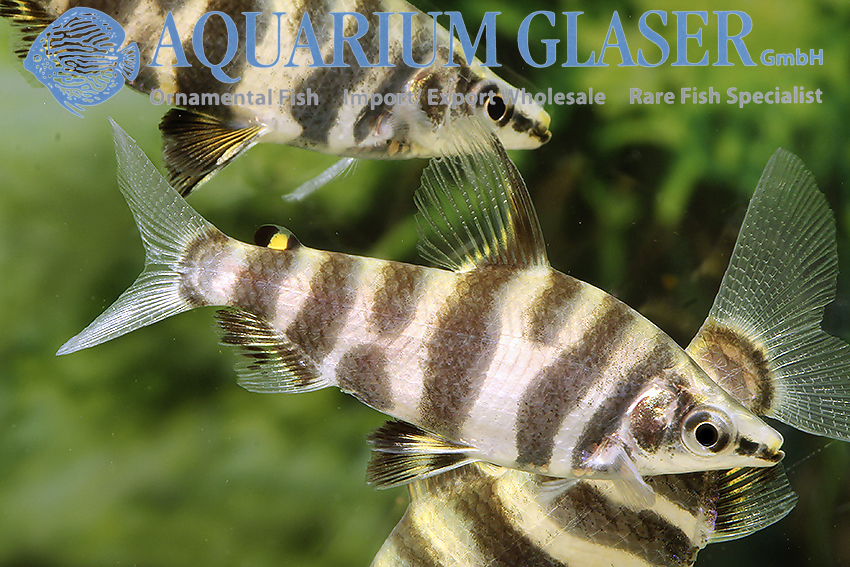
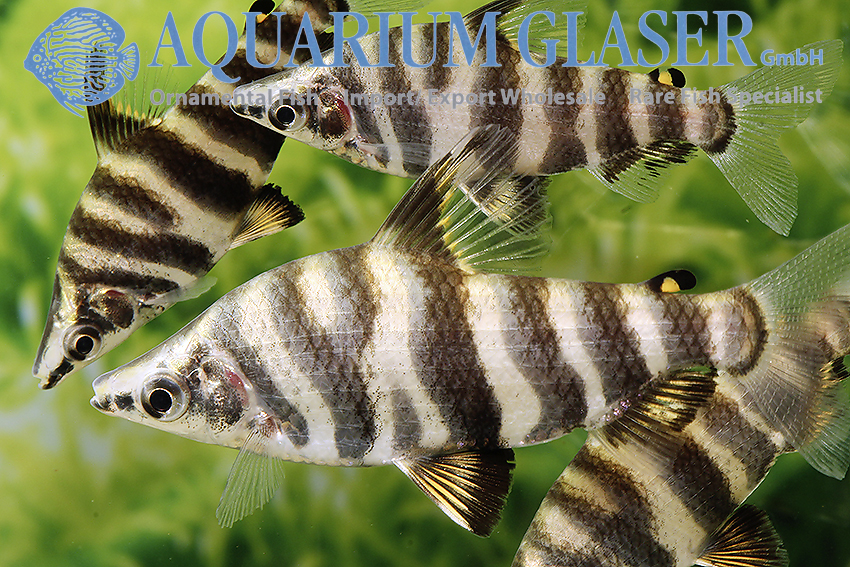
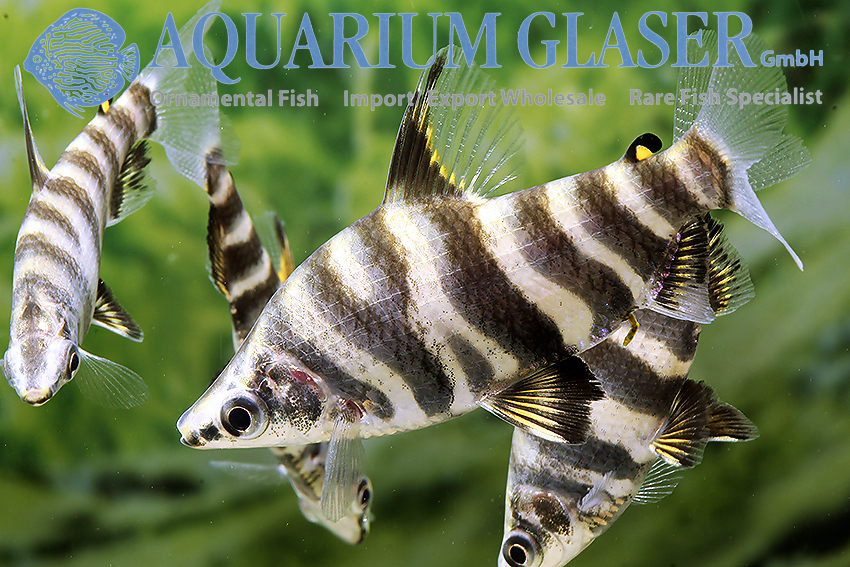
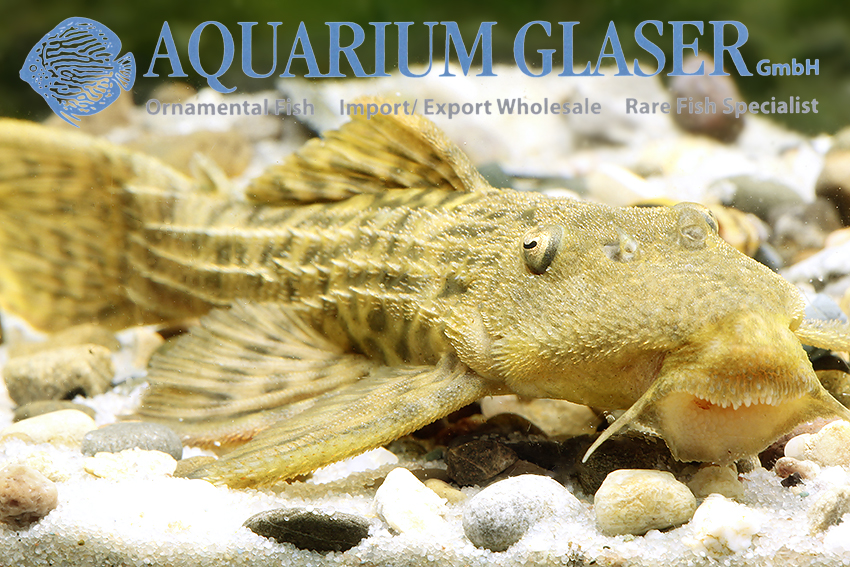
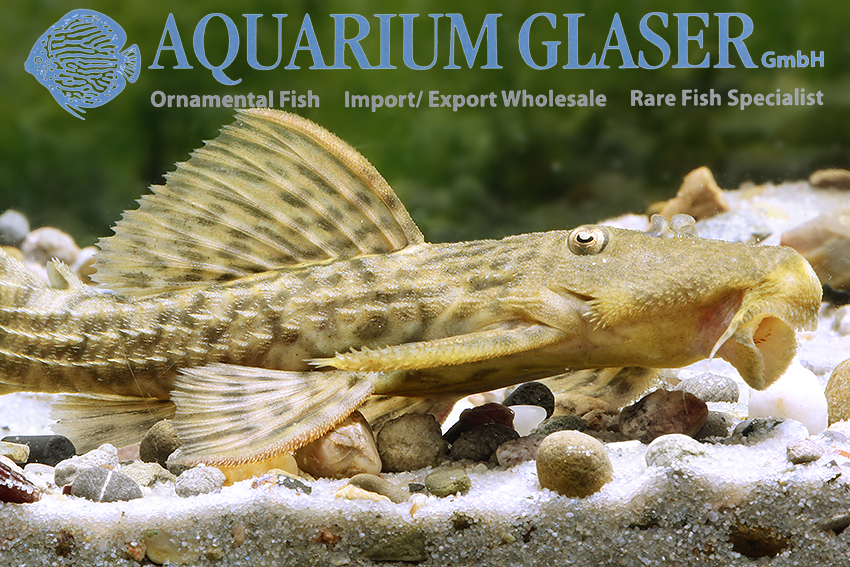
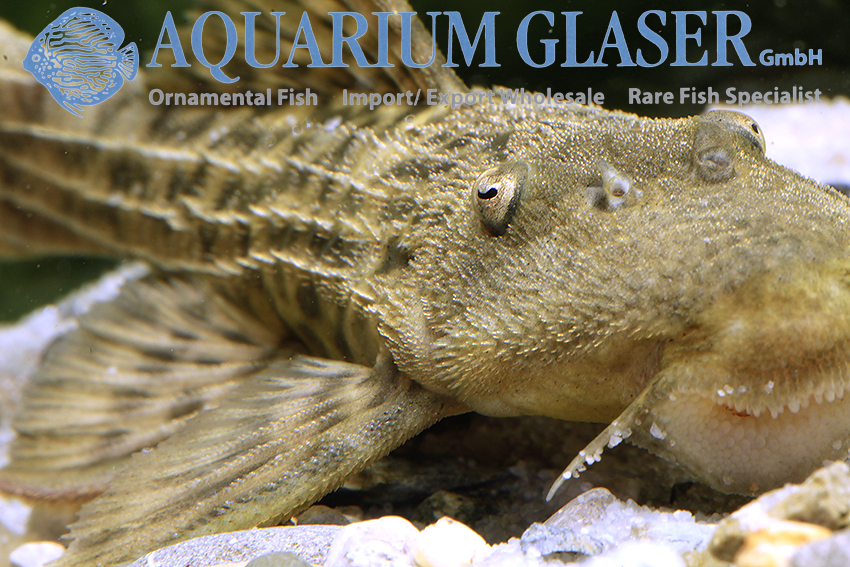
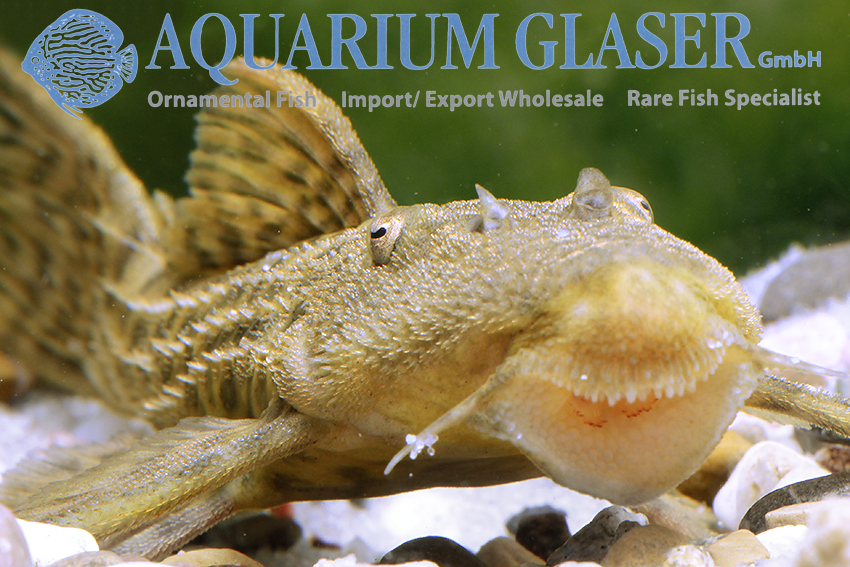
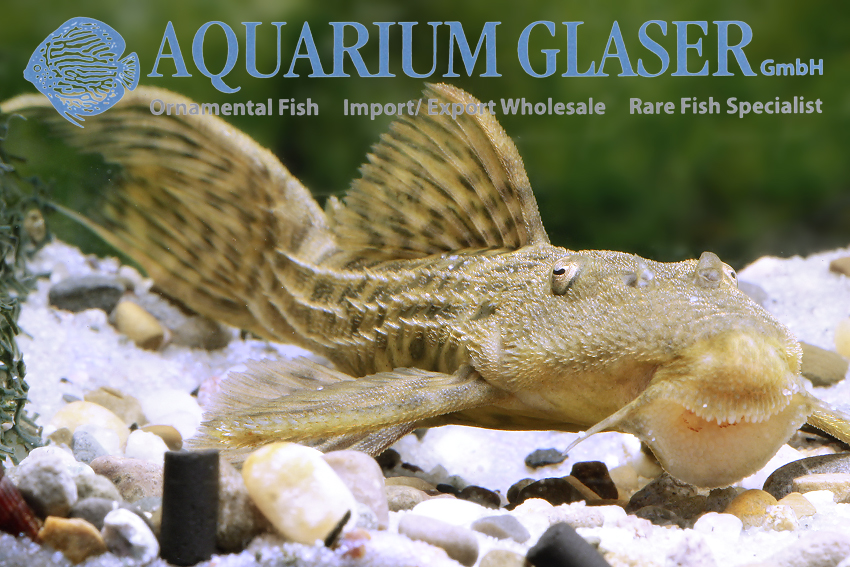
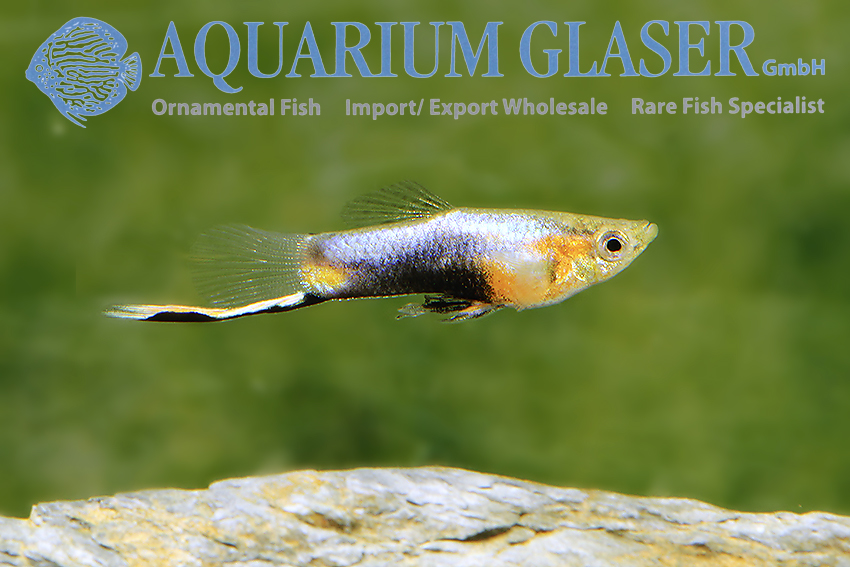
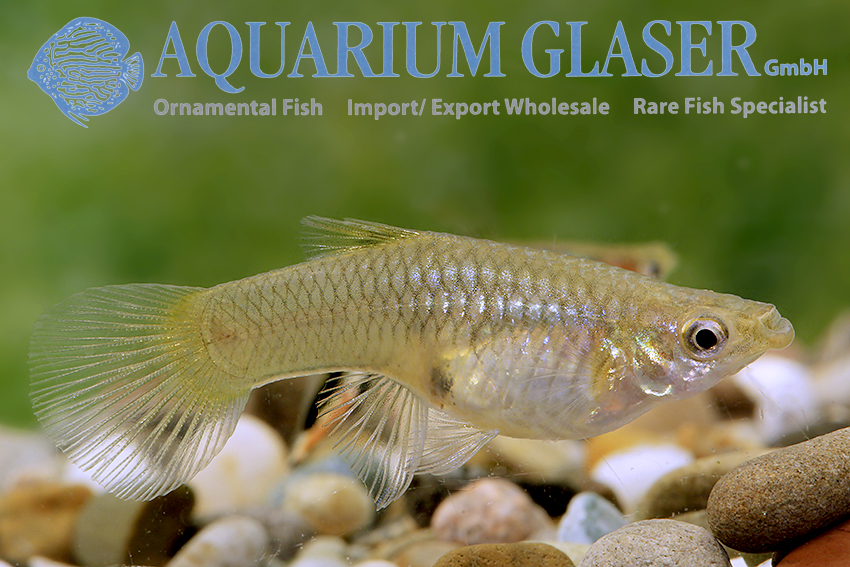
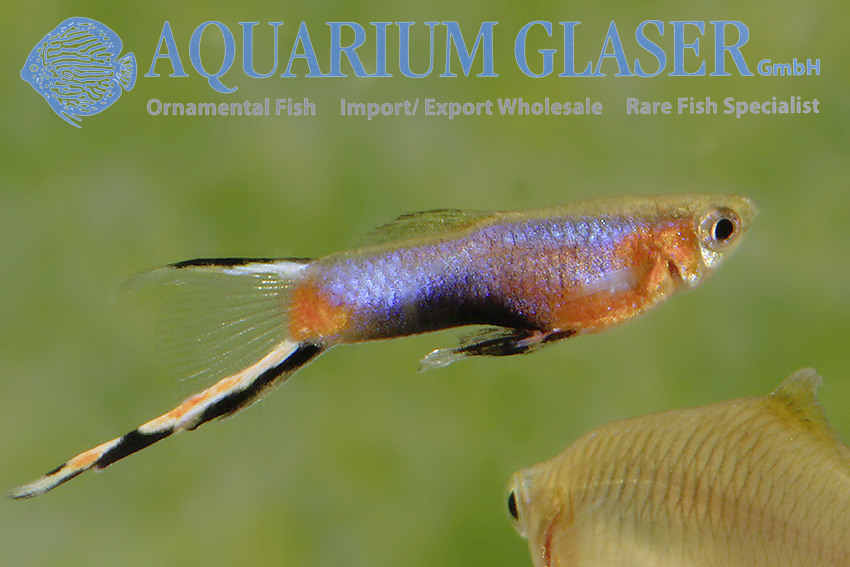
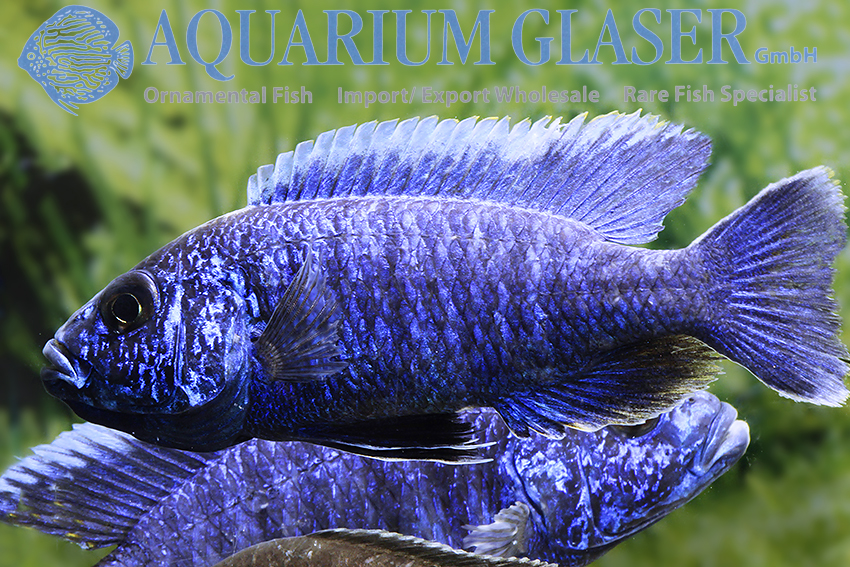
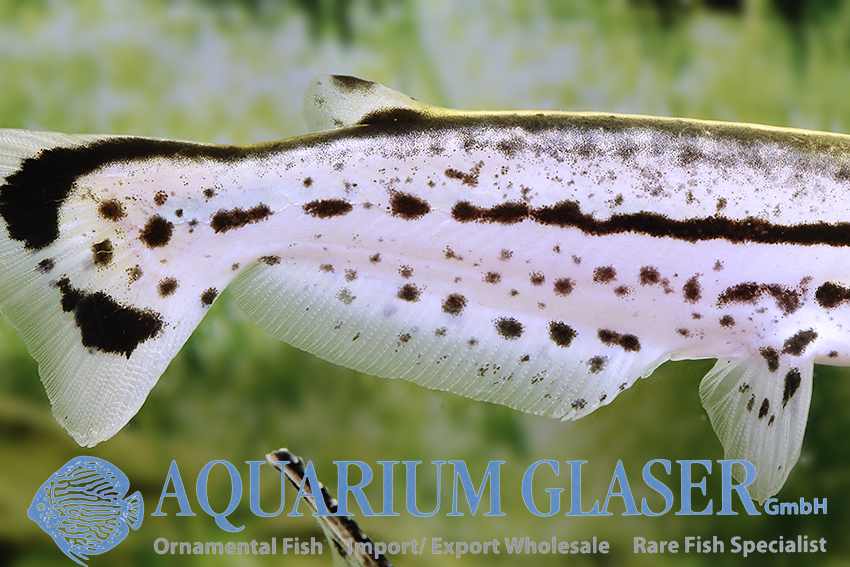
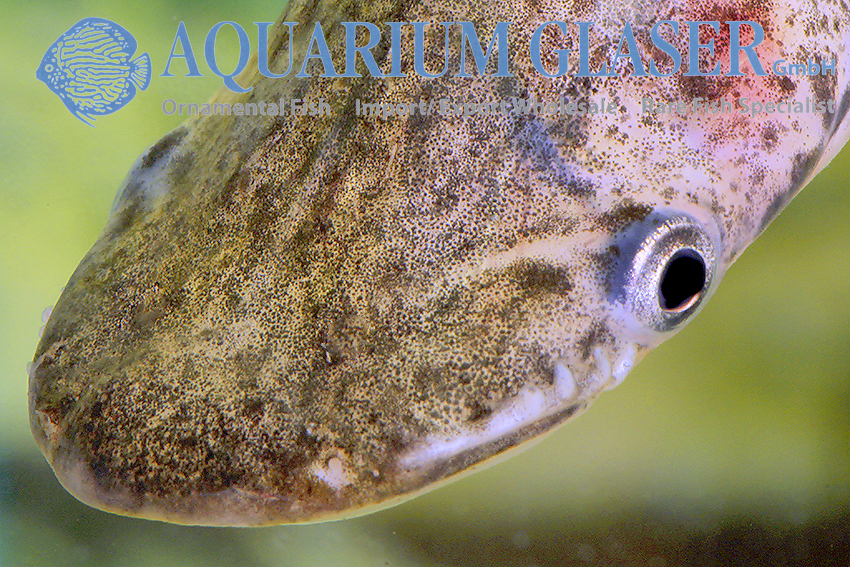
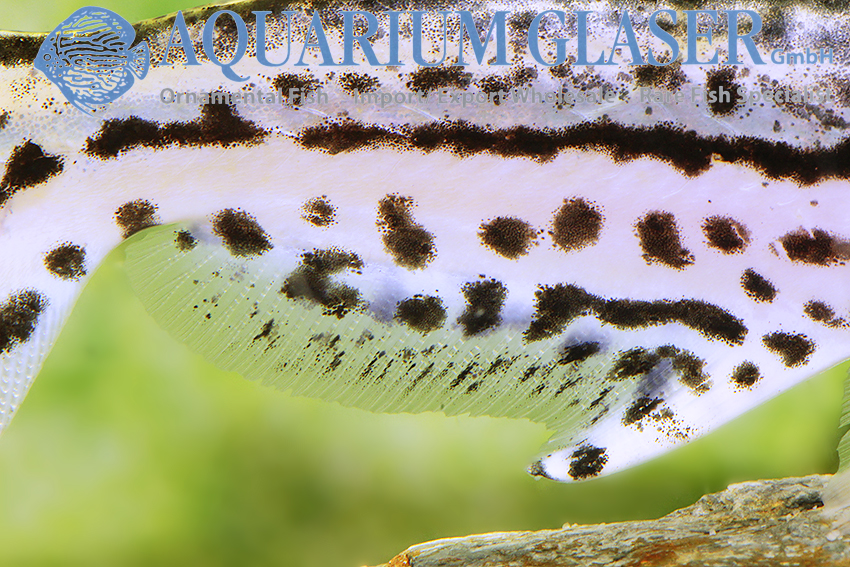
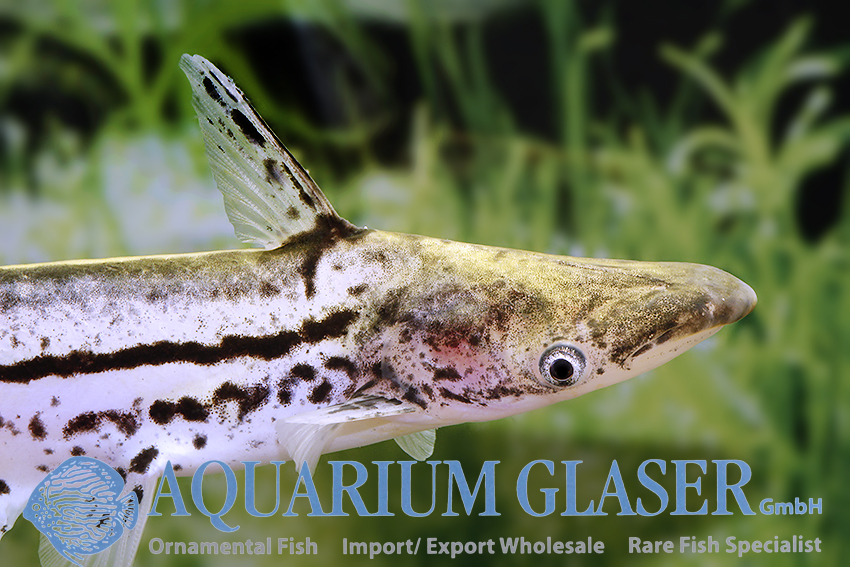
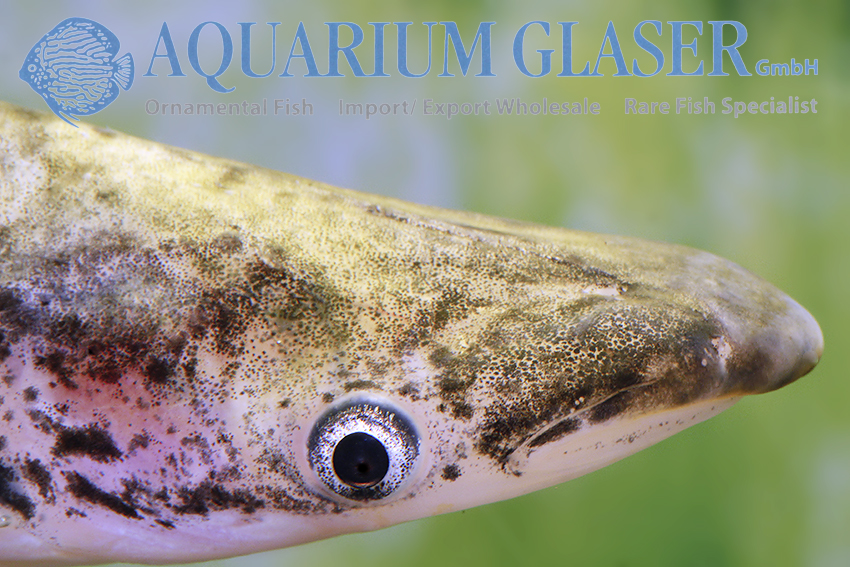
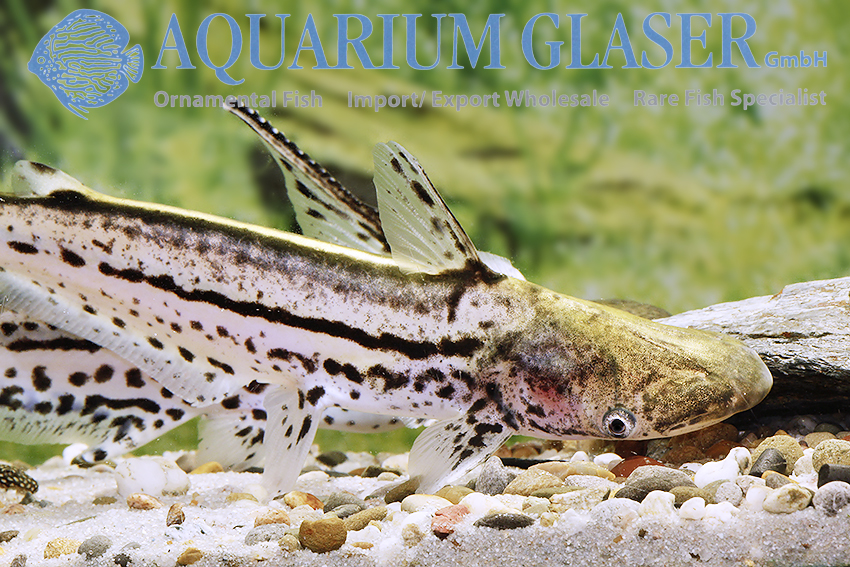
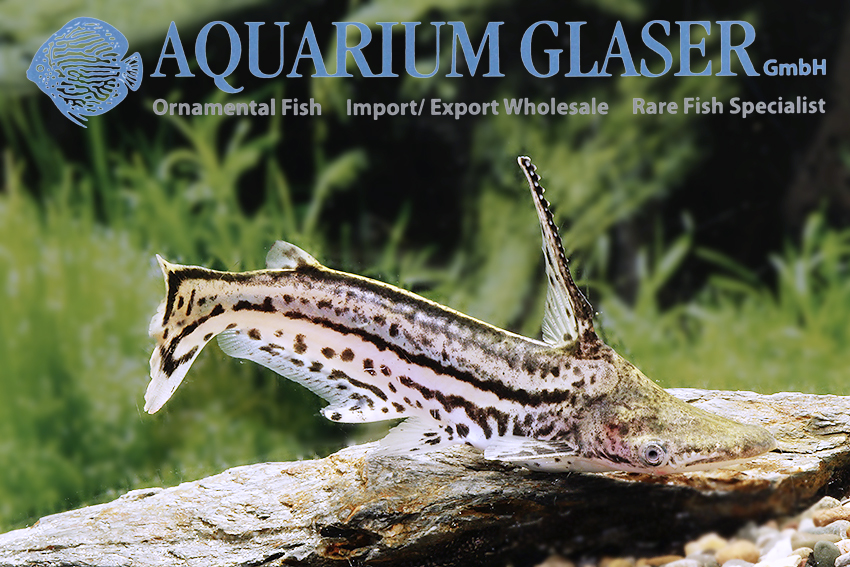
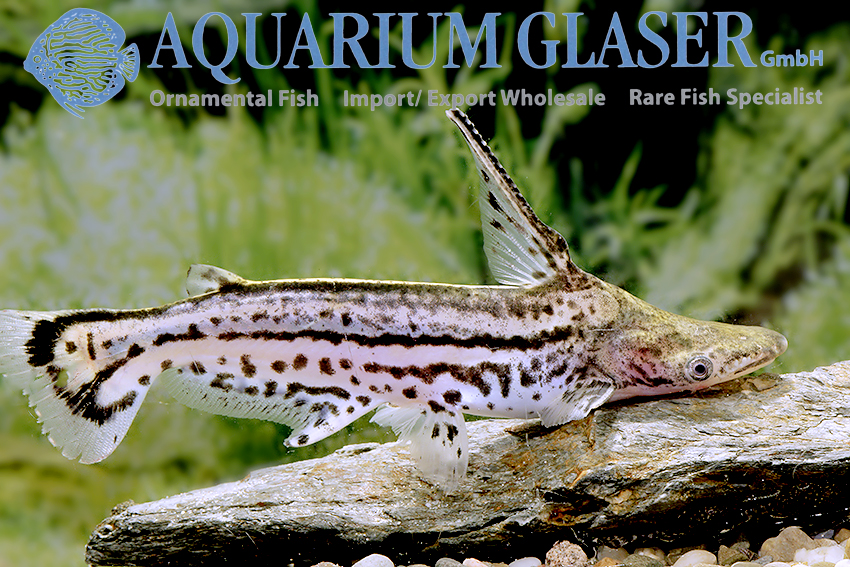
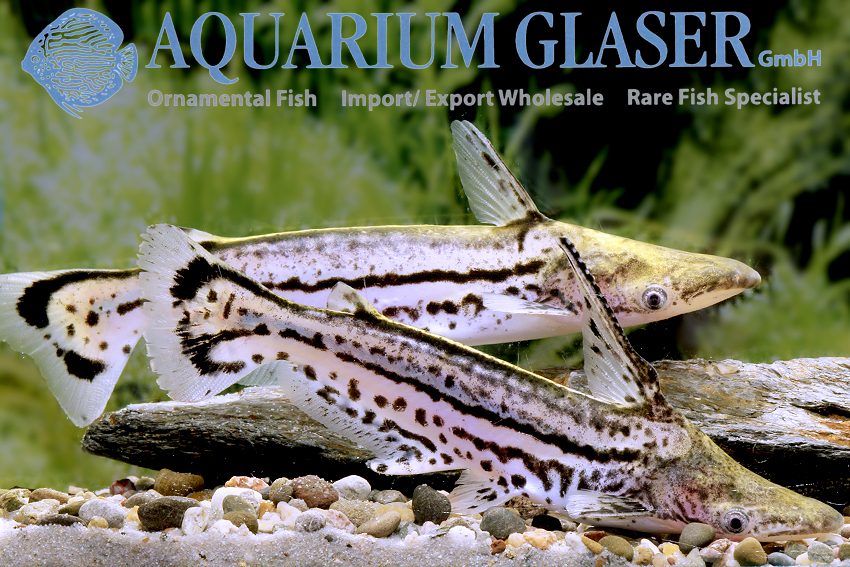
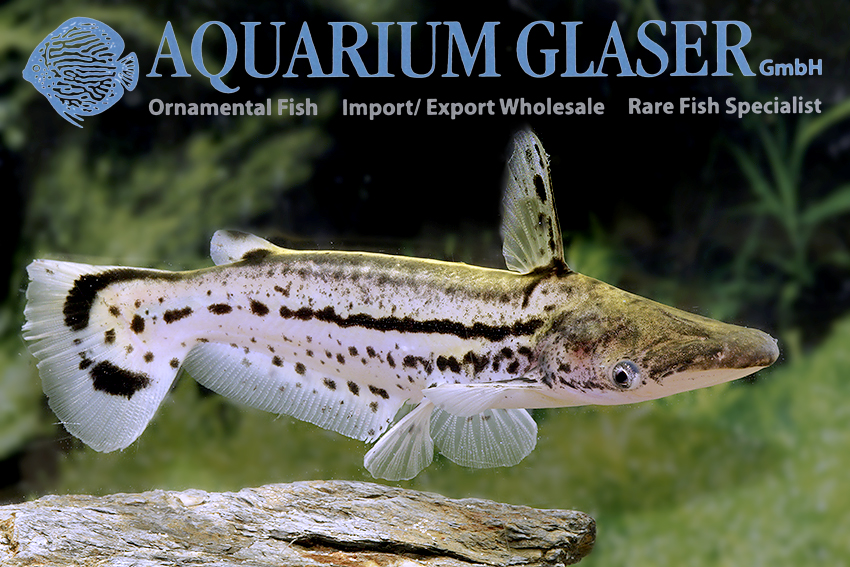
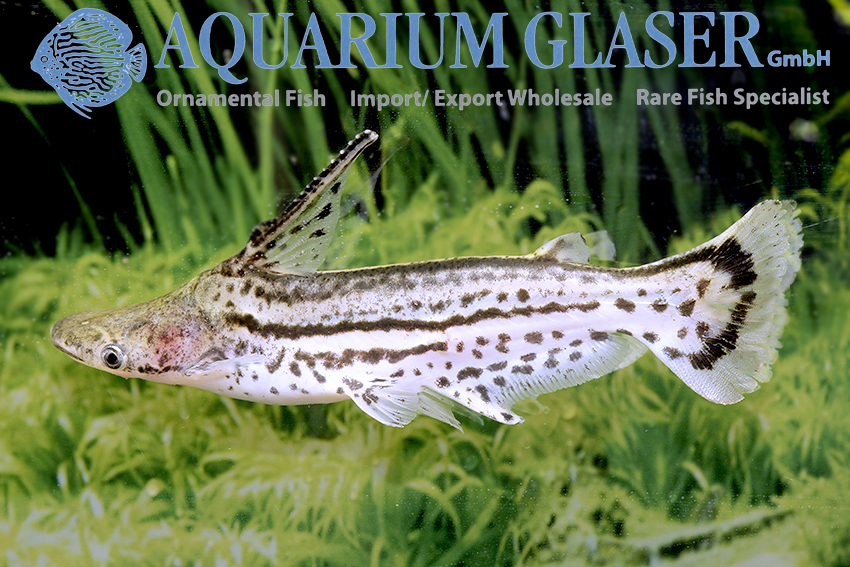
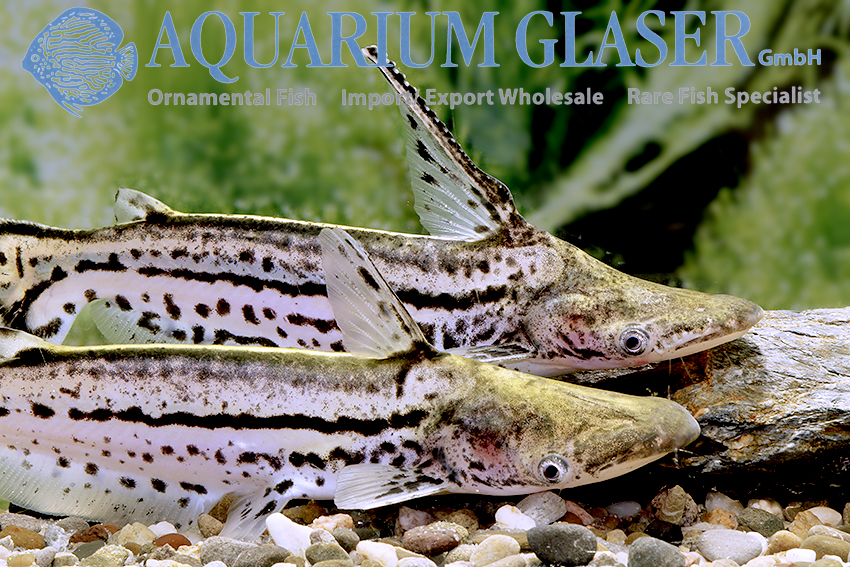
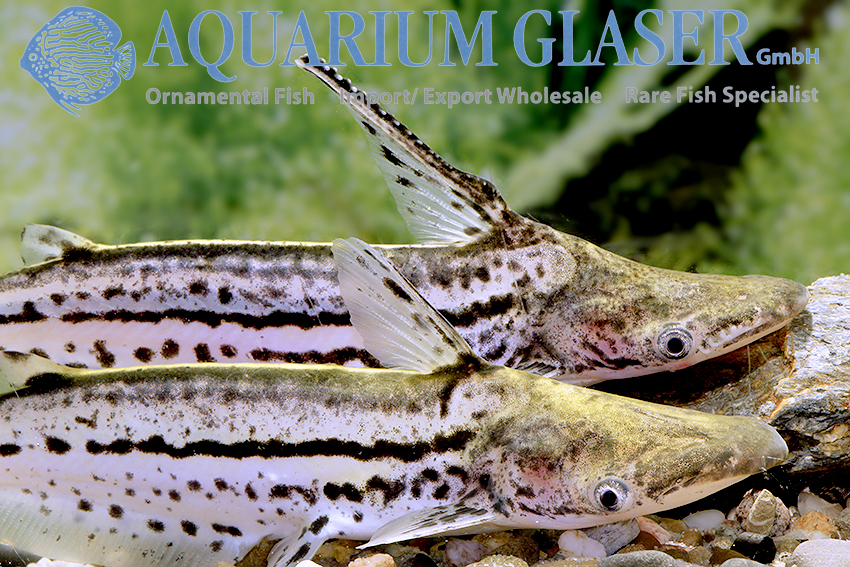
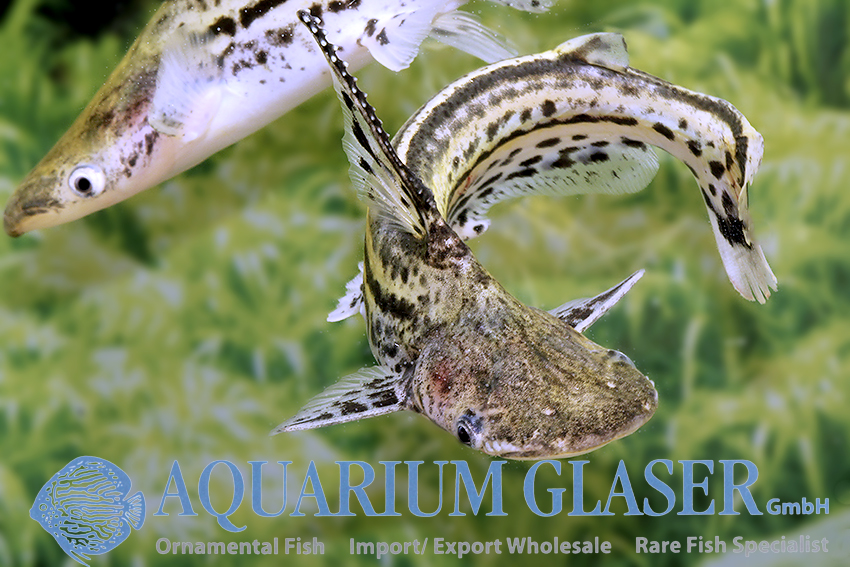
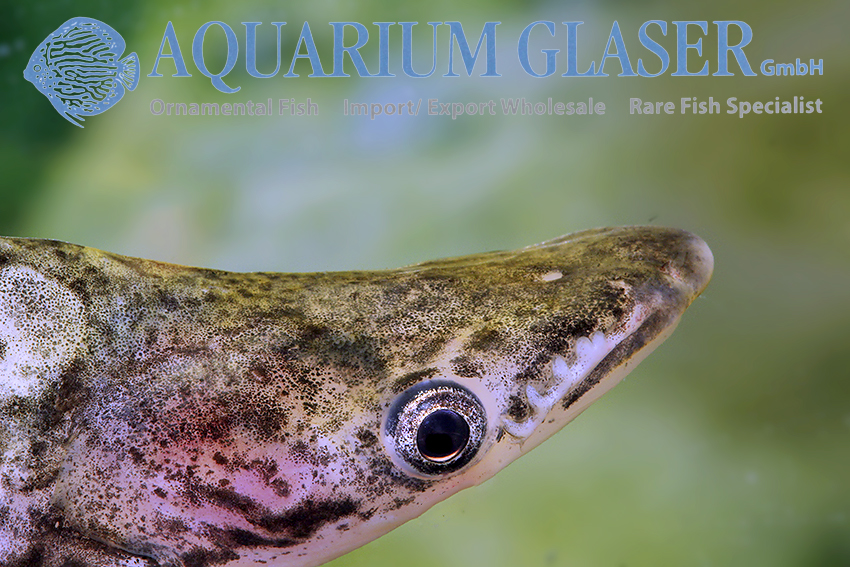
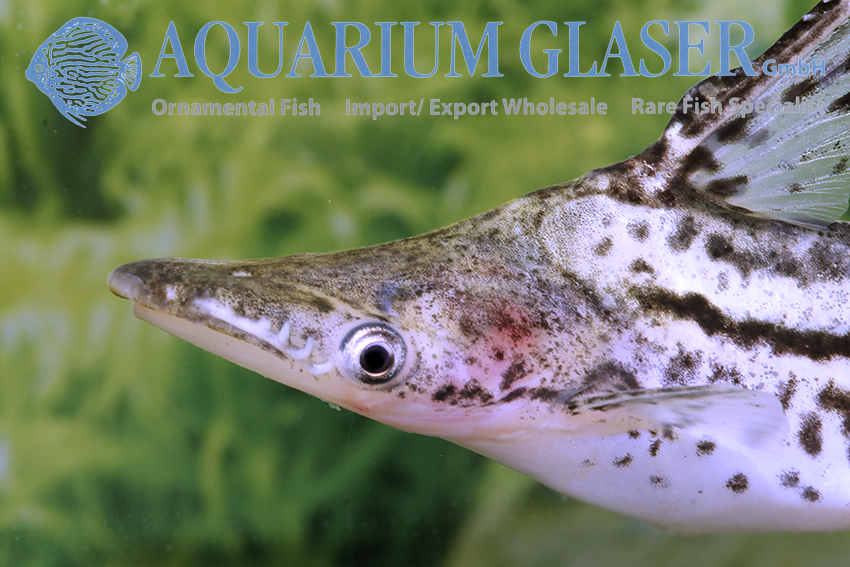
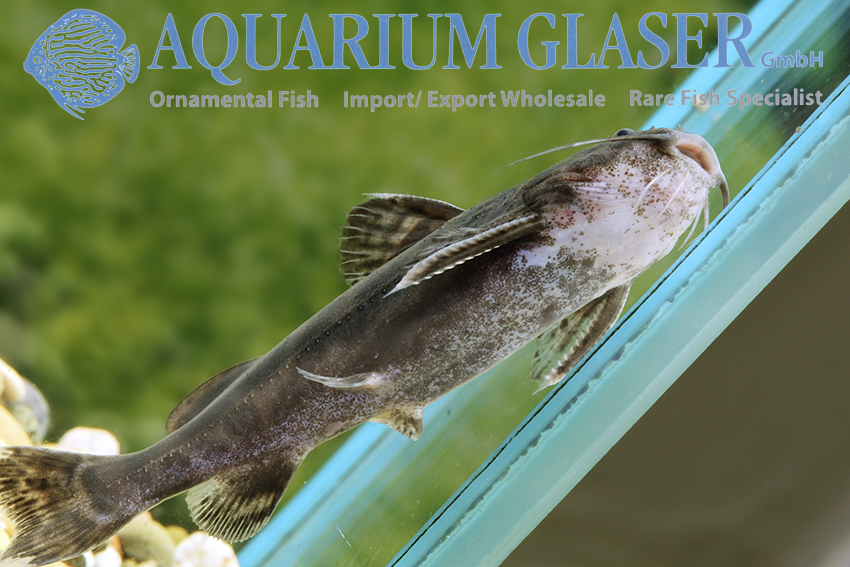
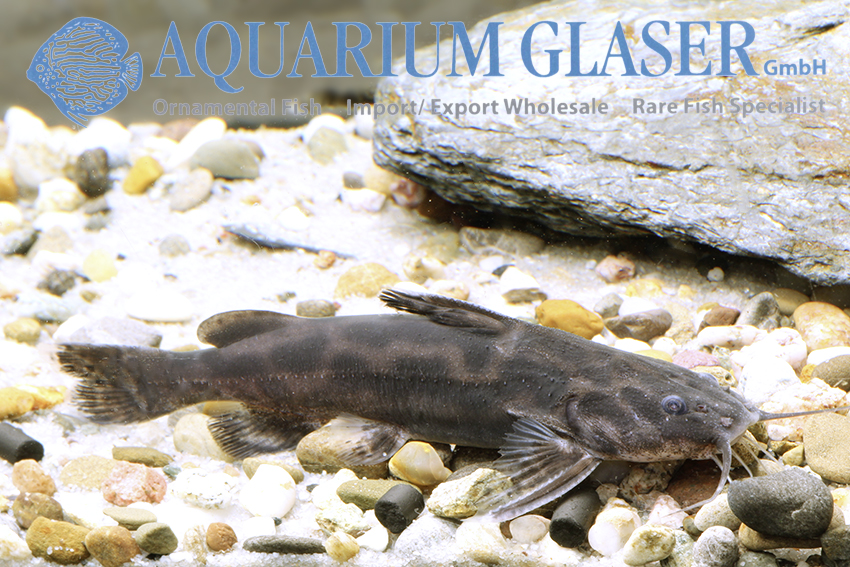
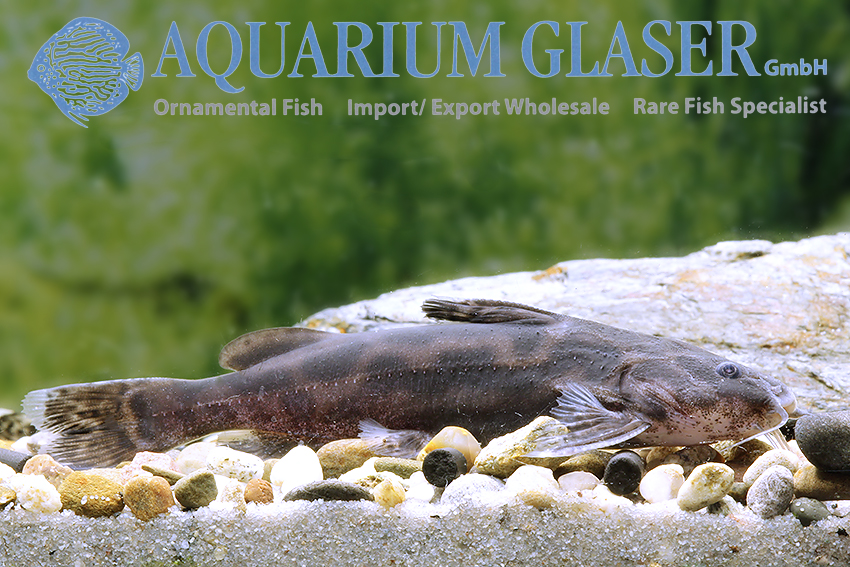
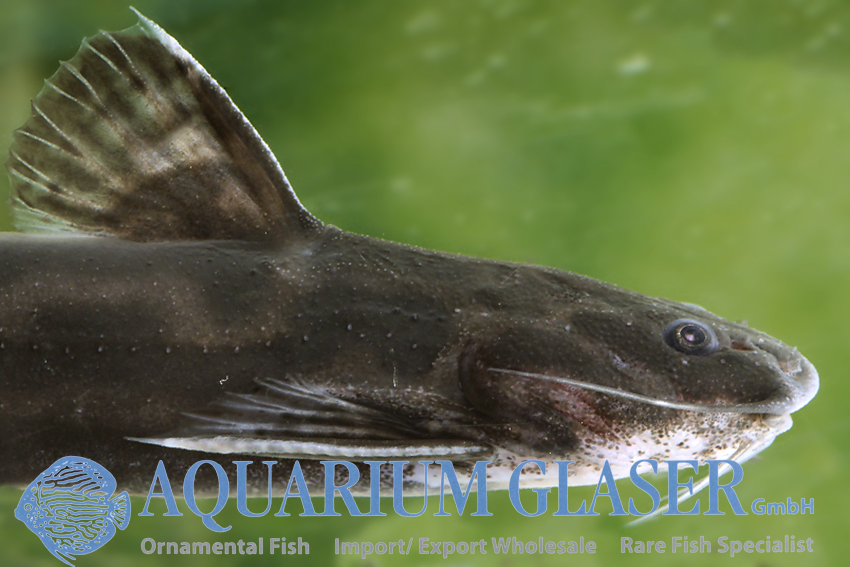
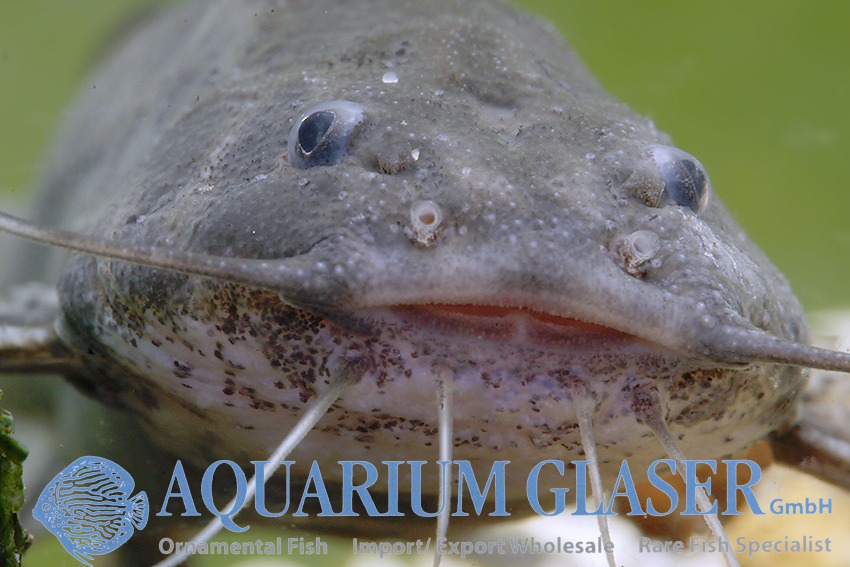
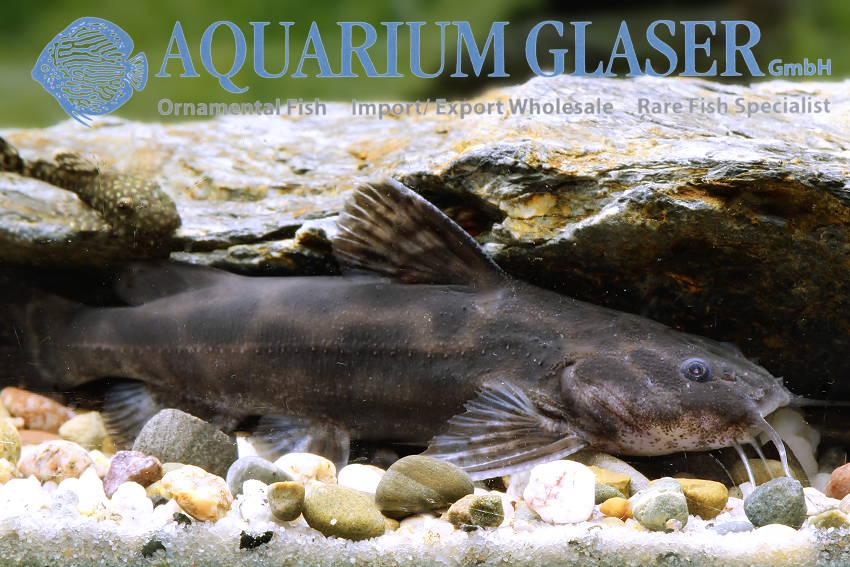
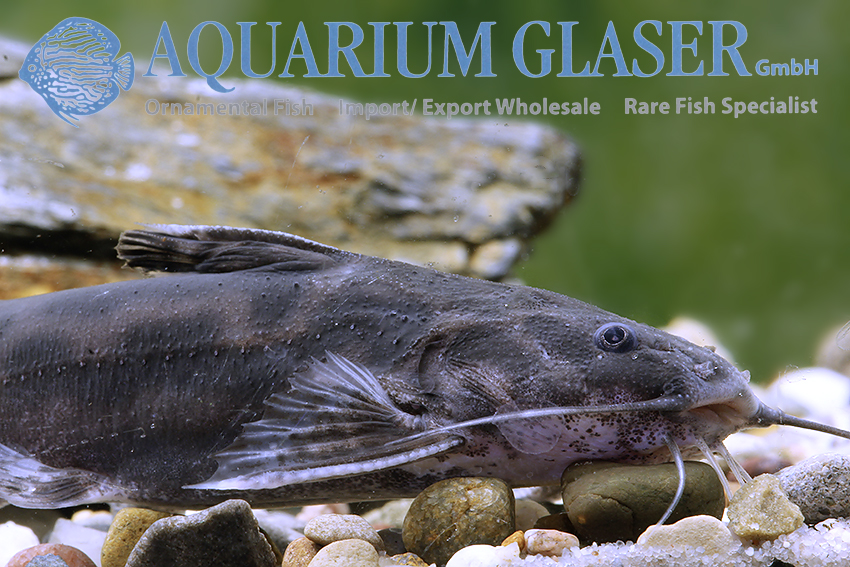
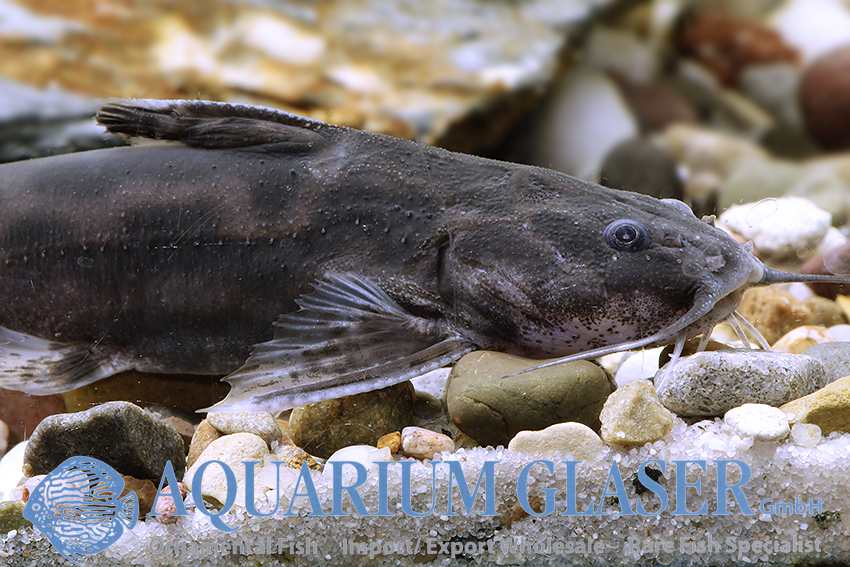
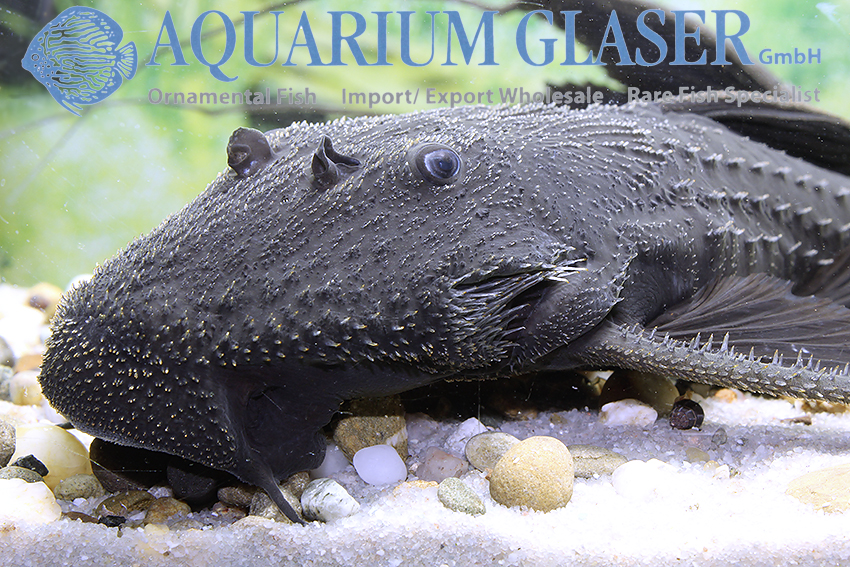
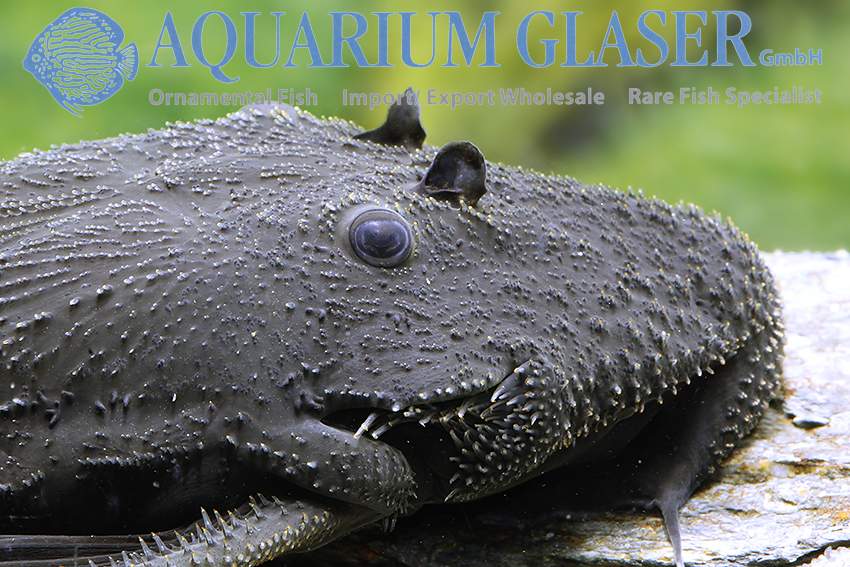
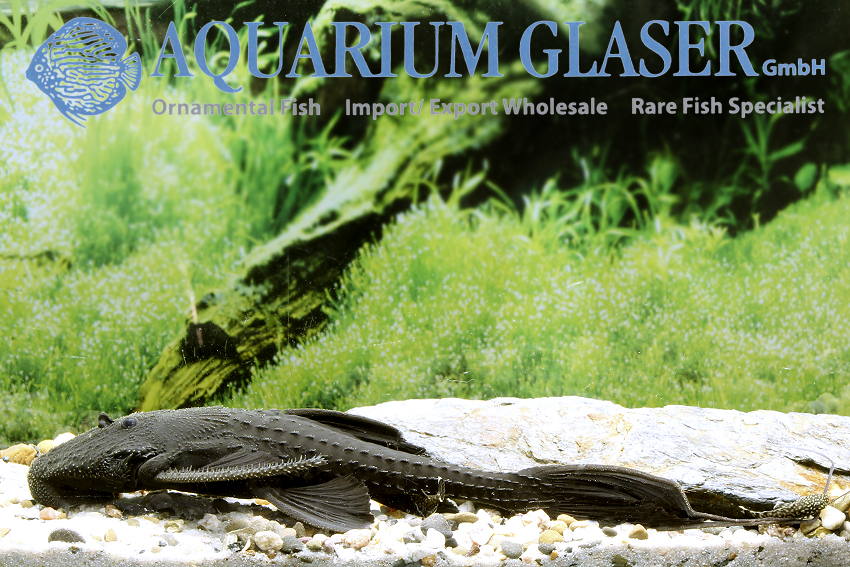
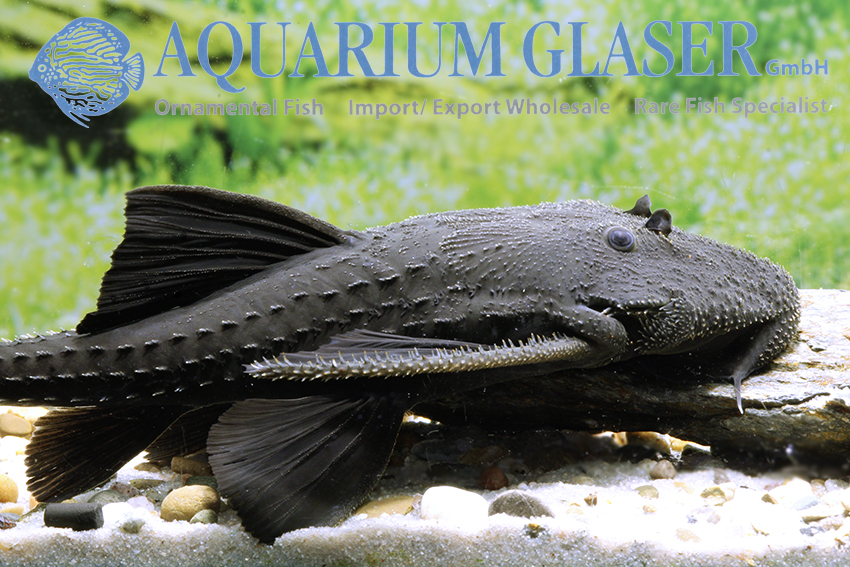
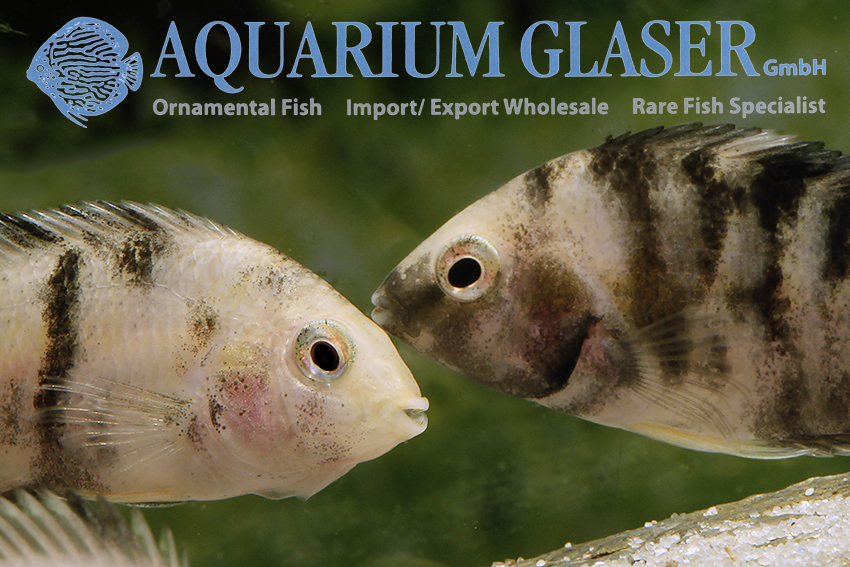
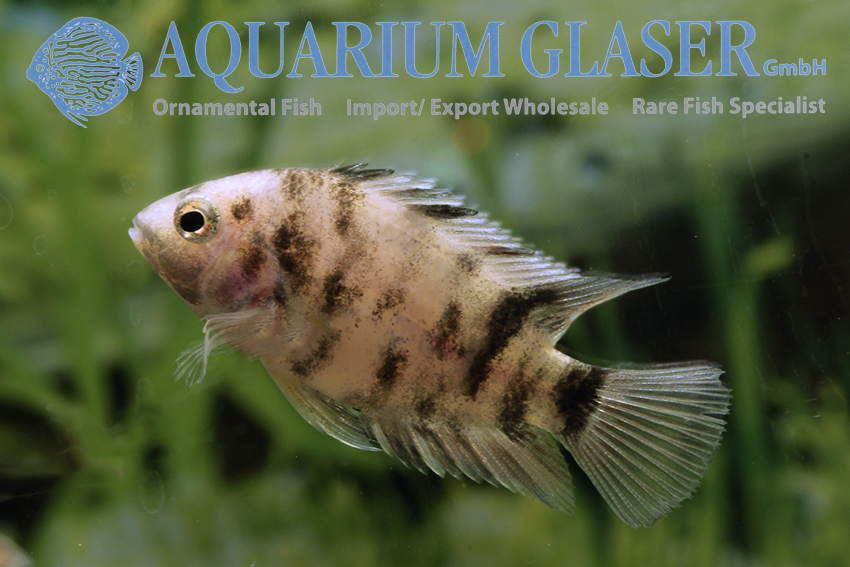
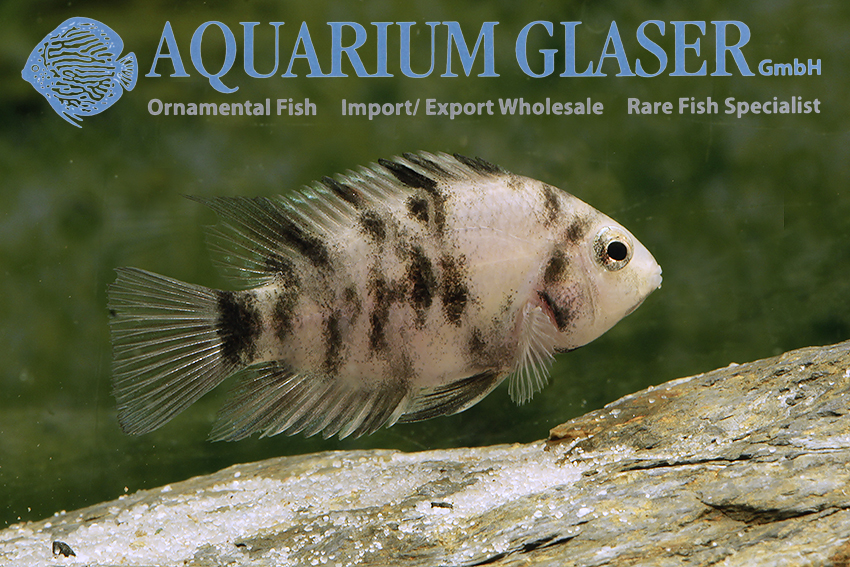
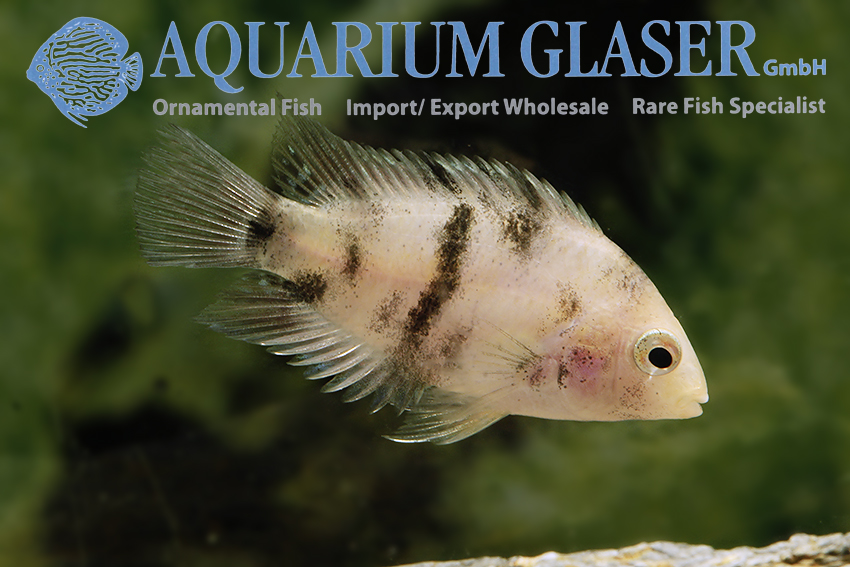
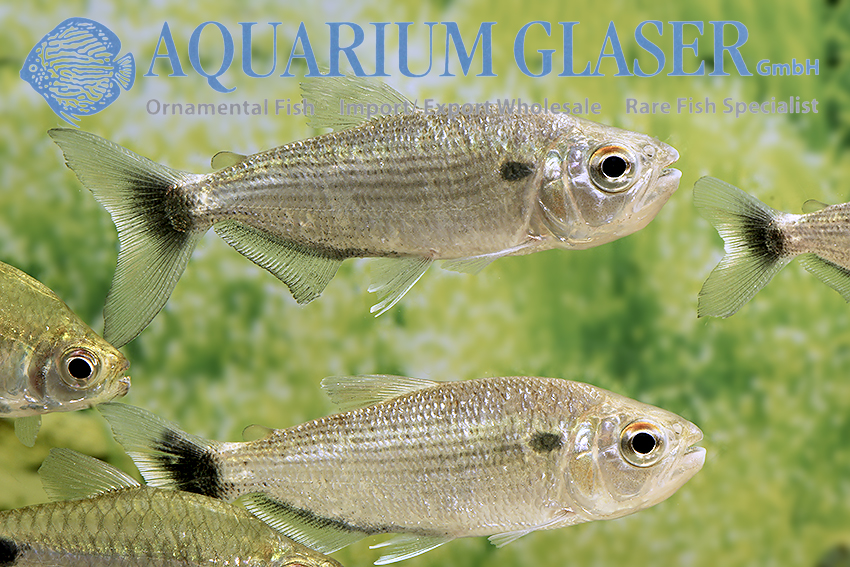
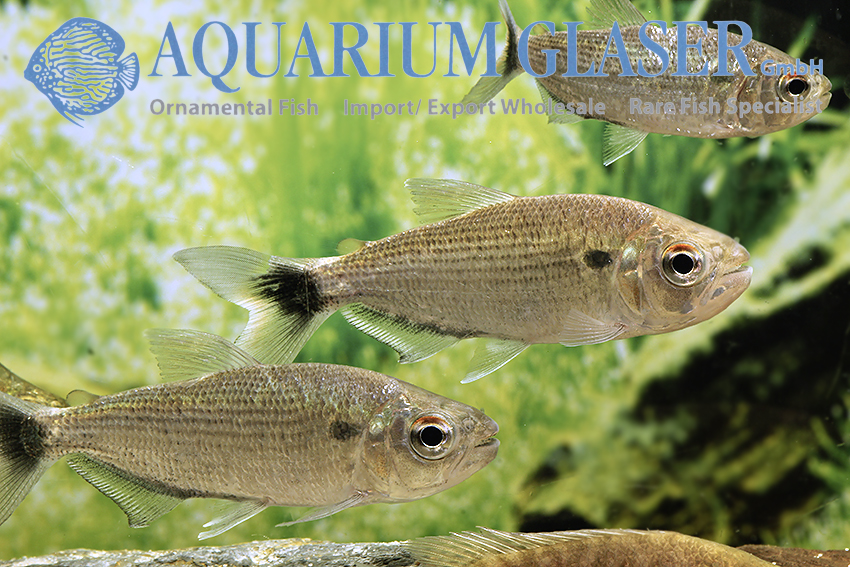
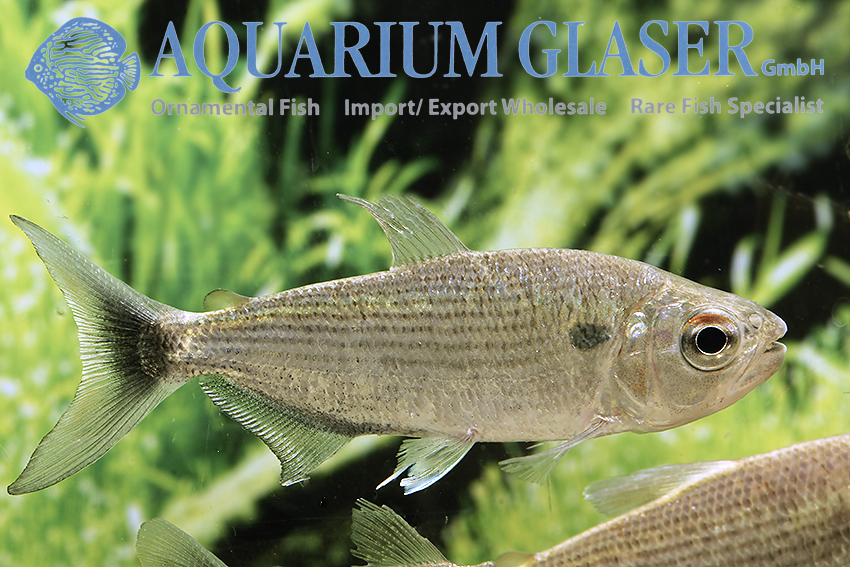
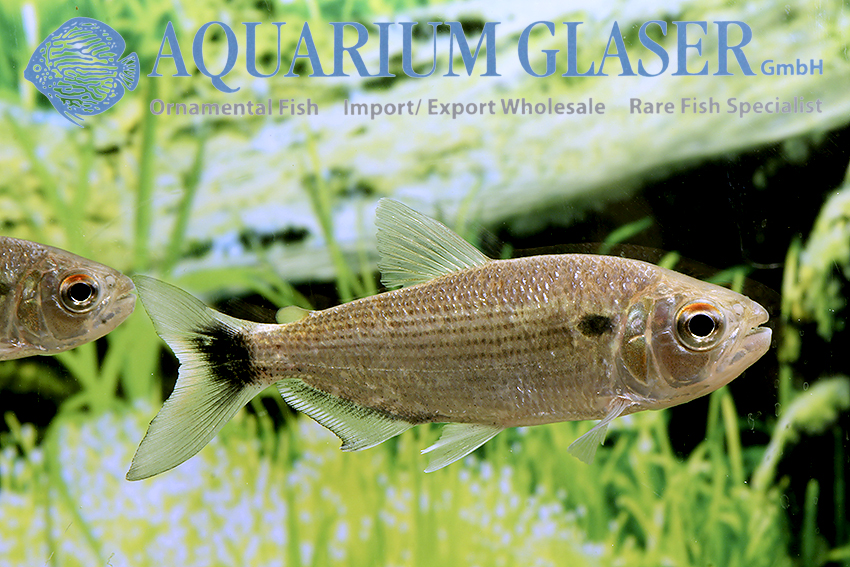
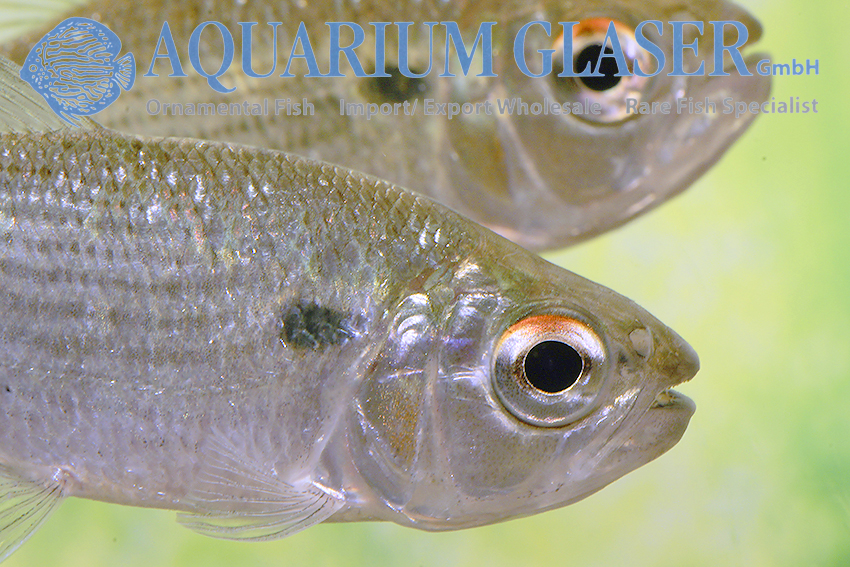
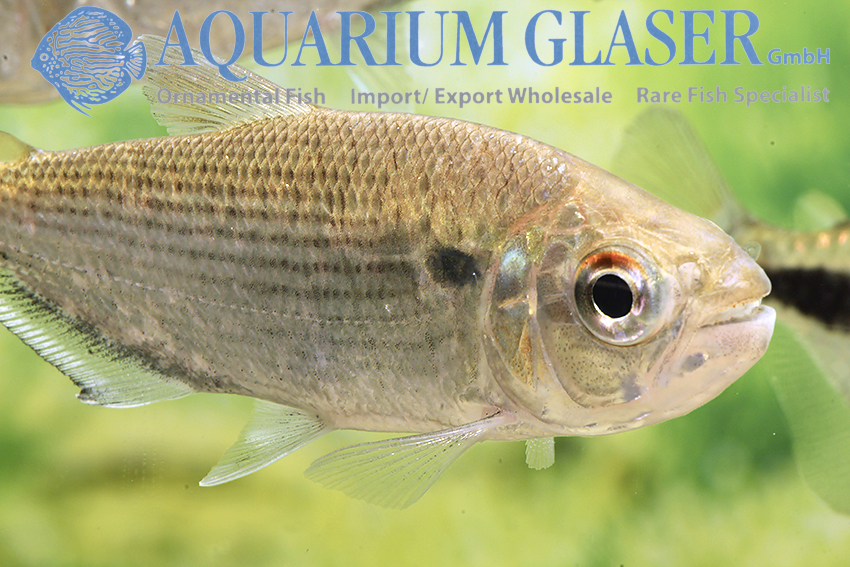
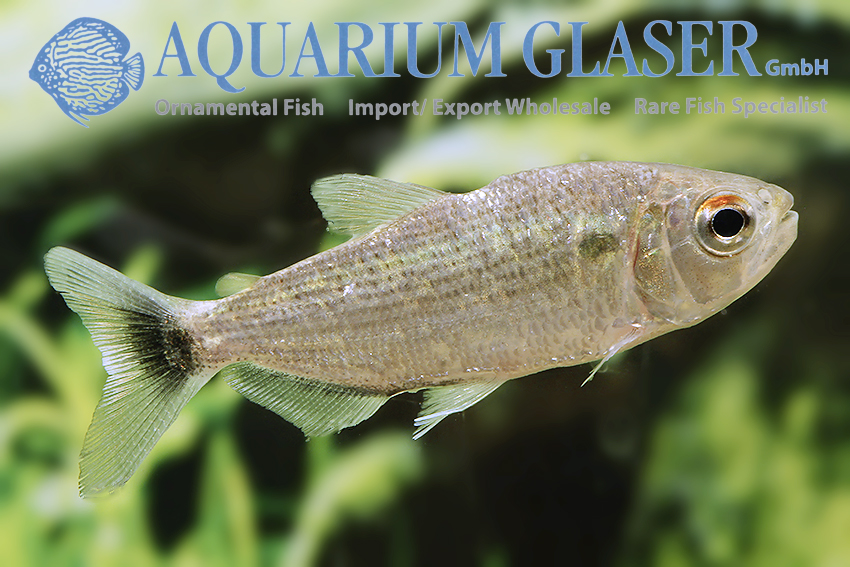
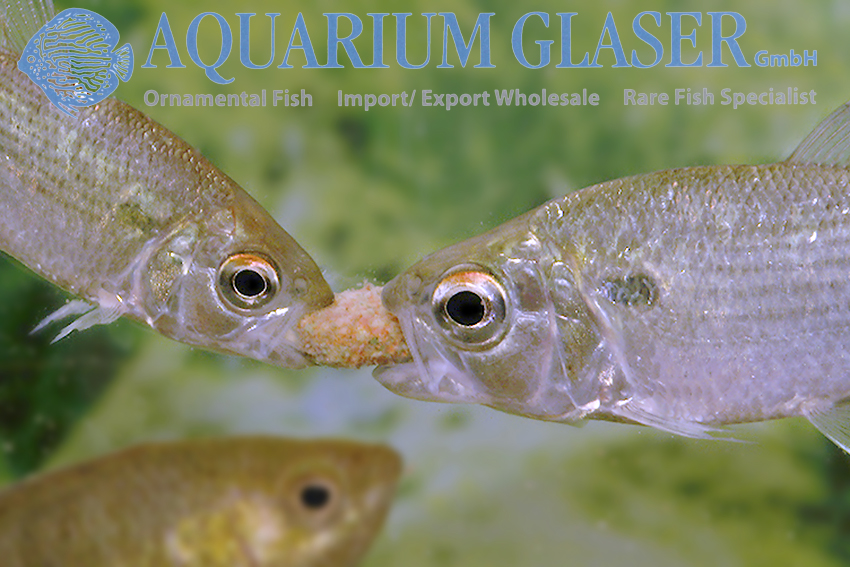
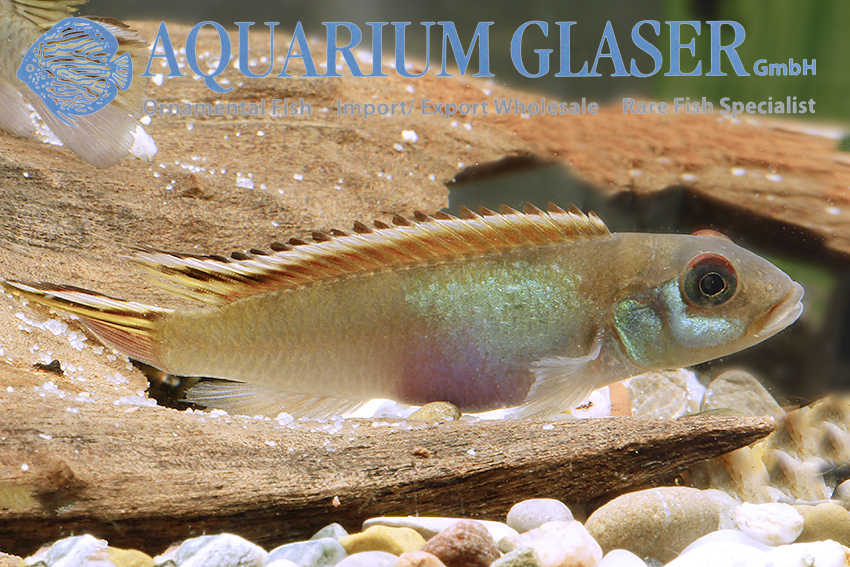
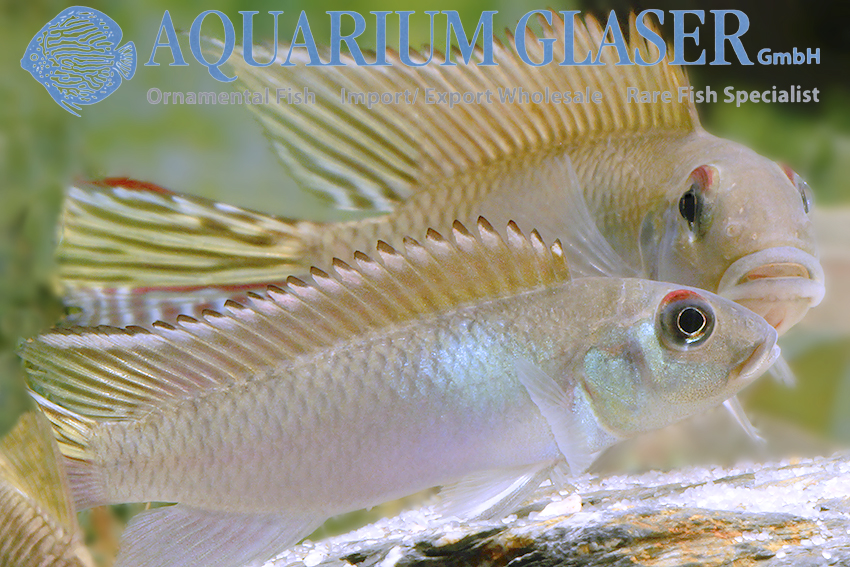
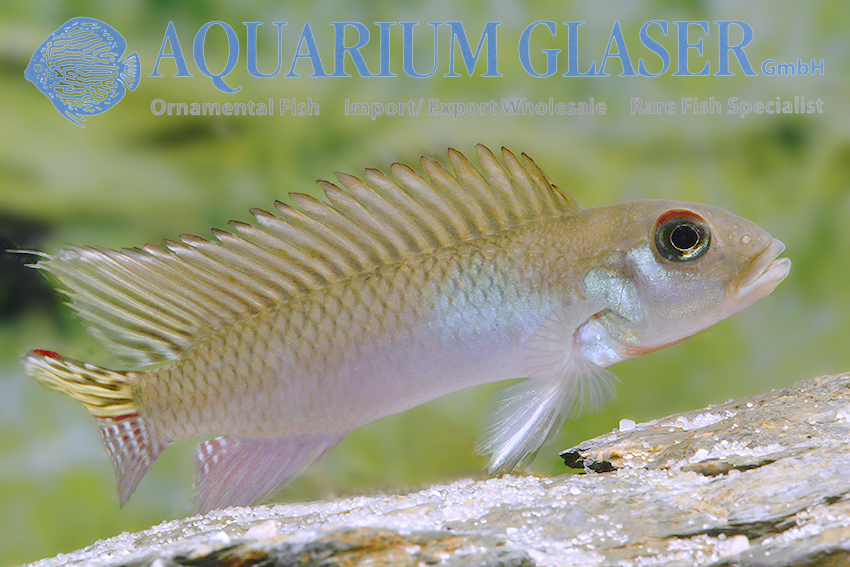
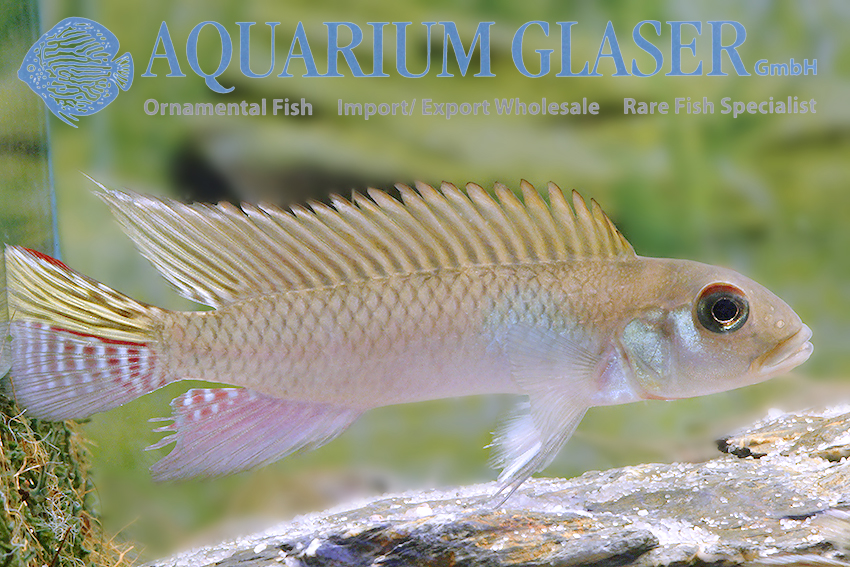
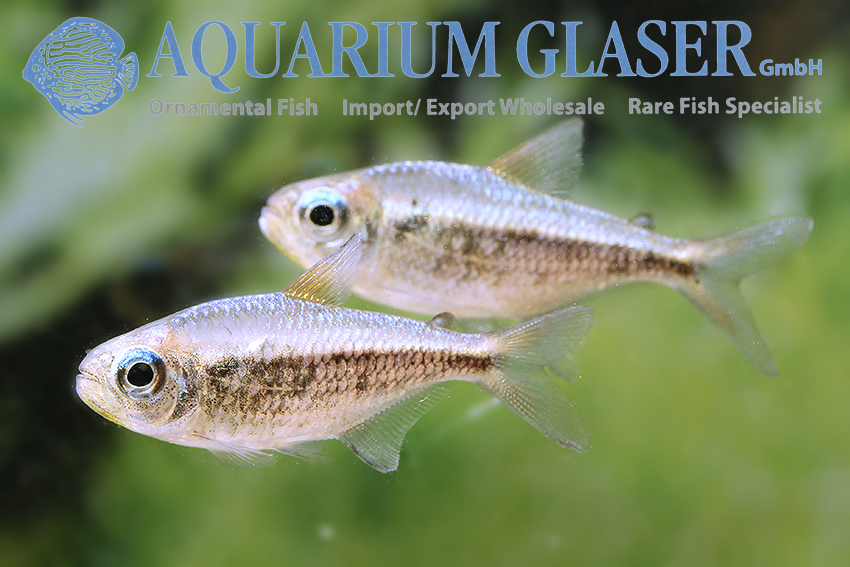
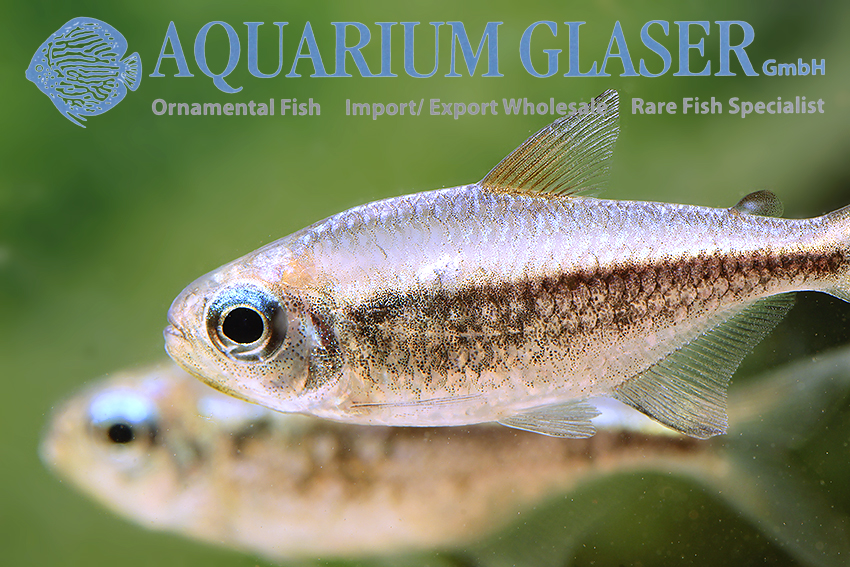
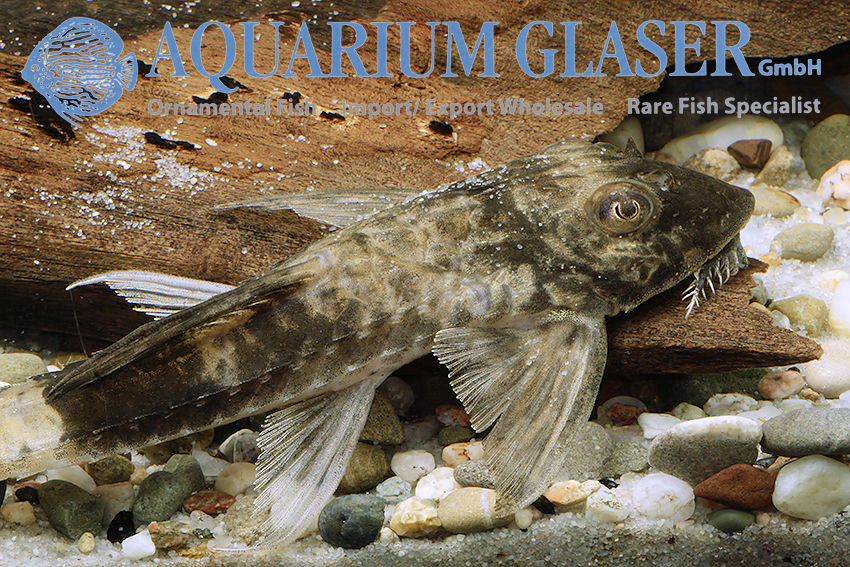
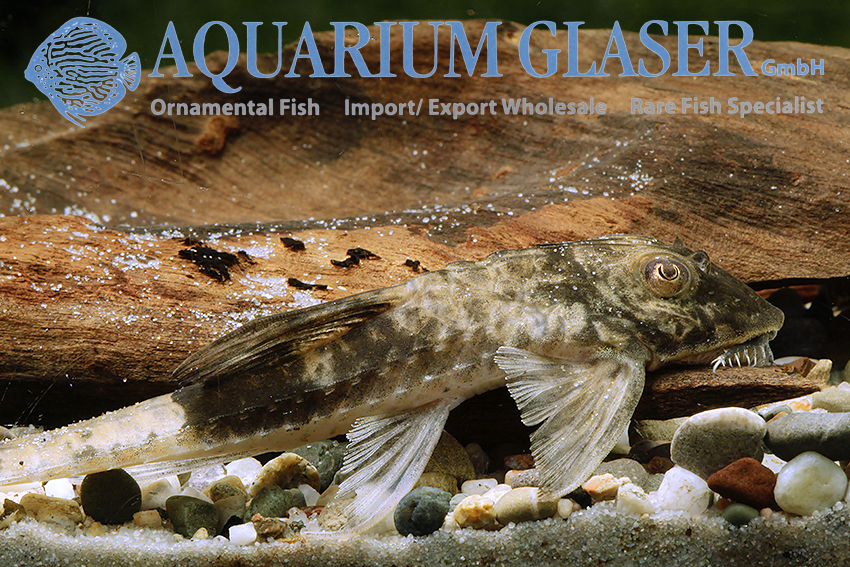
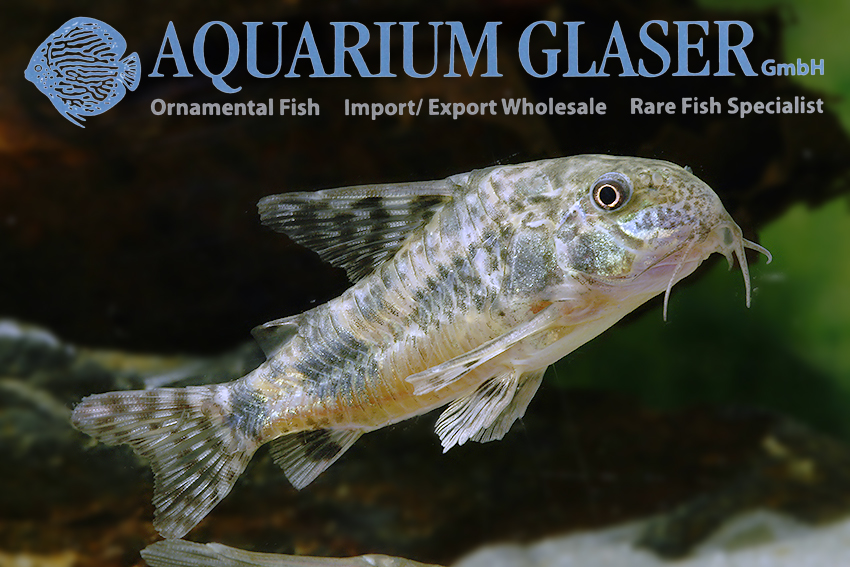
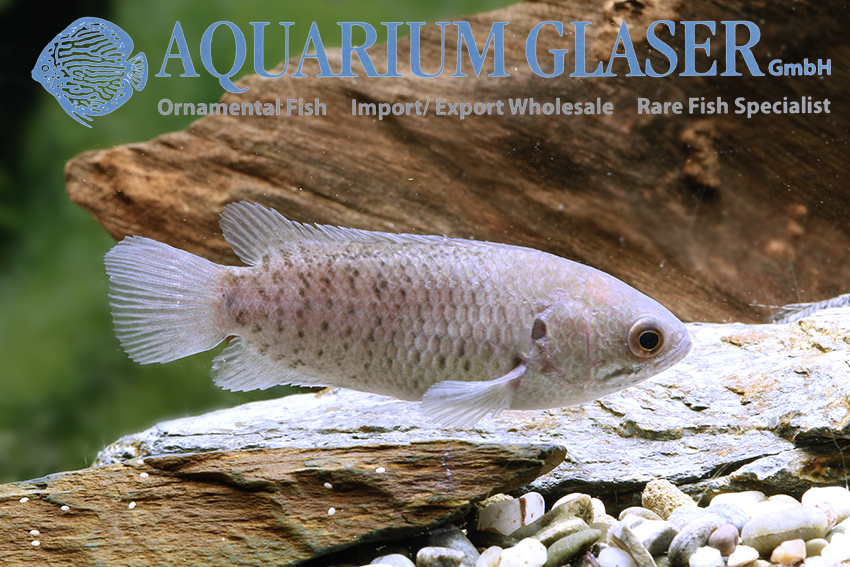
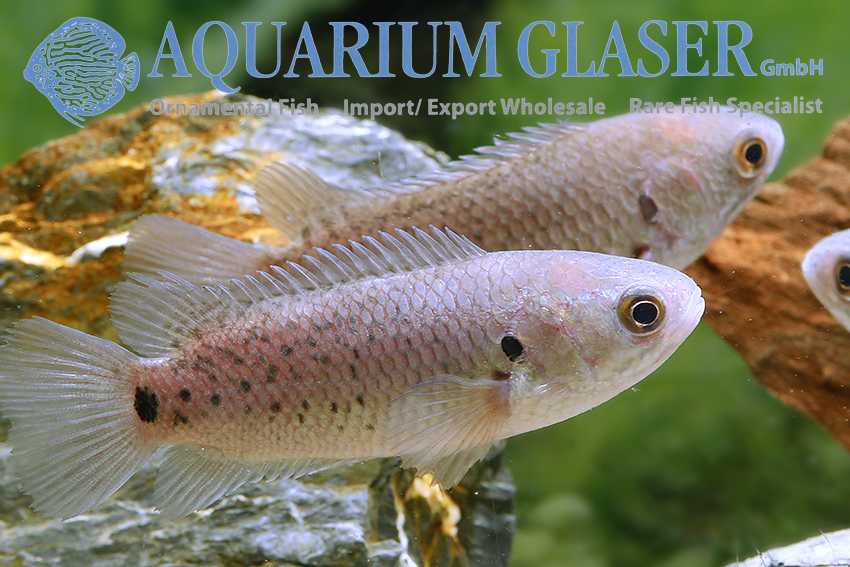
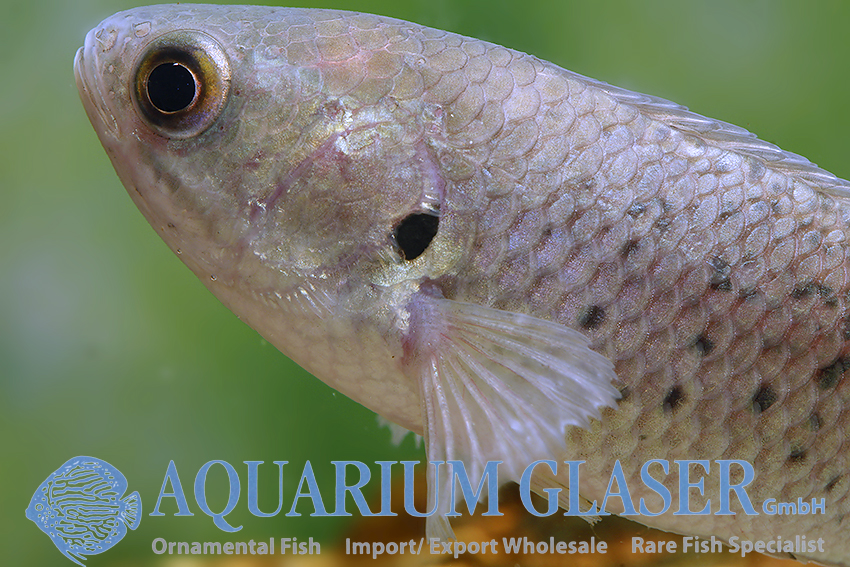
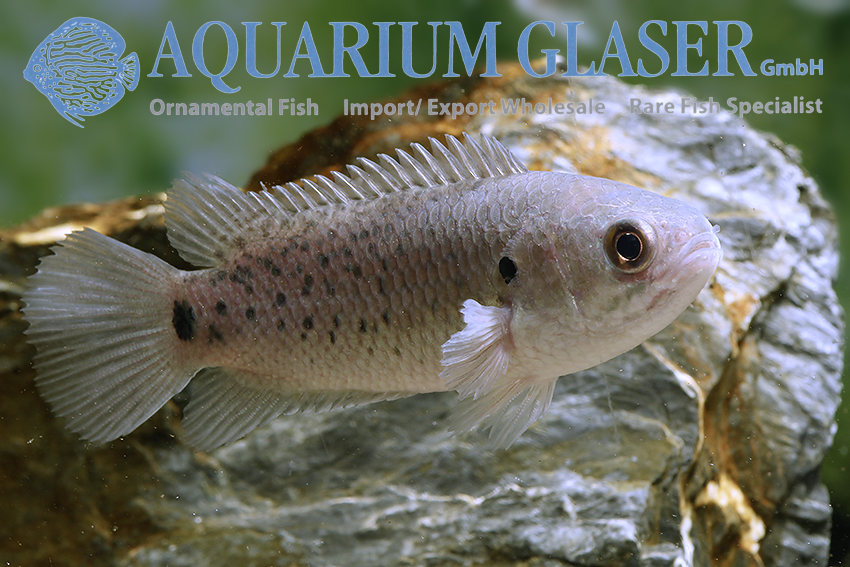
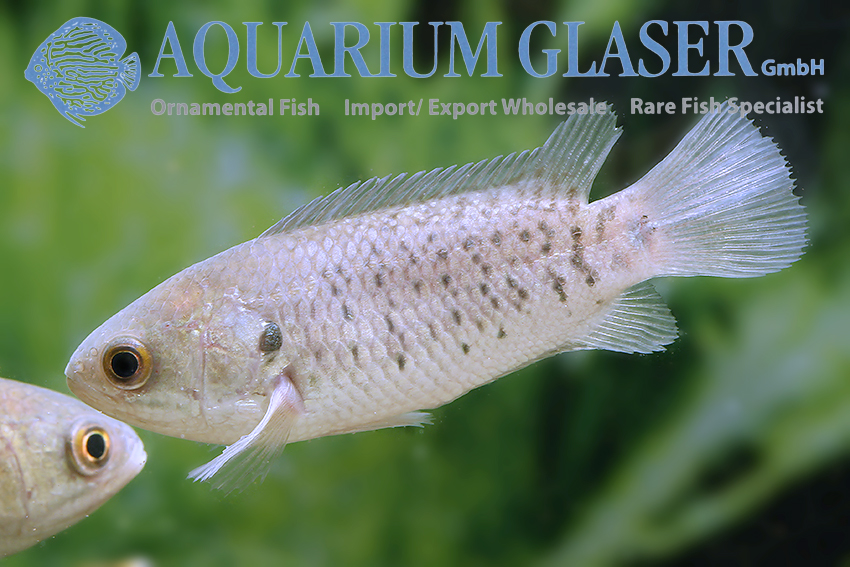
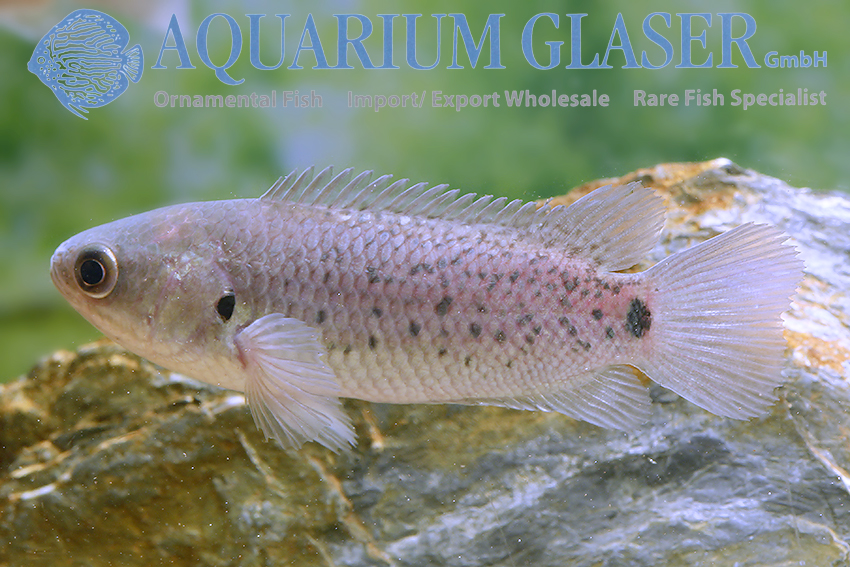
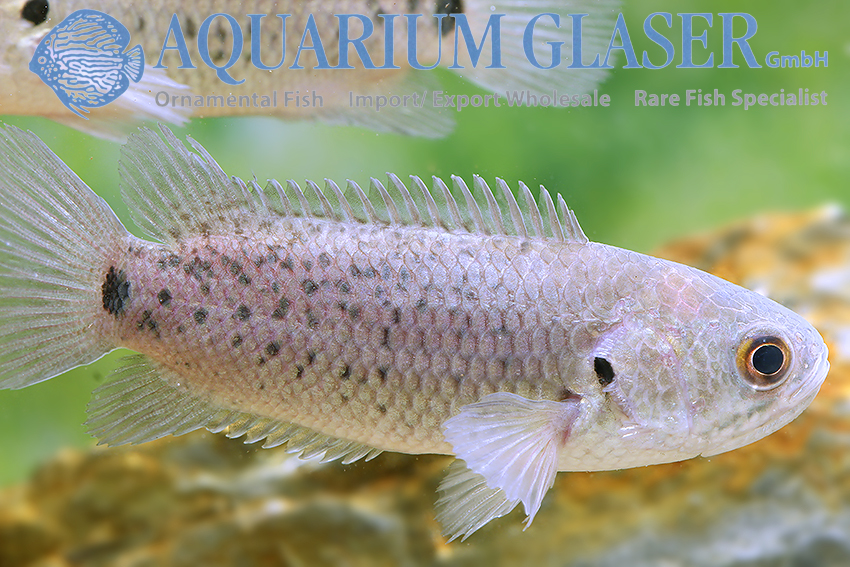
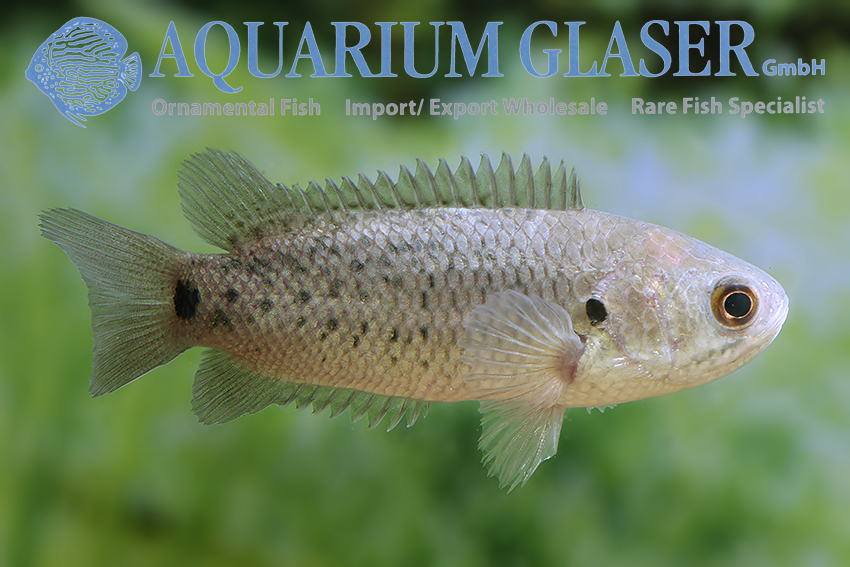
This snakehead, often traded under the name Channa cf. barca, originates from the northern Indian province of Assam. C. stewartii can reach a length of up to 30 cm (usually around 20 cm) and as a predatory fish should only be kept along with fish that are at least 2/3 of its body length. Besides living and dead fish they accept as food insects, worms, coarse frozen food and after habituation also food sticks.
Since their area of occurrence is not in the tropical area, they can be kept well in the unheated aquarium. They tolerate temperatures between 15 – 30°C, also to the water parameters only small requirements are made. Since they can breathe atmospheric air in addition to gill breathing, the oxygen content of the water is of secondary importance.
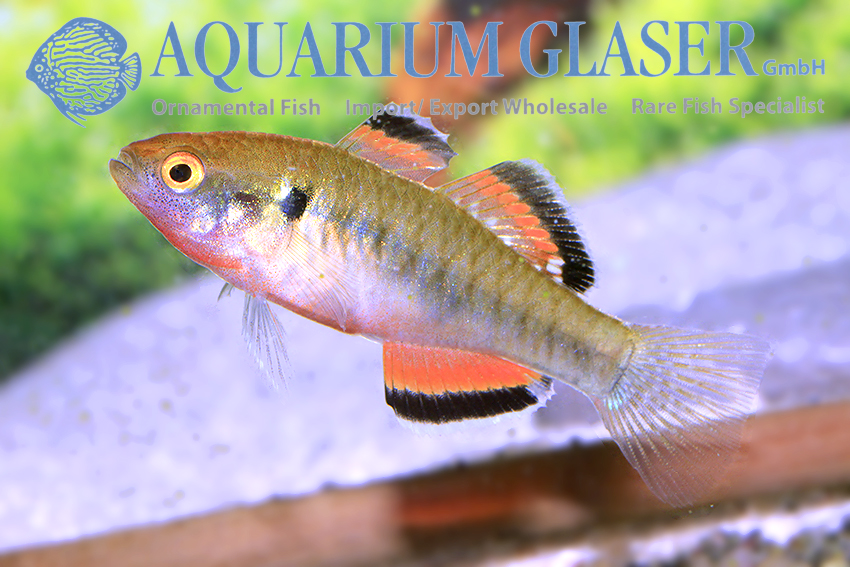
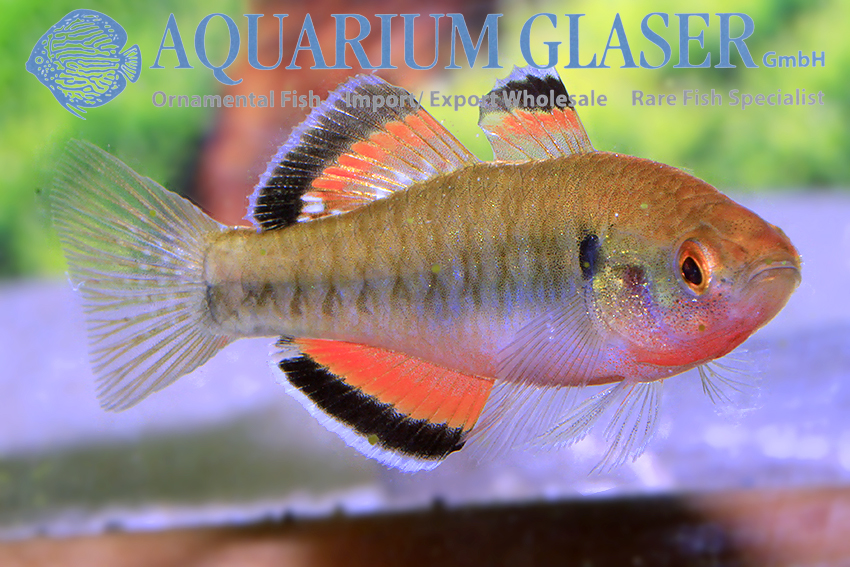
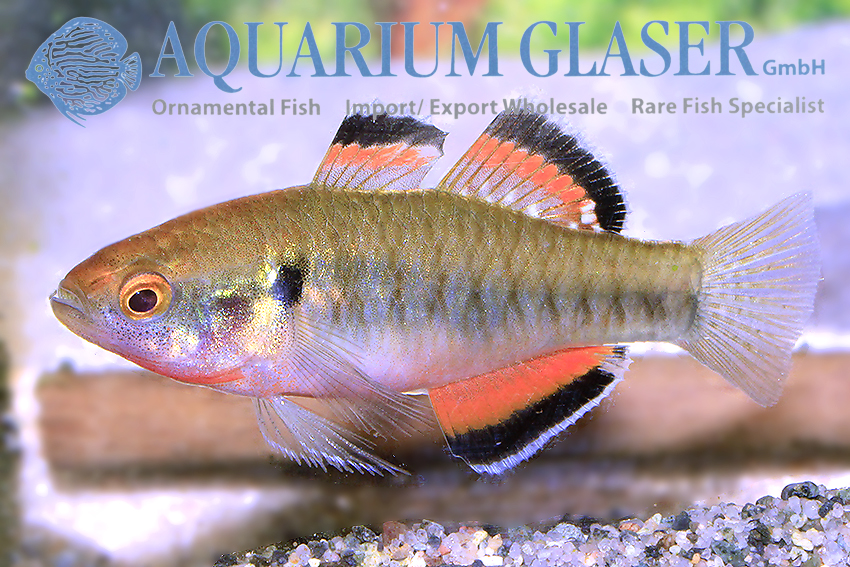
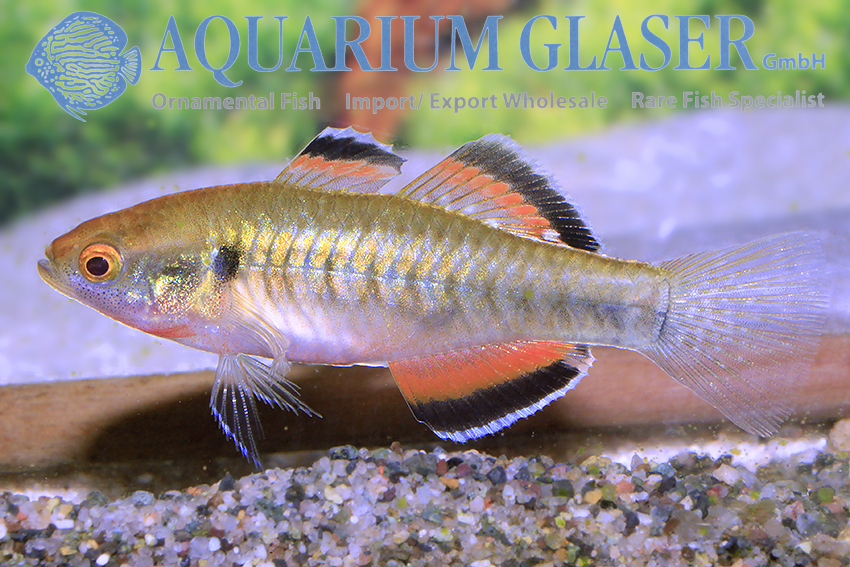
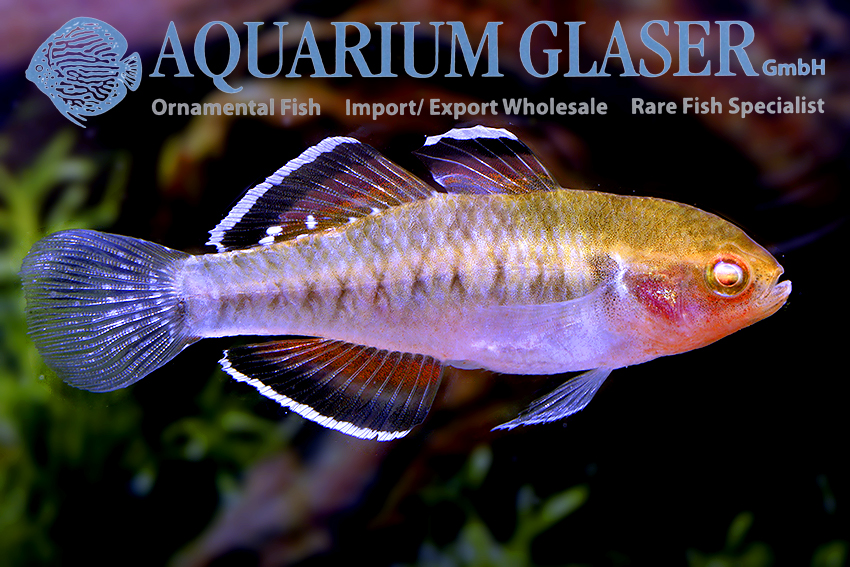
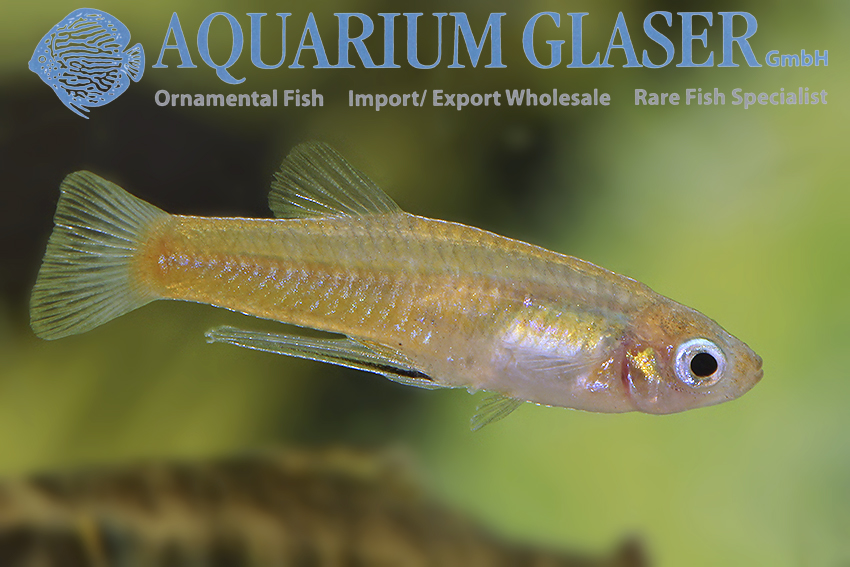
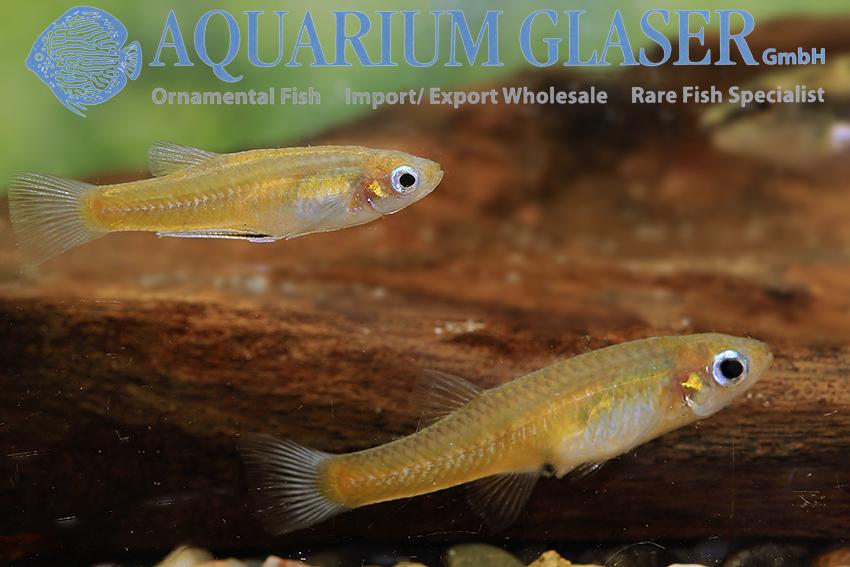
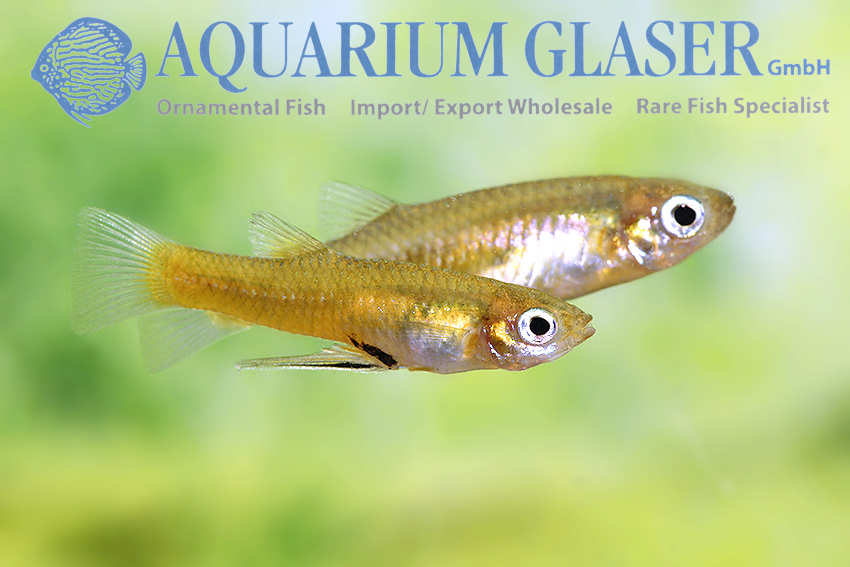
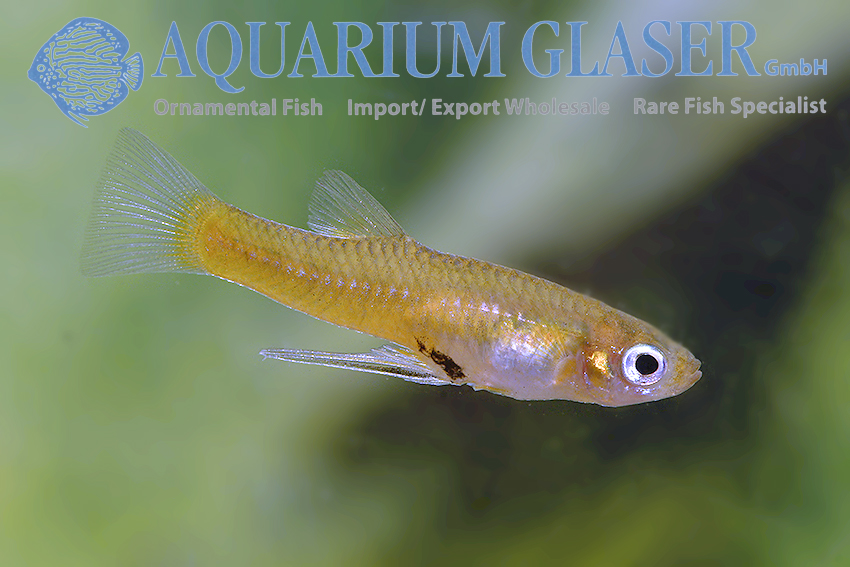
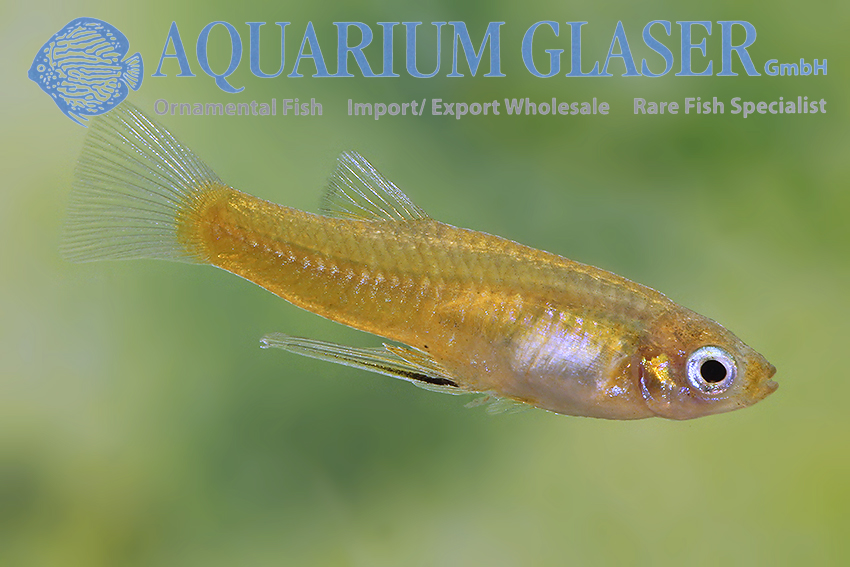
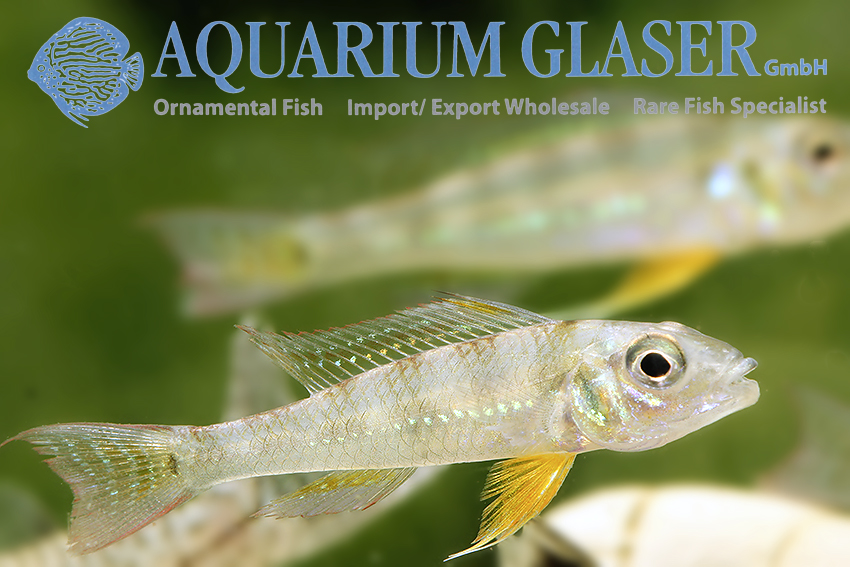
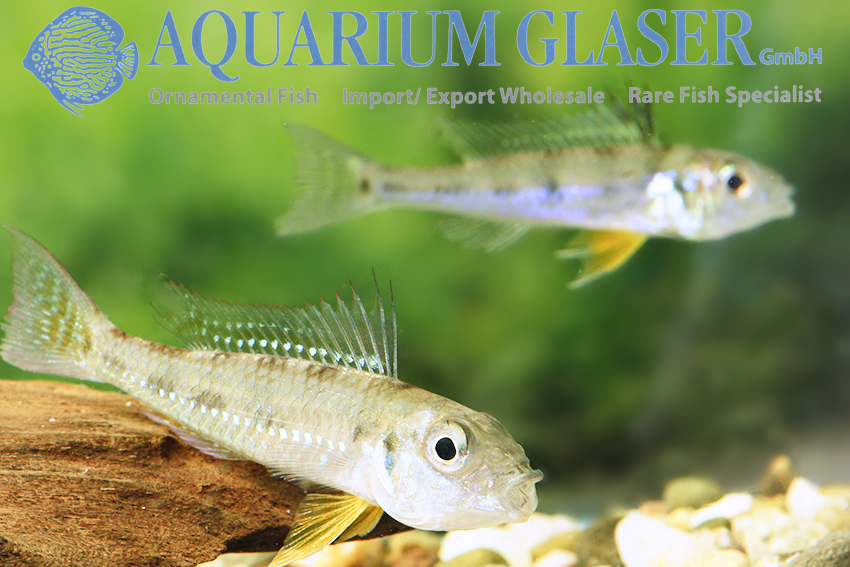
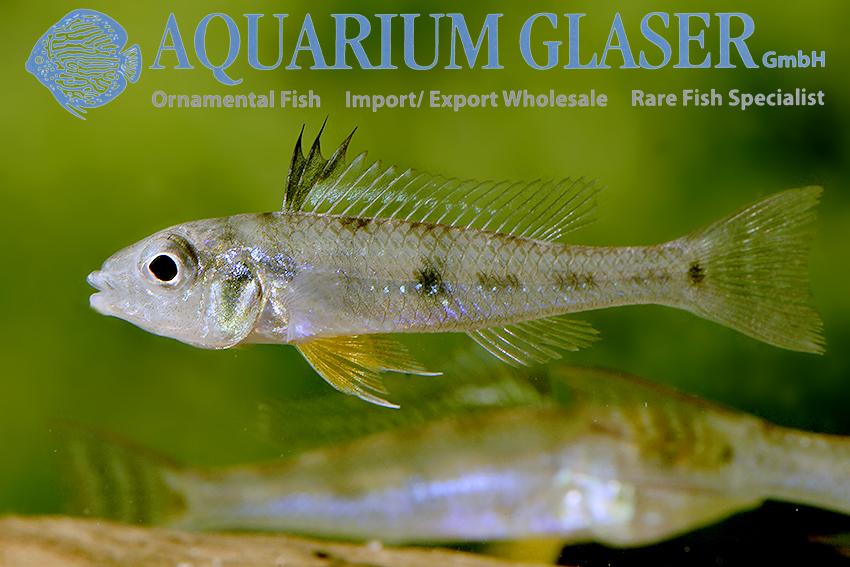
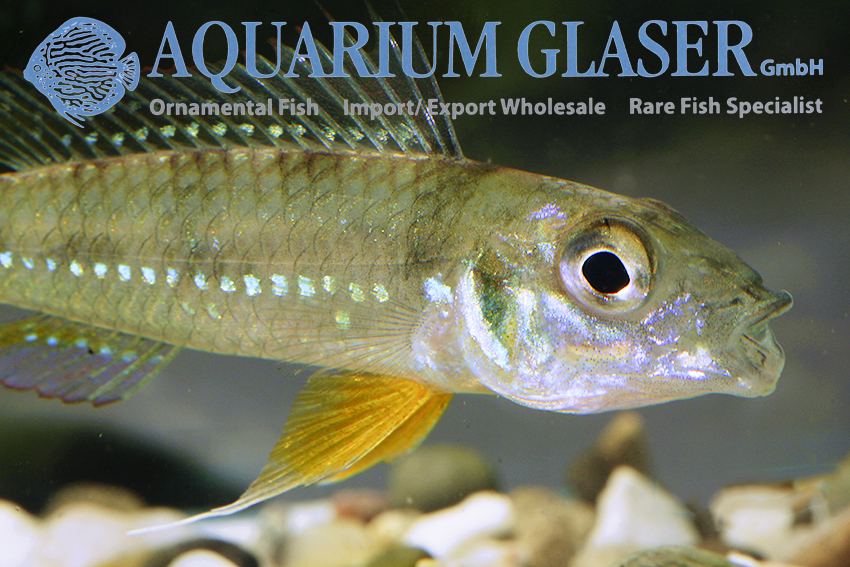
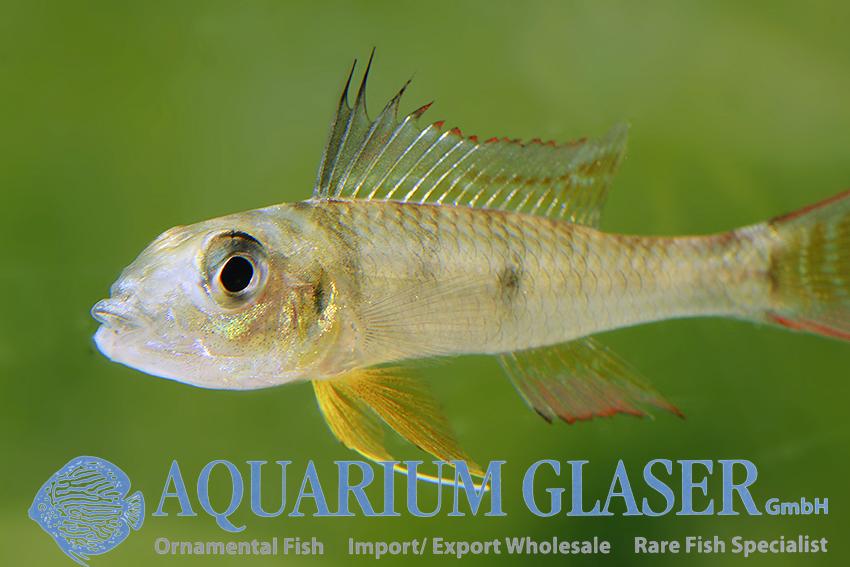
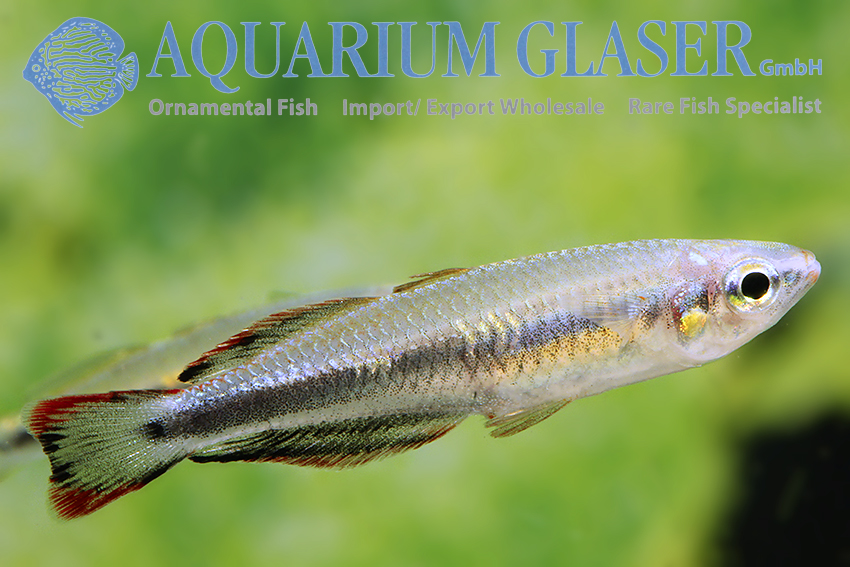
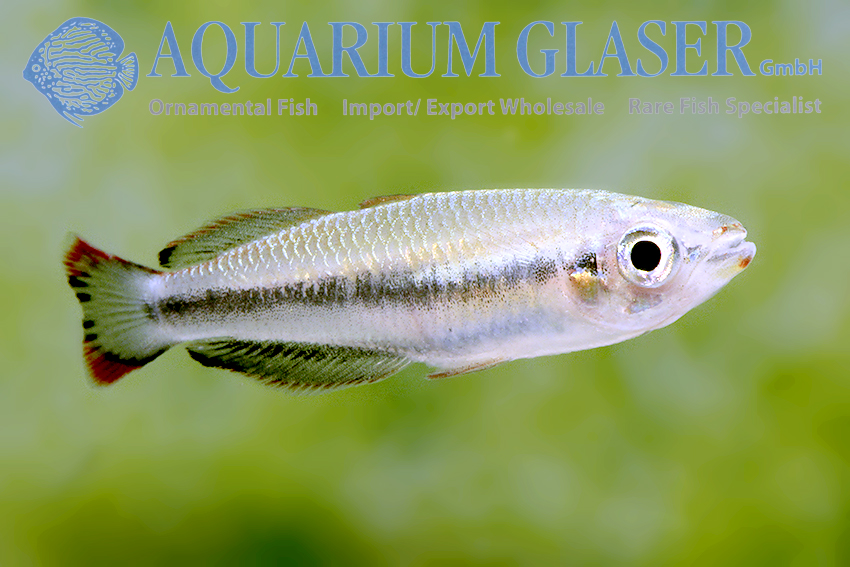
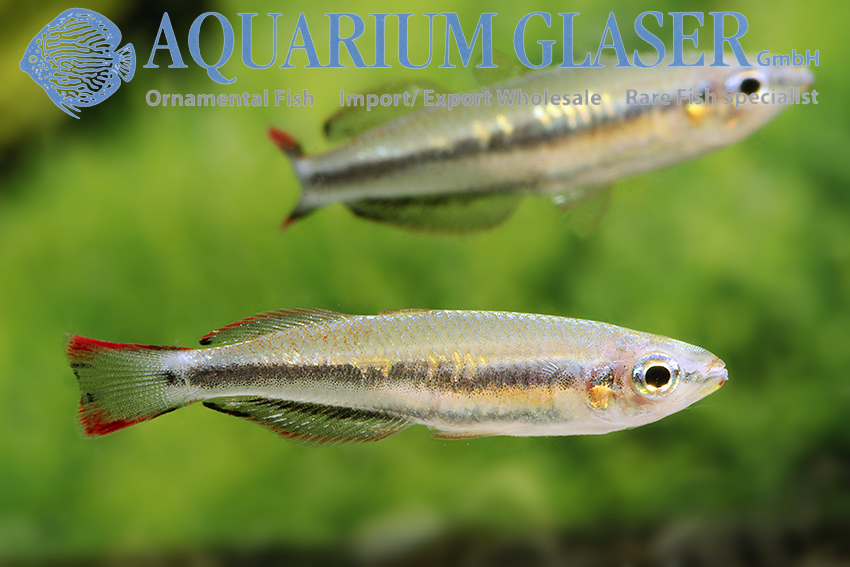
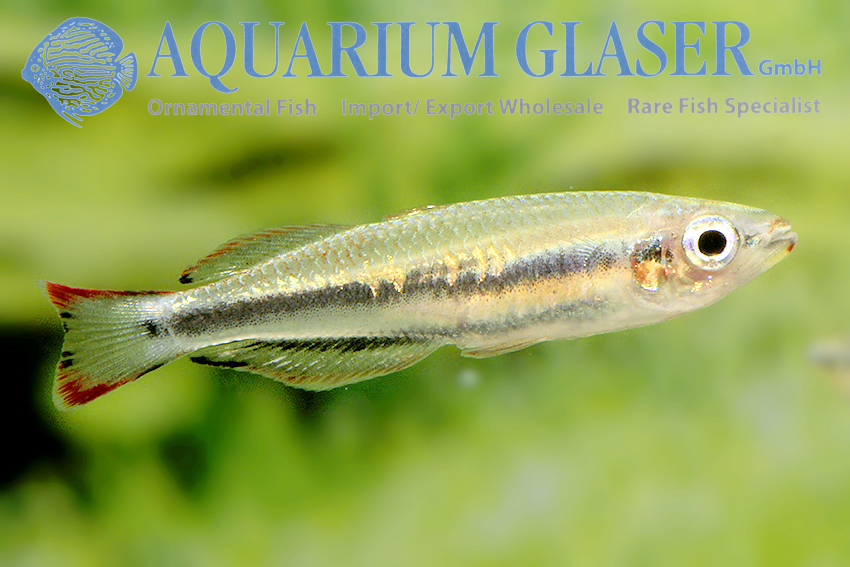
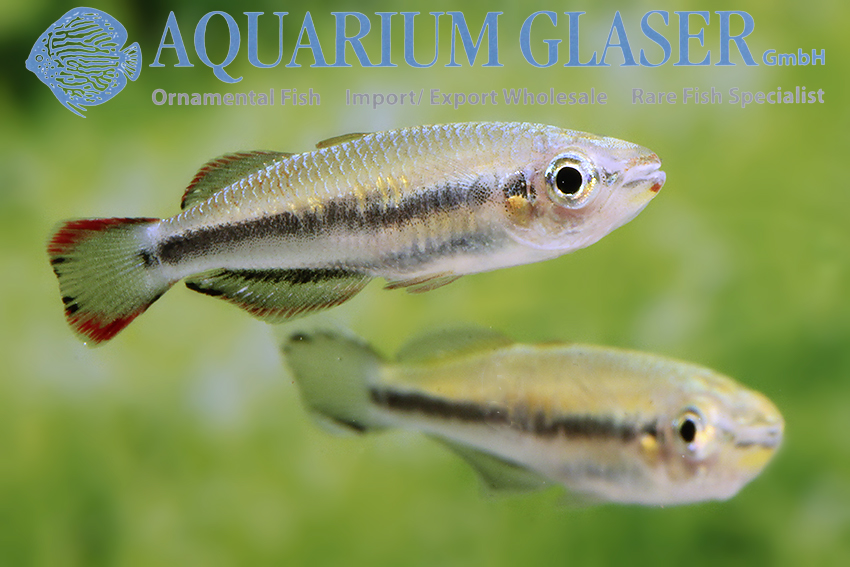
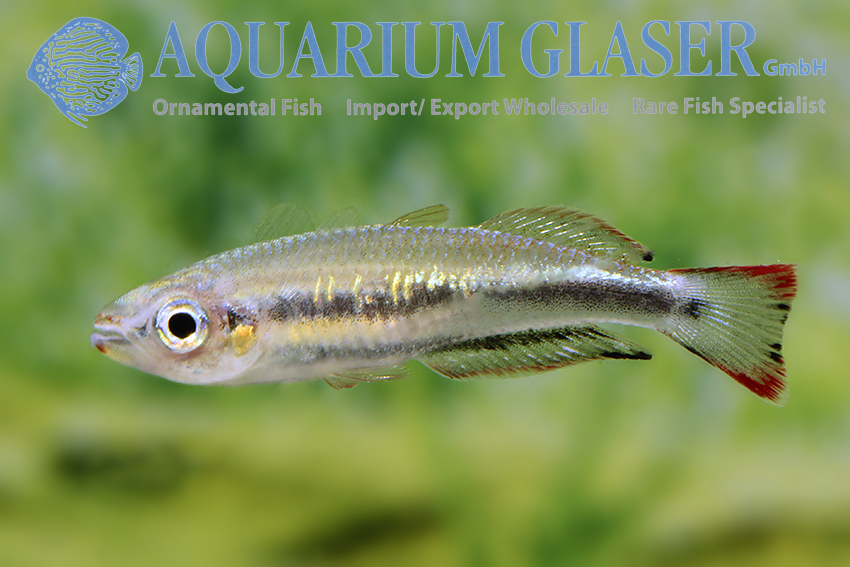
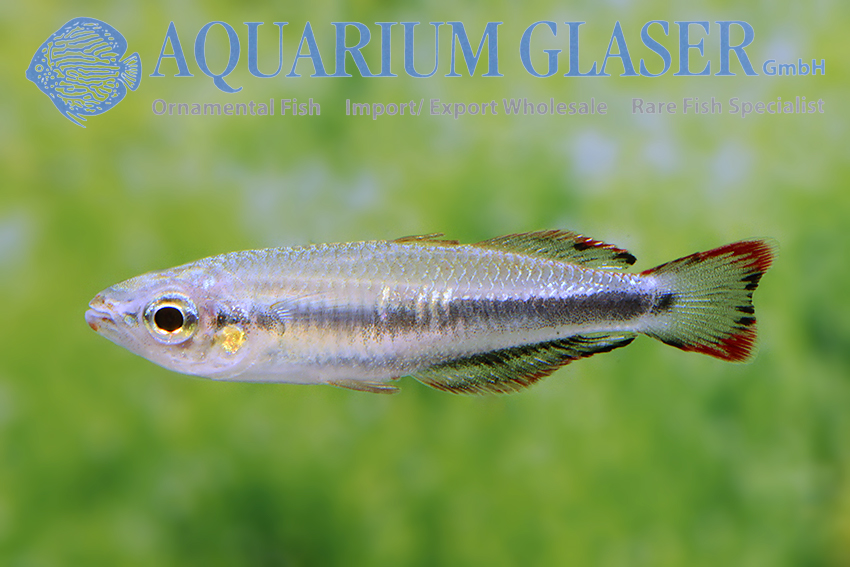
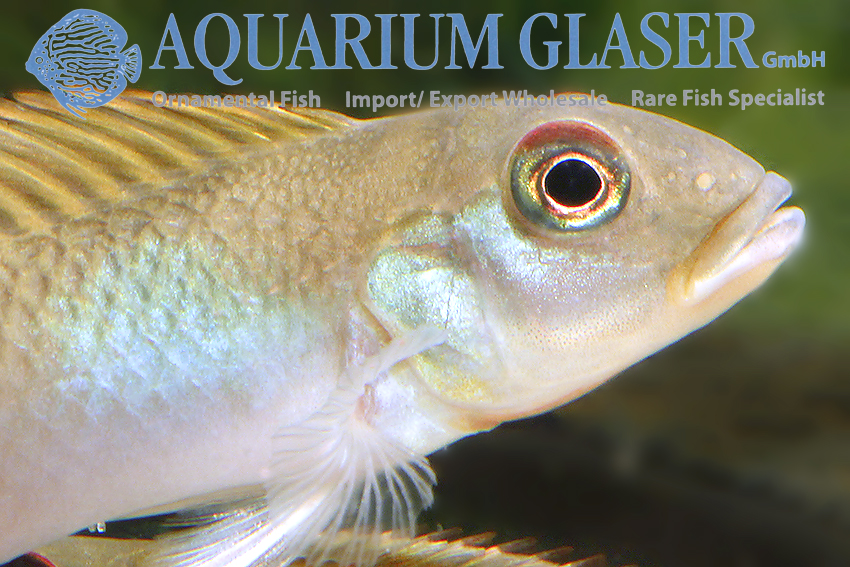
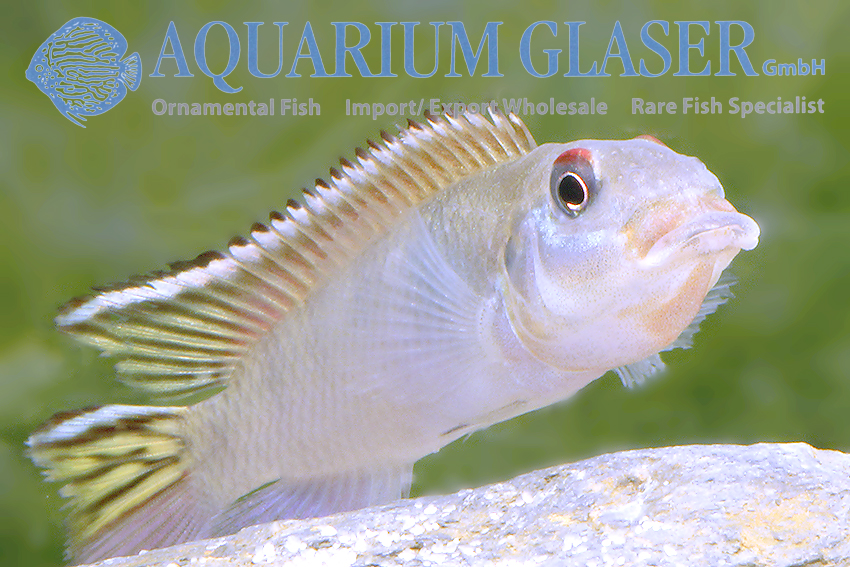
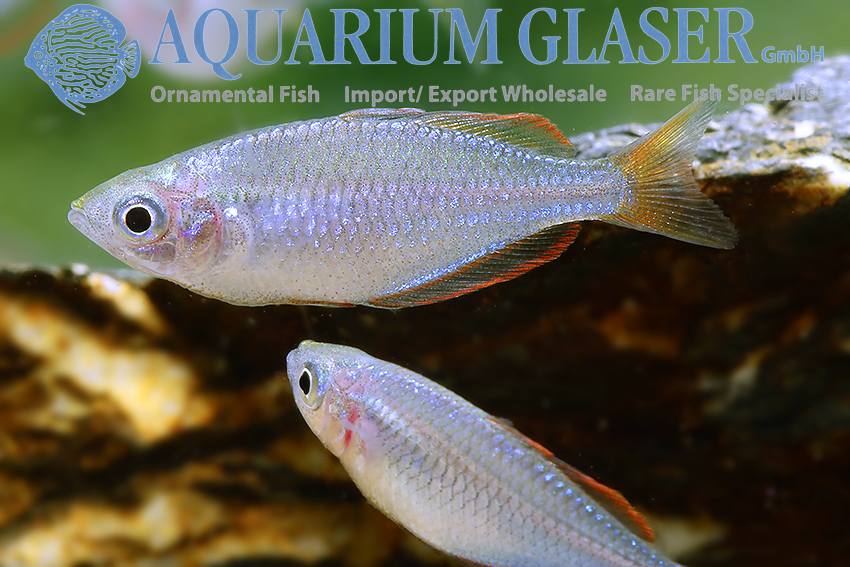
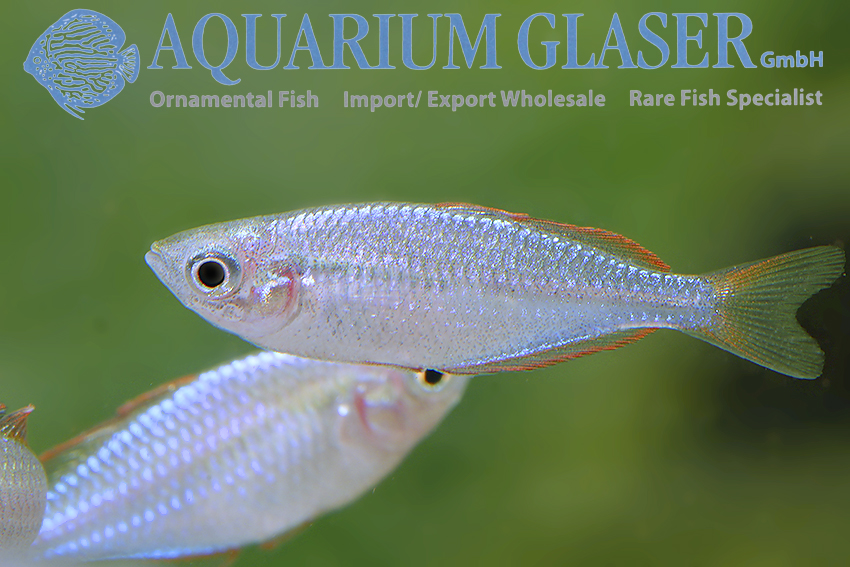
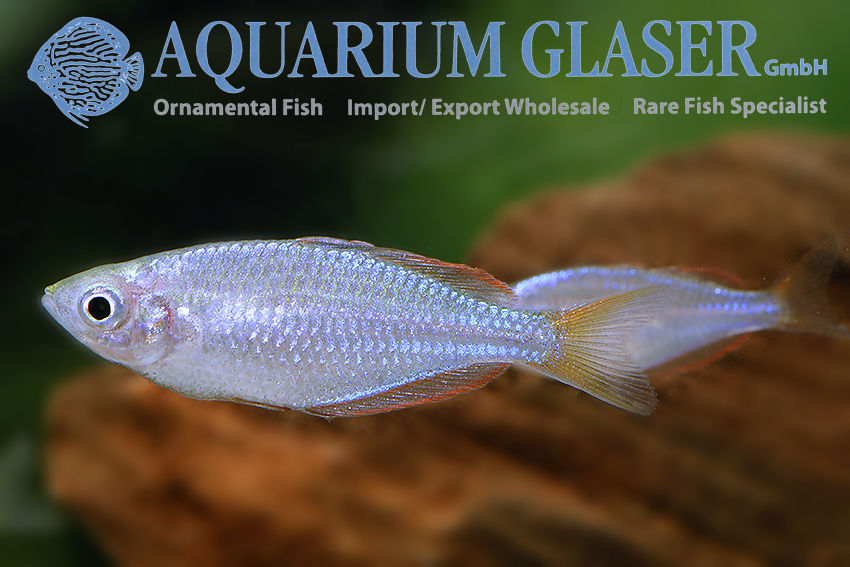
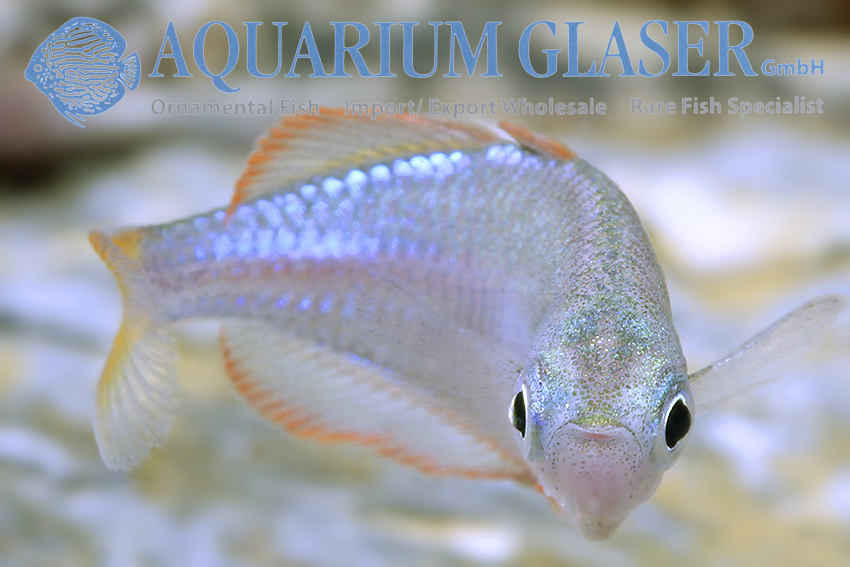
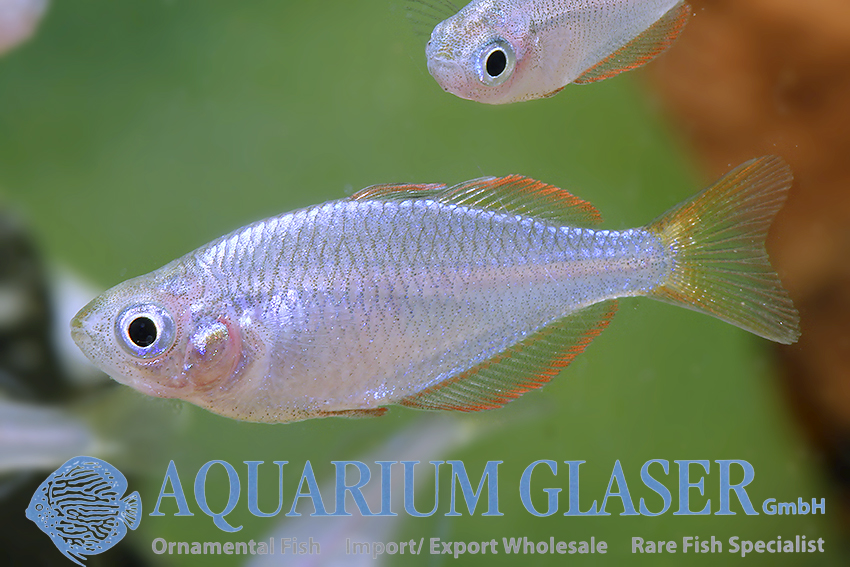
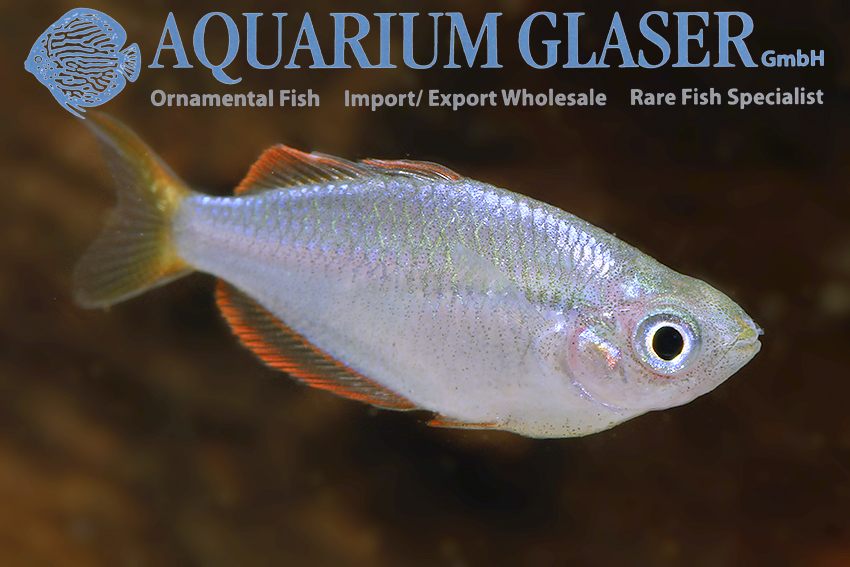
Sometimes it happens that even we run short in finding superlatives: in any case this fish deserves to create one! It is so beautiful…. H. compressa is a sleeper goby that lives free swimming in the water column. In contrast to many other gobies this fish is not a bottom dweller. In Germany the genus Hypseleotris is called “minnow goby”, for the fish live like schooling minnows in the open water.
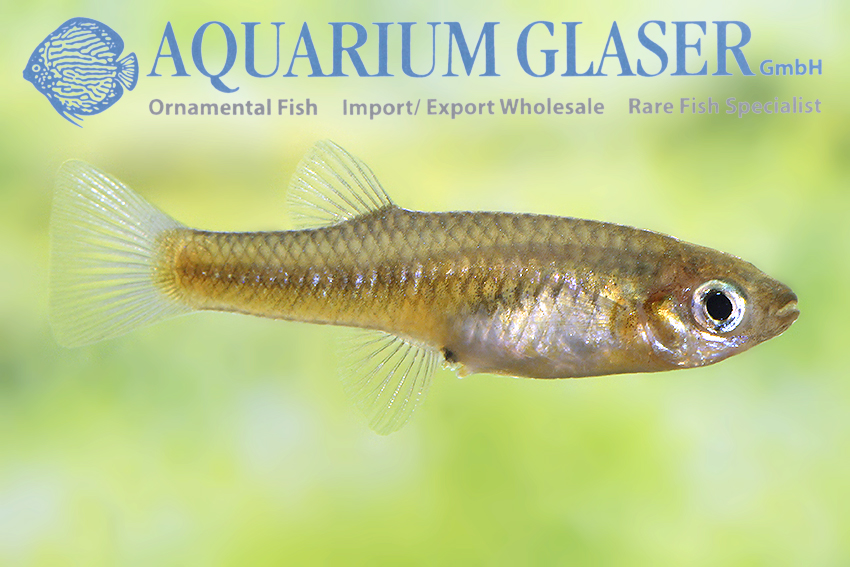
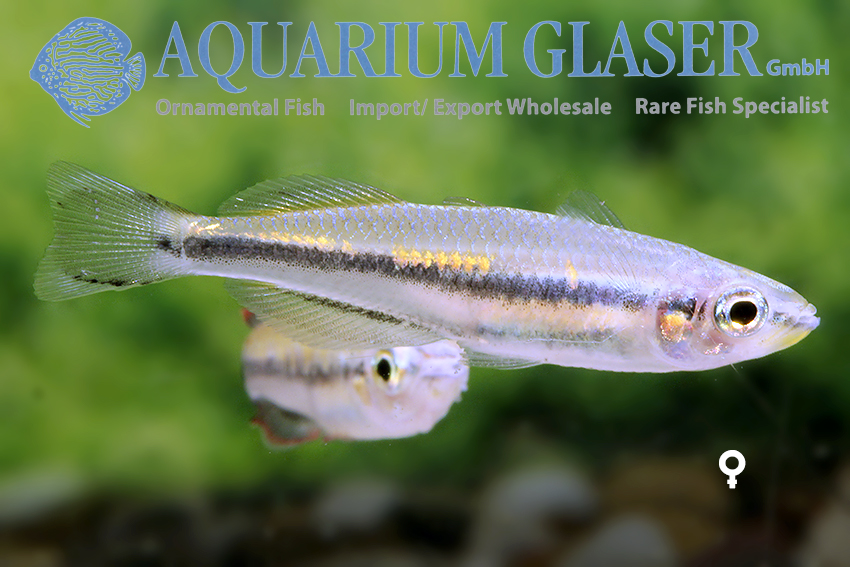
Males of this goby – it occurs in the wild in northern Australia and southern New Guinea – literally switch the light on while displaying. It is highly recommended to keep several males together in one tank, so at least one is in the mood to show the fantastic colours. The females are not so deep bodied and have a rather dull coloration.
Sadly it is very difficult to breed this fish under aquarium conditions. The fish spawn readily (they are substrate brooders), but the eggs and the fry are extremely small and the offspring is able to survive only in strong brackish or marine water. Here they can be fed with live marine plankton (for example oyster larvae).
On the other hand the fish are extremely hardy and undemanding. They tolerate temperatures between 18 and 35°C and almost any water chemestry. However, medium hard water will fit best.
For our customers: the fish have code 421682 on our stocklist. Please note that we exclusively supply the wholesale trade.
Lexicon: Hypseleotris: ancient Greek, means “deep Eleotris”; Eleotris is another genus of goby. compressa: Latin, means “compressed”.
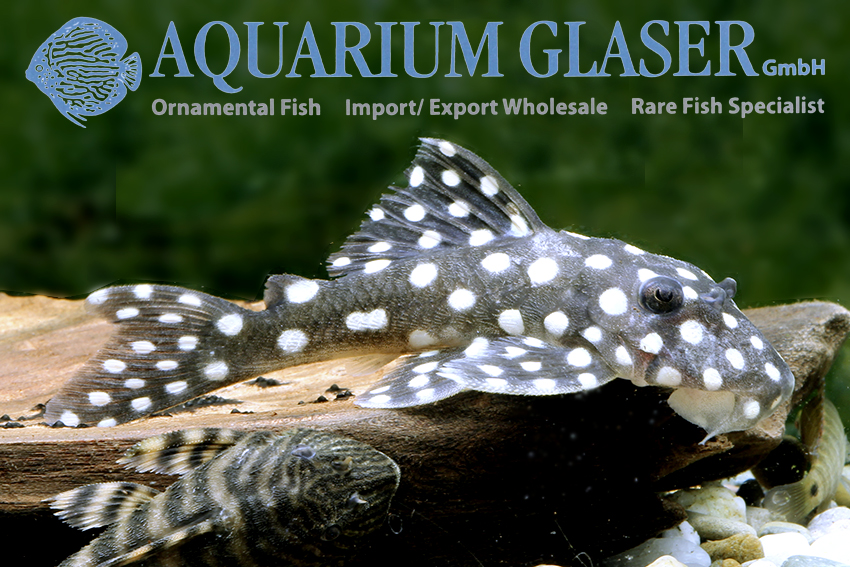
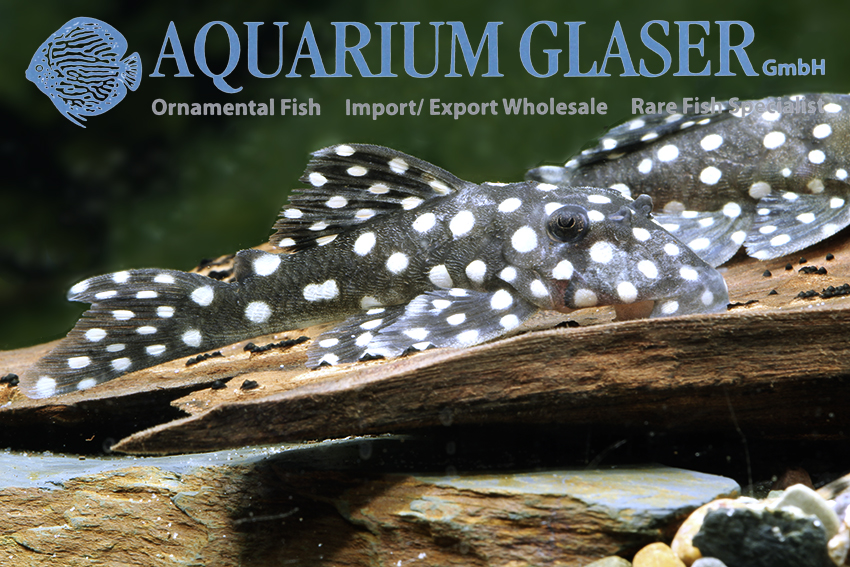
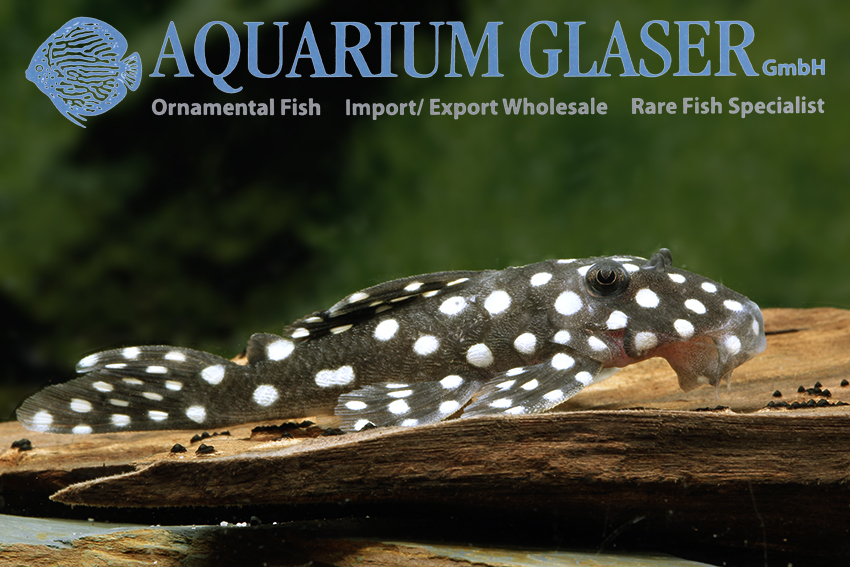
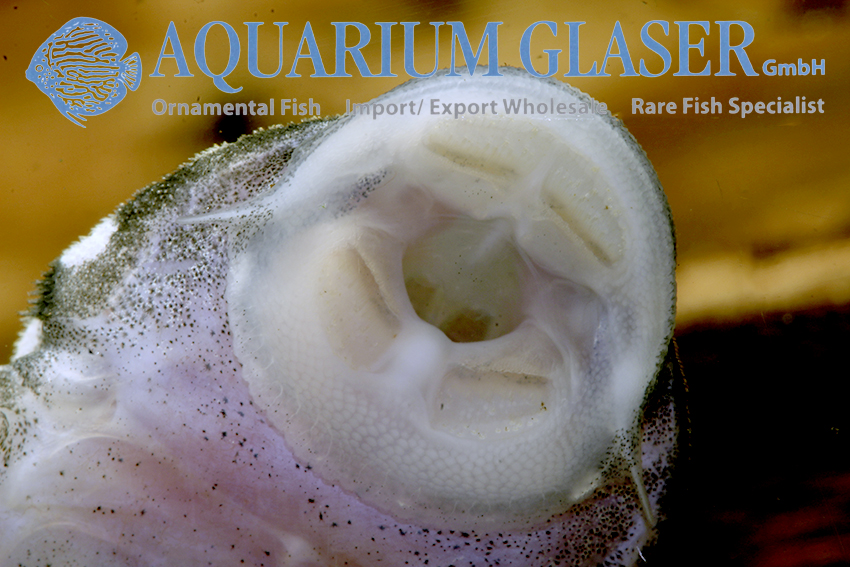
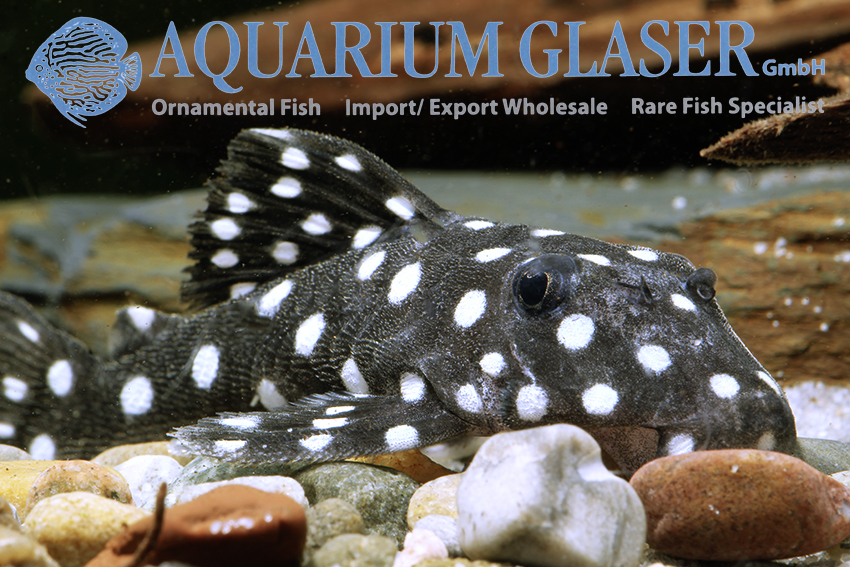
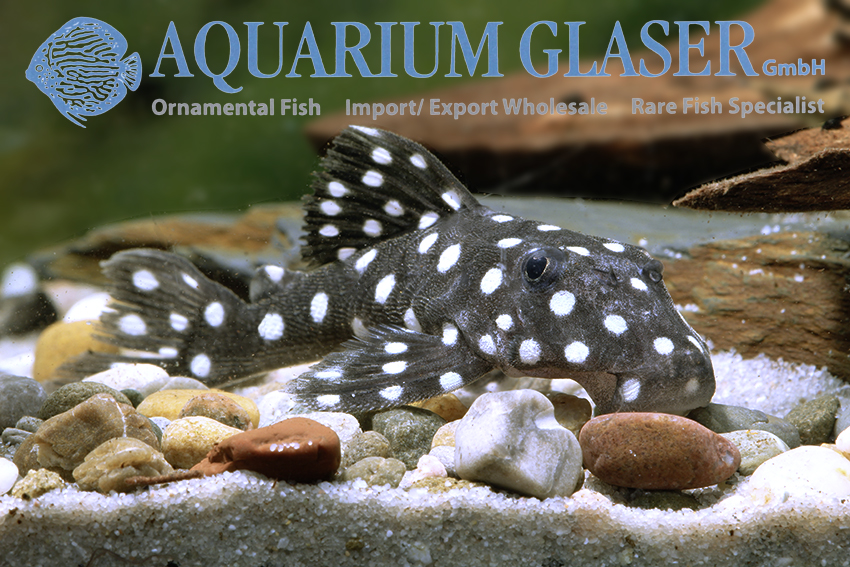
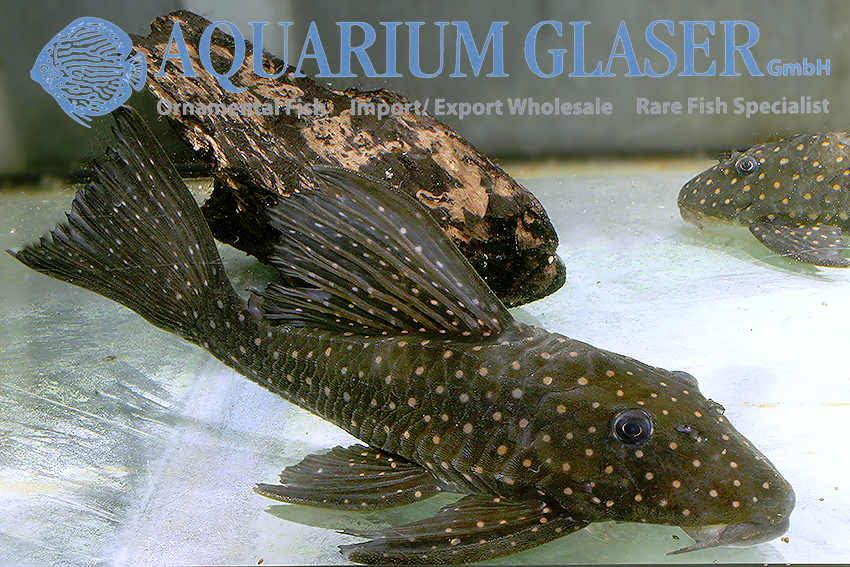
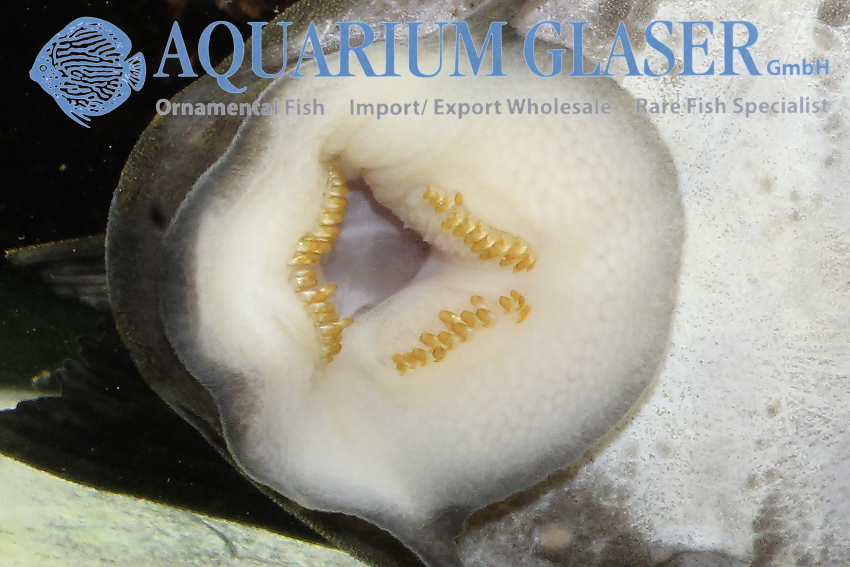
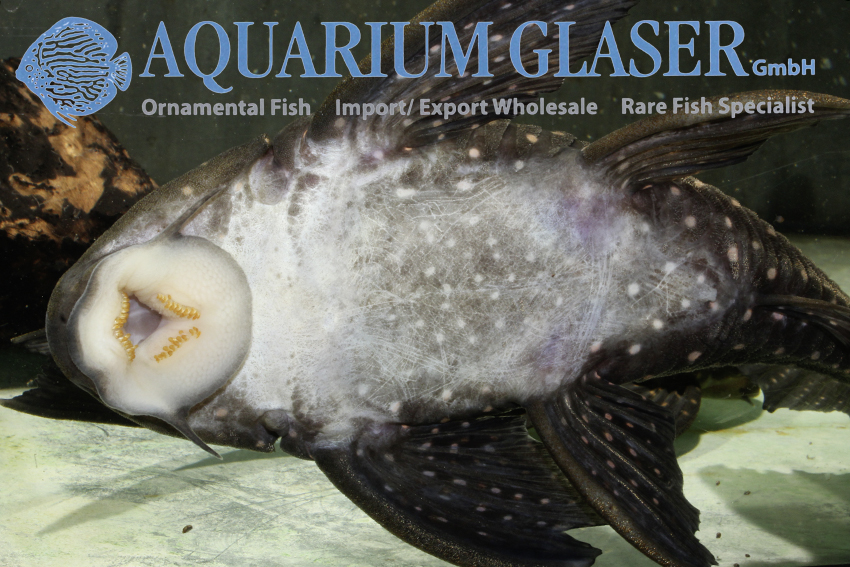
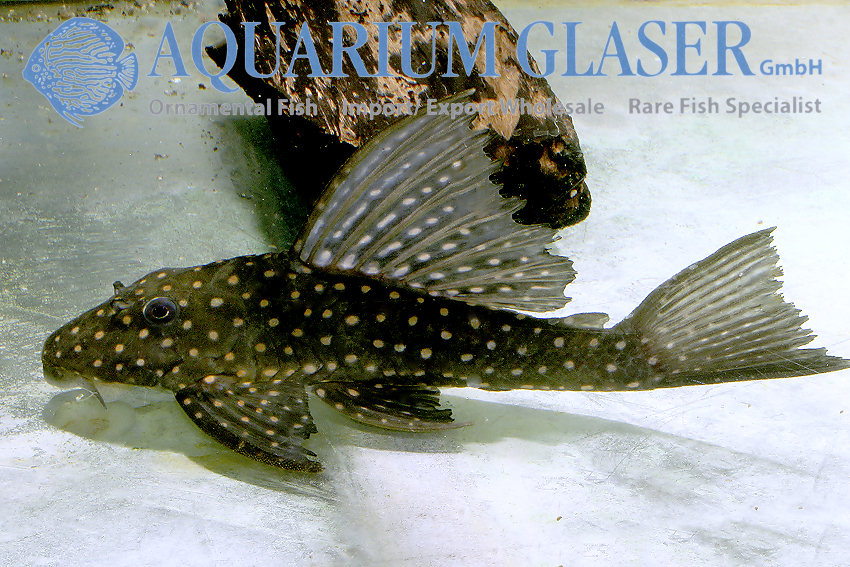
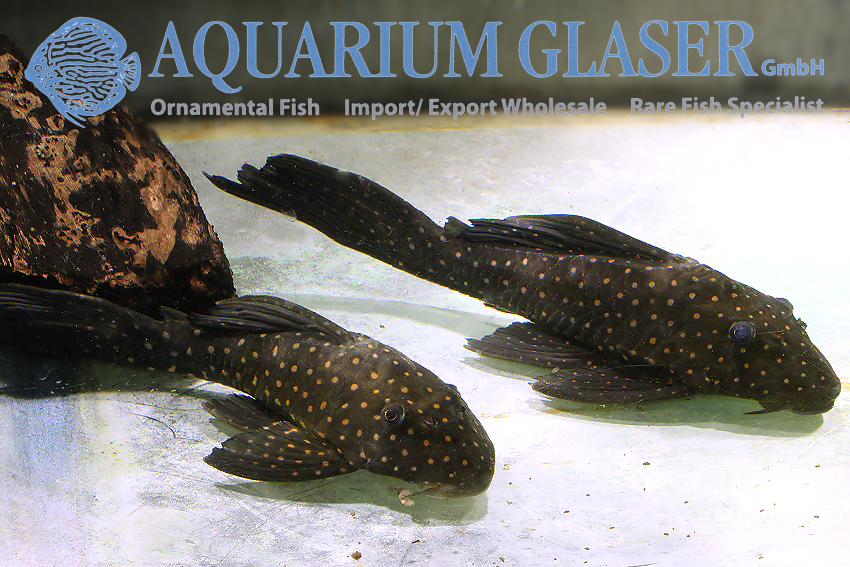
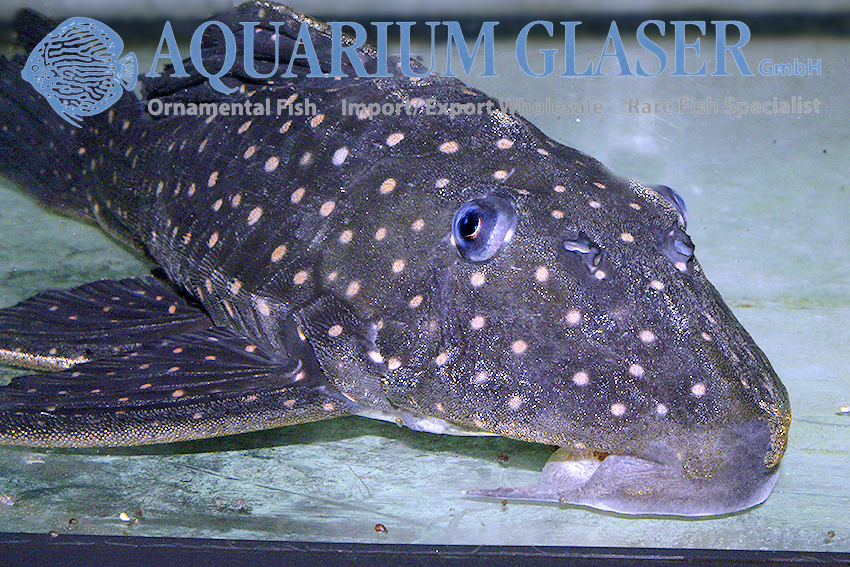
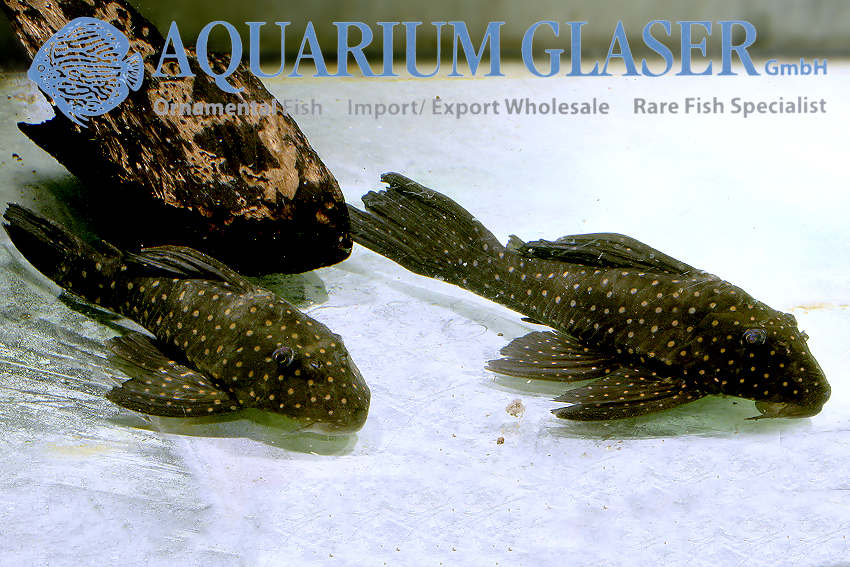
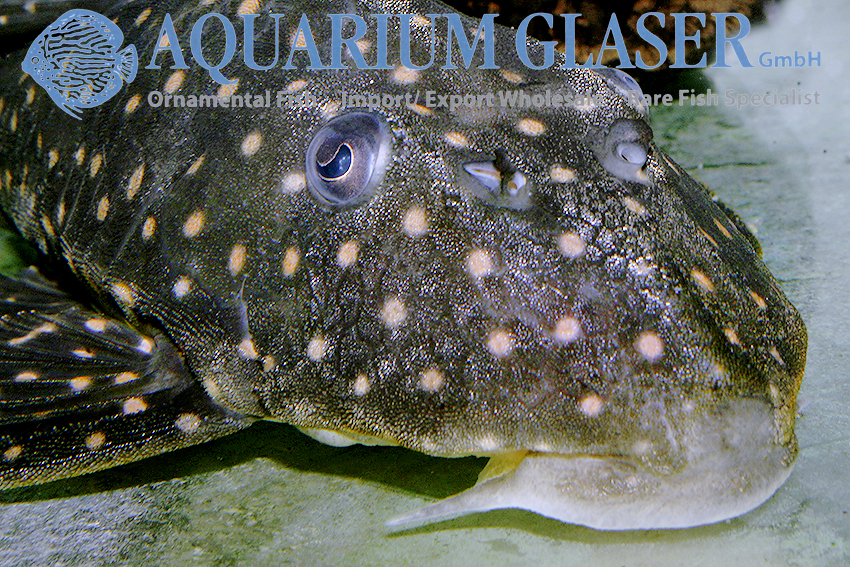
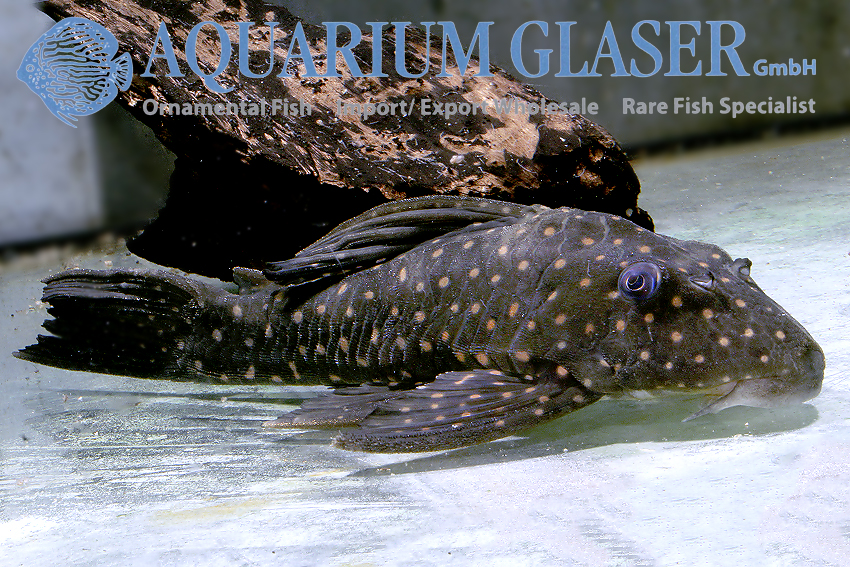
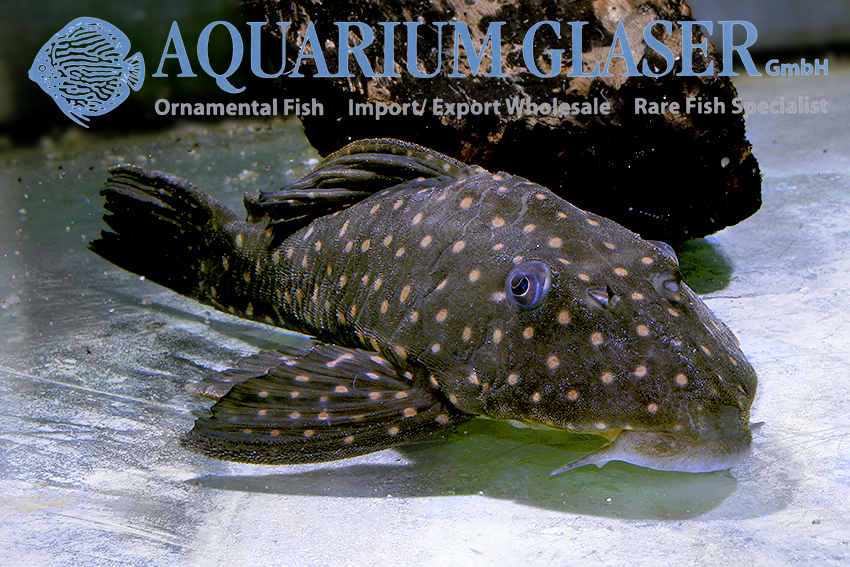
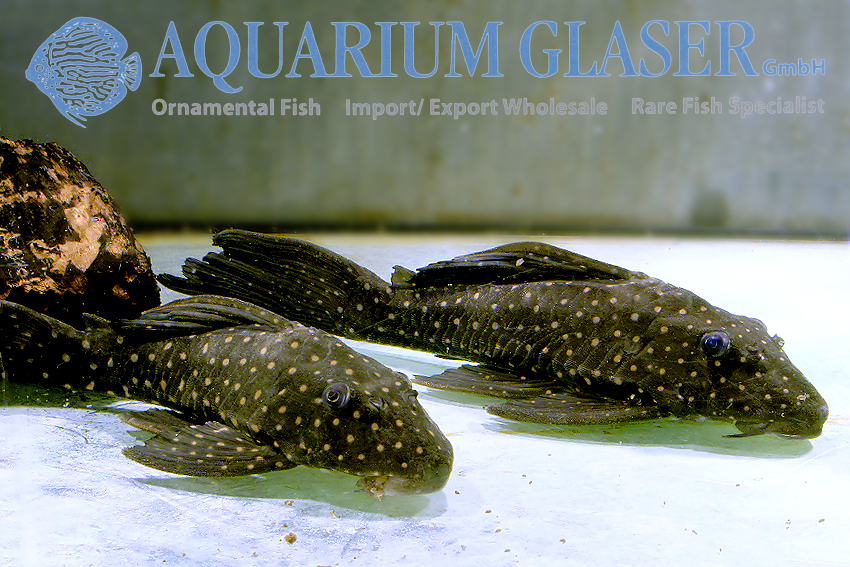
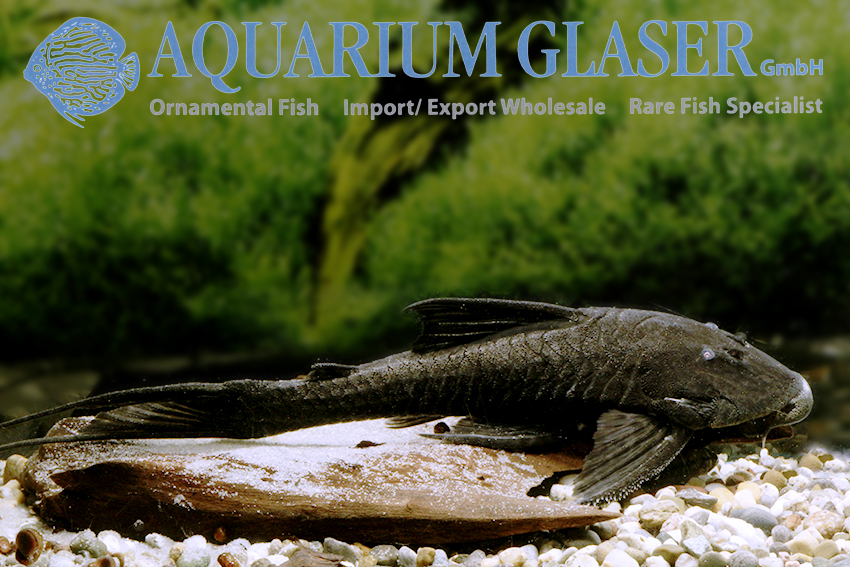
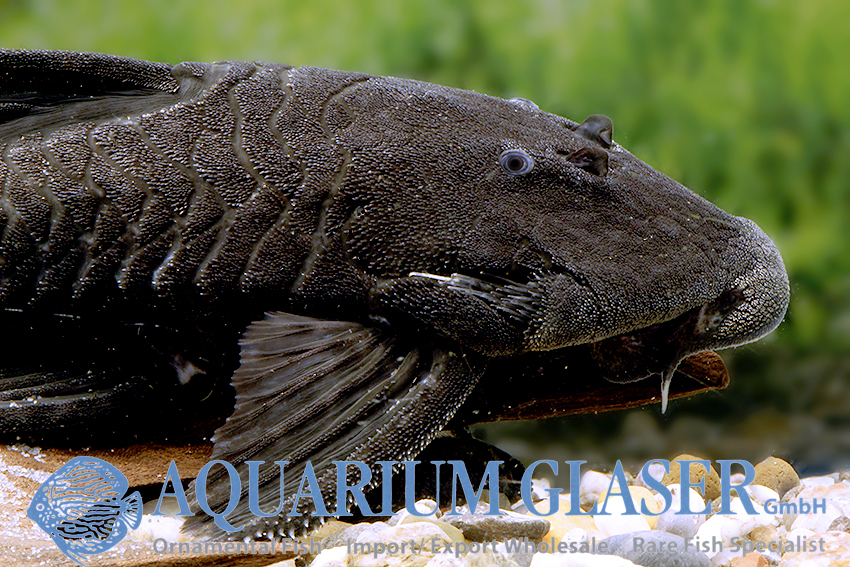
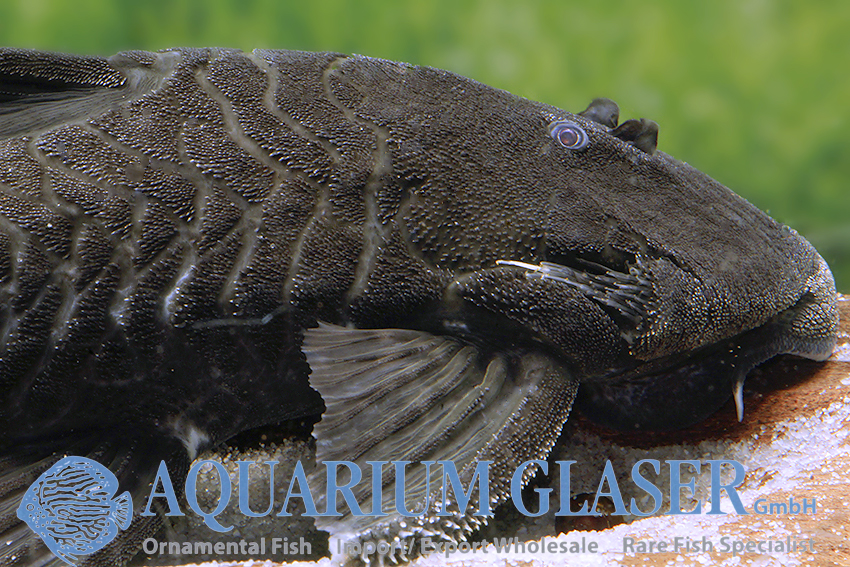
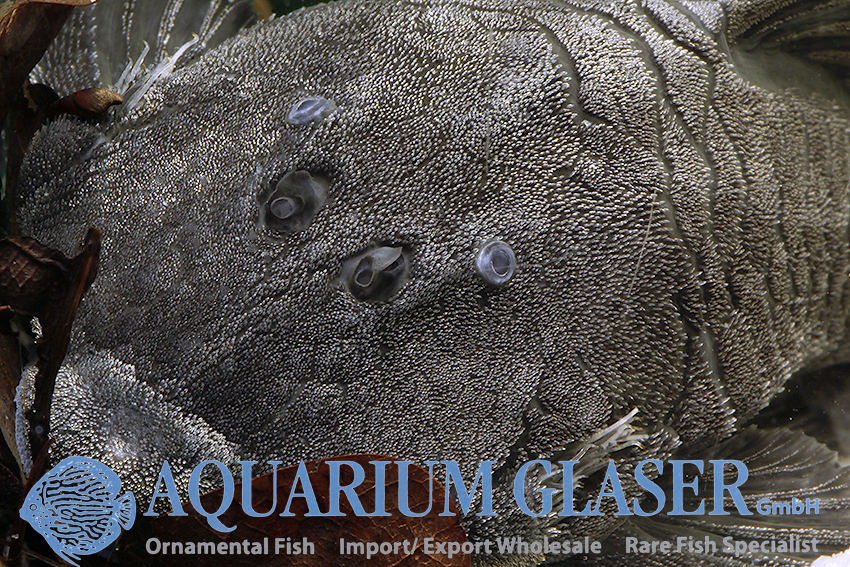
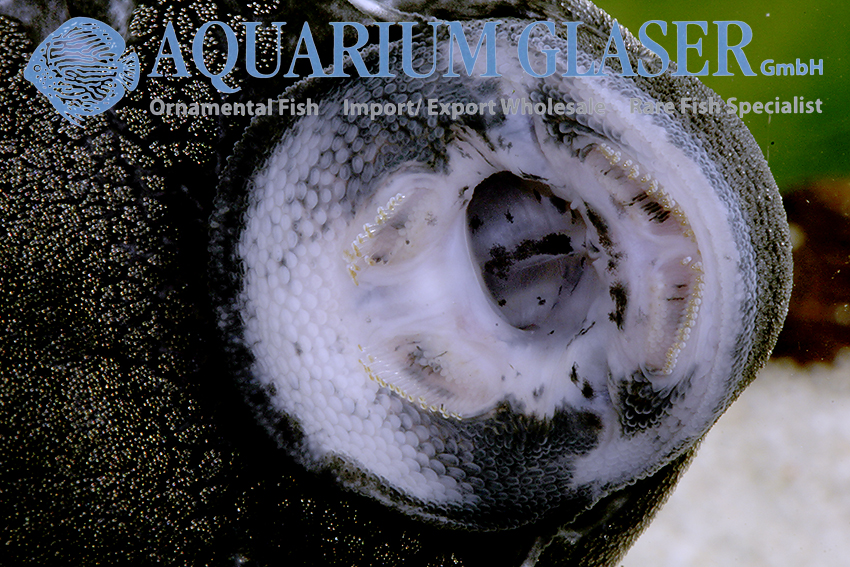
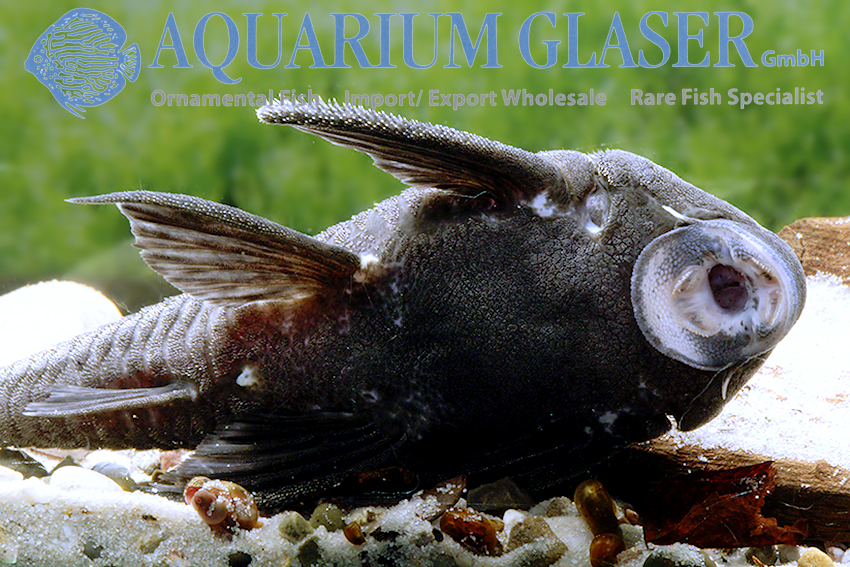
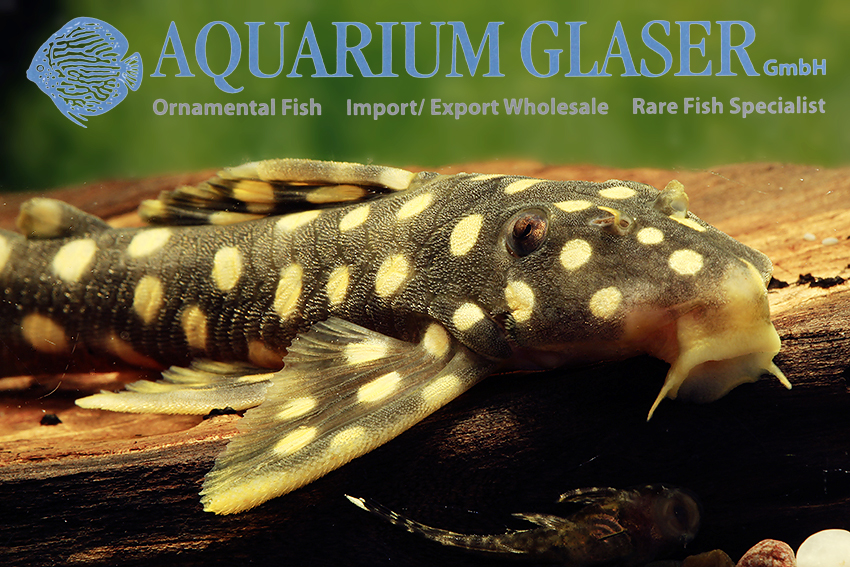
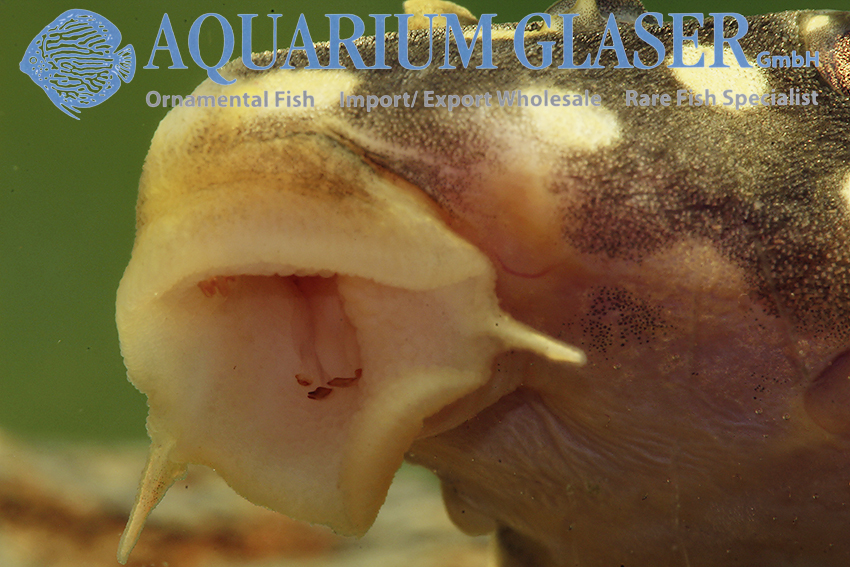
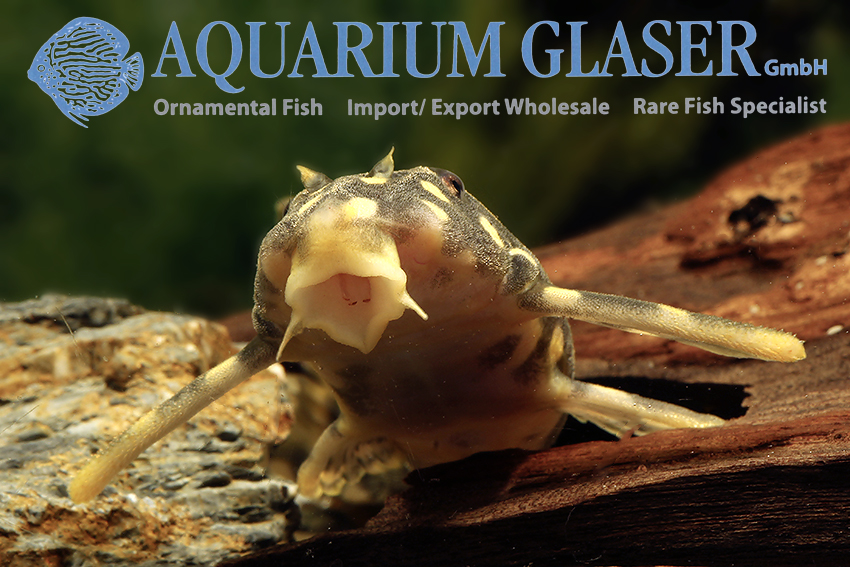
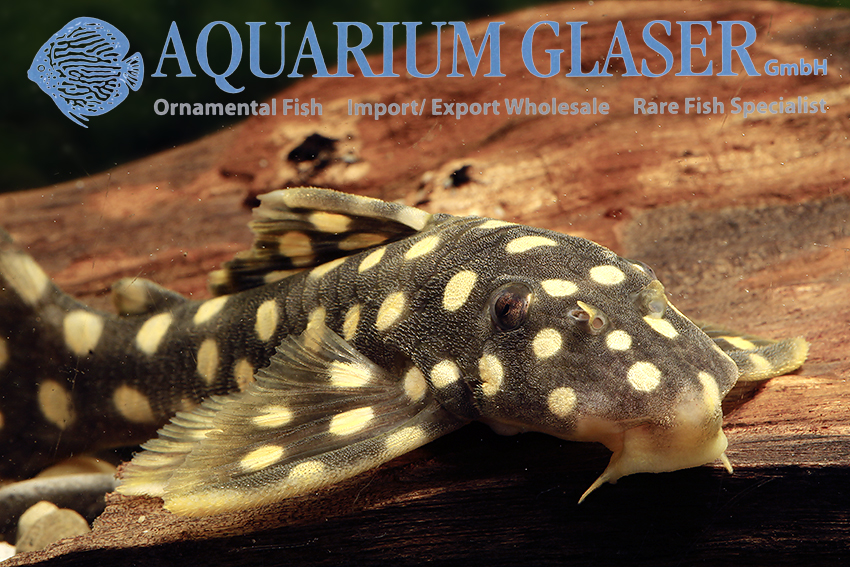
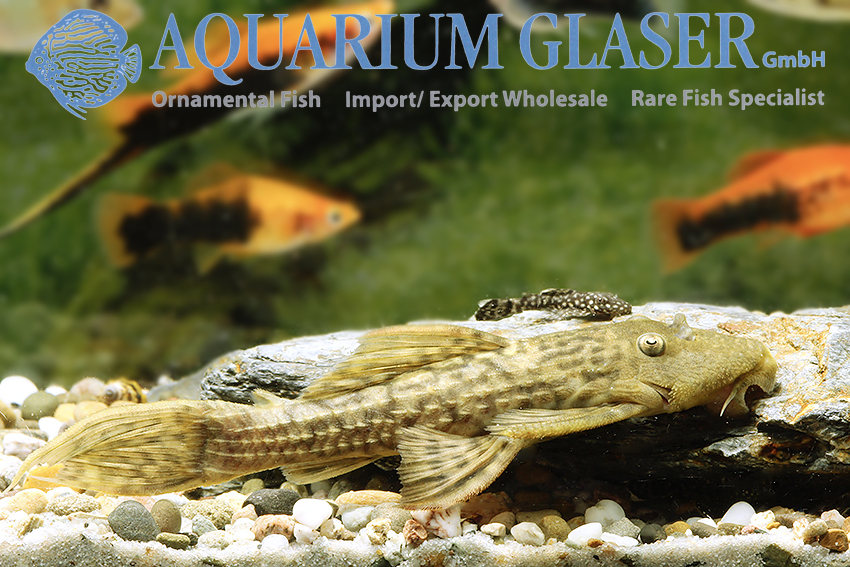
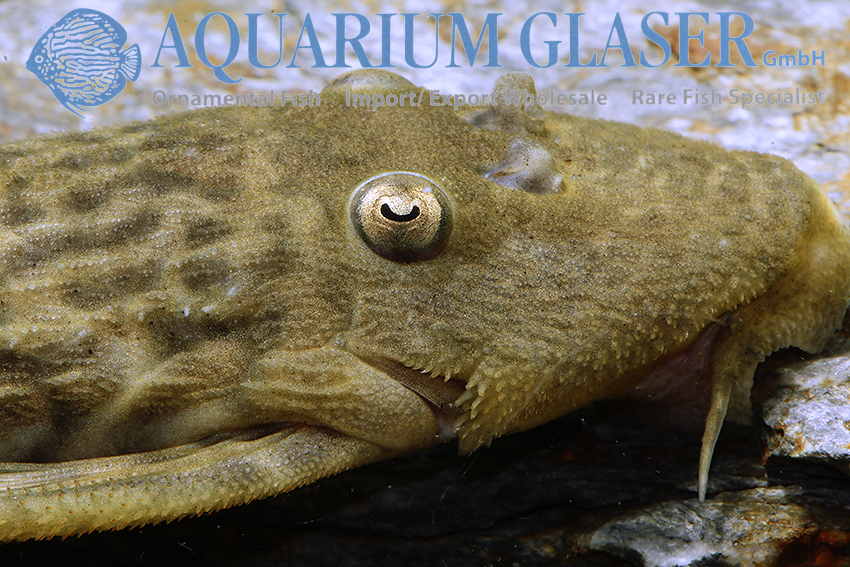
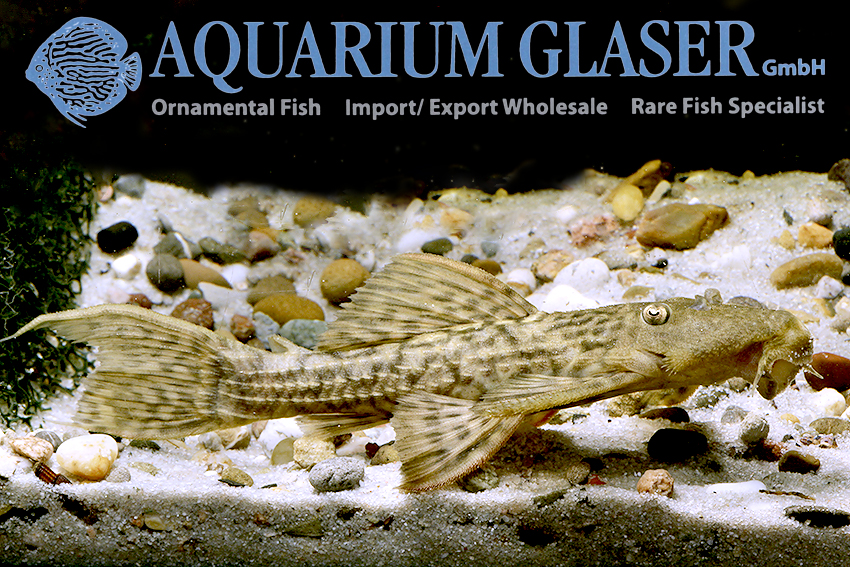
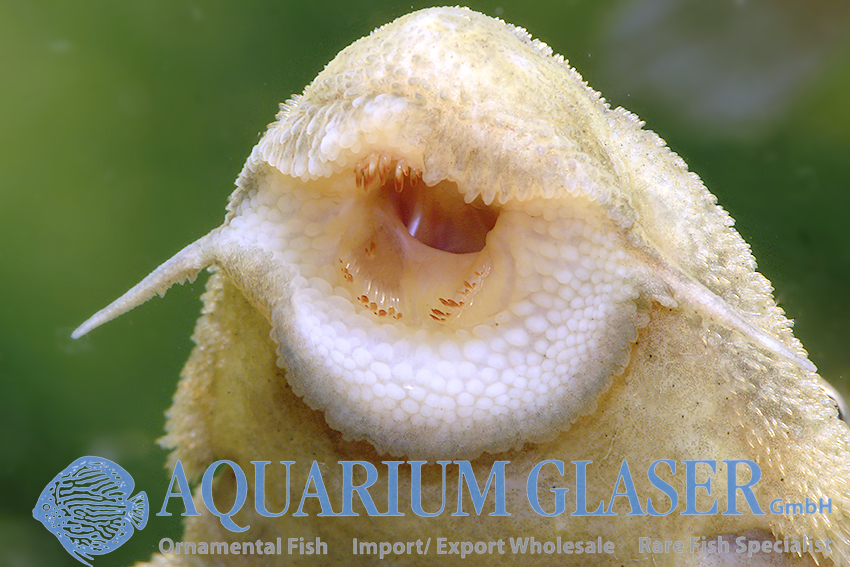
This beautiful loricariid catfish comes from the Rio Tapajós in Brazil. Usually, 4-5 cm long youngsters are imported from these catfishes, which look very attractive with their large, white dots on a deep black ground and fully deserve the name “Snowball-Pleco”. In addition to high water temperatures (not below 28°C), these catfishes should be kept in water that is as low in germs as possible. They also need to be fed properly. The food also includes soft (!) wood, which the animals grate off. In the nature these catfishes can become up to 30 cm long.
For our customers: the animals have code 26480-LDA 033-7 on our stocklist. Please note that we only supply wholesalers.
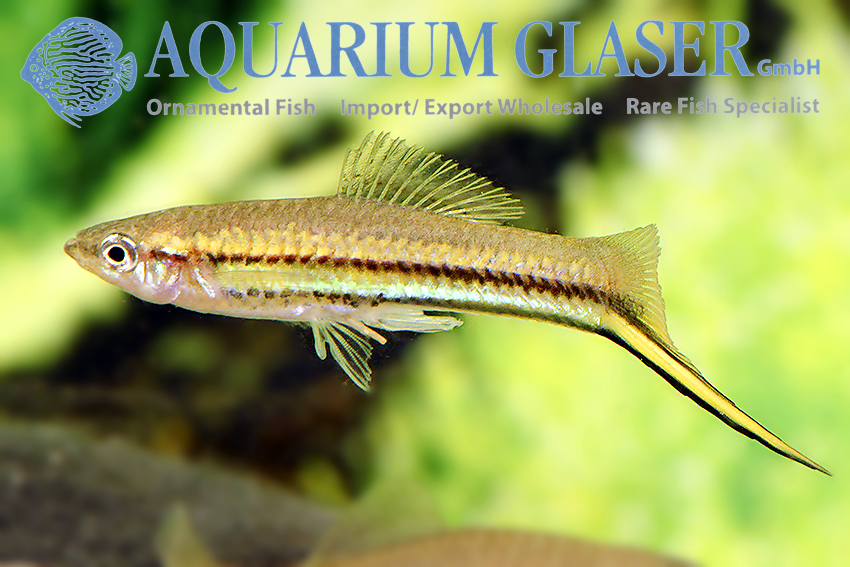
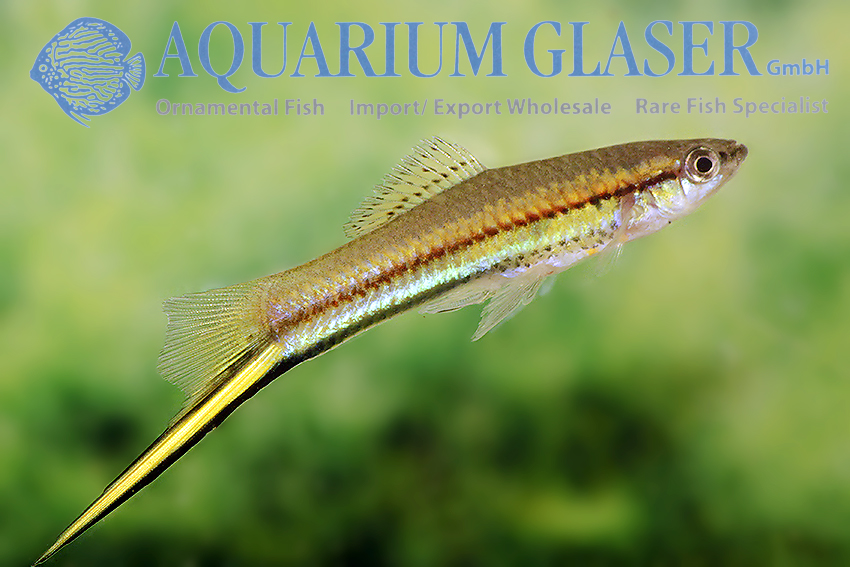
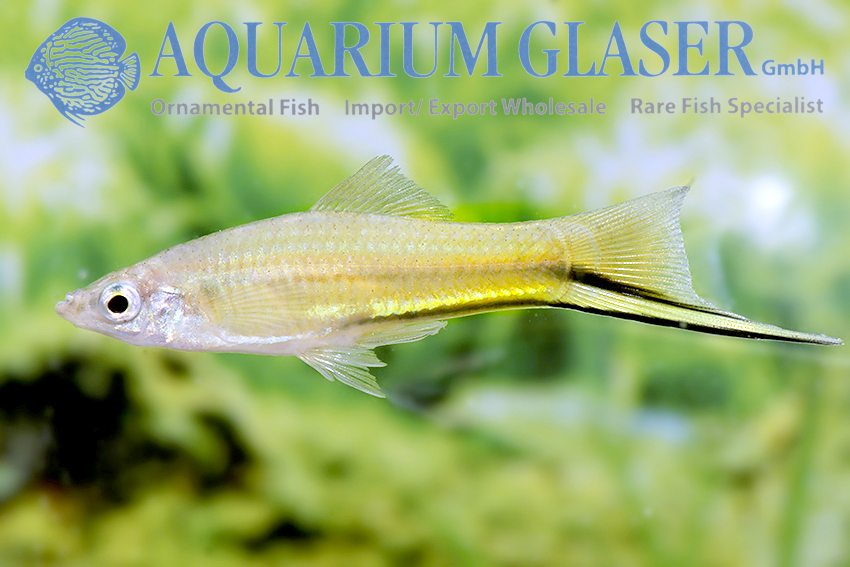
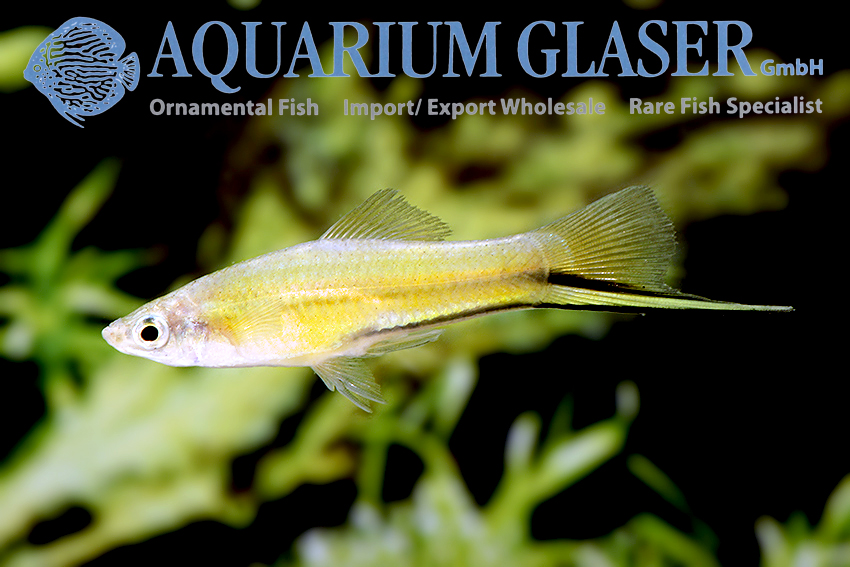
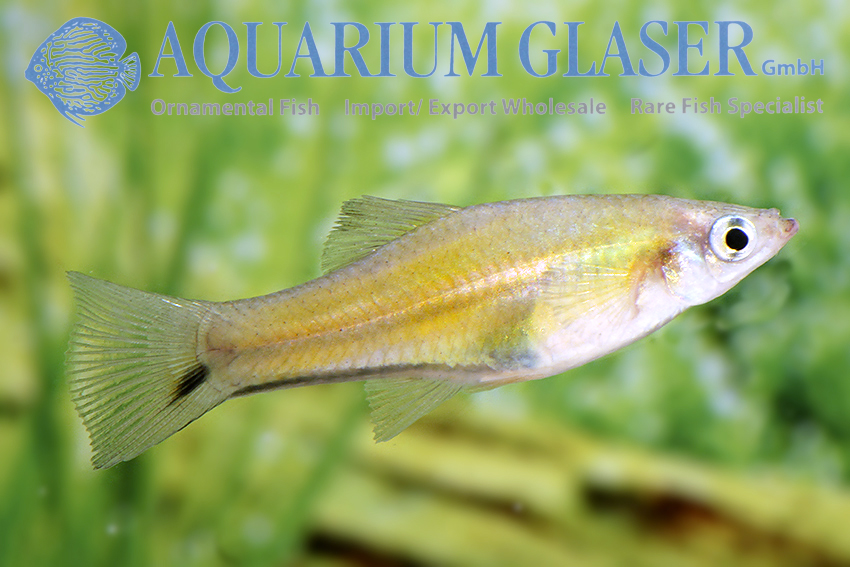
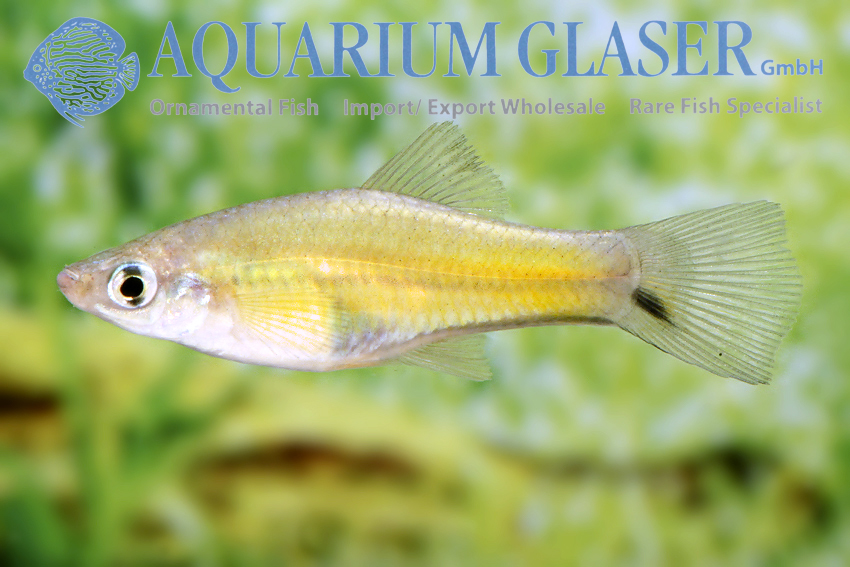
When you first see this slender, splendidly colored swordtail wild form, you involuntarily think: this is no X. hellerii! And yet, when X. hellerii was first described in 1848, exactly such animals became the type specimens. The traveler of the royal imperial horticultural society Karl Heller discovered and collected the animals in clear streams of the mountain Orizaba in Mexico (the highest mountain of Mexico and third highest of North America) and was already enthusiastic about the colorfulness of the fish at that time. At that time, however, aquaristics did not yet exist, so Heller could only send his new discovery to Vienna dead and faded in alcohol.
About 50 years later, in 1902, Meek described the Jalapa swordtail again under the name Xiphophorus jalapae, which is of course a younger synonym for the typical X. hellerii. On the other hand, it’s not so sure whether the “ordinary” Green Swordtail, which we have in the aquarium since 1909, is actually the same species as the “real” X. hellerii (the Jalapa form).
In comparison to “ordinary” green swordtails, the colors of the Jalapa swordtail look like painted on the body with neon pencils. They are really wonderful fish. Regarding care and breeding the Jalapa swordtails do not differ however from the “usual” green swordtails.
We get our specimens from a German breeder.
For our customers: the animals have code 476595 on our stocklist. Please note that we only deliver to wholesalers.
From the Rio Xingu we could import the probably strangest of all headstander: Sartor respectus. Unfortunately there were only two specimens, which one of our employees acquired. Nevertheless we did not want to withhold this speciality from you, dear readers.
Sartor (there are two other very similar species, one from the Rio Trombetas (S. elongatus) and one from the Rio Tocantins (S. tucuruiensis) are specialized in picking insect larvae from the underside of trees and branches that have fallen into the water. For this purpose they have the tusk-like teeth in their lower jaw. The genus name “Sartor” is the Latin word for “tailor” or, more generally, someone who works with a needle. This refers to the long, needle-like teeth in the lower jaw.
Sartor remain relatively small, around 10 cm. Among themselves they are quarrelsome, as is generally known of anostomids, without serious injury. An exciting animal that we would like to have “more” of….
One of the most important arguments for importing wild-caught fish for aquaristics is the gain in knowledge it allows. For the majority of small fish species this is only possible by observing living specimens. Without this there is no species knowledge, without species knowledge there is no species conservation.
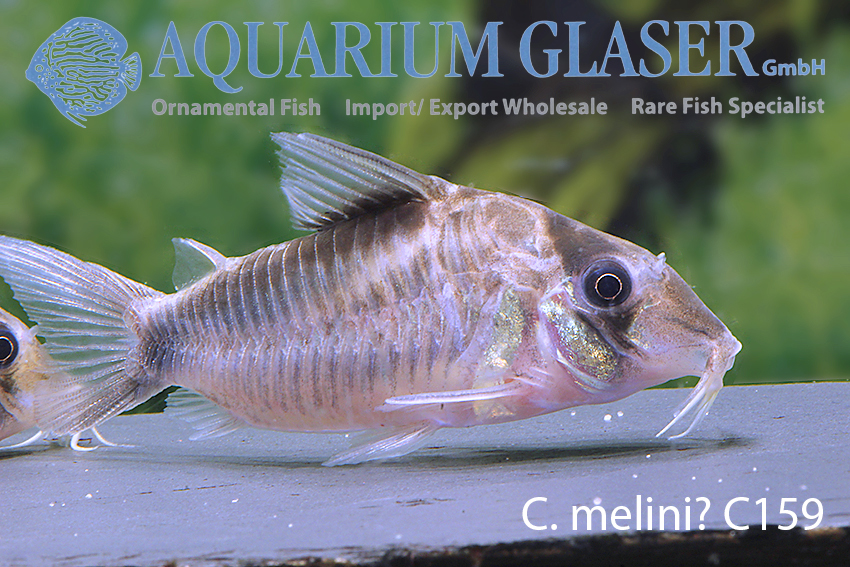
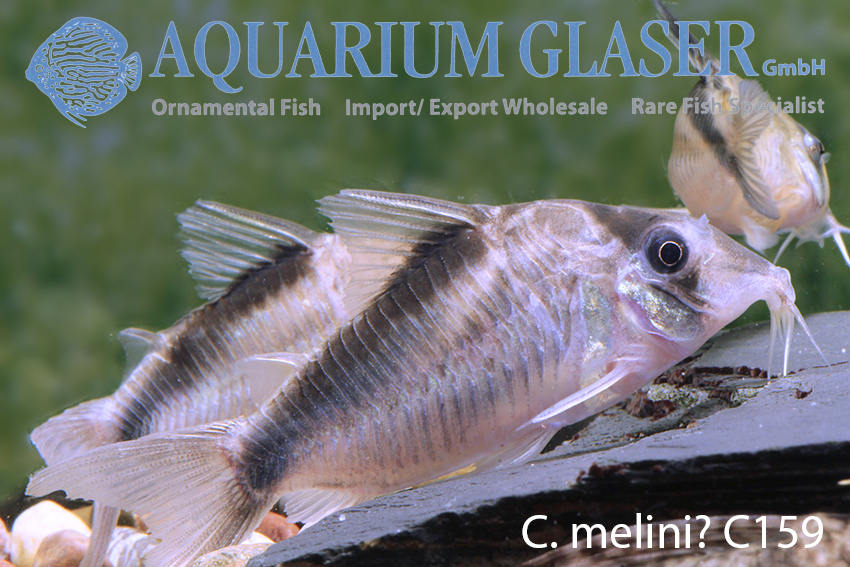
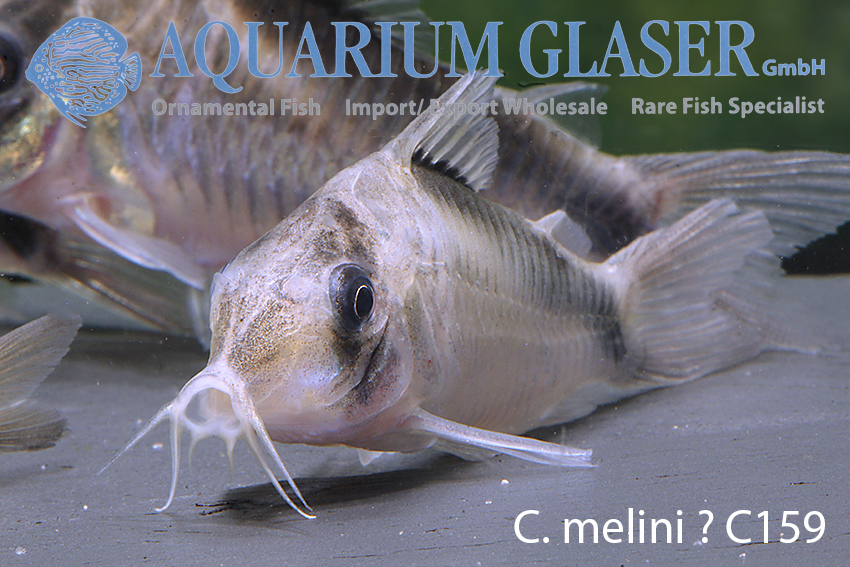
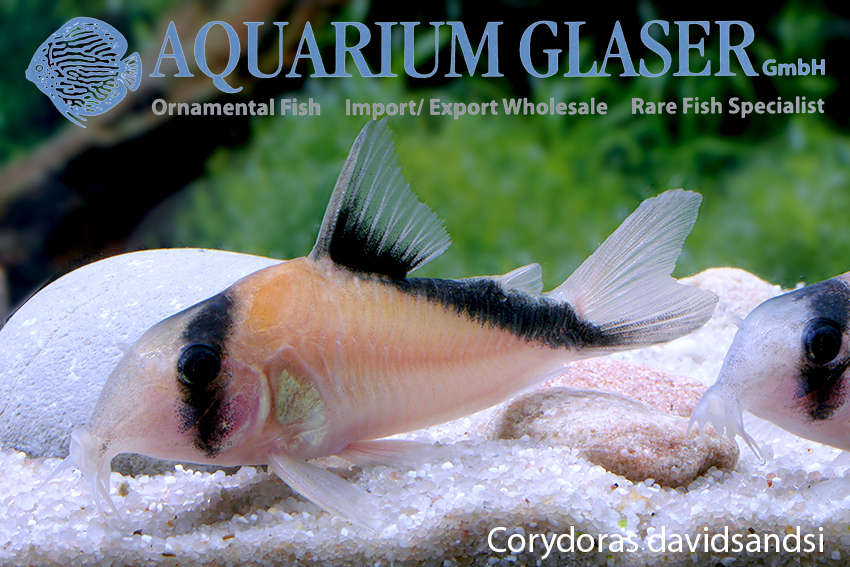
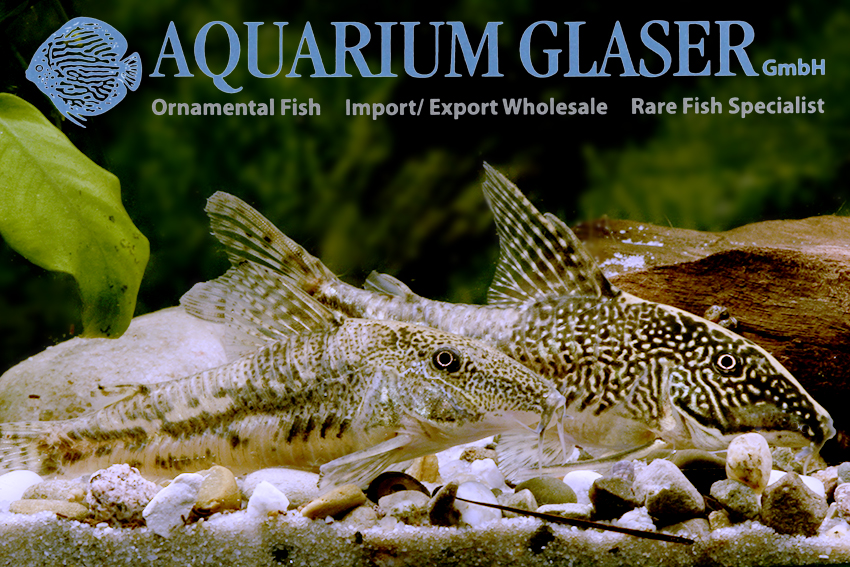
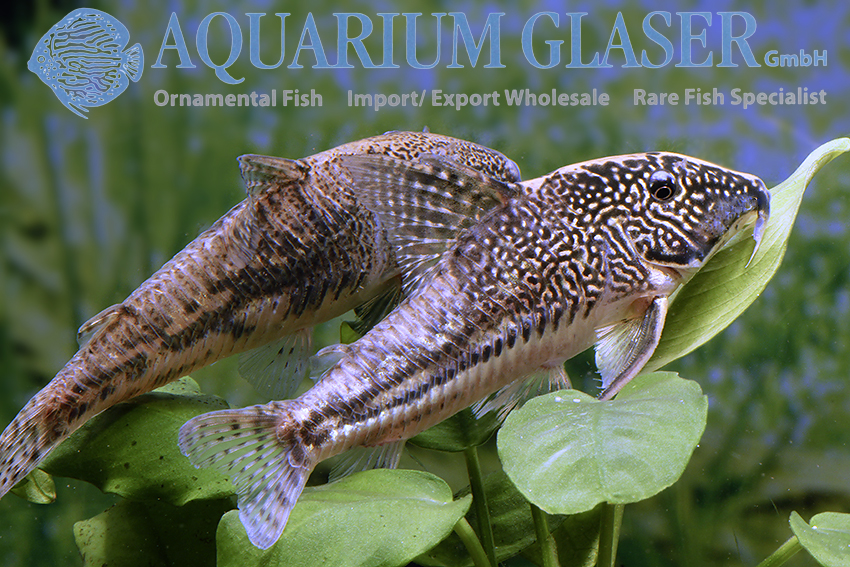
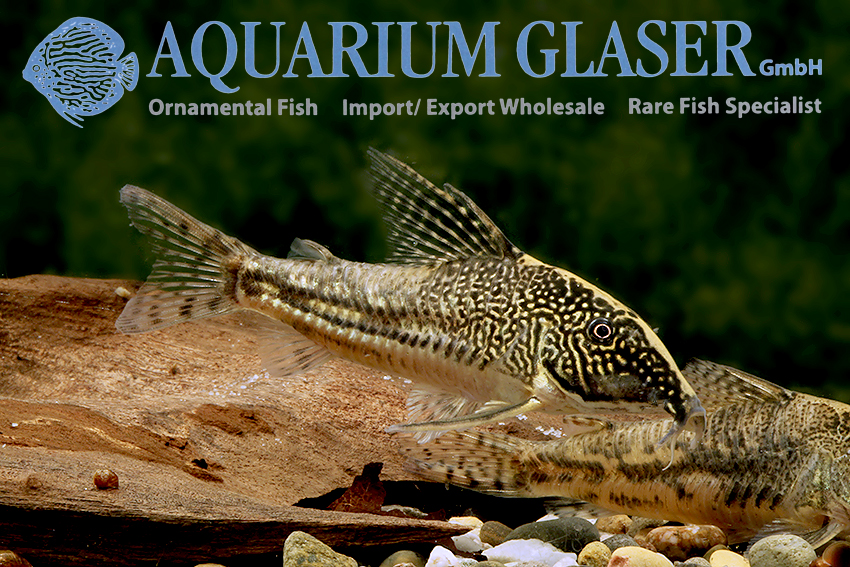
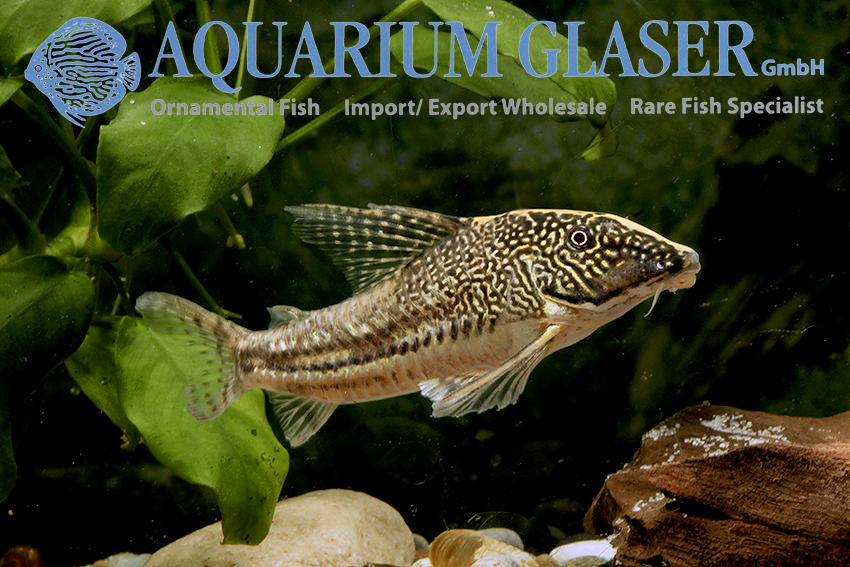
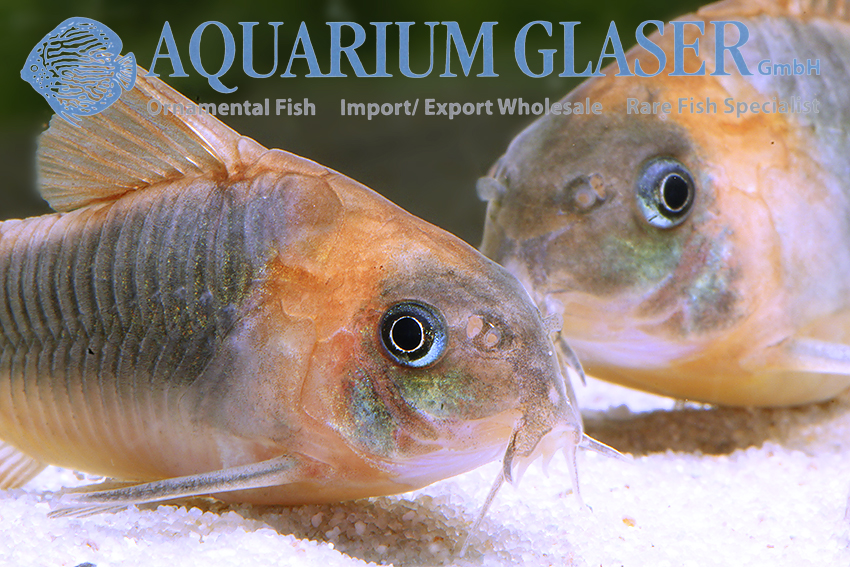
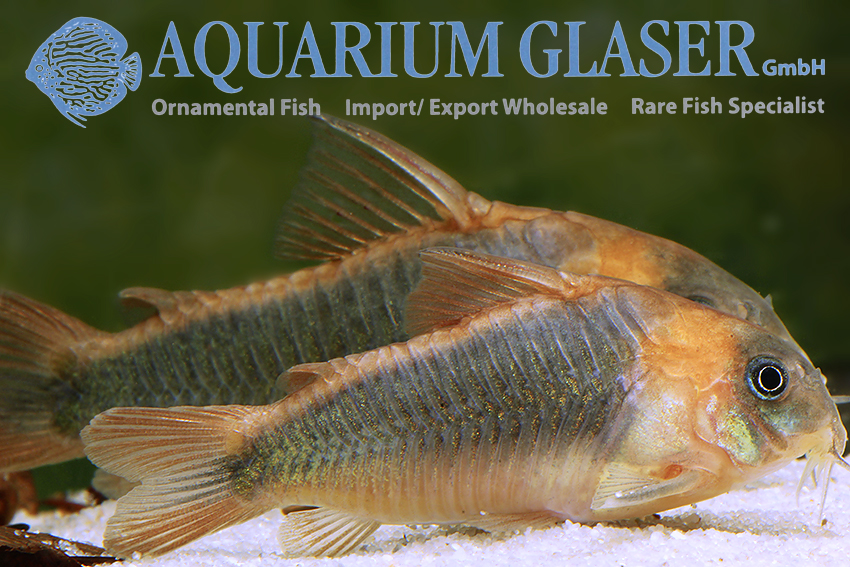
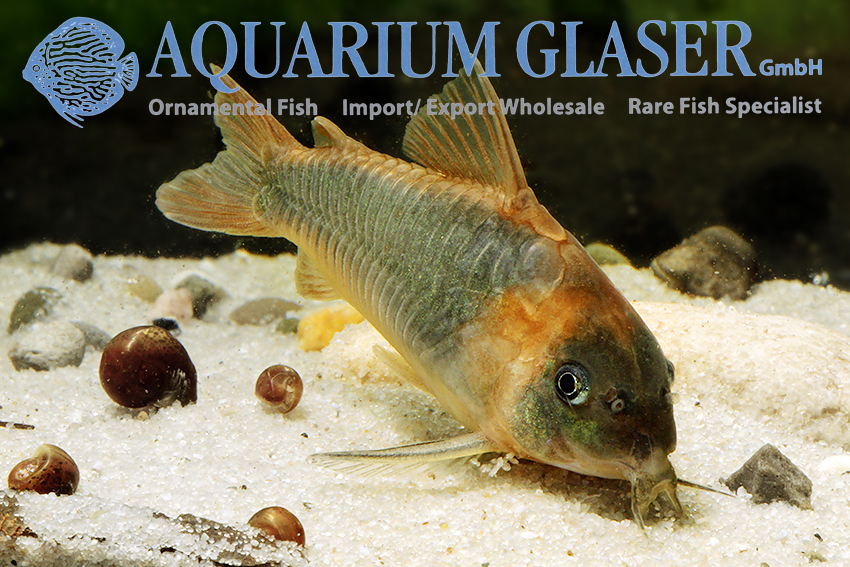
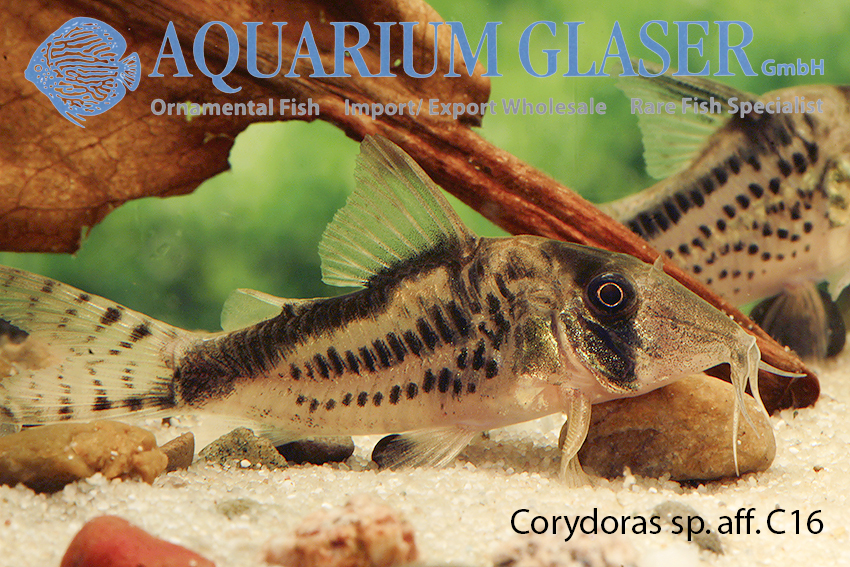
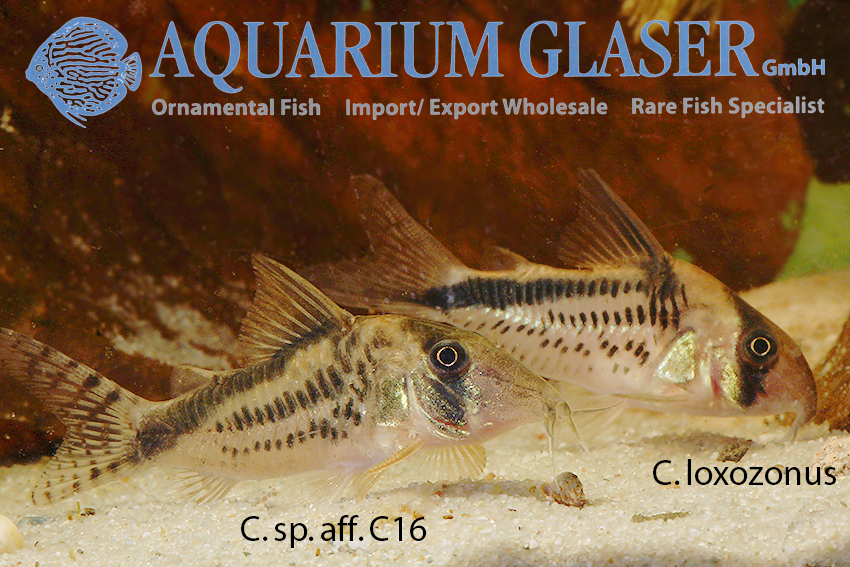
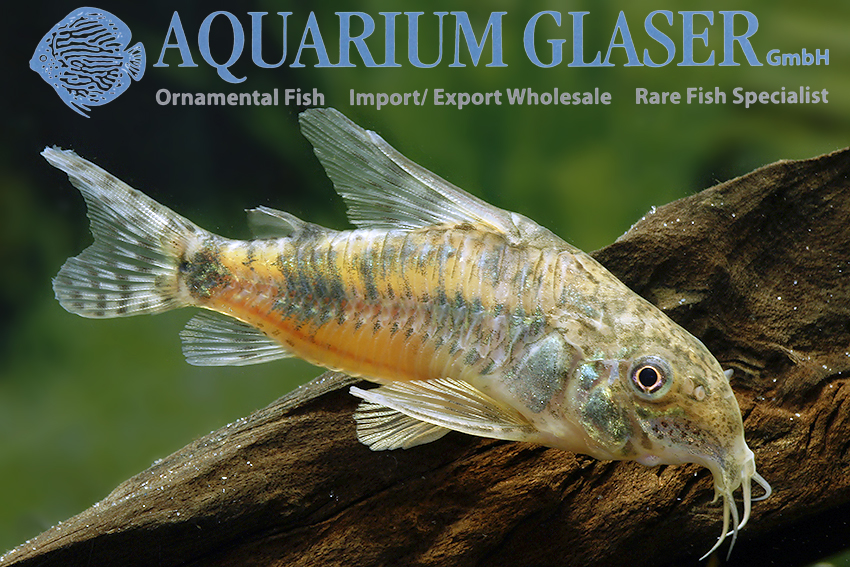
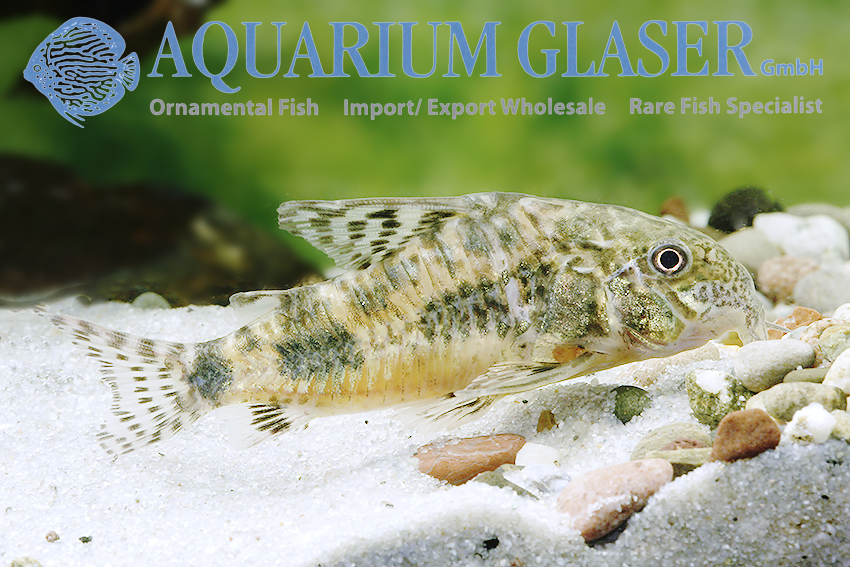
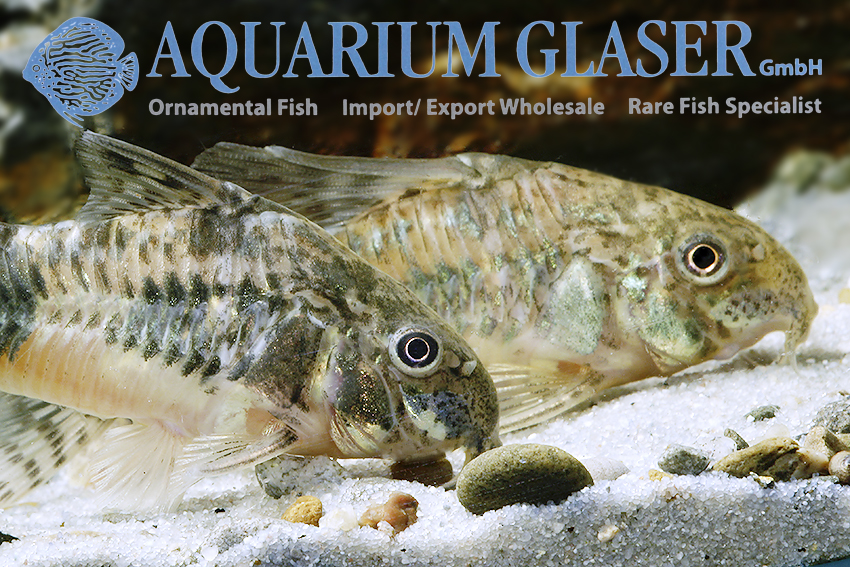
A wonderful example of the above is the Corydoras, which we received from Brazil a few weeks ago under the name Corydoras davidsandsi. It seemed to us a bit too high-backed and pointy-nosed for C. davidsandsi, but because they are particularly large animals and we had no better name to offer in a hurry, we let it go for the time being.
In the meantime, however, we did further research and came to surprising results. Since the 1980s a very beautiful armored catfish is imported from Colombia, which several scientists identified in scientific studies as Corydoras melini. This Colombian is a round-nosed armored catfish with a black eye band; a broad black dorsal band begins below the dorsal fin and runs down the root of the tail to the lower base of the caudal fin and continues along the lower edge of the caudal fin. We will refer to this color pattern as the “Melini pattern” in the following text.
Nowadays we have learned that there are several developmental lineages in armored catfishes that differ in terms of head shape (and thus food acquisition). Very often there are round-, long- and saddle-snouts with almost identical color pattern, without these species being more closely related to each other; in addition, there are twin species with the same head shape, which, however, occur in spatially far apart areas, therefore at least represent different populations and are usually distinguished by details of coloration. And to make it even more complicated: the head or snout shape is also subject to a certain variation within a population and also changes in the course of individual development (ontogenesis). For example, a very young long snout is recognizable as such only to very experienced specialists, and the relative length of the snout increases considerably during growth.
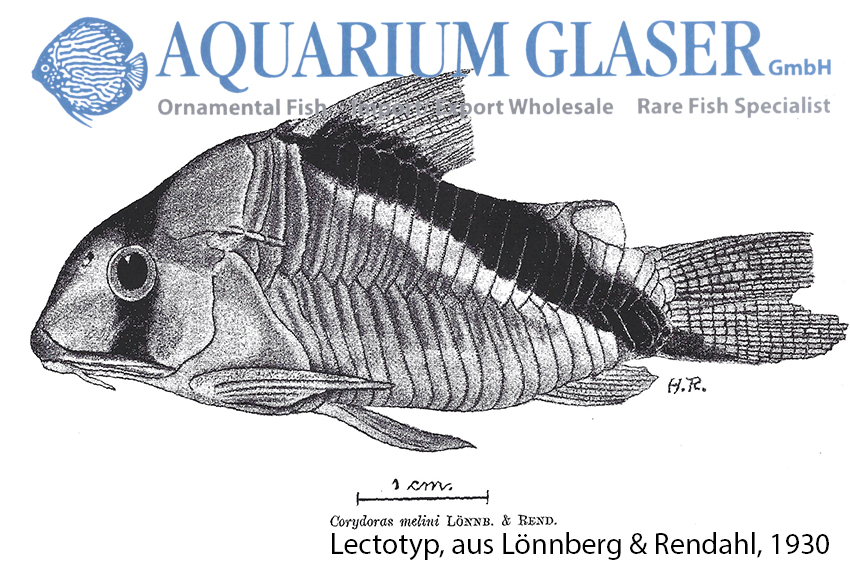
The examination of the first scientific description of Corydoras melini showed that it is clearly a longnose, even if the animals on which the description was based were still relatively small. They were collected in 1924 in the Rio Uaupes in the border area between Brazil and Colombia by D. Melini, in whose honor the species was named at the first description by Lönnberg and Rendahl. Rendahl was not only a zoologist but also a recognized artist and made a detailed drawing of the largest, 44.4 mm (without caudal fin) long animal, which Nijssen & Isbrücker declared to be the lectotype in 1980 (thus it is the reference specimen for all subsequent determinations). Because this work is not so readily available, we reproduce the drawing here for comparison purposes.
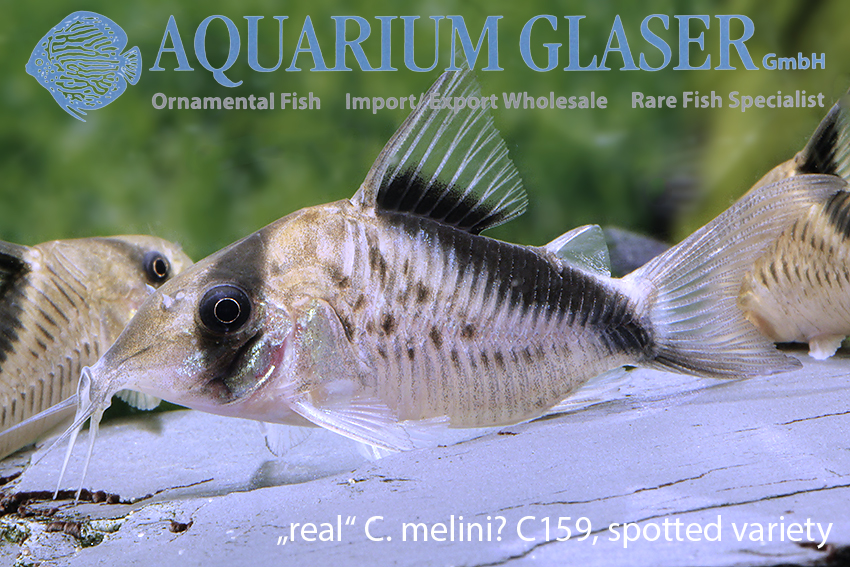
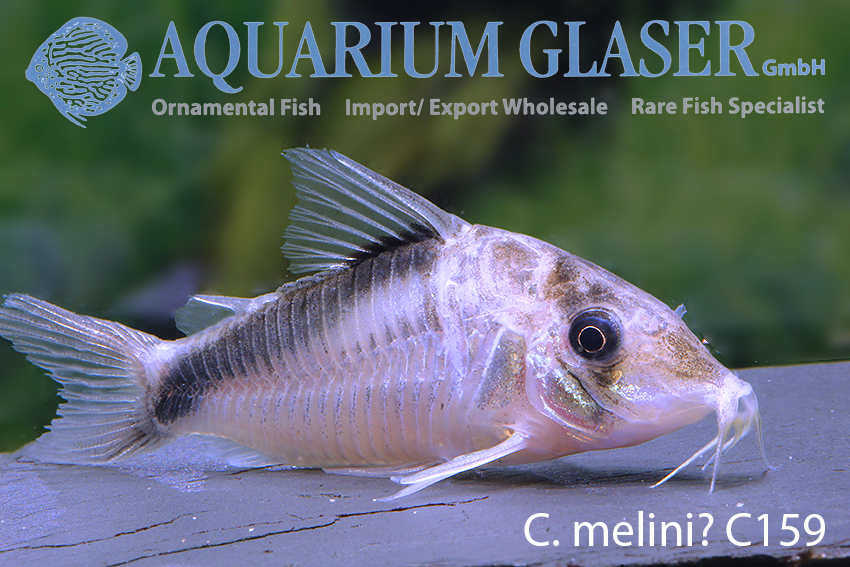
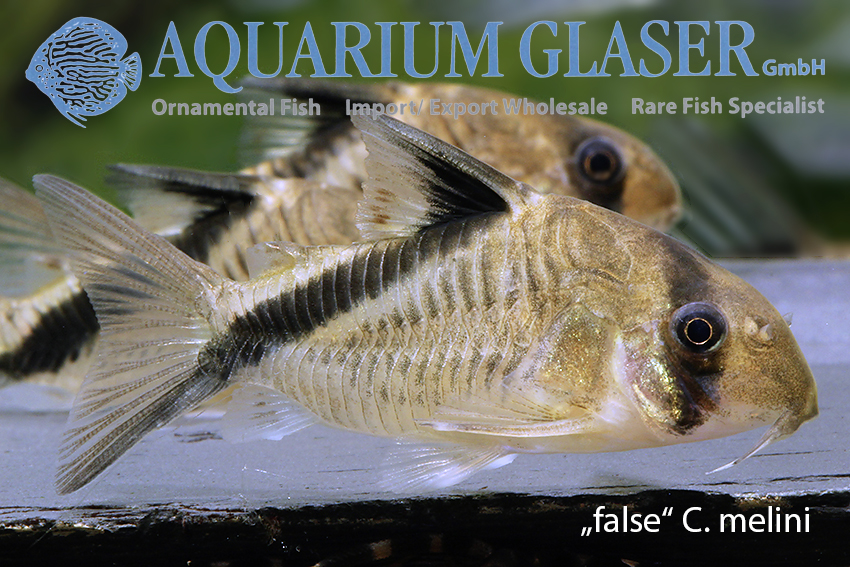
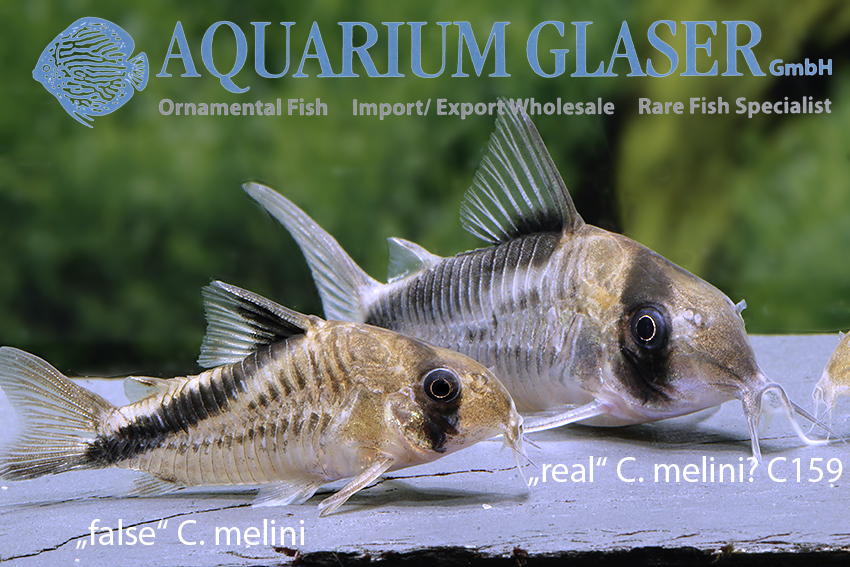
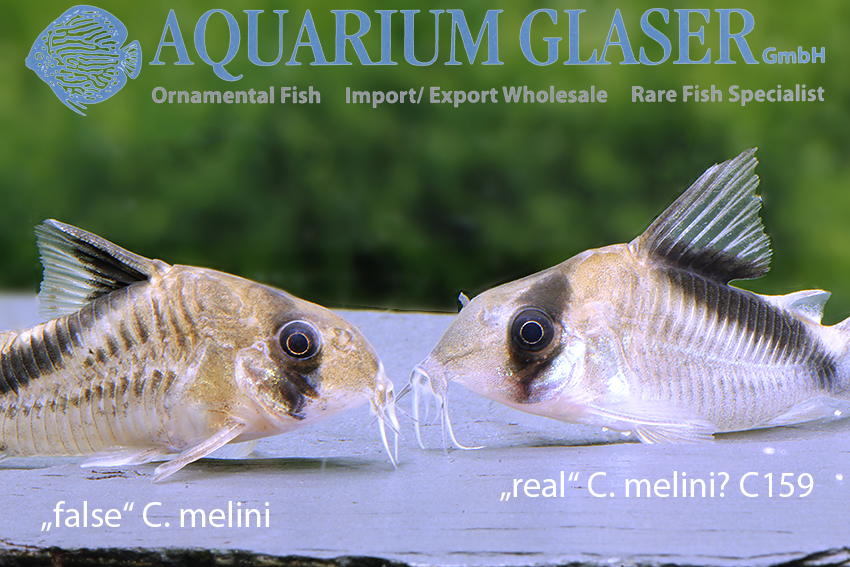
An easily recognizable difference between the “false” C. melini from Colombia and the “true” C. melini from the Rio Uaupes (in Colombia the same river is called Vaupes) is the coloration of the dorsal fin. The “false” C. melini has a black triangle in the dorsal fin that extends from the tip of the dorsal fin spine to the posterior lower end of this fin. The dorsal fin triangle is merged in color with the dorsal band. In the “true” C. melini, however, the dorsal fin is transparent and only in the lower, dorsal region is there a flat, black rectangle that is also connected to the dorsal band. Further coloration differences are easily seen in the attached photos. By the way, according to Castro (1987) the “false” C. melini occurs in the Rio Guaviare (Colombia, Orinoco drainage) and in the Rio Caqueta (Amazonian drainage in Colombia, in Brazil the same river is called Japurá).
The following longnose with “melini pattern” and the coloration of the “true” C. melini are currently known: C52 (Peru), C85 (Peru), C138 (Peru), C159 (Brazil: Rio Purus), CW89 (Colombia, Rio Vaupes), CW106 (Colombia, Rio Cuduyaria, a tributary of Rio Vaupes). Of these, ours, sent as C. davidsandsi, correspond best to C159 and from our point of view CW89 is the fish closest to the first description of C. melini.
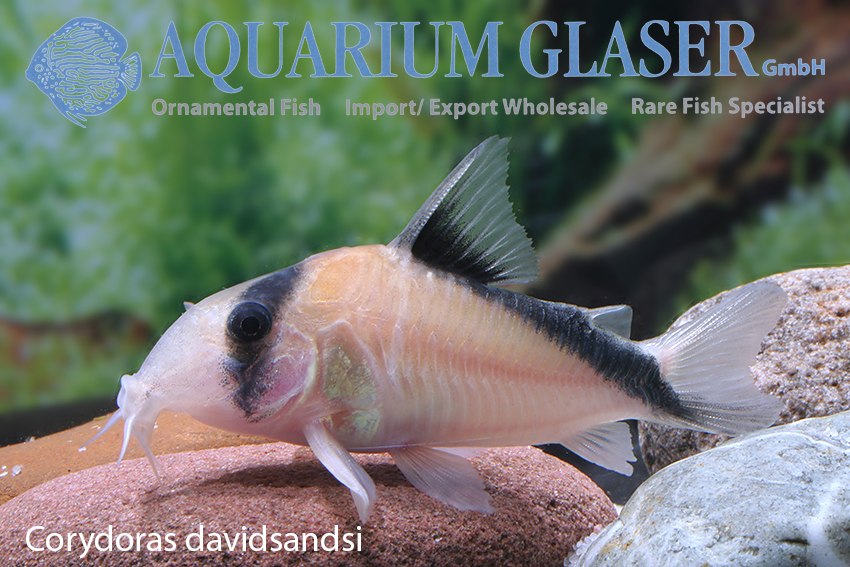
Finally, a word about C. davidsandsi: this species occurs in the Rio Negro drainage (Rio Unini) in Brazil and has the “melini pattern”, but the nuchal shield between the eye patch and the dorsal fin base is colored pale orange-red, which places it more in the relationship of Corydoras adolfoi, C. burgessi, C. imitator and similar species.
Text & Photos: Frank Schäfer
Literature cited:
Castro, D. M. (1987): The fresh-water fishes of the genus Corydoras from Colombia, including two new species (Pisces, Siluriformes, Callichthyidae). Boletin Ecotrópica. No. 16: 23-57, Pls. 1-11.
Lönnberg, E. & H. Rendahl (1930): Eine neue Art der Gattung Corydoras. Arkiv för Zoologi v. 22 A (no. 5): 1-6.
Nijssen, H. & I. J. H. Isbrücker (1980): A review of the genus Corydoras Lacépède, 1803 (Pisces, Siluriformes, Callichthyidae). Bijdragen tot de Dierkunde v. 50 (no. 1): 190-220.
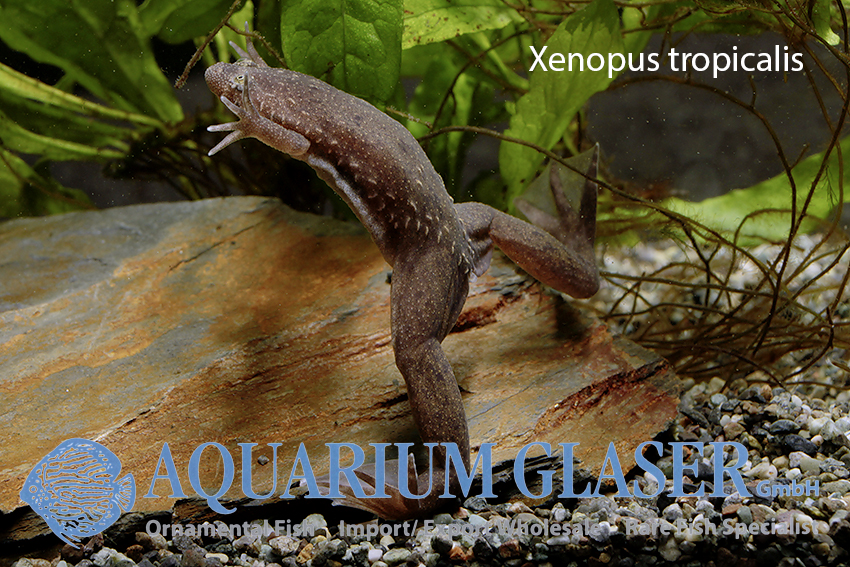
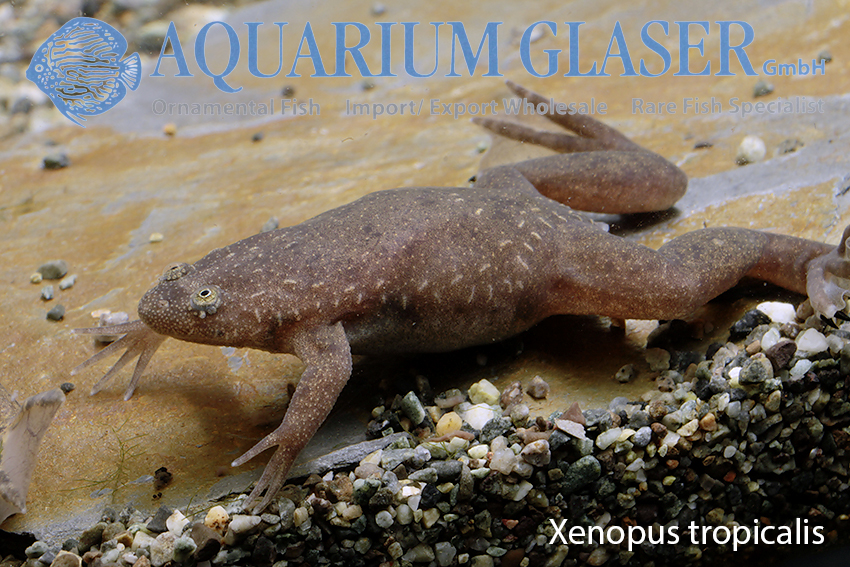
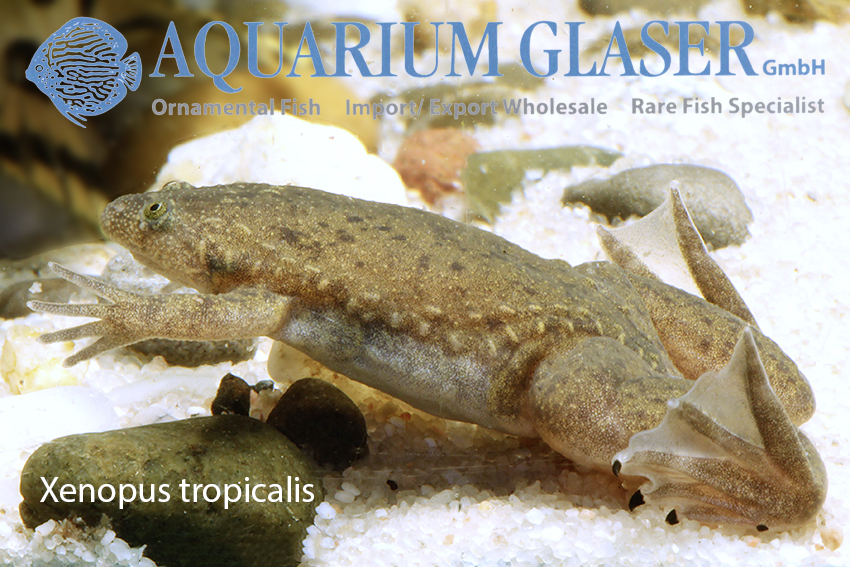
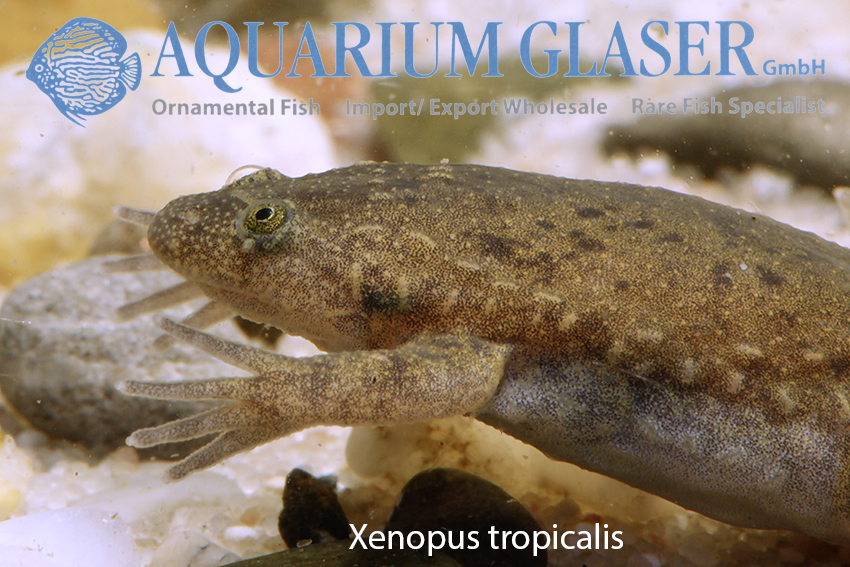
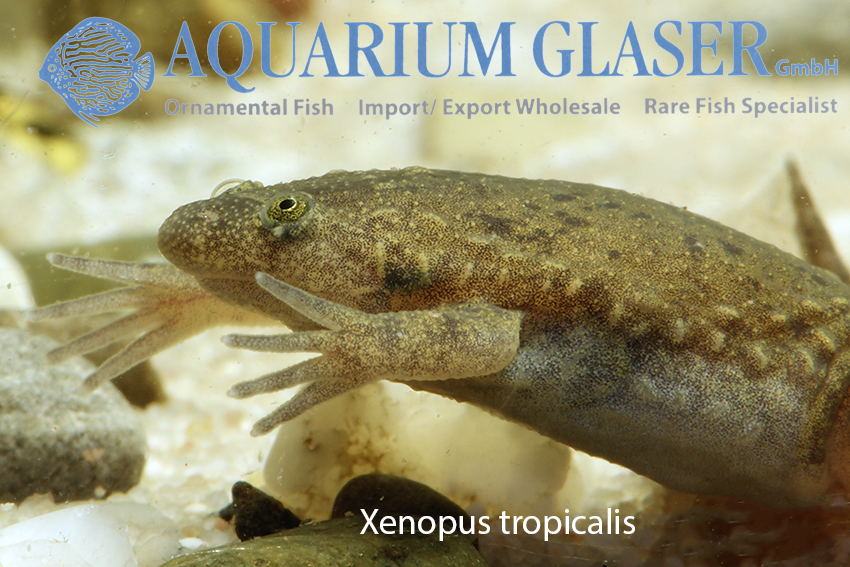
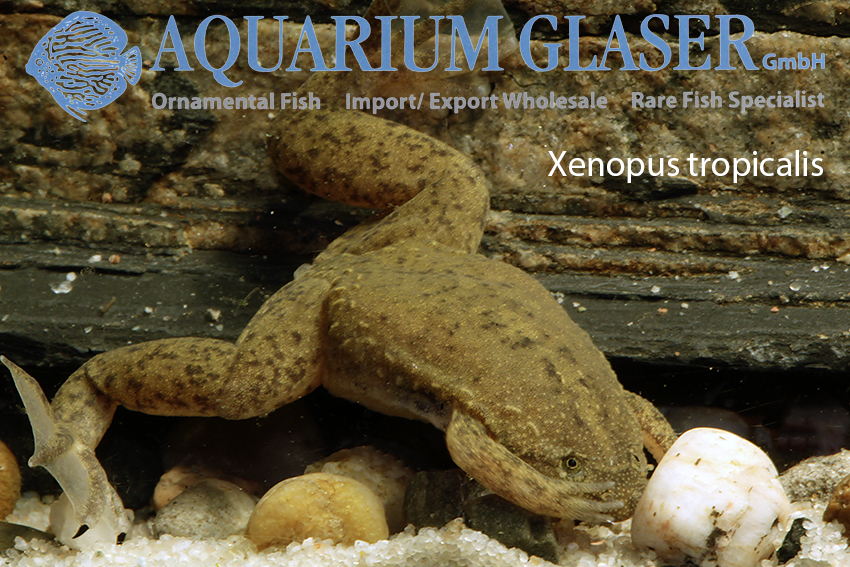
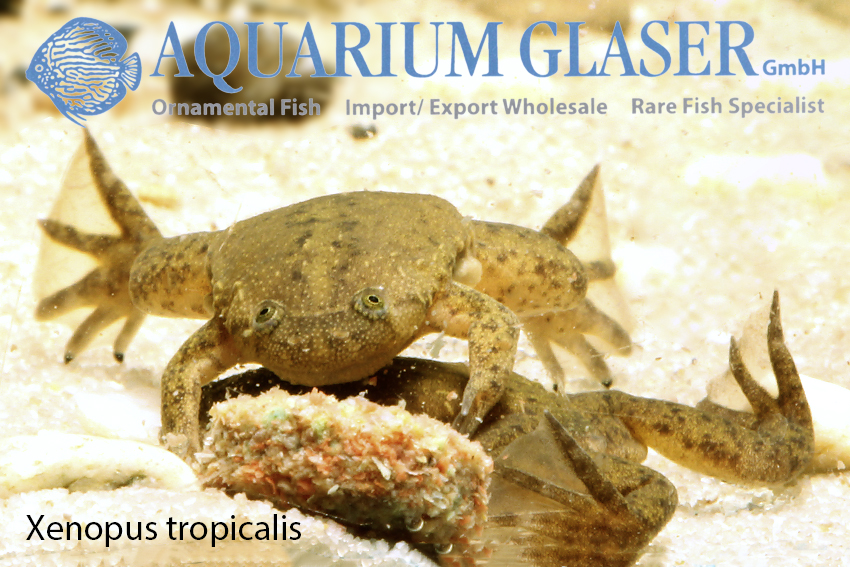
Most likely, the trade of clawed frogs of the species Xenopus laevis will soon be banned because a reproducing population has been discovered in France. Due to climate change, it is now feared that this species could become invasive in Europe. To prevent this, the trade with this species should be prohibited.
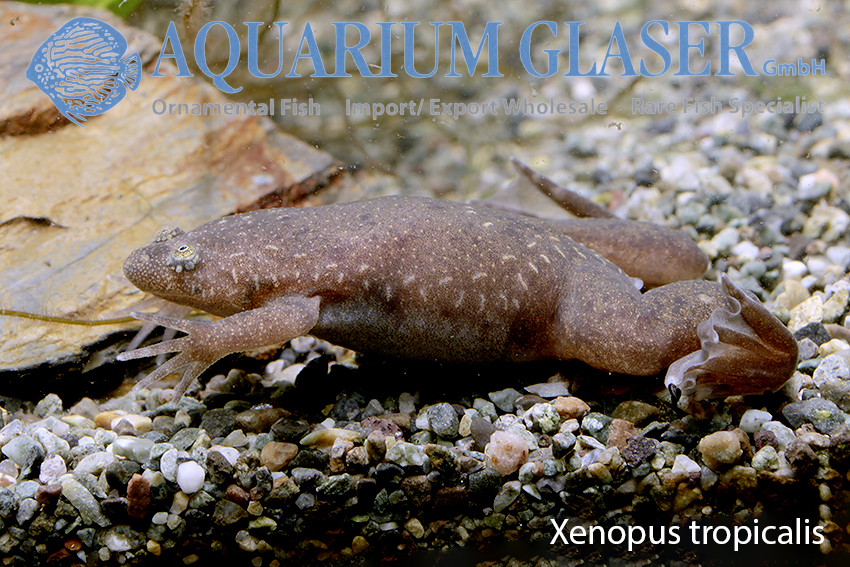
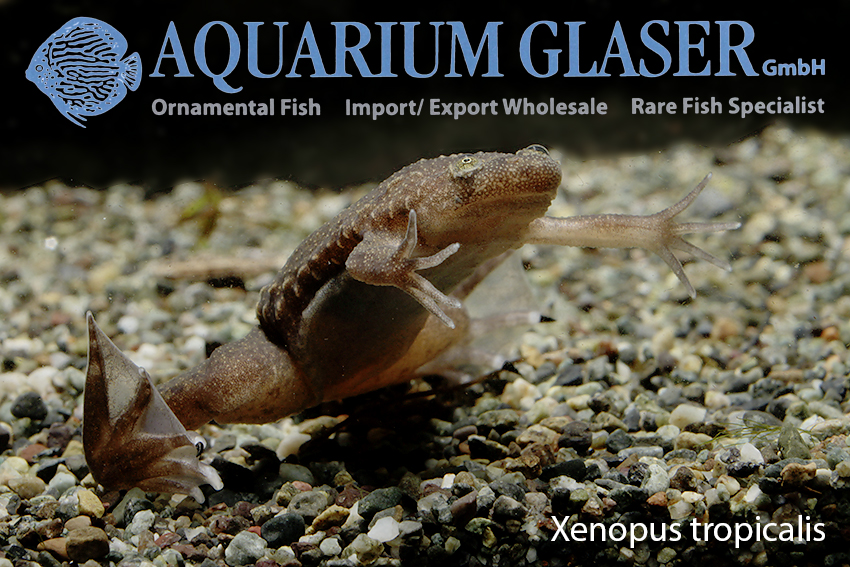
We would like to point out to our customers that we usually do not trade Xenopus laevis, but the much smaller Xenopus tropicalis, even if it is/was listed as X. laevis. The determination of clawed frog species (there are 29 of them) is even specialists often only possible with biochemical methods (DNA analysis), therefore in the wholesale trade so far one has renounced an exact naming.
Xenopus tropicalis (often called Silurana tropicalis) is clearly different from Xenopus laevis. It grows only about 4 cm (X. laevis up to 15 cm), has smaller eyes and is a tropical species that could never survive a European winter. Some strains of Xenopus laevis, on the other hand, come from South Africa and can even survive sub-zero temperatures for short periods. We obtain X. tropicalis both as wild catch from Nigeria and as EU offspring or from Southeast Asia. Because of the good suitability of this small species for community aquariums with fish, it has largely replaced its larger cousin in breeding for aquarium purposes. X. laevis is mainly bred as a laboratory animal for medical research, and animals from these breedings have sometimes entered the pet trade.
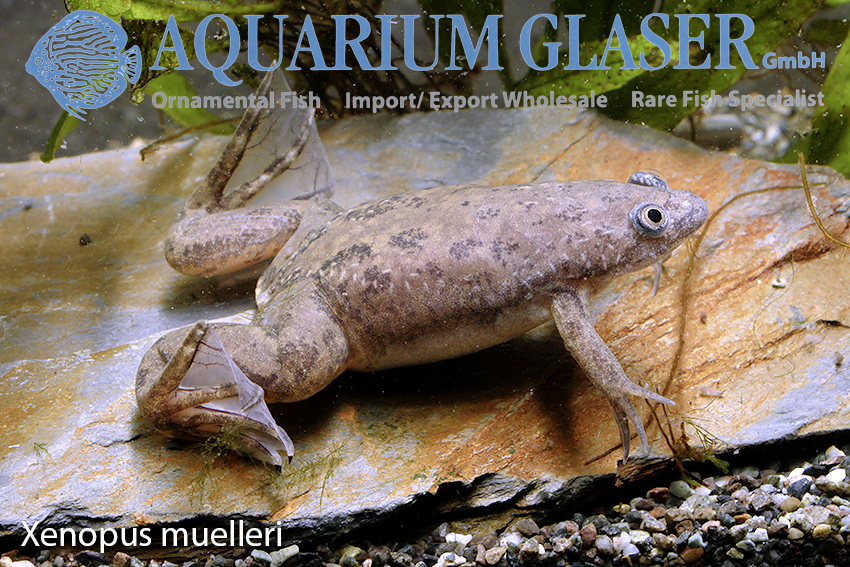
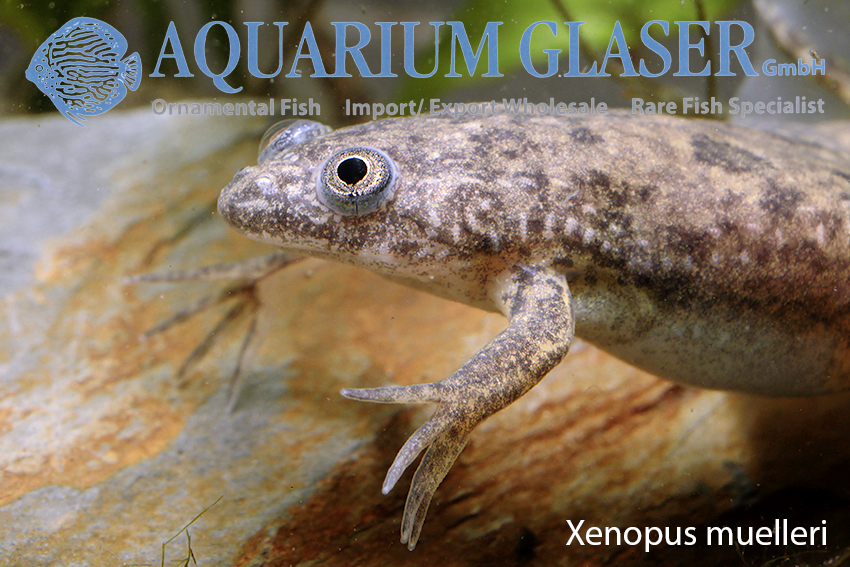
Occasionally we have also the small (around 6 cm) Xenopus muelleri as offspring in stock. This tropical species remains allowed.
The care of Xenopus tropicalis is simple, it eats and tolerates any ornamental fish food, whether dry, frozen or live. It is peaceful, but will try to eat anything that fits in its mouth. Therefore fish, which you want to keep together with X. tropicalis, should not be smaller than 3 cm. It is very important to cover the aquarium completely. In case of air pressure fluctuations, the animals are overcome by a great wandering instinct and they then become perfect escape artists. Unfortunately, such excursions in living rooms usually end fatally.
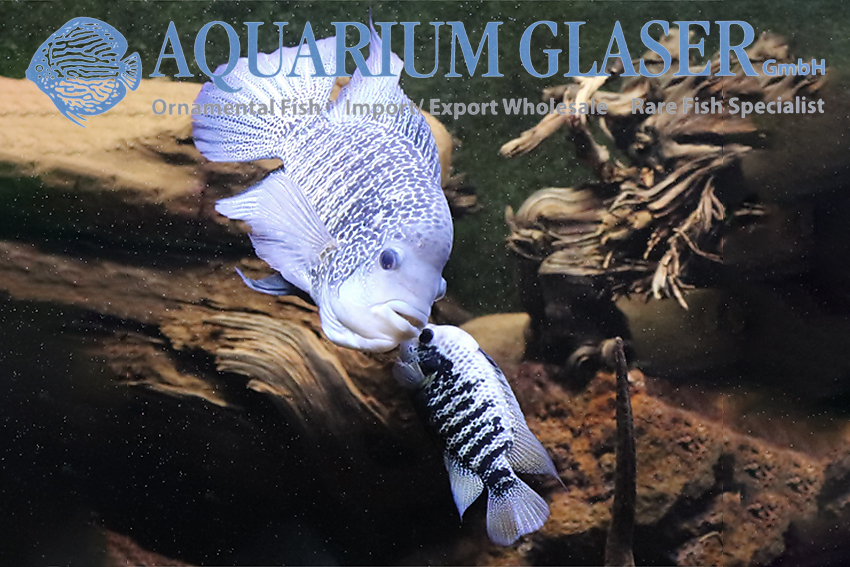
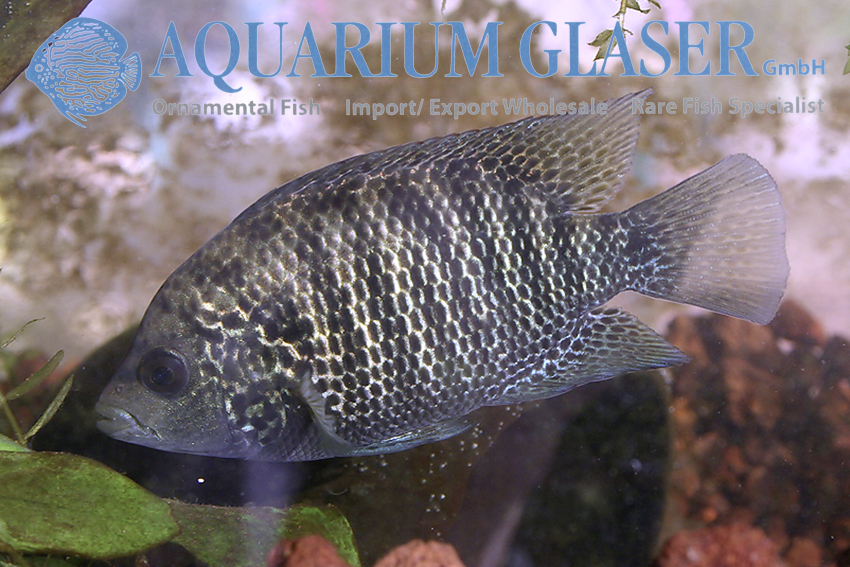
Origin: Rio San Christobal = Laguna El Camalote, San Blas, Nayarit, Mexico
The small town of San Blas, where the Rio San Christobal empties into the Pacific Ocean, is considered the northernmost place with a tropical climate on the Pacific coast of Mexico. The name Laguna El Camalote was originally applied to a marshland southeast of the river mouth, but is also used for the ocean bay south of San Blas.
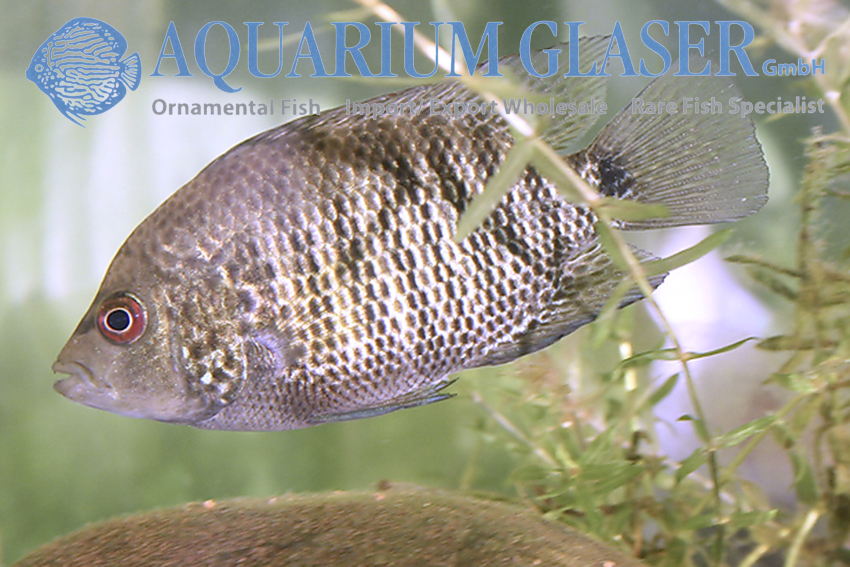
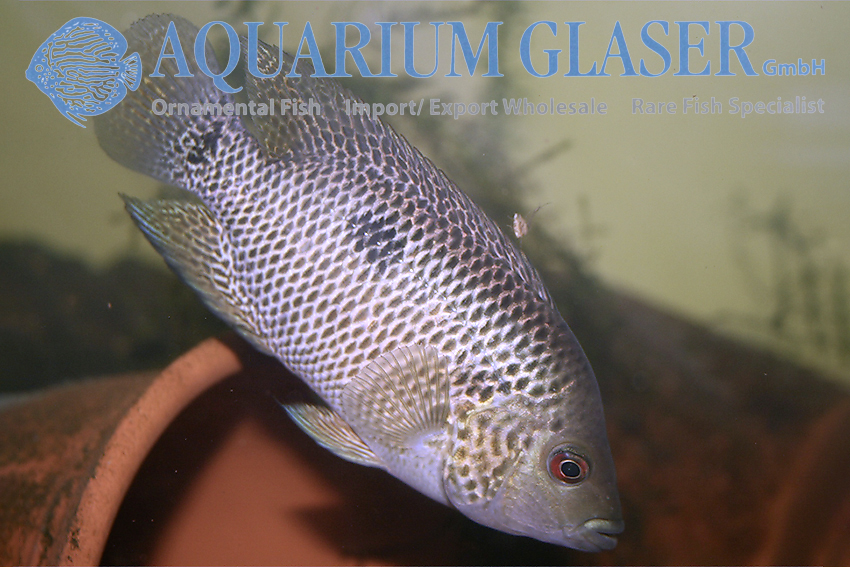
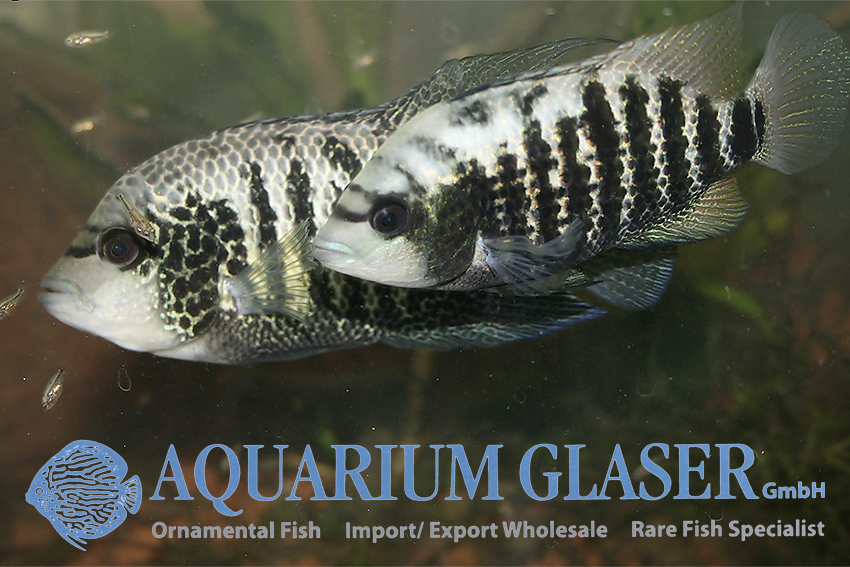
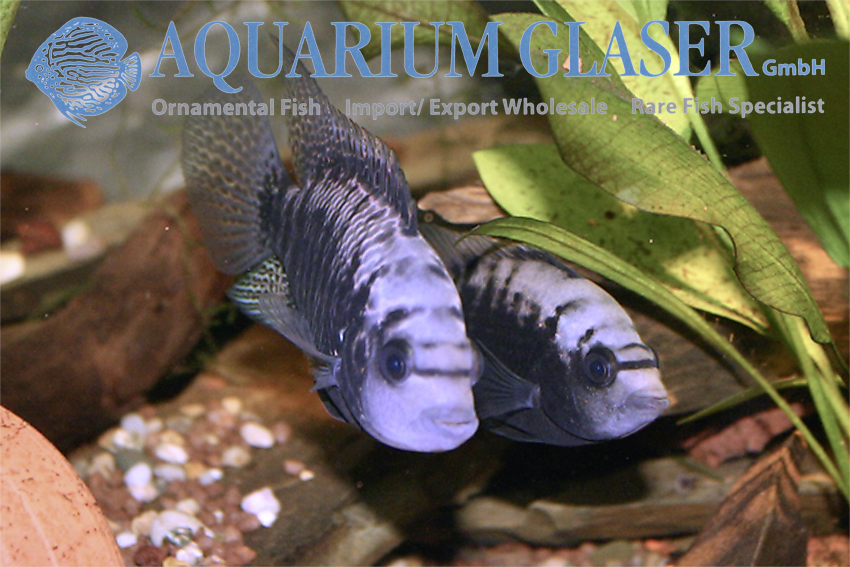
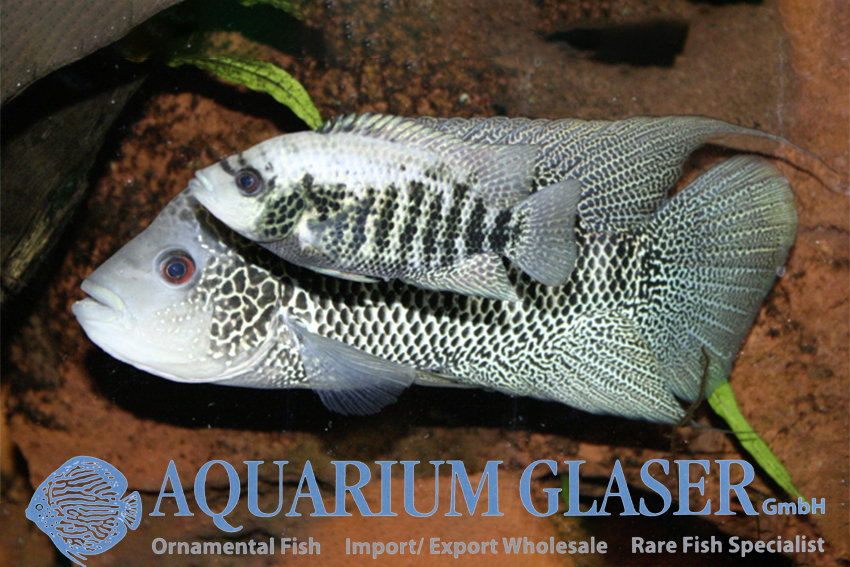
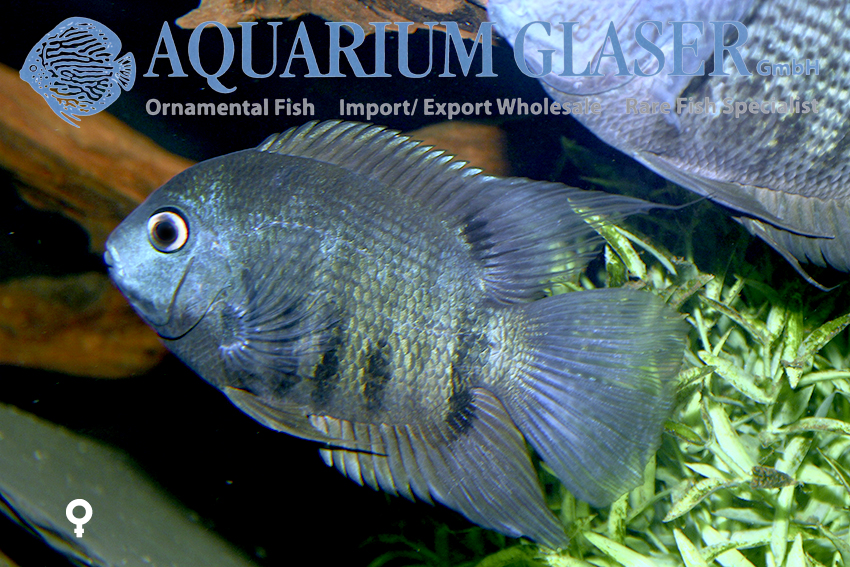
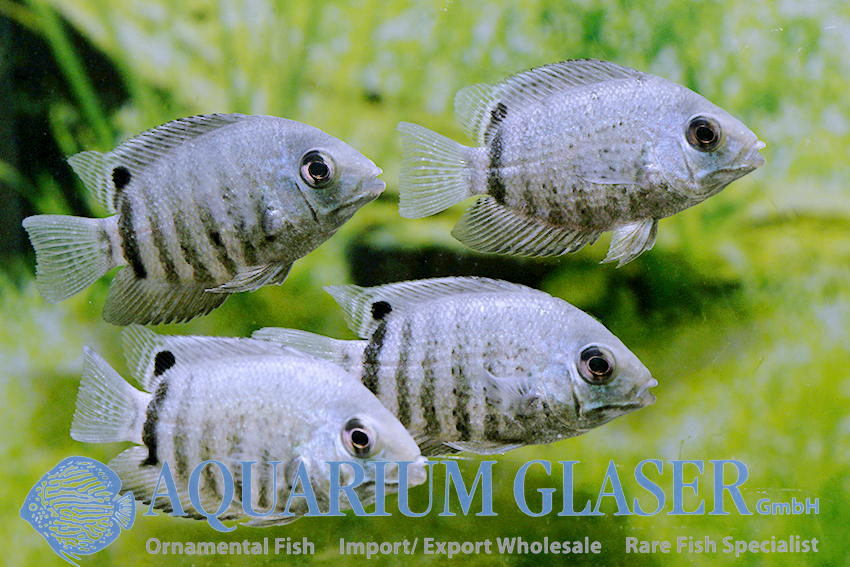
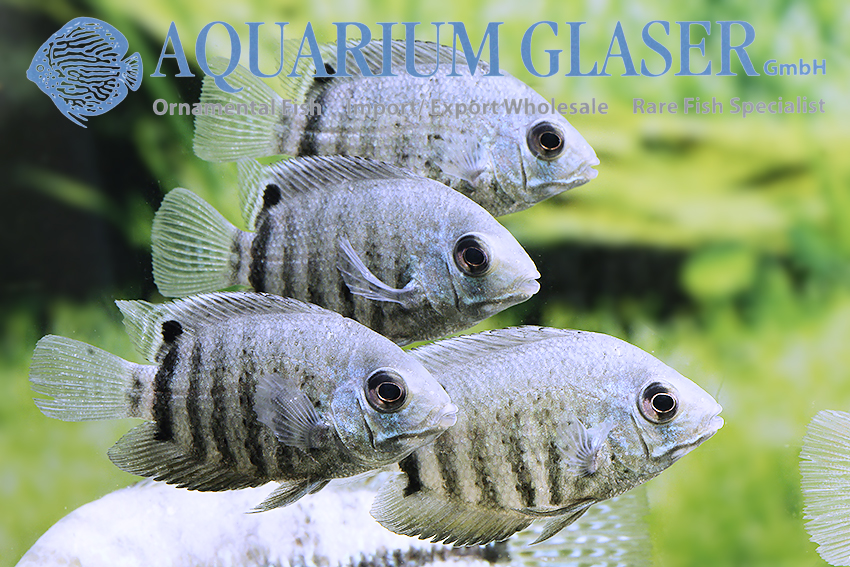
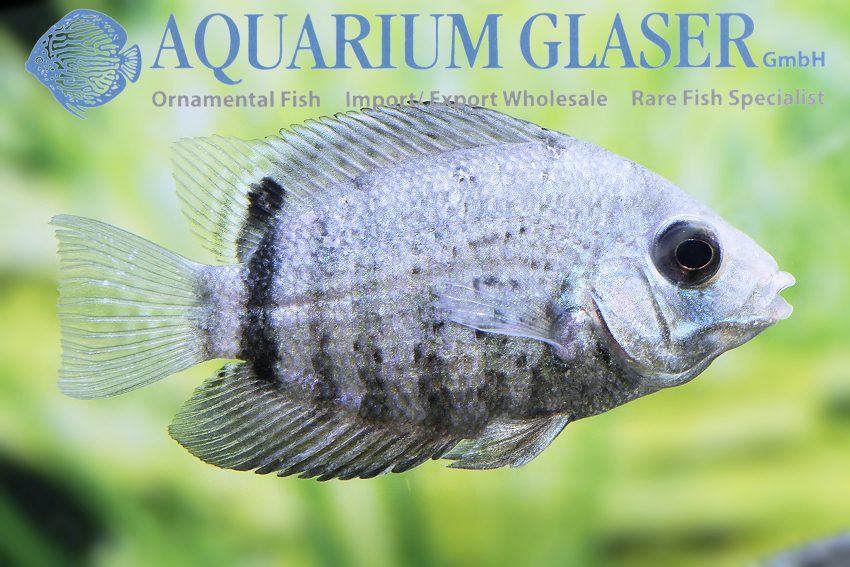
The Mayaheros beani found here are of the contrasting black and white variety during breeding. However, coloration can vary greatly depending on mood and incidence of light. Outside the breeding period they are blue-green in color, which has earned them the native name Mojarra verde.
The fish occur from the brackish waters of the estuary and mangrove swamps to the headwaters of rivers and streams. They also live in marshes, reservoirs, ponds and irrigation ditches.
They can reach a size of 30 (m) or 25 (f) in the aquarium. They are sexually mature at about 6 cm at the earliest.
Water temperatures vary between 16 and 34 degrees. The mineral content of the water and the pH-value are also very different depending on location and season.
The offered animals come from the conservation breeding program of the DCG (Arbeitskreis Großcichliden, studbook number 07702020 ). They are descended from fish from three sites, which are located at intervals of about 1-3 km in the outflow of the La Tovara spring. This small river flows into the Rio San Christobal at San Blas.
For our customers: the animals have code 640202 on our stocklist. Please note that we only supply wholesale.
Text: Carsten Weile, Photos: Carsten Weile and Frank Schäfer
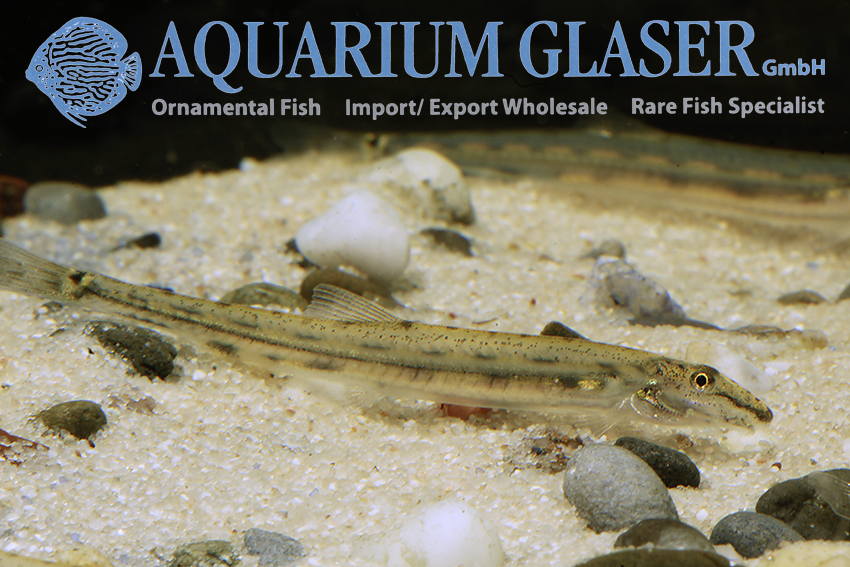
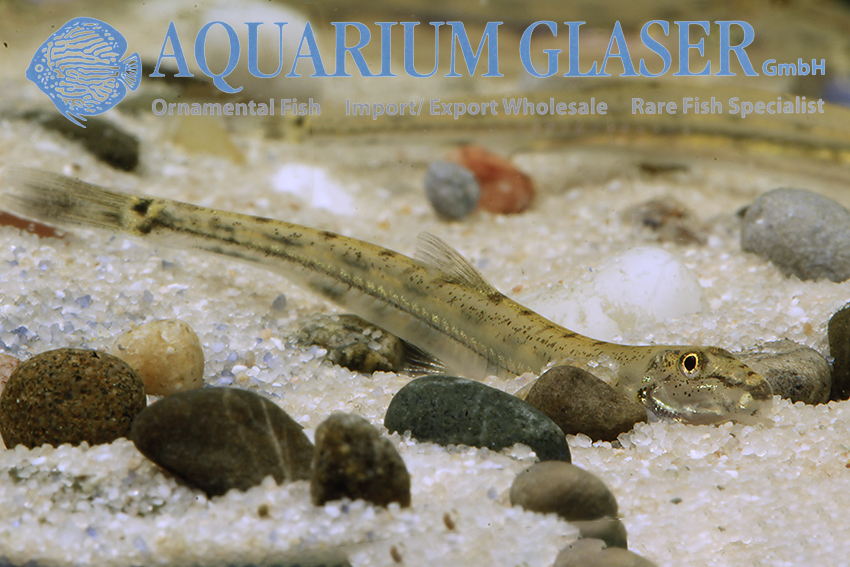
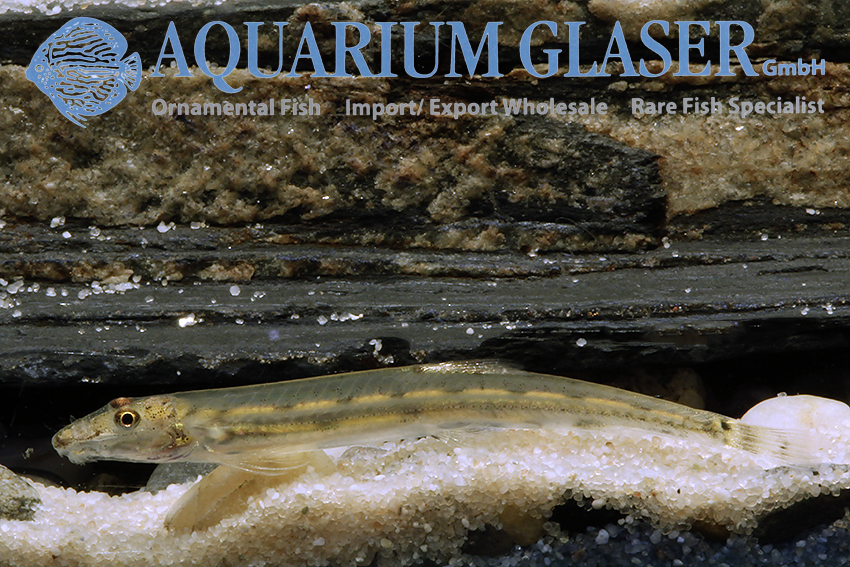
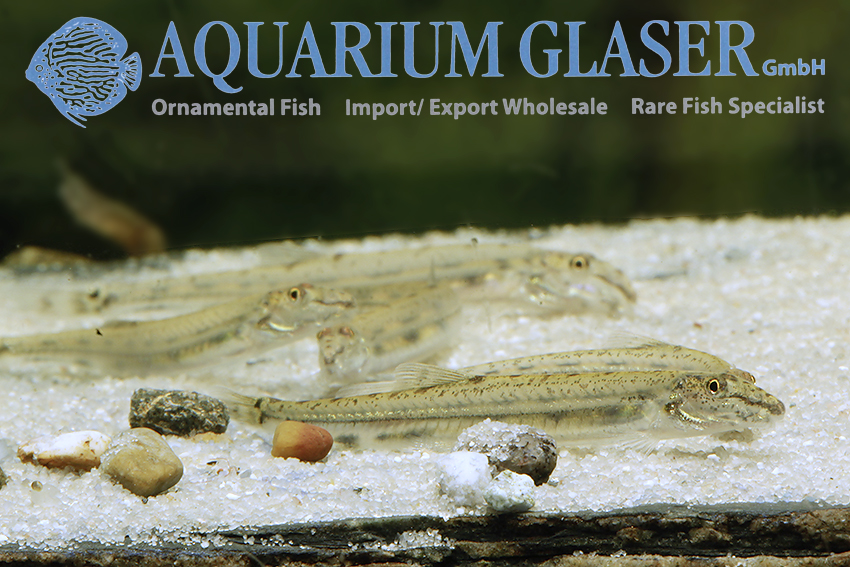
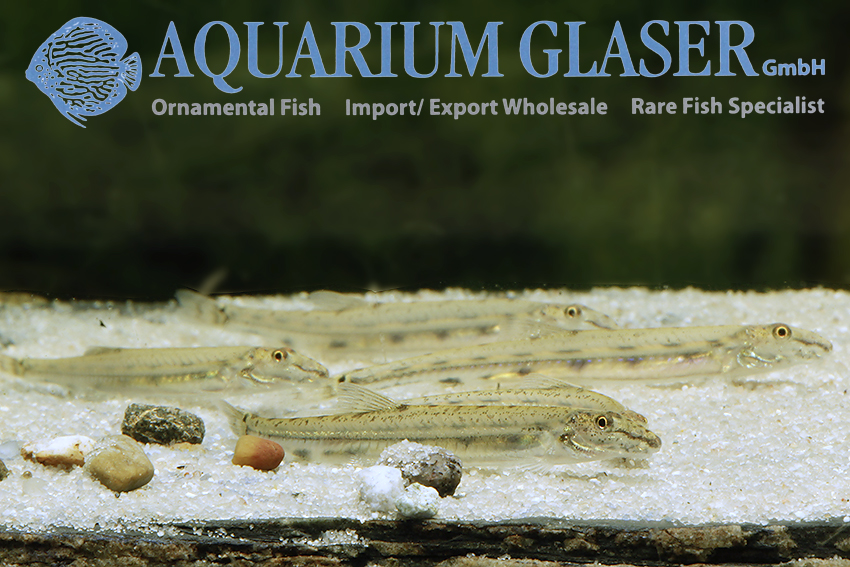
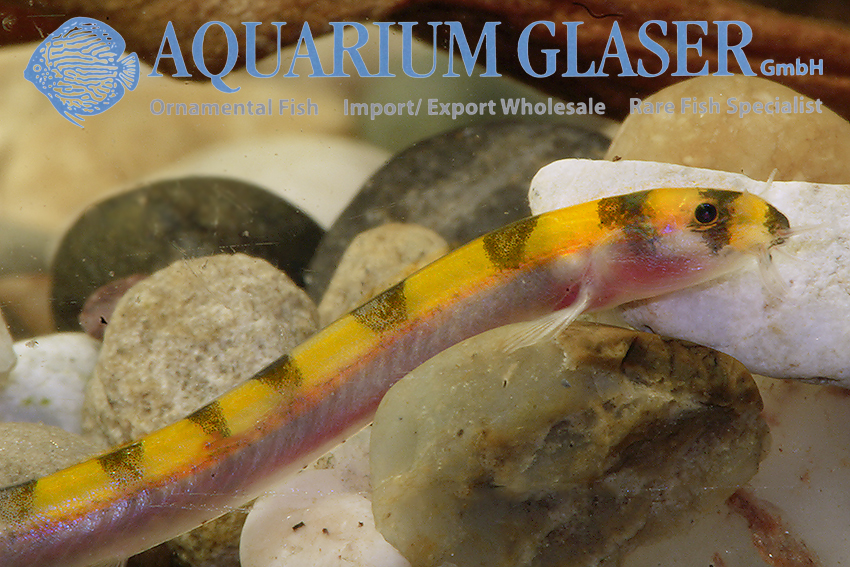
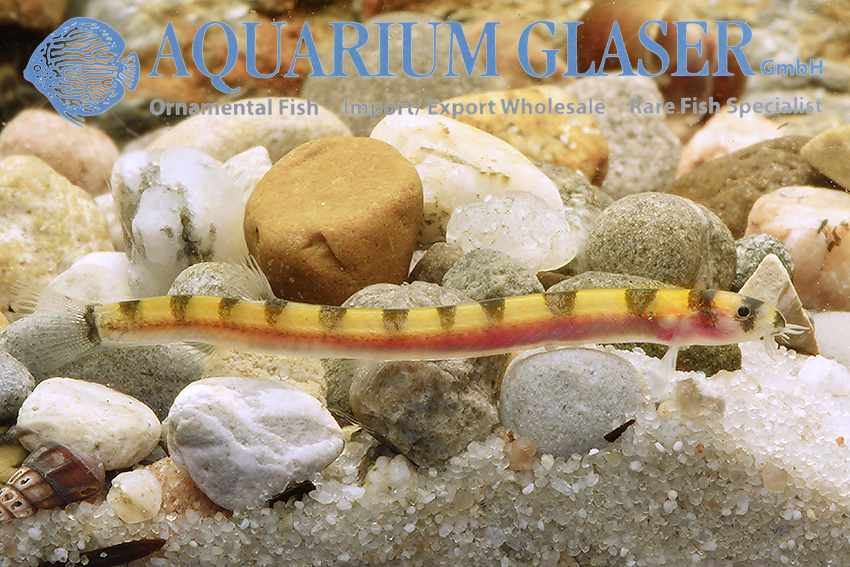
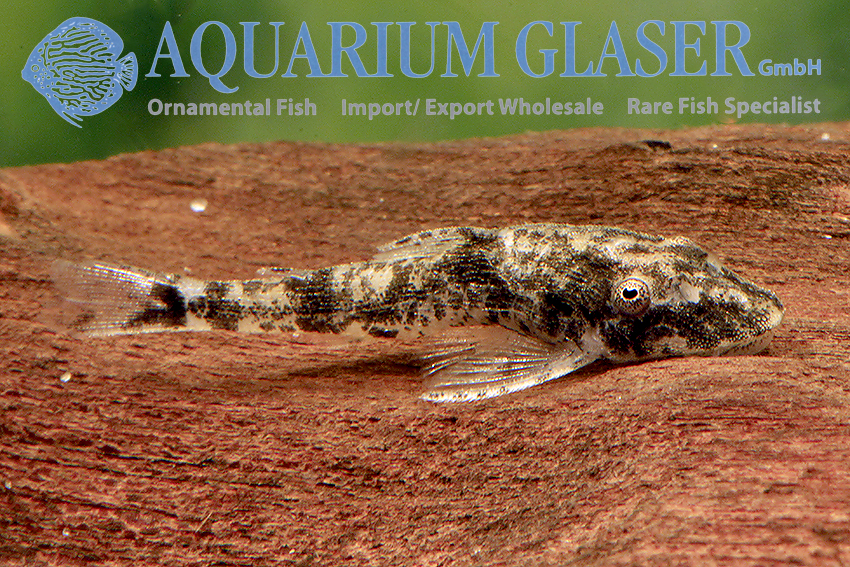
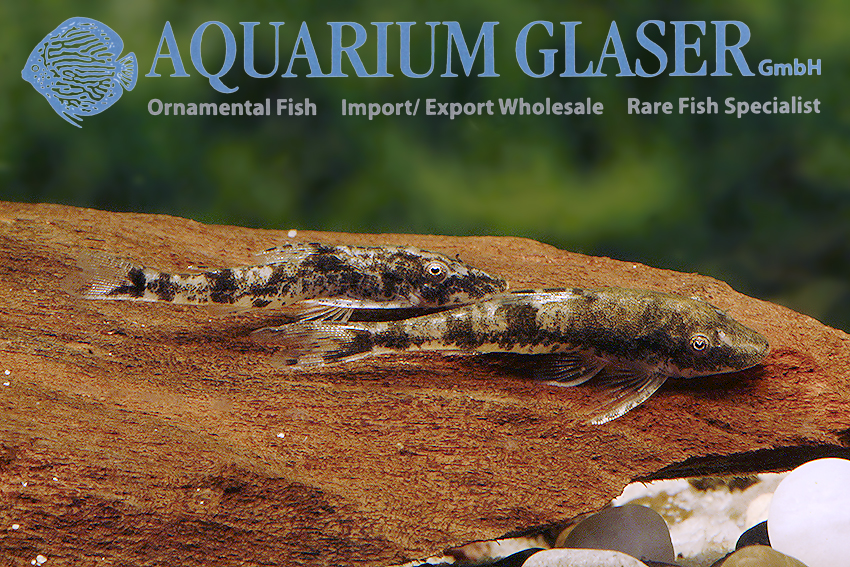
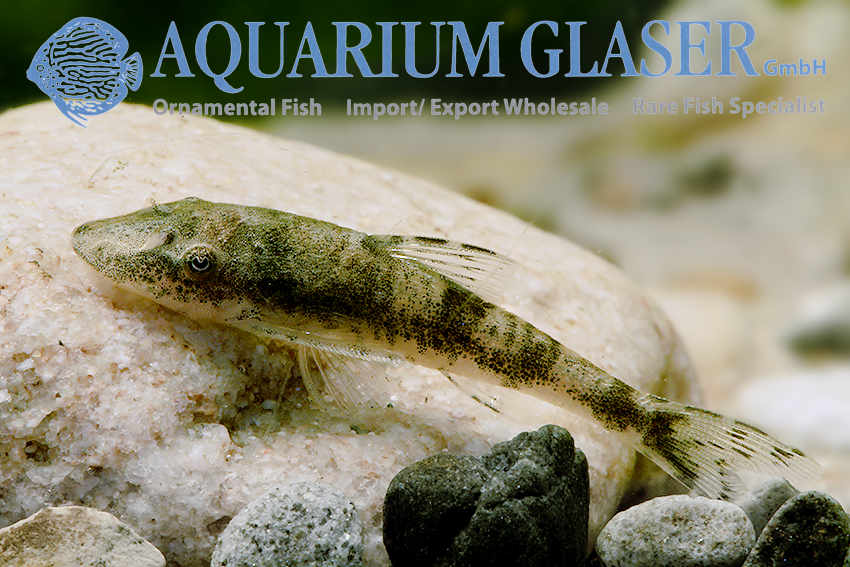
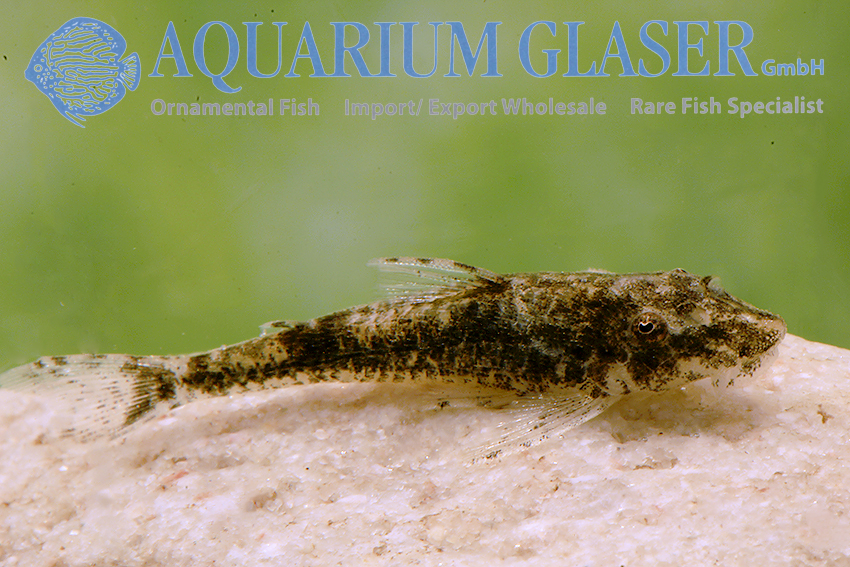
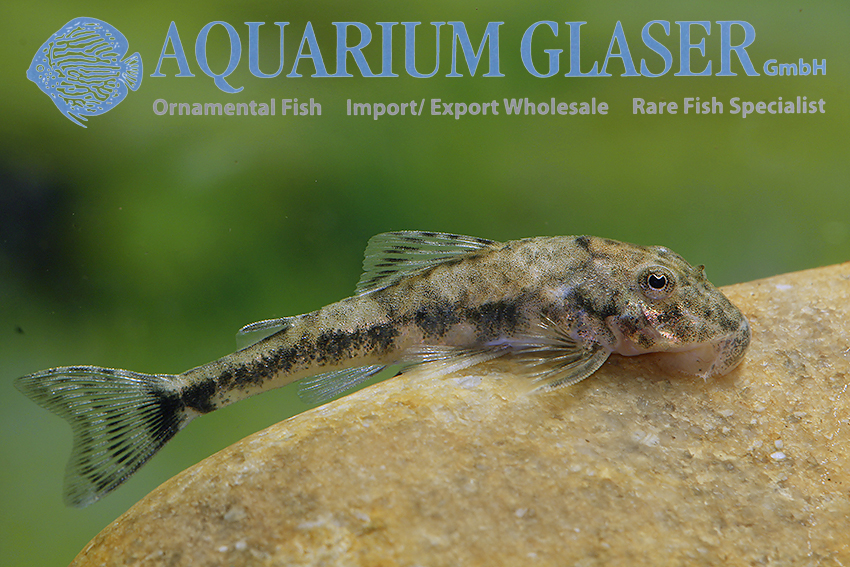
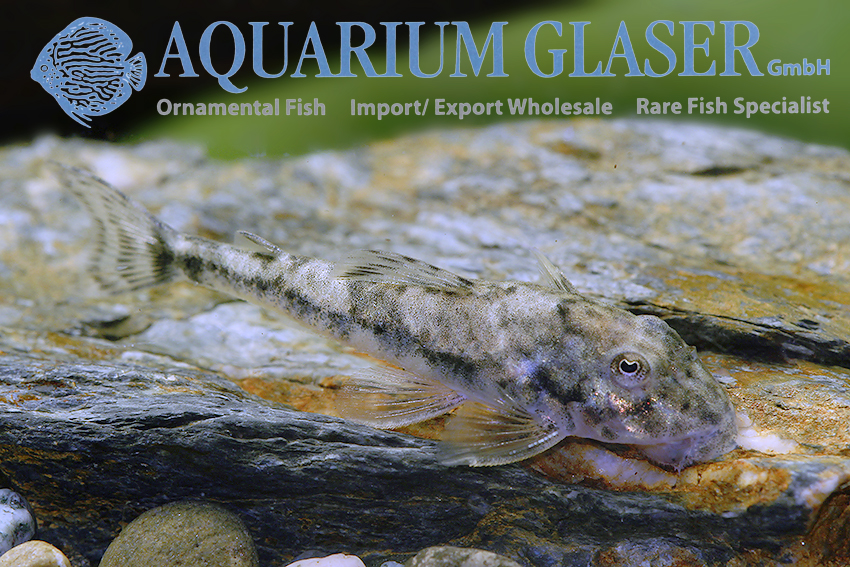
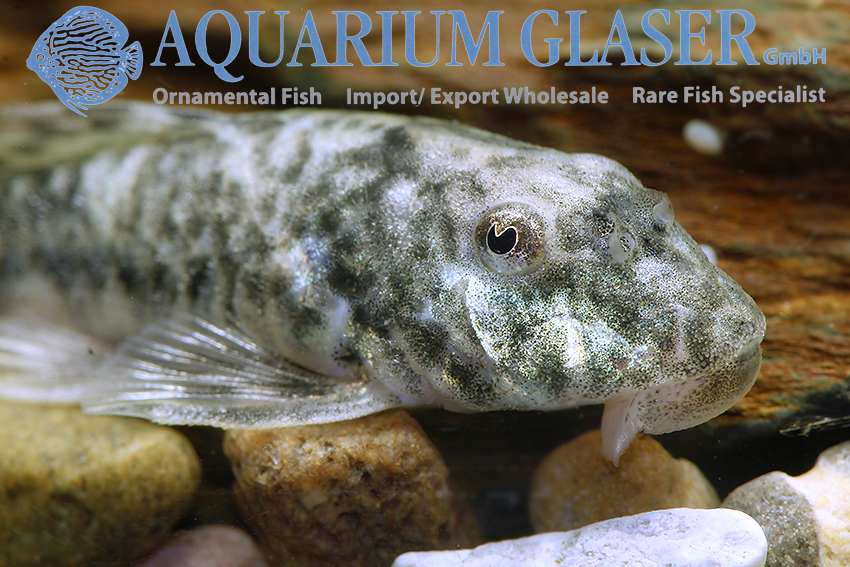
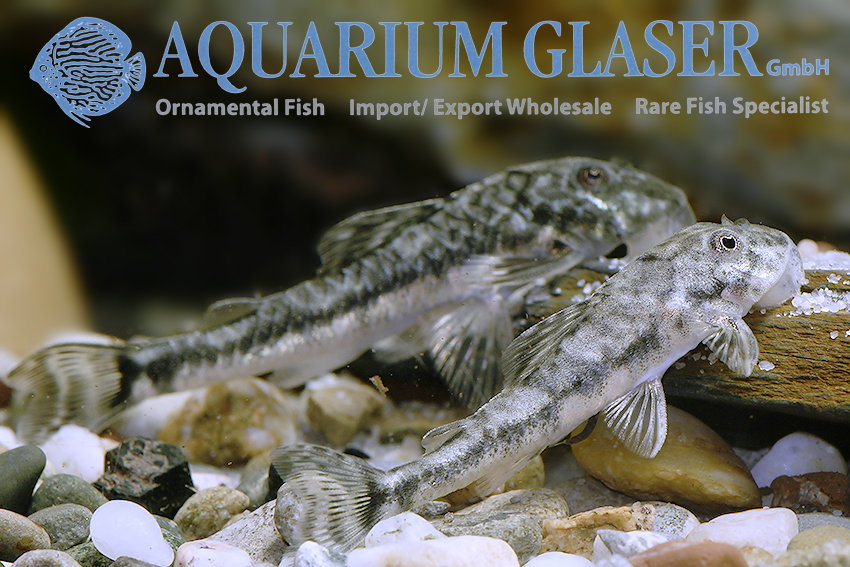
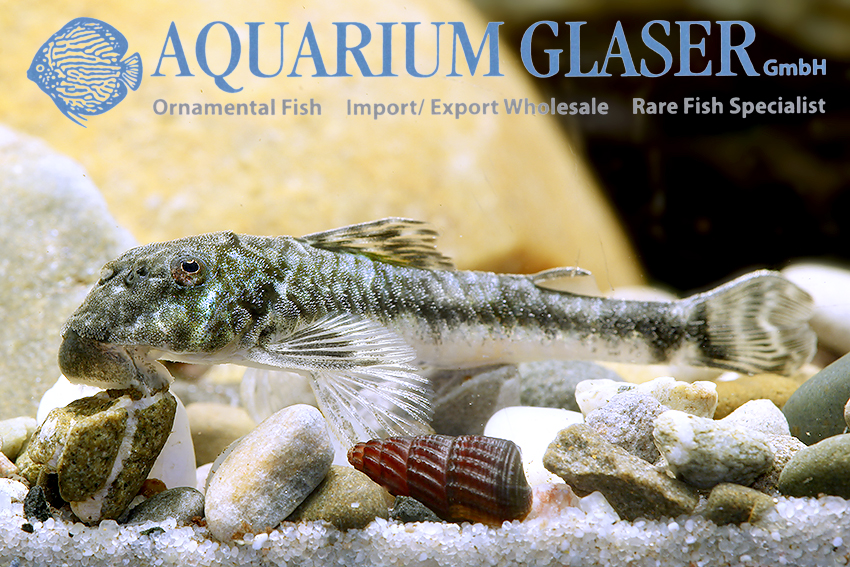
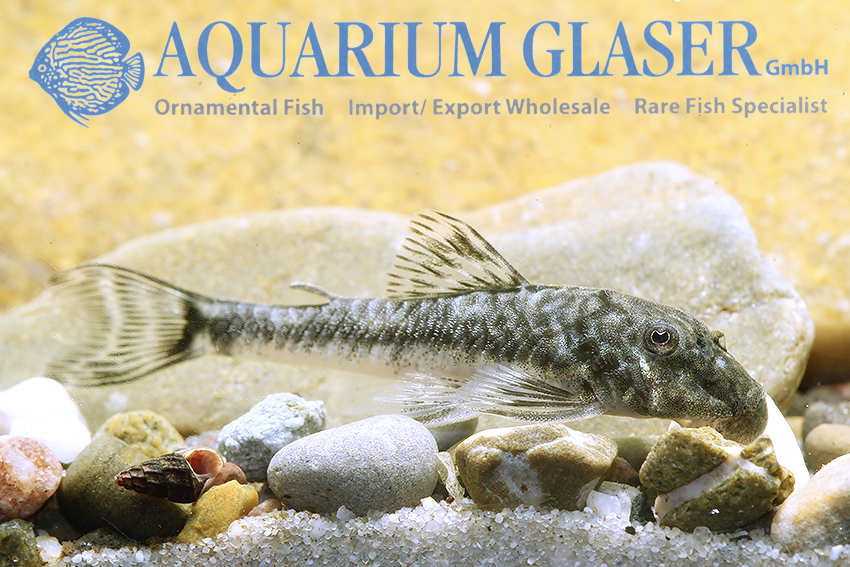
Horseface loaches (Acantopsis) are popular and well-known aquarium fishes, but with 15-20 cm attainable final length (the record is even 25 cm) they become quite large and therefore need larger aquariums. Practically unknown to aquarists are the dwarf horseface loaches (Acanthopsoides), whose seven species grow to only 3.5-5.5 cm in length. The photographed specimens are approx. 4.5 cm long, thus to a large extent fully grown.
We could now import one of these species, which is probably Acanthopsoides robertsi. The species is native in Indonesia and Malaysia, where it is found in flowing waters with sandy bottoms. The behavior of the tiny fishes is similar to that of their larger cousins. They are peaceful, sociable animals that forage on sandy bottoms and sometimes burrow in when needed.
For our customers: the animals have code 360893 on our stock list. Please note that we only supply wholesale.
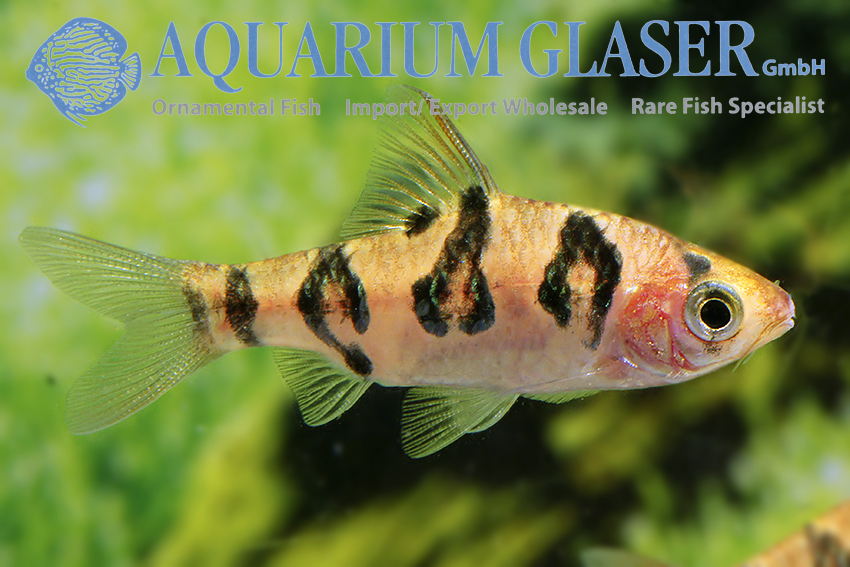
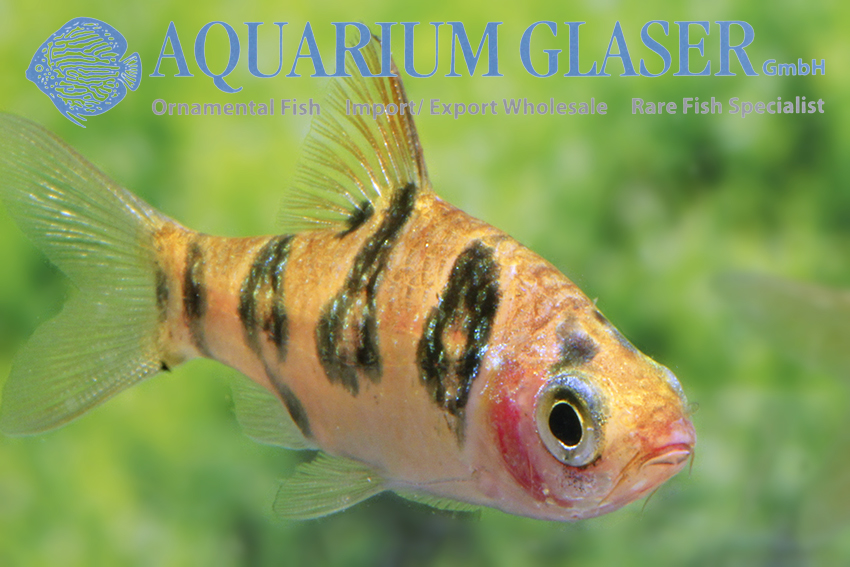
Once again we have been able to import beautiful, fully grown specimens of the Orange Barb; unfortunately they are already sold out, but we want to use this opportunity to point out another of the numerous name changes of the Asian small barbs.
Desmopuntius – the name means “convict barb” and refers to the striped pattern reminiscent of convict clothing, which all species show at least as juveniles – currently includes the following eight species:
Desmopuntius endecanalis (Kapuas River basin, Indonesian part of Borneo), D. foerschi (Kalimantan, Indonesian part of Borneo), D. gemellus (Jambi, Sumatra, Indonesia), D. hexazona (Central Sumatra, Indonesia), D. johorensis (Johore, Malaysia), D. pentazona (Sarawak, part of Borneo belonging to Malaysia), D. rhomboocellatus (Kalimantan, Indonesian part of Borneo), and D. trifasciatus (Kapuas River basin, Indonesian part of Borneo).
Due to their coloration D. rhomboocellatus is unmistakable within the genus.
For our customers: the animals have code 370923 on our stocklist. Please note that we supply exclusively to wholesalers.
Bichirs are so called living fossils. Already 60 million years old fossils were found, which can still be assigned to living species today. However, there are only 16 known species, all coming from Africa.
The last discovered and at the same time smallest species of the genus is Polypterus mokelembembe, which was described as a separate species only in 2006. Previously it was confused with P. retropinnis, in the trade it was often called P. lowei. P. mokelembembe is a resident of smaller blackwater streams in the Congo region and grows to about 25 cm in length. Males and females can be easily distinguished, as in all Polypterus species, by the differently shaped anal fin, which becomes more than twice as large in the male as in the female. During mating, this anal fin is spread out like a bowl. The male swims side by side with the female during mating, encompassing the anal fin region of the female with the splayed anal fin, ensuring fertilization of the eggs released freely into the water. Brood care is not practiced by bichirs. The larvae have external gills and thus look very similar to newt larvae. Even tiny P. mokelembembe (the small ones pictured are about 5 cm long) have the coloration typical of the species.
In the aquarium Polypterus mokelembembe are very peaceful towards all tankmates, which do not come into question as food. The animals do not like bright lighting. They eat coarse frozen and live food of all kinds, as long as it is of animal origin, also granules are gladly eaten by acclimated animals.
For our customers: the animals have code 165533 on our stocklist. Please note that we supply exclusively to wholesalers.
Lexicon: polypterus: ancient Greek, means “many-finned”, referring to the numerous individual dorsal fins. mokelembembe: name of a legendary dinosaur-like creature from the Congo, comparable to Nessie from Loch Ness. The name was chosen to refer to the high geological age of the bichirs, which already existed at the time of the dinosaurs. retropinnis: Latin, means “with fins pointing backwards”.
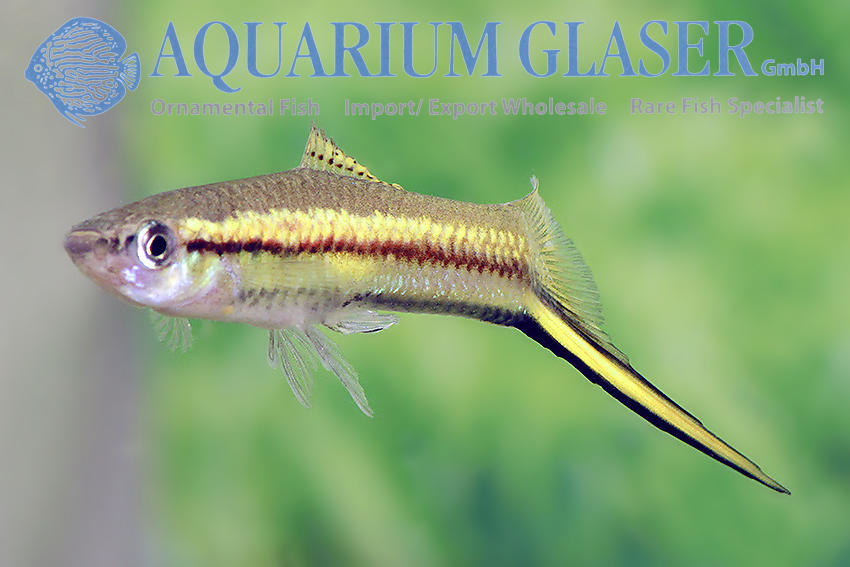
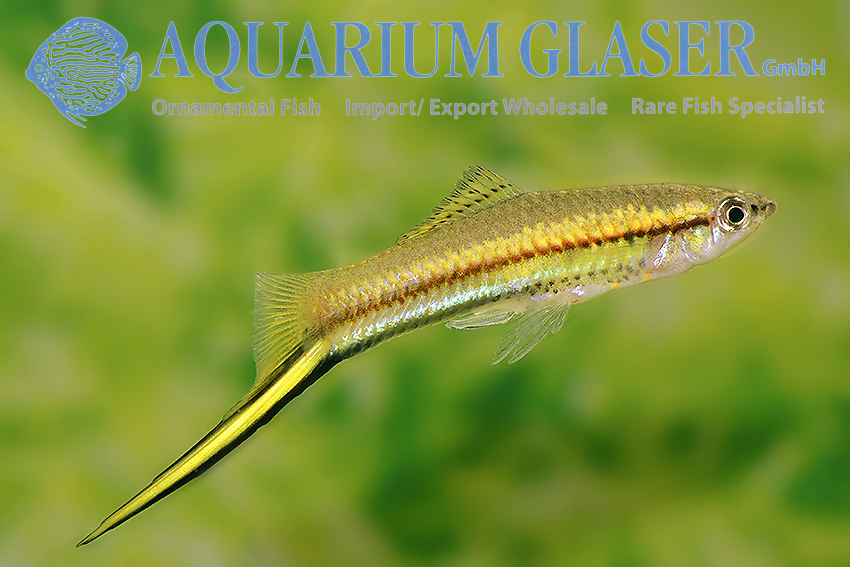
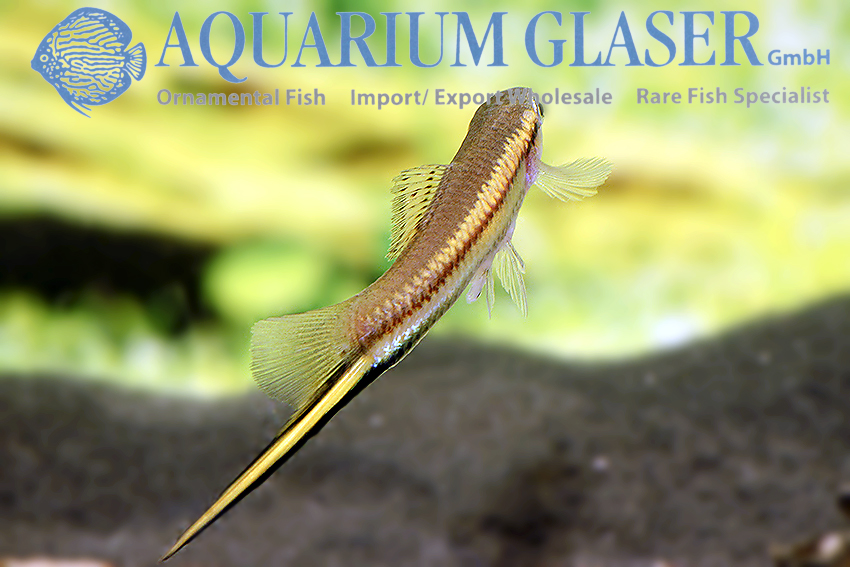
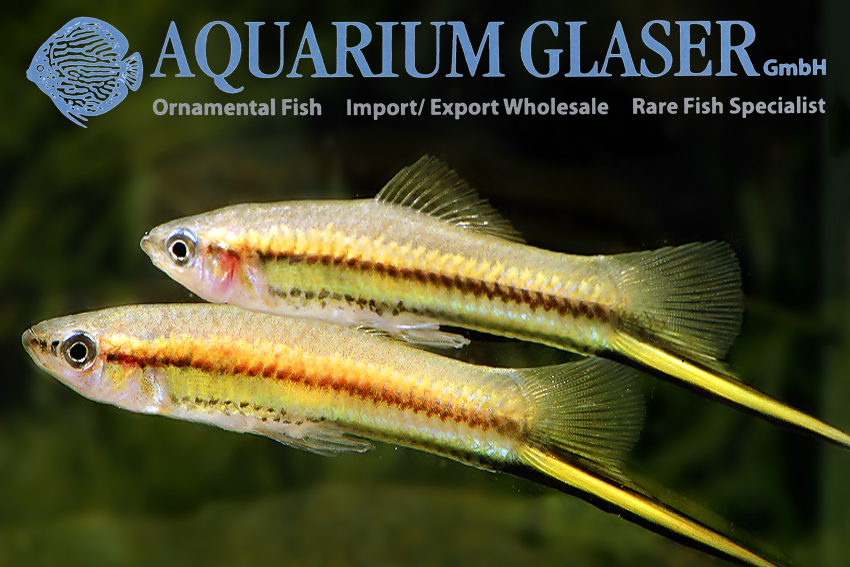
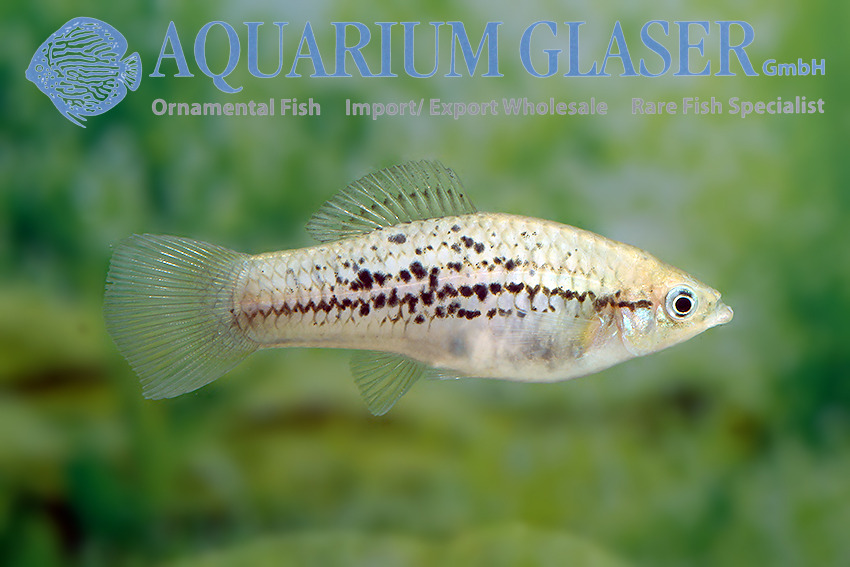
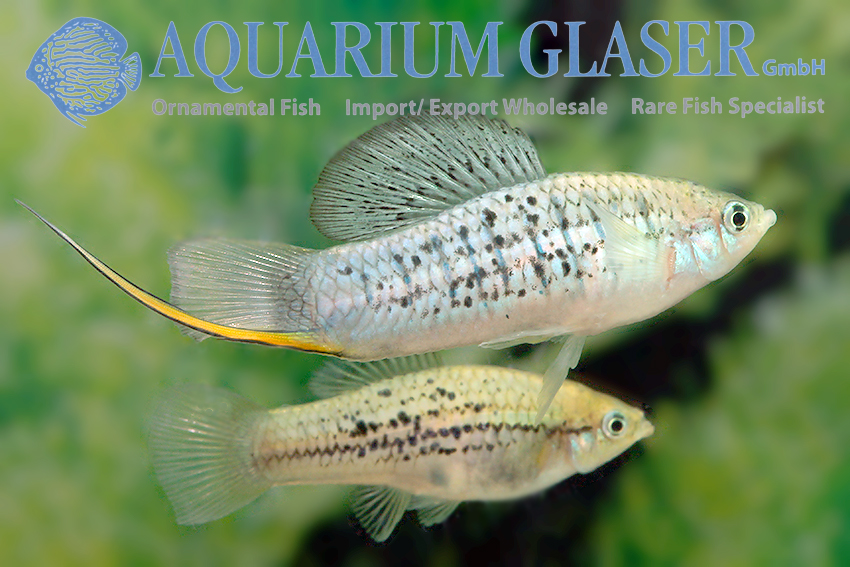
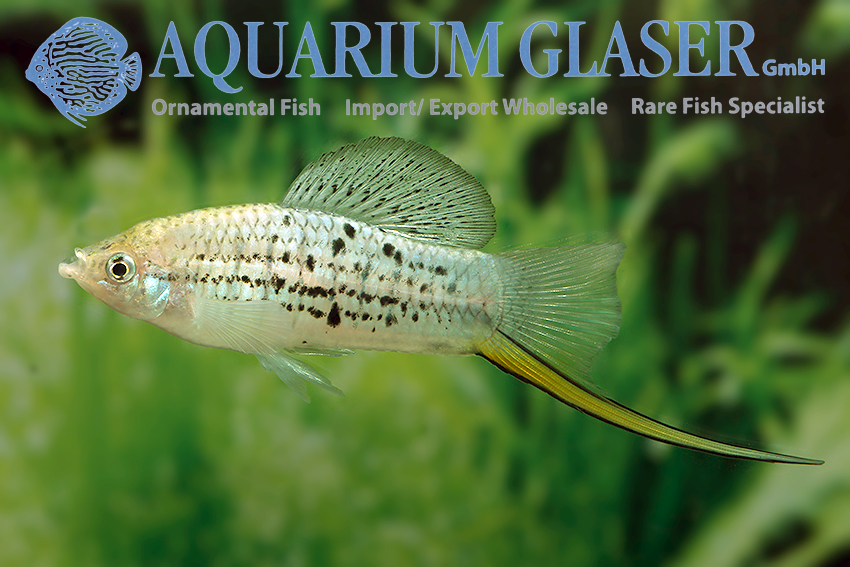
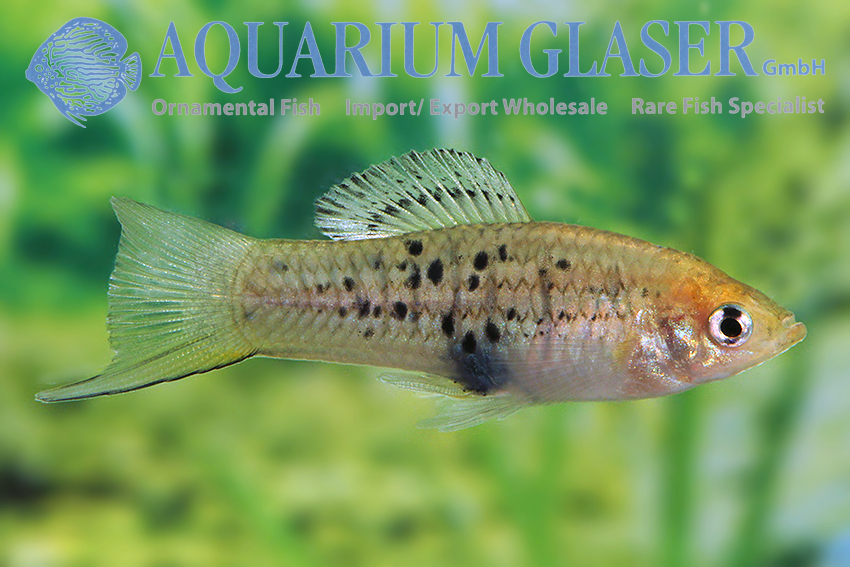
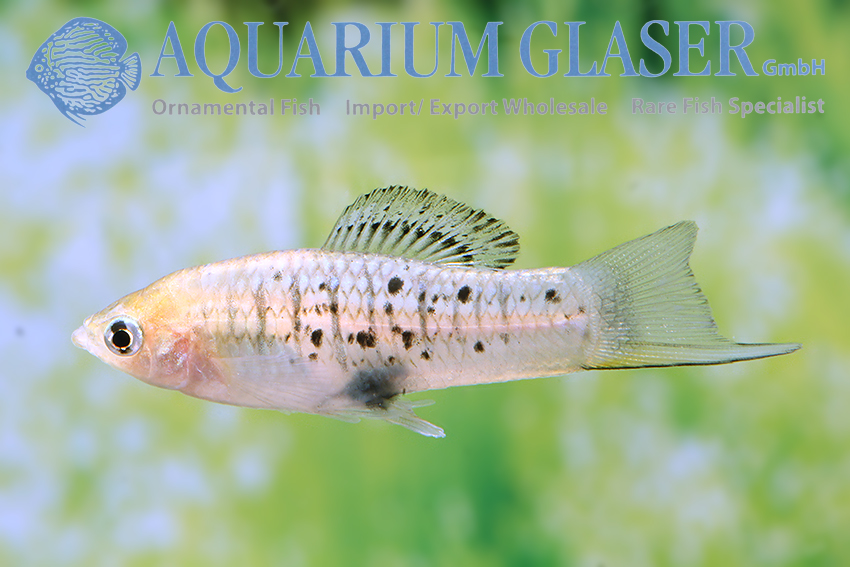
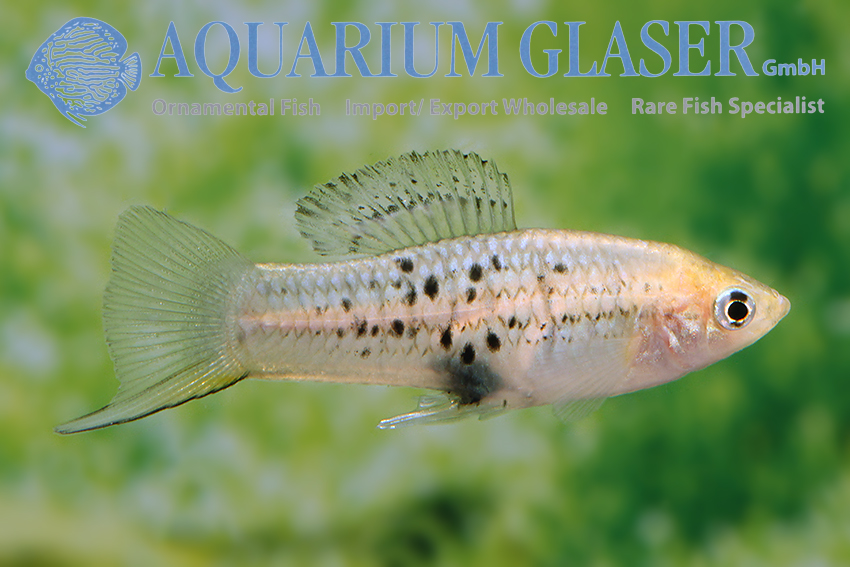
We have just obtained very attractive offspring of the “Northern Mountain Swordtail”. The fish are young adults, i.e. the sword of the males is still relatively short. For comparison we show here also an adult pair of another strain.
In former times X. nezahualcoyotl was considered as a local variant of X. montezumae. The name refers to Nezahualcoyotl,the poet philosopher emperor of Tezcoco (Texcoco), considered to be coequal with Montezuma, monarch of the Aztecs in the Aztec Triple Alliance, because the species is to be considered a sister taxon of X. montezumae. X. nezahualcoyotl is found only in the headwaters of some rivers in the state of San Lous Potosi in Mexico. The water there is clear, the soil stony, the temperatures moderate (22-24°C). Care of this small-bodied swordtail – body length rarely exceeds 4 cm (the largest wild-caught male measured had 48 mm standard length), plus fins – is not very difficult, but care must be taken to maintain good water hygiene.
The species may appear with or without black mottling. The black speckling, as shown by the animals of our currently stocked strain, is linked to the Y-chromosome, so it is inherited from the father.
For our customers: the animals have code 476562 on our stock list. Please note that we only supply wholesale.
The ornamental fish industry, as an international, global player, is naturally particularly affected by the pandemic; however, it is not only the virus and its direct effects that are causing problems for breeders, catchers and exporters around the world. Climatic changes, industrial conversion of the landscape, water pollution and social aspects also have a major impact on the ornamental fish trade. In addition, there are local, site-specific challenges and, of course, national and international legislation. In addition, the ability to plan exports is very problematic due to air travel, which is still severely restricted. Unfortunately, little leaks out about the direct impact on our suppliers and their specific problems on the ground. We have therefore asked them to describe their situation to us. In irregular order we bring the experiences of our business partners as a newsletter.
We start with our supplier from Sri Lanka:
1.- General information about the company
Company founded in ? 1994
Number of employees? 92
How many family members depend on it? approx. 368
Number of direct suppliers? 35
How many family members depend on it? approx. 140
Number of outgrower? 26
How many family members are dependent on it? approx. 104
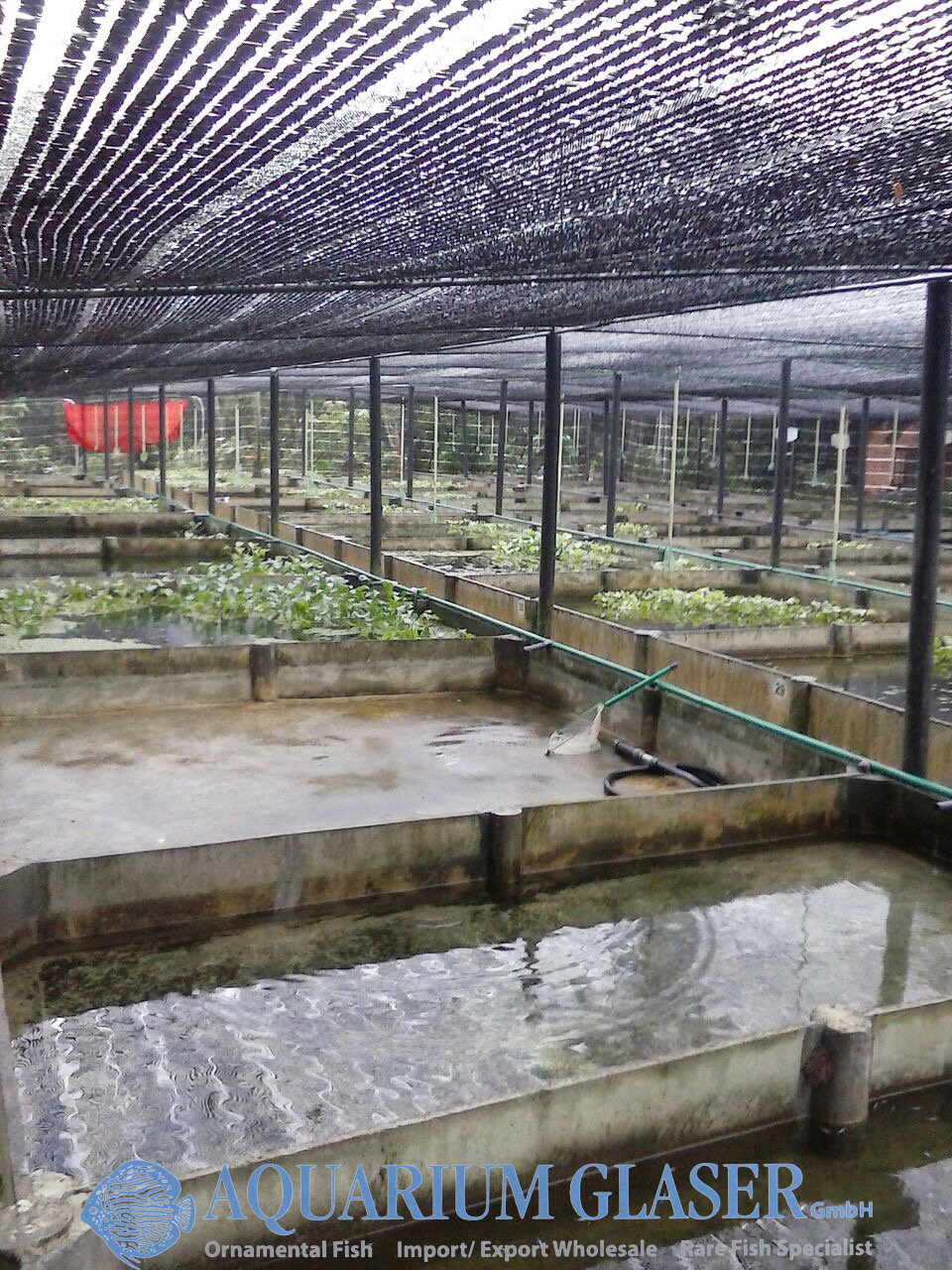
Size of the facility? Total square meters: 46,817.
Approximately what percentage of your country’s population is vaccinated against Corona? 60% (as of today). The accuracy of this figure is questionable.
Approximately how many of your employees are vaccinated against Corona? 100% as of August 2021.
Typical fish we obtain from SriLanka
2.- What are the biggest challenges currently facing your company?
Answer: We breed and raise all fish needed for export. No fish are taken from the wild. Ornamental fish are bred to meet the needs of the market. Therefore, the breeding and raising of fish must be done according to a planned program that includes the following:
A. Preparation of required parental breeding stock
B. preparation of regular replacement stocks for the parental stocks
C. Rearing of fish for export
D. Grading of fish for export, including initial rearing at the nursery and subsequent transfer to nursery ponds
E. Preparation and administration of appropriate nutrients and feeds according to species/variety
F. Fishing and selection of good quality fish for export.
All of the above tasks and many more must be performed under daily supervision.
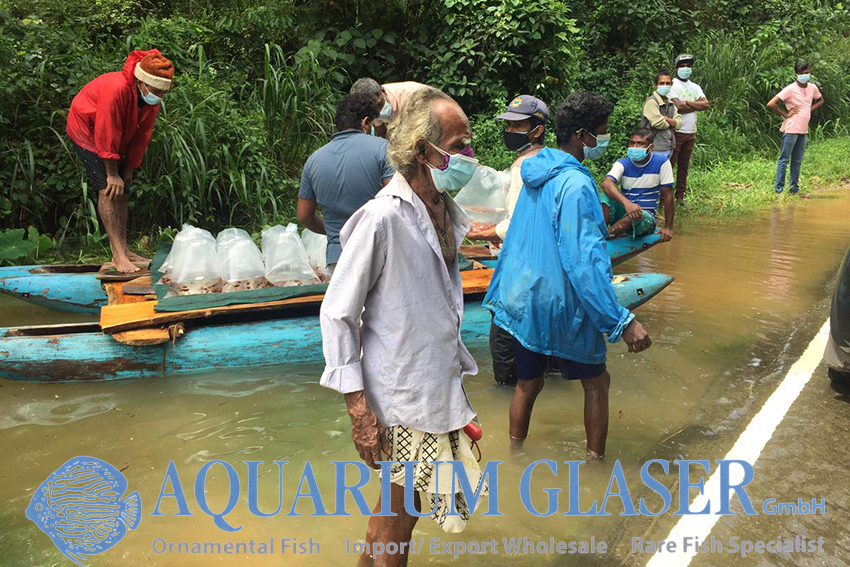
During the pandemic period that started in March 2020, many of the required care activities could not be carried out in time due to domestic travel bans, (lockdowns, etc.) We worked with a skeleton staff after obtaining special permits. Nevertheless, we were not able to work according to the planned program. The lack of flights to ship export-ready fish contributed to overstocking and disease. We had to feed thousands of fish to prevent the spread of disease. This had a negative impact on the supply chain, especially for certain guppy varieties that are produced in large quantities. We are now only gradually getting back on track, and it will be a while before we can again consistently supply high quality fish of the pre-pandemic quality.
Transport of the fish needed for export. Normally, of course, this takes place in iso- lated small trucks, but due to the adverse circumstances, improvisation is necessary at the moment.
3.- How have prices and the supply situation changed in the last weeks/months and what are the biggest changes/difficulties?
Answer: 1.- Purchase prices
Due to the instability of the export market caused by Covid 19, we have reached an agreement with suppliers and kept the purchase price stable until now.
However, we will have a price increase of 10% to 15% for purchasing fish from November 2021.
The cost of raw materials, including fish feed and packaging materials, has increased by approximately 30% since January 2021 due to the rapid devaluation of the Sri Lankan currency. We expect prices to increase further in the near future due to the continued depreciation of the Sri Lankan currency against the US dollar and the Euro. As an example, 425 g of Artemia cysts purchased for US $32 in 2020 now cost US $44. Dry fish food that cost US $0.75 per kg now costs US $1.25.
Medicines have become enormously more expensive. The lack of imports of items needed for fish farming has also contributed to the rapid increase in prices due to the lack of foreign exchange reserves.
2.- Additional stocks
Additional inventories of raw materials – obstacle to cash flow.
Normally, we hold a 3-month supply of key raw materials worth approximately US$35,000. Currently, we are holding 4 to 5 months of inventory, which is hindering the company’s cash flow. The value of raw material inventory is currently US$47,500.
3.- Food/medicines for people
Since fish farming and rearing of freshwater ornamental fish are labor-intensive activities, the most important thing in our facility is the people – that is, our employees.
Prices of staple foods such as rice, wheat flour, milk, eggs, chicken, and vegetables have increased by 20% to 50%, and the cost of medicines has increased by 50% to 100%, due to the shortage of supply resulting from the devaluation of the Sri Lankan currency and the lack of foreign exchange reserves.
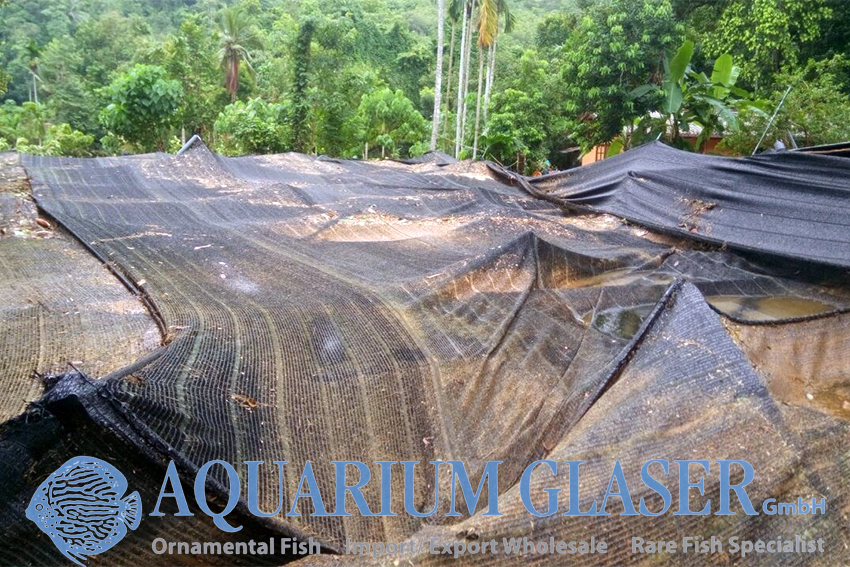
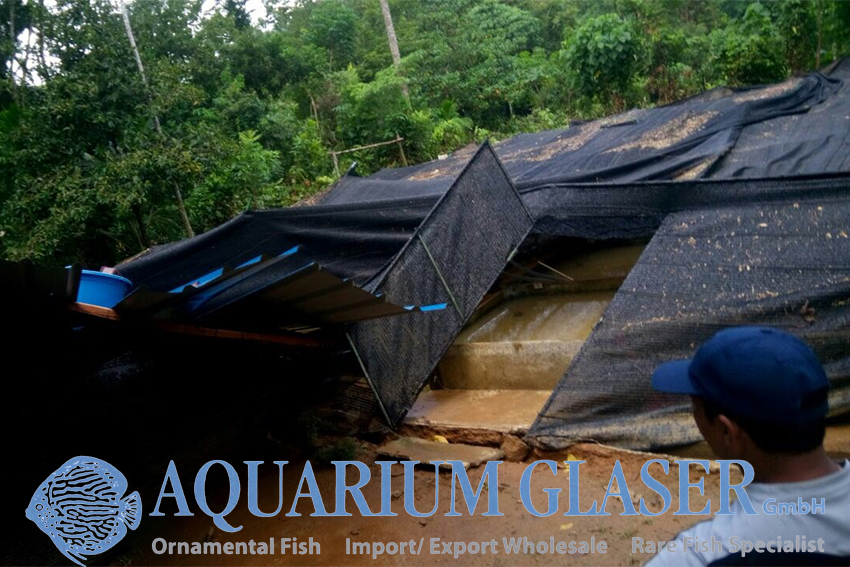
On the left a part of the plant BEFORE a weather change in intact condition, on the right a part of the plant AFTER a heavy thunderstorm.
4.- How has the situation of the employees changed in the last weeks/months?
Answer: our pre-epidemic workers are still employed by us, but are having great difficulty surviving due to the rapid increase in the cost of food and medicine.
5.- What impact does Corona currently have on their daily work?
Answer: The negative factors are
A. Rapid increase in the prices of raw materials.
B. Short supply of raw materials
C. Shortage of flights
D. High freight costs
6.- What is the impact of weather conditions on fish procurement/availability?
Answer: heavy rains have a negative impact on the achievement of farming objectives and lead to a shortage of exportable quantities of fish
7.- What influence do weather conditions have on the keeping of fish in your facility?
Answer: Again, it is mainly heavy rains that are dangerous. There is a tendency for diseases to spread. However, thanks to careful monitoring, we have managed to keep disease cases to a minimum.
Anlage eines Outgrowers nach einem Unwetter.
8.- How has the general quality of the fish changed?
Answer: The quality has decreased due to
A. Delays in husbandry practices
B. overstocking
C. Lack of “just in time” control. However, we are now back on track to achieve “Pre-Endemic Quality”.
9.- In your view, is there any way to make the current situation more tolerable or to solve the current problems more quickly?
Answer: a disciplined community of Sri Lankans working towards a common vision.
10. – Keyword sustainability: does it play a role in your everyday work? If so, what is it?
Answer: yes, of course. We make sure that employees have a happy life.
The balance of the annual bonus will be paid in December 21.
The annual salary increases will be paid in January 22.
School books, shoes and socks, and school uniforms will be issued to employees’ children in January 22.
11.- Is there any support from the government for the current problems (probably mainly Corona)?
Answer: only in relation to the vaccination program for people.
12.- Do you have any expectations for the coming weeks/months on how everything will develop with you?
Answer: We hope to achieve pre-endemic consistency in terms of delivery reliability and quality by the end of January 2021.
13.- Is there anything you would like to share with us that we should inform our customers about?
Answer: They should have confidence in us that we will achieve pre-endemic consistency in both quality and deliveries as we are a dedicated team. It was announced today by the Export Development Board of Srilanka that the Presidential Award for the category of Ornamental Fish Exports, has been awarded to us for the years 2019/20 & 2020/21 (period April to March of the following year). We have won the award for 4 consecutive years, starting with 2017/18, 2018/19, 2019/20, 2020/21. Many thanks to Aquarium Glaser and its customers, we are honored.
Best regards to all and thank you to the entire staff of Aquarium Glaser for their continued support.
Our current Congo import contains again two species of the funny humphead cichlids: Steatocranus casuarius and S. gibbiceps. They look very similar to each other at first sight (and we can hardly avoid in wholesale that sometimes a casuarius is among the gibbiceps and vize versa), but when looking closely you can see that in S. casuarius the scale center is dark and in S. gibbiceps it is light. S. gibbiceps is also more slender. The species grows to about 10 cm in length. The frontal hump is only moderately pronounced in S. gibbiceps, but males develop a very elongated dorsal fin.
Humphead cichlids should be kept at least in pairs, in sufficiently large aquariums also in groups, where there is always something going on. They are relatively peaceful, although the immediate area of the breeding burrow is fiercely defended and individual space is also otherwise demanded. Although they inhabit very oxygen-rich water in nature, adaptation to aquarium life is not a problem for them. The water in the Congo is soft, but not overly acidic, so water composition requirements are also easily met. Any common fish food is eaten, but it must not be too fatty (no Tubifex and the like), because this leads to intestinal diseases, which can be fatal. Plants are not damaged, but occasionally they are dug up or bitten away when the animals get into breeding mood. Steatocranus are cavity breeders with parent families.
For our customers: S. gibbiceps has code number 575042 on our stock list. Please note that we only supply to wholesalers.
This beautiful cichlid has been swimming in the world’s aquariums since 1906 and has been delighting for generations with its varied behavior and beautiful looking brood care. The animals are typical open breeders with parent family, i.e. both parents lead the numerous brood.
Confusion gave in the course of time due naming. For a long time the fish was listed in the genus Aequidens and Andinoacara latifrons was considered for a long time as a synonym to the similar species A. pulcher. Our animals – German offspring – are descended from parent fish caught in the Rio Atrato in Colombia.
The maximum length of the fish is about 17 cm, from about 6-8 cm length they are able to spawn. Andinoacara latifrons has always been considered a relatively calm, little burrowing species that is gentle with plants. The larger the aquarium, the more peaceful the cichlids are.
For our customers: the fish have code 613804 on our stock list. Please note that we supply only wholesale.
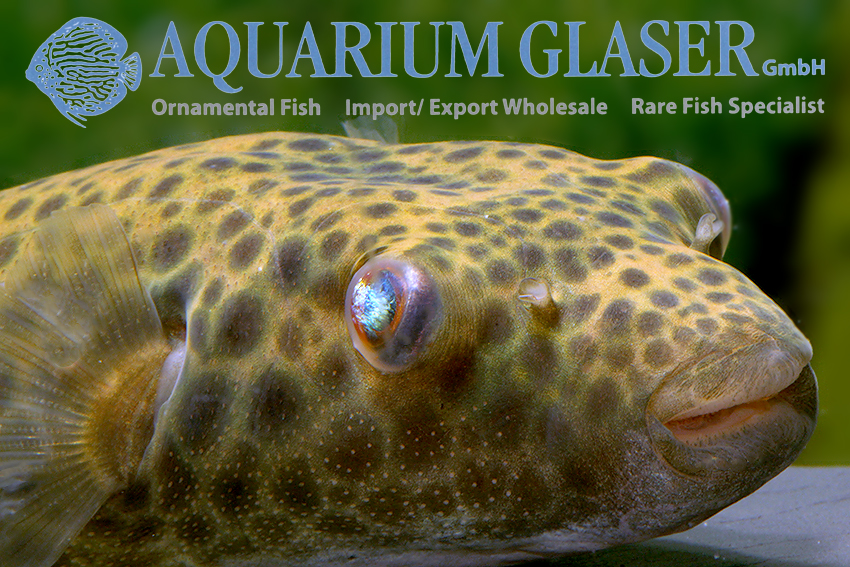
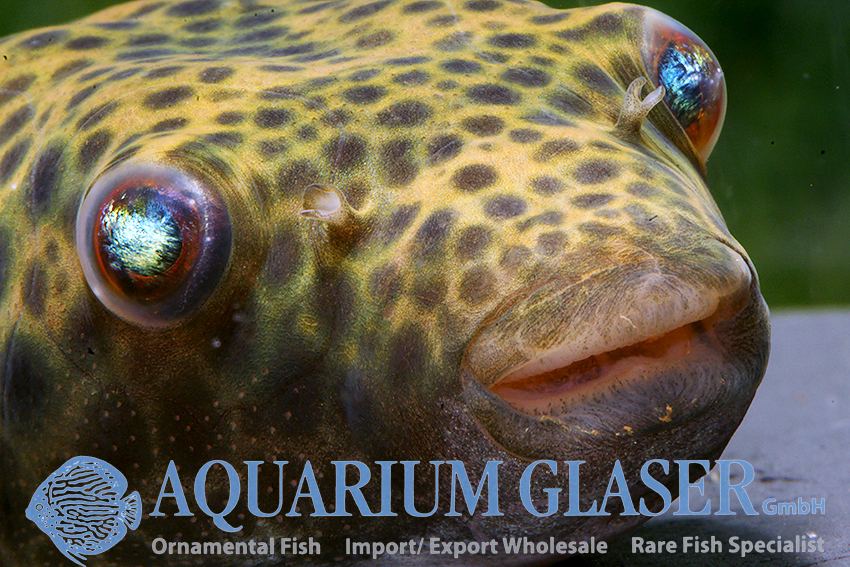
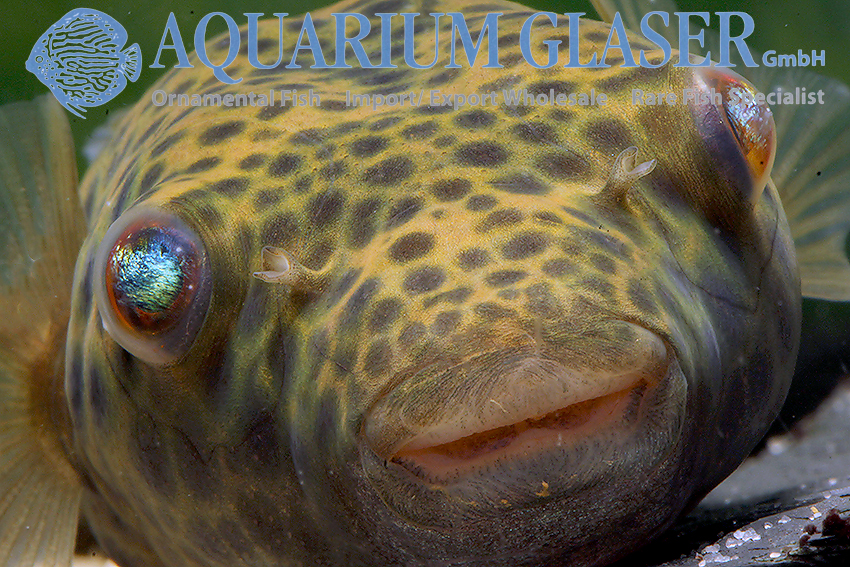
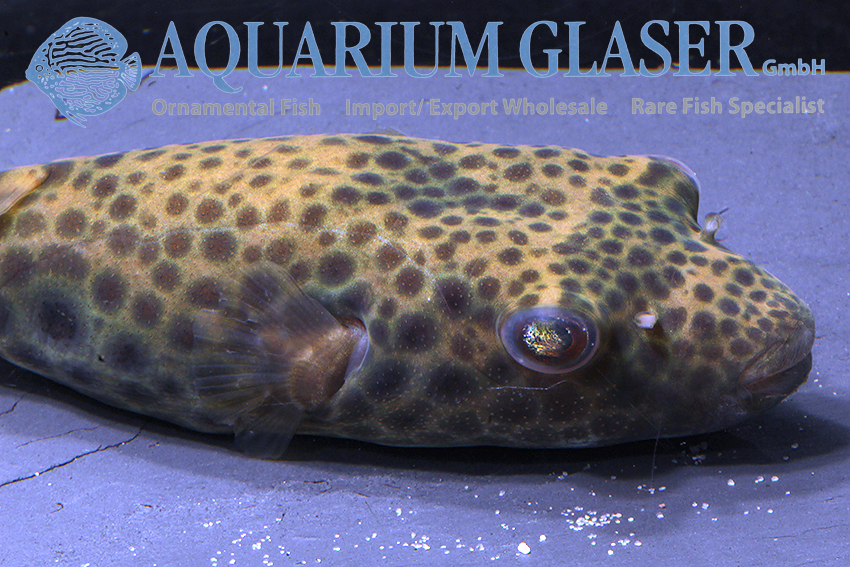
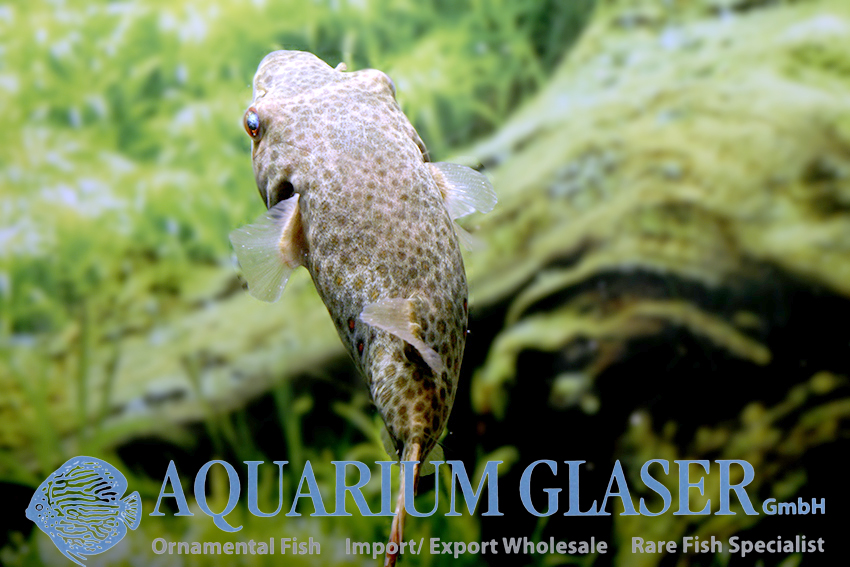
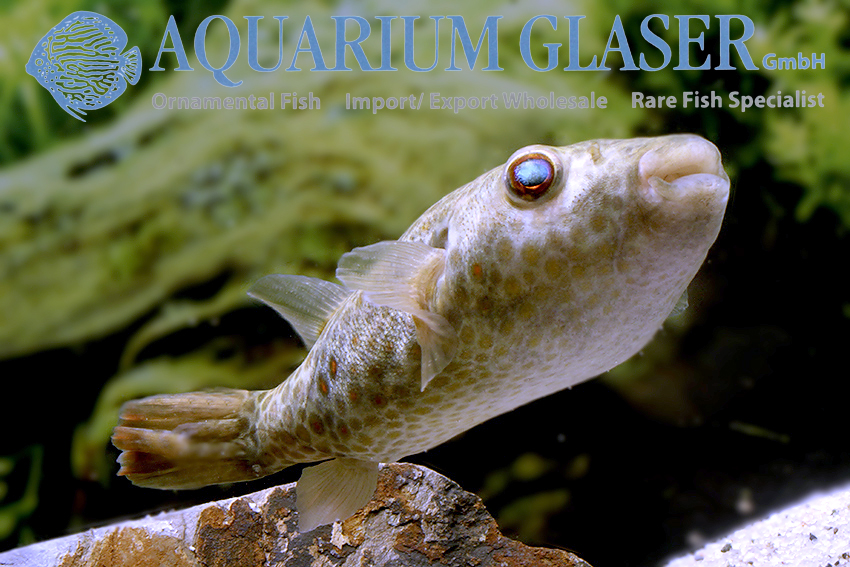
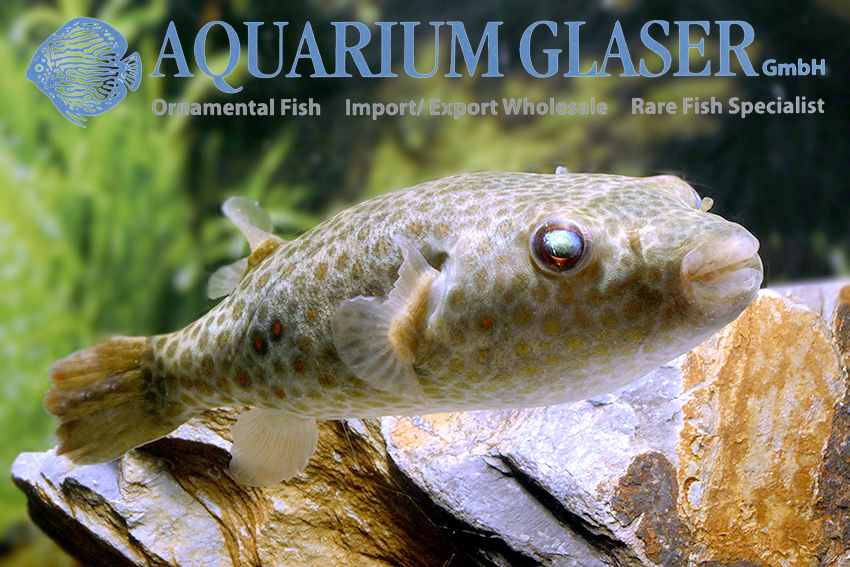
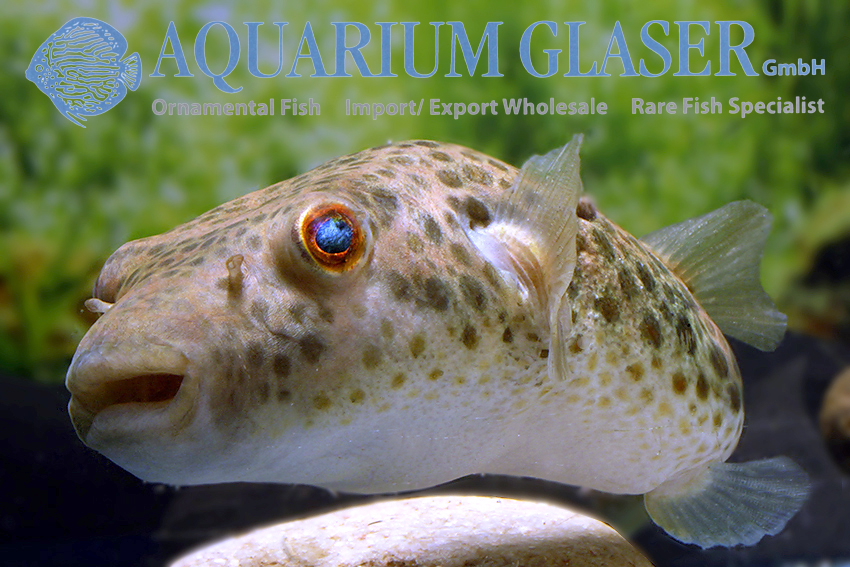
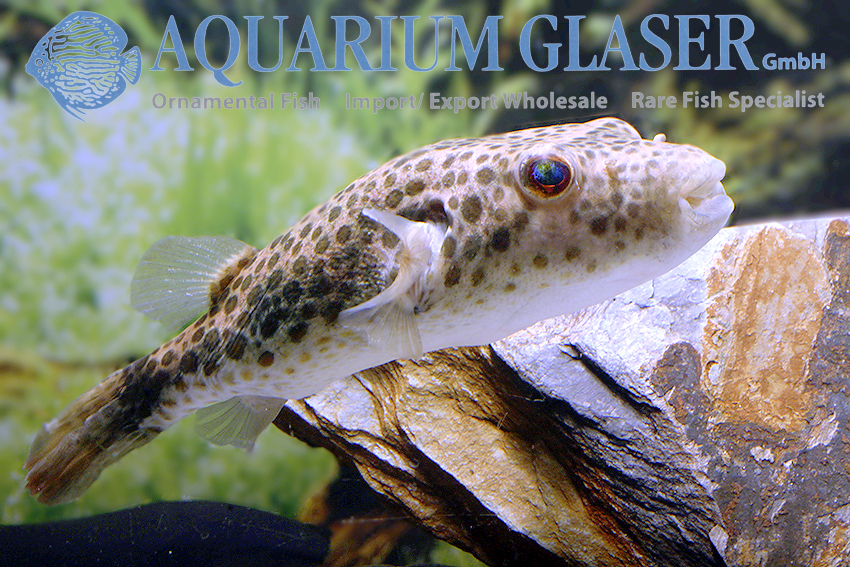
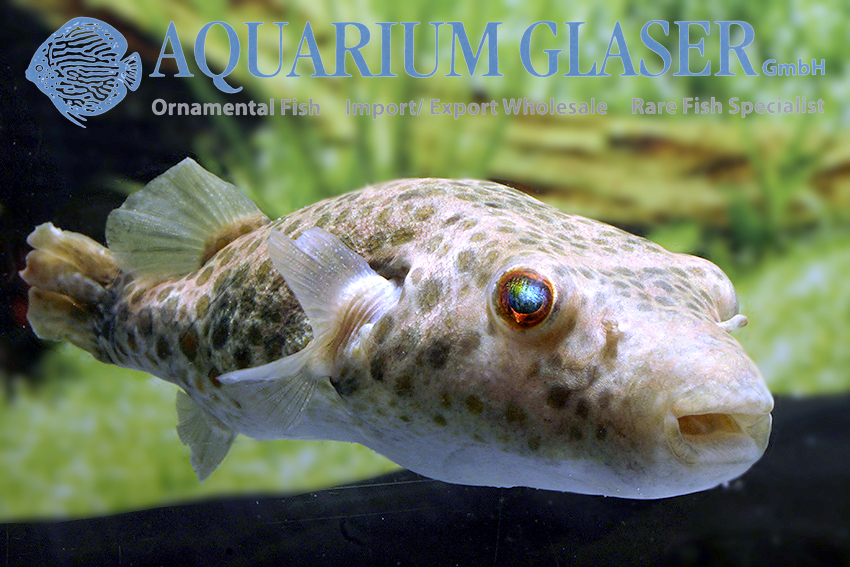
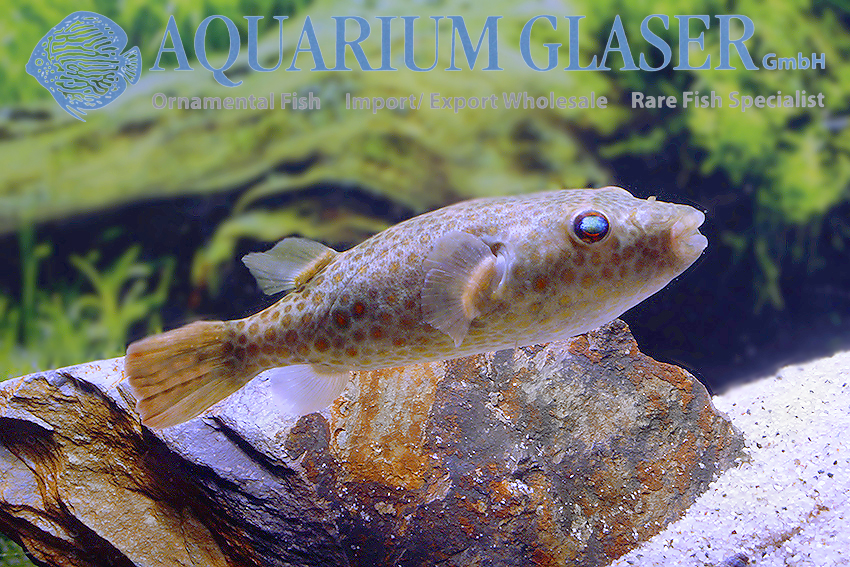
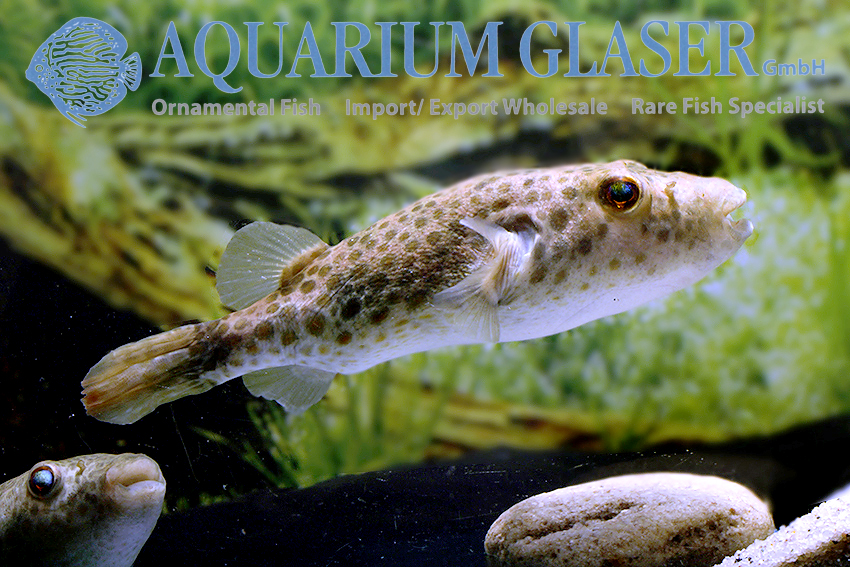
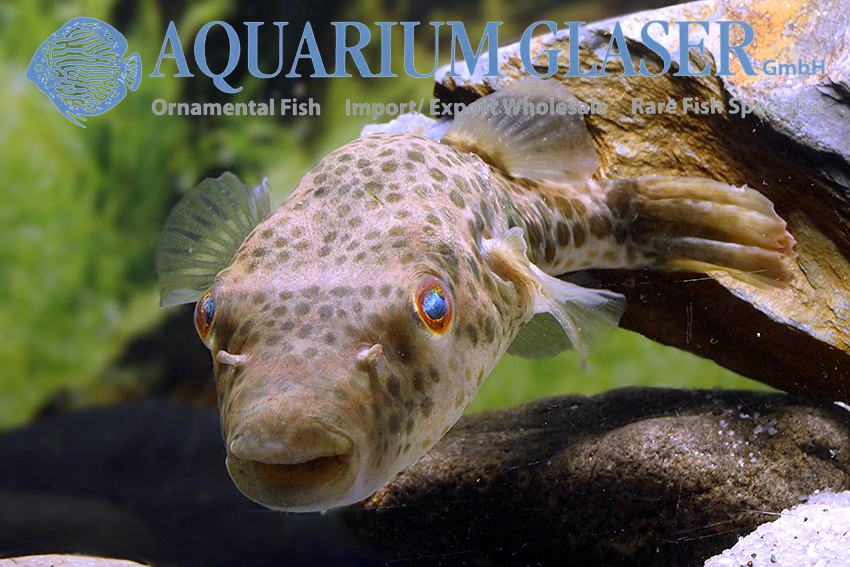
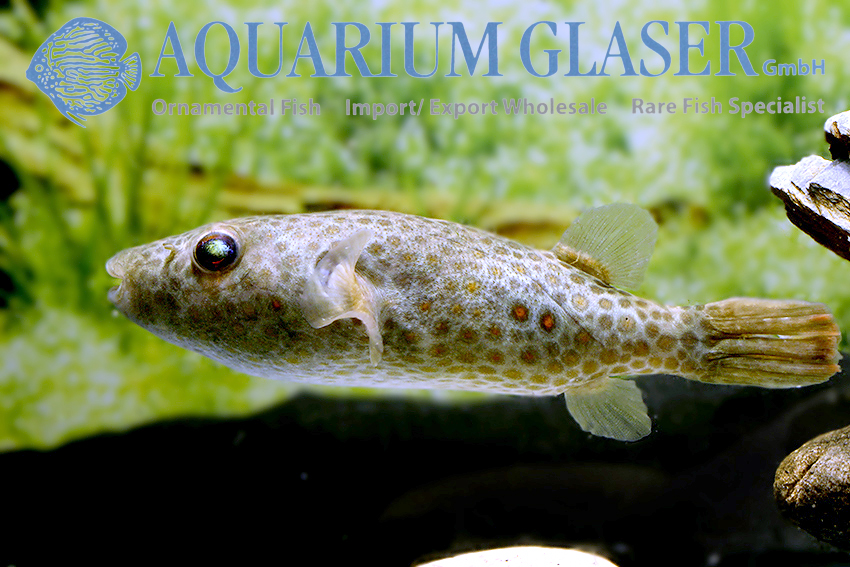
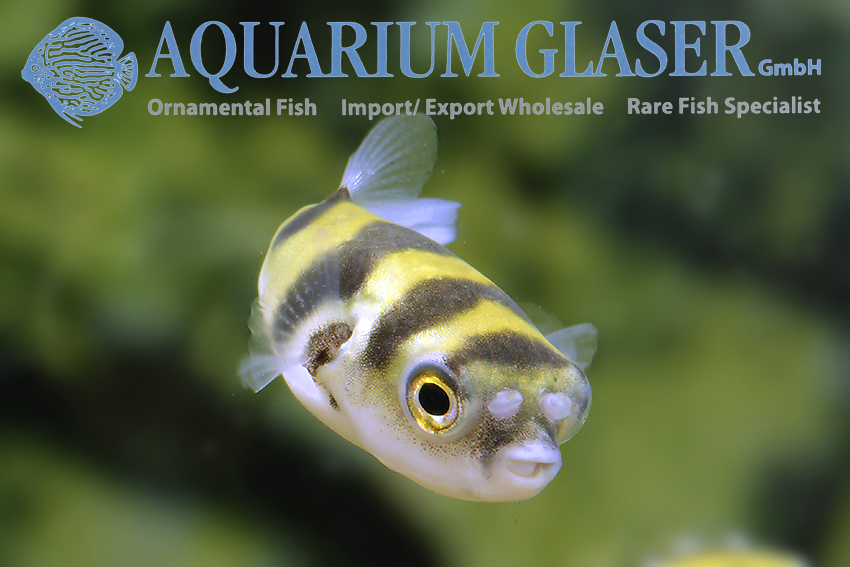
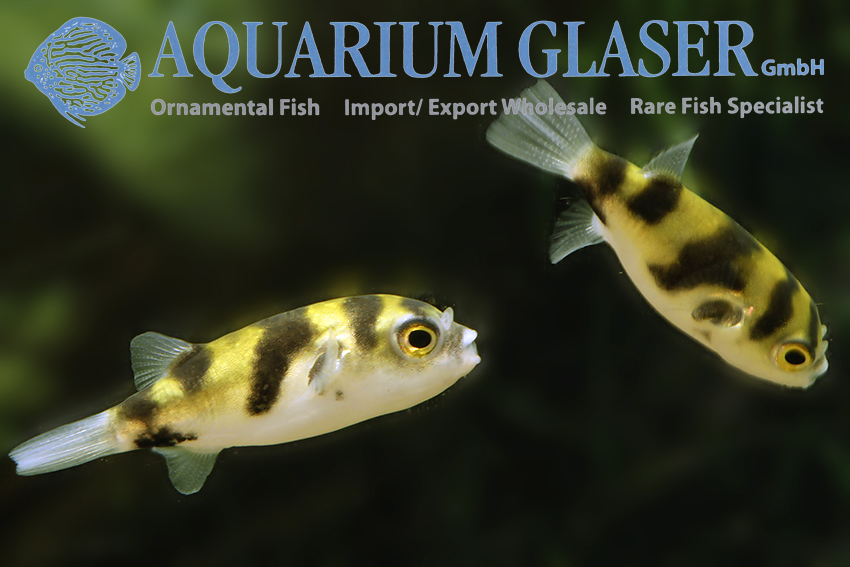
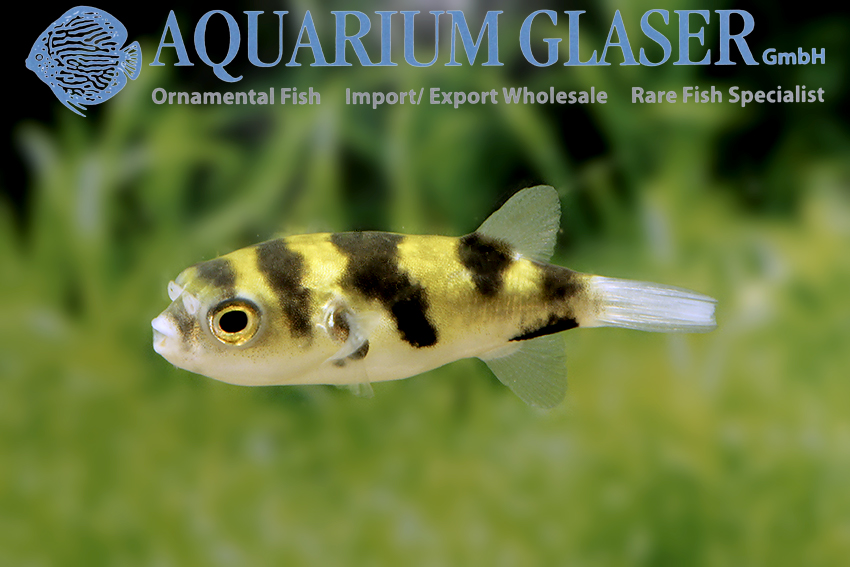
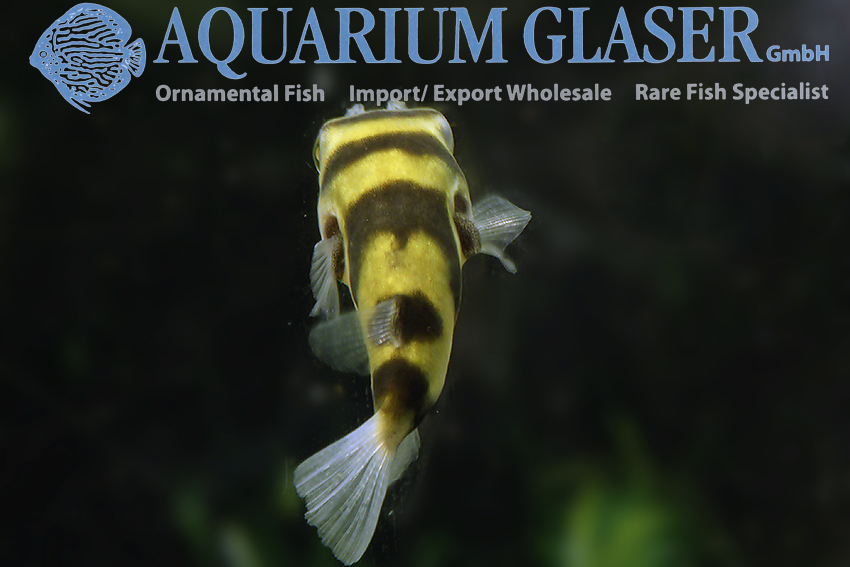
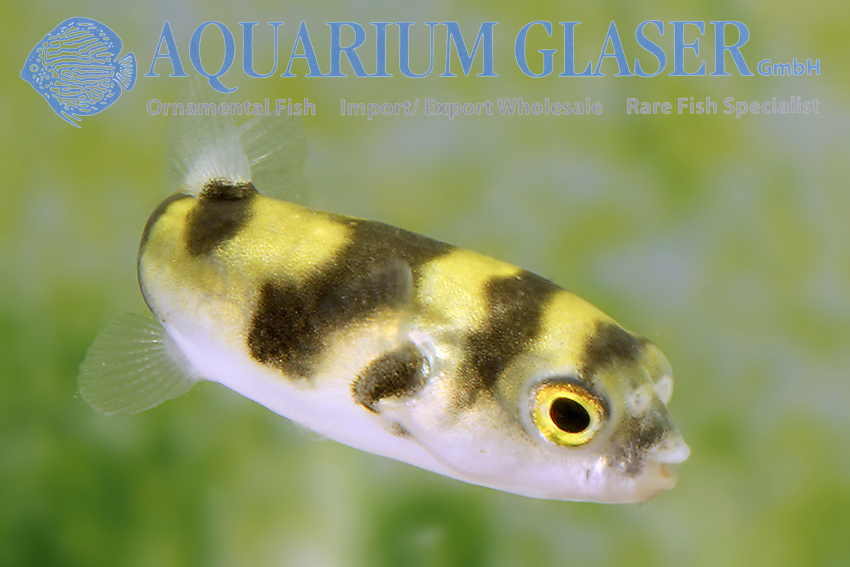
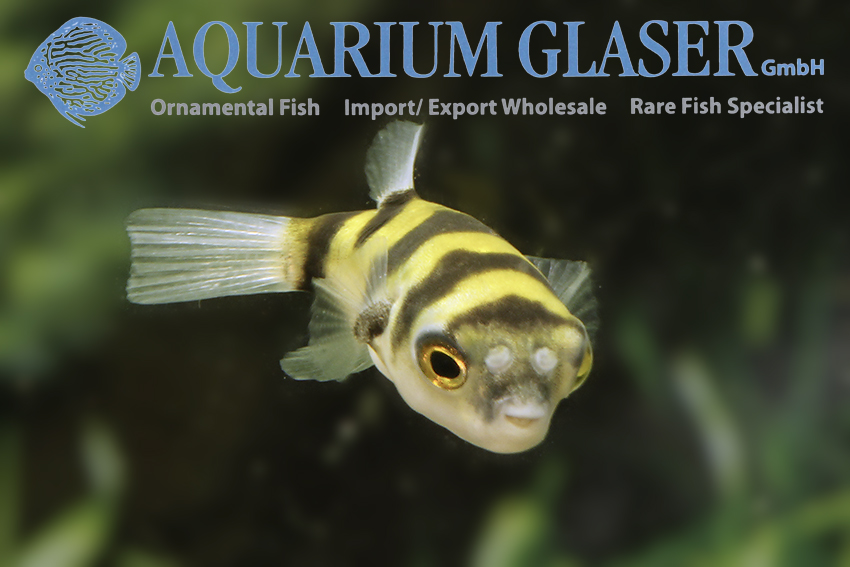
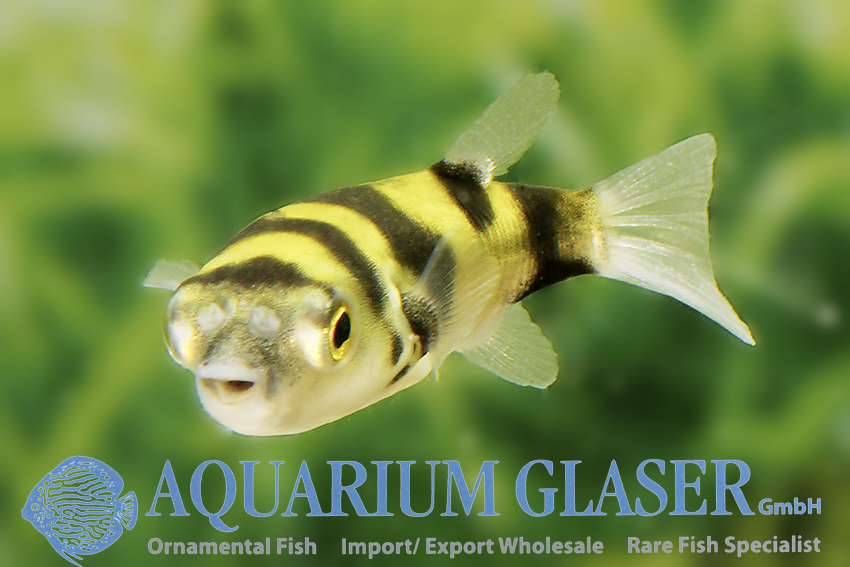
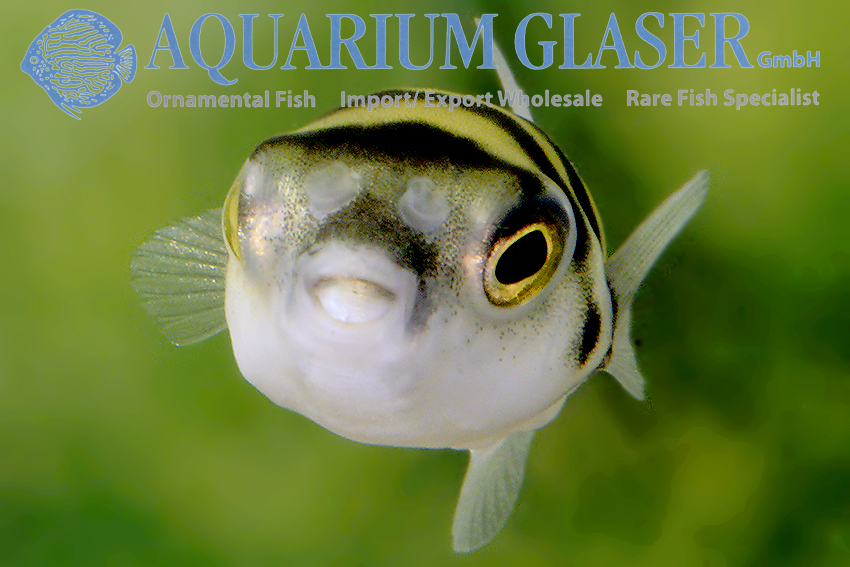
In Southeast Asia a group of freshwater puffers exists that is extremely difficult to tell apart on a specific level. They are called the Eyespot-Puffers or the Pao-leiurus-complex. These puffers live in streams and rivers, some also in ponds and lakes, always in pure freshwater.
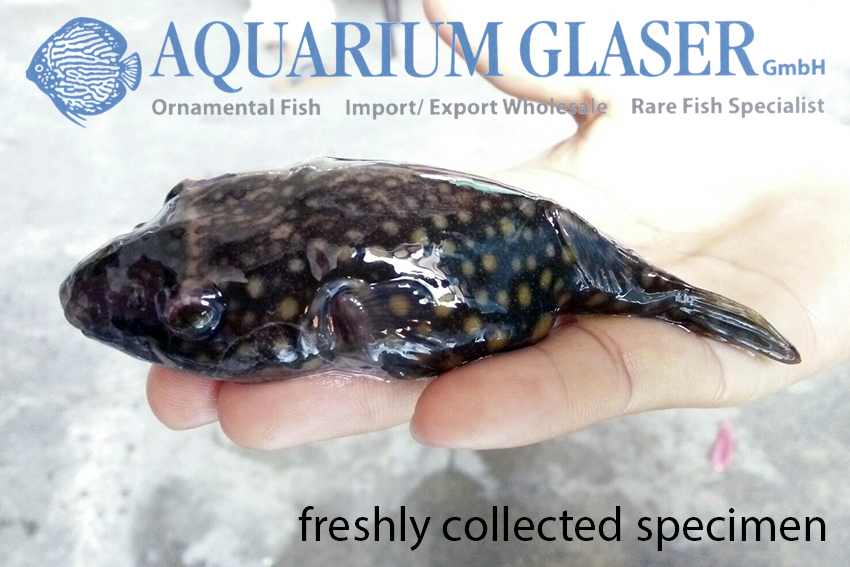
Among the most enigmatic species is Pao abei, which has been described scientifically in 1998 from the Mekong river in Laos. Preserved specimens are very dark, almost black, with tiny yellow or orange spots. This was exactly how the freshly collected fish looked on the photos that were sent to us by our supplier from Thailand! But the very same fish he sent look very different when kept in aquaria. This is the tricky thing with freshwater puffers: they can change their coloration very fast and very drasticallly. Additionally every individual has a slightly different pattern. There are only very few constant anatomical features that allow a determination, most of them overlap in the different species. So, do the fish we could recently import – they have a size of 7-10 cm – really belong to the species Pao abei? Who knows… Anyway, they are beautiful and interesting fish!
For our customers: the fish have code 461245 on our stocklist. Please note that we exclusively supply the wholesale trade.
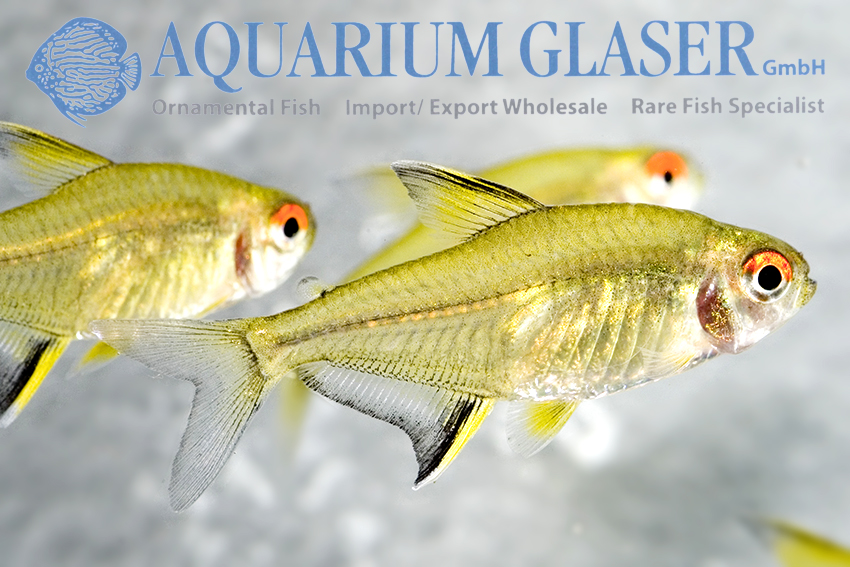
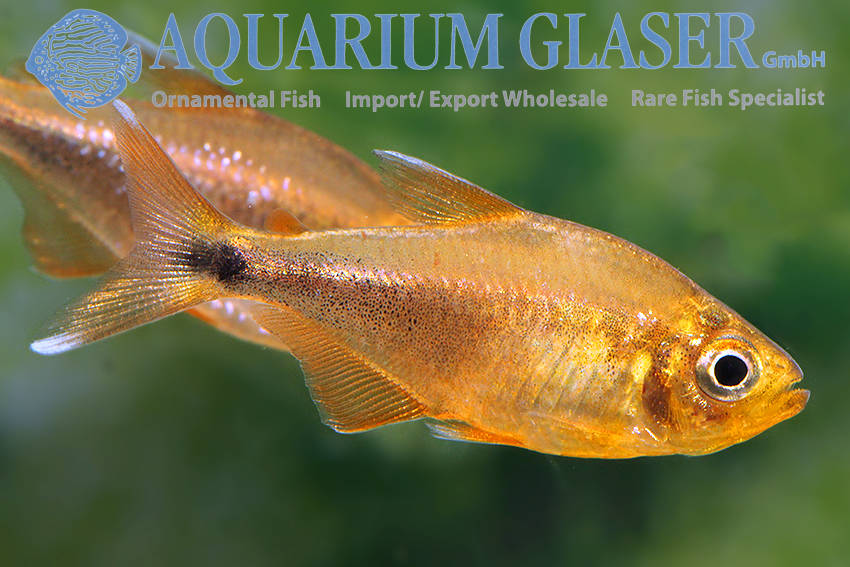
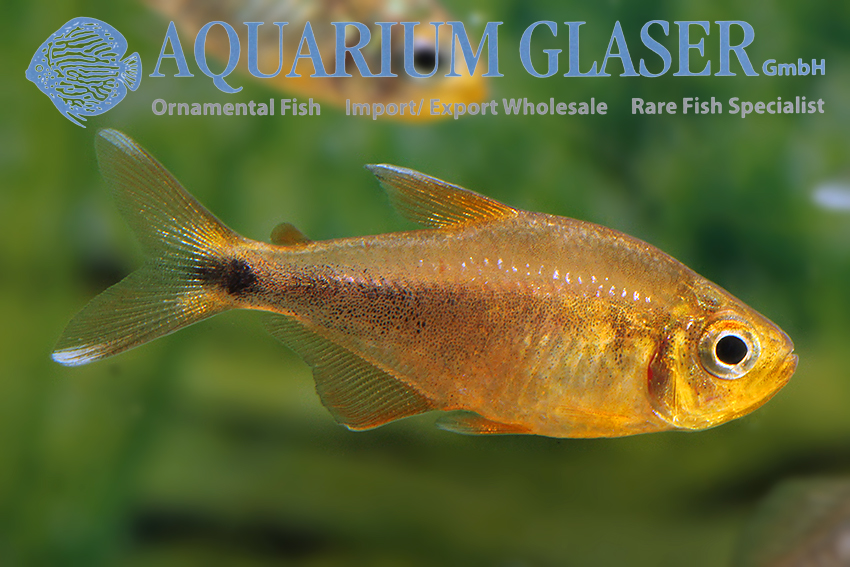
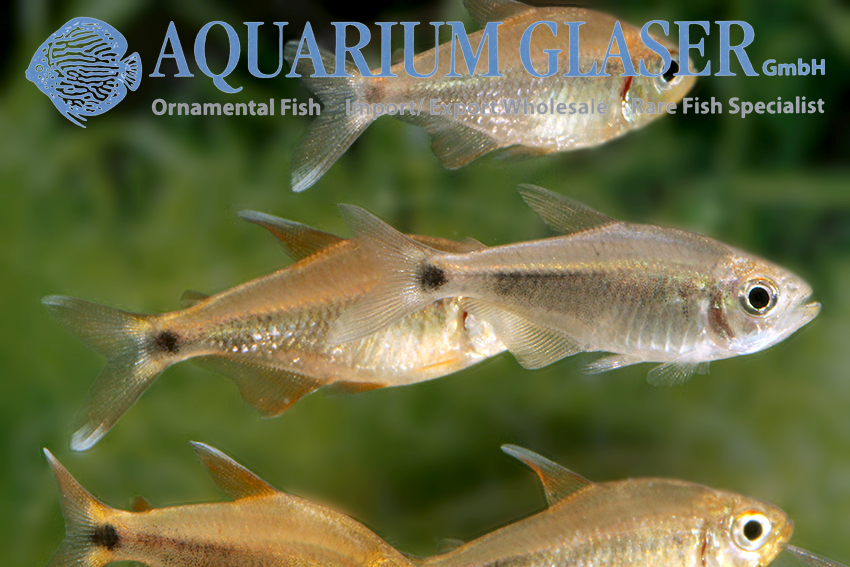
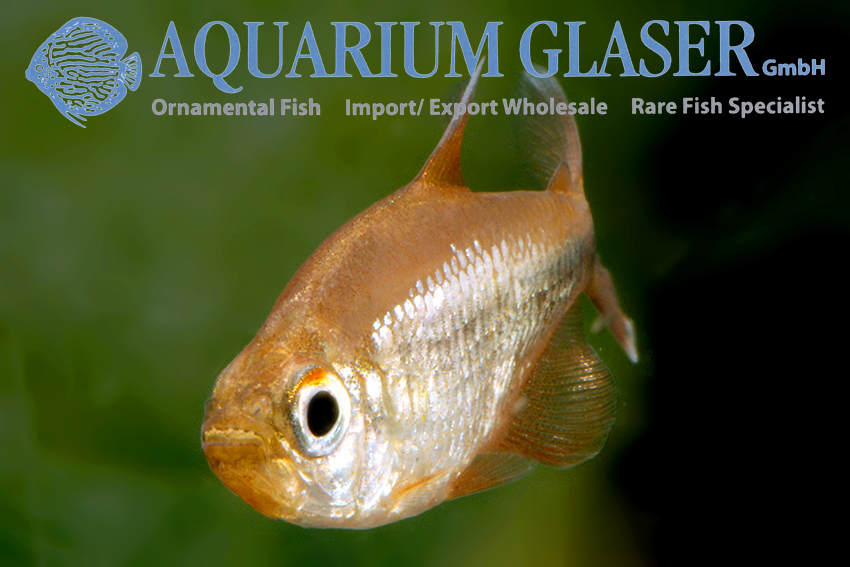
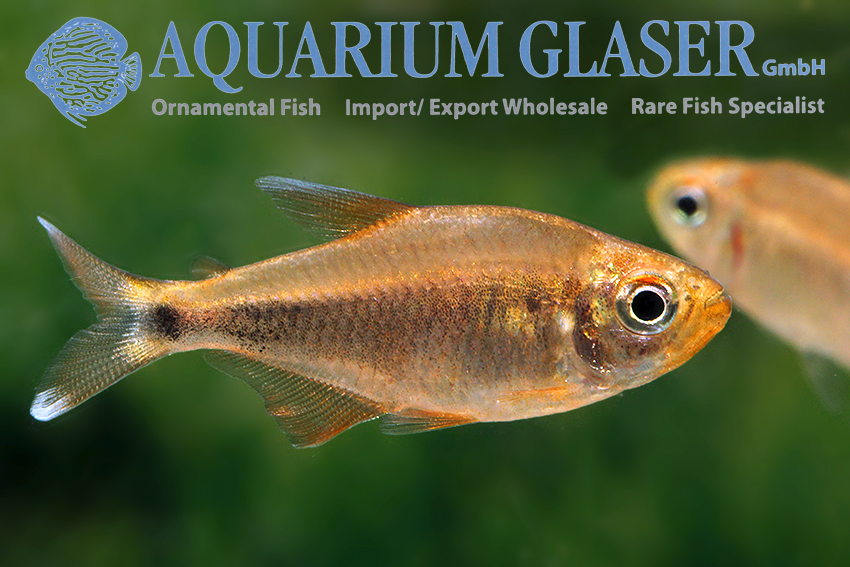
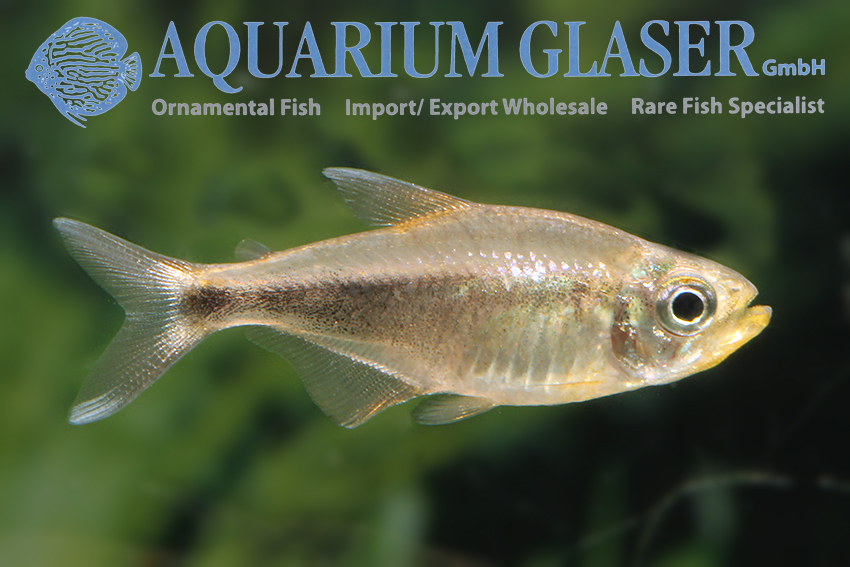
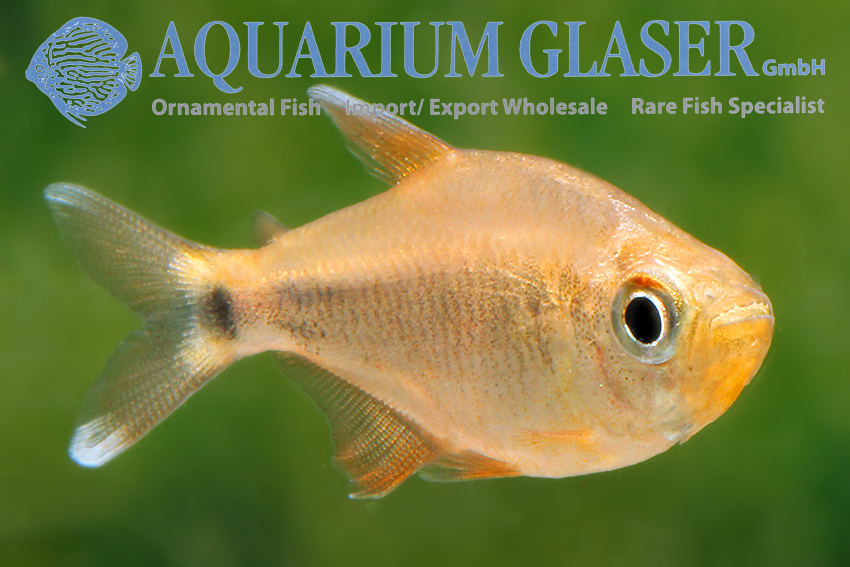
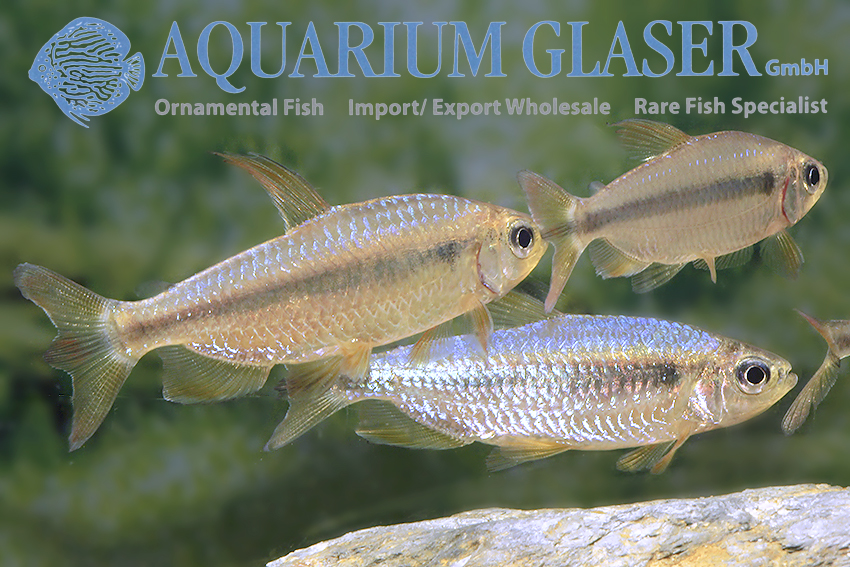
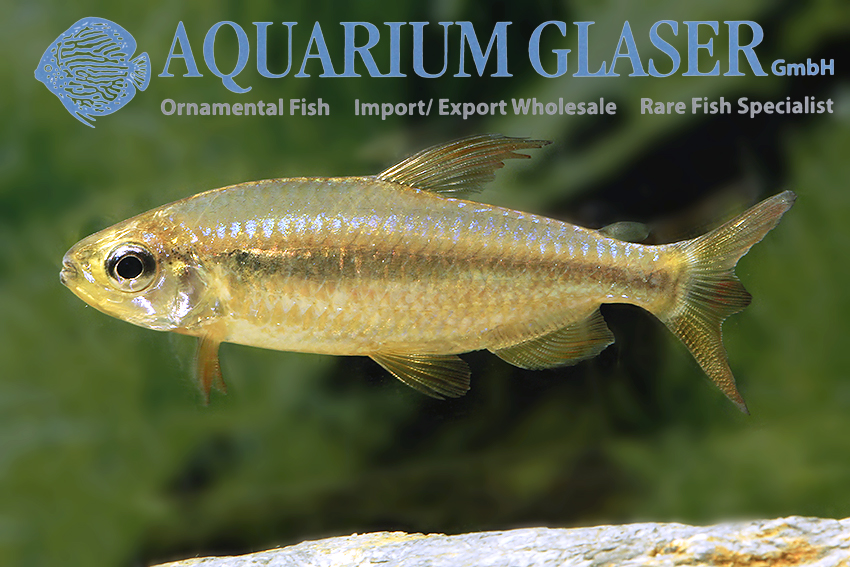
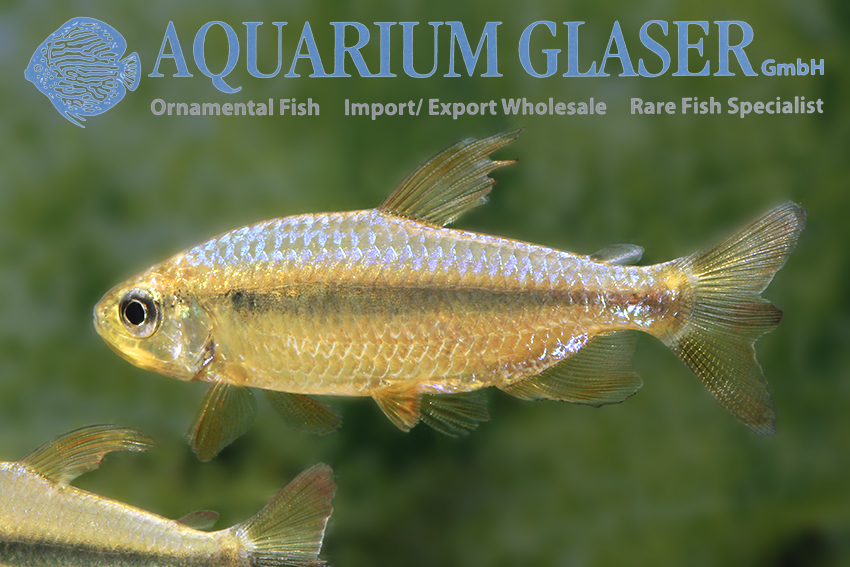
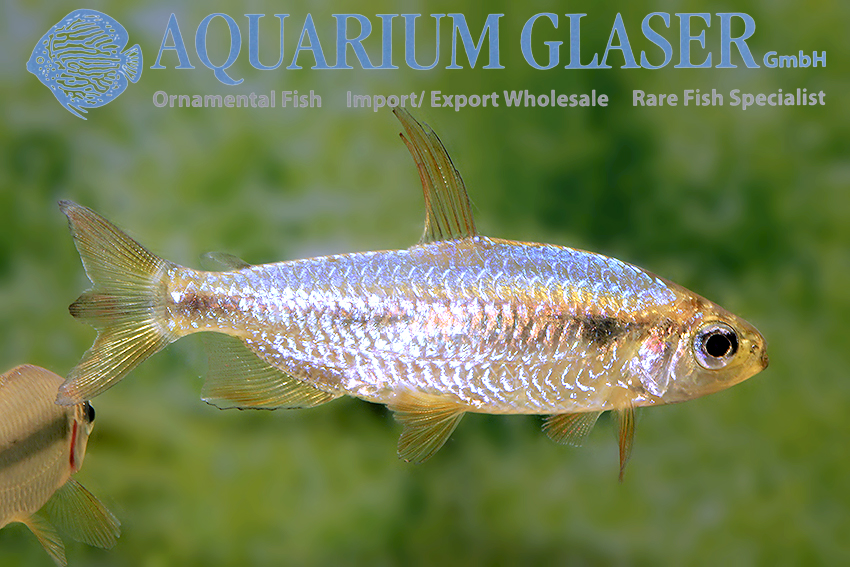
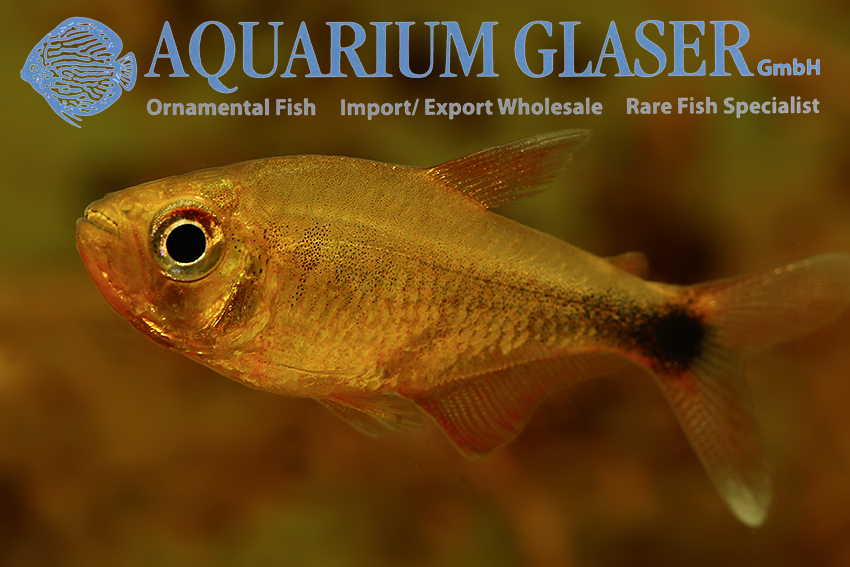
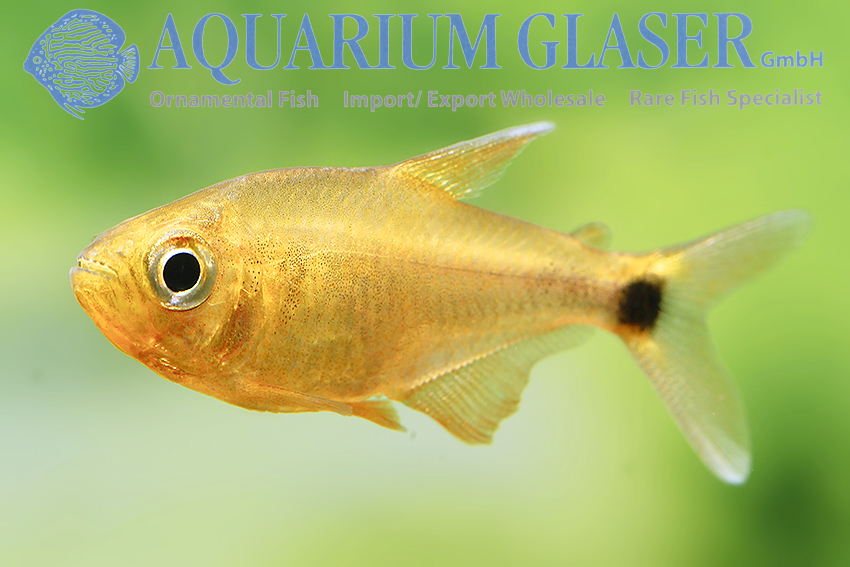
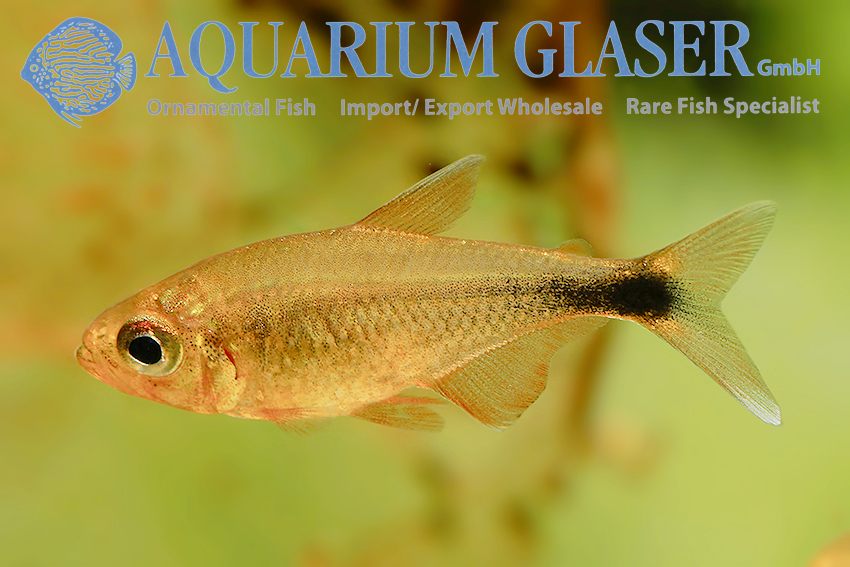
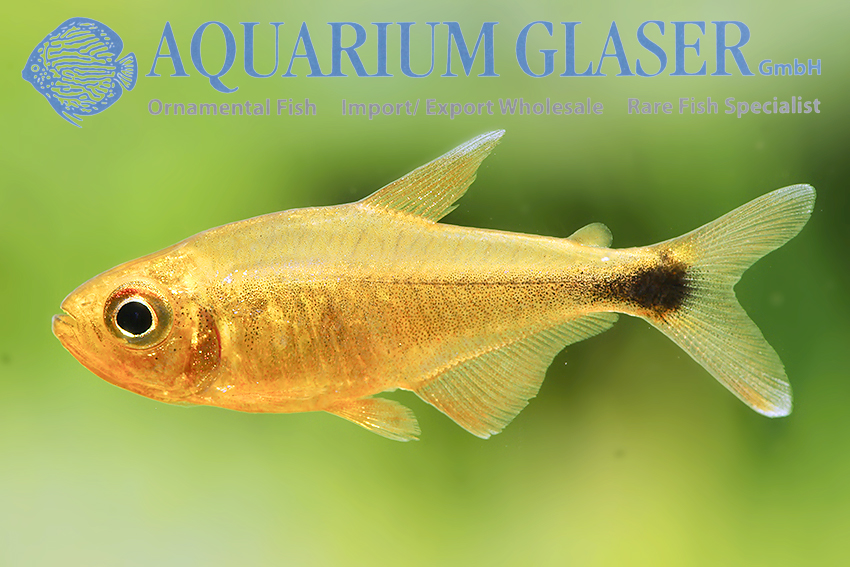
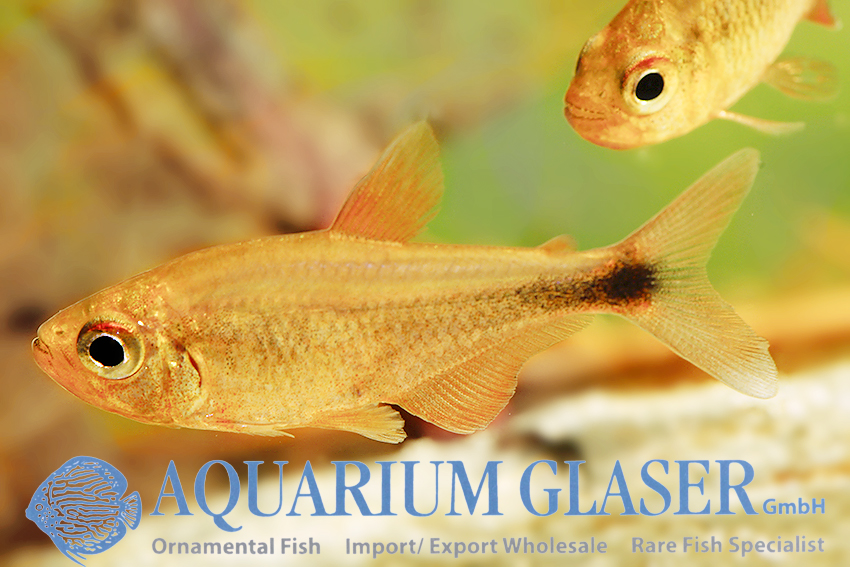
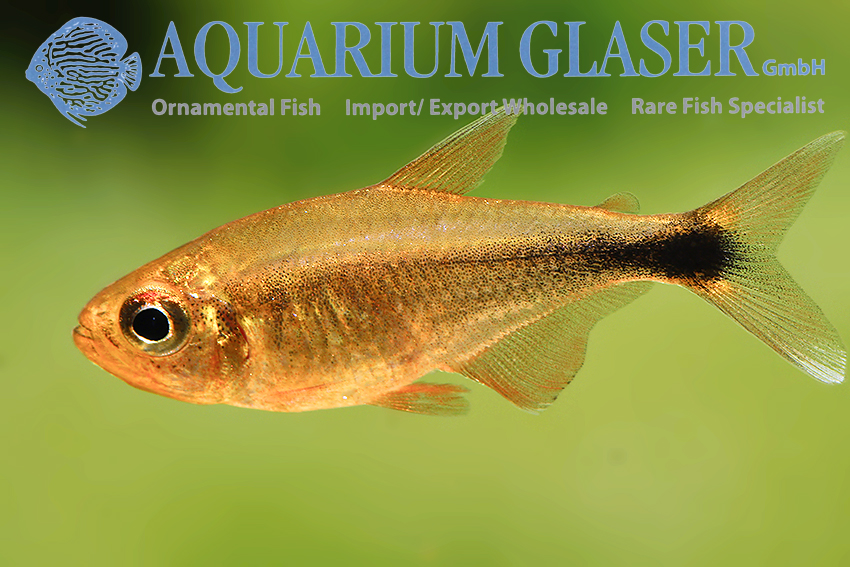
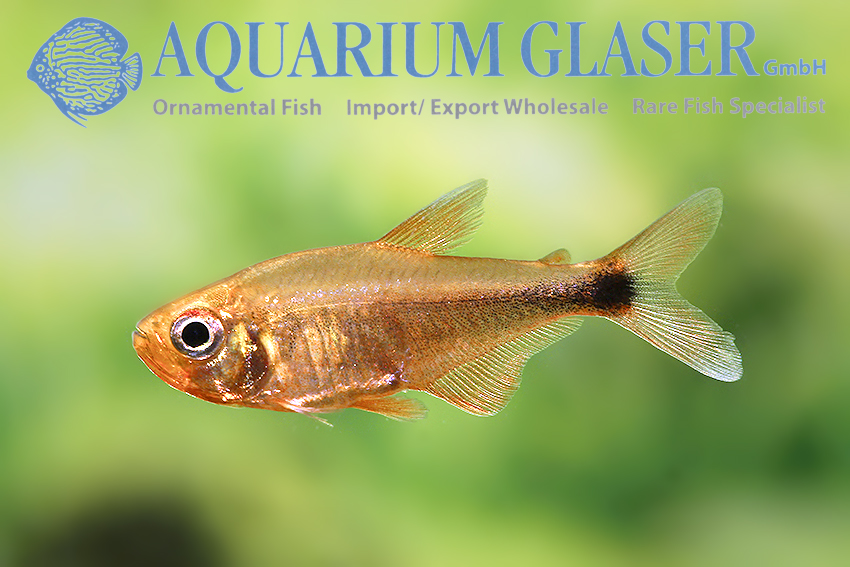
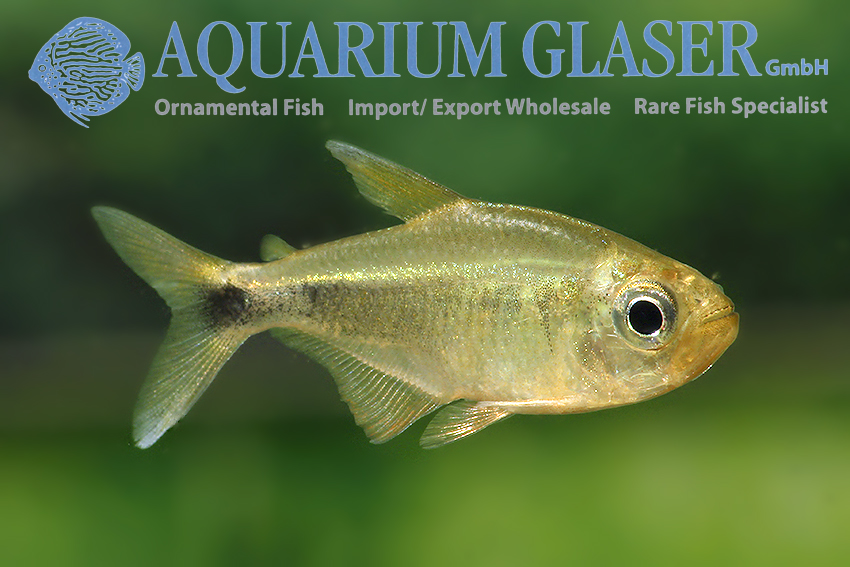
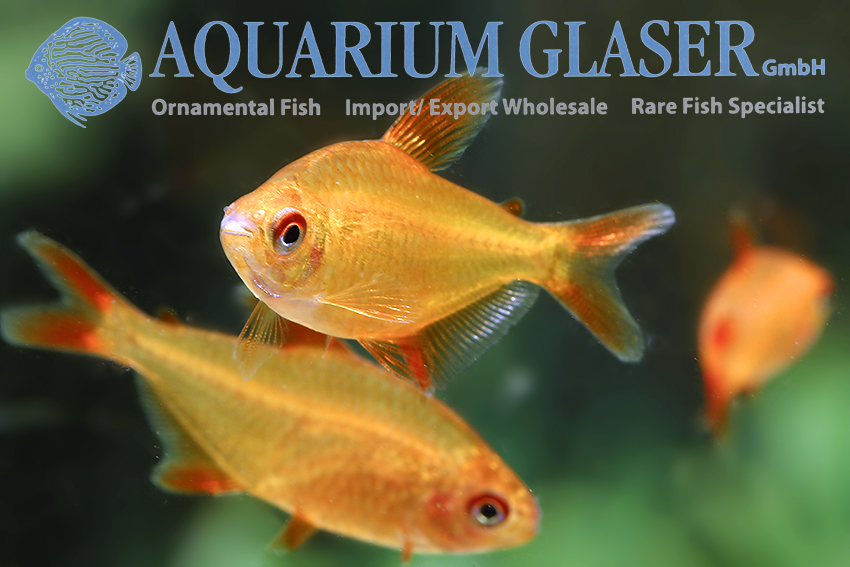
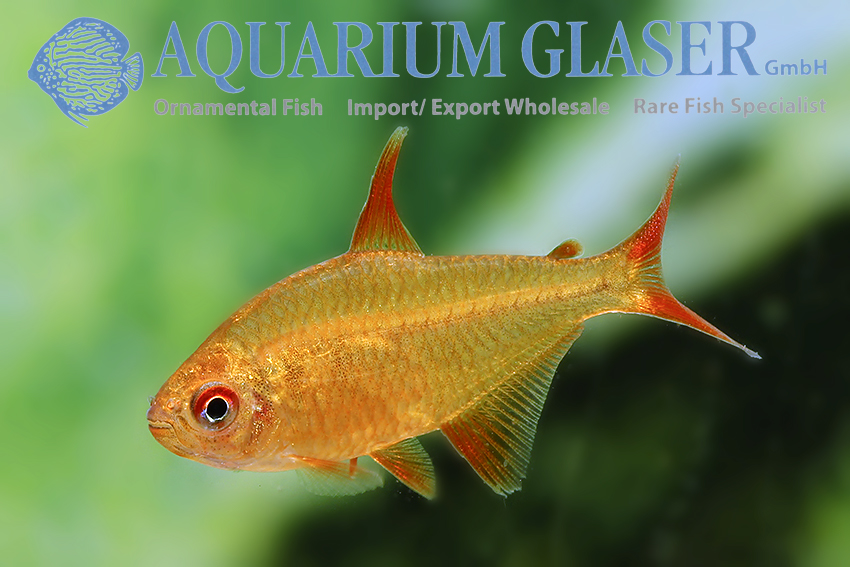
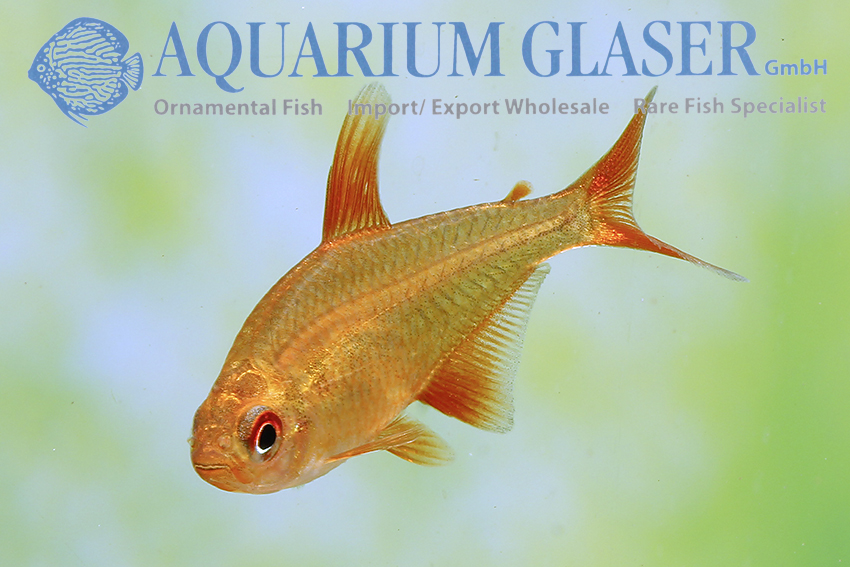
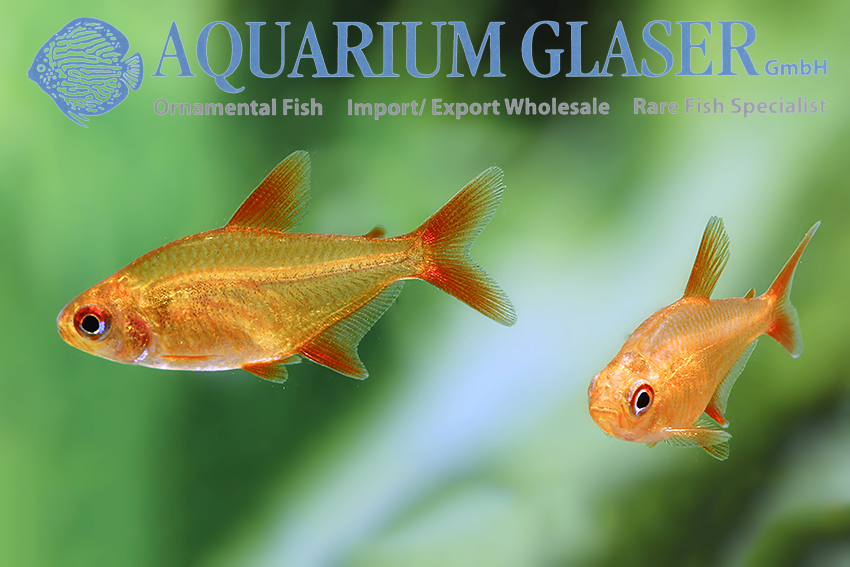
Under the name “Hasemania hansseni” a new tetra has recently appeared on the market, which with its intense orange coloration is indeed somewhat reminiscent of the well-known copper tetra, Hasamania nana. However, one of the characteristics of the genus Hasemania is that it lacks the adipose fin that is so typical for tetras. This is however present in the new imports. They are Hyphessobrycon moniliger, a species first mentioned in scientific literature by Lowe-McConnell in 1991 as “Hyphessobrycon sp. golden tetra”. It was then scientifically described in 2002 based on specimens from the Rio Tocantins drainage. In the meantime it was also reported from the Rio Tapajós drainage.
The males of H. moniliger have broadened fin rays in the anal fin, which are also covered with numerous hooks. This characteristic is known rather from the Hemigrammus relationship, but as we have already mentioned several times, the systematics of the small tetras of South America is so far only very unsatisfactory clarified.
With about 4 cm total length H. moniliger remains handy small. They are very beautiful and peaceful fish, a real enrichment of the assortment!
For our customers: the animals have code 261393 on our stocklist. Please note that we only supply wholesale.
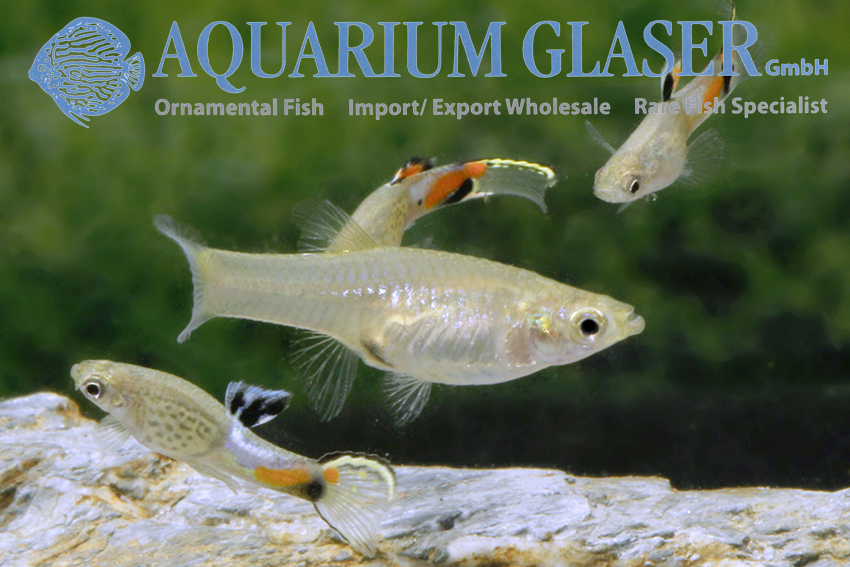
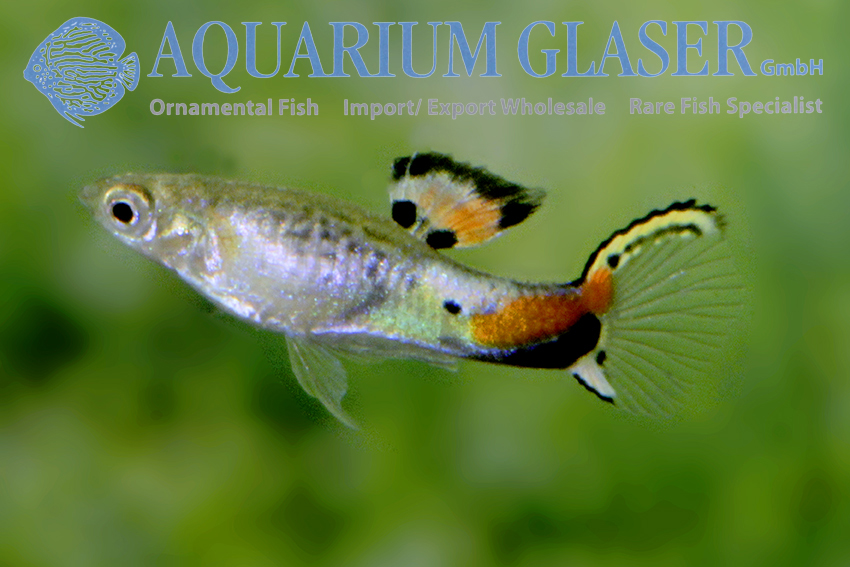
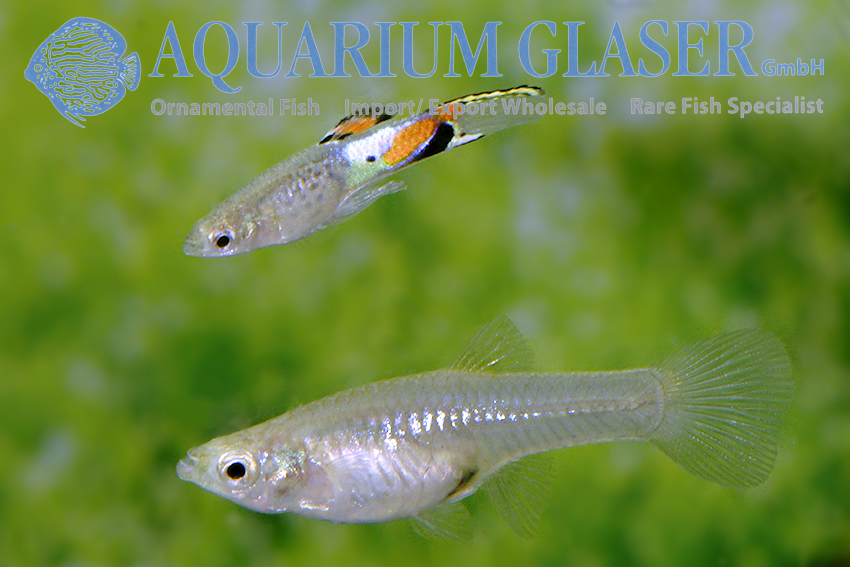
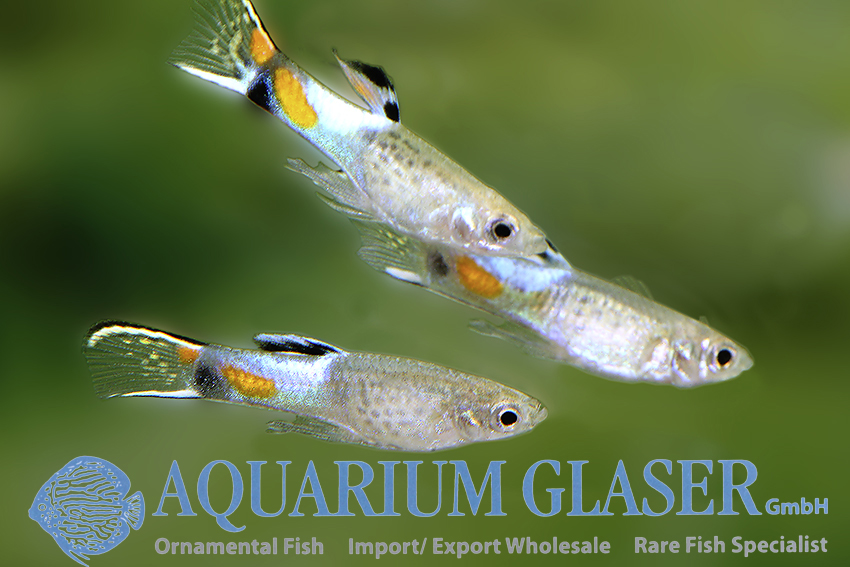
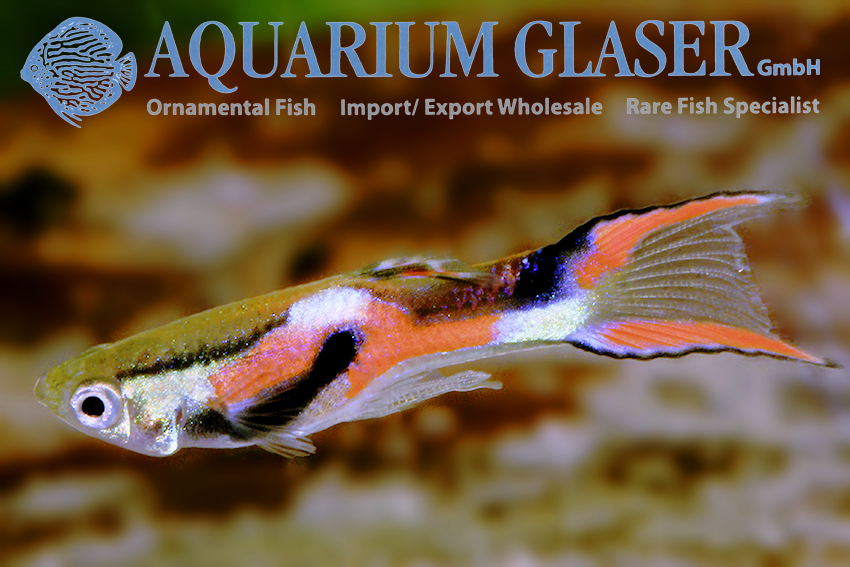
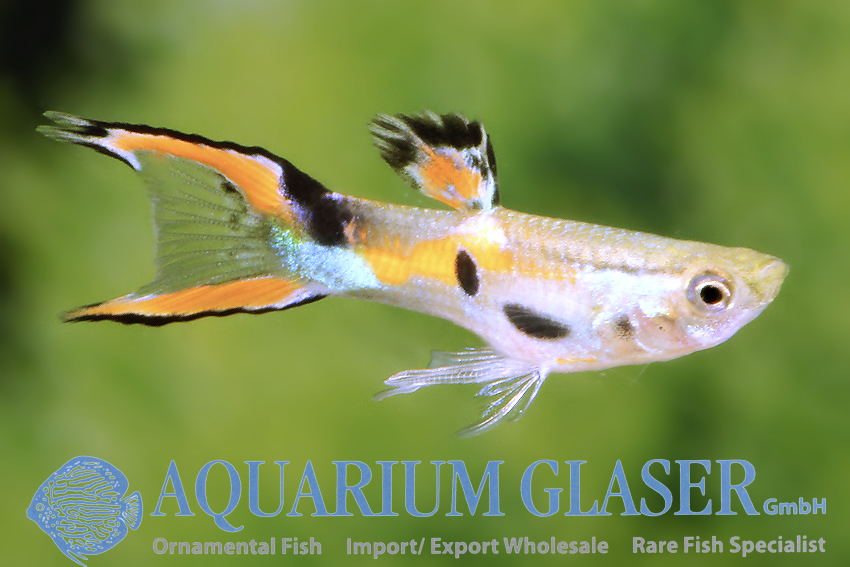
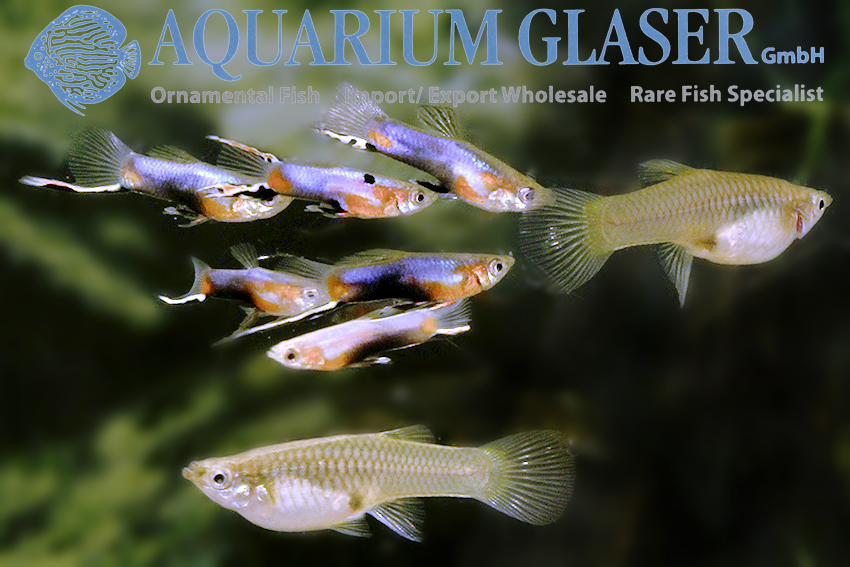
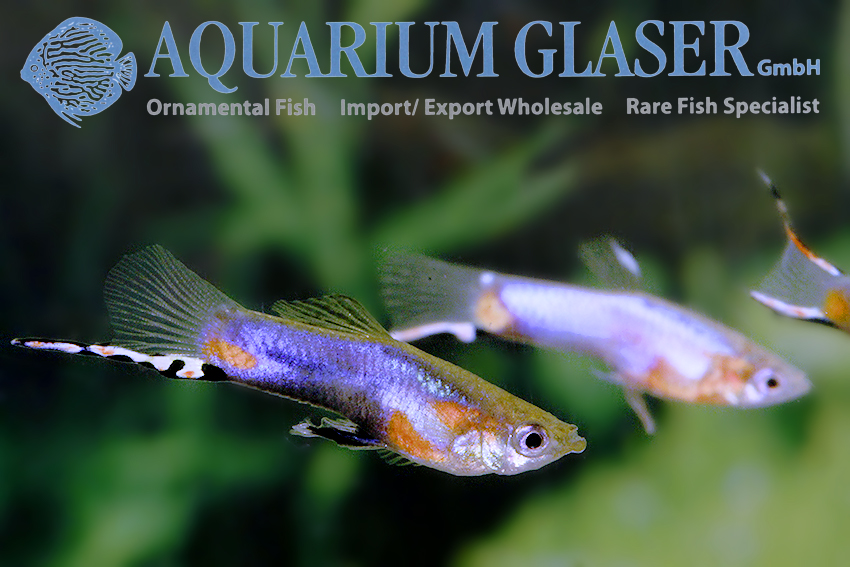
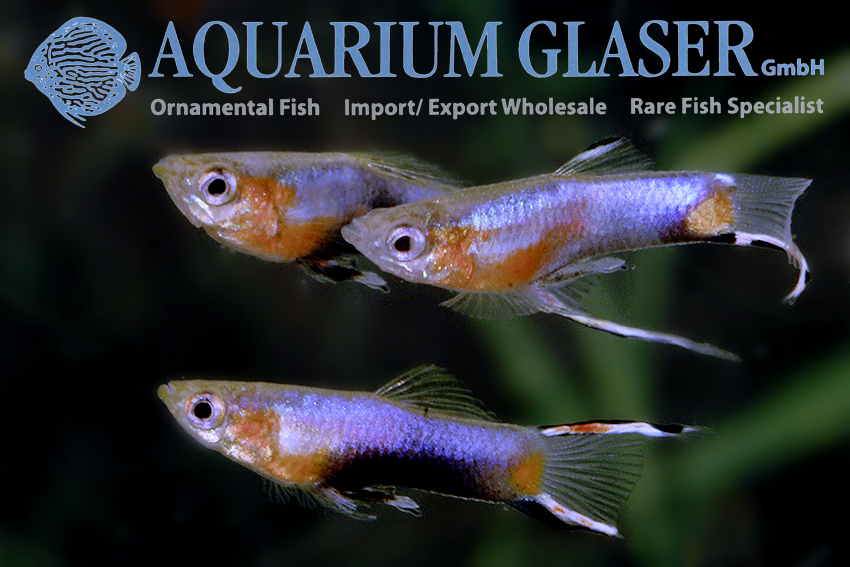
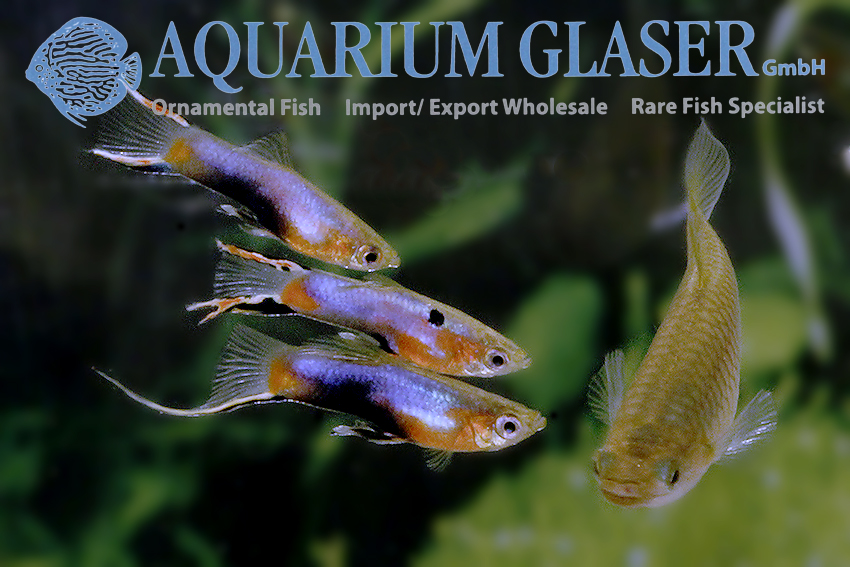
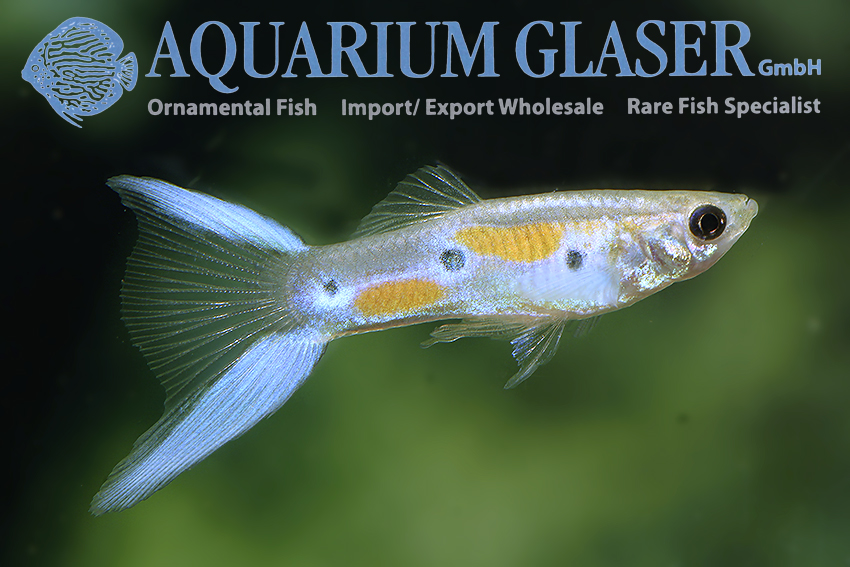
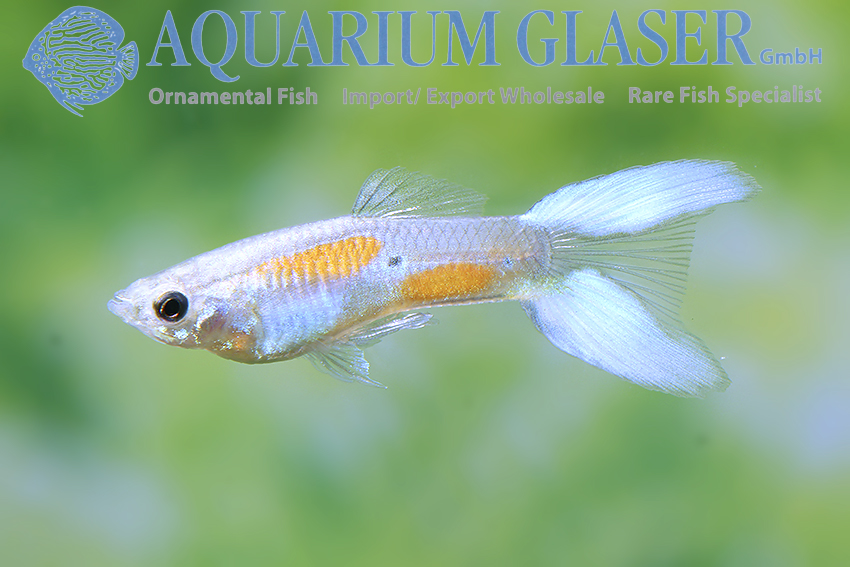
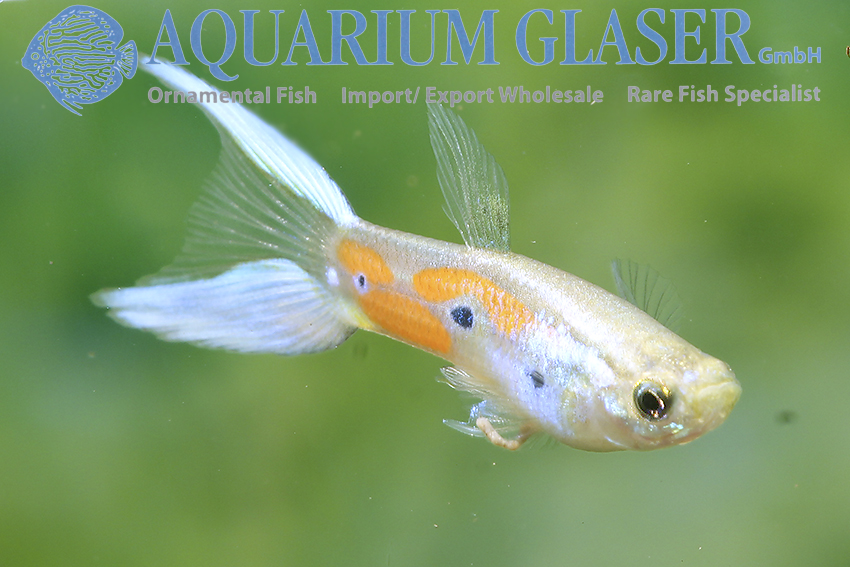
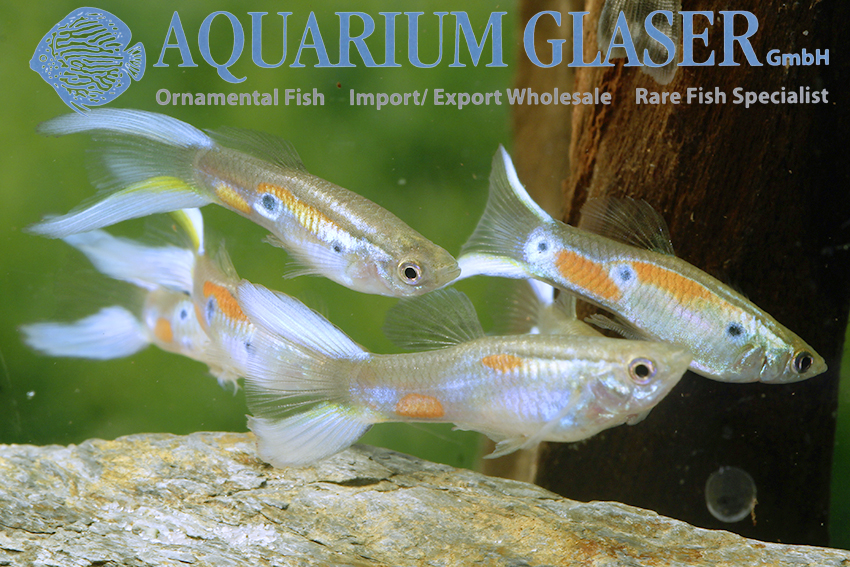
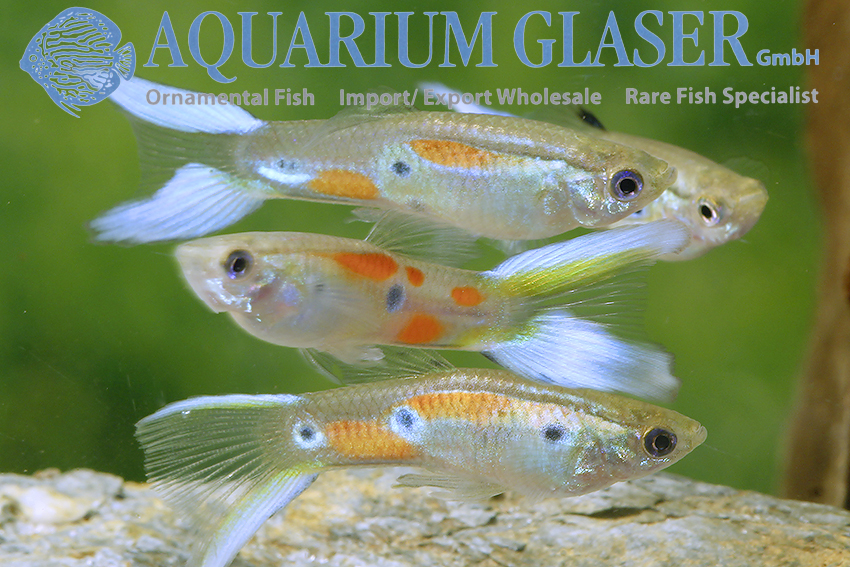
Infinite is the variety of colors, patterns and color combinations possible in wild guppys. In natural biotopes no two males are alike. There are multiple mechanisms, genetic and biological, that ensure this. This is also true for the two wild guppy populations assigned to the species Poecilia wingei: Campoma and Cuminá.
However, if individual males of such natural populations are placed and mated separately and their offspring as well, it is possible to breed a largely uniform color variant in a very short time (one guppy generation takes less than 8 weeks). Such a selection breeding is Campoma No31. It is not a special species, but a color variant of the Endler Guppy. We can offer these cute animals in pairs.
For our customers: the fish have code 419017 on our stocklist. Please note that we only supply wholesale.
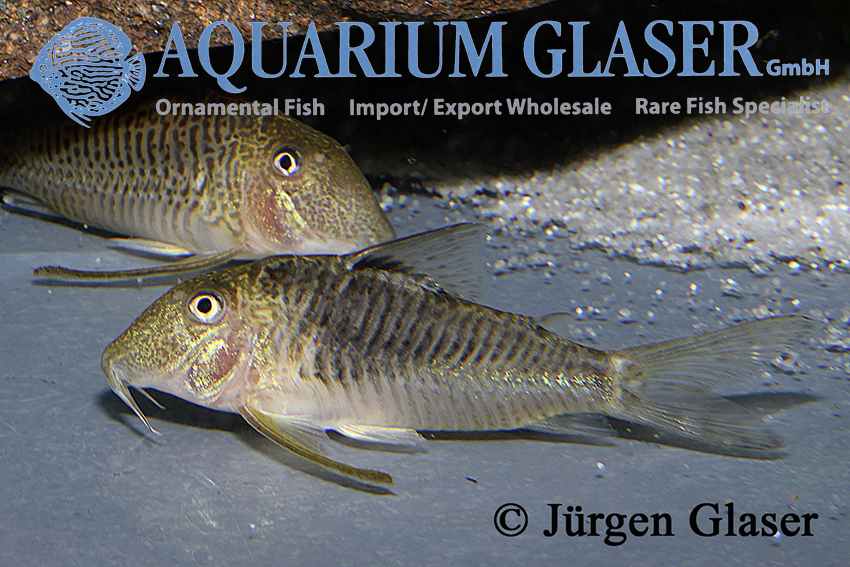
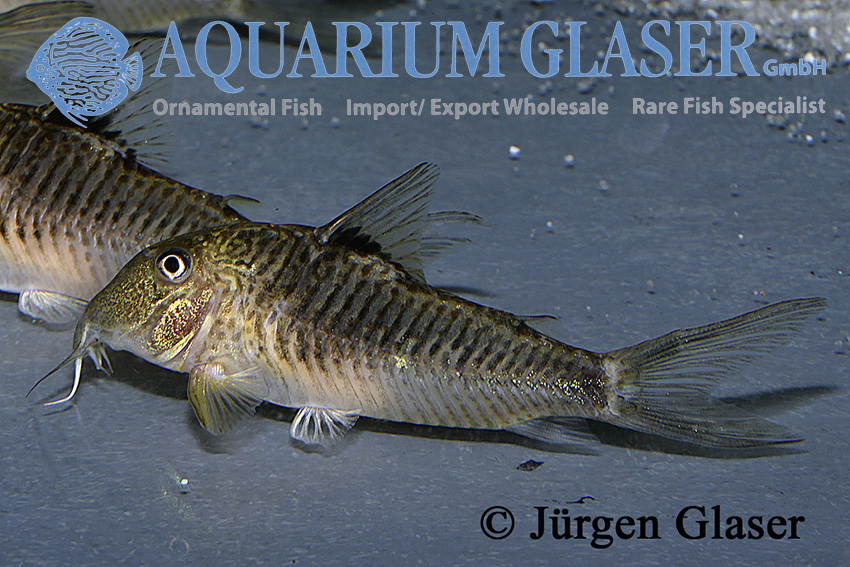
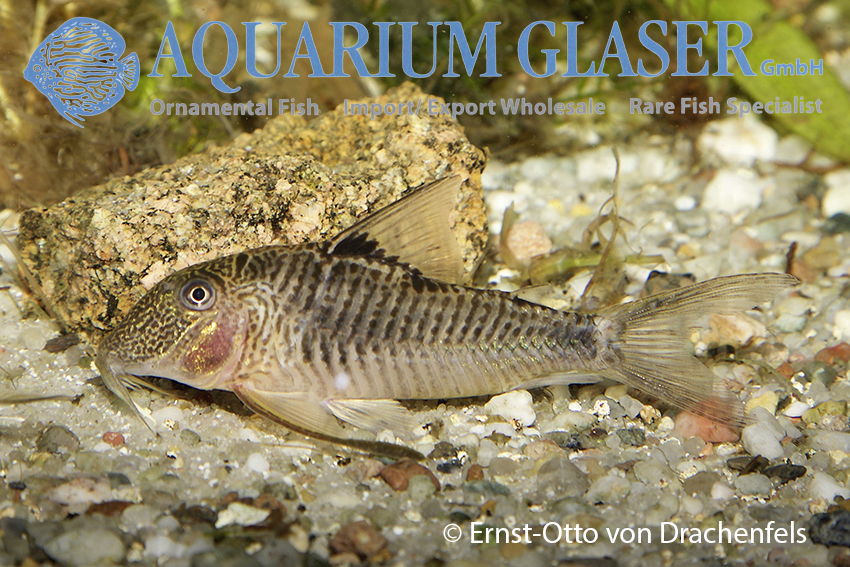
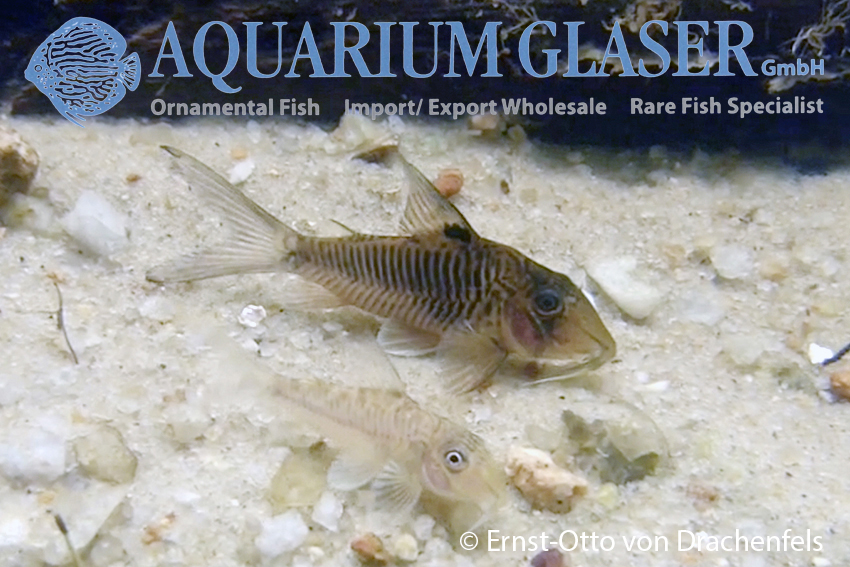
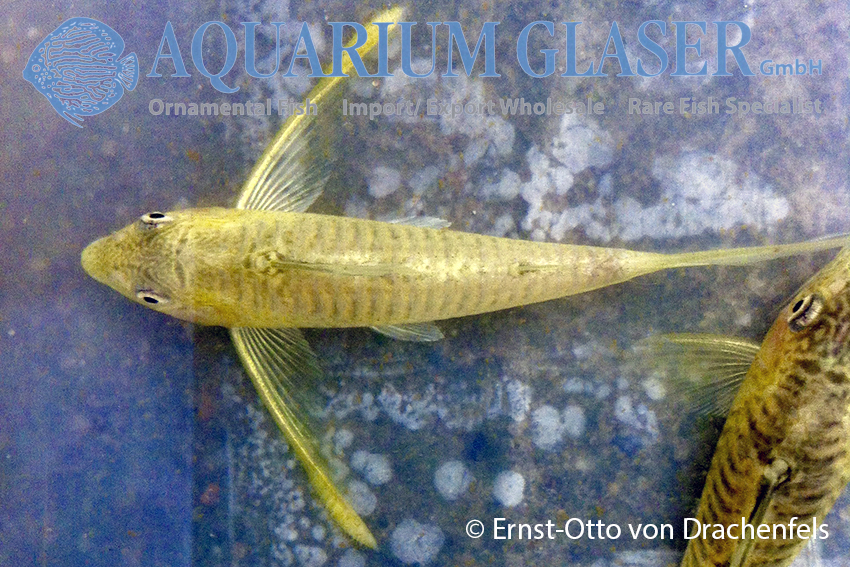
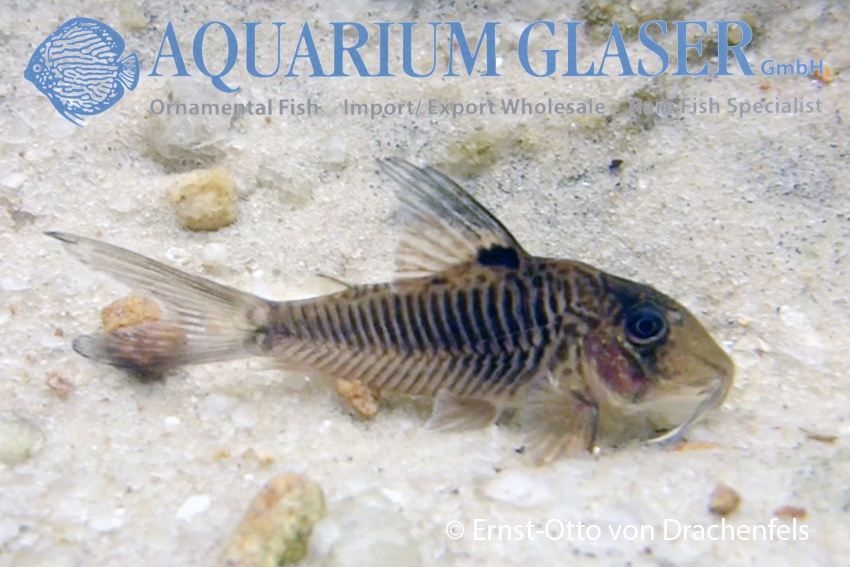
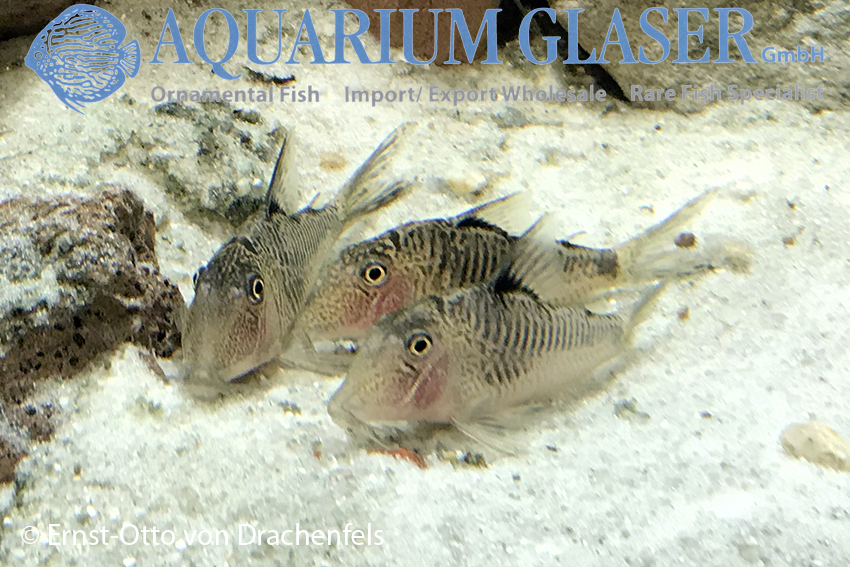
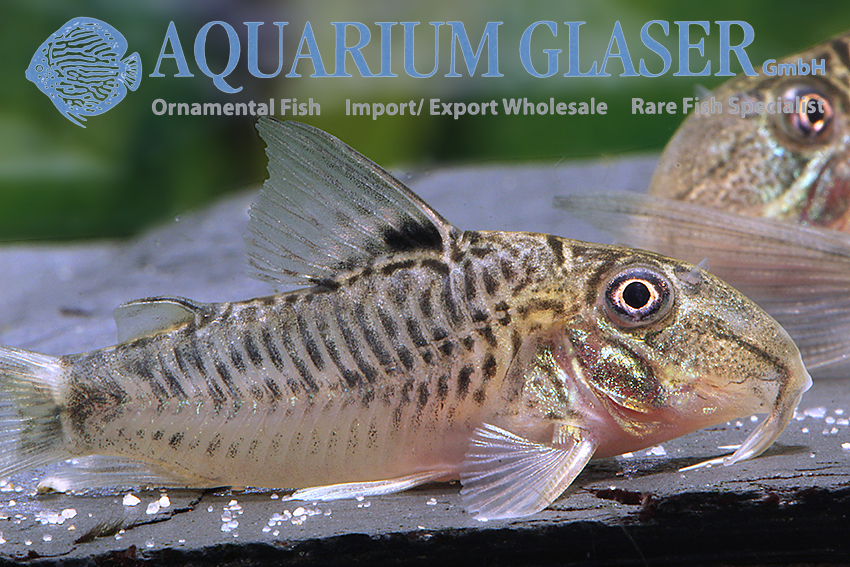
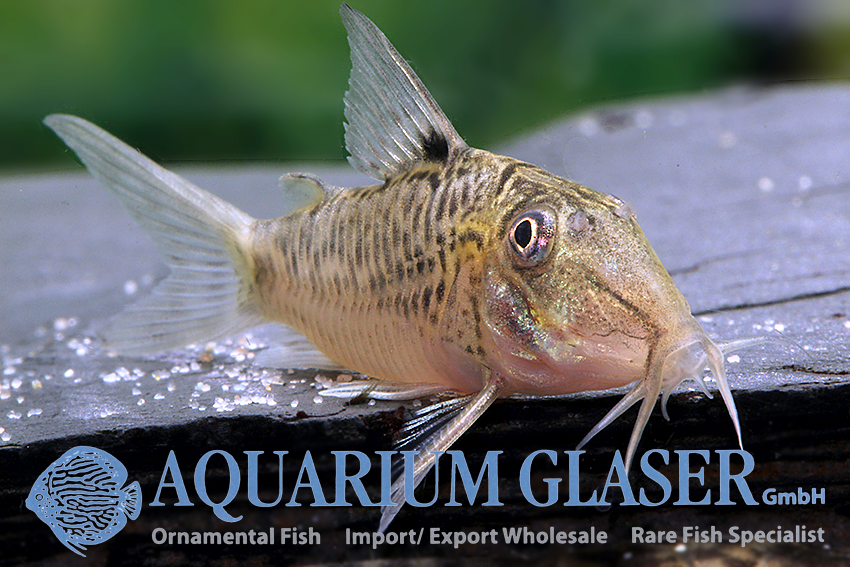
For a long time this fish, the type species of the genus Corydoras, was a mystery. Until today it is a top rarity among the armored catfishes. And so we are especially pleased to be able to offer offspring of this precious fish once again. The animals are still a bit inconspicuous, so we would like to thank Ernst-Otto von Drachenfels and Jürgen Glaser for providing us with some pictures of adult animals!
Corydoras geoffroy comes from the Guyana countries Suriname and French Guyana, from where there are no ornamental fish exports. The species, described as early as 1803, could therefore only be made available to the hobby by adventurous traveling aquarists. Since 2018, Corydoras specialists have been successfully engaged in breeding these unusual animals.
For our customers: the fish have code 230212 on our stock list. Please note that we supply exclusively to wholesalers.
Text: Frank Schäfer, Photos: Ernst-Otto von Drachenfels, Jürgen Glaser and Frank Schäfer
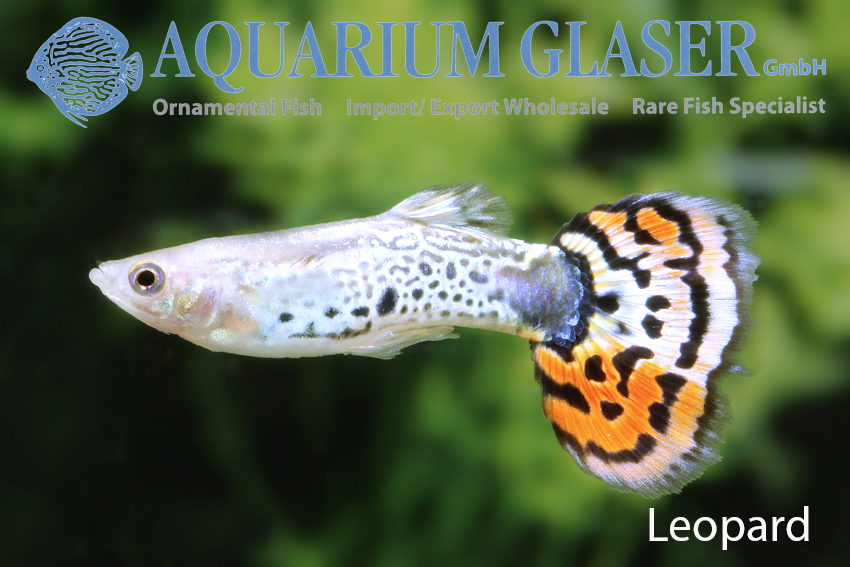
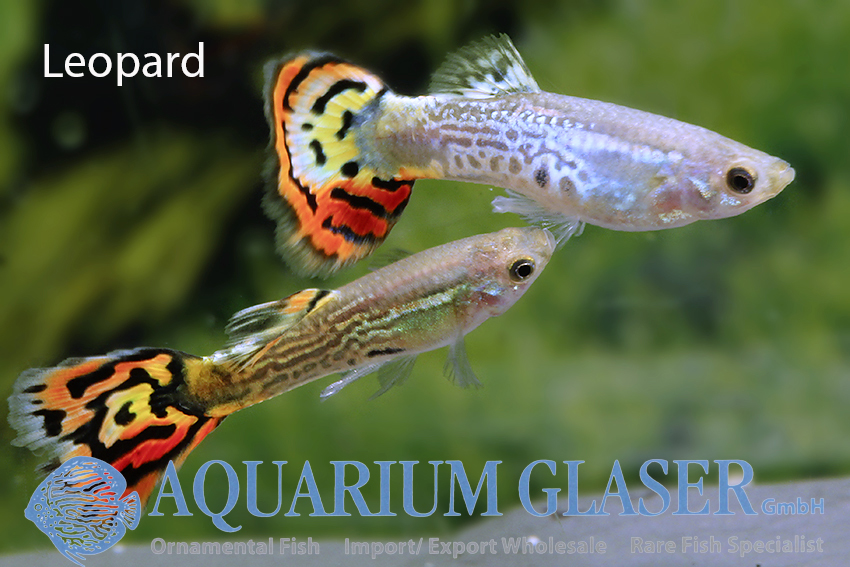
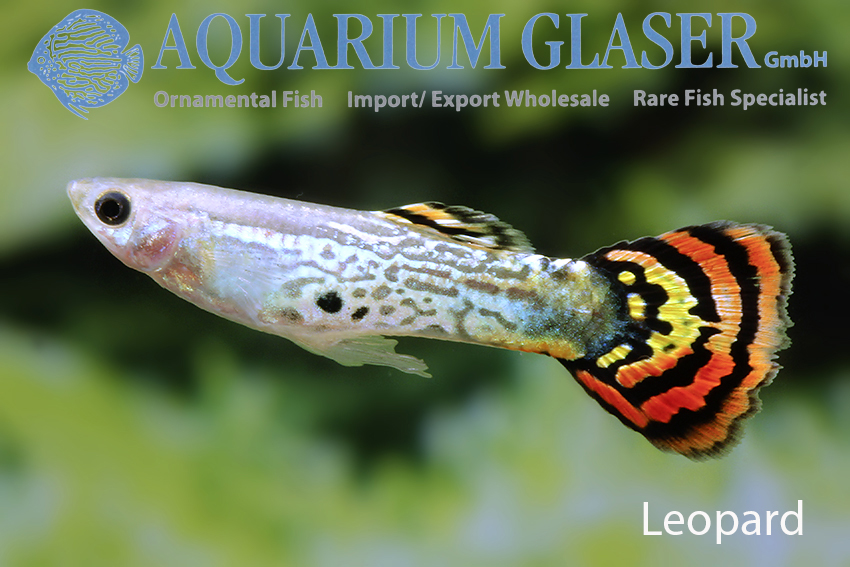
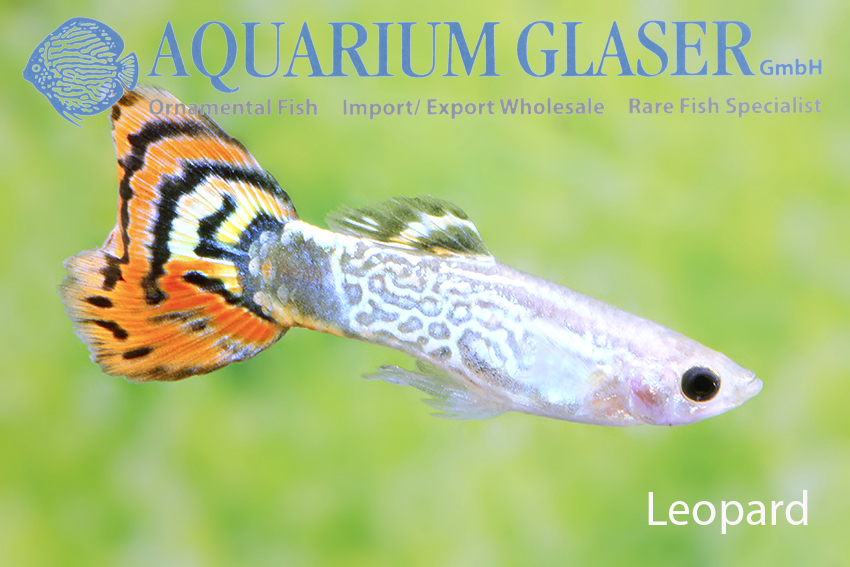
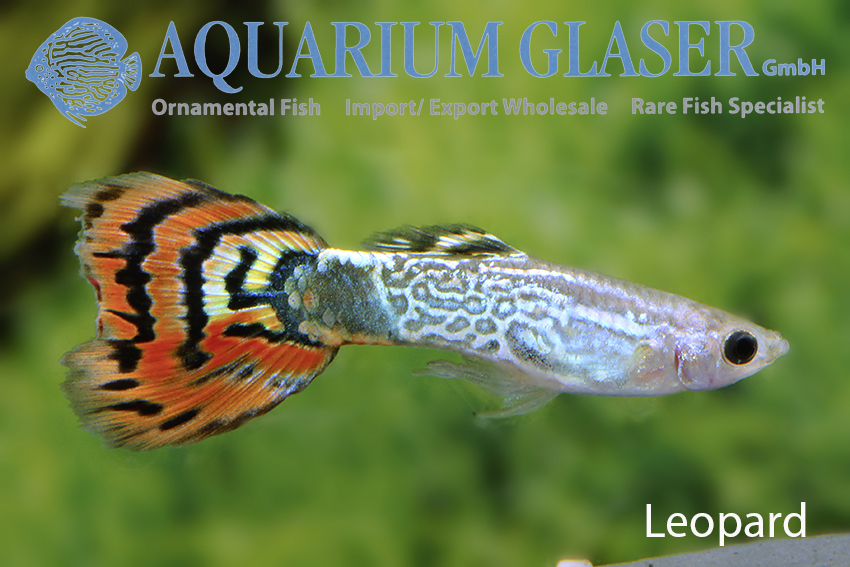
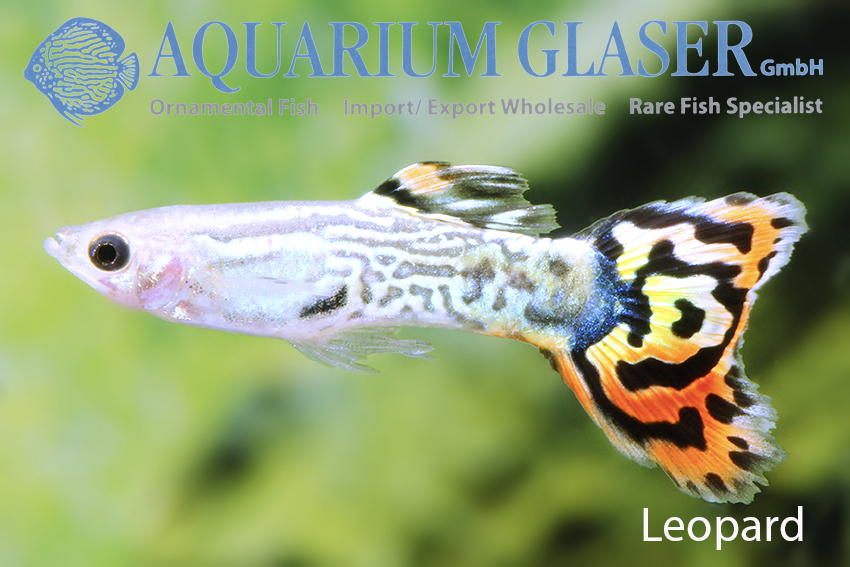
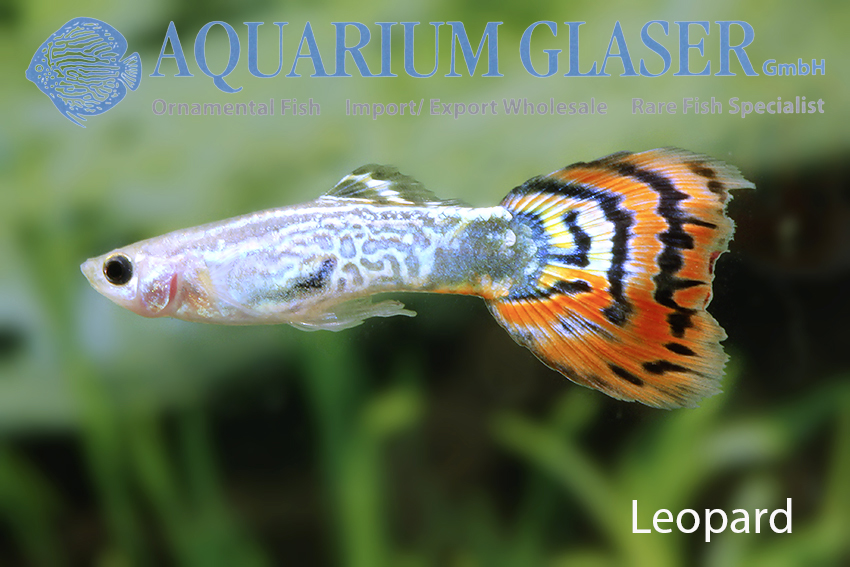
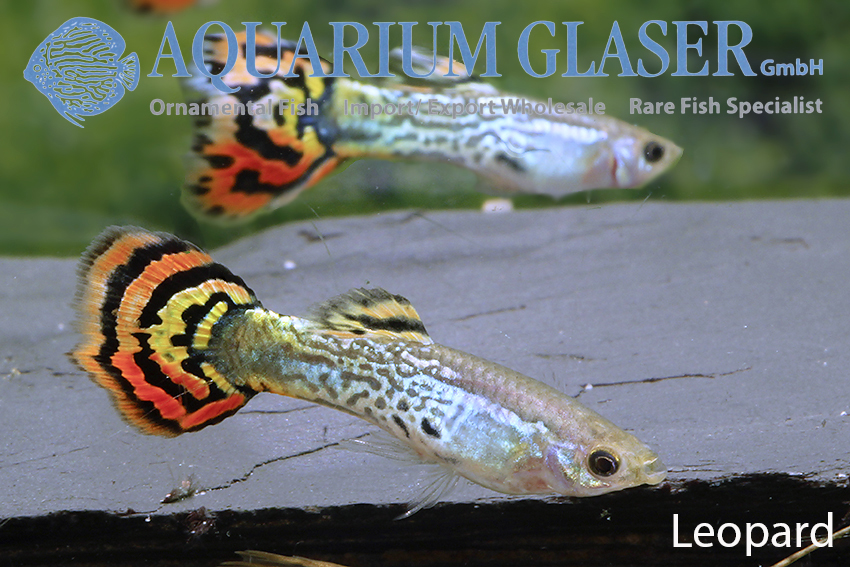
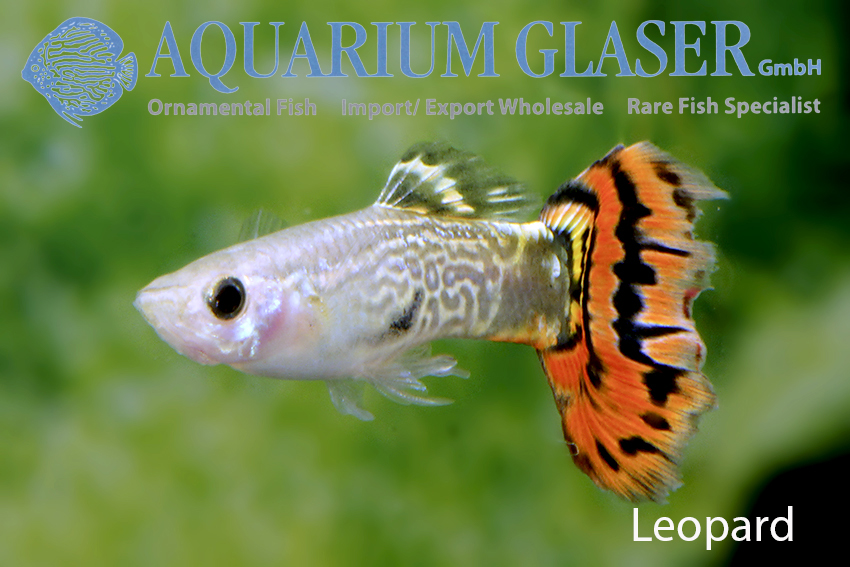
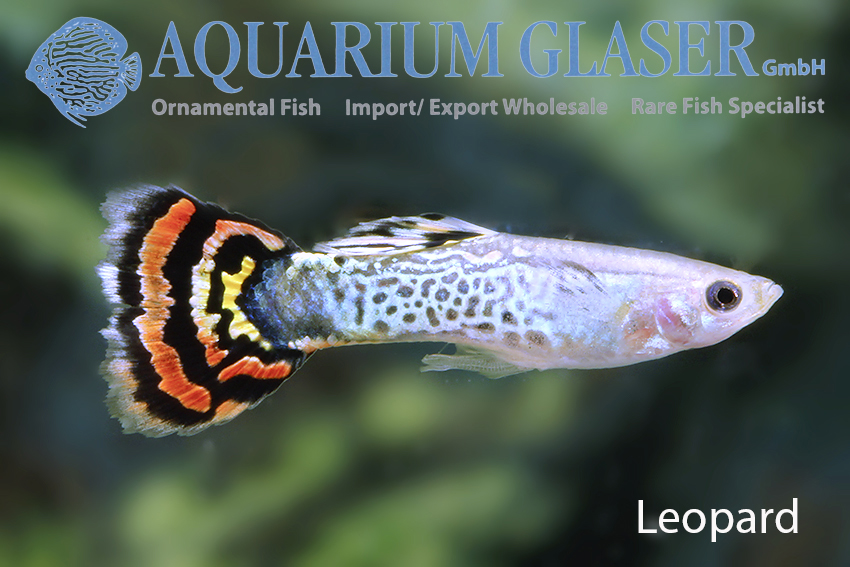
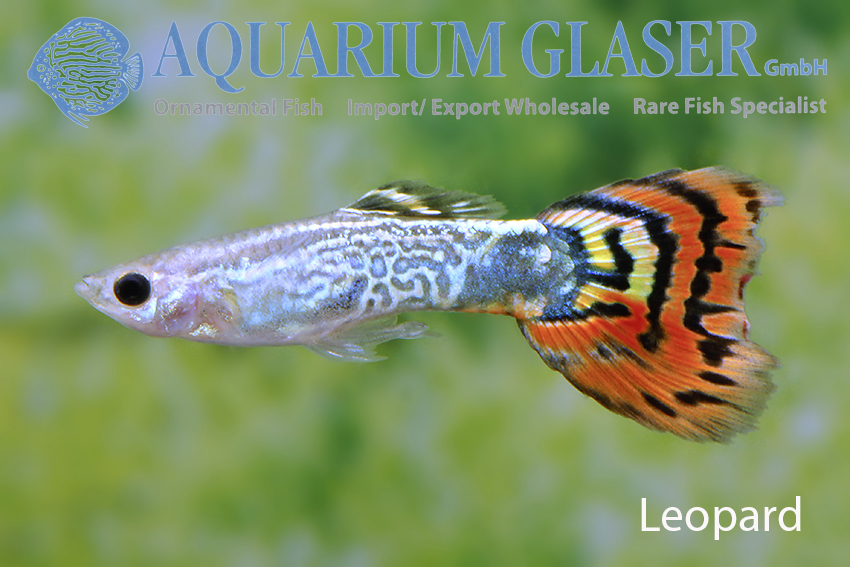
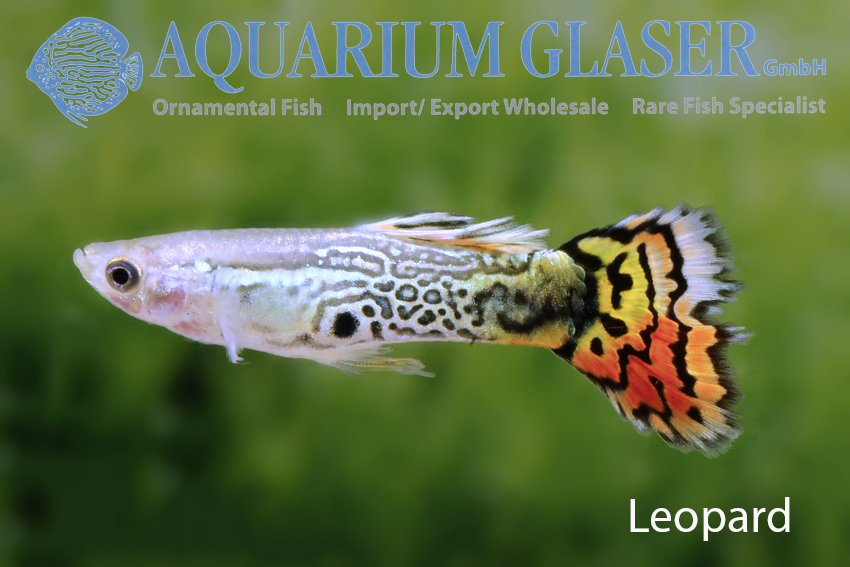
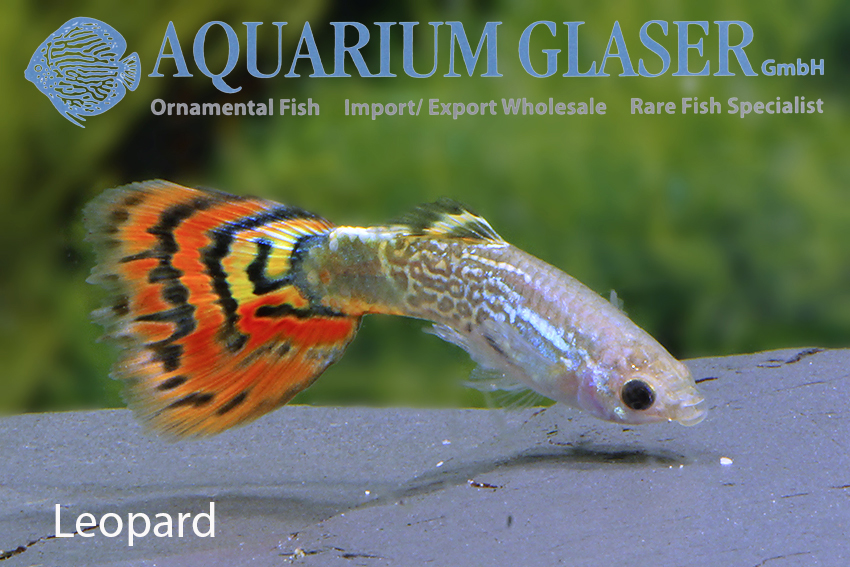
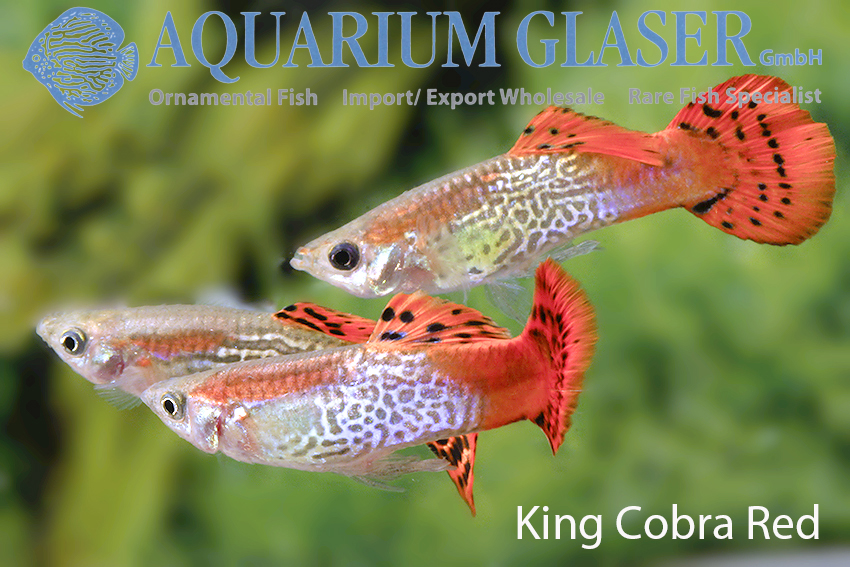
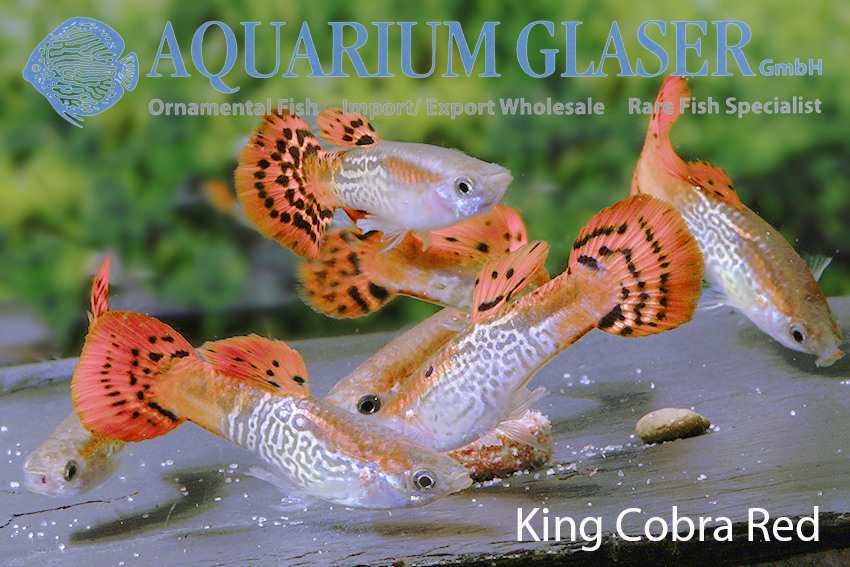
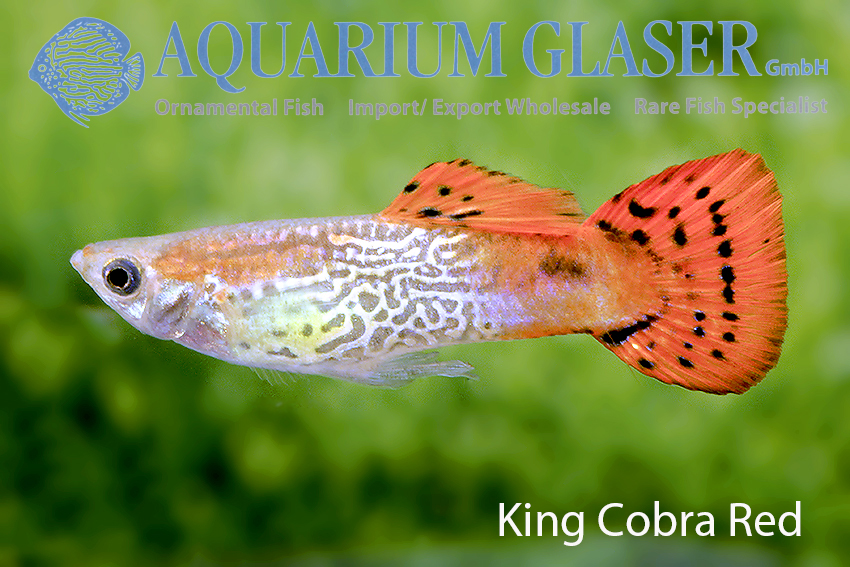
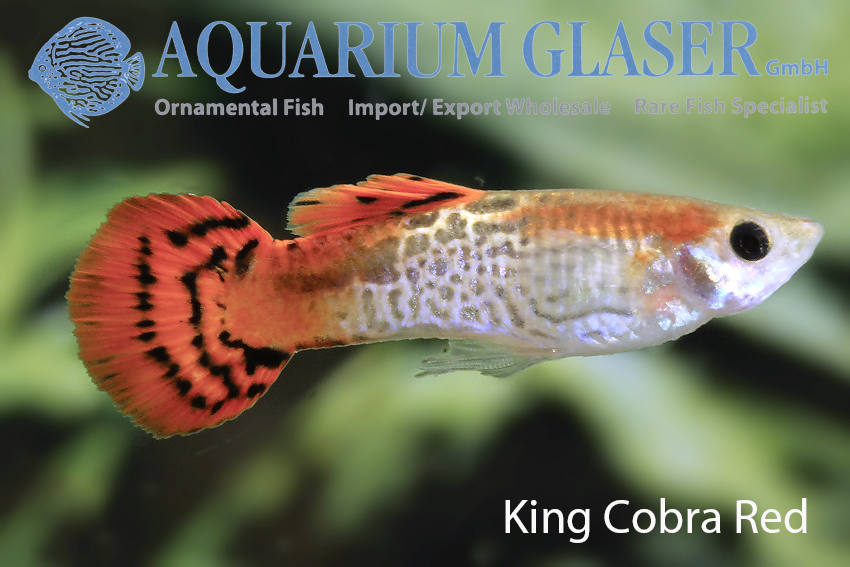
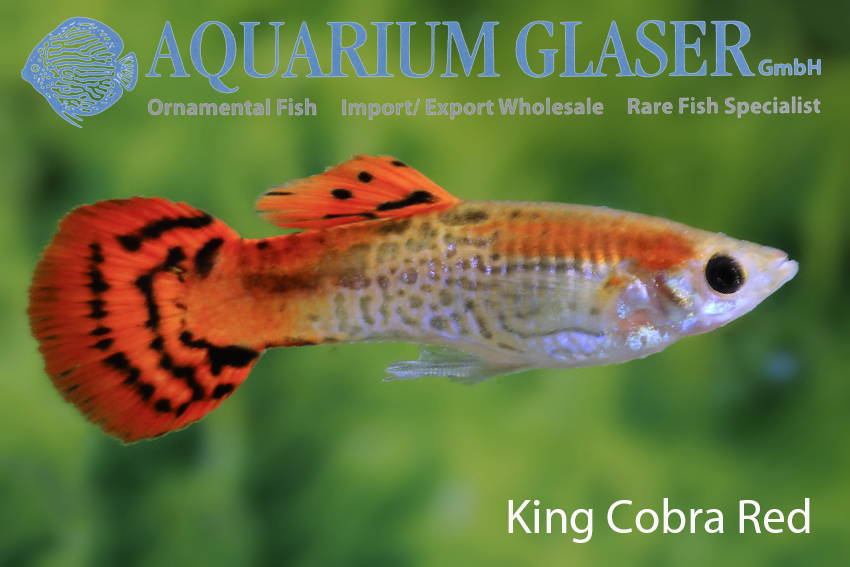
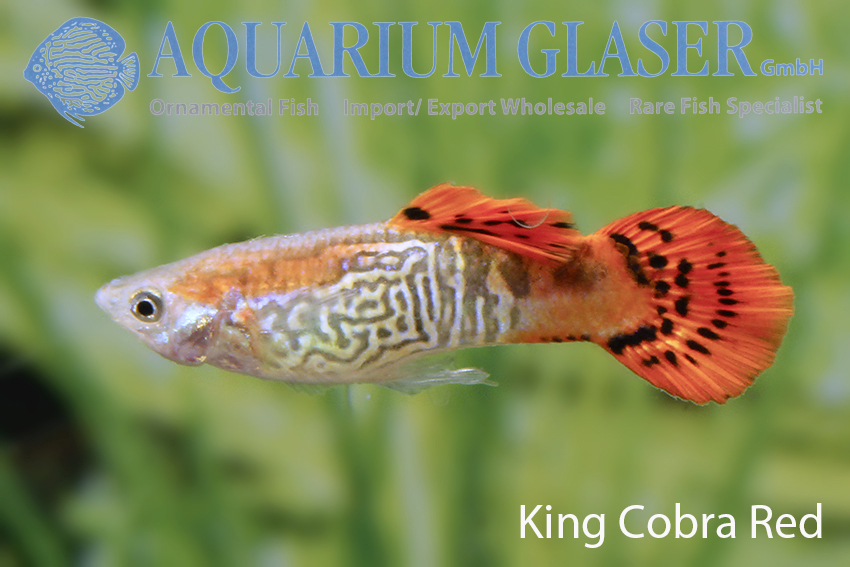
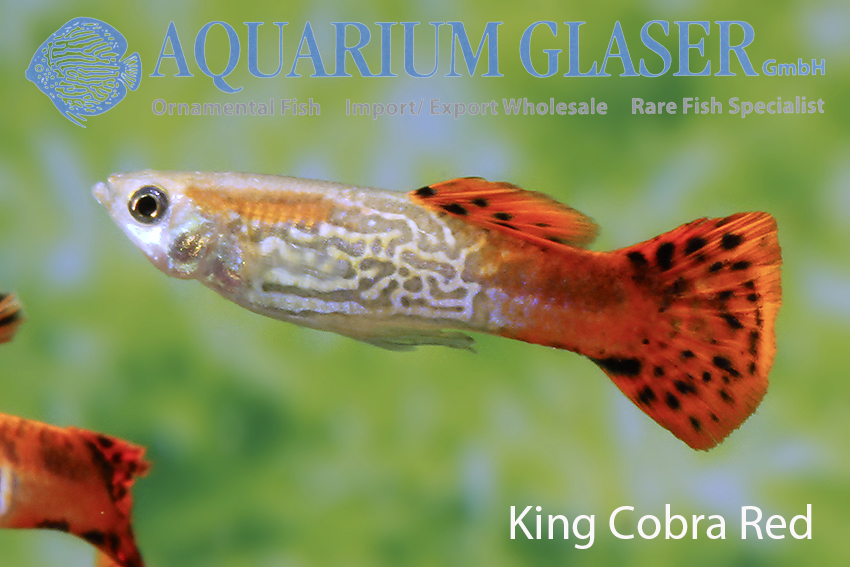
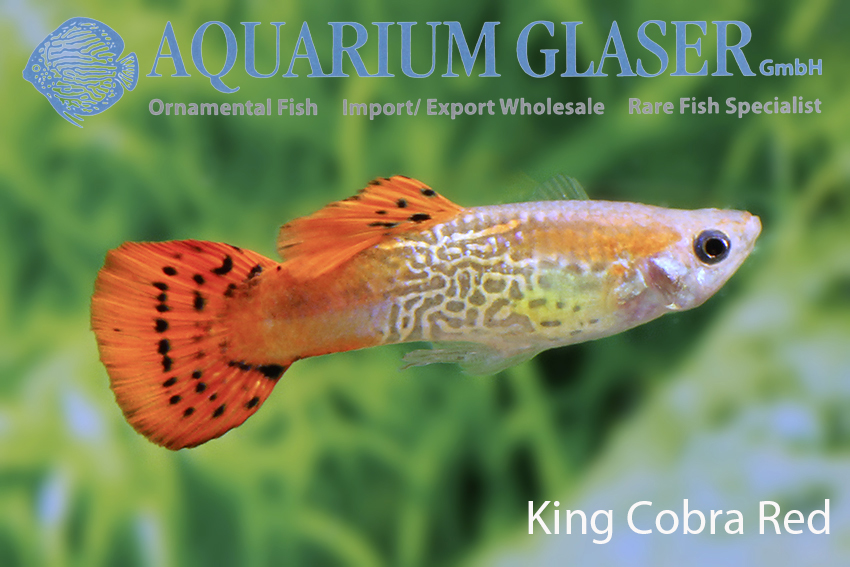
The Filigran Guppys belong to the most popular Guppy forms. They have a body pattern of squiggles and dots, which is also called “Snakeskin” or King Cobra. This body pattern sometimes appears in wild Guppys, but it was not until the 1950s that it received more attention and was genetically characterized by M. Dzwillo in 1959. It is a gene localized on the Y chromosome, which only the male possesses. This makes breeding with filigree pattern relatively easy, since each son inherits this gene from the father. The real breeding art is to get this pattern in beautiful expression on the fish and this is now again anything but easy.
We always have different filigran guppys in the stock, very recently especially beautiful “King Cobra Red”, a blond fish with a rust red dorsal stripe starting behind the eye, a rust red caudal peduncle and orange red caudal fins decorated with thin black stripes and “Leopard”, which are filigran guppies with carpet pattern in the caudal fin.
For our customers: Leopard has 418493, King Cobra Red 418473 on our stock list. Please note that we only supply wholesale.
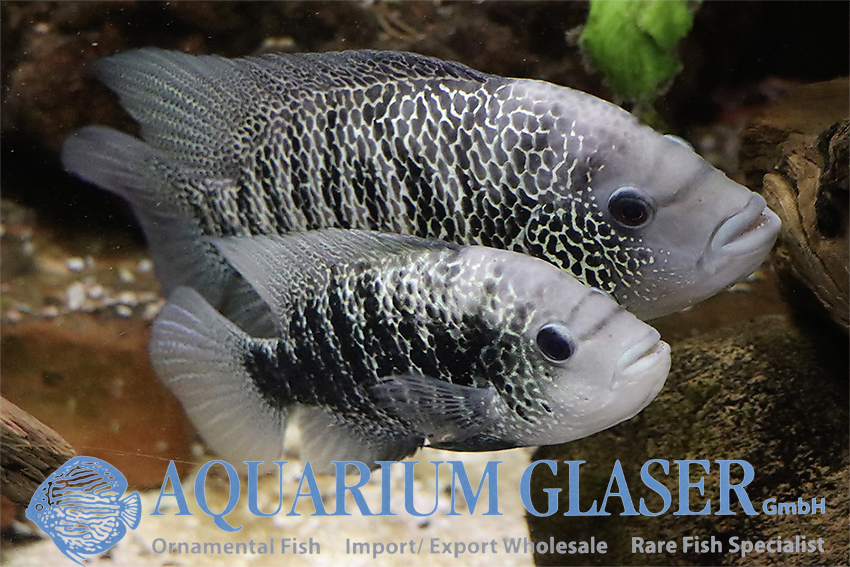
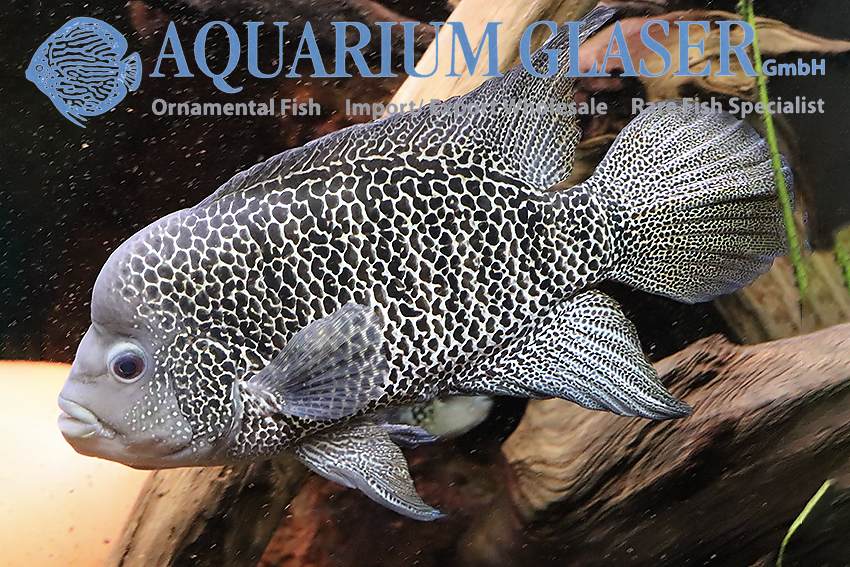
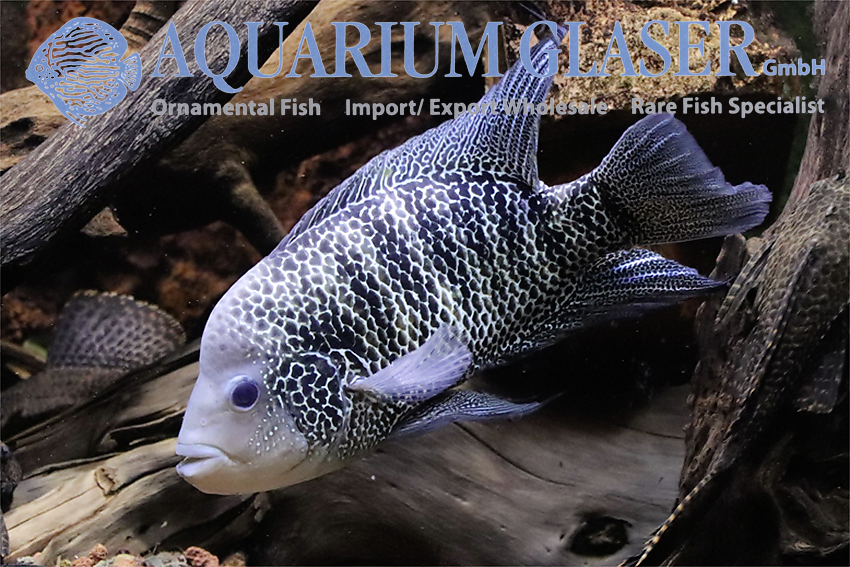
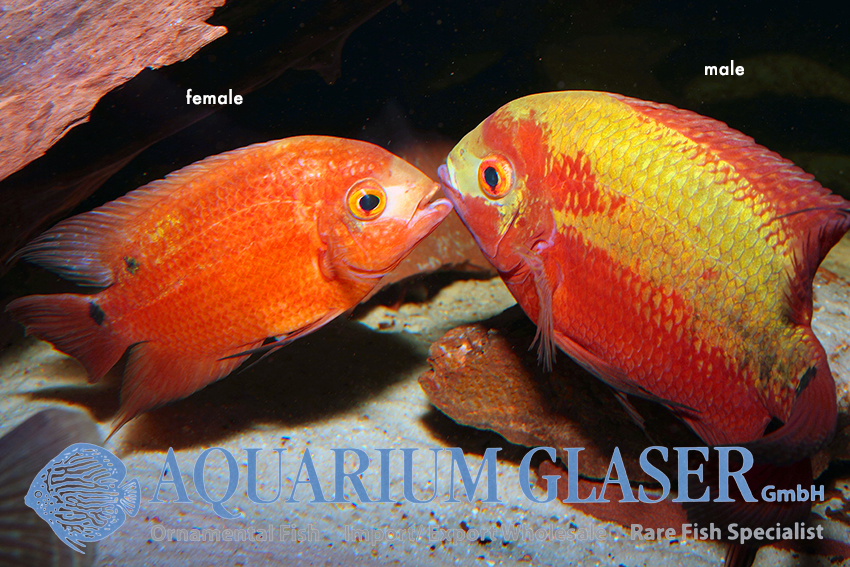
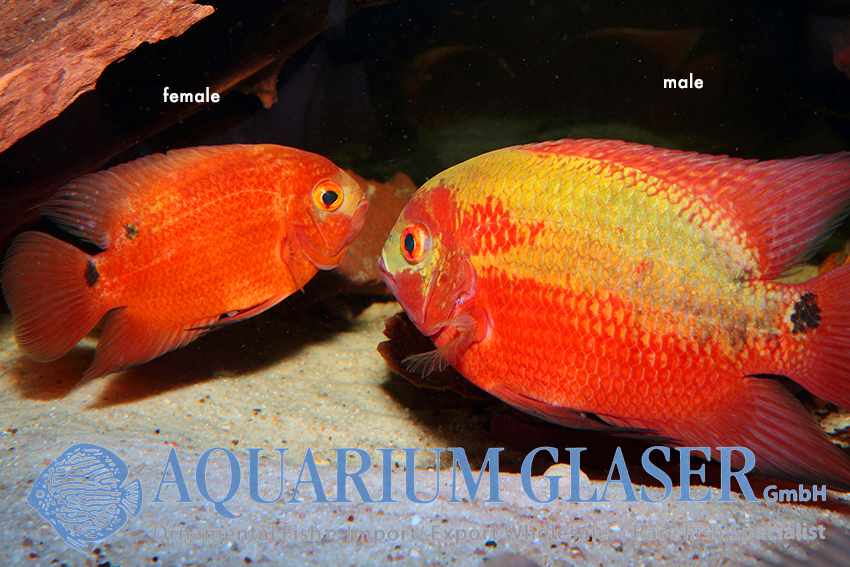
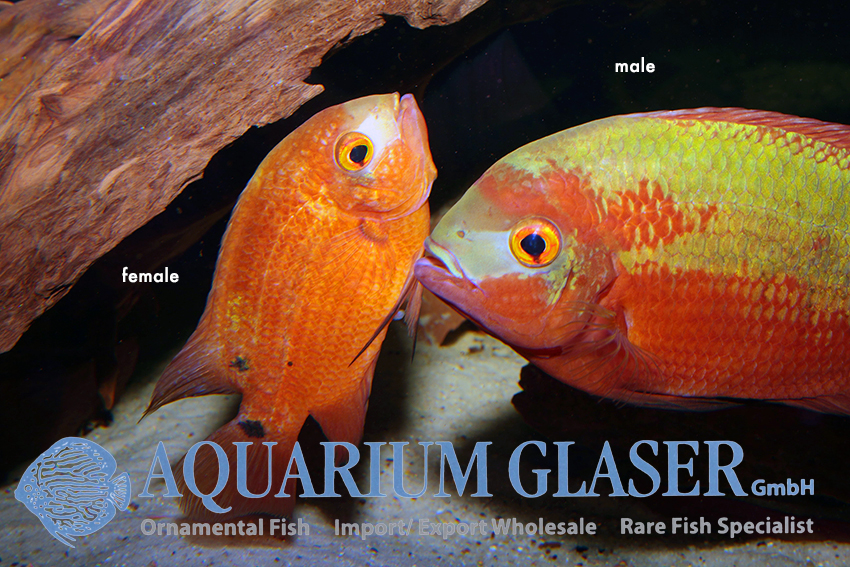
The Emerald cichlid has become a bit out of fashion. This is a quite sad thing, for this impressive large cichlid – males can become up to 30 cm long, females always stay much smaller – is one of the most beautiful species of cichlid of South America.
Once more we can offer now German bred specimens of the population from the Rio Oyapoc. The splendid red colours makes the look a an artifical sport, but they are a true wild form!
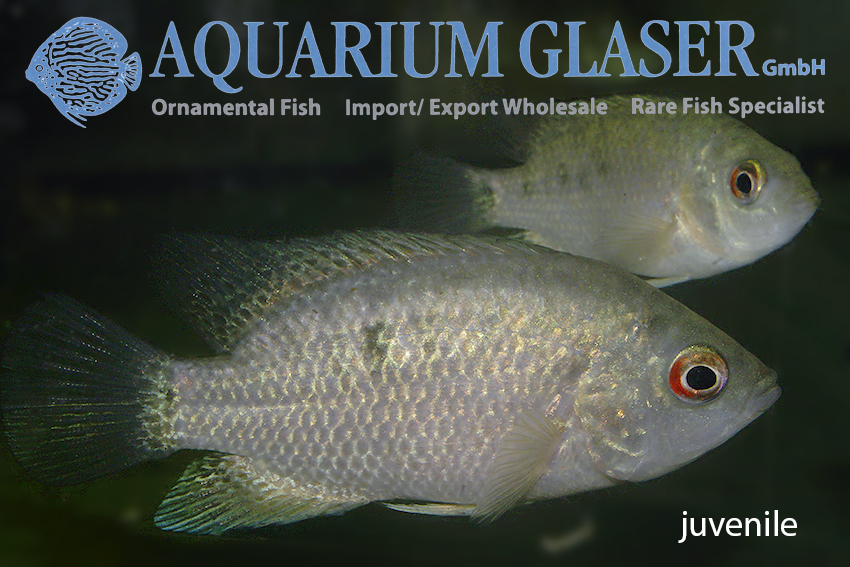
Juveniles, as we offer them, are of course still relatively colorless, but even with them the reddish coloration of the fins already shows from which stable they come. The young animals almost always show a longitudinal stripe, sometimes additionally a dot, the dot can be faded out or in within seconds. Juveniles should always be kept in a troop, they need the company of their peers and like to stand – like flag cichlids (Mesonauta) – slightly slanted in the water, with the head pointing upwards.
For our customers: the fish have code 683082 on our stocklist. Please note that we exclusively supply the wholesale trade.
Lexicon: Hypselecara: means “deep bodied Acara”; Acara is the Tupi word for cichlid. temporalis: means “with a high forehead”.
Common name: Emerald cichlid
Text: Frank Schäfer, photos: Thomas Weidner & Frank Schäfer
The red highfin sucker is a classic, which found its lovers long before the invention of the L-numbers. Juveniles are really adorable and excellent algae killers. In addition they look very beautiful. Since this catfish easily grows to 30-40 cm in length, there are two camps among aquarists. Some are critical of the animal because of its achievable final size (“everyone must have fallen for it”), others use the opportunity to finally acquire the long desired large tank.
The Glyptoperichthys gibbiceps in the trade are meanwhile almost without exception offsprings from Southeast Asia. The wild species is very widespread in South America (the entire upper and middle basins of the Amazon and Orinoco : Bolivia, Brazil, Ecuador, Peru, Colombia and Venezuela), but is hardly ever imported from there.
The care of the peaceful animals is completely problem-free, if one does justice to their space requirements.
For our customers: the fish have code 285801 (4-5 cm), 285802 (5-6 cm) and 282804 (8-10cm) on our current stocklist. Please note that we only supply wholesale.
Black butterfly cichlids have been around for a few years and many breeders do an excellent job on them, so that really beautiful and healthy animals come on the market. We have now received a strain of Black Rams, in which the blue of the scales is limited to the rear half of the body (in many strains the blue extends over a whole body) and in which additionally the intensely rust-red fins are striking. We think: très chic!
For our customers: the animals have code 686833 on our stocklist. Please note that we only supply wholesale.
The beautiful Corydoras undulatus belongs to the relationship of C. elegans. Like most representatives of this group the species swims rather in free water than on the ground. Also typical for the group is that males and females differ clearly in color. In the case of C. undulatus the males become very dark with bright points.
Corydoras undulatus comes to us from Paraguay and grows 5-6 cm long. The species has some siblings: C88 from the Mato Grosso in Brazil is very similar and also C. bilineatus from Bolivia is a species that can be easily confused with C. undulatus.
For our customers: the fish have code 248004 on our stocklist. Please note that we only supply wholesale.
From Paraguay we regularly receive shipments of the small whiptail catfishes of the genus Rineloricaria. No less than 65 species are currently recognized, which makes identification in many cases almost impossible without knowledge of their origin. But in the case of Paraguay, there is a recent revision of the species known from this river system by Vera-Alcaraz et al. (2008), so at least trying to determine the exact species name is not just a waste of time.
Mostly, the whiptail catfishes destined for export are collected from Paraguay not far from the capital Asunción. From there three species can be expected: R. aurata, R. lanceolata and R. parva. The technical species differences are in the number and arrangement of the body plates, but the three species are also easily recognized by color: R. lanceolata has a dorsal fin that is darkly colored in the anterior part (see https://www.aquariumglaser.de/en/fish-archives/rineloricaria_lanceolata_en/), in R. parva the pectoral fins are distinctly banded, and in R. aurata both fins are without conspicuous color markings. Incidentally, R. aurata was described using an atypical, solid yellow specimen. Normally the species has the gray-brown coloration usual for Rineloricaria with 4-5 narrow, dark bands across the back starting at the dorsal fin (much broader in R. parva).
Our imports consist therefore of more than 90% R. parva and some R. lanceolata as bycatch. Fishes clearly belonging to R. aurata have not been imported so far or at least we have not noticed them.
The care and breeding of these whiptail catfishes, which usually grow to a maximum length of 12 cm, is easy. You have to provide them with sandy soil in places and a good amount of vegetable food (lettuce, spinach, dandelion etc. frosted or briefly scalded, as well as flake food on a vegetable basis). They are peaceful contemporaries. As with all fish from southern South America, the water temperature should not be kept the same all year round, but cool periods (18-22°C) should be alternated with warmer ones (24-28°C) throughout the year (several months at a time).
For our customers: the animals have code 288803 on our stocklist. please note that we only supply wholesale.
Literature. Vera-Alcaraz, H. S., C. S. Pavanelli & C. H. Zawadzki (2012): Taxonomic revision of the Rineloricaria species (Siluriformes: Loricariidae) from the Paraguay River basin. Neotropical Ichthyology v. 10 (no. 2): 285-311.
This extremely attractive Ancistrus is a breeding form. The actual LDA 16 is a wild form imported in 1994 from Brazil (Rio Puraqequara, a tributary of the Rio Guamá, which in turn is a tributary of the Rio Tocantins) and is uniformly purple-brown in color. We do not know if the orange-blotched Ancistrus descended from LDA 16, but we do not think so. It is rather the further development of the breeding form, which was introduced in 1996 by Ralf Paul in AqualogNews No6 as “Tortoiseshell Ancistrus”, which must have existed at that time already longer and is probably identical with the common “Aquarium Ancistrus“.
The care of the “Orange Brown”, in which every single animal is individually differently patterned, succeeds therefore every beginner in the aquaristics without problems. The only reason why these pretty loricariid catfishes are so rare in the trade, is probably that the clearly smaller number of eggs per clutch (approx. 60), than in the usual “Aquarium Ancistrus“ (up to 200).
For our customers: the animals have code 26480-LDA 016-0 (3 cm) and 26480-LDA 016-1 (4-5 cm) on our stocklist. Please note that we supply only wholesale.
Usually the different species of banded Coolie loaches (Pangio kuhlii, P. semicincta, P. myersi, P. shelfordi, P. alternans, P. cuneovirgata, P. malayana) are not distinguished in the trade because they are so variable in color and are often imported mixed. The sorting of Coolie loach is an activity you don’t want your worst enemy to do, and it’s no fun for the animals either. That’s why you leave it and title everything as “kuhlii”.
But no rule without exception. Now we have received the adorable Dwarf coolie, Pangio cuneovirgata, almost “pure of variety” (only a few small P. semicincta are in between) from Thailand. These cute miniature loaches grow to only 4 cm long, rarely large females even reach 5 cm. They are perfect dwarf loaches for miniature aquariums. Since all Coolie loach are initially somewhat sensitive to infectious diseases and do not tolerate medications well, you should provide a boggy environment with dead leaves, alder suppositories and peat. Then the acclimation succeeds well and you can have many years of pleasure with these amazingly long-lived dwarfs.
For our customers: the animals have code 441058 on our stocklist. Please note that we only supply wholesale.
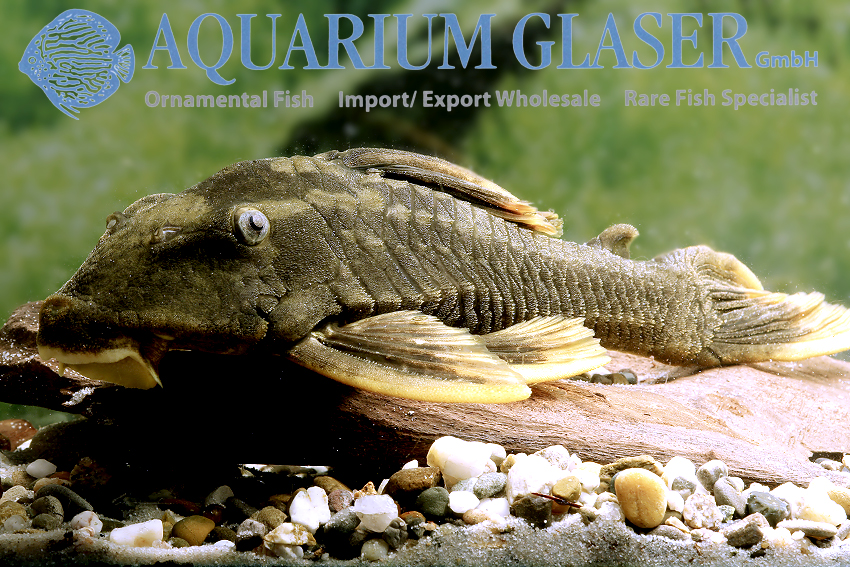
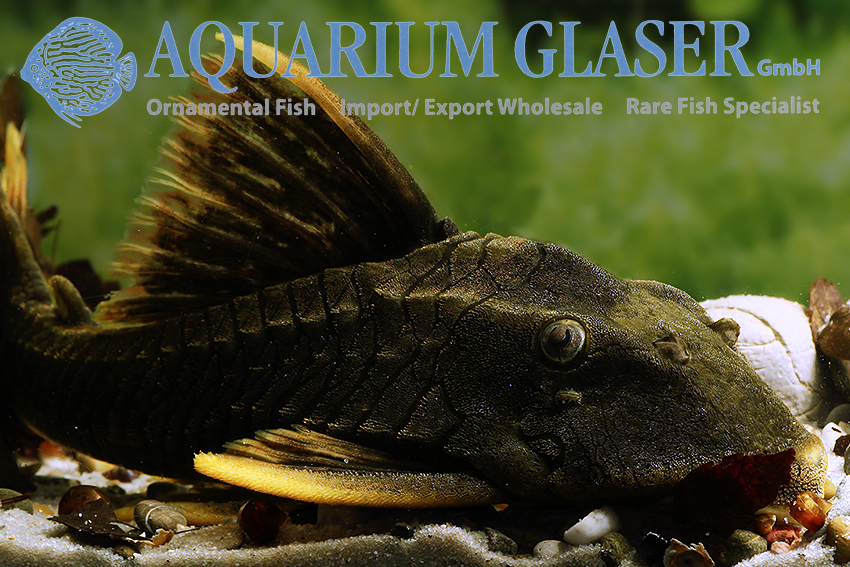
Not less than 148 species are counted to the genus Hypostomus, but no five of them appear more often in the trade. Special is of course H. luteus with its sail-like dorsal fin and the bright yellow coloration, but most species are “plecos”, brown or gray with black spots. In addition, most species grow quite large (20-40 cm) for normal aquariums.
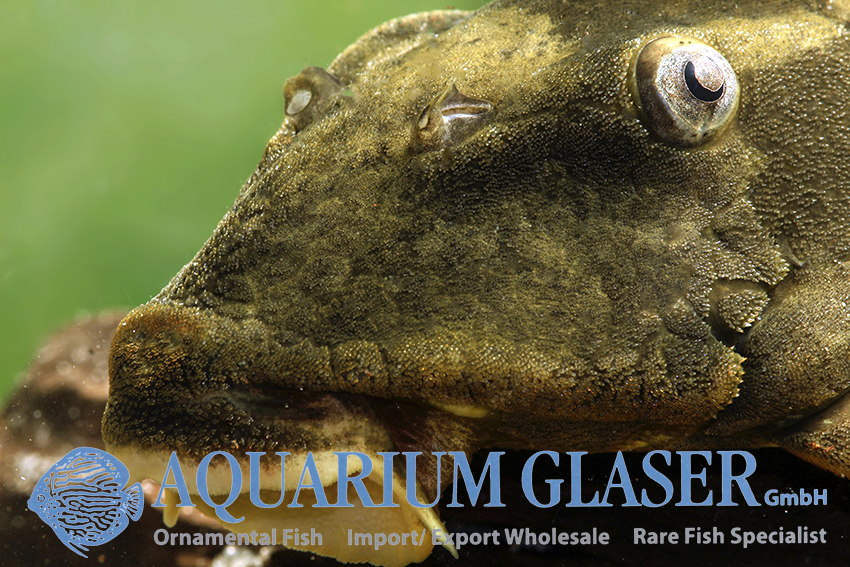
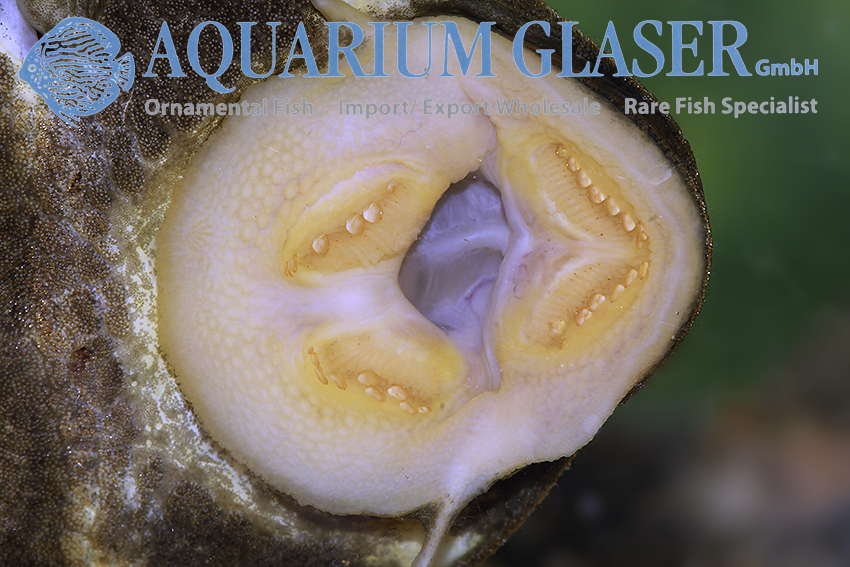
An exception is Hypostomus roseopunctatus. It comes, like also H. luteus, from the south of Brazil, as well as from Paraguay and further areas of the inflows of the rivers La Plata and Rio Uruguay. Whether the species is really identical with L311, which was exported from the Brazilian state of Bahia, which is much further north, is not clear, but in the trade one hardly cares. Clear recognition mark of the only extremely rarely imported species is the small number of teeth per maxillary branch, as our animals show. The pink stippling is also very characteristic.
Hypostomus roseopunctatus becomes about 25 cm long, therefore our specimens are almost fully grown. The two fish shown in the photo are probably a pair due to the physical differences. These catfishes are very tolerant among each other and towards other fishes anyway.
For our customers: the fish have code 26480-L 311-7 on our stocklist. Please note that we only supply wholesale.
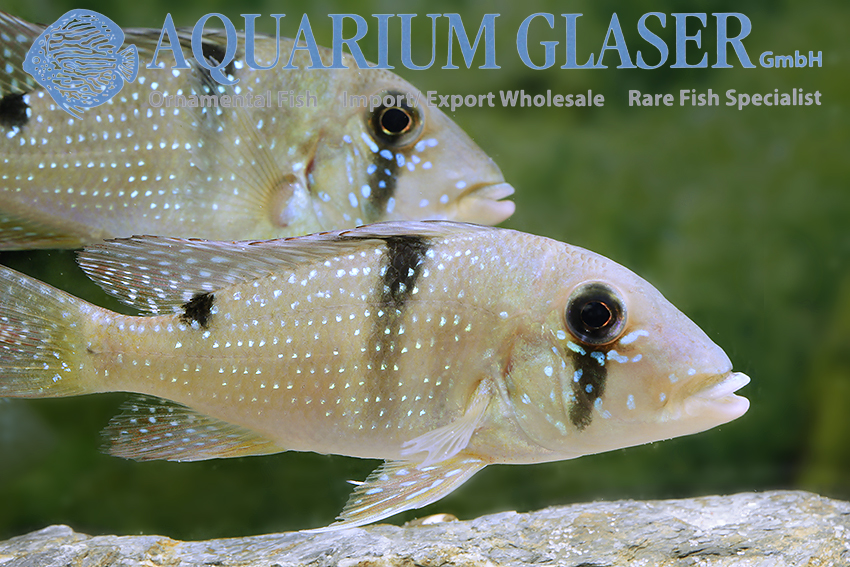
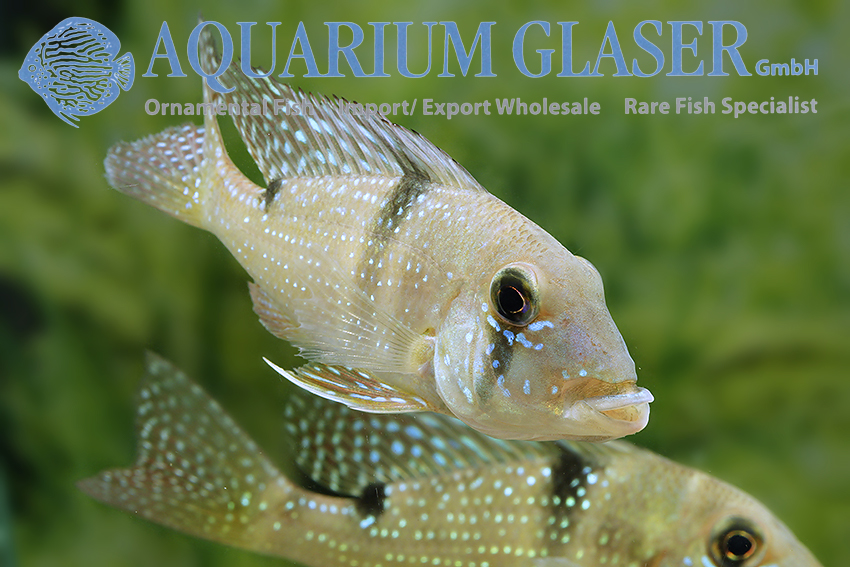
In very small numbers we have received this beautiful Geophagus as German offspring. The species reaches a maximum length of 20-25 cm and is exclusively found in the inlet of the Marowijne River, the border river between French Guyana and Suriname. One of the tributaries of the Marowijne is the Maroni River, known to cichlid enthusiasts for the keyhole cichlid, Cleithracara maronii, named after this river. The Marowijne and its tributaries are not easy to travel to, ornamental fishers never get there, therefore G. harreri was a pipe dream of cichlid fans for a long time. Only in 1998 traveling aquarists were able to bring some animals from the Maroni and breed them. The description specimens of the species scientifically determined in 1976 were collected by Jean-Pierre Gosse, King Leopold III and Heinrich Harrer. The species was named in honor of the latter, known mainly for his book “Seven Years in Tibet” (made into a movie starring Brad Pitt).
Quite untypical for Geophagus is the central dark vertical body band, which reminds very much of the pattern of Guianacara. The many bright spots show already young specimens. G. harreri is considered to be a bit more aggressive than one is used to from Geophagus, but in the large aquariums, which have to be provided for such a fish anyway, this does not matter much.
For our customers: the fish have code 678103 on our stocklist. Please note that we supply only wholesale.
The South American darters of the genus Characidium are unfortunately almost indeterminable. There is no current revision of the 95 described species, but additional species are constantly being described and it is known that there are still numerous scientifically unrecorded species. In aquaristics one therefore helps oneself by simply calling everything “Characidium fasciatum”, well knowing that this is wrong, and additionally numbering it.
The species, which we currently got again via Rio de Janeiro, is imported from time to time since the 1990s. In the Photo-Collection of Aqualog it is named as sp. V. Of all described species it resembles C. pterostictum the most, mainly because of the caudal fin pattern, which is much less variable than the body pattern.
This Characidium species grows to 9-10 cm in length. Juveniles have divergent coloration, showing a dark longitudinal band with fairly regular streaking; however, the caudal fin coloration is already distinctly species-typical, as is the conspicuous yellow patch on the edge of the gill cover.
South American darters are extremely entertaining fish, always curiously observing their surroundings. They rarely swim in open water, usually sitting, supported by their large pectoral fins, on some vantage point looking around. These tetras are among the few fish that can move their heads. Since each animal builds its own small territory, the aquarium should not be too small and well structured. South American darters can be fed with frozen and dry food without any problems, live food of all kinds is of course also taken with pleasure. Temporarily (a few weeks a year) this species should be kept cool (16-20°C), no demands are made on the water composition.
The Rio Madeira is a right tributary of the Amazon River and is considered the largest tributary in the world. Its origin is in Bolivia where it is formed from the confluence of the Rio Beni and the Rio Marmoré. It flows into the Amazon in Brazil at Itacoatiara. The Rio Madeira is a white water river, purely from a geographical point of view one would expect the Heros species H. efasciatus, H. severus and H. spurius there. Concerning the dark body bands H. sp. Madeira corresponds most closely to H. efasciatus, but the coloration deviates quite considerably from the known color forms of this species. Such a pigeon blue ground color, which is already shown by juveniles and which becomes more and more intense with age, is not shown by any other Heros species known so far.
Like all Heros species this one grows well over 15 cm long, in large aquariums you can expect 5 cm more with these long-lived animals. There are known to be two brood care strategies in Heros, mouth brooding and open brooding. H. sp. Madeira is an open brooder, both parents care together for the extensive brood. In sexually mature animals, the sexes can be easily distinguished by the different facial markings; in juveniles, sex differentiation is not possible. Heros sp. Madeira originally came to Germany on private initiative; our animals are German offspring.
For our customers: the animals have code 682969 on our stocklist. Please note that we only supply to wholesalers.
The magnificent cactus catfish L273 Titanic, up to 30 cm long, originates from the Rio Tapajós. Its first import in 1998 was a sensation. Interesting about the animals, which are allowed to be exported from Brazil again since some time, is the very individual body pattern. All cactus catfishes are carnivores; towards non-species fishes they are usually peaceful, but against conspecifics they become more and more quarrelsome with increasing age.
This is the main reason why cactus catfishes are still quite rarely bred. The mating behavior is – to put it mildly – very rough and the poor females look like they have been treated with a wire brush after a mating. This heals quickly, but a breeding attempt can be fatal to the female if she is not truly ready to spawn.
We currently have L273 in various sizes in the stock.
For our customers: the animals have code 26480-L 273-2 (5-7 cm), 26480-L 273-4 (9-12 cm), 26480-L 273-7 (18-22 cm) and 26480-L 273-8 (20-25 cm) on our stock list. Please note that we only supply wholesale. Only available in small quantities!
The catfish Zungaro zungaro belongs to the largest catfish species of South America. There were all kinds of debates about its name, for a long time it sailed under Pseudopimelodus zungaro or Paulicea luetkeni. Because of its gigantic size (length up to 140 cm, weight up to 50 kg) the species is difficult to study and it undergoes an enormous change of color from a leopard-like patterned juvenile to a monochrome gray giant.
DNA studies suggest that there are other species besides the two generally recognized Zungaro species (Z. zungaro from the Amazon and Orinoco rivers and Z. jahu, which grows to exactly the same size, from the Paraná-Paraguay system).
We have now imported from Brazil some “babies” of 15-20 cm length, which still carry the nice juvenile markings. Of course such giants are only suitable for zoos, show aquariums and specialists with the corresponding large tanks.
For our customers: the fish have code 299805 on our stocklist. Please note that we only supply wholesale.
The pike cichlids (Crenicichla) are with 94 accepted species (and there are still a large number of undescribed ones) the most species-rich genus of cichlids at all. One of the most distinctly different species is Crenicichla jegui from the Rio Tocantins drainage. There the fish lives very hidden and was therefore discovered only when the Tucuri dam was built. This created shallow residual pools in the area of the former rapids, where a few specimens were found. The scientific description was made in 1986.
The up to 30 cm long species is an absolute rarity in the hobby. They are animals with strongly reduced swim bladder, therefore they live a bottom-bound life. The teeth show clearly: C. jegui is a predator. Fish, fish pieces, shrimps etc. form its food in the aquarium. The location/shelter is defended vigorously against conspecifics. This looks brutal, but hardly leads to injuries. However, a prerequisite for keeping several specimens is a very large aquarium, plenty of hiding places and strong current.
We currently have some 10-12 cm long wild caught specimens in the stock. Sex differences are not yet recognizable in this size, sexually mature females get a bright red stripe in the rear part of the dorsal fin.
For our customers: the animals have code 669062 on our stocklist. Please note that we only supply wholesale.
From the currently seven accepted species of the genus Giradinus only G. metallicus and occasionally G. falcatus are offered in the trade. We have now received a small number of G. uninotatus from a breeder. They are really no color miracle, but their pretty apricot color is quite interesting.
The species oirginates from Cuba. The name was given to this livebearer already in 1860, referring to the fact that many of the males (but by no means all) develop a black spot at the base of the gonopodium ( = the mating organ).
The peaceful animals usually grow 3-5 cm long, but they grow throughout their life and so old ladies (the females always grow larger than the males) can sometimes grow over 8 cm.
For our customers: the animals have 416952 on our stocklist. Please note that we only supply wholesale. Only available in small numbers!
We have received some beautifully marked yellowseam catfish. This catfish originates from the middle Rio Jamanxin in Brazil and has not yet been correctly (i.e. scientifically) identified, neither in terms of genus nor in terms of species. However, it is quite possible that this catfish has already been scientifically described; young animals are quite inconspicuous, they are monochromatic brown and do not yet have the distinctive yellow fin seams.
Also the dentition of young animals is “normal”, so it corresponds to the usual dentition scheme of Hypostomus and Cochliodon species, while the beautiful adult animals have a Panaque dentition. But in contrast to Panaque, L360 have no spreadable interopercularodontodes.
Apart from the expected size – the animals will certainly grow over 30 cm long – they are trouble-free, peaceful animals. One should give them, like Panaque, a lot of soft dead wood as food basis in the aquarium.
For our customers: the animals have code 26480-L 360-5 (18-21 cm) on our stocklist. Please note that we only supply to wholesalers.
For the first time we can offer this magnificent breeding form of the black paradise fish. Our breeder writes about it:
How did I become aware of these fish:
In 2019, I saw a picture of blue paradise fish from Vietnam in a Facebook group for paradise fish lovers by chance. Being skeptical at first I did some further research on Facebook and found a few Vietnamese posting photos of such animals. These animals immediately fascinated me as a labyrinth fish lover and I started looking for a breeder in Vietnam who would sell them to me.
How did I get this paradise fish:
After some time, I had located a breeder in Vietnam on Facebook. At that time, the fish were quite new even in Vietnam and only known among hobbyists for a few years. He told me that the variety is called Royal Blue and it should be a breeding form from the Macropodus spechti. Due to the still high price in Asia, the small quantity I wanted to purchase as an individual, and the resulting single animal shipping, each fish would cost a fortune. I decided to import 3 pairs through a shipping agent at over 100 Euros each to still have replacement animals in case of any failures. Although this import meant a high risk for me, I decided to send money to the Vietnamese via Western Union and trust in the good in people.
Arrival and breeding:
Thank God, a few weeks later 6 young animals arrived at my place alive. They were as white as chalk and swam nervously up and down the glass of the quarantine aquarium. Also live food in the form of water fleas and cyclops, which I offered, had to be newly recognized until they ate it. As far as I have learned, paradise fish in Vietnam are mainly fed rice worms and Tubifex. Tubifex I have also tried, but made rather bad experience. Therefore, I suspect that there are either other types of Tubifex or fresher quality in Vietnam. Feeding high quality granules, live and frozen Artemia, Cyclops and water fleas seems to suit the paradise fish best with me.
After some time the paradise fish showed a nice, strong dark blue color and I could start the first pairs for breeding. Unfortunately this was unsuccessful at first, because the eggs were not fertilized and did not develop. That started well…
A few weeks later it worked and I had the first broods swimming, which I fed with infusoria and after about 1 week switched to freshly hatched Artemia. After a few weeks the fry started to develop color and I was curious if I had got purebred animals. To my great joy all fry became blue! These offspring now showed completely normal behavior and were accustomed by me to commercial food.
After a first post in the Facebook group of the IGL and the overwhelming response it was clear to me that this variety should be made available to a larger group of customers.
So much for our breeder. We have nothing to add to this, except to point out that the males of this form develop very lush finwork.
For our customers: the fish have code 425613 on our stocklist. Please note that we exclusively supply the wholesale trade.
The changed legal situation in Brazil now makes the import of several species from the south of Brazil possible again, which for many years were only available as offspring, among them the magnificent Scleromystax barbatus (formerly Corydoras b.). We have been able to import a good number of wonderful, fully grown specimens. For more information on the species, please see https://www.aquariumglaser.de/en/fish-archives/scleromystax-barbatus/
The sexes are extremely differently marked in S. barbatus; the easiest way to go is by the light-colored forehead blaze, which only the male shows. By the way, the „Banded Coryoras“ is one of the very few species among the typical armored catfishes, which show rudimentary brood care. The male defends the spawning ground for some time.
For our customers: the fish have code 224006 on our stocklist. Please note that we supply exclusively to wholesalers.
The dwarf cichlids of the genus Biotoecus were shrouded in mystery for decades. The first species, B. opercularis, was scientifically described as early as 1875. It originated from the Amazon River basin in Brazil, a well-collected area for aquaristic purposes, and yet the first import was not accomplished until the mid-1980s and early 1990s. The species was considered one of the most delicate aquarium fishes around. Its nice pastel colors and unusual breeding behavior – as sand dwellers, the fish like to build small “castles” for egg laying – nevertheless made it a sought-after keeper among specialists.
In 1989 a second species of the genus, B. dicentrarchus, was described from the Orinoco basin. Preserved animals differ from B. opercularis almost only by tiny anatomical details, which have to be examined under the microscope. Thus one looked with each of the (rare!) imports of Biotoecus very exactly whether differences were recognizable.
Nowadays Biotoecus are everything else than everyday fishes, but by far not so sensitive. The ever improving catching, transporting and keeping methods on site are the reason for this. And so both B. opercularis and B. dicentrarchus, when offered, arrive here in good to very good condition and present no one with unsolvable problems. The distinction between B. dicentrarchus and B. opercularis is very simple: B. dicentrarchus has free, extended rays in the front part of the dorsal fin, so that a “cockatoo” shape of the dorsal fin is formed here. In B. opercularis, all rays in the dorsal fin are approximately the same length.
For care a bottom of fine sand is the most important, in addition warmth (26-30°C), humic substances (from dead leaves, alder cones, peat, etc.) and if possible no or only extremely peaceful company, because Biotoecus are stress sensitive. If you now also do good water care and create low-germ conditions, you will have a lot of fun with the animals.
At the moment we have very nice B. dicentrarchus from Colombia in our stock.
For our customers: Biotoecus dicentrarchus has code 634483 on our stock list. Please note that we only supply wholesale.
This season we received especially attractive Pterophyllum leopoldi from Brazil. Unfortunately, the animals do not like the photo tank at all and show there only a fraction of the wonderful colors – a magnificent green shimmer all over the body and a very nice red tone in the back – that well acclimated animals of this form can show.
But also in “fear pallor” the fish are still very beautiful. The very distinctive teeth of this P. leopoldi are also striking, especially in the male (the larger of the two photographed specimens with higher red content in the back) very eye-catching.
For more information please see https://www.aquariumglaser.de/en/fish-archives/pterophyllum_leopoldi_en/
For our customers: the fish have code 699006 on our stocklist. Please note that we only supply the wholesale market. Only available in small quantities!
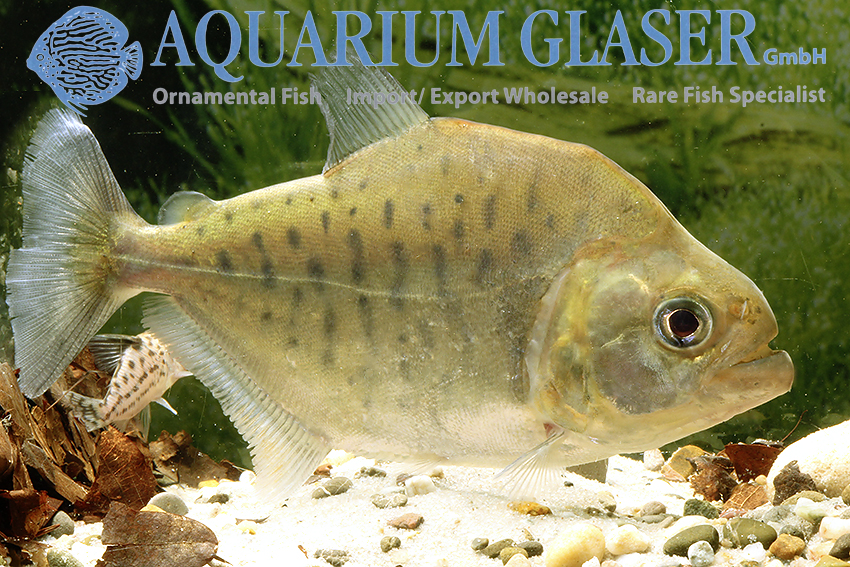
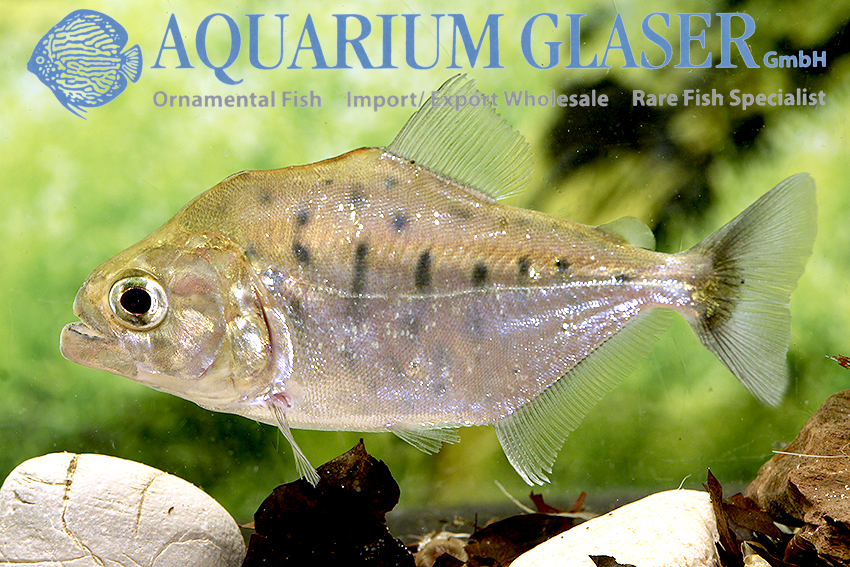
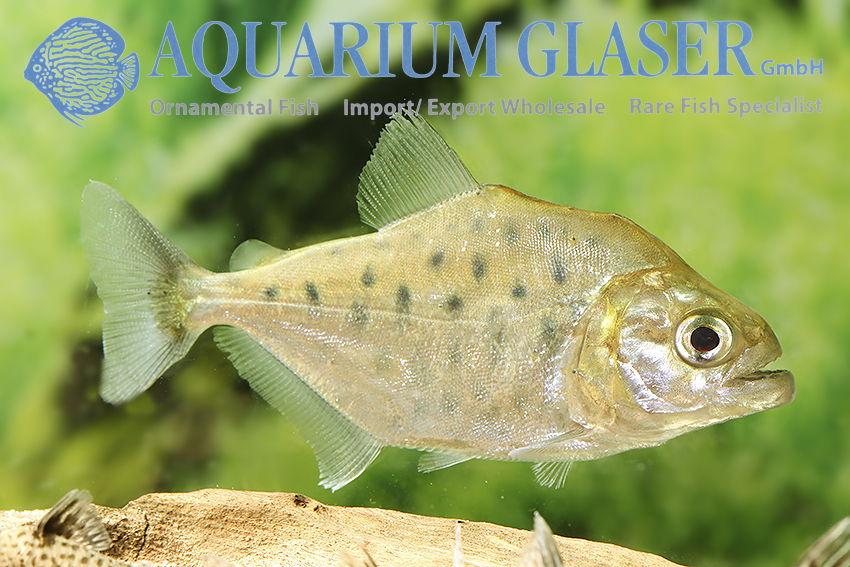
It is indicative of the difficulties in piranha identification that this widespread species, which also occurs in an area intensively collected for the aquarium hobby (namely, the Rio Negro) was not scientifically described until 1992 and, moreover, almost never appears in the hobby. The terra typica is Anavilhanas, Río Negro, Brazil.
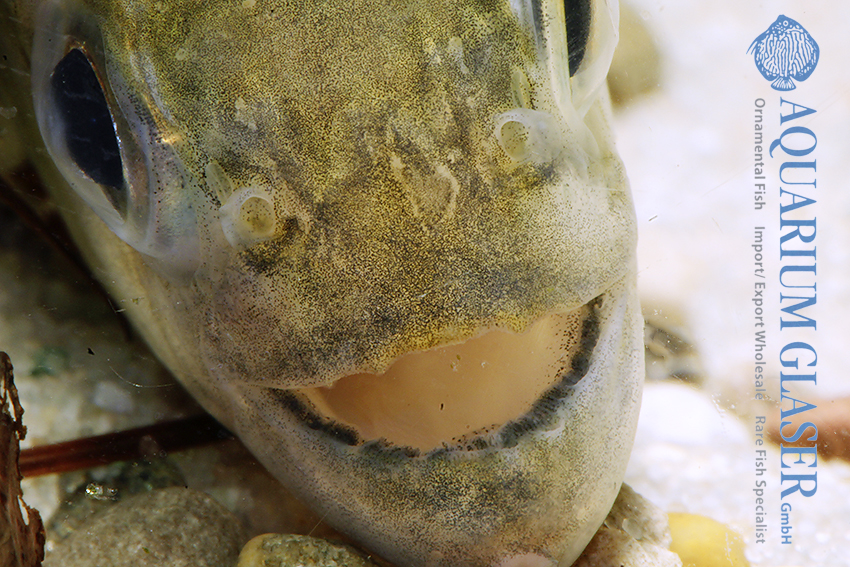
The representatives of this species undergo a dramatic change of color and shape during their life. The fish, which grows to about 30 cm in length, is quite round-backed when old and then resembles a Pygocentrus. As a juvenile, it has a peculiar head shape reminiscent of Serrasalmus manueli, with a massive, nearly horizontal lower jaw. In contrast to S. manueli, which like S. gouldingi often shows vertically elongated body dots when young (but there are also specimens with a rounded dot pattern), S. gouldingi lacks the humeral spot (= a dark, conspicuous spot immediately behind the edge of the gill cover), which is always very prominent in S. manueli, at all age stages.
Juvenile S. gouldingi have a transparent caudal fin with a black wedge at the base, making them very reminiscent of S. eigenmanni, which, however, has a prominent humeral spot. As they grow, the caudal fin becomes darker and darker and eventually is almost black except for a transparent fringe. This distinguishes S. gouldingi well from S. rhombeus, which also occurs in the Rio Negro, but always has a black fringed caudal fin. In older S. rhombeus, which, like S. gouldingi, tend to become very dark to black overall, eye color is a reliable distinguishing characteristic. S. rhombeus always has a red iris, S. gouldingi has a silvery iris.
Serrasalmus gouldingi is widely distributed in the Amazon and Orinoco, our current stocked specimens were obtained via Manaus. Outside of the spawning season the adult fish appears silvery with smoky black fins and red or yellow coloration of the gill cover area, at spawning time the entire animal darkens considerably and then appears almost completely black. Any dot patterns are only indistinctly discernible on the body of adult live animals. S. gouldingi is a typical fin eater and therefore must be kept mostly individually.
For our customers: the animals have code 292105 (10-12 cm) and 292106 (12-15 cm) on our stocklist. Please note that we only supply wholesale.
From Peru we received four specimens of a top rarity: L350. This peculiar fish does not fit any genus of loricariid catfish known to date. It originates from deep, turbid, very fast flowing water of the Peruvian Amazon, where it can only be caught with great difficulty and rarely. It is a carnivorous species whose interesting black and white mouth disc pattern is characteristic of the species. There are occasional snow-white speckles on the ventral side, and the upper side is a pure jet black. The maximum final size is unknown, but specimens 40 cm long have been offered; exporters usually count the caudal fin, but not the very long caudal fin filaments, as part of the length. Our four animals are currently 14-18 cm long.
Sometimes L350 is equated with a species that is anatomically similar to it, but unlike L350 is completely colorless: Hemiancistrus (or Peckoltia) pankimpuju. So far only two specimens of H. pankimpuju are known, and they lack any color pigment. Such bright whte animals have not been offered on the ornamental fish market so far. It is not completely excluded that the raven black L350 discolors at certain times (similar to what is known from golden Parancistrus aurantiacus). However, it does not seem very likely.
For our customers: the fish have code 26480-L 350-6 on our stocklist. Please note that we supply exclusively to wholesalers.
The changed legal situation in Brazil now makes the import of several species from the south of Brazil possible again, which for many years were only available as offspring, among them the magnificent Scleromystax barbatus (formerly Corydoras b.). We have been able to import a good number of wonderful, fully grown specimens. For more information on the species, please see https://www.aquariumglaser.de/en/fish-archives/scleromystax-barbatus/
The sexes are extremely differently marked in S. barbatus; the easiest way to go is by the light-colored forehead blaze, which only the male shows. By the way, the „Banded Coryoras“„ is one of the very few species among the typical armored catfishes, which show rudimentary brood care. The male defends the spawning ground for some time.
For our customers: the fish have code 224006 on our stocklist. Please note that we supply exclusively to wholesalers.
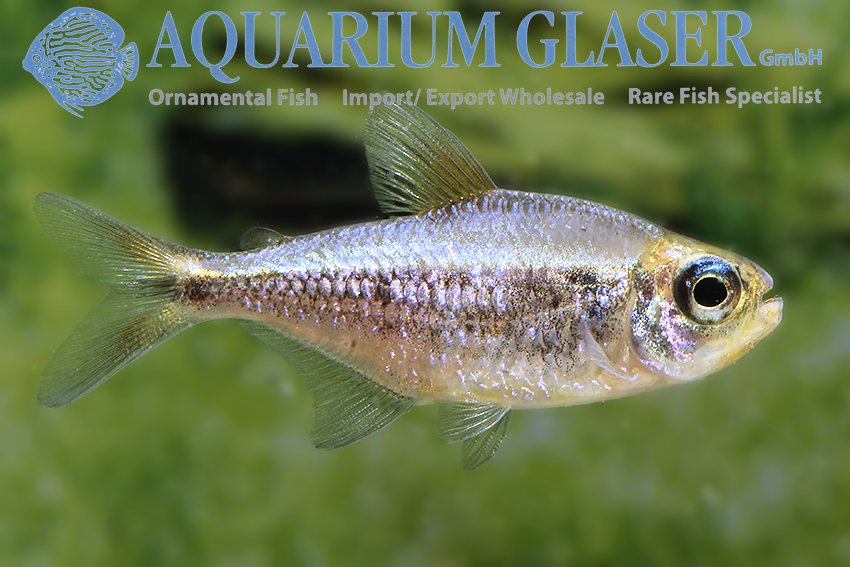
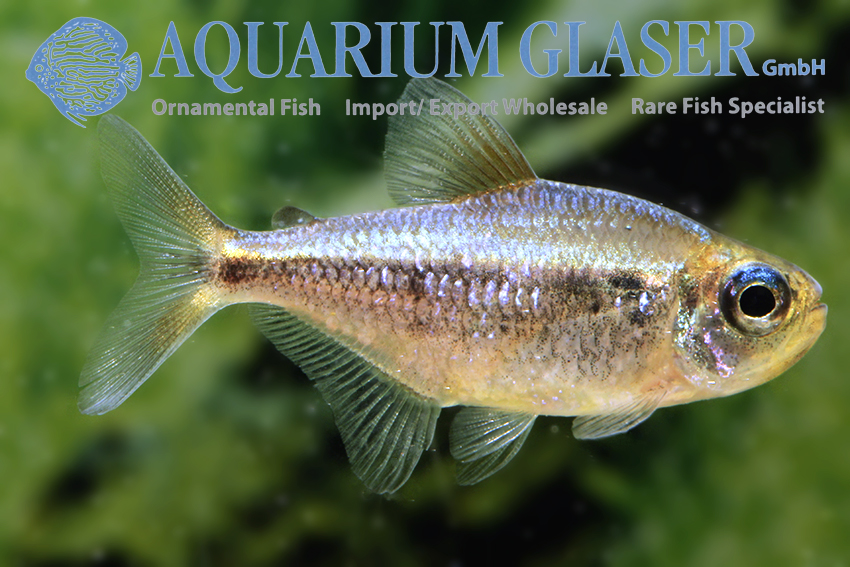
This small (about 4 cm) species of tetra originates from upper Rio Tapajós basin the Mato Grosso state in Brazil. It is the only species of Moenkhausia with such a colour pattern. So already in the original scientific description (1979) the author mentioned that this generic placement can be only provisionally. This makeshift stands until today for Moenkhausia phaeonota…
Sadly this charming tetra is only very rarely available. If one observes the life fish the behaviour reminds one in that of croaking tetras (Stevardiinae). We are able to offer this rare tetra currently.
For our customers: the fish have code 269003 on our stocklist. Please note that we exclusively supply the wholesale trade.
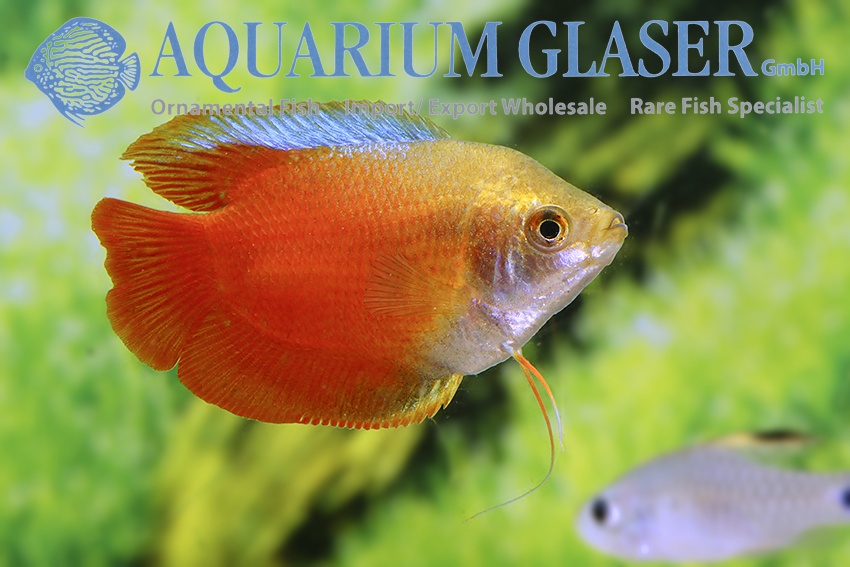
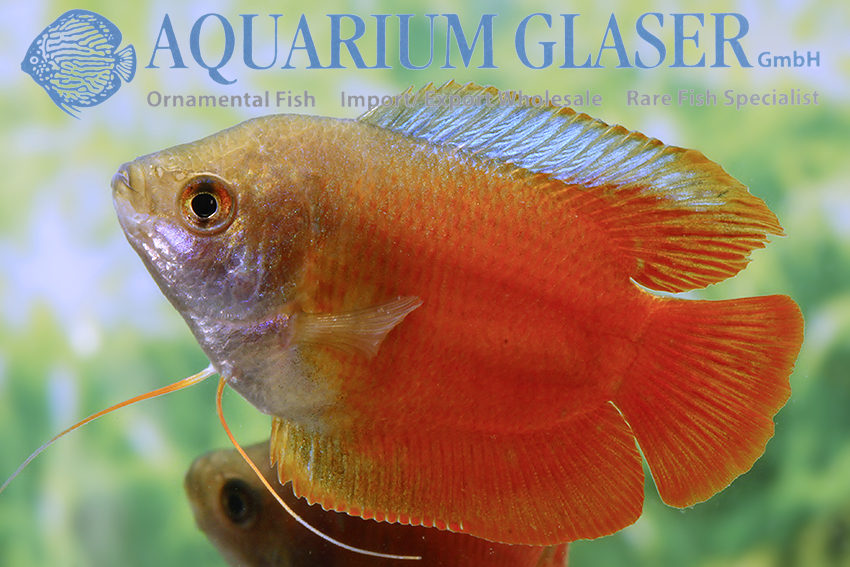
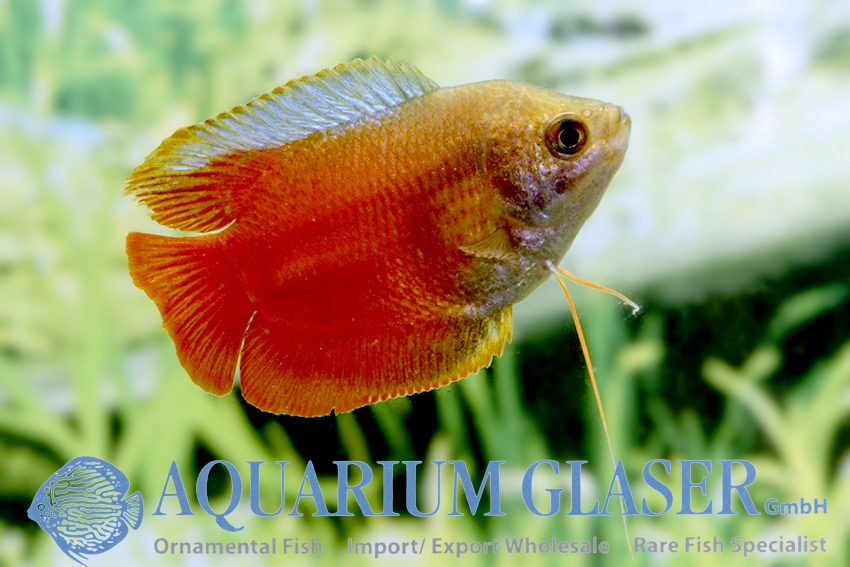
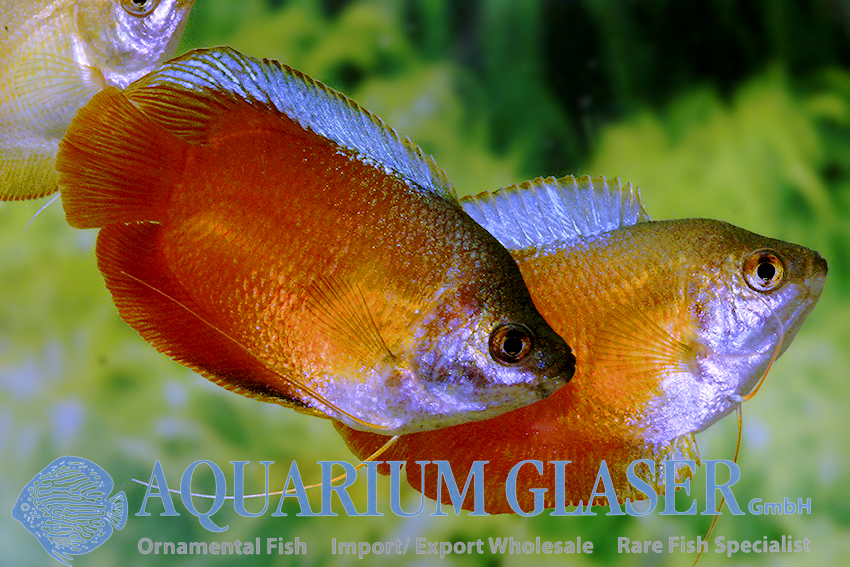
Only from few breeding forms is so well known, when they originated, as with Colisa lalia “Flame Red”. At the same time the fish decorated the covers of all aquaristic journals worldwide in the early 1980s, so sensational were they found. The animals were bred in the Lim Choa Kang area of Singapore, a rural area at the time, where five farms were primarily involved in breeding dwarf gourami. According to a scientific study in 1985, 8,000 to 9,000 kg of dwarf gourami of the Red, Neon, Gold and Wild breeding forms were produced there annually, which at that time corresponded to a wholesale value of between US$800,000 and US$1,000,000. In comparison, the most expensive food fish that can be produced in such breeding ponds fetched just 1% of this amount at wholesale.
In 1985, the Red Dwarf Gourami was still the most expensive farmed species, costing 4-5 times as much as the “common” Colisa lalia. Nowadays this has all been put into perspective and all dwarf gourami cost similar. Every now and then we have XXL specimens of the “Flame Red” from Singapore in our stock. They are beautiful fish even after 40 years. By the way, in the breeding ponds in Singapore, these fish take just 5 months from egg to show size. Their overall natural life expectancy is 1-2 years. They are the orchids among the ornamental fishes, which will probably still find enthusiastic lovers in another 40 years.
For our customers: the animals have code 411705 on our stocklist. Please note that we supply only wholesale.
Unfortunately, almost all predatory fishes have one unpleasant characteristic: most of them grow too large for average aquarium dimensions. In many cases we can only keep juveniles for some time and have to part with them when it becomes nice. What a pity!
An exception to this rule is Acestrorhynchus minimus, a barracuda tetra from Amazonia. The barracuda tetras are widely distributed in South America with 14 currently recognized species. Most species grow to 20-30 cm in length, so can still be maintained quite well in very large aquariums. However, Acestrorhynchus minimus even grows to only about 8-10 cm in length and can thus still be accommodated excellently in medium-sized aquariums of perhaps 120 cm edge length. Unfortunately the species is imported only very rarely. From scientific collections the fish is known from Brazil, Venezuela and the Brazilian-Colombian border area. Its type locality is the Lago Jacaré at the Rio Trombetas in Brazil. However, the specimens illustrated are from Peru, but all diagnostic characteristics of the species fit. From morphologically similar, large-bodied species, A. minimus can be most reliably distinguished by the fact that A. minimus has only a dark spot on the root of the tail, but not at the end of the gill cover.
For our customers: the fish have code 202254 on our stocklist. Please note that we only supply wholesale.
The very nice Corydoras eversi lives in the Araguaia drainage (Brazil) and became known as C 65. It was only scientifically described in 2016. The scientific treatment of C. eversi is based on a collection by Hans-Georg Evers in 1998, who was also able to bring living animals with him. As mentioned, they were initially assigned the number C65.
The species is present in aquaristics since its first import by conservation breeding – a nice example that conservation breeding is also possible by hobby aquaristics. Also our fish, which we can offer just now, are offsprings. C. eversi is very similar to C. araguiaensis from the same distribution area and differs – apart from color details, especially the golden yellow shimmer – by a structure in the cranial skeleton.
For our customers: the animals have code 229575 on our stocklist. Please note that we only supply wholesale.
Now begins the season for one of the best algae eaters of all, the La Plata algae eater from Paraguay. Originally the species was described as Parodon affinis. It is amazingly similar in shape and coloration to the Asian Flying Foxes; but of course, the La Plata algae eater can always be easily recognized by the tetra-typical adipose fin that flying foxes always lack.
Apareiodon affinis grows to a maximum length of 15 cm and should be kept in a group of 5 specimens upwards. The fish are out all day looking for food. Besides algae they also consume any common fish food. Since they are subtropical fish, they can be kept in a wide range of temperatures (16-28°C), but sudden changes in temperature are just as harmful as keeping them constantly above 26°C for a long time (more than half a year).
The chemical composition of the water is irrelevant for the care of the animals, but it should be clean and rich in oxygen. Against conspecifics and non-species fish the La Plata algae eater is completely peaceful.
For our customers: the animals have code 275803 on our stocklist. Please note that we only supply wholesale.
Lexicon: Apareiodon: means “without teeth on the side of the mouth”. Parodon: means “with the same teeth”. affinis: means “similar”.
The wild mollies are – from a zoological-systematic point of view – certainly one of the most difficult fish groups at all. Not without reason, science has been wavering between two extreme views for over 100 years: the first states that all wild mollies belong to only one, highly variable species, which would then be called Poecilia sphenops, others assign the so far 33 scientifically described forms to 12 species. In addition there are still undescribed species. In short: it is very difficult.
This is due to the fact that all species are polymorphic and polychromatic. So: in each population there is a whole set of color and body variants. It is therefore impossible to define them in such a way that the determination of single specimens can be successful, one must always examine large series of wild catches (50 or more specimens), in order to be able to come to a decision concerning the species. By the way, the matter is not made easier by the fact that wild mollies, just like guppys and gambuses, were released quite arbitrarily for mosquito control until the 1950s.
The species Poecilia mexicana and P. sphenops do not differ appreciably externally. P. sphenops has single-pointed teeth, P. mexicana has three-pointed teeth, and there are minor differences in the structure of the mating organ of the males. Both species have a vast natural range and have additionally been displaced by humans, so knowing the origin does not help in identification either.
Campeche is a Mexican state that covers much of the western part of the Yucatan Peninsula. The ancestors of the strain of P. mexicana, which we can now offer from time to time for several years from Asian pond breedings, originate from there. The beautiful and easy-to-care-for mollies have as a special attraction that the males can change color in a flash. In highest excitement they are deep blue-black, relaxed males are like the females light olive green with blue shiny scales. Not all, but most males develop an orange fringe in the caudal fin, the color intensity of which is controlled in part by social position.
Usually the Mexico Molly reaches a size of 4-6 cm, as does the Black Molly, in whose ancestry it is also represented, by the way. But sometimes giant growth can occur with these fish, then giants of over 10 cm length have been observed.
For our customers: the animals have code 280558 on our stocklist. Please note that we supply only wholesale.
No fish species is as changeable as the Guppy. There are no two males in nature that are exactly alike in color. This is true for all four Guppy species (Poecilia reticilata, P. wingei, P. obscura and P. kempkesi), which therefore cannot really be distinguished from each other externally (genetically, however, they can).
In the case of the Endler Guppy (Poecilia wingei), there are now so many breeding forms in which the males look identical that the impression can arise that this guppy species is also uniformly colored in nature. This is not the case at all. The animals we offer as “Endler Guppy” originate from non-directional swarm breeding, i.e. a larger number of males and females swim together in the breeding aquarium and have the free choice of mate. The resulting colorful society represents the natural color variability quite well, however, even with this breeding method appearances of domestication develop, because all natural predators are missing. Thus also these “pure”, on wild-catches based breeding-strains have meanwhile often clearly larger fins and become also altogether larger than their wild-living cousins. The females prefer bigmouths – excuse me, I mean of course big fins. Nothing can be done about that…
For our customers: the animals have code 419063 on our stocklist. Please note that we only supply wholesale.
From the Brazilian state of Amazonas, more precisely from the surroundings of the city of Anori, we once again received a good number of a beautiful armored catfish, which is known to science for a long time, but rarely appears aquaristically: Corydoras eques.
This typical schooling Corydoras looks most attractive when kept in black water. The bright orange neck banding undoubtedly serves to keep the swarm together when underwater visibility is poor. C. eques becomes about 6 cm long.
For our customers: the animals have code 227814 on our stocklist.Please note that we only supply wholesale.
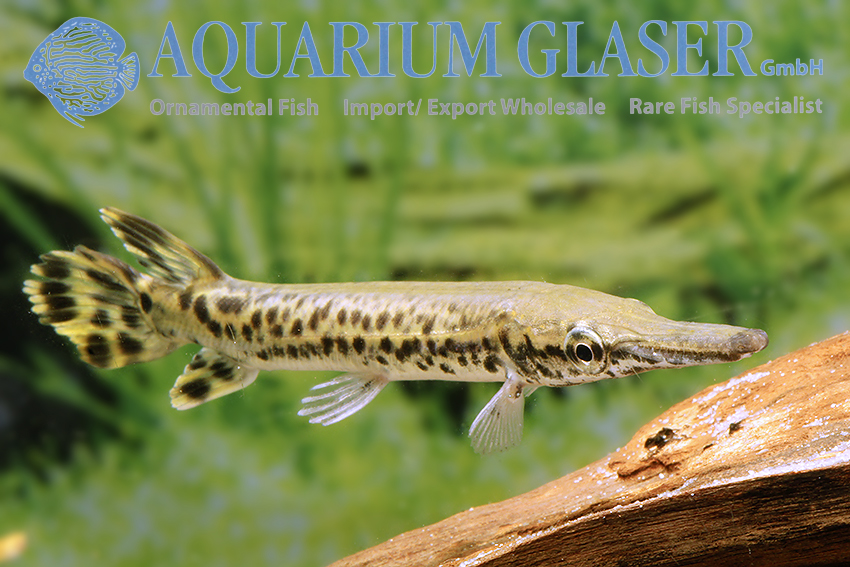
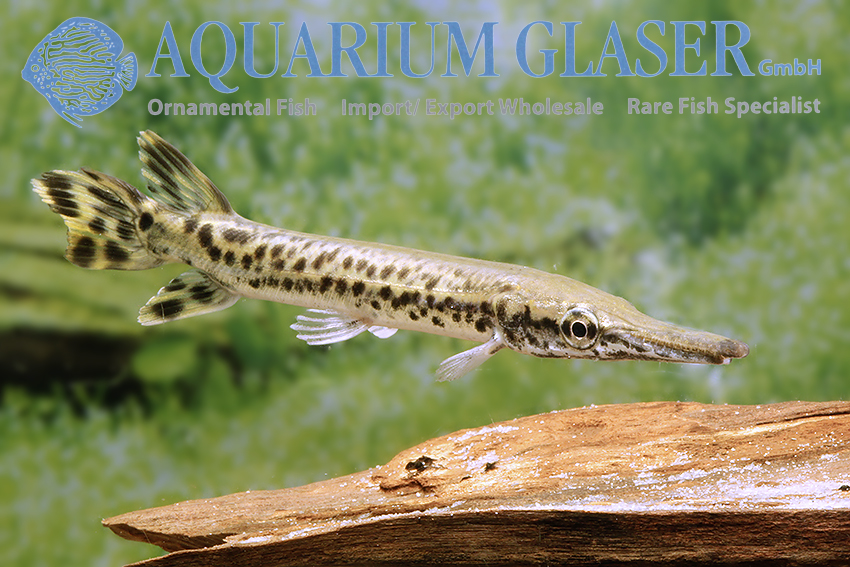
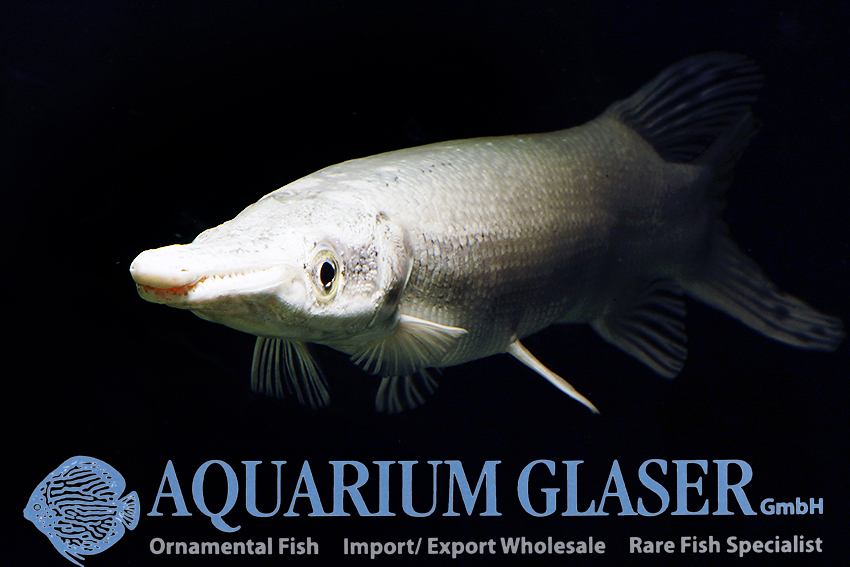
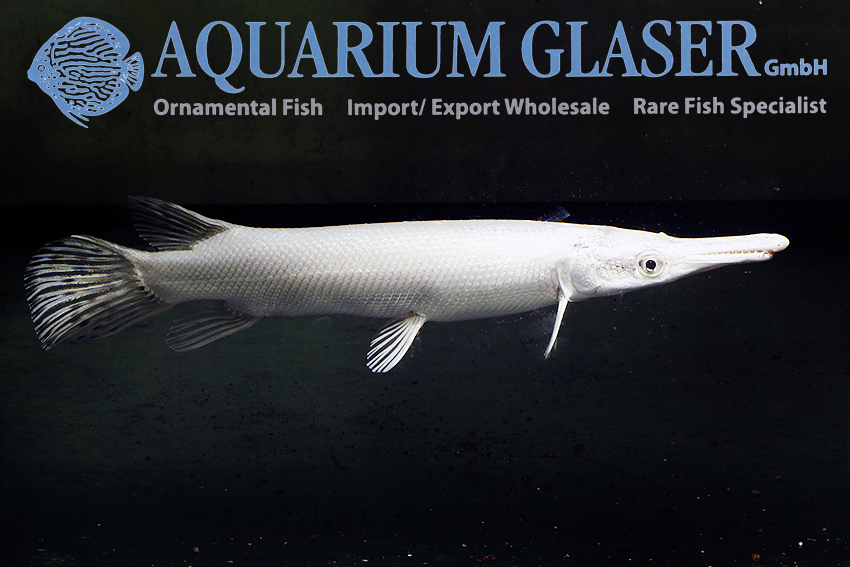
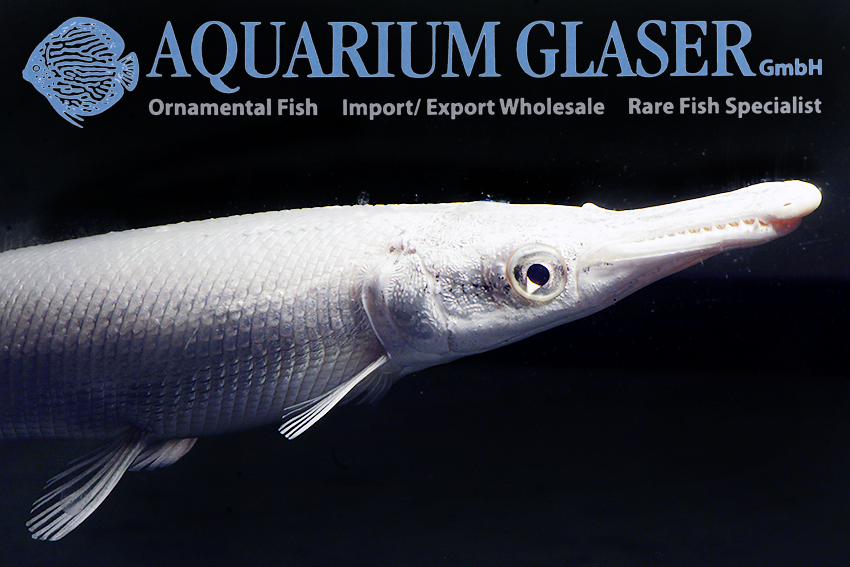
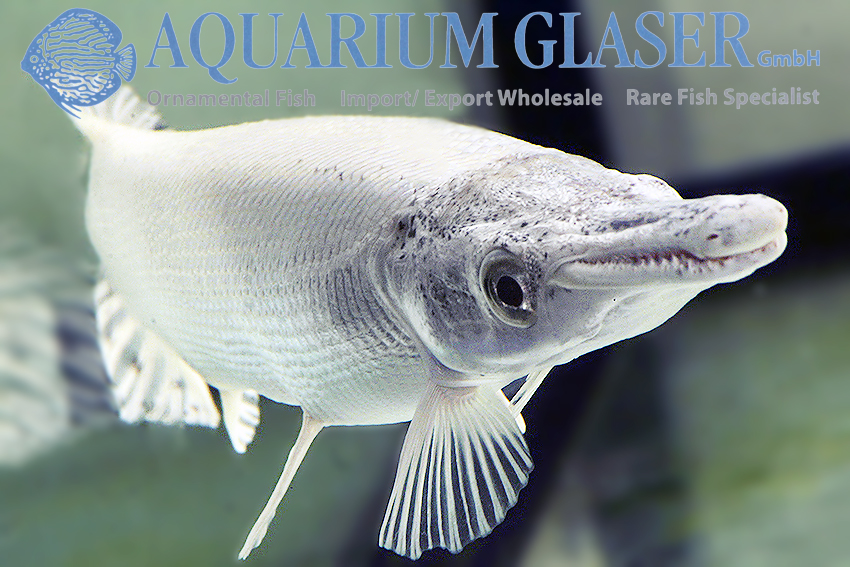
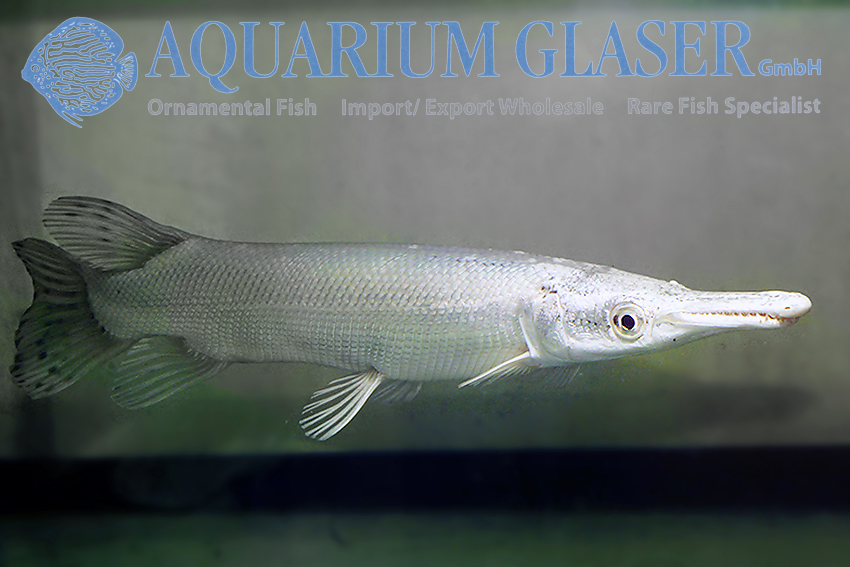
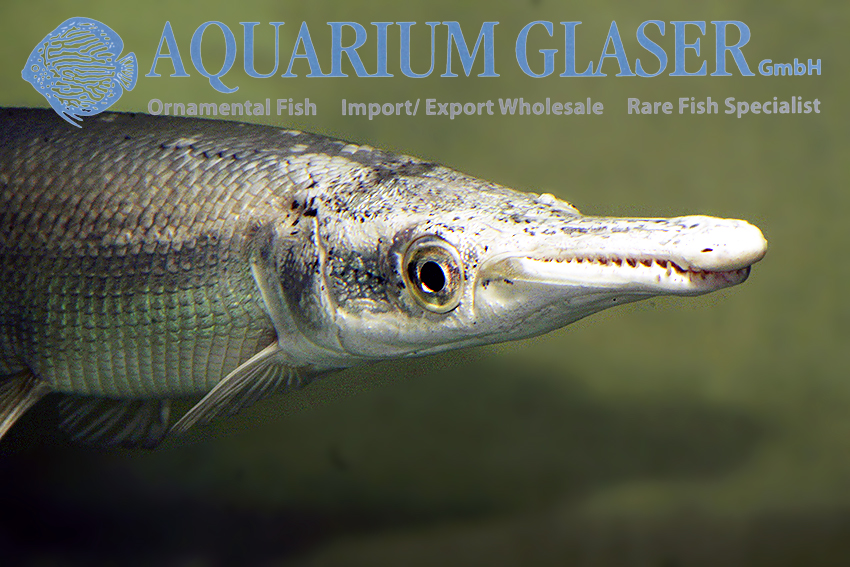
The Alligator gars are so-called living fossils. They developed about 100 million years ago in the upper Cretaceous and haven´t changed much since then. Currently two genera live in the New World, namely Atractosteus (containing three species) and Lepisosteus (four species).
The members of Atractosteus can reach about 2 m in length (formerly they are said to have reached even 3 m, but formerly everything was better ;-)) and are thus the largest recent members of the Alligator gars. The three species are very similar to each other and differ only in details which are not observable from outside. Our specimens are currently about 8-10 cm long and have been bred in Indonesia. We believe the breeders regarding the identity of the species as we have no opportunity to verify or falsify this.
Among the ancient features of the fish are the very strange bony scalation and the remains of a “tail” in the upper half of the caudal fin, which is clearly visible in our baby fish. Gars do not breath only via gills, but also via the swim bladder which serves as a lung. So they can survive even in very oxygen-poor water.
Gars feed exclusively on fish, but can be easily accustomed to feeding by forceps. Against conspecifics and other species of fish the gars are absolutely peaceful as long as they do not serve as food. Alligator gars are gorgeous animals for large show aquaria.
Sadly the natural population is decreasing due to habitat loss. The animals offered by us for public aquaria or owners of really big tanks are bred ones from Indonesia, Malaysia, and Singapore. The latest sport offered from there are Platinum fishes; we imported currently a 25 cm long specimen.
For our customers: the fish have code 848122 (wild type) and 847004 (Platinum) on our stocklist. Please note that we exclusively supply the wholesale trade.
Lexicon: Atractosteus: means “arrow-bone”. spatula: means „short sword“, referring to the shape of the snout. Lepisosteus: means “bone-scale”.
Again we could import the lampeye fish Procatopus aberrans from NIgeria; unfortunately we do not know the location where they were collected. However, we know that our supplier occasionally receives fish from Cameroon. Anyway, the current imports are a bit more graceful in body structure and the upper half of the iris lacks the red rim that was so characteristic of the specimens imported in January. See https://www.aquariumglaser.de/en/fish-archives/procatopus-aberrans-6/
These are very beautiful, elegant fish that should be kept and bred separately from other P. aberrans populations to be on the safe side.
For our customers: the animals have code 343103 on our stock list. Please note that we only supply to wholesalers.
This is the only almost always available aquarium fish that comes from the large, geologically old island of Madagascar. All other freshwater fishes from this island, which unfortunately are often threatened with extinction due to massive environmental changes, are only suitable for specialists.
The beautiful Madagascar rainbow (Bedotia geayi) grows to a length of 10-12 cm and is about 10 years old, but in nature it always remains smaller and no free-living specimen is likely to live to such an age. Although Bedotia are only distantly related to the Australian rainbowfishes, they are very similar to them in terms of behavior. Males and females differ with respect to the coloration of the fins. Sexual maturity begins at an age of less than one year, then the animals are usually 4-6 cm long. The animals photographed for this post are such young, just sexually mature specimens.
You have to be a bit careful with very large specimens, they have a relatively large mouth, in which a half-grown guppy may well disappear. So you should only combine fish with them that are at least half the size of the Bedotia to be on the safe side.
Regarding the chemical composition of the water and the food, the animals are completely undemanding, any tap water suitable as drinking water and any commercial ornamental fish food meet their requirements. In nature they are forest dwellers, often colonizing very soft and acidic water.
For a long time B. madagascariensis was synonymous with B. geayi, which is why the latter name is widely used in the hobby (these animals were first introduced to France in 1953 and have never disappeared from aquaristics since). The easiest difference for aquarists to recognize between B. madagascariensis and B. geayi (whose ranges are separated by several hundred kilometers) is the caudal fin pattern. In B. madagascariensis both sexes have a continuous black band in the caudal fin (clearly in front of the edge of the caudal fin – the technical term for this is “submarginal” – and the red zone in the male), which is missing in B. geayi. Also, the males of B. geayi have a red chin spot, while those of B. madagascariensis do not.
The first imported animals for aquaristics were actually B. madagascariensis, the “real” B. geayi was introduced much later. Nowadays both species are available in the hobby (we include a picture of B. madagascariensis here for comparison) and are usually not distinguished in the trade. Basically it doesn’t matter, only if you want to breed you have to be careful not to accidentally create unnecessary hybrids. Since both Bedotia species have to be classified as endangered in nature, it is important to keep the aquarium populations pure.
For our customers: the animals have code 373313 on our stock list. Please note that we only supply wholesale.
Silver dollars and Pacus are magnificent fish. However, they grow quite large and most species eat plants, so they are mainly suitable for show aquariums and specialists, less for the classic community tank. Therefore, the demand can usually be met well with wild catches. However, some time ago breeders in Asia have taken up the species Myloplus schomburgkii (formerly the species was placed in the genus Myleus) to be independent from the irregular supplies from South America.
Myloplus schomburgkii is widespread and common in the middle and lower Amazon, the Rio Nanay, and the upper Orinoco. The species reaches a maximum length of about 45 cm and is used as a food fish. Juveniles show a crescent-shaped banding on a silvery ground, which varies in width depending on origin, so it is reasonable to assume that future studies will show that there are multiple, closely related species. The anal fin is colored red.
How and when the breeding form “Lamax III” appeared for the first time is not documented, we probably showed the first pictures in the western press, that was in 2012. It seems to be a very rare form, which is difficult to manifest in breeding, because on the world market in 2012 only 30 animals were offered, of which 20 came to Aquarium Glaser. One can probably say without exaggeration that at that time Myloplus “Lamax III” was one of the rarest fish in the world. In the meantime this has been put into perspective and you can get the form from several Asian breeders for more moderate (but still high) prices.
It is a bit speculative to assign Lamax III to the species Myloplus schomburgkii, but the thesis seems credible, since the breeder from which the fish originally came offered “normal” M. schomburgkii as “Lamax I” and the naturally occurring variant or species with the broad central band from the Alto Solimoes as “Lamax II”. Thus, it is reasonable to think that “Lamax III” is a mutation that occurred during the breeding of the aforementioned two forms. On the other hand, it is most likely not a cross, because all 20 “Lamax III” from the import of 2012 and also the now (2021) imported animals look identical. Moreover, in case of a hybrid there would certainly be more specimens, since such large fish as M. schomburgkii spawn several tens of thousands of eggs at once. The Lamax III are internationally also called “Blackberry”.
For our customers: the fish have code 270904 on our stocklist. Please note that we only supply wholesale.
There is a number of tail fin shapes of the guppy, which have been standardized by the guppy breeders. As a rule, however, these breeds are only found at private breeders. In the pet trade the triangle guppies dominate in such a way that aquarists, who do not inform themselves specifically about guppies, could get the impression that these are the “normal guppies”. Recently, however, there has been a move away from this trend.
Double sword guppies are an old breeding form. Already in many wild guppies you can see hints of lower or upper swords – that is a pointed extension of either the upper or the lower tail fin edge. By appropriate breeding selection the double sword can be developed. First reports of double swords date back to 1928, already some years earlier animals with clear predispositions to the double sword appear in illustrations. In contrast, the triangle guppies, which are so dominant today, did not appear until the late 1950s and early 1960s.
Interestingly, however, the double sword was a direct predecessor of the fan tails, from which in turn the modern triangle guppies were bred. The fantail – as can be shown by crossbreeding experiments – is a double sword, so to speak, in which the space between the swords is filled with fin material. The tail fin shape “fan tail” comes from the combination of a certain color gene with the gene for double swords.
One of the most popular double sword guppies in the trade is the beautiful “Japan Blue”. While the name actually refers to the coloration and could be bred on other fin shapes, only specialized guppy breeders usually do. Supposedly, the Japan Blue is called this way because the color is said to have first appeared in feral free-living guppies in Japan. The color is inherited from the male (it is linked to the Y chromosome).
Quite new is the Japan Red, which should actually be correctly named Japan Blue Red, as it exhibits the typical Japan Blue cover sheen, but on a red and gold base coloration. The Japan Red is also bred as a double sword.
For our customers: Japan Blue has code 419043, Japan Red code 419047 on our stock list. Please note that we only supply wholesale.
This species of swordtail is only very rarely offered in the trade. At the first glimpse one may think that they are a variety of the common swortail X. hellerii, but the species X. signum is much more slender. The mark that is responsible for the scientific name (latin signum = sign) is always good visible in females on the caudal fin base, while in males it is covered by the dark border of the sword.
Xiphophorus signum is, like most wild types of swordtail, quite demanding. It needs clear, bacteria poor water and a proper feeding with different types of food, including frozen and live food. Our specimens are German bred ones.
For our customers: the fish have code 476655 on our stocklist. Please note that we exclusively supply the wholesale trade.
The South American puffer fish Colomesus asellus are ideal for aquarium care. They remain small (usually around 6-8 cm, at most around 12 cm, other sizes given in the literature are based on confusion), are pure freshwater inhabitants, love to eat small snails and are absolutely peaceful, both against conspecifics and against other fish species. They have only one characteristic, which is negative: they are unbelievably active and rush continuously through the aquarium. They should not be kept together with calm fish species and also nervous aquarists should keep their hands off them.
Care must be taken during acclimation: Colomesus are very susceptible to Piscinoodinum and Ichthyophthirius (velvet and spot disease). The diseases can be combated well with commercially available medications, additionally a temperature increase to 30°C and a flow pump helps. After the acclimatization the fish are robust and long-lived and give a lot of joy by their droll nature.
Now is the season for these animals, which we get from the upper Amazon (Peru). By the way, in 2013 a cryptic sibling species was described from the Rio Tocantins drainage in Brazil, which practically does not differ in color from C. asellus, but in small anatomical details and especially by DNA: Colomesus tocantinensis. This species is also a pure freshwater pufferfish. To our knowledge it is not exported and its care should not be different from C. asellus, but it is good to know that it exists.
For our customers: Colomesus asellus has code 218303 (approx. 3 cm) on our stock list. please note that we only supply wholesale.
Spectracanthicus zuanoni L 354 originates from Rio Xingu and the Rio Iriri in Brazil. It has been described scientifically only in 2014 (see http://www.aquariumglaser.de/en/archiv.php?news_id=1195). The fish belongs to the same species as L 20, with however clearly larger white marks, so that the design reminds of a black net on a bright background. The reddish, large eyes form a beautiful contrast.
A characteristic for the former Oligancistrus species is the large dorsal fin, therefore the name Sailfinloricariids suggested by Seidel appears as very applicable for this group. Since Spectracanthicus species are found in shallow water zones with fast flowing water, they place high requirements against the water quality. As many other Loricariids from this region they should be kept at higher temperatures.
It should be paid attention on their nutrition. A too rich food with a high protein content can lead in the long term to liver damages.
For our customers: the fish have code 26480-L 254-3 on our stocklist. Please note that we exclusively supply the wholesale trade. Available in very limited numbers only!
One of the most attractive large catfishes is Pimelodus ornatus, which is common in large parts of tropical South America. It is reported from the big rivers Amazonas, Orinoco and Parnaná, in addition the Guyana states. Maximum size reported is 38.5 cm (excluding caudal fin).
The beautiful and lively fish is notorious for its venomous fin spines. Stings are considered extremely painful and are also prone to infection. Therefore, some caution should be exercised when catching it and fine-meshed nets should be used if possible, otherwise the fish can easily become entangled in the meshes with their serrated fin spines. When freed, stings can then easily occur.
Interestingly, females of this species have been found to have the ability to store sperm. Thus, once fertilized, they can lay viable fertilized eggs without a male. Since this requires internal fertilization, it would be very interesting to know how this occurs. Any externally recognizable sex differences or mating organs do not exist in P. ornatus.
Unfortunately Pimelodus ornatus is imported only rarely, so that breeding reports in the aquarium – one needs for it undoubtedly larger aquariums starting from 200 cm edge length and several specimens of both sexes – are still pending. The care itself is simple, there are no special demands on food and water. A strong current, soft bottom and dim light meet the requirements of the species perfectly. P. ornatus is peaceful among each other and towards other fish, as long as they are not considered as food.
The animals we can currently offer come from Peru.
For our customers: the fish have code 279604 (9-12 cm) and 279605 (12-15 cm) on our stocklist. Please note that we only supply wholesale.
Corydoras loxozonus belongs to the beautiful armored catfishes, which we receive relatively regularly from Colombia. The species is quite variable in pattern and therefore has already received the C-numbers C79 and C83. There was never any “proof” that these C-numbers really belong to the species C. loxozonus; this was only concluded from the fact that these unusually patterned C-numbers were always imported together with C. loxozonus.
We just received pretty Corydoras loxozonus and between them was a longnose with amazingly similar coloration. This longnose has so far not been described scientifically nor in the hobby, in the hobby an extremely similar species has the code number C16. C16 in turn has always been imported as a bycatch of another Colombian species, namely C. melini. C. melini is clearly more high-backed than C. loxozonus and originates from the Rio Uaupes (= Rio Vaupes), which belongs to the Amazon River system, whereas C. loxozonus originates from the Rio Meta, an Orinoco tributary. Therefore, the C16-like bycatch to C. loxozonus is probably not a C16, but another undescribed species! Unfortunately, this animal is not expected to ever enter the trade in larger numbers.
However, this example shows once again that it is worth to have a closer look also at “common” species. They also hold many a surprise!
For our customers: Corydoras loxozonus has code 233703 on our stocklist. Please note that we supply exclusively to wholesaler.
The systematics of the Indian deep bodied loaches – they represent the remaining species in the formerly much broader genus Botia – is confused. Botia lohachata was described from Bihar in India as early as 1912. Their coloration is very specific: three Y-shaped bands – the first in front, the second below and the third behind the dorsal fin – and between each band in the middle of the flank a circular dot – YoYo loaches!
The body marking is on the one hand the only characteristic to distinguish closely related Botia species from each other, but on the other hand it is also highly variable. With Botia lohachata things are like this: since this species is very popular in aquaristics – it is pretty, relatively peaceful (at least if kept in sufficiently large groups from 10 specimens upwards), remains with usually 8-10 cm length (the maximum length given in the literature is 15 cm) handily small and eat quite reliably all small water snails in the aquarium – and wild catches are available only seasonally, it is bred commercially in Southeast Asia already since the 1970s. For unknown reasons, these captive-bred specimens are marketed as “Botia pakistani”. There is no “Botia pakistani”, this name is pure fantasy and the offspring correspond perfectly to Botia lohachata regarding the pattern of markings.
How variable Botia lohachata can be, however, can be seen when wild caught specimens are available, like right now (the season runs from about July until October). And in the age the pattern changes strongly to a net pattern. This raises doubts whether B. lohachata is really a good species, because at least B. almorhae, B. birdi and B. histrionica are extremely similar and have been described much earlier; a good overview of the many similar looking Indian loaches is given by Grant (2007) in the electronic publication Ichthyofile Number2.
For our customers: the animals have code 403001 (3-4 cm), 403003 (5-6 cm) and 404802 (“pakistani”) on our stocklist. Please note that we supply only wholesale.
One of the absolute routine measures in the everyday care of the fish is to examine it regularly in the beam of a strong flashlight for possible disease. In this context, one of our keepers, Martin Möller (who has a degree in biology), made the discovery that under certain light incidence, the glass catfish show a distinctly colorful iridescence. This is basically the same effect of light refraction that leads to the formation of rainbows. However, it is not easy to capture it photographically, because the interaction of light and movement of the fish must fit absolutely. After many unusable pictures, however, we finally succeeded in depicting the Möller effect. Fascinating, to say it with Mr. Spock!
For our customers: the animals have code 422005 on our stock list. Please note that we only supply wholesale.
Nannacara taenia is with a maximum of 5 cm total length one of the smallest cichlids at all. Additionally it is absolutely peaceful and therefore an ideal fish for community aquariums. The species was described in 1911 from aquarium fishes believed to have been exported via Manaus. However, these animals were never found again in the much fished Rio Negro area around Manaus. It was not until 1987 that they were rediscovered in the lower Amazon and subsequently found in several more Amazon tributaries in this region.
Like all Nannacara species the species is an open breeder. It is difficult to distinguish the sexes. It is said that only the females – but this is also due to mood – show vertical stripes from time to time. Unfortunately, N. taenia is so rarely kept that general statements on this subject are difficult to make. Best is to buy a troop of 10-12 animals and just let the pairs find themselves.
At the moment we can offer nice offsprings of this species.
For our customers: the animals have code 684253 on our stocklist. Please note that we only supply wholesale.
What is the saying? Who does not ask, remains stupid. In the case of the rock cichlids of Lake Malawi, the so-called Mbuna, it is undoubtedly the garish, bright colors that initially attract attention and led to the much quoted comparison with coral fish. In fact, the colors of the mbuna have primarily the same task as those of the coral fishes: a demarcation against other species as clear as possible. This makes it easier to recognize one’s own species and this in turn avoids fights, because with members of other species there is no need to fight so intensively for available food (other species usually eat something else) and for females.
Among the most combative mbuna of all is the type species of the genus Chindongo, C. bellicosus, which was described along with the genus in 2016. The species name “bellicosus” means “warlike”! Chindongo includes the species C. ater, C. bellicosus, C. cyaneus, C. demasoni, C. elongatus, C. flavus, C. heteropictus, C. longior, C. minutus, C. saulosi, and C. socolofi. They are among the smallest mbuna and – at least in the wild – barely exceed 8 cm in length. In the aquarium, however, they can grow 50% larger.
In many mbuna, also in quite a few Chindongo, there is a clear gender dichromatism. In other words, sexually mature males are colored differently than females. Juveniles all look like females. Why? Because only sexually mature males defend territories and indicate with flaunting colors that they cordially invite any passing female to mate with them. Other males in showy colors, on the other hand, are beaten up. So far, so logical. But why are there species, like Cindongo socolofi, where males and females cannot be distinguished optically? Only the egg spots in the anal fin are missing in the females or are at least less pronounced. Why this? There is no answer to this question yet.
Maybe you will find out, dear reader? In any case, we have just pretty, fully colored and with 6-7 cm length almost fully grown Chindongo socolofi from Southeast Asian breeding in the stock. By the way, this species is relatively peaceful in the aquarium. So the opportunity to explore is there: go ahead!
For our customers: the animals have code 573202 on our stocklist. Please note that we only supply wholesale.
Knifefishes are found in the Old World (Africa, Asia) and in the New World (South and Central America). However, the two groups are not closely related. Aquaristically, however, they are quite comparable. They inspire above all by their elegant swimming. The very special fin structure allows them to maneuver both forward and backward. At the same time, they are lightning fast. And knifefish are intelligent – at least by fish standards. They get to know the keeper and come to receive tidbits on whistle. Among themselves, they communicate with sounds and “electric speech,” which uses weak electrical impulses.
The smallest species of Old World knifefish is Xenomystus nigri, which usually grows to 12-15 cm, exceptionally to 20 cm. It is widely distributed in western Africa; the photographs show a juvenile specimen from the Congo and two adults from the Niger River in Nigeria, from where we usually obtain them. X. nigri can be very easily distinguished from all other Old World species by the fact that it lacks a dorsal fin, all other species have one.
Very small fish become eaten by African knifefish, they are peaceful to all larger fish. They are crepuscular animals, as can be easily seen from their large eyes. In the aquarium Xenomystus do not necessarily want caves, but dim shelters. The sexes are hardly distinguishable, males are a bit more high-backed. Xenomystus nigri are crevice spawners, “shooting” their eggs individually into depressions or small holes. The species does not seem to take broodcare.
Xenomystus nigri feeds in nature mainly on insects and worms. In the aquarium, it readily accepts all common frozen foods, but will also accept dry foods. Although the fish is not colorful, it is a wonderful contrast fish to other aquarium inhabitants, it is, as we say, the salt in the soup.
For our customers: the animals have code 192004 on our stock list. Please note that we supply exclusively to wholesalers.
The Indian Dwarf Mudskipper, Periophthalmus novemradiatus, is the ideal aquarium mudskipper with its usually 6 cm length (in literature up to 10 cm are given, but we have never seen such large specimens, probably this statement is based on confusion with other species). In addition to its small size, it has many other favorable attributes: it is much more peaceful than most other mudskippers, it is not very shy, and it is hardly susceptible to disease. As with most mudskippers, males can be easily distinguished from females by dorsal fin size. In males, the first dorsal-fin ray is elongate, the fin itself is larger and more colorful, and, when attached, extends well past the base of the second dorsal fin; in females, the attached first dorsal fin ends before the base of the second.
Periophthalmus novemradiatus is a coastal dweller – our specimens come from Bengal in India – and feeds on organic debris, small animals and algae left on the muddy bottom at low tide. It is, like all mudskippers, capable of living in pure freshwater and pure seawater. In practice, maintenance in brackish water (5-15 g sea salt/l) has proven best. Basically, the pH should not fall below 7. Water temperatures should be kept in the range of 20-28°C, even if the animals tolerate a little less and a little more without harm.
The care is best done in an aqua-terrarium in a larger group. In such a tank there is always something to observe. The animals are fed on a dry food basis, for variety all small frost and live foods can be given, also smallest crickets and flies are taken from time to time with pleasure. Breeding is complex (see the article by Hans-Georg Rupp in the magazine Koralle, issue 87 (2014)), but at least in principle possible.
For our customers: the animals have code 441182 on our stoclist. Please note that we supply exclusively to wholesalers.
A very long name for a very small fish! The genus Curculionichthys was established only in 2015 to accommodate dwarf sucker catfishes of the subfamily Hypoptopomatinae (formerly: Otothyrinae) of Loricariidae, which were previously placed in the genus Hisonotus. Both anatomical and molecular data showed that two independent evolutionary lineages existed within Hisonotus, namely that around the genus type Hisonotus notatus and another that was consequently described as Curculionichthys. The genus name translates as “fish with a long snout”.
A total of 14 species have since been assigned to the genus, but none of these have made aquaristic appearances to date. With 269 described species the subfamily Hypoptopomatinae is also very confusing. Many species look very, very similar to each other, the determination is mostly only possible for trained specialists. Therefore also we cannot exclude that the charming dwarfs – they are only about 1,5-2,5 cm long – which we could import under the name C. sabaji, turn out to be something else. But purely optically they agree very well with C. sabaji. The maximum length of C. sabaji known so far is 23.6 mm without caudal fin.
The tiny fishes keep well with us. Experience with similarly small Paraotocinclus species has shown that such dwarfs should be provided with aquariums as old as possible, with a rich micro growth on which they feed. Dead leaves, root wood etc. should therefore be abundant. In addition, the completely peaceful animals also accept fine dry and frozen food.
Curculionichthys sabaji originates from the drainage of the Rio Xingu. In nature Curculionichthys species are found in flowing water; they can be found in shallow shore areas on sand and gravel, as well as in brush hanging into the water or between water plants. A water temperature of 25-30°C is recommended.
For our customers: the animals have code 250853 on our stocklist. Please note that we supply exclusively to wholesalers.
Among the species threatened by the construction of the Bela Monte Dam is L82, a species of loricariid up to about 15 cm long, which cannot yet be assigned to any genus described scientifically to date; it is most similar to Scobinancistrus. Also on species level L82 is not yet worked on. The only certainty is that it belongs to the carnivorous catfishes and has only been found in the Rio Xingu.
Sometimes you can read that the animals are only found at Altamira. However, there are color variants, which indicates a wider distribution. For example, the photographed animals are decorated with large, yellowish dots and have an abdomen without markings. But there are also animals with smaller, more whitish dots and a pattern on the abdomen.
The species is considered to be relatively peaceful and could be reproduced in the aquarium. For the care the usual applies for L-catfish from the Xingu: high water temperatures (28-30°C) and strong current. Hardness and pH-value do not play an important role at least for the care. As a carnivorous species L82 is fed with food tablets, granules and frozen food.
For our customers: the animals have code 26480- L082-4 on our stocklist. Please note that we only supply wholesale.
The marbled headstander is perhaps the most unusual of all headstanders. This beautiful fish grows to about 15-20 cm in length and is hard to mistake because of its high body shape. There is only a second Abramites species, A. eques, but it has never been imported alive. It lives exclusively in the Rio Magdalena in Colombia. All live photos known to us, which are supposed to show A. eques, are in reality color variants of A. hypselonotus. In A. eques there is no stripe on the anterior body, the first bandage starts only below the dorsal fin and runs over the middle of the body.
In the extremely widespread Abramites hypselonotus – it exists practically in the whole of South America east of the Andes, from Argentina to Venezuela – the stripes start directly behind the head. Thereby, at least in wild collected ones, each animal is individually recognizable by its stripe pattern. One has to doubt that the marbled headstander is really the same species everywhere in this vast area, but they look very, very similar.
Mostly we have offspring of this fish from Indonesia in our stock, but occasionally we receive wild catches. The fish currently swimming with us are from Peru.
Abramites are social animals that interact constantly. If you have too few animals, this can become a nuisance, but in larger groups and large aquariums this is not so noticeable. Unfortunately, these beautiful fish are extreme herbivores.
For our customers: the animals have code 200503 on our stoclist. Please note that we only supply wholesale.
This very flat Pseudacanthicus from the Rio Tocantins belongs to the rarest L-catfishes on the market. Even before the export ban by the Brazilian authority IBAMA, which was lifted only recently, the fish came to us only very sporadically. L79 certainly grows over 20 cm long, but exactly how big is unknown. Our animals are currently 10-12 cm long.
The care is not different from other carnivorous Loricariid catfishes. L79 is somewhat shy, but you have to keep a close eye on them if you want to keep several animals together. If there are any incompatibilities, they can hurt each other badly. Otherwise they are very pretty and interesting keepers for a large aquarium.
For our customers: the fish have code 26480-L 079-4 on our stocklist. Please note that we only supply wholesale.
Poecilia wingei is widely distributed in the hobby after its best known local variant as Endler´s Guppy. It remains much smaller than the normal Guppy and is very popular with many aquarists because of its graceful body shape.
Just as with the common Guppy, numerous local forms can be observed with P. wingei. The ancestor of the “Blue Star” was caught in 2010 by Phillippe Voisin and friends in Venezuela, some also call it French Blue Endler. We can offer this beautiful fish in good numbers of pairs right now.
For our customers: the animals have code 419106 on our stocklist. Please note that we only supply wholesale.
Many rock dwelling cichlids (mbunas) of Lake Malawi live isolated on certain rocky shores. These are often miles away from other rocky biotopes, so geographic isolation leads relatively quickly to local color variations.
Other cichlids of the lake, such as Sciaenchromis fryeri, are not bound to specific biotopes and occur accordingly throughout the lake. Although there are tendencies for them to look slightly different in certain regions – for example, in S. fryeri the anal fins of males from the south of the lake are reddish, while those from the north are more yellowish – on the whole these differences are rather marginal.
Of Sciaenochromis fryeri the “Iceberg” variety (see https://www.aquariumglaser.de/en/fish-archives/sciaenochromis-fryeri-iceberg-2/) is especially popular, but also the wild colored animals are beautiful fish with their brilliant azure blue. One should not keep these cichlids together with the fast and aggressive mbunas of Lake Malawi. These species interfere with each other and also have completely different food requirements. While S. fryeri is a small predator that follows large cichlids in the wild, which dig for food in the substrate, scaring up small fish and shrimp that S. fryeri grabs, mbunas feed mainly on aufwuchs, i.e. algae and microorganisms found in it, a very high-bulk diet. In the aquarium, Sciaenochromis get shortchanged compared to fast Mbunas, resulting in fatty Mbunas and malnourished Sciaenochromis. No one wants that.
Sciaenochromis fryeri is a typical mouthbrooder in the female gender and grows to about 15 cm long. Males and females differ clearly in coloration.
For our customers: the animals have code 574295 on our stocklist. Please note that we supply exclusively to wholesalers.
Males of all dolphin catfishes (Ageneiosus) develop huge dorsal fin spines and a penis-like mating organ at spawning time, also strange tooth-like looking papillae on the posterior margin of the upper jaw. They use the dorsal fin spine to clamp females for mating, and fertilization occurs internally. After spawning, the dorsal fin spine is shed again, like deer antlers after the rut, and the mating organ regresses so that males and females can no longer be distinguished externally.
Unfortunately, the relatively small remaining (under 10 cm) dolphin catfishes are rather inconspicuous in color. We could import now from Venezuela splendid, sexually active A. magoi. The fish are currently about 15 cm long. The maximum length given in the literature for A. magoi is 18-20 cm. Thus A. magoi is surely the most interesting dolphin catfish for aquaristics: highly attractive colored and comparatively small.
For our customers: the animals have code 203353 on our stocklist. Please note that we supply exclusively to wholesalers. Only available in small numbers.
Wertheimeria maculata belongs to the strangest thorny catfishes. You don’t see this on the relatively inconspicuous juveniles with their 6-8 cm length, but it is nevertheless so. The first thing that catches your attention is the really high price that is demanded for them. This is due to the fact that these fish are local endemics and occur exclusively in the Jequitinhonha and Pardo rivers in Brazil, where there is no organized ornamental fishing. The area of occurrence covers more than twice the area of Switzerland, W. maculata is not considered endangered.
Already on the occasion of the first description of the species in 1877 the genus Wertheimeria was established for it, of which it remained the only member until today. The independence of Wertheimeria has never been doubted; within the spiny catfishes (Doradidae) a separate subfamily Wertheimerinae was established for the species and two others (Franciscodoras marmoratus and Kalyptodoras bahiensis).
Adult Wertheimeria maculata are about 30 cm long; then they look spectacular: on a black background the species has large, cream-colored spots. Whoever acquires this species should keep it for himself if possible. Our young animals are compatible with each other. The animals are hiding-loving and mainly nocturnal and are easily disturbed by other species. One hardly gets to see them then. Wertheimeria maculata do not have special demands on water and food, but it goes without saying that they should be kept in aquariums as large as possible with well maintained water and fed with high quality food (mussel meat is ideal, but any commercially available ornamental fish food is accepted) to quickly turn the ugly little duckling into a proud swan.
For our customers: the animals have code 299053 on our stock list. Please note that we only supply wholesale.
In the meantime, further correspondence with our supplier revealed that the animals did indeed come from the Rio Tocantins. We have received another shipment of the animals, which are somewhat larger (5-7 cm) and are now developing very attractive colors. In addition, the head shape is more recognizable. We now think that the animals are the species Mylesinus paucisquamatus, which grows to about 20-25 cm and if you look at how pretty the juveniles are now, you can expect a lot more from the adults!
For our customers: the animals have code 270053 on our stocklist. Please note that we only supply wholesale.
The “pointed tail” mutation, in which the middle caudal fin rays are elongated, appeared relatively late: the first specimens appeared on the market in the 1980s. It originated in the Southeast Asian large-scale breederies.
The characteristic, which first appeared in the Platy (Xiphophorus maculatus), can also be transferred to other Xiphos, but the pointed tail has really become established in the long term only in Wagtail Platys. Here it is especially the red breeding forms, which are offered with pointed tail. Because with very large and old animals the innermost rays can grow somewhat over the fin, one calls this breeding form sometimes also “brush tail”. Apart from the fin shape, the pointed tails are quite normal platys: lively, colorful and robust.
For our customers: the animals have code 442103 on our stoclist. Please note that we supply exclusively to wholesalers.
Acanthicus hystrix is one of the great myths in the literal sense. With a length of almost one meter it is one of the largest loricariid catfishes at all. In addition, the species, which was already described in 1829, is extremely prickly: “hystrix” means “porcupine”!
Unfortunately, the specimen on which the description of this species is based was destroyed during the Second World War. Where it was captured is unknown. Thus, it is unclear which of the three or four Black Adonis Catfishes known so far is the “real” A. hystrix. For one of them, a form from the Rio Xingu, the L-number 155 was assigned. In the trade it has become common practice to refer to the Black Adonis Catfishes all as L155, regardless of origin. Our L155 come from the Furo Maguari, a tributary of the Rio Tocantins.
Black Adonis Catfish are fish for specialists who can accommodate these giants, which can also be quite aggressive. For show aquariums large Adonis catfish are excellent subjects. Our animals in the stock are currently 18-21 cm long.
For our customers: the animals have code 26480-L 155-6 on our stocklist. Please note that we only supply to wholesalers.
The Orange Blotched are now one of the most common Malawi cichlids on the market. No wonder: there is hardly a fish species, which shows such a variety of bright colors, like these animals!
For our customers: the fish have code 502763 on our stocklist. Please note that we supply exclusively to wholesalers.
The convict cichlid Amatitlania (formerly Cichlasoma) nigrofasciata is really not a novelty anymore: it has been kept and bred in aquariums since 1939. The first aquarium animals of this very widely distributed fish in Central America came from the lakes Atitlan and Amatitlan in Guatemala. The genus to which the convict cichlid currently belongs was named after the latter.
As early as the 1960s, a uniformly flesh-colored variety appeared in breedings, and since then the “piggies” have also found their enthusiasts. “New” is the marble variety. It originated in 1992 by chance in large-scale breeding of the monochrome animals in Florida and became lokal quite popular. Across the ocean they spilled first to Southeast Asia, where the busy professional breeders are always on the lookout for interesting novelties, from there to Europe and the animals we are currently offering, we got from a Czech breeder.
Apart from the coloration, which is different for each individual, they are typical convict cichlids, which move through the aquarium like a pack of wild pigs, examine every corner for food and are always ready for a fight. You can almost hear them squealing…
For our customers: the animals have code 655922 on our stocklist. Please note that we supply exclusively to wholesalers.
The new Hellboys have a halfmoon tail fin, which means that when the tail fin is folded completely out, the edges are at a 90° angle to the longitudinal axis of the body. In a “normal” Pla Kat, this angle is smaller.
While the first Hellboys were predominantly red in color with a few speckles, they are now still red-grounded fish – hence the name, which refers to the comic and movie character Hellboy, an all-red, friendly but belligerent demon – but they have quite different cover colors, ranging from silvery-white pelts to koi patterns.
Thus, the new Hellboys are visually quite different from the first ones – as in the Hellboy movies, because in the third part the main character Ron Perlman is replaced by David Harbour, who also looks different…
For our customers: the animals have code 390082 on our stock list. Please note that we only supply wholesale.
Guppy breeders are currently very active again and bring new, attractive strains on the market. The Guppy Kohaku Koi Tuxedo combines two special characteristics: The Kohaku factor, which causes males and females to have a red head combined with a red caudal fin and red dorsum; and the Elephant Ear factor, which causes the greatly enlarged pectoral fins of males to be colored (usually black, but white ones exist) instead of transparent; coupled with the Elephant Ear is often the Tuxedo factor, which causes a black body color with a blue anterior dorsum, but without spilling over to the fins.
They are very lively, beautiful fishes that will definitely gain a permanent place in the assortment.
For our customers: the animals have code 419205 on our stocklist. Please note that we only supply wholesale.
Paracheirodon simulans is the smallest and tiniest species of neon tetra. The maximum length is around 2.5 cm. One should not confuse this species with the neon costello, Hemigrammus hyanuary, which is also called the “green neon” occasionally. This is the reason why some people call Paracheirodon simulans the “blue neon”, but in the international trade the name “green neon” is established for the species.
Despite this babylonic confusion one cannot confuse P. simulans with any other species. Only in this neon tetra the intensive shining neon band runs from the tip of the snout right through to the end of the caudal peduncle.
We can offer green neons the greatest part of the year. They originate from Colombia and Brazil. But only rarely such large, adult (about 2 cm long) specimens are available as we have currently in stock. This is a perfect occasion to stock a nano tank with these shimmering jewels….
For our customers: the animals have code 275704 on our stocklist. Please note that we exclusively supply the wholesale trade.
The species of the genus Brycon belong to the large tetras of the open water. 21 species east of the Andes were distinguished in the last revision by Flávio C. T. Lima (there are others west of the Andes). Their identification, especially of juveniles, presents considerable difficulties, because they usually grow to 30-40 cm in length and adults look quite different from juveniles. That is why we listed B. amazonicus as Brycon sp. Colombia on our stocklist until now. However, the fine line pattern of the juveniles, which is very unusual for Brycon species, and the distinctive caudal fin pattern now lead us to believe that these animals are the species B. amazonicus, which is widely distributed in the Amazon and Orinoco systems.
The care of Brycon is in principle simple, but one must not save on food. They are very greedy and fight for a food tablet like a pack of puppies for a bone. Due to their expected final size (approx. 50 cm!), combined with swimming pleasure they need large aquariums.
For our customers: the animals have code 212652 on our stocklist. Please note that we only supply wholesale.
Literatur
Lima, F. C. T. (2017): A revision of the cis-andean species of the genus Brycon Müller & Troschel (Characiformes: Characidae). Zootaxa 4222 (no. 1): 1-189.
Our current Congo import contained among others the magnificent tetra Alestopetersius leopoldianus, which originates from Lac Mai Ndombe (formerly: Lake Leopold) and the middle Congo. With this maximum 9 cm long species one can get philosophical about the supposed objectivity of photography. Depending on the incidence of light the animal looks completely different! With the naked eye one almost always sees a dark, broad longitudinal band. This is also the only significant coloration feature mentioned in the first scientific description from 1899.
Wonderful is the deep blue dorsum, which is the first thing that catches the eye of the importer when he closely examines his newly arrived treasures with a strong flashlight. The result can be seen in the photo pool. Here, too, the back of the animal shines in a magnificent blue, but the effect is completely different. And depending on the angle of light, the reflective colors can be so intense on the body that they even cover the longitudinal band, or almost invisible.
The nice thing is: In the aquarium you have all these colors at once, because the fish swims and so the incidence of light also changes permanently. So you have in an aquarium with Alestopetersius leopoldianus a beautiful picture, which you never get tired to admire.
For our customers: the animals have code 100173 on our stocklist. Please note that we supply only wholesale.
The beautiful Corydoras elegans is widely distributed in the Amazon region and locally forms numerous color forms. Possibly all these variants are even independent species, but scientifically this has not been investigated yet. A color variant from the Rio Nanay in Peru stands out above all by yellow-orange tinted fins. Some males (they have higher dorsal fins with dark bands) have even strongly orange colored dorsal fins, but only in old age and our animals are still quite young. Anyway, this Rio Nanay variant has been given the code number C123 to facilitate communication among enthusiasts.
Apart from the pretty fin coloration, C123 is a typical Corydoras elegans. The fish are very social and peaceful, swimming in open water more often than most other Corydoras. The maximum length is about 5-6 cm.
For our customers: the fish have code 229102 on our stocklist. Please note that we only supply wholesale.
Since a long time we received again a Congo import. Beside many other interesting fishes and novelties also the good old acquaintance Nanochromis parilus was among them. These beautiful, assertive dwarf cichlids are very common in the region around the capital Kinshasa. It is astonishing that they were described by science only in 1976. In the hobby they have been known since 1952, however they were initially misidentified as Nanochromis nudiceps (which is a different species).
Nanochromis parilus are river-dwellers, but not rapids cichlids, preferring calmer sections. With a maximum of 8 cm (male) the species remains handy, females even stay smaller. They can be recognized by the broad white band in the dorsal fin. This species is a cavity breeder, with the female caring for the clutch and the newly hatched young, and the male defending the territory. When the young are larger, both parents lead the young.
Care is similar to the closely related Pelvicachromis, but keep in mind that breeding animals can be quite aggressive.
for our customers: the animals have code 554594 on our stocklist. Please note that we only supply wholesale.
Again we can announce a first import: Moenkhausia nigromarginata. For the first time ever we received some of these tetras described in 1994. The species reaches a length of about 5 cm. Striking are the blue eye, the blue back in incident light and the – sometimes more and sometimes less visible – zigzag bands on the belly. This tetra comes from the drainage of the upper Rio Tapajós in Brazil and was caught together with Moenkhausia rubra.
Very interesting is the escape behavior of this species, which may explain why the animals did not appear in the hobby so far: when they feel threatened, M. nigromarginata shoot towards the ground and try to push themselves, lying on their side, under stones, roots and the like. This looks quite alarming for the keeper, who naturally fears that the animals would injure themselves in panic or become trapped in such a way that they would not be able to get out of the self-imposed trap again. But this worry is unfounded. Once acclimated, M. nigromarginata is no more skittish than other tetras.
All in all an interesting new form, which will surely find its followers.
For our customers: the animals have code 268852 on our stocklist. Please note that we supply exclusively to wholesalers. Only available in small quantities!
From the larger growing, mouthbrooding whiptail catfishes of the genus Loricaria only the very widespread L. simillima is in the trade from time to time, the others – after all there are 17 recognized plus several scientifically still undetermined species – are absolute top rarities. We have now received L. lata from Brazil. This species grows 20-25 cm long. It originates from the drainage of the Rio Tocantins. Like so many mouthbrooding loricariids this species is polychromatic, i.e. within one population there are quite differently marked animals. Our fish also show this polychromatism. Some are almost completely black, others rather bright with black bands and there are all conceivable intermediate stages; depending upon mood the animals also can change color.
Among themselves our fish are peaceful. However, they are somewhat skittish and try to hide in the bottom when disturbed. A sandy bottom is therefore useful for the care, even if the fish then look in the close-up as if they had the white spot disease (Ichthyophtirius). We can reassure you: the animals are perfectly healthy.
For our customers: the fish have code 266563 on our stocklist. Please note that we only supply wholesale.
In the 1990s, when the large river cichlids of Brazil experienced a certain boom, also four Crenicichla species came to Europe for the first time, which were named Crenicichla sp. Xingu I – IV due to the lack of availability of a scientific name. All four grow quite large by ornamental fish standards, you have to expect 30-40 cm in length, moreover Crencichla are robust animals that are able to assert themselves. Very large aquariums are therefore a basic requirement for the care of these animals. For a long time they were closed for export, now Brazil has released them again. Two of the species we can offer right now.
Crenicichla sp. Xingu I is strangely not described scientifically until today. Juveniles up to 5 cm length are bright red, then they turn orange. Adult fish look quite different; the males are then brassy yellow, the females gray-green with a bright red band in the middle of the body. We have juveniles (“fries”) in the stock that are decidedly schooling fish. Kept in a school, they sometimes retain their beautiful coloration until 20 cm in length. When this size is reached, the keeper has to watch out! In the “puberty”, before they become sexually active, these fish are extremely incompatible among themselves! Only when the sexes are clearly recognizable, you can dare to try to put pairs together.
Crenicichla sp. Xingu IV was scientifically described as C. percna in 1991. From this very rarely imported species we have only one large animal of 24-28 cm length in the stock. We do not agree about the sex, but it speaks more for a male than for a female. This fish has a real personality, watching everything that is going on in front of the aquarium very closely, and it takes quite a bit of cunning and guile to approach it for a photo. Once the animal understands what’s planned, it squats in a corner and won’t budge – if it could, it would certainly stick its tongue out at the photographer!
For our customers: C. sp. Xingu I/Orange has code 671801 (5-7 cm) and 671802 (6-8 cm), C. percna has code 671896 on our stock list. Please note that we only supply wholesale.
Under the name “Hasemania hansseni” a new tetra has recently appeared on the market, which with its intense orange coloration is indeed somewhat reminiscent of the well-known copper tetra, Hasemania nana. However, one of the characteristics of the genus Hasemania is that it lacks the adipose fin that is so typical for tetras. This is however present in the new imports. They are Hyphessobrycon moniliger, a species first mentioned in scientific literature by Lowe-McConnell in 1991 as “Hyphessobrycon sp. golden tetra”. It was then scientifically described in 2002 based on specimens from the Rio Tocantins drainage. In the meantime it was also reported from the Rio Tapajós drainage.
The males of H. moniliger have broadened fin rays in the anal fin, which are also covered with numerous hooks. This characteristic is known rather from the Hemigrammus relationship, but as we have already mentioned several times, the systematics of the small tetras of South America is so far only very unsatisfactory clarified.
With about 4 cm total length H. moniliger remains handy small. They are very beautiful and peaceful fish, a real enrichment of the assortment!
For our customers: the animals have code 261393 on our stocklist. Please note that we only supply wholesale.
New legislation in Brazil now allows the import of species whose export was previously not allowed. One of these species is Moenkhausia rubra, which was only scientifically described in 2014. The species is so far known only from the Rio Juína and the Rio Juruena, both belonging to the upper Rio Tapajós drainage, Mato Grosso state, Brazil. The new species is quite unusually colored; especially the red back of the males is striking. Additionally – but this can only be seen in light obliquely from above – the anterior dorsum and the area along the longitudinal band have wonderful green iridescent zones.
The largest specimens known so far from nature were about 5.5 cm long (so with caudal fin about 6.5 cm). Probably they become somewhat larger in the aquarium than in the free life. In our facility these beautiful novelties proved to be robust, peaceful and easy to care for so far.
For our customers: the animals have code 269203 on our stocklist. Please note that we only supply wholesale.
Only very rarely we receive wild collected Corydoras paleatus. Imports of this species, which is widespread in southern South America, didn´t appear for more than 10 years, because many export stations in southern Brazil had to close down when some of the most important ornamental fishes of the region were forgotten on the Brazilian positive list, which regulated which species could be caught and exported as ornamental fish. Now a negative list is in effect, meaning that all species may again be caught and exported unless they are specially protected.
This veteran among the aquarium fishes was already bred in 1878 by the Parisian aquarium pioneer Pierre Carbonnier, outside France the species is available since 1893. Since then there have always been offspring and also various breeding forms (long-finned, albino etc.) are always available in the trade.
For our customers: the wild caught species have code 239553 (lg) and 239554 (xlg) on our stocklist. Please note that we only supply wholesale.
There are many criteria, why to choose this or that fish for the aquarium. Those who like colorful fish should avoid Anabas. But who likes to observe biological peculiarities is well advised with the climbing perch. General information about Anabas can be found here: https://www.aquariumglaser.de/fischarchiv/anabas_de/.
We have now once again imported climbing perch from Bengal. The animals are only 5-7 cm long and already sexually differentiated. Very nice animals – for Anabas standards anyway!
For our customers: the animals have code 364203 on our stocklist. Please note that we only supply wholesale.
The Pitbull Pleco (Parotocinclus jumbo, formerly Hypostominae gen. sp.) was one of the most popular small sucking catfishes until about 10 years ago. Then it was accidentally forgotten on the list of Brazilian ornamental fishes allowed for export. Since then, it has only been around in breeder circles. This species, very common in the wild, was one of the most important export fish in southern Brazil. Almost all exporters had to close their farms when the export of the Pitbull Pleco was no longer possible.
Now the situation has changed fundamentally, from Brazil all fish may be exported again, if they do not enjoy protection status due to a special situation. And finally we have received the first Pitbull Plecos again. Still a lot of lost infrastructure has to be rebuilt, the bad corona situation in Brazil, combined with extreme flood events does not make this easier, but we expect that in the future Pitbull Plecos (LDA25) will be seen regularly in the trade again.
For all who have forgotten or do not know it yet: This is a very peaceful, sociable fish that should definitely be kept in groups. The substrate should consist of fine sand at least in places, as the fish sometimes like to dig themselves in. Breeding is similar to that of Corydoras. P. jumbo does not practice broodcare. The males of the species are darker colored and slimmer. The normal size of this fish is 5-6 cm, but actually 8 cm giants of the species have been known.
For our customers: the animals have code 26480-LDA 025-2 on our stocklist. Please note that we supply only wholesale.
Aquaristics is unimaginable without the multitude of colorful livebearer breeding forms. However, this also means that there is competition between the different breeding lines for the buyers’ favor. A good name clearly sells. And even if, strictly speaking, the Neon Green Lyretail is neither neon green in color nor has a lyre tail – who cares? The little beauty has been sold under this name for a good 20 years and enjoys great popularity.
For our customers: the animals have code 418883 on our stocklist. Please note that we only supply wholesale.
From Brazil we received this really nice novelty, which looks a bit like an enlarged edition of the Ember tetra, Hyphessobrycon amandae. However has the “Muzel Red Cherry” two (although indistinct) shoulder spots, which never occurs in H. amandae. In addition, the dorsal fin in “Muzel Red Cherry” is red with a light margin, while in H. amandae it has a large black spot on the posterior margin. The novelty also bears a certain resemblance to the “Bolivia Orange”, which in turn is placed in the relationship of Hyphessobrycon pulchripinnis (although it is completely different in coloration). In contrast to the “Bolivia Orange” the “Muzel Red Cherry” has a red caudal fin, this is transparent in “Bolivia Orange”. In addition, there is a sex difference in “Muzel Red Cherry”, which is missing in “Bolivia Orange”: the males of “Muzel Red Cherry” grow larger than the females and have enlarged fins, as known from the Rosy Tetras.
The origin of the novelty is still unknown, the imported animals are bred ones. As our supplier learned, the Brazilian ichthyologist Flavio Lima from the Universidade Estadual de Campinas in the state of Sao Paulo is working on the scientific description.
It will be interesting to see which genus Lima will come to, because the “Muzel Red Cherry” basically looks like a “Rosy Tetra” of the genus Hyphessobrycon, but it also has an incomplete lateral line and a scaled caudal fin base, both characteristics of Hemigrammus.
Anyway, this 3-4 cm long tetra is a real color wonder and a wonderful enrichment of the tetra assortment.
For our customers: the animals have code 261943 on our stocklist. Please note that we supply exclusively to wholesalers.
The Diamond Rainbowfish – Melanotaenia praecox – is one of the smallest species of the actual rainbowfishes and grows only 6-7 cm long. It shows already from 3 cm length its splendid iridescent body coloration. That is why it is one of the most popular species in the trade. With age the males become high-backed and then the red in the vertical fins develops even more intensively.
Since Melanotaenia praecox is only found on the island of New Guinea and there only in a small area in the western half of the island called Irian Jaya, all Diamond Rainbowfishes in the trade are descended from a few animals. Carelessly raised animals are susceptible to disease, well raised ones are not.
For our customers: the animals have code 428601 on our stock list. Please note that we only supply wholesale.
Aulonocara are a specious and colorful genus of Malawi cichlids; because of their brightly colored dress they are called “peacocks” in English. They are small-animal eaters that selectively ingest small chunks of food.
Another group of cichlids in Lake Malawi feeds on the algae and the microorganisms (= Aufwuchs) they contain, which grow on rocks. These cichlids are called “mbuna” after a name given to this group of fish by local fishermen. Among the Mbunas there is a phenomenon that is not yet well explained: the so-called O- and OB- forms. O stands for “orange”, OB for “orange blotch”. These extremely deviant colored animals can occur in several species and are not necessarily bound to the sex.
Although peacock cichlids and mbunas look very different, they have common ancestors. And the amazing thing is: they can even be crossed! Of course, such crossbreeding is done artificially, i.e. eggs and sperm are mixed and incubated “in the test tube”. Thereby the so called Fire Fish, Dragon Blood, O- and OB-Aulonocara were created, of which nowadays there are countless lines and at least as many imaginative names. All in all, hardly any animal is identical to the other, as it is to be expected due to the hybrid character. In feeding behavior and general body shape these animals resemble the Aulonocara species.
They are extremely colorful fish with bright colors, a real alternative for aquarists who like it very colorful, but do not want to make the effort of coral fish aquaristics. A basic requirement, however, are aquariums as large as possible, because although these animals grow only 10-15 cm long, they can develop a lot of temperament!
For our customers: the animals have code 502783 on our stocklist. Please note that we only supply wholesale.
We have already introduced several wild strains of Xiphophorus variatus, which rightly bears its scientific species name (variatus = variable).
Now we have again two new variants on offer, both are German bred ones, descended from wild populations. The first is a pretty speckled fish discovered and brought back on a scientific collecting trip in Mexico. It comes from the area around Hotel Taninul (Carretera Km. 15, 79250, Tampico, Valles, 79250 Cd Valles, S.L.P., Mexico). Located in a natural park, “Set inside the Huasteca, a 740-acre ecological preserve, this rural resort hotel surrounded by tropical forest is 17 km from the town of Tamuín and 19 km from the center of Ciudad Valles.” (quoted from the hotel’s promotional website). Near the hotel grounds flows a nameless sulfurous brook and from it came the said X. variatus. Other fish species living in the brook were Poecilopsis gracilis, Astyanax mexicanus, Poecilia formosa and unspecified aquatic turtles.
The second form was found by the same expedition along road 85 in a drainage near Mante towards Victora (11 km north of Mante at km 105). There is no publication on this so far, this information was passed on orally. Therefore, so far there is only the provisional designation “1243” made in the field notes. This Platy is rather interesting than beautiful, because one looks for color with him in vain. Interesting are the strong melanophores in the front half of the body and the dark reticulation in the middle of the rear, which gives the impression of a longitudinal band. This variety will hardly be able to establish in the hobby, here is probably an unique buying opportunity for specialized friends of livebearers, while “Hotel Taninul” will certainly find its friends, especially since the males with increasing age develop increasingly strong yellow tones in the fins and back, as the breeder told us.
For our customers: “Hotel Taminul” has code 443095, “1243” code 443093 on our stocklist. There are limited quantities of both varieties available. Please note that we only supply to wholesalers.
Text & Photos: Frank Schäfer
We use cookies
We use cookies on our website. Some of them are essential while others help us to improve this website and your experience.