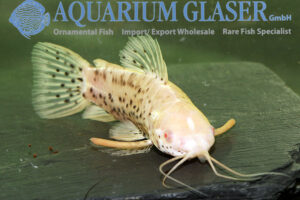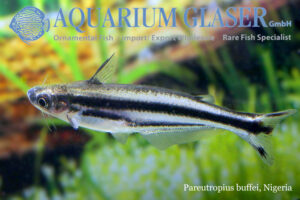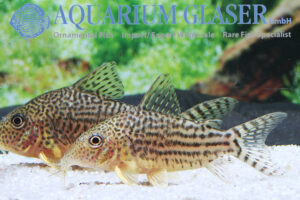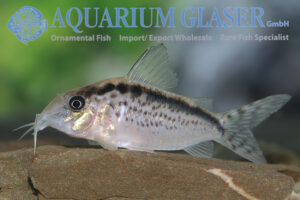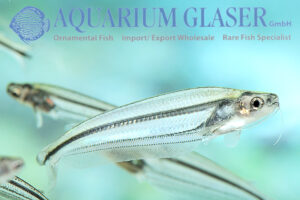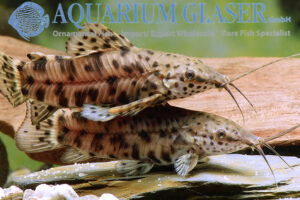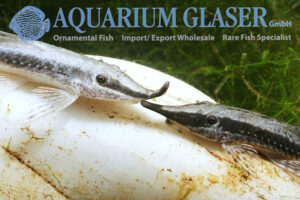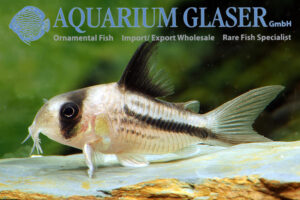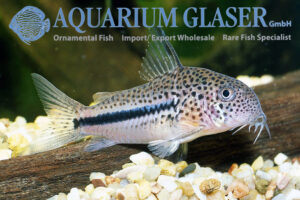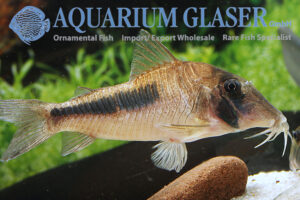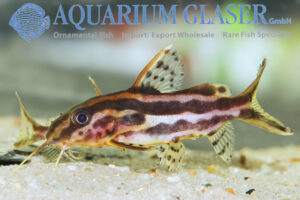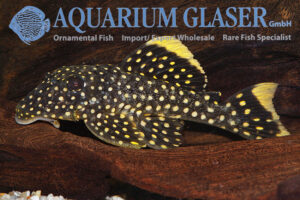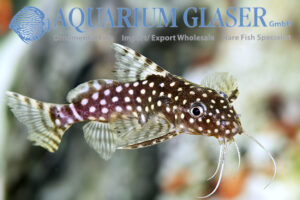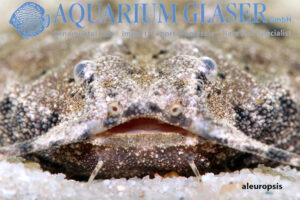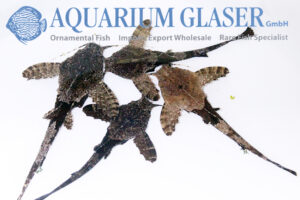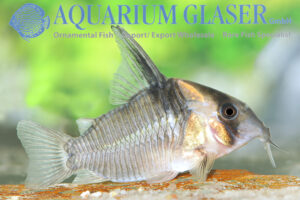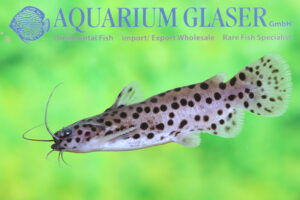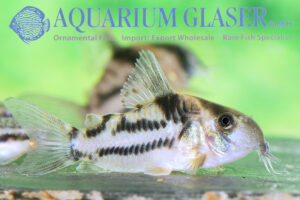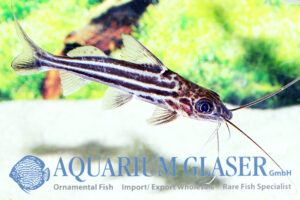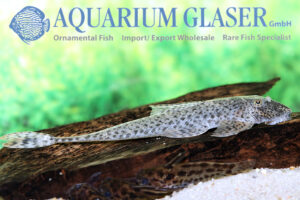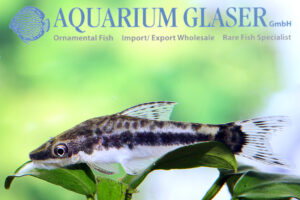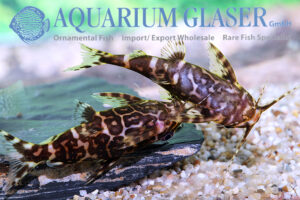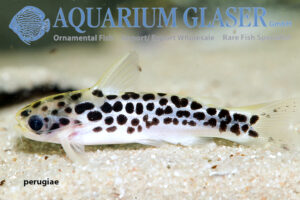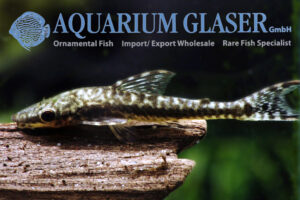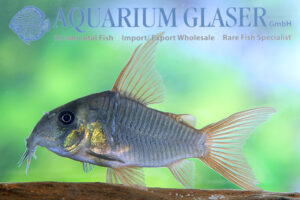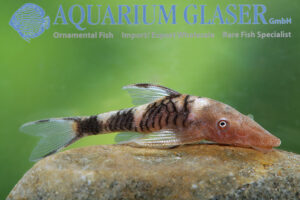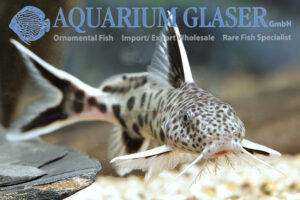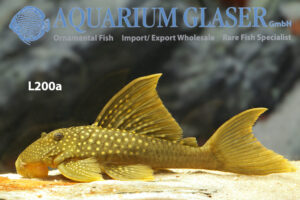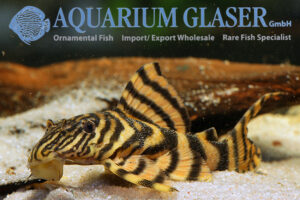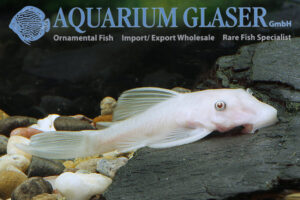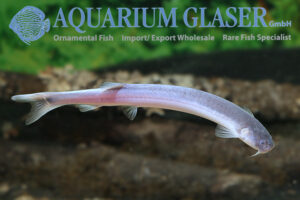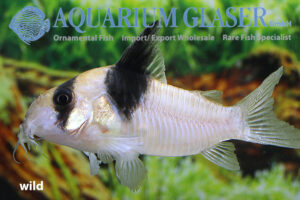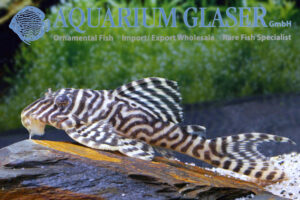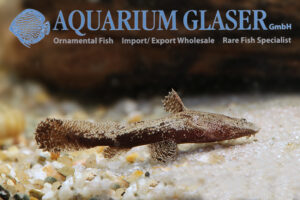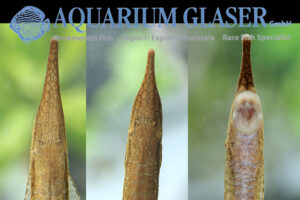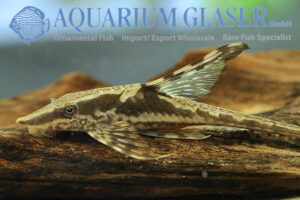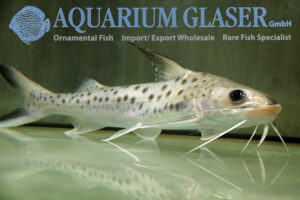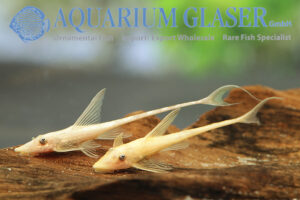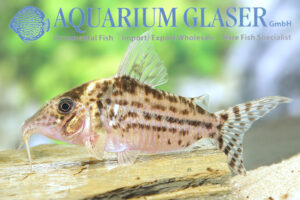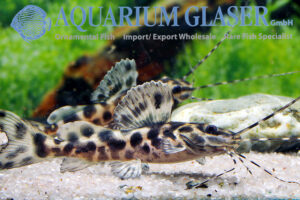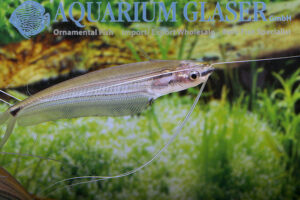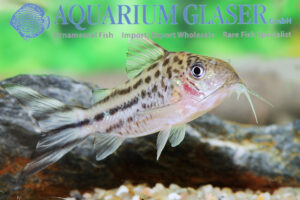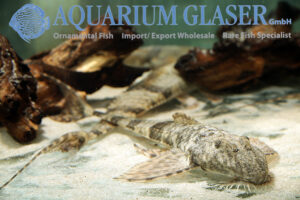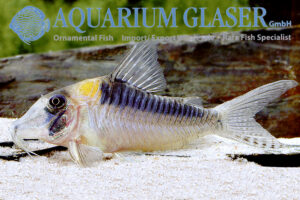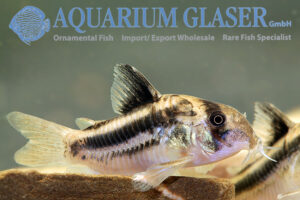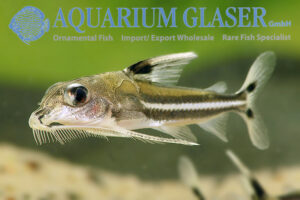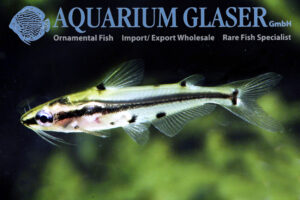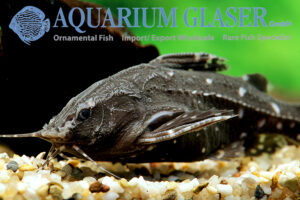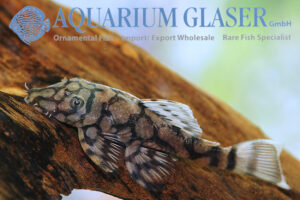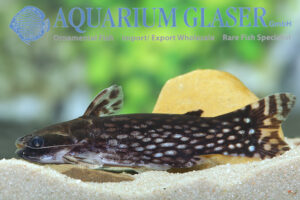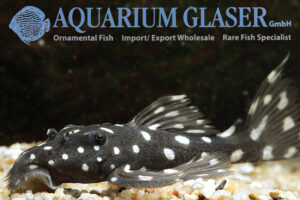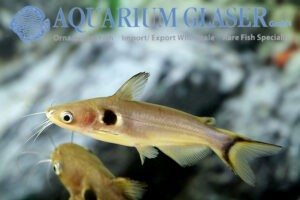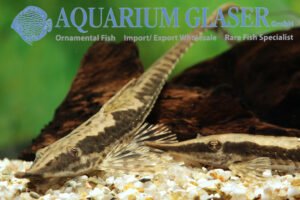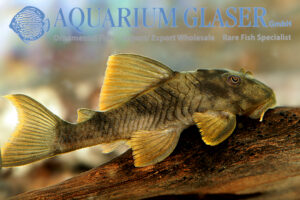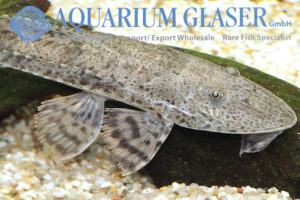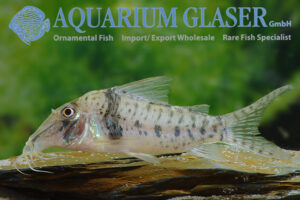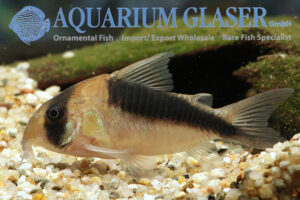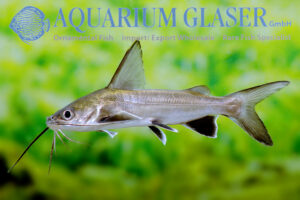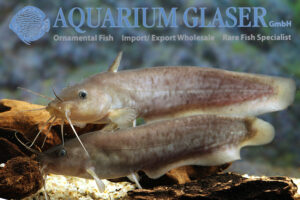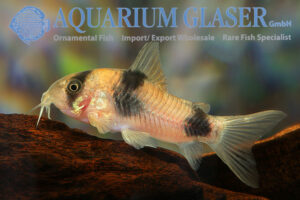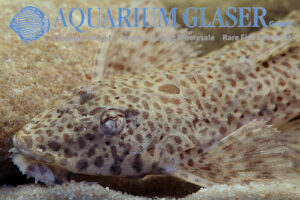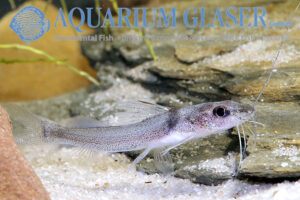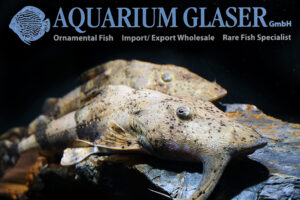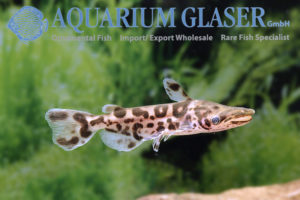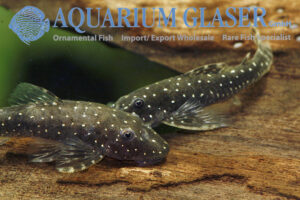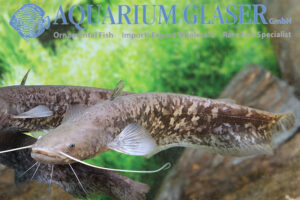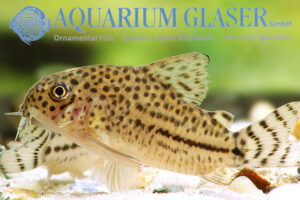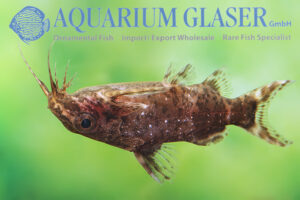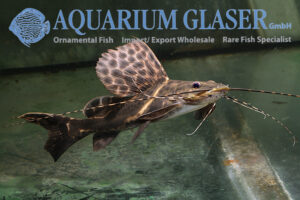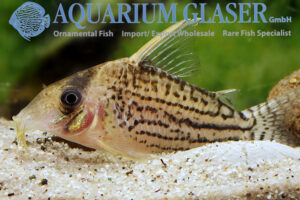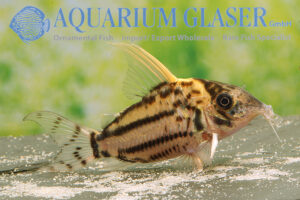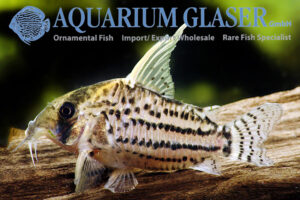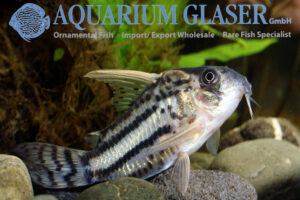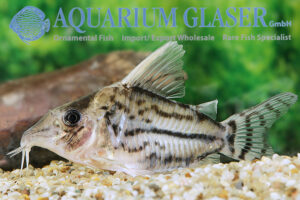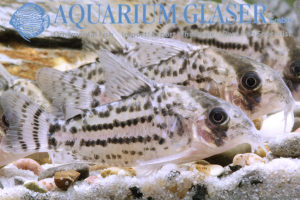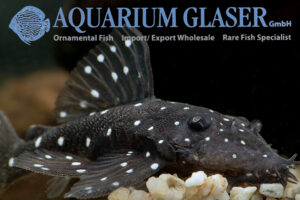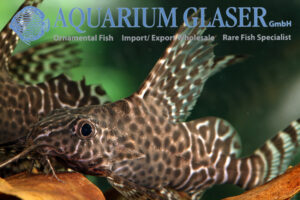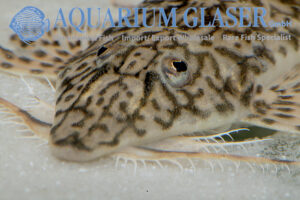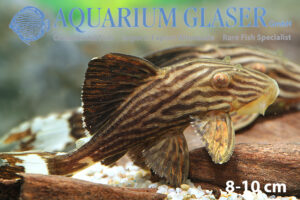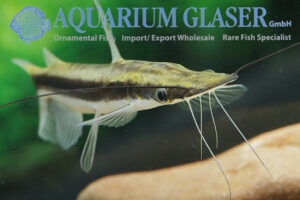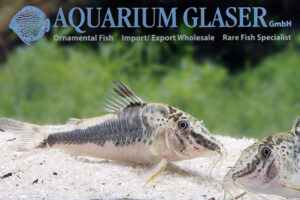

This attractive squeaker catfish originates from the lower Congo (for example in the Pool Malebo area, formerly known as Stanley Pool). With a final size of around 20 cm, it is one of the medium-sized species of the genus. In the past, this catfish was considered to be as sensational as the zebra catfish (L46, […]
10. Catfishes (763)
-
-
Baryancistrus xanthellus L18
The fishing season for the beautiful Golden Nugget catfish of the genus Baryancistrus lasts from around the end of May to the end of September. Due to the varying sizes of the spots on their bodies and the varying widths of the fin edges on their dorsal and caudal fins, as well as the varying […]
-
Synodontis angelicus
With 133 species, the squeaker catfish (Synodontis) inhabit practically the entire African continent. The smallest species grow to 6-7 cm in length, the largest to 60-70 cm. They play a very minor role in aquariums. Only the Upside-Down catfish (Synodontis nigriventris) and a few species from Lake Tanganyika are true aquarium fish with a larger […]
-
Bunocephalus aleuropsis and B. colombianus
We received four larger (10-15 cm) banjo catfish from Colombia, which turned out to be four different species. The two Xyliphius specimens were identified relatively quickly; one is a specimen of X. lepturus and the other is an almost entirely black specimen of X. melanurus (see https://www.aquariumglaser.de/fischarchiv/xyliphius-cf-lepturus-und-x-cf-melanurus/). The two “real” Bunocephalus were more difficult to […]
-
Bunocephalus coracoideus
Banjo catfish (Bunocephalus) are extremely common in nature. That’s why we always have them in stock. We usually refer to these animals as Bunocephalus coracoideus, which may be correct in many cases. But when you look at such a swarm of banjo catfish, you notice that there are always other species mixed in. As a […]
-
Hoplisoma colossus ( = CW45, Corydoras sp. „Lessex“)
In 2009, we successfully imported a large, beautiful armored catfish from the Rio Jutai in Brazil for the first time. At the time, we referred to the animals as Corydoras sp. aff. armatus because their particularly high dorsal fin and general body shape were very reminiscent of C. armatus. However, C. armatus (current name: Hoplisoma […]
-
Hoplisoma sp. aff. concolor Rio Tomo CW217
We consider the import of this beautiful new Hoplisoma to be sensational. According to the supplier, it comes from a small tributary of the Rio Tomo in eastern Colombia. The fishermen refer to this tributary as Cano Negro. The water is described as “crystal clear.” The Rio Tomo itself is a tributary of the Orinoco, […]
-
Bunocephalus coracoideus
Banjo catfish (Bunocephalus) are extremely common in nature. That’s why we always have them in stock. We usually refer to these animals as Bunocephalus coracoideus, which may be correct in many cases. But when you look at such a swarm of banjo catfish, you notice that there are always other species mixed in. As a […]
-
Spinipterus moijiri
The discovery of a new genus of driftwood catfish—Spinipterus—is quite sensational. In 2011, the first species of the newly described genus (S. acsi) was described and the new genus was established for it. In 2019, the second species (S. moijiri) was added, which is significantly more attractive in appearance and displays a beautiful jaguar pattern […]
-
Aspidoras raimundi C125 Red
The genus Aspidoras has recently undergone a revision, resulting in several regroupings. Among other things, the species A. menezesi and A. spilotus, well known at least by name in the hobby, have been synonymized with A. raimundi. Cory-catfish enthusiasts agree that C125 and CW119 also belong here. More information on the wild type of A. […]
-
Hoplisoma sp. CW127 BRED
One of the most magnificent armored catfish to become available in recent years is undoubtedly the CW127 from the Rio Jamanxim. For more information, see https://www.aquariumglaser.de/en/fisharchive/corydoras-sp-aff-parallelus-cw127-4/ We now have German captive-bred specimens of these magnificent animals in stock for the first time. For our customers: the animals have code 240262 on our stock list. Please […]
-
Pimelodus tetramerus
The genus Pimelodus is quite species-rich, with 35 recognized species currently, and also very confusing due to a lack of recent revision. These South American catfish play only a minor role in aquariums. The only species regularly available in stores is Pimelodus pictus, the angel catfish, and P. ornatus is an expensive rarity sought after […]
-
Harttia punctata
From the species-rich genus Harttia—currently divided into 28 species—hardly any ever find their way into our aquariums. The fish are relatively close relatives of the popular royal farlowellas (Sturisoma and Sturisomatichthys) and resemble them in many behaviors, but are considerably more demanding. Harttia need very clean, oxygen-rich, and warm water to thrive; in addition, fine […]
-
Otocinclus cf. macrospilus = O. mangaba?
The small sucker catfish of the genus Otocinclus are among the most popular “cleaners” in aquariums. They tirelessly clean all surfaces they can reach. Since they usually only grow to 3-4 cm, rarely up to 5 cm in length, and perform their cleaning activities very delicately, they do not damage even relatively delicate plants, but […]
-
Synodontis sp. aff. nigriventris ZEBRA
The upside-down catfish Synodontis nigriventris is the most popular species from the species-rich genus Synodontis. The comical behavior of these animals, which prefer to swim belly-up, is certainly the main reason for this. In addition, the species remains small, well under 10 cm. In fact, we have never seen animals larger than about 7 cm […]
-
Tatia perugiae and Tatia cf. altae
The driftwood catfish Tatia perugiae has become firmly established in the hobby. The species is small (4-6 cm), very pretty in color, and easy to breed in the aquarium. In addition, the animals are very peaceful and undemanding in terms of water composition and food. It is understandable that they usually only leave their hiding […]
-
Hypoptopoma psilogaster
The genus Hypoptopoma comprises small to medium-sized (the largest species is just over 10 cm long) armored catfish, which at first glance look like an enlarged version of Otocinclus. A characteristic feature of this genus is that the eyes are located on the sides of the head, giving a Hypoptopoma sitting on a plant stem […]
-
Hoplisoma concolor
Hoplisoma concolor (formerly Corydoras concolor) is a distinctive species from the Orinoco basin in Colombia and Venezuela. Its synonymization with Corydoras esperanzae was long overlooked, but is now completely undisputed. The first person to describe it, Castro, simply overlooked H. concolor in his 1987 work on the armored catfish of Colombia (the species had already […]
-
Nannoptopoma sp. Zebra Rio Tigre (LDA110)
Armored catfish are known to be a very species-rich and diverse group of fish. The largest species can grow to a length of one meter; Nannoptopoma are among the smallest known species, reaching only about 3-4 cm in total length. The genus Nannoptopoma is easily recognizable by its eyes, which are positioned very far to […]
-
Synodontis petricola ( = S. lucipinnis)
The squeaking catfish (Synodontis) of Lake Tanganyika became world-famous when one of their species was found to have cuckoo breeding behavior. This involves the catfish sneaking their spawn to mouthbrooding cichlids. The catfish are not only hatched by the cichlids, but the brood parasites even feed on the young cichlid stepsiblings in the mother’s mouth. […]
-
L200 Hemiancistrus subviridis and Baryancistrus demantoides
L-numbers were never intended as a substitute for scientific species designations, but rather to illustrate the diversity of imported loricariids and simplify communication. This is why it happened more frequently that the same zoological species was given several L-numbers, e.g. L18, L81 and L177. They look different, but belong to the same species, namely Baryancistrus […]
-
Panaqolus sp. L374
There are several tiger plecos of the genus Panaqolus. First L2 was imported from the Rio Tocantins and introduced in 1988 in the very first “L-catfish article” in the Datz. In 1992, LDA1 from the Rio Negro was added, which was given the additional L number 169 in 1994. The tiger pleco presented in 2001 […]
-
Hypostomus boulengeri
Every aquarist probably knows the genus Hypostomus by name, to which 154 species are currently assigned (including Cochliodon, which is sometimes seen as an independent genus and sometimes as a synonym of Hypostomus). Of this huge variety, however, only one species is regularly found in the trade, namely Cochliodon basilisko, also known as Red Bruno. […]
-
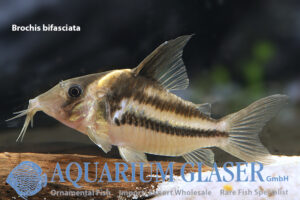
Brochis bifasciata ( = Corydoras bifasciatus)
Given the current (June 2025) 159 C-numbers and 216 CW-numbers, you would think that all 203 scientifically accepted species of the subfamily Corydoradinae (i.e. Aspidoras, Brochis, Corydoras, Gastrodermus, Hoplisoma, Osteogaster and Scleromystax) would be appearing more or less regularly in the hobby. But this is not the case. Two longnosed species from the Rio Tapajós […]
-
Hypancistrus sp. L260 Queen Arabesque
It is astonishing that this strikingly colored catfish from the Rio Tapajós in Brazil (state of Para) has not yet been scientifically recorded. Since 1998 it has carried the L-number 260 and since then has also been one of the regularly imported and bred L-catfish. There are great similarities to L411 from the Rio Jari. […]
-
Glyptothorax buchanani
The mountain catfish (Glyptothorax) are virtually unknown in aquaristics. It is a very species-rich group (almost 120 accepted plus presumably numerous undescribed species) of mostly small, current-loving catfish. The extremely limited experience of keeping these catfish shows that (as with many stream fish) they are sensitive animals that do not tolerate heavy organic pollution or […]
-
Tocantinsia piresi
We just received one of the very rare imports of a very peculiar representative of the Auchenipteridae (driftwood catfish): Tocantinsia piresi. These catfish were first discovered in 1974 in the Rio Tocantins near Porto National in the state of Goiás in Brazil. Because they did not fit into any known genus, Mees described them as […]
-
Ancistrus sp. “Gold Albino”
Albinism is a mutation that can occur in almost any animal species, including humans. The word is derived from the Latin “albus” = white. The expression of the mutation is admittedly different. In some forms of albinism, some melanin (the black cell pigment) is still produced, in other forms hardly any or none at all. […]
-
Ancistrus sp. “Snow White Longfin”
When asked: “May it be a little more?”, many Ancistrus enthusiasts answer: “Yes, I’d love to!”. The result is Veil Ancistrus, which are now available in pretty much all colors of the popular aquarium Ancistrus. Of course, the “Snow White Longfin” are still quite exclusive and only available from time to time. There are both […]
-
Ancistrus “Snow White”
White animals – preferably as pure white full albino with red eyes – exert a special attraction on many people. The white coloration gives them the impression of special purity and innocence. It is therefore no wonder that albinos sooner or later appear in the trade from almost all very frequently kept and bred animal […]
-
Pareiodon cf. microps
The parasitic catfish of the subfamily Stegophilinae within the pencil catfish (Trichomycteridae) are famous and notorious as “Candirus”. They often specialize in blood as food and swim like little vampires into the gill cavity of large catfish, where they bite into a blood vessel and pump themselves full of the red elixir of life. Apparently […]
-
Hoplisoma (formerly Corydoras) sp. CW49
Two beautiful new panda catfish (Hoplisoma) arrived from Colombia in 2010. As these species have not yet been scientifically studied, they have been assigned the code numbers CW49 and CW51. At first there was some confusion as to whether they were different species or just two color forms of the same species. Both have already […]
-
L66 is now Hypancistrus seideli
The scientific processing of loricariid catfishes with L-numbers is progressing. The confusing variety of forms that some species develop is a problem that is almost impossible to solve, even for ichthyologists, i.e. professional fish experts. In a recent study, a team of scientists looked at two Hypancistrus species from the Rio Xingu, namely L174, which […]
-
Chaca chaca GERMAN BRED
Frogmouth catfish (Chaca) are rarely kept in the aquarium and even more rarely bred. There are four species: Chaca chaca from India, C. burmensis from Burma, C. bankanensis from Malaysia and parts of Indonesia and C. serica from south of Borneo. The four species look very similar and were not distinguished from each other for […]
-
Farlowella hahni
The needle catfish (Farlowella) are whimsical representatives of the loricariid catfishes (Loricariidae), reminiscent of sticks. They graze on fine growth with their typical sucking mouth. They are usually common animals in the wild, which is why they attracted the attention of scientists early on. The first species was described in 1853 (F. acus), the last […]
-
Sturisomatichthys aureus
As is well known, the royal farlowellas (Sturisoma and Sturisomatichthys) were reclassified in 2019, resulting in some regrouping. Several species previously classified as Sturisoma now belong to the genus Sturisomatichthys. According to Londoño-Burbano & Reis, 2019, externally recognizable differences between the two genera are the irregular, numerous central ventral plates that are not arranged in […]
-
Platynematichthys notatus
Platynematichthys notatus is one of the extremely rare species on the ornamental fish market. There is only one species of the genus, but it is widely distributed in the Amazon and Orinoco river systems (Bolivia, Brazil, Ecuador, Colombia and Venezuela). This fish is usually only caught in the strong current, oxygen-rich areas of the main […]
-
Sturisomatichthys ALBINO
As is well known, the royal farlowellas (Sturisoma and Sturisomatichthys) were reclassified in 2019, resulting in a number of regroupings. Several species previously classified as Sturisoma now belong to the genus Sturisomatichthys. According to Londoño-Burbano & Reis, 2019, externally recognizable differences between the two genera are the irregular, numerous central ventral plates that are not […]
-
Oxyropsis acutirostris
Unfortunately, the “Giant Otos” of the genus Oxyropsis are rarely offered for sale. Three species are currently scientifically accepted, O. carinata and O. wrightiana, which inhabit the upper and middle Amazon basin, and O. acutirostris from the upper Orinoco and Rio Negro basin. Oxyropsis can be distinguished from the similar species of the genus Hypoptopoma […]
-
Brochis sp. C156 Rio Purus
The armored catfish of the Rio Purus in Brazil have an enormous variety of forms, which is really hard to see through. In addition to the already variable coloration, there are also differences in the color pattern at different ages. Almost every attempt at identification leaves doubts, at least for individual animals. It is therefore […]
-
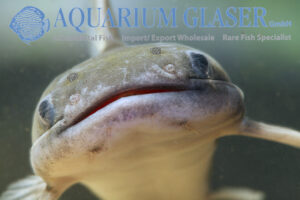
Leiarius marmoratus ( = L. longibarbis?)
There are two species of catfish in South America that look confusingly similar: Leiarius marmoratus, which the Indians call “Achara” and Leiarius (formerly: Perrunichthys) perruno. Both species grow to around 60 cm in length and have the same leopard pattern and long, ringed barbels. However, there is an easily recognizable difference: Leiarius marmoratus has 10-11 […]
-
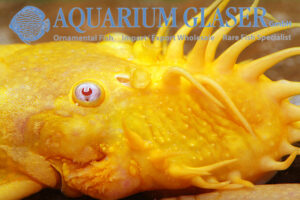
Ompok pinnatus
Occasionally we receive a very unusual glass catfish from Thailand, whose incredibly long barbels immediately catch the eye. This is the species Ompok pinnatus, which was only described in 2003. These fish have little in common with the Ompok we usually import (see https://www.aquariumglaser.de/en/10-catfishes/10e-catfishes-from-asia/ompok_cf_fumidus_en/ and https://www.aquariumglaser.de/en/10-catfishes/10e-catfishes-from-asia/ompok_bimaculatus_and_o_pabda_en/), they look more like typical glass catfish (Kryptopterus), which […]
-
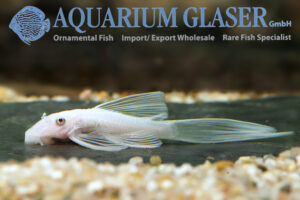
Brochis robineae
Brochis robineae (formerly: Corydoras robineae) stands out from the large number of armored catfish species that exist due to its unique tail fin pattern. Only in B. robineae is the caudal fin horizontally striped (in all other species it is colorless or vertically striped). Such a striking caudal fin pattern is also rarely found in […]
-
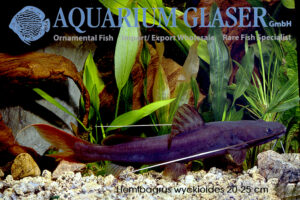
Spatuloricaria terracanticum ( = S. sp. COLOMBIA)
The genus Spatuloricaria consists of 13 scientifically described species. The genus has an extremely wide distribution area from the south of South America (Argentina, Paraguay, Uruguay, southern Brazil) to Panama in the north. It is also found on both slopes of the Andes. 11 of the 13 species were described by 1945, with two new […]
-
Corydoras serratus
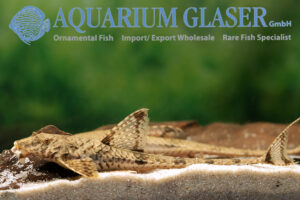
The saddle-snouted Corydoras serratus from the upper Rio Negro region in Brazil is one of the most sought-after armored catfish. Because the saddle-snouted Corydoras, in contrast to the long-snouted and round-snouted former (now assigned to other genera) Corydoras, tend to be solitary fish, they cannot be caught economically in large numbers. This and the fact […]
-
Hoplisoma cf. axelrodi CW169
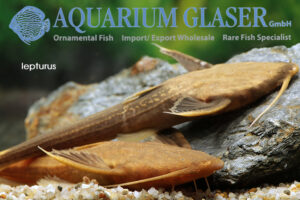
A whole range of armored catfish species are exported from Colombia under the fantasy name “Corydoras deckeri”. They all originate from the large Rio Meta system, but more precise information is rarely available. One of the most frequently offered “deckeri” species is Hoplisoma axelrodi. This beautiful armored catfish has been very popular for decades and […]
-
Tenellus trimaculatus
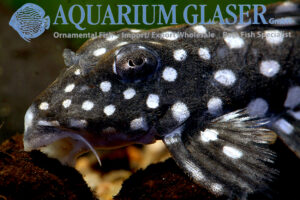
From Peru we receive this nice catfish, which can be recognized by its species-typical pattern: A black spot at the base of the dorsal fin, two at the middle base of the caudal fin. The species name also refers to this (trimaculatus = with three spots). The peaceful animal becomes about 10 cm long. Its […]
-
Hyalobagrus flavus
Back in 1903 Georg Duncker from the Hamburg Museum described a small species of catfish from the Malay Peninsula under the name of Pseudobagrus ornatus. The description appeared in the same famous paper in which the harlequin barb (Trigonostigma heteromorpha) and the dwarf rasbora (Boraras maculatus) were described. In contrast to the two barbs, which […]
-
Agamyxis pectinifrons
If you are looking for a long-lived, extremely robust, pretty and peaceful fish, Agamyxis is the right fish for you. Although these virtually indestructible spiny catfish grow relatively large at up to 15 cm in total length, they are absolutely peaceful and require so little movement due to their well-kept phlegm that they can live […]
-
Ancistrus sp. L519 Bolivia
During the private fish expedition “SiluCha 2018”, this Ancistrus, which is ideal for aquariums, was discovered in the drainage of the Rio Iténez. The collectors managed to bring back a few specimens and breed them. In the meantime, this beautifully marked species has even reached the trade, and because there are currently no professional ornamental […]
-
Tatia intermedia
The closer relatives of Tatia are quite well known aquaristically, as several species have proven to be easy to keep and breed. The attractive coloration of some species makes up for the fact that these animals are rarely seen during the day. They only leave their hiding places at feeding times. The following applies to […]
-
Leporacanthicus sp. L241
Why do so many L-catfish have a light-colored dot pattern on a black background? From the 3-5 cm long Parotocinclus haroldoi (https://www.aquariumglaser.de/en/fisharchive/parotocinclus-haroldoi-4/) to the sometimes meter-long Acanthicus adonis (https://www.aquariumglaser.de/en/10-catfishes/acanthicus-adonis-2/) the coloration occurs; in between there are tens of species with such coloration, which are in between in size. In the entire realm of other catfish, […]
-
Horabagrus brachysoma
The catfish fauna of Asia is very species-rich and includes several hundred species, but only very few of these are kept in aquaria on a fairly regular basis. The genus Horabagrus is endemic (= only found there) to southern India. There are only two accepted species in this genus, namely H. brachysoma and H. nigricollaris. […]
-
Sturisoma cf. ghazziae
Recently (December 2023) the genus Sturisoma was revised and on this occasion four new species were described. We have now been able to import Sturisoma from Brazil and according to the identification key of the revision we came to the conclusion that it must be one of the newly described species, namely Sturisoma ghazziae. This […]
-
Peckoltia sp. L76
In 1990, well over 30 years ago, the beautiful orange-fringed loricariid catfish L76 was introduced in the DATZ. Like L99, which was introduced in 1992 and is currently only seen as a color variant of L76, it originates from the Brazilian state of Pará, more precisely from the Rio do Pará. There are three forms […]
-
Loricariichthys sp. Rio Blanco
The interesting genus Loricariichthys currently comprises 19 accepted species. The members of the genus can be reliably recognized by the shape of their lips. These lip-brooding catfishes – similar to many other whiptail catfishes, the male carries the clutch of eggs attached to the lower lip until the larvae hatch – do not have any […]
-
Corydoras orcesi
The beautifully marked Corydoras orcesi is only very rarely found in the aquariums of enthusiasts. The species has been described from the Rio Tigre system in Ecuador, originally as a subspecies of C. pastazensis. Both species are similarly colored, but no hybrid forms occur, so that they are in all probability independent species, even if […]
-
Hoplisoma sp. CW 91/CW 107
The Rio Vaupés – the Spanish spelling – or Rio Uaupes – the Portuguese spelling – is a “small” right-bank tributary of the Rio Negro. After all, the “little one” has a length of 1,375 km! It rises in Colombia in the foothills of the Andes and forms the state border with the Brazilian state […]
-
Ariopsis simonsi (formerly Arius jordani or Hexanematichthys seemanni)
The Colombian shark is a wanderer between worlds. It spends its childhood in fresh water, adults live in the sea. The nutrient-rich brackish water zones of the estuaries are particularly favorable habitats for specimens that have outgrown their infancy. These catfish, which belong to the Ariidae family of around 150 species, only have their name […]
-
Neosilurus ater
Catfish are an incredibly successful group of fish and have conquered practically all freshwater habitats. Only the sea catfish (Ariidae, the only true ornamental fish in this family is the Colombian mini shark) and the eel catfish (Plotosidae) are true marine fish, with around 30 of the 40 or so species of eel catfish regularly […]
-
Hoplisoma (previously: Corydoras) weitzmani
Over the decades, we have often witnessed the rise of a new star in the ornamental fish sky. Among the armored catfish, this was undoubtedly Hoplisoma weitzmani, which went from being a sought-after phantom to a species that is now firmly established in the range. Our first posts on this animal appeared in 2007: https://www.aquariumglaser.de/en/10-catfishes/10a-catfishes-corydoras-co/corydoras_weitzmani_en/ […]
-
Rineloricaria formosa ( = Hemiloricaria f.)
Among the small whiptail catfish (Rineloricaria), all of which are cave breeders, there is a group that is particularly well adapted to life on sandy bottoms in black water. They are particularly sought after by catfish specialists due to their attractive spot pattern. What they have in common is a circular, conspicuous spot on their […]
-
Pimelodella sp. Ventuari
The genus Pimelodella comprises 103 described species, of which 81 are currently considered valid. The size of the Pimelodella species is between 7 and 30 cm. So no species is really huge. The genus is almost exclusively South American, with only one species reported from Central America (Costa Rica and Panama). Identification of the species […]
-
Bagarius vegrandis
The devil catfish (Bagarius) is one of the largest representatives of catfish in South and Southeast Asia: giant 2-meter specimens of the Goonch – as the animals are called in India – have been caught. Unfortunately, the systematics of Bagarius are highly confused. Only one species is very well defined and clearly recognizable: B. suchus […]
-
Ageneiosus inermis
Already in 1766 this catfish was described by Linné. It is one of the most widespread species in South America. It has been reported from Argentina, Bolivia, Brazil, Paraguay, Ecuador, Peru, French Guiana, Guyana, Suriname, Uruguay, Colombia and Venezuela. In the course of the centuries many synonyms accumulated: 12 times this species was described under […]
-
Parotocinclus haroldoi
Perhaps the prettiest and at the same time most suitable otocinclus for aquaristics is Parotocinclus haroldoi. Concerning the coloring – yellow-white, shining spots on black underground – the species resembles the adonis pleco (Acanthicus adonis), remains however with maximally 4 cm (male) and at all-highest 5 cm (female) much, much smaller. Until now this species, […]
-
Silurus glanis
The Wels catfish or Sheatfish (Silurus glanis) was originally widespread from Eastern Europe to Central Asia, but was artificially introduced by humans as a food fish over large regions. It is one of the largest freshwater fish in the world. The current records that are reported speak of animals up to 3 meters long and […]
-
Hoplisoma knaacki ( = Corydoras knaacki)
Hoplisoma knaacki originates from the Madre de Dios region in Peru and belongs to a group of armored catfishes that are very close to the type species of the genus Hoplisoma Swainson, 1838 – H. punctatus (Bloch, 1794). Aquarists are best familiar with the two species H. julii and H. trilineatus from this group, which […]
-
Synodontis nigriventris
By far the most popular squeaker catfish (Synodontis) is the upside-down catfish (Synodontis nigriventris). The species comes from the Congo, where it colonizes the central section of the river (including Pool Malebo, the former Stanley Pool); the settlement area also includes the basins of the Kasai, Ubangi and Kouilou-Niari rivers. It is not the only […]
-
Leiarius pictus
Leiarius pictus is one of the most attractive predatory catfish of all. The large, sail-like dorsal fin in combination with the light-colored band that starts at the base of the dorsal fin and runs diagonally backwards to the belly make it unmistakable. The species is extremely widespread in South America. It has been reported from […]
-
Brochis sp. “Super Schwartzi Hifin Longnose” ( = Corydoras sp. “labrina” or “labrea”)
The characteristics of Brochis sp. “Super Schwartzi Hifin Longnose” are identical to Hoplisoma sp. “Super Schwartzi Hifin CW28”, except that Super Schwartzi Hifin Longnose is a longnose and Super Schwartzi Hifin CW28 is a roundnose. Brochis sp. “Super Schwartzi Hifin Longnose” has usually only appeared in single specimens mixed with the other species from the […]
-
Brochis sp. “CW28 Longnose” ( = pulcher variant)
The characteristics of Brochis sp. “CW28 Longnose” are identical to Hoplisoma sp. “CW28”, but Brochis sp. “CW28 Longnose” is a longnose, CW28 a roundnose. This species is usually sent mixed with CW28, but occasionally also mixed with Brochis pulcher. We have often received this species purely sorted as Brochis pulcher. In the aquarium literature, Brochis […]
-
Hoplisoma sp. “Super Schwartzi Hifin CW28”
The characteristics of Super Schwartzi Hifin CW28 are: Round snout; two thin longitudinal bands, sometimes resolved to dots, running parallel, one above and one below the midline; usually two more thin longitudinal bands are present, so usually four in total; the dorsal fin spine is conspicuously cream-colored; the dorsal fin is conspicuously high in males […]
-
Hoplisoma sp. CW28 ( = cf. pulcher)
The characteristics of CW28 are: Round snout; two broad, parallel longitudinal bands on the bony plates, one above and one below the midline; the dorsal fin spine has a conspicuous cream color. The maximum length is 6-6.5 cm (standard length without caudal fin). CW28 has been known in the hobby since the 1960s. A specimen […]
-
Brochis pulcher
The Rio Purus is one of the major tributaries of the Amazon. Its length is over 3,200 km. The source and upper reaches of the Rio Purus are in Peru, the middle and lower reaches are in Brazil. The Rio Purus is home to numerous ornamental fish, including various armored catfish. A species flock of […]
-
Hoplisoma schwartzi (= Corydoras schwartzi)
This well known, but still beautiful Hoplisoma originates from the Rio Purus system in Brazil. It was named in honor of the exporter Willy Schwartz. In Hoplisoma schwartzi, which belongs to the stocky, round-headed members of the genus, the dorsal fin is marked very slightly differently in each animal, the coloration of the spine ranges from […]
-
Ancistrus sp. L107
One of the most beautiful Ancistrus of all is certainly L107, which – as far as we know – has still not been scientifically studied. It is a pitch-black Ancistrus with snow-white spots, which is also known as the “brilliant Ancistrus” due to its striking contrast. In contrast to many other similar Ancistrus, this species […]
-
Synodontis eupterus
Synodontis eupterus inhabits the White Nile, the Niger and Chad basins and the Volta River. There it is found over mucky and sandy substrate. Nowadays, however, practically all animals in the trade are captive-bred. A striking feature of this catfish, which can grow up to 25 cm long, is its magnificent dorsal fin with elongated […]
-
Rhadinoloricaria andaki
It’s been a while – April 2016 – since we were able to proudly report the first import of a Rhadinoloricaria species from Venezuela. Although the genus was already described in 1974, the only species assigned to it in 2016, R. macromystax from Peru, is considered to be very rare. Since our first import, the […]
-
L27 Xingu Panaque cf. armbrusteri
The fine systematics of the large (over 30 cm) black-striped Panaque is still only unsatisfactorily studied. Panaque nigrolineatus (L190) from Colombia and Venezuela is certainly the best known by name, and in 2020 a subspecies, usually rather spotted, was described from the upper Rio Guaviare in Colombia (P. n. laurafabianae, L330 see https://www.aquariumglaser.de/en/10-catfishes/l330-scientifically-described-panaque-nigrolineatus-laurafabianae/). Aquarists recognized […]
-
Sorubim lima
The large-sized species of the spiny catfishes (Pimelodidae) belong as adult fishes to the desired food fishes and not less desired species for fans of predatory catfishes with giant aquariums. As juveniles, these animals often look completely different and have, for example, absurdly long fin processes. The Shovelnose catfishes of the genus Sorubim are with […]
-
Corydoras semiaquilus
Three magnificent Corydoras species from Peru undoubtedly form a closely related group. They are very pointed-headed and comparatively large (around 6 cm, sometimes up to 8 cm) Corydoras, namely C. fowleri, C. coriatae and C. semiaquilus. The independence of C. coriatae is often doubted, as numerous locality variants of C. fowleri have become known and, […]
-
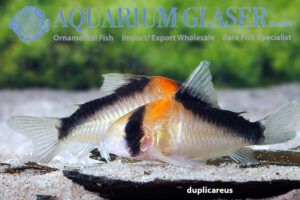
Hoplisoma adolfoi and H. duplicareus (formerly: Corydoras)
We receive these beautiful armored catfish both as captive-bred and wild-caught specimens. Both are currently classified in the genus Hoplisoma. The correct species identification of these animals is still unclear. There are clearly two types, a high-backed one with a very broad dorsal band (duplicareus) and a slimmer one with a narrow dorsal band (adolfoi). […]
-
Corydoras ambiacus (now: Brochis ambiacus)
Corydoras ambiacus is one of the longest known species of the enormously diverse armored catfish, which has recently been assigned to the genus Brochis in a major review of armored catfish. The species Corydoras ambiacus was formally described from the Rio Ambyiacu in Peru as early as 1872. At that time, only 5 Corydoras species […]
-
Corydoras have been revised – “new” genus names!
The armored catfish (Callichthyidae) are a species-rich family that occurs exclusively in South America. There are two subfamilies, the callichthyid catfishes (Callichthyinae) and the corydoras-like armored catfishes (Corydoradinae). The latter are particularly species-rich. Currently (June 2024), 231 species are considered to be described, 171 of which are generally recognized as valid; in addition, there are […]
-
Hemibagrus wyckii and H. wyckioides
These large predatory catfish from Southeast Asia usually grow to around half a meter in length. The maximum length given for H. wyckioides is up to 130 cm and 86 kg in weight, while “only” around 90 cm is given for H. wyckii. They are important food fish and are highly prized for their excellent […]
-
Rineloricaria eigenmanni
There is no consensus among ichthyologists (= fish experts) as to the correct generic name for the whiptail catfish of the narrower Rineloricaria relationship. Some group all species together as Rineloricaria, others divide these fish into Rineloricaria and Hemiloricaria. Rineloricaria in the broadest sense is very species-rich, currently 64 species are recognized and there are […]
-
Xyliphius cf. lepturus and X. cf. melanurus
Once again we succeeded in importing some specimens of these strange, naturally almost blind banjo catfish, this time from Colombia. For our first import and further information see here: https://www.aquariumglaser.de/en/10-catfishes/10c-catfishes-remaining-catfish-from-south-america/xyliphius-cf-lepturus/ This time there are apparently two species in the import. Unfortunately, only one specimen probably belongs to the species Xyliphius melanopterus, recognizable by the light […]
-
Hypancistrus inspector “L102, Snowball Pleco”
L102 is one of the plecos that has long been known in the hobby and was given its L number back in 1992. These animals originated from the lower Rio Negro in Brazil and were soon given the popular name “Snowball Pleco” because of the large white spots on a black background. The species was […]
-
Microglanis “poecilus”
The genus Microglanis consists of small to very small catfish with a maximum length of between 2.5 and 8 cm, depending on the species. All species come from South America. Until 1950, only 6 species were differentiated; currently the number of species is 30, with 17 species alone being described after the year 2000. Only […]
-
Rineloricaria cf. sanga
We received Rineloricaria from the Brazil-Uruguay border region. The genus Rineloricaria is extremely species-rich with currently 72 accepted species and new species are constantly being added. Unfortunately, there is no complete overview of the genus, making identification extremely difficult. The southern Rineloricaria are also particularly tricky because only a few live observations have been made […]
-
Panque suttonorum ( = P. suttoni)
In the 1980s, the blue-eyed Panque was one of the most common loricariid catfishes on the market. Incidentally, the correct name is Panaque suttonorum. For unknown reasons, the animals are hardly available nowadays. There are a lot of rumors that an environmental disaster is to blame or that a madman has poisoned the river or […]
-
Corydoras reticulatus
We are once again able to offer fully grown Corydoras reticulatus from Peru. C. reticulatus can be easily distinguished from the similar species Corydoras sodalis (see: https://www.aquariumglaser.de/en/10-catfishes/10a-catfishes-corydoras-co/corydoras-sodalis-2/) by the deep black spot on the dorsal fin. The maximum length of C. reticulatus is around 6-7 cm in total, including the caudal fin. The species makes […]
-
Chaca chaca
These catfish have their funny name due to the fact that they make croaking sounds when taken out of the water. These sounds are decribed onomatopoeicly as „chaca“ by the natives. Usually Chaca chaca is imported from Bengal; the species is pretty common, but only seldom available, as it is not eaten by the local […]
-
Kryptopterus macrocephalus
This close relative of the well-known and popular glass catfish Kryptopterus vitreolus (formerly: K. bicirrhis) is widespread in Southeast Asia. We have now been able to import this pretty species once again from Indonesia. The main difference between the glass catfish and K. macrocephalus is that K. macrocephalus has two dark stripes along the body. […]
-
Corydoras pantanalensis C5 Bred
Highly sought-after, large, magnificent and rarely on offer: this is Corydoras pantanalensis, which was given the code number C5 before its scientific description. For general information on the species, see here: https://www.aquariumglaser.de/en/10-catfishes/corydoras-pantanalensis-2/ We are very pleased to be able to offer some offspring of this species in the 3-4 cm size. The fish were bred […]
-
Nemadoras elongatus
The thorny catfish are a very interesting and diverse group of catfish. Once again we were able to import the slender species Nemadoras elongatus from Peru, which can reach a total length of around 12-15 cm. At first glance, the fish are very reminiscent of the Hassar species, which they also resemble in terms of […]
-
Tenellus leporhinus
The thorny catfishes of the genera Doras, Hassar, Hemidoras, Leptodoras, Nemadoras and Tenellus look quite similar at the first glimpse and have often been confused with each other in the past, both in scientific and aquarium literature; accordingly, there are always small question marks behind the identification of rarely imported species. From Colombia we have […]
-
Auchenipterichthys coracoideus (formerly: A. thoracatus)
A few decades ago, the Zamora catfish was the most commonly imported driftwood catfish. At that time it was identified as Auchenipterichthys thoracatus. It was not until 2005 that it was discovered that although the species A. thoracatus exists, it is not identical to the Zamora catfish. Its correct name is Auchenipterichthys coracoideus. While A. […]
-
Pseudorinelepis sp. L95a
At present, only one species of Pseudorinelepis is recognized by scientists, namely P. genibarbis. According to this assumption, the species is widely distributed in tropical South America and occurs in the Amazon and its tributaries as well as in the Orinoco and its catchment system. According to this theory, the color differences observed in living […]
- 1
- 2
- 3
- …
- 8
- Next Page »