
Fish Archive (3164)

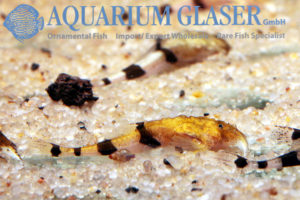
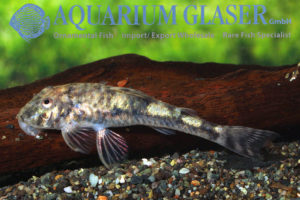
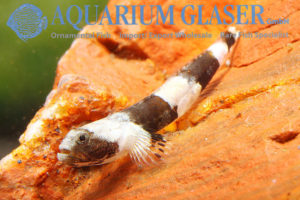
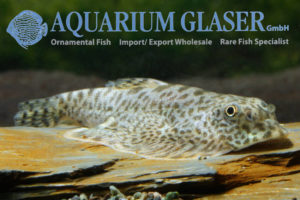
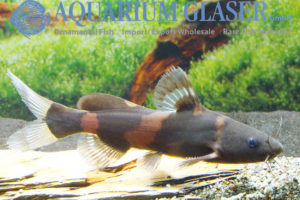
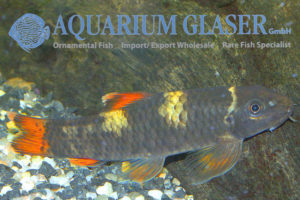
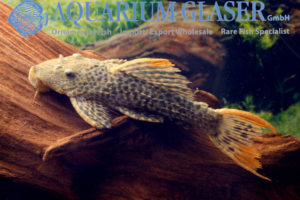
  • Hemiloricaria sp. Golden (Lutino)

    23. August 2010

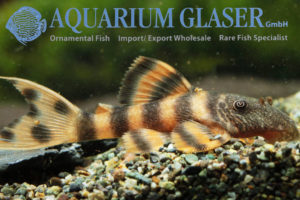
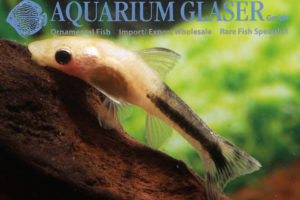
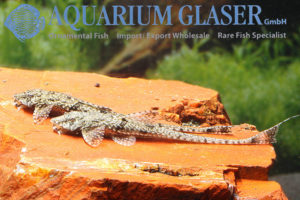
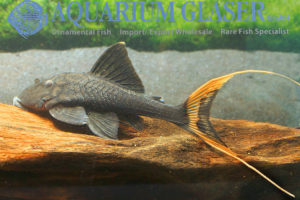
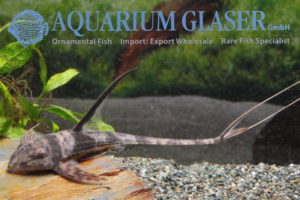
    This wild collected specimen from Peru has a very unique colour aberration. Usually such specimens cannot survive in the wild, but this fish is a healthy, adult animal. For our customers: the fish has code 257924 on our stocklist. Please note that we exclusively supply the wholesale trade. Lexicon: Hemiloricaria: ancient Greek, means “half loricaria”; […]
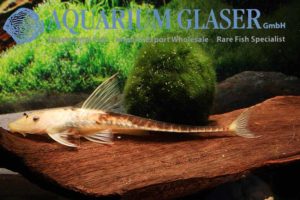
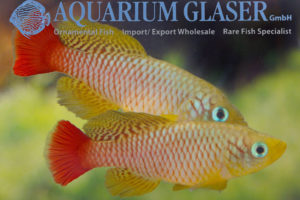
  • Moema cf. ortegai

    17. August 2010

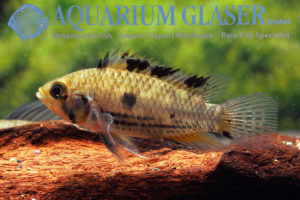
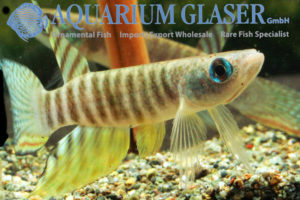
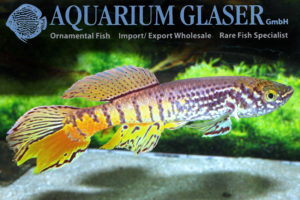
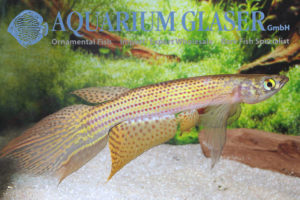
    We were able to import astonishing large Moema cf. ortegai from Peru. The females are around 8 cm, the males around 12 cm long. This places them among the largest species of killifish known so far. The extremely large pectoral fins of the males are very impressive. However, the whole finneage of the males is […]
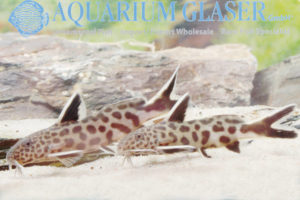
  • Ernstichthys megistus

    16. August 2010

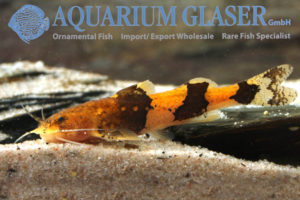
    For the first time we were able to import a very astonishing species of catfish, which was known until 1985 from 3 specimens only. At the first glimpse the small animals – they are hardly 2 cm long – remind one on the Asian catfishes of the genus Akysis. Actually they are relatives of the […]
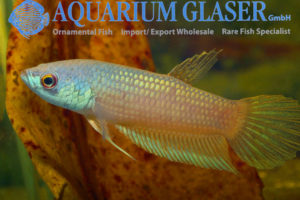
  • Pinirampus sp. Paraguay

    16. August 2010

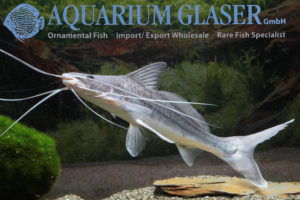
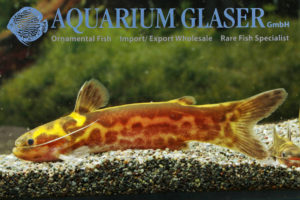
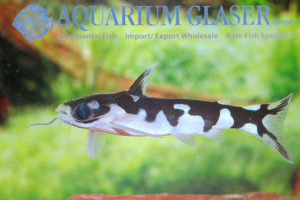
    The catfish family Pimelodidae is restricted to South America. It is a quite diverse family. Although only about 90 species are known they could hardly be more contrasting. The smallest species (a still undescribed one from the Amazon river) becomes only 2.5 cm long, the largest (Brachyplatystoma filamentosum) becomes 2 metres long. Most species, however, […]
  • Yasuhikotakia nigrolineata

    Yasuhikotakia nigrolineata

    16. August 2010

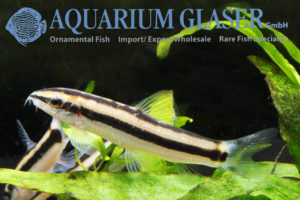
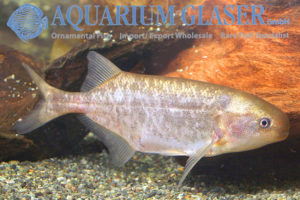
    This pretty loach is distributed in Laos, Thailand and parts of China. Obviously it is a close relative of the dwarf chain loach, Y. sidthimunki, and the behaviour of Y. nigrolineata is absolutely the same. However, there are two distinguishing features – besides the coloration: first, Y. nigrolineata become a bit larger, about 8 cm […]
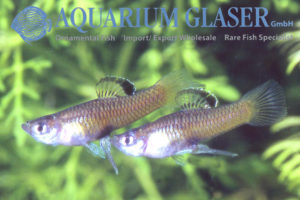
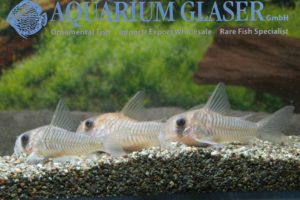
  • Corydoras sp. Neon Goldstripe, CW 10

    11. August 2010

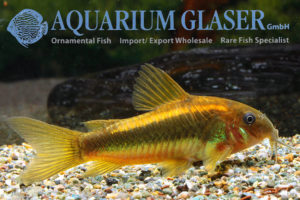
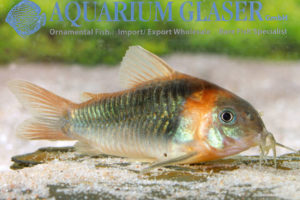
    There are many attractive and desirable species of Corydoras, but one would hardly describe many of the about 300 species known so far as colourful. One of the very few really colourful Corydoras is the scientifically still undescribed species Corydoras sp. Neon Goldstripe, that we were able to import again in larger numbers now from […]
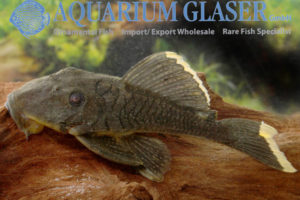
  • Parotocinclus jumbo, LDA 25, Pitbull Pleco

    5. August 2010

    The import season for this charming algae killer has started. Parotocinclus jumbo is both one of the largest species of the genus (maximum size is reported to be around 6-7 cm!) and one of the prettiest. Astonishingly there is so far no report in the aquarium literature on the very obvious sexual dichromatism found in […]
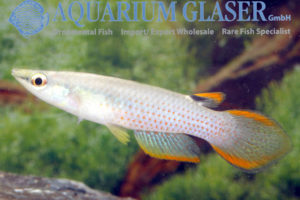
  • Apistogramma cactuoides WILD

    5. August 2010

    Some species of fish are very popular in the aquarium hobby. Many of them are kept only as sports or breeding forms that do not exist in the wild and most aquarists are completely unaware how the wild form looks like. One of these species is the very popular dwarf cichlid Apistogramma cacatuoides. The species […]
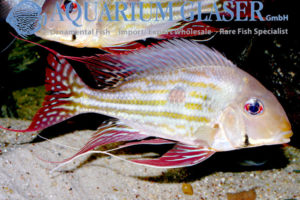
  • Macrobrachium brasiliense

    4. August 2010

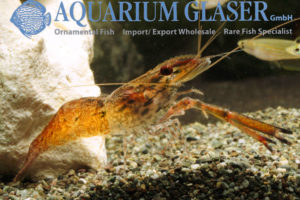
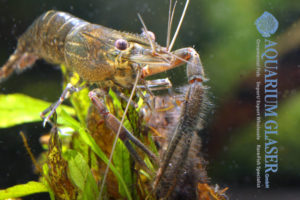
    Most freshwater shrimps that are established in the hobby originate from Asia and Afrika. Not even one species from South America has become a permanent aquarium inhabitant. There are several reasons for that, but the most important one is the fact that in most species from South America the larvae develop in marine environments. This […]
  • Copeina cf. osgoodi

    2. August 2010

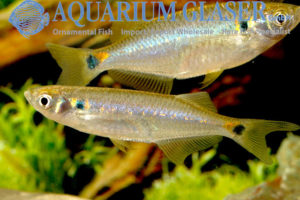
    At least in Germany members of the genus Copeina are pretty well known, which is reflected by the fact that an accepted common name exists: Forellensalmler, which means “trout tetra”. However, this knowledge is rather outdated and nowadays the fish can be regarded as real rarities in the hobby. There are only two accepted species […]

  • Clibanarius africanus with white shells!

    2. August 2010

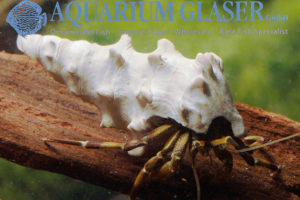
    The charming hermit crab Clibanarius africanus has become a very popular aquarium inhabitant. It is an euryhalin species, which means that it can survive in both pure fresh and pure marine water. However, it seems that it can live in pure freshwater only for a few months, so it is much better to keep it […]

  • Panaqolus sp. PUCALLPA

    30. July 2010

    Once more we were able to import another quite cute suckermouth catfish from Peru – from Pucallpa to be more precise. Again, this species belongs to the closer Panaqolus changae relationship (LDA 26, L206, L226), as it does the “New Zebra Pleco” we introduced to you last week (http://www.aquariumglaser.de/en/news/Panaqolus_sp_NEW_ZEBRA_JUTAI_en/). Especially the young ones are colored […]

  • Tatia dunni

    30. July 2010

    Once more we were able to be the first who imported this pretty driftwood cat. The identification of Tatia species is not that easy. Although there is a very recent revision of the genus available, the species concept used there reflects only few aspects of coloration. So currently fish of very different coloration are lumped […]

  • Aphyolebias peruensis

    27. July 2010

    This species from Peru represents one of the most beautiful species of killifish. It was known in the hobby for quite a long time under the name of Pterolebias peruensis. They are typical seasonal fishes. In the aquarium, they might become up to 1.5 years old, but in the wild they will never reach such […]

  • Guppy Venezuela Top Sword

    26. July 2010

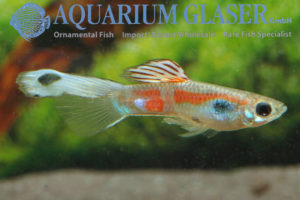
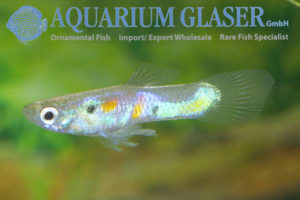
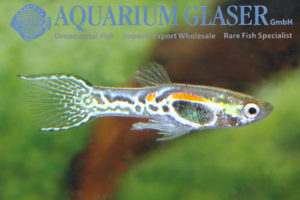
    Since quite a long time we receive wild guppy types from one of our breeders. These wild types are much sought for, due to their brilliant colours, their lively temper and their perfect adaptability to almost any aquarium conditions. Under the name of guppy “Venezuela” recently wonderful fish in show size with top sword reached […]

  • Otocinclus vestitus PARAGUAY

    26. July 2010

    The season for this popular Otocinclus has started now. Otocinclus vestitus has a very large distribution. It is found in Peru, Bolivia, and Paraguay. The species can be easily identified by the typical pattern in the caudal fin. Among the O. vestitus we received this week from Paraguay was one very unusual xanthoristic specimen. It […]

  • Geophagus megasema

    20. July 2010

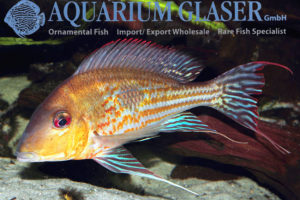
    There is almost no chance that commercial importations of wild collected Geophagus megasema will ever appear. So it is very welcome that travelling aquarium enthusiast collect such species in areas that are ignored by professional fish collectors and bring them home alive, which makes it possible to develope a captive bred stock. Geophagus megasema was […]

  • Panaqolus sp. NEW ZEBRA JUTAI

    15. July 2010

    This extremely attractive new suckermouth cat was sent to us from Peru with the name of a collecting site “Jutai”. Currently the fish are around 4-6 cm long. There is no doubt that they belong to the Panaqolus changae group (LDA 26, L206, L226). A very astonishing matter in these fish is the fact that […]

  • Hemigrammus sp. Boqueron

    15. July 2010

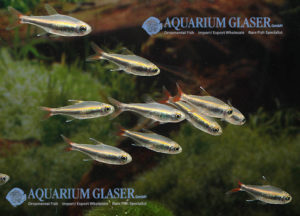
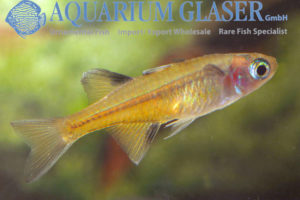
    Currently we received from Peru a new species of Hemigrammus, which does not fit the description of any species known so far. Thus we decided to adopt the name on the import list, eg. “Boqueron”. The pretty fish looks like a cross of the glowlight tetra (Hemigrammus erythrozonus) and the silvertip tetra (Hasemania nana). Due […]

  • Corydoras sp. “New Panda” CW51

    15. July 2010

    Corydoras sp. “New Panda” from Colombia is so far the most spectacular new importation of the year. Hans-Georg Evers, expert for Corydoras, guesses that the species may be found in the Rio Vaupes system, but still no assured information on that topic is available. It is very conspicious that the spot below the dorsal fin […]

  • Rivulus ornatus

    9. July 2010

    This tiny jewel among the fishes, which we were able to import from Peru recently, causes some confusion among taxonomists. It is possible that this fish represents a still undescribed species and will be named seperatly in the future. May this be as it wants, we are glad to have this pretty animal in stock […]

  • Mastacembelus caudiocellatus

    9. July 2010

    Recently we were able to import this pretty spiny eel from Burma for the first time. It is a rather small (around 20 cm) species with a very contrasting pattern. The species lives endemically in the Lake Inle region in Burma. Lake Inle has medium hard water with a slightly alcalic pH. From Lake Inle […]

  • Otocinclus mimulus

    6. July 2010

    For the first time ever we are now able to offer a very rare Otocinclus species, namely O. mimulus. Besides all the well known good characteristics that it shares with other members of the genus – small size, peacefulness, cleaning of plant leaves, day activity – this species also has to offer a very special […]

  • Hyphessobrycon eschwartzae (= Hyphessobrycon cf. agulha JURUA / PERU)

    29. June 2010

    For the first time ever we were able now to import this beautiful tetra from Peru. Scientifically H. agulha is known for quite a long time, but it has never become an aquarium fish so far. In Jaques Géry´s classical work on Characoids of the World even a complete group of Hyphessobrycon is named after […]

  • Aphyolebias schleseri

    24. June 2010

    A very unusual killi is Aphyolebias schleseri, which can be recognized by its unique sword. The species has been described only in 2003 and initially we thought it to be a new species of Micromoema. However, some members of the German killifish association (DKG) helped to trace the correct name. Once more: thank you guys! […]

  • Hyphessobrycon cf. pando PERU

    22. June 2010

    Recently we received beautiful Rosy tetras under the name of “Hyphessobrycon robertsi” from Peru. However, the fish is not identical with the well known “robertsi” (the species has not been described formally by a scientist yet, but it is unknown whether is has been made available “by chance” in the past 60 years of its […]

  • Corydoras diphyes

    22. June 2010

    This Corydoras is available irregularly in Germany and has been recently described by Axenrot and Kullander (2003). C.dyphyes originates from the tributary of the Rio Monday, a river flowing into the Rio Parana in Paraguay. This species was described, for a long time, as Corydoras flaveolus which comes however from the Brazilian state of Sao […]

  • Corydoras diphyes

    22. June 2010

    It has been quite a long time since we were able to import this pretty species from Paraguay, but now we managed it! Please click here for further information: http://www.aquariumglaser.de/en/fish-archive/corydoras-en/Corydoras_diphyes_en/ Text & photo: Frank Schäfer

  • Ichthyborus ornatus

    17. June 2010

    The odd subfamily of African tetra called Ichthyborinae is restricted to Africa. Many species are specialized fin eaters that feed almost exclusively on fins of other fish. Their teeth work like a scissor and are able to cut out pieces of fin from other fish without any problems. Almost all of these tetras – there […]

  • Megalamphodus

    16. June 2010

    Honestly speaking, the trade name for this cute fish is completely wrong: first of all, the genus name Megalamphodus is regarded nowadays as a synonym to Hyphessobrycon and twice the species in question is an undescribed one and not identical with the red phantom tetra, H. sweglesi. However, even undescribed fish have to be named […]

  • Hyphessobrycon loretoensis

    10. June 2010

    Some species of ornamental fish live in a kind of shadowy existence. Basically speaking they are always available, beautiful and ideal aquarium fish, but it seems that nobody keeps them actually. One of those species is Hyphessobrycon loretoensis. The tiny tetra (maximum length around 3.5 cm) has been imported as an ornamental fish in 1938, […]

  • Xenopus muelleri

    10. June 2010

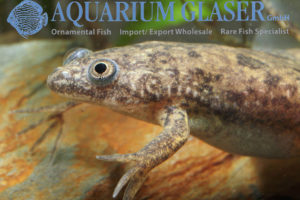
    Clawed frogs or platannas (Xenopus) are popular aquarium inhabitants. They are totally aquatic animals and leave the water only for curiosity or when the water body dries out. Nevertheless the tank has to be absolutely safely covered, for a trip in the dry living room can cause the death of the animal. Most often Xenopus […]

  • Chapalichthys pardalis

    2. June 2010

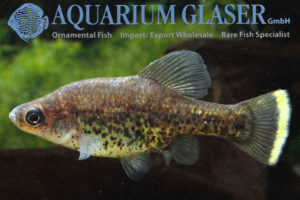
    The Polkadot Goodeid, Chapalichthys pardalis, reaches a maximum length of 6.5 cm (males) and 7 cm (females). Its natural habitat are the waters of the pacific slope of Mexico, Michoacan province, Tocumbo district. In contrast to many other goodeids this pretty, livebearing species seems not to be endangered in the wild. In the aquarium, however, […]

  • Pseudobunocephalus sp. White Peru

    27. May 2010

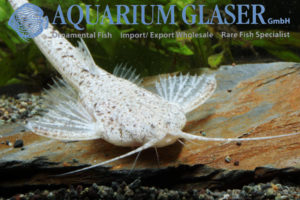
    The genus Pseudobunocephalus has been erected quite recently (2008). It is distinguished from the other banjo cat genera by externally invisible characters of the teeth and bone structures. As aquarists are more interested in fish than in technical definitions of genera it may be mentioned that nevertheless there are some external features that allow to […]

  • Corydoras orcesi

    26. May 2010

    This beautifully marked species appeared only very occasionally in the aquarium hobby. The fish has been described from the Rio Tigre system in Ecuador. Initially it was described as a subspecies of the similar Corydoras pastazensis. However, so far no intergrades have been found and this makes it very likely that both are seperate species. […]

  • Lamontichthys llanero

    Lamontichthys llanero

    24. May 2010

    This beautiful catfish comes from Venezuela. Lamontichthys are very sensitive and need extremely clean water. Another problem is that they often refuse food. This is obviously a problem due to the shyness of the fish. Even relatively small disturbances let them stop feeding for hours. This is the reason why Lamontichthys are kept best in […]

  • Brandnew: Guppy Endler Yellow Half Tuxedo

    17. May 2010

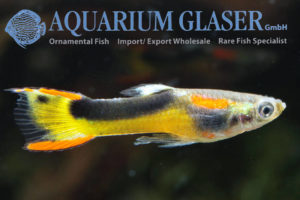
    This week we were able to import a new sport of the Endler Guppy for the first time. Its bright contrasting yellow and black coloration will for sure excite the guppy enthusiasts. Regarding body shape and behaviour this new sport is a typical Endler Guppy (Poecilia wingei). This means it is a rather small fish […]

  • Pseudorasbora parva GOLD

    Pseudorasbora parva GOLD

    6. May 2010

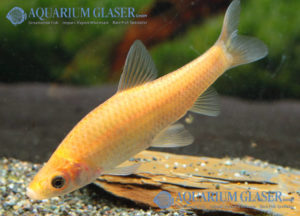
    IMPORTANT INFORMATION: We have not traded the species Pseudorasbora parva and its golden breeding form since 2016 due to an EU-wide trade ban. For the first time we have a golden sport (the scientific word for that phenomenon is xanthoristic) of the Stone moroko (Pseudorasbora parva) in stock. Like all our garden pond fish the […]

  • Phallichthys tico

    5. May 2010

    For the first time ever we are able to offer this top-rarity among the livebearers. The charming fish – males reach a maximum length of about 2.5 cm, females 4.5 cm – are restricted to the upper reaches of the river San Juan in Costa Rica and Nicaragua. No commercial fishing for ornamental fish does […]

  • Corydoras sp. aff. reynoldsi CW12

    20. April 2010

    Repeatedly we were able to import the longnosed Corydoras from Colombia that resembles the shortnosed C. reynoldsi. For the latter please check http://www.aquariumglaser.de/en/corydoras-reynoldsi–corydoras-tukano_en_1074.html. The longnosed species represents a species undescribed by science so far. Like all longnosed Corydoras this fish is somewhat variable regarding coloration. In contrast to the shortnosed species, longnosed Corydoras live more […]

  • Gobiopterus chuno

    9. April 2010

    Glass perches and glass catfish are well known and common aquarium fish. But do you know glass gobies, too? The members of the genus Gobiopterus (there are so far 9 known species) are tiny freshwater gobies. They reach only 2-3 cm length and are so transparent that the observer can see how a food item […]

  • Priapella chamulae

    8. April 2010

    We obtained a good number of this quite rare livebearer from a German breeder. Priapella are specialized fish. The best known species in the hobby is for sure Priapella intermedia. Like this species, P. chamulae has brillant blue eyes. Priapella are schooling fish that live near the surface in brooks. These conditions, eg keeping in […]

  • Strophidon sathete

    Strophidon sathete

    7. April 2010

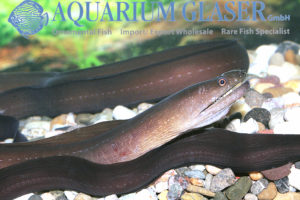
    For the first time now we have some specimens of the largest moray eel of the world in stock: Strophidon sathete. This species originates from brackish water regions. They inhabit the very same habitats (lower reaches of rivers) as the common freshwater moray, Gymnothorax tile. Both can be kept like scats or monos: they are […]

  • Anabas cf. macrocephalus

    24. March 2010

    The Climbing Perches (Anabas) are no popular aquarium fish at all. Scientists also do not work on them and so the systematics of the genus are quite unclear. Members of the genus can be found all over the tropical and subtropical areas of South and Southeast Asia. However, it often remains unclear wether the fish […]

  • Astronotus ocellatus wild, Colombia

    19. March 2010

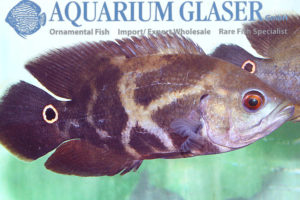
    The Oscar, Astronotus ocellatus, belongs to the most popular species among the large cichlids. It was imported to Europe in 1929 for the first time. In Asia, many different sports have been bred since. However, the wild ancestors of the Oscar remain somewhat mysterious and little understood. Until recently, only one or two species were […]

  • Mugilogobius rexi

    16. March 2010

    This small, yellow goby is a free swimming species, in contrast to most of the other gobies. Maximum length is about 4-5 cm. Territorial males become bright yellow and also develope larger fins with dark bands. Females are much paler in coloration and have translucent fins. The species is restrictet to Sulawesi and even on […]

  • Centromochlus sp. Ninja (= C. orca)

    11. March 2010

    A small sensation reached us recently from Brazil. Already when the small (4-6 cm long) catfish were unpacked their brillant black-and-white-pattern was a real eyecatcher. The fish definetely belong to the genus Centromochlus, which currently comprises 11 species in South America. These fish are close relatives of the better known genus Tatia and belong (like […]

  • Hemiloricaria beni

    17. February 2010

    Now we can offer the smallest known species of whiptail catfish: Hemiloricaria beni. It hardly becomes longer than 8 cm. As this species occurs only in Bolivia and no commercal exportations from Bolivia appear, we offer only bred ones. Initially Swiss aquarists collected this species on a private collecting trip in 1997. Since then a […]

  • Discus Heckel / Jatapu

    11. February 2010

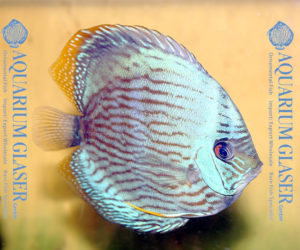
    The series of astonishing wild collected discus we are able to offer right now does not break off. Besides the wonderful Royal Blue which we introduced to you last week, we also have excellent Heckel blue-head said to come the Jatapu river. This branch of the Amazon river has an unique mix of fauna found […]

  • Toxotes sp. New!

    10. February 2010

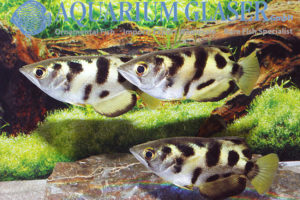
    A new species of Archerfish! Recently we received a shipment containing archerfishes (Toxotes) from Thailand. Most of the shipment were T. jaculatrix (see http://www.aquariumglaser.de/en/toxotes-jaculatrix_en_1076.html) and some T. chatareus (see http://www.aquariumglaser.de/en/toxotes-chatareus_en_1044.html). But a closer look showed also four specimens of an unique colored archerfish, which we have never seen so far and which fits to none […]

  • Schismatogobius ampluvinculus

    9. February 2010

    We received for the first time now this cute goby from Taiwan. Especially when it is in the right mood it looks extremely pretty due to its contrasting black-and-white coloration. One of the generic characteristics of Schismatogobius is the fact that they have an individual coloration: there are not even two specimens with the exact […]

  • Discus Royal Blue Novo Ariguana

    5. February 2010

    Yesterday (2.2.) we received breathtaking beautiful large wild collected discus called Discus Royal Blue Novo Ariguana. All insiders will understand that the fish do not show all of their beauty today, but even what they show is amazing! Text & photo: Frank Schäfer

  • Parauchenoglanis punctatus

    4. February 2010

    Parauchenoglanis punctatus: Among the imports from central Africa this beautiful catfish is a real rarity. It is known so far only from the central Congo basin. From that region only few fish are imported regulary. The species attains a length of approximately 40 cm. Thus it is a perfect tankmate for show aquaria with larger […]

  • Yunnanilus sp.

    Yunnanilus sp.

    2. February 2010

    The genus Yunnanilus comprises a comparably high number of species: 30 species are currently recognized as valid, but there are for sure much more species. Most known species have a very small distribution area. If you realize that only a very small part of the waters in the area of the genus have ever been […]

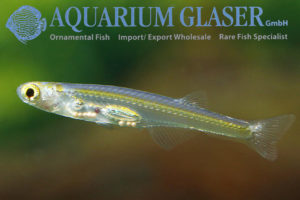
  • Danionella dracula

    Danionella dracula

    28. January 2010

    Danionella are extremely small cyprinids, which never grow larger than 2 cm. The species that was discovered first – Danionella translucida – was thought to be the smallest cyprinid in the world, until the even smaller genus Paedocypris was discovered. Currently, four species are recognized by science, three from Burma and one from northern India. […]

  • Sewellia speciosa

    26. January 2010

    Currently we were able to import this nice hillstream loach from Laos for the first time. The species is restricted to the Kong river influence in Laos and Vietnam. Maximum length is around 6 cm. The species has a very interesting sexual dimorphism. Males – which are in general more tiny than females – develope […]

  • Corydoras sp. C40

    20. January 2010

    This pretty cory comes from the Brazilian state of Rondonia. It is not possible to distinguish the fish from Corydoras griseus externally. However, Corydoras griseus comes from Guyana and between the collecting sites of both species are serveral thoundands of kilometers. So it was decided to wait until a scientist has researched the identity of […]

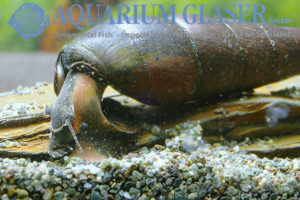
  • Faunus ater

    20. January 2010

    This attractive, about 6 cm long snail currently reached us from Thailand. It is a relative of the well known Malayian trumpet snail. In the wild this animal occurs in the lowest reaches of rivers on muddy bottoms and is thus very tolerant against salt. So it is possible to keep it in freshwater tanks […]

  • Pseudomystus siamensis (= Leiocassis siamensis)

    15. January 2010

    It has been some time that we had this good old fashioned classic from Southeast Asia in our fishhouse. Pseudomystus siamensis originates from Thailand, Cambodia, and Laos and is a smaller species of catfish. Maximum length given in literature is 15 cm, but this length is hardly ever reached. Against congeneers and other species of […]

  • Pseudocrenilabrus multicolor victoriae

    14. January 2010

    This extreme beautiful small cichlid has changed its name quite often. Initially it was introduced to the hobby under the name Pseudocrenilabrus philander dispersus. The natural distribution area of this subspecies is Uganda. Only bred specimens are traded. The fish are agamous maternal mouthbrooders, which means that the males and the females do not build […]

  • Neocaridina heteropoda BLOOD RED

    13. January 2010

    There are always new cultivated varieties of freshwater dwarf shrimp appearing in the market. It is already difficult to determine the exact scientific identity of wild shrimps, it is almost impossible in cultivated ones. The animals imported under the name Neocaridina heteropoda BLOOD RED from Taiwan are a real alternative to the difficult to keep […]

  • Neocaridina RED-BEE-SNOW-WHITE-SHRIMP

    11. January 2010

    We already introduced this beautiful animal to you: http://www.aquariumglaser.de/en/neocaridina-red-bee-snow-white-shrimp_en_1081.html. Now we have it again in stock, once more the beauties come from Taiwan. For our customers: the shrimps have code 485340 on our stocklist. Please note that we exclusively supply the wholesale market.   Text & photos: Frank Schäfer

  • Poecilia reticulata Guppy Jamaica

    7. December 2009

    The guppy is one of the most important ornamental fishes. Besides the numerous cultivated varieties the wild forms become more and more popular in the hobby. We offer several of these wild forms, one of the most beautiful is the so-called Jamaica-variety. However, the fish are bred for us by professional breeders in Europe. In […]

  • Panaque L90a Ojo Chico

    3. December 2009

    L90 is a very variably colored species. This year we received very nice animals which have the bright halfmoon in the caudal fin orange red instead of white. The Spanish name (ojo = eye, chico = boy) does not emphasize on the coloration, but on the small eye which distinguishes L90 from other members of […]

  • Brienomyrus niger

    3. December 2009

    There are about 200 species of Mormyridae (Elephantfishes) in Africa. Some of them belong to the most important freshwater fish species of the continent, due to their abundance and good taste. In the aquarium hobby, on the other hand, mormyrids are only rarely seen. All mormyrids belong to the weakly electrical fishes and communicate on […]

  • Macrognathus meklongensis

    1. December 2009

    We were able to import for the first time one of the smallest and most beautiful species of spiny eel: Macrognathus meklongensis from Thailand.This charming species becomes hardly 15 cm long and only as thick as a forefinger. The coloration differs very much depending on mood. The basic colour is a nice golden bonze, the […]

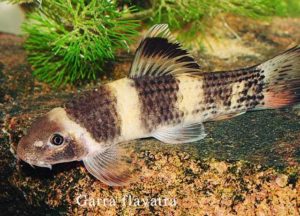
  • Garra flavatra

    27. November 2009

    The algae-eating suckermouth barb Garra flavatra from Burma is a quite beautiful fish. In contrast to all other species of algae-eaters this is a species which is kept due to its own attractivity. In our show-room the fish now revealed a secret they kept so far: they develope deep red fins! Keeping Garra flavatra is […]

  • Garra flavatra

    27. November 2009

    Now available again! We are pleased to be able to offer you Garra flavatra. Their attractive pattern as well as their reddish fins make it the most beautiful Garra species. In our first news (see news v. 16.12.05) it was offered under the trade name Garra spec. “Panda”, in the meantime resulted the species affiliation […]

  • Subscription of our newsletter works again

    20. November 2009

    Dear visitor, sadly we became aware only now that for some days the link for subscription of our free newsletter did not work. We were able to solve the problem and apologize for all those who gave up frustrated. Sincerely yours, the team of Aquarium Glaser Picture: Fehlerteufelchen © by Hidenori Nakano, 2009

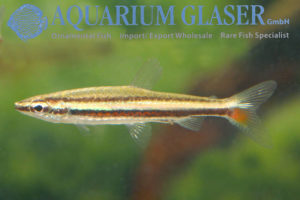
  • Nannostomus digrammus

    18. November 2009

    The pencilfishes (Nannostomus) belong to the most beautiful tetras. Besides their nice coloration their swimming stile makes them so attractive. It reminds one always of a miniature airship. Nannostomus digrammus is a rarely imported species. It looks quite similar to the common N. trifasciatus. However, the eponymous third black stripe on the belly, which is […]

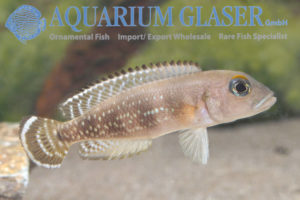
  • Neolamprologus meeli

    13. November 2009

    Among the snail-dwelling cichlids of Lake Tanganyika are some species that look very much alike and in some cases it remains still unclear whether the scientific name applied on them is correct or not. Neolamprologus meeli has been described in 1948 by Max Poll from a place near Katibili which belongs to the Congolese part […]

  • Pseudomugil signifer

    12. November 2009

    The species of the genus Pseudomgil are relatives of the rainbowfishes. But they stay much smaller and usually they reach only 4-5 cm in length. This is also true for P. signifer, which looks a bit like a miniature edition of the Celebes rainbowfish (Marosatherina ladigesi). The males are displaying the whole day through what […]

  • Guppy Endler “Spotted Tail”

    11. November 2009

    The latest fancy guppy developed in southeast Asia reached us currently. The fish is a cross of Endler´s livebearer and the King Cobra guppy. The beautiful animals have the graceful figure and the great shoulder spot of Endler´s livebearer and the filigran pattern of the King Cobra. For our customers: the fish have code 419059 […]

  • Guppy Endler “Spotted Tail”

    11. November 2009

    The latest fancy guppy developed in southeast Asia reached us currently. The fish is a cross of Endler´s livebearer and the King Cobra guppy. The beautiful animals have the graceful figure and the great shoulder spot of Endler´s livebearer and the filigran pattern of the King Cobra. For our customers: the fish have code 419059 […]

  • Akysis vespa

    10. November 2009

    Among the catfishes are several species that are able to take revenge for being caught by giving a poisonous sting. Although the venom has only mild effects on most people (burning, local swelling, pain) it might be even fatal for allergy sufferers. You should always keep in mind that our beloved honey bee is the […]

  • Fundulopanchax sjostedti USA blue

    6. November 2009

    Killis represent the most colourful fish in the World. One of the most beautiful among them is Fundulopanchax sjostedti (formerly Aphyosemion s.). Initially this fish originates from Eastern Cameroon and Western Nigeria. This species belongs to the largest species of killifish. Males can reach a total length around 12 cm! The adult male depicted here […]

  • Macrobrachium eriocheirum

    5. November 2009

    We received the interesting shrimp species Macrobrachium eriocheirum from Thailand. It gets a body length of about 5 cm and thus it represents one of the smaller species of the genus. Males can be recognized by their unequal scissor arms, which are very hairy. M. eriocheirum belongs to the species with a higher developed breeding […]

  • Corydoras eques, C. sp. aff. armatus and Corydoras duplicareus

    4. November 2009

      From the Brazilian state of Amazonas we received a species of Corydoras, which is long known to science but almost unknown in the hobby: Corydoras eques. This unique and extremely colourful species was collected near Anori. For the first time ever we were able to import another species of Corydoras. This species is for […]

  • Tylomelania sp. “Pure Orange”

    27. October 2009

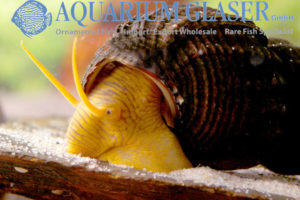
    Lake Poso on Sulawesi (formerly: Celebes) is not only home of beautiful dwarf shrimps, but also of large relatives of the well-known Malayan livebearing snail (Melanoides tuberculata). The brash colour of the body is really astonishing. Species of Tylomelania do not feed on algae, but on detritus. Thus some muddy corners in the tank are […]

  • Etroplus maculatus

    23. October 2009

    The Indian cichlid, Etroplus maculatus, is a very popular aquarium fish and never disappeared after its first importation again. Recent research suggests that Etroplus is not a close relative of the cichlid family, but rather of the damselfishes (Pomacentridae). However that does not mean anything for the hobby. Etroplus maculatus can be kept and bred […]

  • Etroplus maculatus “Gold-Blue”

    23. October 2009

    The Indian cichlid, Etroplus maculatus, is a very popular aquarium fish and never disappeared after its first importation again. Recent research suggests that Etroplus is not a close relative of the cichlid family, but rather of the damselfishes (Pomacentridae). However that does not mean anything for the hobby. Etroplus maculatus can be kept and bred […]

  • Gymnorhamphichthys cf. hypostomus

    21. October 2009

    The sand knifefishes (Rhamphichthyidae) from South America belong to the weak electric fishes. They send continously electric impulses which are used for tracing prey, orientation, and intraspecific communication. Currently three genera and 14 species are known. The genus Gymnorhamphichthys, also called thermometer knifefishes, contents five described species. There is hardly anything known about the fish, […]

  • Laetacara araguaiae

    19. October 2009

    Laetacara sp. „Buckelkopf“ described scientifically. Laetacara sp. „Buckelkopf“ is known in the hobby for many years already. The somewhat unusal common name (the German word „Buckelkopf“ means „humphead“) derives from the feature developed by some very old males, but this happens rather seldom. It is a typical dwarf cichlid, the males grow to a length […]

  • Pseudorinelepis sp. L95

    16. October 2009

    Last week we were able to import another catfish gem: L95, a scientifically undescribed species of the genus Pseudorinelepis, which is very closely related to P. genibarbis. Our specimens come from the Takutu river in the upper Rio Branco basin. These gorgeous fishes are collected mostly in relative large specimens, because the juveniles are not […]

  • Pseudacanthicus leopardus

    13. October 2009

    The genus Pseudacanthicus currently comprises five described species. Three of them are known as aquarium fish. Additionally there are 16 L-numbers given for species of Pseudacanthicus which represent either species new for science or have a doubtful identity. Species of Pseudacanthicus are also known under their popular name “cactus catfish”, for the species are very […]

  • Phractocephalus hemiliopterus

    12. October 2009

    At Aquarium Glaser not only small fish for private community tanks are stocked, but also real rarities for scientific institutions and large fish for public aquaria and zoos. A specimen for the latter category reached us now: a gigantic Phractocephalus hemiliopterus, more than 80 cm long. We stocked the fish for a Russian customer. The […]

  • Nothobranchius foerschi

    9. October 2009

    Nothobranchs (genus Nothobranchius) belong to the most colorful species of freshwater fish. This is true at least for the males, as female nothobranchs are all more or less unicolored. Nothobranchs are typical seasonal fish. They outlive the desiccation of their habitat with eggs that can survive without water almost unlimited. Nothobranchius furzeri is world famous […]

  • Synodontis lucipinna (= dwarf petricola)

    7. October 2009

    This beautiful Synodontis is a real dwarf compared with its numerous congeneers: it reaches only 8-10 cm (very old specimens in extreme spacy aquaria may reach 15 cm). In the hobby it became popular under the name “dwarf petricola”. Some species of Synodontis occuring in Lake Tanganyika (where S. lucipinnis is an endemic species) have […]

  • Betta kuehnei

    6. October 2009

    The mouthbrooding fighting fishes of the Betta pugnax group are wideley spread over Thailand, Malaysia and Indonesia. The most currently described species is Betta kuehnei from the northernmost Province Kelantan of Malaysia and the southernmost parts of Thailand. The species has been discovered by the travelling aquarist Jens Kühne and introduced in the hobby as […]

  • Telmatochromis temporalis

    1. October 2009

    Snail-cichlids are a specialty of Lake Tanganyika. Of course also other places on earth exist where empty shells of snails are used by fish for hiding or breeding. But nowhere else than in Lake Tanganyika are so many specialized species. In Lake Tanganyika real fields of empty snail-shells exist. Empty shells that lie here and […]

  • Cynotilapia axelrodi

    30. September 2009

    Currently we have received beautiful C. axelrodi from a breeder. The animals are full in colour and about 4-6 cm long. Maximum length for this species is given around 9 cm. Cynotilapia are typical mbuna cichlids. They differ from the closely related Maylandia (the zebras) by the dentition. Keeping is identical, which means they need […]

  • Hoplosternum punctatum

    29. September 2009

    Plated catfish from the genus Hoplosternum are known in the hobby mainly from relatively large growing species, which can reach 15 to 20 cm in length. However, there also exist small species, like H. punctatum, which hardly grows larger than 7 cm. The natural distribution of this species is in Panama and in the rivers […]

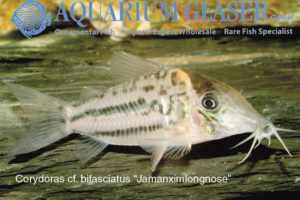
  • Corydoras from the Rio Jamanxim – C. bifasciatus?

    25. September 2009

    From the Rio Jamanxim in the state of Pará, Brazil, we received for the second time now beautiful Corydoras catfish.  The Rio Jamanxim is a tribute to the Rio Tapajós. The first shipment of corys from there contained only long snouted animals, whereas the second shipment contained the shortsnouted counterpart. The new corys remind one […]

  • Umbra pygmaea

    Umbra pygmaea

    24. September 2009

    The mudminnows (Umbra) are relicts from the ice age and nowadays found only in remainings of their initial territory. Three species are still extant, two of them in North America and one in Europe. The European species (U. krameri) is in danger of extinction due to habitat destruction. Mudminnows are inhabitants of extreme biotopes: swampy […]

  • Poeciliopsis prolifica – Blackstripe livebearer

    22. September 2009

    This tiny species of livebearer originates from northwestern Mexico. The males reach a maximum length of 2 cm, the females of 3.5 cm. At the first glimpse the fish look somewhat unspectacular, but no one who keeps the fish has regrets about it. The whole day through the males are after the females or fight […]

  • Xenotoca variata – Jeweled splitfin

    21. September 2009

    Only few species of splitfin (Goodeidae) have become established aquarium fish, despite the fact that they are perfectly suited for keeping and breeding in tanks. Many species are in danger of extinction in the wild, for they inhabit only very small areas and habitat destruction can easily wipe out complete species. Species conservation via breeding […]

  • A new L-catfish!

    18. September 2009

    Last week we were able to import a new yellow seam pleco belonging to the genus Baryancistrus. The fish originate from Sao Felix at the Rio Xingu. They differ from all other members of the genus from there (L18, L47, L81, L85, L177) by the almost black ground colour of the body. Almost no spots […]

  • A new Panchax from Manipur

    17. September 2009

    After the spectacular importation of the new gourami from Manipur (http://www.aquarium-glaser.de/en/colisa-cf-fasciata-_en_1115.html) now we were able to import a beautiful new Panchax from this state in northern India. Currently only one species is accepted formally within this species-group, eg Aplocheilus panchax. This species is distributed from China over great parts of India, Burma, and Indochina (Thailand, […]

  • Geophagus winemilleri

    16. September 2009

    The main distribution of Geophagus winemilleri is the southern part of Venezuela. Nevertheless most imports come from Brazil, because the species also occurs in the Rio Negro. G. winemilleri becomes often confused with G. proximus and a second, still undescribed or unidentified species. However, G. winemilleri can be identified by the dark spot on the […]

  • Chela laubuca

    Chela laubuca

    14. September 2009

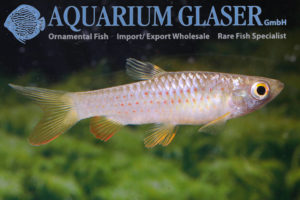
    Currently we offer a beautiful surface dwelling fish for community tanks for fishes from Asia: Chela laubuca. The absolutely peaceful species attains a total length of around 6 (rarely 8) cm. Keeping and breeding is comparable to that of the zebrafish (Danio rerio) which shares the same habitats as Chela laubuca in nature. Text & […]