
Fish Archive (3192)

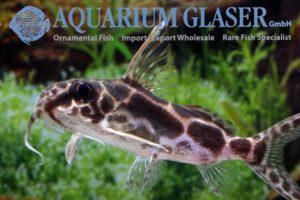
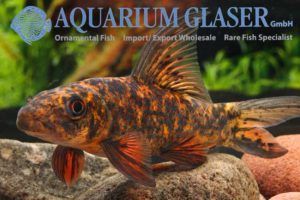
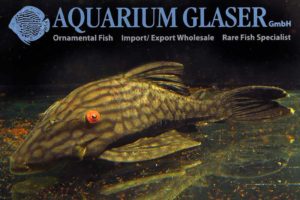
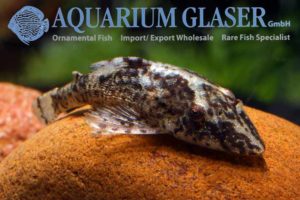
  • L330 Panaque sp. Spotted 14-18 cm

    16. June 2014

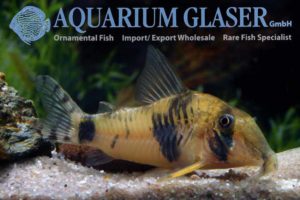
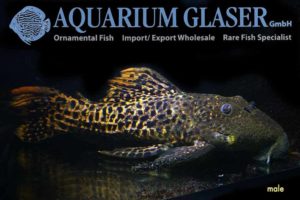
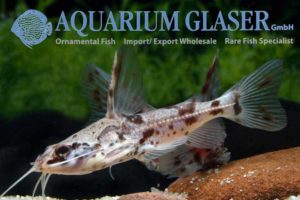
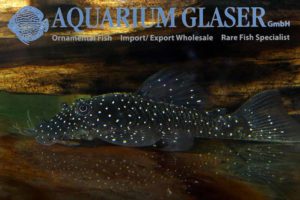
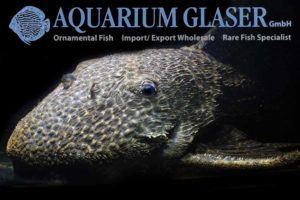
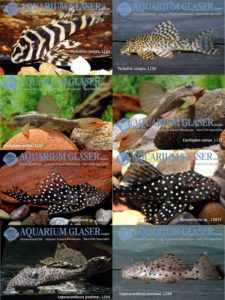
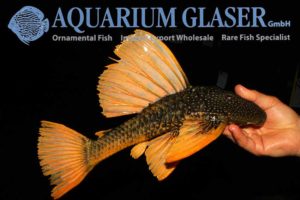
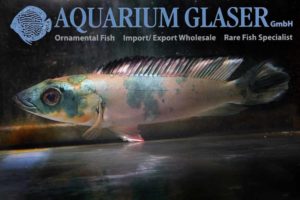
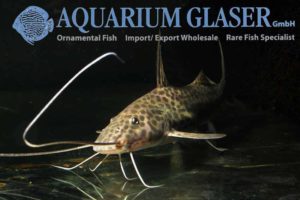
    We have some specimens of this gorgeous, wood-eating pleco in stock. L330 originates from Colombia. Fully grown specimens get a spotted pattern all over the body. Younger specimens can look quite similar to L190 or Panaque nigrolineatus, because they usually show a striped pattern. The yellow tips of the caudal fin are a good hint […]

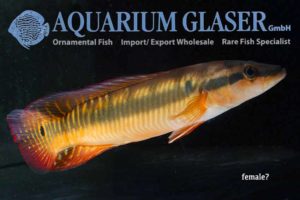
  • Crenicichla zebrina

    16. June 2014

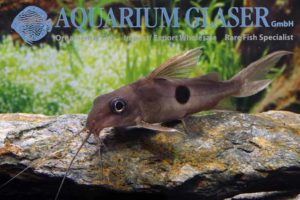
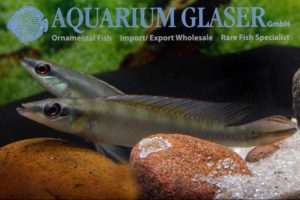
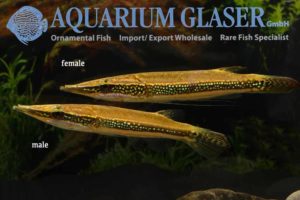
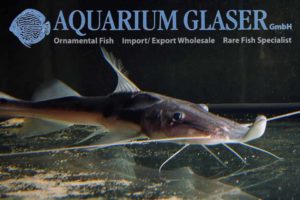
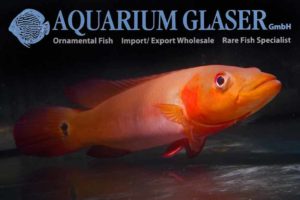
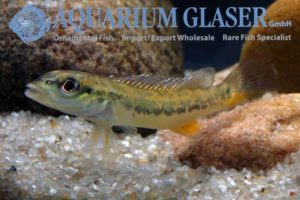
    Does there exist anything like a dreamfish even in our days? Well, at least Crenicichla zebrina from Venezuela is a hot candidate! We were able to import two specimens of this top rarity which have a length of 15-20 cm. So far no external features are known for that species to separate males from females. […]

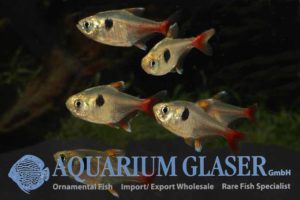
  • Megalamphodus roseus

    10. June 2014

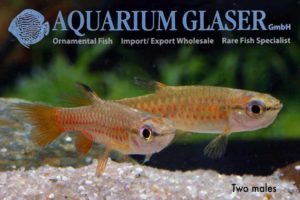
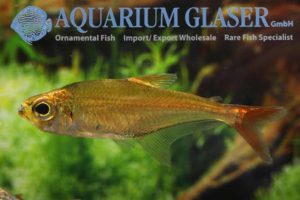
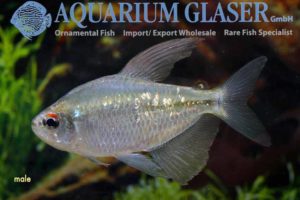
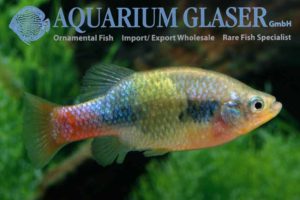
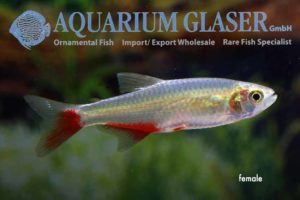
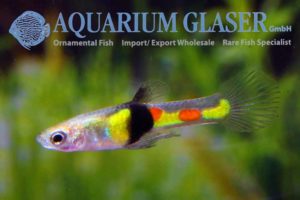
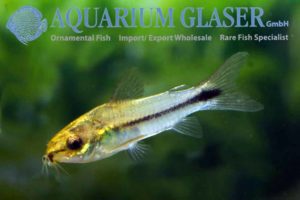
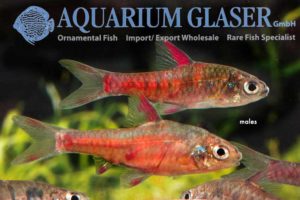
    The Yellow Phantom Tetra is one of the colorful, small species. The peaceful dwarfs – they become only around 3 cm long – have blood red caudal fins and a wonderful contrasting large black shoulder spot. The species originates from French Guyana, where it occurs in the rivers Maroni and Oyapock. There are no exports […]

  • Hydrolycus armatus

    Hydrolycus armatus

    10. June 2014

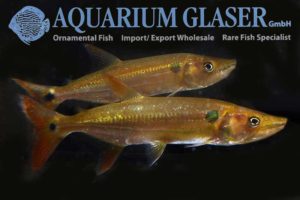
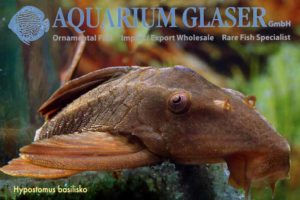
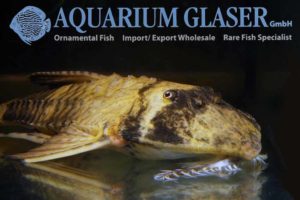
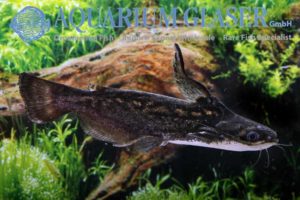
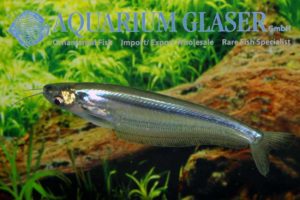
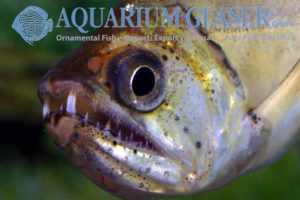
    The complete opposite to the Yellow Phantom Tetra is the Giant Waterwolve. This fish-eating predator attains a maximum length of 75 cm and is thus the largest species of the four members of the genus Hydrolycus. Of course this animal is much sought after by owners of really big tanks and public aquaria; sadly larger […]

  • Amatitlania sp. Honduras Red Point

    4. June 2014

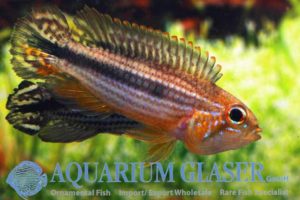
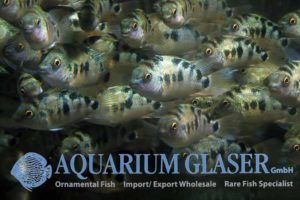
    Recently we could introduce to you this pretty dwarf cichlid that belongs to the closer relationship of the Convict cichlid (Amatitlania nigrofasciatum, formerly Cichlasoma n.), see http://www.aquariumglaser.de/en/news/Amatitlania_sp_Honduras_Red_Point_en/Now we obtained again specimens from our proved breeder. For our customers: the animals have code 674452 on our stocklist. Please note that we exclusively supply the wholesale trade. […]

  • Amatitlania sp. Honduras Red Point

    4. June 2014

    The Convict cichlid (Amatitlania nigrofasciatum, formerly Cichlasoma, Archocentrus or Cryptoheros nigrofasciatus) was for a long time one of the most popular species of cichlid in the aquarium. Nowadays it becomes rather rarely seen. Instead of that species another Amatitlania appreared some years ago on stage, named Amatitlania sp. “Honduras Red Point”. These fish seem not […]

  • Pyrrhulina australis

    4. June 2014

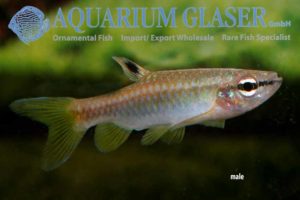
    Finally we were able once more to import Pyrrhulina australis from Paraguay. The animals have pretty yellow caudal fins with a sky-blue seam, on the operculum is a shining, blue spot. The coloration of the body is changing with mood. Most often the fish display a dark horizontal band over the body, but this can […]

  • Crenicichla sp. Tapajós

    3. June 2014

    At the beginning of this week we introduced to you the dwarf cichlid Teleocichla proselytus from the Rio Tapajós (see http://www.aquariumglaser.de/en/news.php#1040). A close relative, but much, much bigger is the gorgeous red Crenichichla sp. Tapajós that originates from the same river. The species is not described scientifically yet. Females (sadly too shy for a good […]

  • Mesonauta festivus

    Mesonauta festivus

    3. June 2014

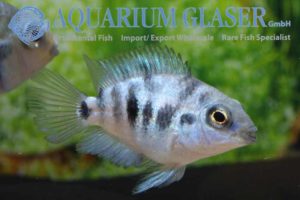
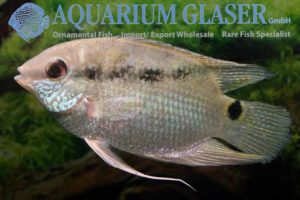
    We received from Brazil very nice, wild collected flag cichlids. M. festivus is usually not kept due to its coloration, which is not very spectacular, but due to the interesting and peaceful behaviour. But the animals that reached us now have a very interesting, blue pattern in the face. The scales also show an attractive […]

  • Crenicichla lugubris Jutai

    3. June 2014

    Once more we were able to import some specimens of this gorgeous large cichlid from the Jutai region. This time the shipment contained one male with an extraordinary marble pattern. For more informations please click http://www.aquariumglaser.de/en/news/Crenicichla_lugubris_Jutai_en/ For our customers: the fish have code 670746 on our stocklist. Please note that we exclusively supply the wholesale […]

  • Distichodus noboli and D. affinis

    3. June 2014

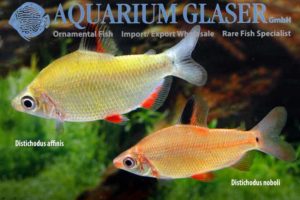
    Finally we were able to organize again an import from the Congo. The shipment contained two very pretty species of Distichodus. They look quite similar on the first glimpse. Both species become about 15-20 cm long. For our customers: the fish have code 127002 (D. noboli) and 123002 (D. affinis) on our stocklist. Please note […]

  • Corydoras robustus

    3. June 2014

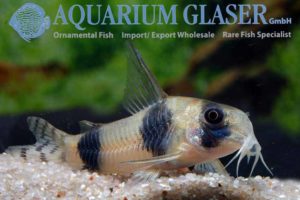
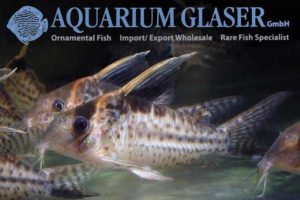
    This cory belongs to the largest and most attractive species of Corydoras at all. They can reach a total length of 9-10 cm. Both sexes develop long, filamentous dorsal fins when fully grown. The males can be best recognized by the much longer ventral fins. For our customers: the fish have code 244106 on our […]

  • Heros cf. efasciatus Red Shoulder

    3. June 2014

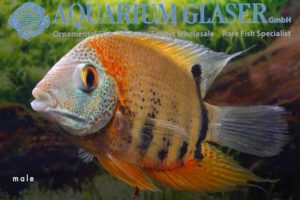
    We received wonderful wild collected specimens of this extraordinary species from Peru. Currently the fish are 9-12 cm long. Experts are still debating whether these fish belong to the species Heros efasciatus or to a scientifically still undescribed species of Heros. But all agree that they represent the most attractive Heros at all. Males can […]

  • Oryzias latipes

    3. June 2014

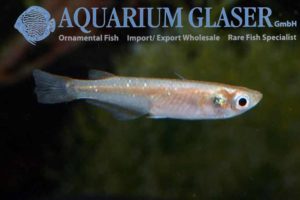
    The Japanese Ricefish or Medaka is the typical pet of the Japanese scientists that work on genetics. Uncountable numbers of scientific papers exist about this fish. Nevertheless the wild type of Medaka is a top rarity in the ornamental fish trade. We now managed to obtain for the first time ever a wild type of […]

  • Altum angels: bred ones available!

    27. May 2014

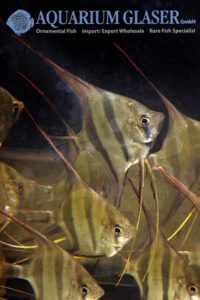
    We obtained very beautiful German bred Pterophyllum altum. The “Orinoco” strain is characterized by the very good shape of the body and a high degree of red in the fins. For our customers: the fish have code 698303 on our stocklist. Please note that we exclusively supply the wholesale trade. Text & photos: Frank Schäfer

  • Microctenopoma fasciolatum

    27. May 2014

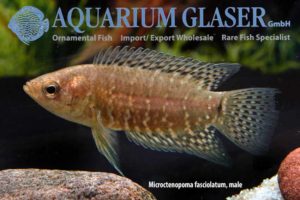
    Our current import from the D.R. Congo contains inter alia two pretty species of dwarf bushfish: Microctenopoma ansorgii and M. fasciolatum. While M. ansorgii, the Orange bushfish, is imported on a rather regular basis, M. fasciolatum is found only very rarely in the trade. The Striped bushfish – this is the common name of M. […]

  • Hemichromis elongatus

    27. May 2014

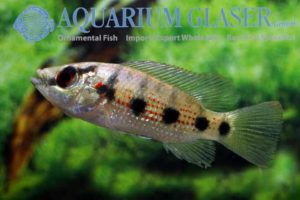
    The Five Star General has a very wide distribution in western Africa and is one of the most beautiful species of cichlid at all. Sadly it is also one of the most aggressive species of cichlid and this is the reason why it is only very rarely seen in aquaria. The photographed specimens originate from […]

  • Colisa lalia Cobalt

    Colisa lalia Cobalt

    27. May 2014

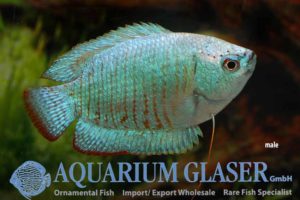
    Dwarf gouramis are the orchids among the freshwater aquarium fish. They are extremely beautiful, but also a bit of delicate, but if kept properly they are real eyecatchers. The Cobalt sport was developed only in the 1990ies and became very popular. Today the fish is among the most common species found in the ornamental fish […]

  • Große Zebra-Oskar-Wildfänge eingetroffen!

    Large wild collected Zebra Oscars arrived!

    27. May 2014

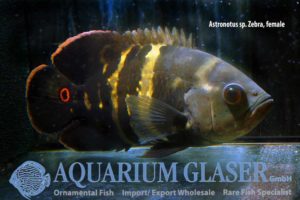
    The Oscar (Astronotus ocellatus) is by far the most popular species of large cichlid from South America. This is not only because it is so splendid coloured, but also due to its behaviour: the fish becomes much larger than 20 cm, but is of calm nature and can thus be kept and bred properly in […]

  • Ctenopoma acutirostre wild

    Ctenopoma acutirostre wild

    27. May 2014

    The current import from the D. R. Congo also contained some wild collected leopard bushfish. This species is available as bred from Indonesia in the last years (see http://www.aquariumglaser.de/en/archiv.php?news_id=140), but wild collected ones are very rare in the trade. The animals show an extremely variable pattern, each individual has a different coloration. One of our […]

  • Aguarunichthys torosus

    27. May 2014

    We could import a very special fish for the hobbyists specialized in predatory catfish from Peru: Aguarunichthys torosus. This species has been discovered only in 1986. Isn´t it fascinating that nature has the same solution for totally different species over and under the water? The spotted pattern of A. torosus is very similar to the […]

  • Teleocichla proselytus

    7. May 2014

    We received this very rarely offered dwarf cichlid from the Rio Tapajós in Brazil. Like in the humphead cichlids of the genus Steatocranus in Africa, Teleocichla have a reduced swimming bladder; because of that they exclusively live near the bottom. Our specimens have very nice orange colours in the fins. For our customers: the fish […]

  • Barbus jae

    6. May 2014

    Barbus jae is one of the smallest species of barb from Africa. It has been described from the river Dja in Cameroon. Sadly nowadays imports from Cameroon are very rare, so one has to be really lucky to find this jewel in a local pet shop. B. jae becomes only 2-3 cm long. Breeding B. […]

  • Parotocinclus longirostris

    6. May 2014

    These dwarf sucker cats reaches us from Brazil. They belong to the smallest species of sucker cat at all. Even fully grown they hardly extent 2.5 cm in length. The determination on species level is not absolutely confirmed, for obviously a complex of very similar species exists. However, in any case the fish are tiny […]

  • Leporinus desmotes

    6. May 2014

    There are a number of ringed species of Leporinus. Each of them has its own special charme. We obtained a shipment of very nice, small Leporinus affinis from Peru. Currently they are about 5 cm long, but fully grown they will reach up to 30 cm length. A closer look on the fish made clear […]

  • Potamotrygon

    5. May 2014

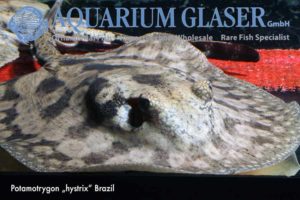
    Funny enough: some of the most popular species of a group in the trade are often totally unknown to science! This is for example the case in P. “hystrix” from the Rio Negro basin in Brazil. This species stays comparatively small – around 30 cm disc width – and is thus quite popular in the […]

  • Odontamblyopus rubicundus

    5. May 2014

    This goby from the lower reaches of the river Ganges belongs clearly to the category “faces that can be loved only by a mother”. Despite the look the fish that can reach up to 25 cm in length are very interesting. One should be careful with possible tankmates. Any fish that fits the mouth will […]

  • Double Sword Guppys

    5. May 2014

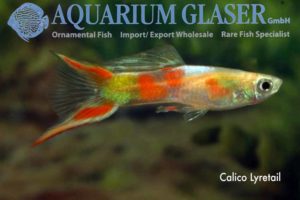
    What would the hobby be without guppys? Probably anyone who keeps ornamental fish has kept and bred at least once a guppy. The lively fish that shimmer in all colours of the rainbow are for sure among the most popular ornamental fish species at all. There are countless sports and even – genetically speaking – […]

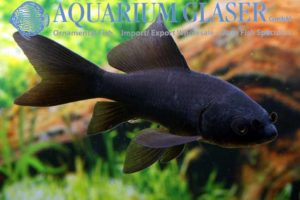
  • Carassius auratus – Comet Black

    5. May 2014

    We received this sport of the goldfish from China. The animals are suited not only for the garden pond (they are completely winterhardy), but look also very nice in lateral view. For our customers: the fish have code 808202 on our stocklist. Please note that we exclusively supply the wholesale trade. Text & photos: Frank […]

  • Corydoras sp Super Arcuatus

    2. May 2014

    Finally we received again this gorgeous, rare species of Corydoras from the Rio Purus in Brazil. The fish become almost double size compared with the “common” Corydoras arcuatus. In any other respect both species can be handled the same: they are hardy and beautiful fish! For our customers: the animals have code 221855 on our […]

  • Dario hysginon (2)

    2. May 2014

    The species of Dario – the Dwarf Badis – are in one respect comparable to their larger cousins of the genus Badis: they are Chameleon fish! Depending on mood or light the colours change a lot and fast. We have once more the Flame Red Dario, D. hysginon, from Burma in stock. The species becomes […]

  • Iguanodectes arrived!

    1. April 2014

    We can offer currently three of the extremely attractive, only very occasionally imported species of Iguanodectes. from Venezuela arrived Iguanodectes geisleri (see http://www.aquariumglaser.de/en/fish-archive/tetras-en/south-america-en/Iguanodectes_geisleri_en/) and I. adujai, and from Brazil we obtained a species that porbably represents I. purusii. For our customers: the animals have code 264612 (I. geisleri), 264353 (I. adujai), and 264402 (I. cf. […]

  • Apistogramma cacatuoides Mega Orange

    1. April 2014

    An orange sport of the cockatoo dwarf cichlid is already known for quite a long time. But now we received for the first time a new strain that has really wonderful orange coloration. The breeder calls it “Mega Orange” – and we agree! For our customers: the fish have code 617343 on our stocklist. Please […]

  • Poecilia wingei Blue Star

    1. April 2014

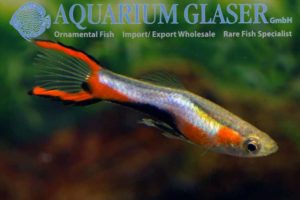
    Poecilia wingei is also known as the Endler´s Guppy, named after the most common local variety of that species in the hobby. It stays much smaller than the common guppy and this daintiness makes the fish very attractive for many aquarists. As in the common guppy a lot of local varieties can be observed in […]

  • Procatopus aberrans and P. nototaenia

    24. March 2014

    One of the beautiful species of Procatopus which we were able to import from Cameroon, has already been introduced to you: P. similis from Mundemba (http://www.aquariumglaser.de/en/news/Procatopus_similis_MUNDEMBA_en/). Now two additional species follow: Procatopus aberrans from Ossing and P. nototaenia from Yabassi. The latter is sometimes considered to be an undescribed species by killifish specialists and then […]

  • Pelvicachromis taeniatus Bipindi

    Pelvicachromis taeniatus Bipindi

    24. March 2014

    Currently we can offer a great number of wild collected varieties of P. taeniatus from different localities in Cameroon. The local variety from Bipindi is characterized by a high degree of yellow colours, the females get a wonderful blue belly when displaying. For our customers: the fish have code 562702 on our stocklist. Please note […]

  • Beautiful P14/Itaituba, bred specimens

    24. March 2014

    The taxonomy of the black river stingrays is very confusing. Three scientifically described species do exist: Potamotrygon henlei (described from the Rio Tocantins), P. leopoldi (described from the Rio Xingu), and P. garrapa (described from the Rio Branco). In P. henlei several varieties exist that possibly represent different, separate species. All specimens from the Rio […]

  • Campylomormyrus compressirostris

    24. March 2014

    Currently only very occasionally importations from the DR Congo appear – mainly due to the unsatisfying flight situation. So it is highly appreciated that we finally were able to import some specimens of the bizarre genus Campylomormyrus that bear the common name elephant fishes. Systematics of Campylomormyrus are rather complicated; in all probability our fish […]

  • Desmopuntius rhomboocellatus

    24. March 2014

    We obtained extremely beautiful, fully grown specimens of the Orange barb. We want to take the opportunity to bespeak one more of the numerous changes in genus names in small barbs from Asia. Desmopuntius – the name means “prisoner-barb” and refers to the striped pattern that is shown by all species included at least as […]

  • Unser neuer Mitarbeiter Friedolin

    Our new employee Friedolin

    24. March 2014

    Dear reader, we are glad to introduce to you our ew employee: Friedolin. Friedolin is a professional fisherman and originates from the house of Playmobil. Any time really large fish come into play, it is Friedolin´s part to face the truth. He is a real brave guy and helps you, dear reader, to realize how […]

  • Acestrorhynchus falcatus

    19. March 2014

    We received charming and very pretty juveniles of the Redtail barracuda tetra Acestrorhynchus falcatus from Peru. One day the fish will become around 30 cm long. Currently they are about 6-8 cm long. This size is perfect for a complication-free acclimatation. For our customers: the fish have code 201701 on our stocklist. Please note that […]

  • Macropodus erythropterus

    Macropodus erythropterus

    19. March 2014

    Not much has been heard in the past few years about this beautiful paradise fish from Vietnam. This might be connected with the dispute about the validity of the species which has been considered to be a mere synonym of M. spechti (formerly: M. concolor) by some scientists. We recently obtained bred specimens that clearly […]

  • Charax stenopterus

    19. March 2014

    Usually no one expects that predatory tetras are especially colourful. Honestly speaking, we had doubts regarding the words of our supplier that the Charax stenopterus, which we could import now for the first time from Paraguay, who said that the fish were very nice coloured when he collected them. But guess what: after some time […]

  • Apistogramma sp. Xingu / Vielfleck

    14. March 2014

    We received wonderful, fully grown bred specimens of this beautiful dwarf cichlid. The species is still undescribed scientifically. For our customers: the animals have code 628744 on our stocklist. Please note that we exclusively supply the wholesale trade. Text & photos: Frank Schäfer

  • Dürre in Singapur und Malaysia

    Drought in Singapore and Malaysia

    13. March 2014

    Currently about 80% of the freshwater ornamental fish traded worldwide are bred specimens. A larger part of them is bred in Malaysia and Singapore. The drought there is extreme, February 2014 was the driest February in the region since 1869! This affects strongly the breeder´s facilities. One of our suppliers wrote: “The weather issue has […]

  • Lepidocephalichthys guntea – die ideale Aquarienschmerle

    Lepidocephalichthys guntea – the ideal aquarium loach

    12. March 2014

    There is hardly a second species of loach that is as good suited for the home aquarium as Lepidocephalichthys guntea is. The species becomes usually 6-8 cm long, only in very rare occasions larger specimens up to 15 cm have been reported in literature. The animal has a huge distribution area over the north of […]

  • Betta splendens KOI

    12. March 2014

    Again we could import a few specimens of this spectacular new sport. We received short finned ones (“Half Moon Pla Kat”) and veiltails (“Super Delta”). This is the first sport of Betta splendens that has been selected especially for the look from the top. Alike in Koi only very few specimens among thousands of offspring […]

  • Betta splendens KOI

    12. March 2014

    For the first time ever we could import a few specimens of this spectacular new sport. This is the first sport of Betta splendens that has been selected especially for the look from the top. Alike in Koi only very few specimens among thousands of offspring have a coloration that make a common Betta splendens […]

  • Ompok cf. fumidus

    Ompok cf. fumidus

    12. March 2014

    We don´t always get what we want. Initially we ordered the Malayan Giant Catfish Wallago leerii for one of our customers. But we received a species of Ompok from our Singapore supplier instead. However, this error is understandable. Even professional scientists have in the past confused both genera quite often and described a number of […]

  • Xiphophorus hellerii Wien Lyra

    Xiphophorus hellerii Wien Lyra

    12. March 2014

    Even in wild living swordtails one can observe the tendency in females to mate only with the most impressive males. And so in swordtails the swordfin developed. This fin is obviously a pure luxury without any practical use, comparable best with the train in male peacocks. The only use of this is to impress the […]

  • Hypselecara temporalis OYAPOC

    Hypselecara temporalis OYAPOC

    10. March 2014

    The Emerald cichlid has become a bit out of fashion. This is a quite sad thing, for this impressive large cichlid – males can become up to 30 cm long, females always stay much smaller – is one of the most beautiful species of cichlid of South America. For the first we can offer now […]

  • Boleophthalmus boddarti

    10. March 2014

    The mudskippers (Oxudercinae) represent a subfamily on their own within the goby family (Gobiidae). One can observe all steps from “normal”, aquatic species (for example in the genus Apocryptes) to partially land-dwelling, amphibic species (Periophthalmus) within the Oxudercinae. Members of the genus Boleophthalmus don´t leave the water completely, but can be found in zones of […]

  • Synodontis bastiani

    Synodontis bastiani

    7. March 2014

    The squeakers (Synodontis) are a species-rich genus of catfish from Africa. Currently 131 accepted species are known. The maximum size of these fish lies between 8 cm and 60 cm. Most species attain a maximum length of 15-20 cm in the aquarium. In their home-countries these fish are very common and heavily used as food […]

  • Panther crabs from Sulawesi

    7. March 2014

    The Panther crabs (Parathelphusa pantherina) are for sure the most attractive of all freshwater crabs. They originate from Matano lake in Sulawesi, where they can be also found under roots etc. on the shore. The animals are, like almost all crabs, omnivorous. However, most food items taken are from animal origin. The maximum width of […]

  • Metynnis fasciatus Breeding coloration

    7. March 2014

    Metynnis fasciatus is a very rarely offered silver dollar which has a characteristic zebra pattern. Males and females can be easily distinguished in all Metynnis by the shape of the anal fin, which is straight bordered in females and has a lappet-like extension in males. Now we could observe for the first time ever the […]

  • Tachysurus fulvidraco

    28. February 2014

    We were able to import a second, beautiful Chinese catfish after Pseudobagrus trilineatus (see http://www.aquariumglaser.de/en/pseudobagrus-trilineatus_de_1581.html).Trachysurus fulividraco becomes about 12-15 cm long and is a perfect catfish for larger, unheated aquaria.The species is also often placed in the genus Pelteobagrus, but the international trade name is much more interesting: Chinese highway catfish! However, the scientific name […]

  • Xiphophorus hellerii Pastel Comet

    26. February 2014

    The blue eye tells us that this wonderful new sport of the swordtail has been developed on white-bodied ancestors. This makes the red color on the body look so magically crystalline. The blue shine all over the body is fascinating. Finally, the dynamic “Comet” pattern on the tail puts the finishing touches on the fish. […]

  • Guppy Blue Sapphire

    26. February 2014

    Once more the breeders in Asia have developed a new, very nice guppy sport. The name “Blue Sapphire” is well chosen, for the fish shine in frontlight bright blue. Technically spoken, the “Blue Sapphire” is a sport of the Moskow strain of Guppy. One could name these little gems also “chameleon guppy”, for the males […]

  • Procatopus similis MUNDEMBA

    26. February 2014

    Our current Cameroon import contains also several local varieties of the magnificent lampeyes of the genus Procatopus. We want to introduce them to you in the near future. We start with a variety of P. similis from Mundemba, which is a breathtaking yellow species. Even the upper border of the iris is golden-yellow in this […]
  • Aequidens (Nannacara) Neon Blue

    18. February 2014

    For all aquarists that feel that Electric Blue Rams are too delicate and Rocio octofasciata “Blue Dempsey” too aggressive: here is an alternative breed from Singapore. The fish are sold under the name of “Nannacara Neon Blue”. Despite the fact that we are quite sure that these fish do not belong to the genus Nannacara […]
  • Rhinomugil corsula

    Rhinomugil corsula

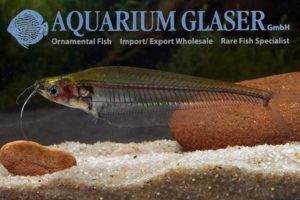
    18. February 2014

    The Indian Four Eyed Fish belongs to the mullet family. It becomes usually 15-20 cm, in rare occasions up to 45 cm long. Like in the South American Four Eyes (Anableps) the eyes in Rhinomugil are parted horizontally. Nevertheless both genera are not related to each other. With the upper half of the eye the […]
  • Gymnocorymbus cf. thayeri

    Gymnocorymbus cf. thayeri

    18. February 2014

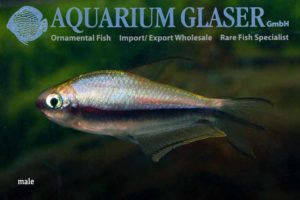
    Sometimes we obtain animals as so-called accidental catches. And sometimes these fish have never been reported so far from the area we got them from. The silver widow tetra (Gymnocorymbus thayeri) is a close relative to one of the most popular tetras in the hobby, the black widow tetra (G. ternetzi). Both look quite similar […]
  • Pseudobagrus trilineatus

    18. February 2014

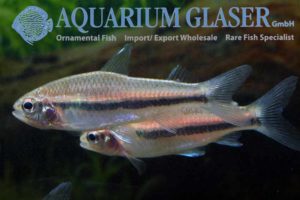
    This very interesting catfish originates from China. We received our first importation of the species now. The fish become about 7.5 cm long and live endemically (= they occur nowhere else) in the Dong Jiang influence in the Chinese province of Guangdong. There is no universal agreement among ichthyologist in which genus this fish should […]
  • Hyphessobrycon eschwartzae (= Hyphessobrycon cf agulha)

    17. February 2014

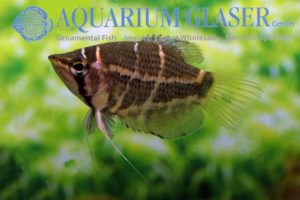
    Finally we were able to import agin this very pretty, only occasionally available tetra from Peru. Keeping this fish is comparable o the popular Black Neon (Hyphessobrycon herbertaxelrodi) that looks also a bit similar. For further information’s, please see http://www.aquariumglaser.de/en/news/Hyphessobrycon_eschwartzae_Hyphessobrycon_cf_agulha__en/ For our customers: the fish have code 260203 on our stocklist. Please note that wee […]
  • Nannostomus nigrotaeniatus

    17. February 2014

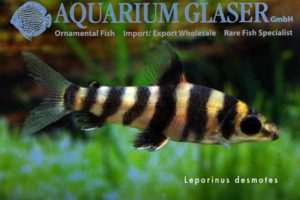
    This beautiful pencil fish has been described scientifically only a few months ago. It is quite similar to N. trifasciatus, but has a much broader central longitudinal band. The most important visual difference for aquarists is the fact that this species is sexually dichromous. Only the males have the very nice red spots in the […]
  • Oryzias dancena

    17. February 2014

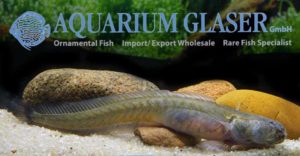
    The elder hobbyists will know this nice blue-eye from India under the name of O. melastigmus; but this is another species, which is hardly ever kept in aquaria. Our O. dancena originate from the area around Calcutta in India, where they live along with so popular fish species like the zebra fish (Danio rerio) and […]
  • Apistogramma urteagai

    17. February 2014

    This pretty dwarf cichlid from the Madre de Dios region in Peru is offered only very occasionally. The species is quite undemanding and thus a perfect subject for beginners who want to collect first experiences in keeping and breeding dwarf cichlids. A. urteagai does not require any special water conditions, this is another advantage of […]
  • Betta splendens Mustard Gas

    17. February 2014

    There is no accounting for taste. But without any doubt the name “Mustard Gas”, which is one of the most disgusting chemical weapons, is a bad offense against good taste. The fish nevertheless are extremely beautiful. It is said that initially an US breeder named Jude Als has bred the first Mustard Gas Bettas. However, […]

  • Hemiodontichthys acipenserinus

    17. February 2014

    This species has been named “Pinocchio cat” in the trade due to its funny looking nose. The species represents the smallest of all mouthbrooding whiptail cats – it usually grows only to 10 cm total length in aquaria – and is thus very well suited for keeping. We currently were able to import these beautiful […]

  • Hemiodontichthys acipenserinus

    17. February 2014

    These strange whiptail catfish, in nature living in a sandy habitat, are regularly imported, although in low numbers. This species requires a sandy substrate, in which they can hide themselves. Because this is a shy fish absolute care needs be taken in the choice of tank mates. The reproduction of this species is not very […]

  • Apistogramma uaupesi

    17. February 2014

    This is without any doubts one of the most attractive dwarf cichlids. Fully grown males show a very variable coloration, a fact that led to different common names in the past, like “Rotkeil-Apistogramma” (which means “Red-Wedge-Apistogramma”) or “Blutkehl-Apistogramma” (which means “Blood-Throat-Apistogramma”). However, according to most current knowledge, all these varieties appear in the wild together […]

  • Dawkinsia sp. aff. exclamatio

    10. February 2014

    Once more we were able to import this impressive barb from South India. It is a very close relative of D. exclamatio, but differs in details of coloration. For our customers: the fish have code 369666 on our stocklist. Please note that we exclusively supply the wholesale trade. Available in very limited numbers only! Text […]

  • Serrapinnus sp. aff. kriegi

    3. February 2014

    The tetras which were called “Cheirodon” for decades are splitted now in several genera: Nanocheirodon, Compsura, Odontostilbe, Serrapinnus, and Cheirodon. They all have a generalized pattern with a black caudal spot and light spots above and below it. We currently received a pretty species of that group from Peru. Sadly we were not able to […]

  • Eirmotus octozona

    30. January 2014

    This tiny barb is very enigmatic. It has been described in 1959 on the basis of specimens from the aquarium fish trade which were said to originate from Thailand (Bung Borapet). However, there have been no reports since then about any occurence of Eirmotus in Thailand. Oramental fish collectors formerly collected this species in the […]

  • Heros severus Gold-Red-Spot

    30. January 2014

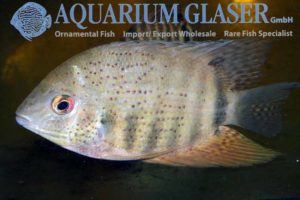
    We obtained gorgeous, fully grown eyespot cichlids of that sport from a German breeder who kept them in a 1.800 liter tank. These fish are real eyecatchers! For our customers: the animals have code 661617 on our stocklist. Please note that we exclusively supply the wholesale trade. Available in limited numbers only! Text & photos: […]

  • We can “big”, too…L191

    30. January 2014

    Ornamental fish are not necessarily small. Last week we received this juggernaut, a Panaque sp. “L191”. The animal has taken the transit from Colombia in our fishhouse in stride and has settled down perfectly.

  • Mystus leucophasis (formerly: Heterobagrus leucophasis)

    30. January 2014

    The Upside-Down-Cat from the Congo (Synodontis nigriventris, see http://www.aquariumglaser.de/en/news/Synodontis_nigriventris_finally_available_again__en/) is known by any aquarists child. But even experienced aquarists often don´t know that in Asia (in Burma) also occurs an upside down swimming species: Mystus leucophasis which can attain a maximum length of about 30 cm, but is commonly found 15-20 cm long. The schooling […]

  • Corydoras sp. Manu5 (CW062)

    28. January 2014

    Currently we received a number of still undescribed species of Corydoras from the Madre de Dios region in Peru, among them the very pretty Corydoras sp. Manu5. The Rio Manú is the larger of the two headstreams of the Rio Madre de Dios. Corydoras sp. Manu5 has the CW-number 62. For our customers: the fish […]

  • Pelvicachromis silviae

    28. January 2014

    Finally we were able once more to import this pretty dwarf cichlid (males become 7-8 cm long, females stay 15-25% smaller) from Nigeria. Before its official description under the name of P. silviae the species has been known by hobbyists for about 40 years as Pelvicachromis sp. aff. subocellatus. For our customers: the fish have […]

  • Synodontis pardalis

    20. January 2014

    We received with the current Cameroon importation this beautiful squeaker, which can attain a maximum length of about 20 cm. The species is known only from the river Dja and its affluent Libi. This is the reason why the fish is considered an endangered species, for the Dja is heavily destroyed and polluted due to […]

  • Corydoras sp. Eder

    20. January 2014

    We obtained from the Madre de Dios region in Peru this extremely rare and beautiful long snouted Corydoras und the name of Corydoras sp. Eder I and II. From a zoological point of view both represent the same species, which is very variable in respect of coloration. In the hobby there are several synonyms for […]

  • Benitochromis finleyi Mungo

    20. January 2014

    This medium sized cichlid reaches a maximum length of about 12 cm. The very beautiful fish are pair-bonding oviphilic mouthbrooders. In repect of water chemistry the species is astonishingly adaptable. One should keep them in larger aquaria, for the fish can be become quite gruff against each other. For our customers: the fish have code […]

  • Ladigesia roloffi

    20. January 2014

    This beautiful tetra originates from West Africa. The fish becomes only 3-4 cm long. Nevertheless it should be kept in comparatively large aquaria, for it loves to swim a lot. The males can be easily recognized by the shape of the anal fin. The sense of that structure is not researched yet. Text & photos: […]

  • Geophagus altifrons Curua Una

    20. January 2014

    All species of Geophagus are gorgeous fish, but G. altifrons – the species can be recognized by the shape of the lateral spot, which is always smaller than the diameter of the eye – is one of the most beautiful of all. We currently can offer German bred specimens which belong to the population of […]

  • Monodactylus argenteus

    20. January 2014

    Are you planning already your tanks for the upcoming year? Maybe you try a brackish water tank? A large aquarium with a school of monos (Monodactylus argenteus) is a real eyecatcher and a perfect opportunity to learn about all the other interesting species that like it a bit salty. Text & photos: Frank Schäfer

  • Trichodactylus sp. Paraguay

    20. January 2014

    Crabs are the personalities among the crustaceans. The crabs of the genus Trichodactylus are exclusive freshwater crabs. These crabs are like most other crabs omnivorous and don´t stop for plants or tankmates. The crabs are not mean, they simply try everything wether it tastes or not. So one should keep the funny guys best in […]

  • Clypeobarbus congicus

    20. January 2014

    The Copper-red Congobarb is astonishingly only an insider tip among aquarists and even experienced hobbyists often never have heard of it. This beautiful fish attains a maximum length of only 4-5 cm, only in rare exceptions they become up to 7 cm long. These barbs are absolutely peaceful schooling fish. Currently we can offer the […]

  • Biotodoma cupido Peru

    Biotodoma cupido Peru

    20. January 2014

    The small cichlid Biotodoma cupido – the species can attain a maximum length of about 12-15 cm, but is sexually mature already at 6-8 cm total length – is probably the species of cichlid with the widest distribution in Amazonia. However, experts are merrily discordant wether all the different looking populations represent only varieties of […]

  • Barbus hulstaerti Lompole

    20. January 2014

    Once more we received a small jewel from the Congo basin. Again, a somewhat larger number of the Butterfly Barb Barbus hulstaerti could be imported, which was lost in the hobby for a long time. The colour variety with the large spot on the side is called “Lompole” after the collection site. The lively fish […]

  • Pseudapocryptes elongatus

    20. January 2014

    We could import this charming goby once more from India. It is a kind of mudskipper, but does never leave the water completely. It only swims in very shallow water. Against each other these mudskippers are absolutely peaceful. They feed readily on any type of usual fishfood. The maximum length is around 20 cm, but […]

  • Gasteropelecus maculatus

    Gasteropelecus maculatus

    15. January 2014

    Hatched fishes belong to very few species of fish that are able to fly. A hatched fish on the run jumps out of the water and uses the pectoral fins just like wings. So these tiny, only 5-6 cm long species can jump several meters. The typical hatched belly is also an adaption for flying, […]

  • Chromobotia macracanthus

    Chromobotia macracanthus

    15. January 2014

    The clown loach is one of the most popular species of loach at all. One should keep this up to 20-30 cm long species always in a small school, for clown loaches are very social animals. Text & photos: Frank Schäfer

  • Pseudogastromyzon sp. Red Fin

    15. January 2014

    Hillstream loaches have become more and more popular in the past years and some of the smaller species are imported on a regular basis now. Currently we received a new species via Hongkong. The very pretty fish attains a length of 4.5 – 5 cm. The males are already mature, they can be recognizes by […]

  • Corydoras ellisae

    Corydoras ellisae

    15. January 2014

    A beautiful, but sadly only rarely available cory from Paraguay. This species is the long-snouted counterpart of the most widespread cory in the hobby, the Peppered Corydoras. Text & photos: Frank Schäfer

  • Discus Royal Blue Nhamunda Maracanha

    11. December 2013

    We continue our journey through the magical world of recently imported wild collected discus with these magnificent animals. Available in very limited numbers only! You will find a small video of the fish on our facebook page: https://www.facebook.com/media/set/?set=vb.119893808211837&type=2 For our customers: the animals have code 731358 on our stocklist. Please note that we exclusively supply […]

  • Pseudolaguvia muricata

    Pseudolaguvia muricata

    11. December 2013

    Catfishes from Asia are sadly not “en vogue” currently. On the other hand, many new, attractive species have been discovered recently, which are perfect aquarium inhabitants. The first species of the genus Pseudolaguvia was discovered back in 1927, but only recently it was found that this genus represents a species-rich one. Pseudolaguvia are dwarf catfish […]

  • Channa andrao

    11. December 2013

    One of the smallest and most colorful species of snakehead has been described recently. Since about 12 years this fish is in the trade under the name of Channa sp. “Blue bleheri”. This mouthbrooding species becomes sexually mature at a length of about 8 cm. In the wild, they hardly ever become larger than 10 […]

  • Channa White Pearl Lemon

    11. December 2013

    We were able to import this attractive snakehead for the first time ever. In all probability it is a sport of Channa argus. Thus we expect that these animals can reach a length of 30-40 cm, exceptionally even 90 cm. And this is the good news: with every centimeter the fish grow they become more […]