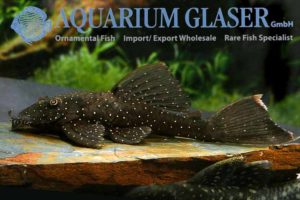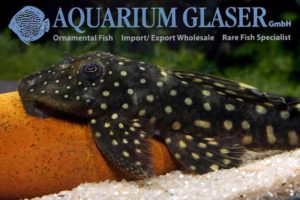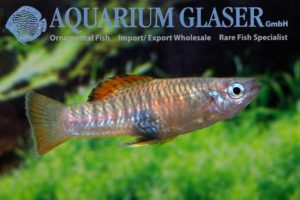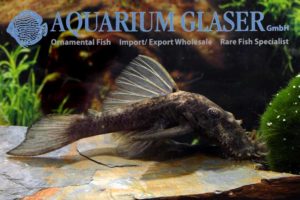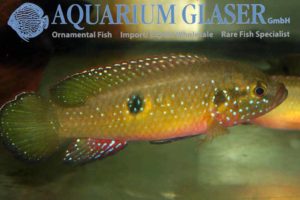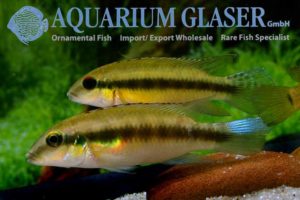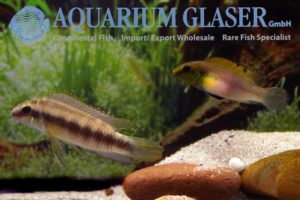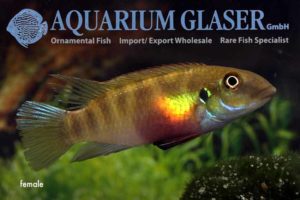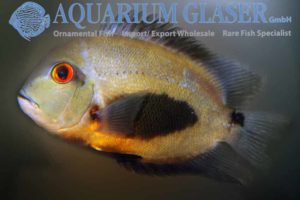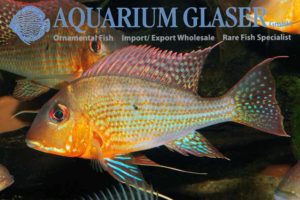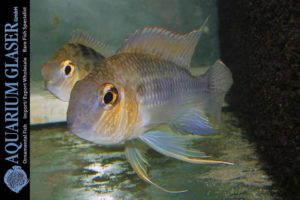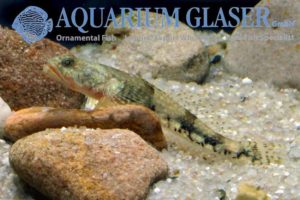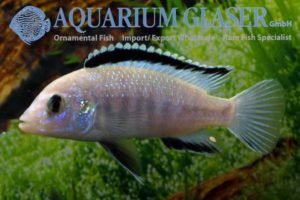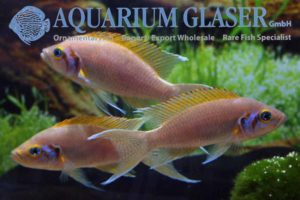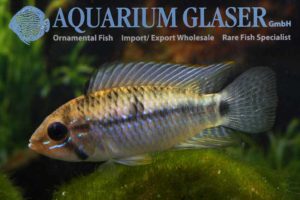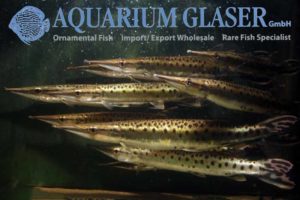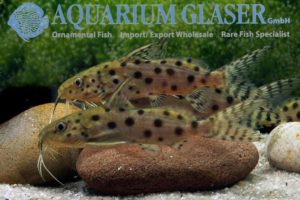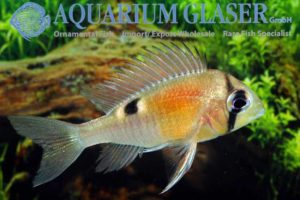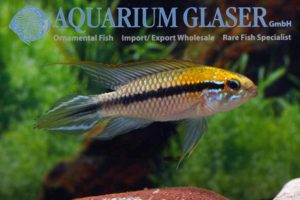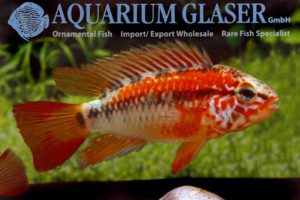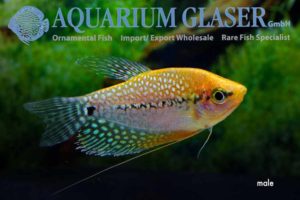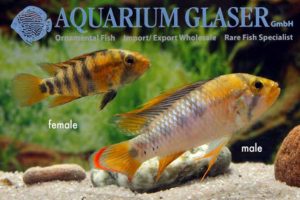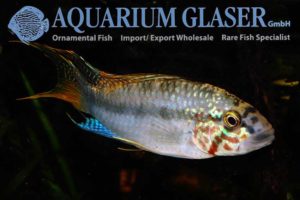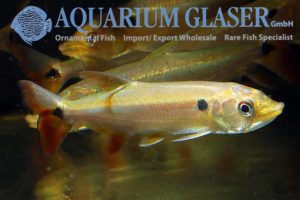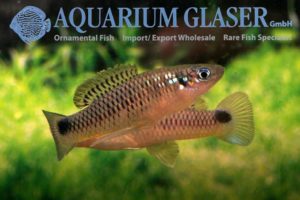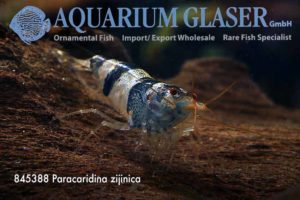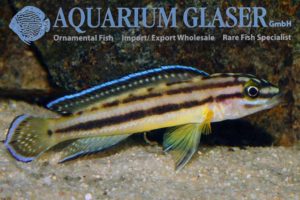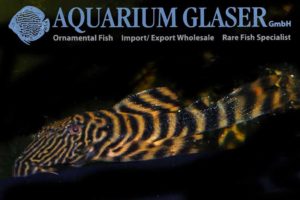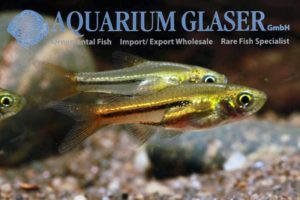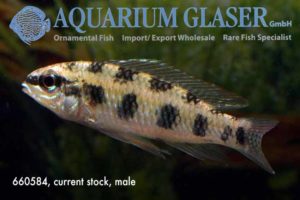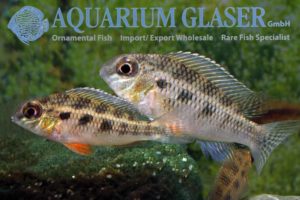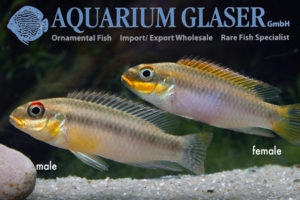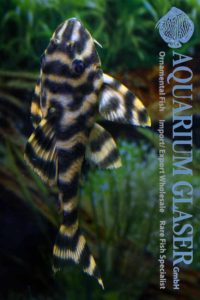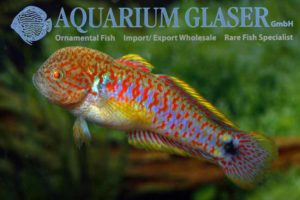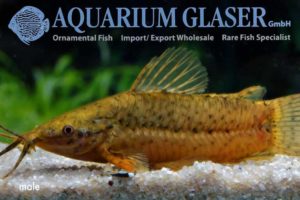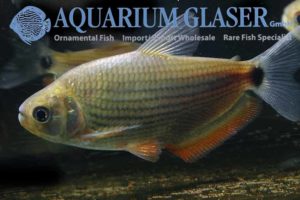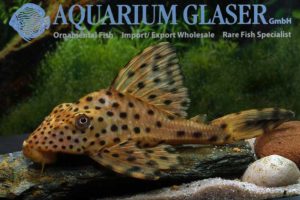

Currently we have several species of checkerboard cichlids (genera Crenicara and Dicrossus) in stock. Most of them are real rarities in the hobby, among them Crenicara punctulatum. We obtained this pretty species from Peru. Males of Crenicara punctulatum can attain a maximum length of about 12 cm, so this species is not a dwarf cichlid […]
Fish Archive (3192)
-
-
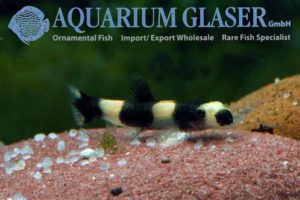
Schistura spilota
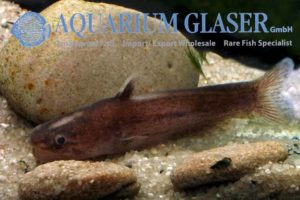
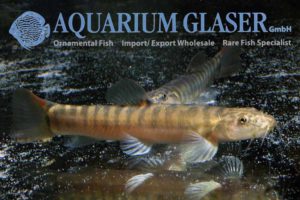
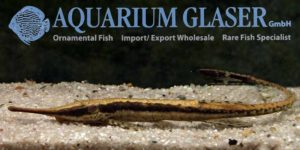
The loaches of the genus Schistura are spread all over South and Southeast Asia. They have much in common with the catfishes of the genus Corydoras from South America: they are present everywhere and there does exist a large number of species. Schistura spilota from Thailand is one of the largest species at all and […]
-
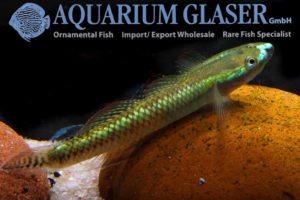
Opsarius bernatziki
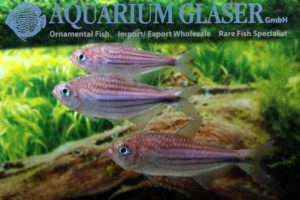
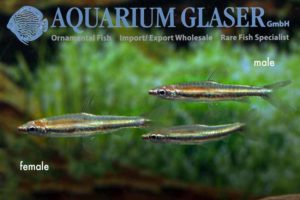
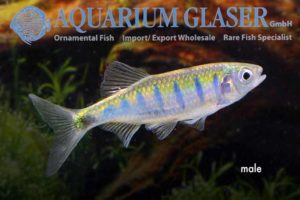
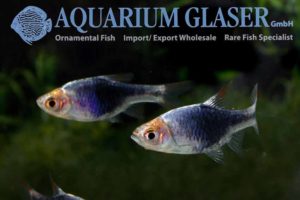
For the first time ever we could import this pretty barb from Thailand. At first we thought the fish would belong to the species Opsarius ornatus, but after they has settled all of our fish showed a clearly marked caudal spot, which is typical for O. bernatziki, but lacking in B. ornatus. Another very similar […]
-
Synodontis sorex
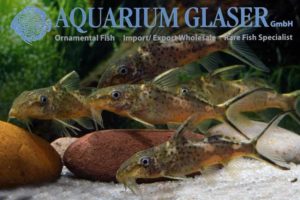
Two weeks ago we presented to you some species of catfish we imported from Nigeria. This wonderful shipment contained also some by-catches, which are species that were send erroneously along with the ordered specimens. One of these by-catches came with Synodontis clarias. It was the extremely rarely imported species Synodontis sorex. This “Scissortail-Squeaker” has a […]
-
Farlowella vittata
The needle suckers of the genus Farlowella are quite specious. To date 27 species are recognized as valid. As many species look very similar to each other the exact determination often proofs to be quite difficult. The 27th species has been described very recently from Colombia (it is the species Farlowella yarigui which has not […]
-
Pelvicachromis taeniatus
Once more a change of names of well-known aquarium fishes appeared. The different forms of Pewlvicachromis taeniatus have been regarded for decades as mere colour varieties of the very same biological species. But now a new study has been published which laces almost all “varieties” from Cameroon under the taxon Pelvicachromis kribensis. Only one “variety” […]
-
Scleropages jardinii and S. leichardti
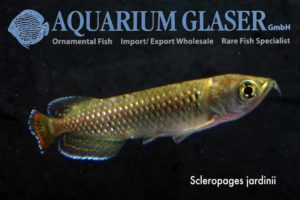
The Bony tongues (Osteoglossidae) are real old high aristocracy among the recent fish species. They are witnesses of the ancient super continent of Gondwana, which included the recent parts of Africa, India, South America, Antarctica, and Australia. About 150 million years ago this super continent began to break. The Bony tongues drifted away from each […]
-
Chrosomus erythrogaster
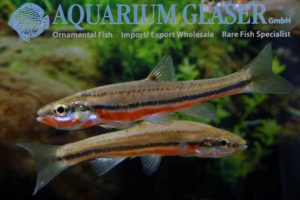
We can offer only very rarely wild collected fishes from the USA. But currently we have some species of minnow in stock, among them the very pretty Chrosomus erythrogaster. These fish do not need a heater, but feel also very comfortable at temperatures over 24°C. Maximum size for that species is 10-12 cm, currently the […]
-
Peckoltia sp. Alto Nhamunda
We are glad to be able to present to you another jewel by the end of the week again. We could import last year already a new species of Peckoltia from the upper Nhamunda River in Brazil, which is also famous for its pretty discus. This first importation contained only fully grown specimens (see http://www.aquariumglaser.de/en/news/Peckoltia_sp_Alto_Nhamunda_en/). […]
-
Tateurndina ocellicauda
We received wonderful, fully grown bred specimens of this beautiful, small freshwater goby. Dominant old males develop a mighty humphead, females a round belly swollen from eggs. For more information, please see http://www.aquariumglaser.de/en/fish-archive/miscellaneous-en/Tateurndina_ocellicauda_en/ For our customers: the fish have code 461004 on our stocklist. Please note that we exclusively supply the wholesale trade. Text & […]
-
Tateurndina ocellicauda
This wonderful goby originates from Papua-Newguinea, but in the trade almost exclusively bred specimens are available. The fish belongs to the so-called sleeper-gobies. These fish have been named after a reflecting layer over their eyes. This looked for the first observers as if the fish would have closed its eyes for sleep. T. ocellicauda becomes […]
-
Parailia pellucida
The species in our small series on catfishes from Nigeria is – in contrast to the species described so far – always available and it fits perfectly in any community tank: the African Glass Catfish, Parailia pellucida. The maximum length is given with 15 cm in literature; however, we see only very rarely specimens larger […]
-
Bagrus filamentosus
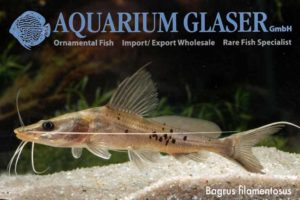
The African genus Bagrus contains large, predatory catfish. The maximum size of the different species is between 30 cm and more than one meter! Sadly the determination of the species is rather difficult, because most of the 11 species that are regarded as valid currently have been described before WW2. A modern revision does not […]
-
Synodontis clarias
This week we want to focus on unusual species of catfish from Nigeria. Today: Synodontis clarias. This is the first species of Synodontis that became known by scientists. The original scientific description dates back to 1758 and was done by Linnaeus. Nevertheless the species is exported only very occasionally for aquaristic purposes. The fish attains […]
-
Synodontis batensoda
There does exist a good number of species of Synodontis that tend to swim upside down. The best known species is without any doubt the upside down cat, Synodontis nigriventris from the Congo. Now we were able to import the very rarely offered Synodontis batensoda from Nigeria, which shows a similar behaviour. It seems to […]
-
L204 Panaqolus albivermis
One of the most beautiful L-numbers at all has obtained an official, valid name in 2013: Panaqolus albivermis. The species originates from Peru. We currently were able to import again a good number of wonderful young specimens of this small species of catfish (maximum length around 10 cm). Among them are also 5 spotted individuals. […]
-
Pao palembangensis and Dichotomyctere ocellatus
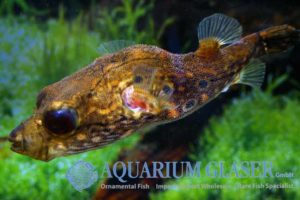
Pao palembangensis (= Tetraodon palembangensis) Once more we were able to import a small number of the most unbelievable freshwater pufferfish. This species is quite specialized. It occurs only on Sumatra and Borneo, where it lives in very soft and acidic water. This puffer is a pure freshwater species that never enters brackish or marine […]
-
Atyoida pilipes
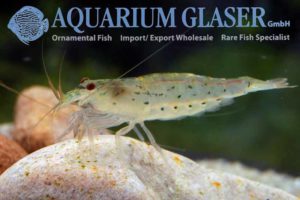
Dwarf shrimps are charming and completely harmless, but also very small. So keepers of somewhat larger fish often search for a species of shrimp which is absolutely harmless and day active, but also a bit larger – too large to be eaten as an intermediate snack between dinner and supper. For these cases mother nature […]
-
Cherax sp. Blue Moon
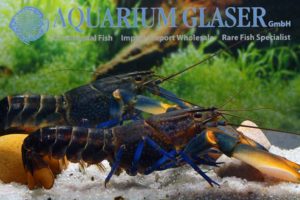
We obtain a number of very beautiful species of the genus Cherax from New-Guinea. One of them is the “Blue Moon”, which is not yet determined on a scientific basis. The legs are bright blue and the carapax is of a deep midnight blue. The outer ridge of the claw is bright yellow-orange – this […]
-
Colisa fasciata bred
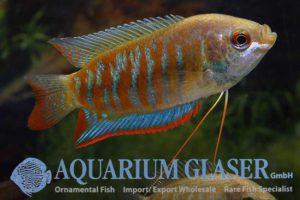
We received breathtaking beautiful specimens of Colisa fasciata from Singapore. This species is an ideal tankmate for nice community tanks with small, peaceful barbs, minnows etc. and a dense plantation. For our customers: the fish have code 411104 on our stocklist. Please note that we exclusively supply the wholesale trade. Text & photos: Frank Schäfer
-
Lepthoplosternum pectorale – Dwarf Hoplosternum
The Hoplosternum relationship belongs to the plated catfish and and is thus closely related to Corydoras & Co. Like these, they make good and interesting aquarium fishes. Sadly most species become quite large. So, the species of the genus Lepthoplosternum are the best choose for smaller tanks. The maximum size of the members of that […]
-
Markiana nigripinnis
We received wonderful, large (8-10 cm) specimens of this extraordinary species of tetra from Paraguay. For more information, please click http://www.aquariumglaser.de/en/news/Markiana_nigripinnis_en/ For our customers: the fish have code 266694 on our stocklist. Please note that we exclusively supply the wholesale trade. Available in limited numbers only! Text & photo: Frank Schäfer
-
Hoplias aimara Amapa Brazil
Hoplias aimara belongs to the fighters. Without any fear they attack even humans. And one should keep in mind that H. aimara attains a length of more than one meter! So one should be really careful with these fish… For the first time ever we could import this species, which is known so far only […]
-
Mystus tengara (M. carcio)
We received the smallest of the striped catfish species from India, which were all called formerly “Mystus vittatus”. The small species also had to face a real mess regarding the correct naming. For a long time the small species was called M. tengara, currently most scientists believe that the correct name has to be M. […]
-
Orthosternarchus tamandua
There are several critters among the South American knifefishes, but Orthosternarchus tamandua is most probably the most unusual of all. We were able to import a specimen from Peru. Our fish has a length of 25-30 cm, the maximum length reported for the species is about 45 cm. For our customers: the fish has code […]
-
Rhinogobius formosanus
We received again this pretty freshwater goby from Taiwan. The determination of the numerous species of Rhinogobius is often very difficult (see also http://www.aquariumglaser.de/en/rhinogobius-rubromaculatus_en_1637.html). R. formosanus is a pleasant exception of that rule, for it differs from all species of Rhinogiobius from Taiwan by the unique red coloration of the face. Taiwan was formerly known […]
-
Neocaridina davidi Fantasy Jelly
The development of new colour sports in dwarf shrimps still goes on and on. The latest brandnew sport reached us now from Taiwan under the name of Fantasy Jelly. This pretty animal is of a deep, intense royal blue; the colour is so intensive that the shrimps sometimes even look black. Possibly this new sport […]
-
Bangana behri
For the first time ever we were able to import a quite bizarre species of carp from Southeast Asia: Bangana behri. This up to 45 cm long relative of Labeo has in adult state a horn on the head and a lot of tubercles in the face. In its native range – the Mekong basin […]
-
L167 arrived!
Finally we were able to import again one of the most attractive species of Cochliodon: L167. The species belongs to the typical representatives of the genus, which feed mainly on soft wood. This can be recognized by the very few teeth, which have a specialized shape with a broad, mussel-shaped cusp. L167 originates from the […]
-
Rasbora sarawakensis
The genus Rasbora is a very specious one and contains currently 82 described species. Nevertheless only comparatively few species have been ever kept in aquaria. R. sarawakensis reaches about 5 cm in length and originates from a part of Borneo that belongs to Malaysia. We were able to import the pretty schooling fish, which is […]
-
Clarias gariepinus marbled
Sometimes it is almost impossible to distinguish between a food fish and an ornamental fish. The marbled Clarias is, however, bred in Southeast Asia as a food fish for human consumption. It grows extremely fast, is very hardy and can survive on the market without water for many hours, because it has an accessory breathing […]
-
Xiphophorus hellerii KOHAKU TRICOLOR
Swordtails with three different colours are know at least for 15 years now. But breeding them is really tricky, because only few of the offspring has a nice pattern. Especially the black parts can cause problems. Specimens with a high dregree of black tend to have cancer (melanomia) and this ends as often fatal as […]
-
Brokatbarbe KOI
The Golden barb is an artificial sport that is said to have derived from the half-banded barb (Barbus semifasciolatus). However, nobody can say this for sure. The fish appeared in the 1960ies in the aquarium trade and is said to have been bred by an aquarist named Thomas Schubert of Camden, New Jersey, US. That […]
-
Acestrorhynchus pantaneiro
We received wonderful specimens of this most attractive barracuda characin of all from Paraguay. Currently the fish have a size of 11-15 cm and already have very nice colours. A. pantaneiro has been named A. altus in the elder aquarium literature. The latter is a close relative, but a different species. A. pantaneiro becomes 30-40 […]
-
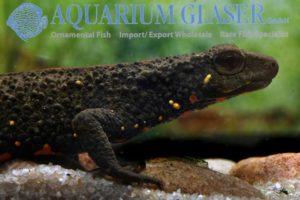
Corydoras sp. Tukano Longnose
There are still species of Corydoras that are imported so rarely and in so low numbers that the fish stay unfulfilled dreams of most enthusiasts. One of the most attractive species of that group is for sure the “Tukanao Longnose”. Of course these animals are not rare in the wild in the sense that there […]
-
Pyrrhulina cf. brevis Red Spots
We received charming Pyrrhulina tetras from Peru, which most probably belong to the species P. brevis. Even on the day of their arrival the fish showed a lot of red colours. But when the males came in breeding mood in the photo-tank and started to quarrel they became even more colorful. At a glimpse on […]
-
Apistogramma agassizii Tefé
We received extremely beautiful wild collect specimens of this most desirable variety of Apistogramma agassizii. The fish show the stripes on the belly, which are so characteristic for the Tefé-variety and additionally they have the yellowish-reddish back of the Santarém-variety. Gorgeous! For our customers: the fish have code 614772 on our stocklist. Please note that […]
-
L273 Pseudacanthicus sp. Titanic XL
The Titanic was never traded in large numbers and is one of L-numbers in great demand. We received now three large specimens from Brazil, which seem to be fully grown. They are 25-30 cm long. One of them is for sure a male. It can be easily identified by the strong spines and the long […]
-
Lonchogenys ilisha
For the first time ever we were able to import this extremely unusual tetra. Lonchogenys ilisha is a member of the family Acestrochrhynchidae, which means the species is closer related to the barracuda tetras (Acestrorhynchus) than, let’s say, to a cardinal tetra. Nevertheless our first observations proofed the species to be very peaceful, as well […]
-
Cochliodon sp.
Among the most popular fishes from Paraguay is the Violet Red Bruno. Finally the species has attained a scientific name: Hypostomus basilisko. The distribution of the fish is the Rio Paraguay, both in Brazil and Paraguay. Here it occurs along with two quite similar species of the Cochliodon-group of Hypostomus, namely Hypostomus cochliodon and Hypostomus […]
-
Synodontis notatus
We were able to import a pretty species of squeaker from the Congo: Synodotis notatus. The species attains a maximum length of about 25 cm and is worth mentioning for at least two reasons: first, the number of spots on the flanks varies a lot individually. Most specimens have only one spot, but there are […]
-
Moenkhausia pittieri
The Diamond tetra is present in the hobby since 1933. The species lives endemic in the lake Valencia in Venezuela (Inclusive some tributary rivers). Usually only bred specimens are available, only every now and then some wild collected ones appear in the trade. At the first glimpse the fish may look a bit unspectacular, but […]
-
Heros cf. efasciatus Japaueri
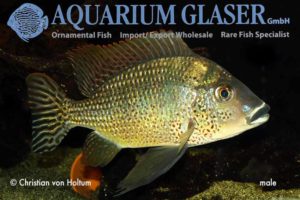
We received from Brazil beautiful wild collected Heros. According to our supplier the fish have been collected in the Rio Negro in the municipal Japaueri. The most obvious difference to other varieties of Heros are the red spots all over the body. Besides this the new imported Heros obviously become sexually ripe quite early. Our […]
-
Endler Guppy Sky Blue
The new sports of the Endler Guppy are fantastic fishes. The brandnew sport “Sky Blue” which we obtained now for the very first time, is a perfect example. It is not only the brilliant coloration that makes these fishes so desirable, but also the lively behaviour. When the males do their harmless display-fights no real […]
-
Trigonopoma gracile (= Rasbora taeniata)
We could import this pretty fish finally once more via Singapore. The two species of the genus Trigonopoma were placed in the genus Rasbora for a very long time. The second species, T. pauciperforata, the glowlight rasbora, occurs interestingly very often syntopically with its close relative. In die elder aquarium literature Trigonopoma gracile was usually […]
-
Clarias batrachus marbled
Sometimes it is almost impossible to distinguish between a food fish and an ornamental fish. The marbled Clarias is, however, bred in Southeast Asia as a food fish for human consumption. It grows extremely fast, is very hardy and can survive on the market without water for many hours, because it has an accessory breathing […]
-
Pterophyllum wild “leopoldi Peru spotted”
We received two species of wonderful, large, wild collected angels from Peru. One of them is traditionally called “Pterophyllum leopoldi” in the hobby. It has a reddish back and a number of red spots on the flanks. The name, however, bases on a mis-identification. The “real” P. leopoldi originates from Brazil and is in truth […]
-
Potamorrhaphis guianensis
The needlefishes (Belonidae) are mainly marine fish. But there do exist three genera with a total of eight species in South America that live exclusively in freshwater. Among them the genus Potamorrhaphis is the most specious one: currently four acceoted species are known. Potamorrhaphis can attain a maximum length of about 30 cm. Astonishingly these […]
-
Rhinogobius rubromaculatus
In the aquarium hobby we only started in discovering the large diversity of the small freshwater gobies of the genus Rhinogobius. This time the scientists were faster: 116 species have been described to date already! Sadly the distinguishing features that allow the determination of the species cannot be seen in many cases in live specimens. […]
-
Amblydoras nauticus
Catfishes have no scales. But many species have bony plates that cover and protect the body. In the family Doradidae these plates are sometimes additionally armored by spines. One of the most common species of Doradidae in Amazonia is the marbled talking catfish, Amblydoras nauticus. The species is not very popular by the natives, because […]
-
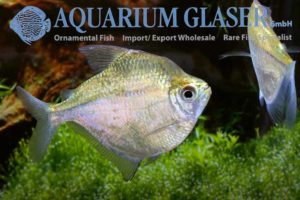
Xenotoca eiseni San Marcos
Only once per year we obtain a number of very rarely offered Goodeids, bred by a specialized breeder. This year the shipment contained inter alia the probably most beautiful species of these interesting livebearers: the San-Marcos-population of Xenotoca eiseni. For our customers: the animals have code 476513 on our stocklist. Please note that we exclusively […]
-
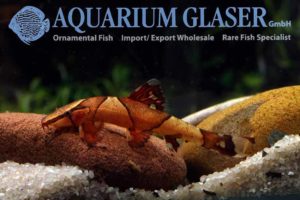
L107 / L184 Brillant-Ancistrus
Among the most beautiful species of Ancistrus is this one. It originates from the middle Rio Negro area in Brazil and is not yet determined scientifically. Instead even two L-numbers have been given to it, namely L107 and L184. The Brilliant Ancistrus is a very peaceful species. The number and size of the white spots […]
-
Paraloricaria vetula
The genus Paraloricaria contains three species that are distributed in southern South America. The fish are virtually unknown in the hobby. This is for sure at least in part due to the enormous size the fish can reach. At least P. commersonoides and P. vetula become larger than 50 cm. For the first time ever […]
-
Cryptoheros cutteri
We received very nice German bred specimens of this smaller cichlid from Honduras. Despite the comparatively small size – males obtain a maximum length of 13 cm, females always stay smaller – one should not keep these cichlids in small tanks. They have a very vivid temper, especially when they care for the offspring. The […]
-
Ophichthus apicalis
Eels (in the scientific sense) are usually no ornamental fish. But there is a greater number of species than one expects, and many of them are used for human consumption. We were able now to import a species of eel from Vietnam that was to the best of our knowledge never imported before alive: Ophichthus […]
-
Aphyocharax anisitsi wild
There are species of ornamental fish that are kept and bred already for such a long time that their conspecifics living in the wild are almost unknown now. Such a species is Aphyocharax anisitsi, the Bloodfin tetra. The first importation was back in 1906. The fish proofed to be easy to breed and very productive. […]
-
Cynotilapia pulpican
At the first glimpse Cynotilapia look very much alike the Malawi Zebras of the genus Maylandia In contrast to the zebras, in Cynotilapia the teeth are monoscupid (with two cusps in zebras). This difference is of more importance than one should think, for the zebras feed on Aufwuchs (eg the algae film on rocks etc. […]
-
Corydoras tukano
Hard to believe but true: it took five long years until we were able now to import once more Corydoras tukano. Now this pretty fish is finally available again. We obtained very stable, beautiful animals. For more information and how to distinguish C. tukano from its close relative C. reynoldsi, please see http://www.aquariumglaser.de/en/fish-archive/corydoras-en/_en-5/ For our […]
-
L234 Megalancistrus sp. Rio Urguayo
We were able to import two pretty gobbets from Paraguay, or, to be more detailed, from the Rio Urguayo. The two Megalancistrus are currently 40-50 cm long and show clearly why they have deserved their generic name: Megalancistrus means “gigantic Ancistrus”. Scientifically speaking, our fish most probably belong to the species M. parananus. For our […]
-
Laemolyta taeniata (= Anostomus taeniatus)
For many years we obtained the striped headstander that looks like the big brother of the golden pencilfish only in single specimens. Now we were finally able to import about 30 specimens of the pretty fish from Peru. The species is a typical headstander in all respects of behaviour. It can become larger than 20 […]
-
Aphyolebias peruensis
Aphyolebias peruensis Once more we were able to import this beautiful killifsih from Peru. The pictures show animals from our current stock. For more informations, please see http://www.aquariumglaser.de/en/news/Aphyolebias_peruensis_en/ For our customers: the fish have code 342803 on our stocklist. Please note that we exclusively supply the wholesale trade. Text & photos: Frank Schäfer
-
Synodontis robertsi
The squeakers (Synodontis) are a very species-rich genus. More than 130 species are known, all of them originate from Africa. In the countries of their origin most species are used for food. In the aquarium hobby most species are unknown with a few exceptions. Among the most pretty, smallest and rarest species of Synodontis is […]
-
Tetraodon miurus
The Congo Puffer is one of the most remarkable species of freshwater pufferfish at all. The strictly solitary living species is a predator. It prefers to spend the day completely burrowed in sand. Only the mouth and the eyes peep out of the lair. If a potential prey comes along the puffer shoots out of […]
-
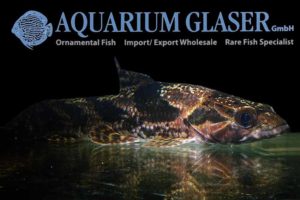
Endler´s Guppy El Tigre
One of our breeders in Thailand loves wild forms of small livebearers. He now was able to send us for the first time ever the “El Tigre” variety of Endler´s Guppy (Poecilia wingei). The fish represent a pure strain of a population that was initially collected in El Tigre, Venezuela. Of course the fish are […]
-
Kryptopterus minor
The “Ghost catfish” has been kept for more than 80 years under a wrong name in our tanks. Initially it was determined as Kryptopterus bicirrhis, afterwards as K. minor. However, both determinations proofed to be wrong, the species was in fact new to science and still undescribed! Now it has a final name, ie Kryptopterus […]
-
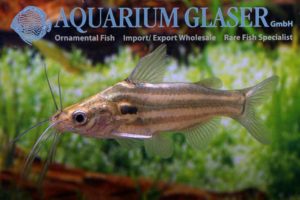
Nematobrycon palmeri wild
The emperor tetra (Nematobrycon palmeri) belongs for decades already to the most beloved species of tetra at all. This is due to its great beauty and interesting behaviour. The species is available the whole year through as bred ones. Wild collected ones, on the other hand, are available only seasonally. We recently obtained once more […]
-
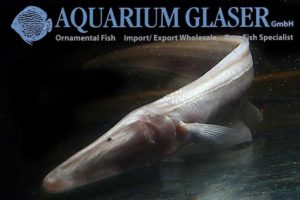
Neolebias trewavasae
The genus Neolebias contains 12 species of small tetra from western Africa. Neolebias trewavasae attains a maximum length of about 5 cm and is one of the largest members of the genus. Sadly the species is only very rarely available in the trade, so we are glad that we could import them now once more […]
-
Sphaerichthys selatanensis
Sphaerichthys selatanensis The season for crossband chocolate gouramis has started. Finally the pretty small anabantoid is available again. For more information please see http://www.aquariumglaser.de/en/fish-archive/labyrinthfish-en/Sphaerichthys_selatanensis_en/ For our customers: the fish has code 455822 on our stocklist. Please note that we exclusively supply the wholesale trade. Text & photos: Frank Schäfer
-
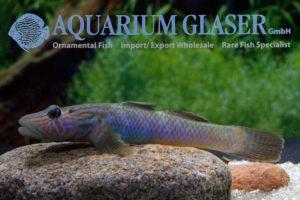
Aspidoras sp. C125 Red
Yesterday we introduced to you the pretty Aspidoras taurus (see http://www.aquariumglaser.de/en/news/Aspidoras_taurus_en/). We received from the very same breeder for the first time the very nice albinotic red variety of Aspidoras sp. C125. The wild coloured variety looks quite similar to A. taurus, but the fish stays a bit smaller (4-4,5 cm). According to our breeder […]
-
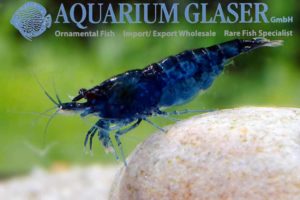
Trachelyopterus fisheri
Currently we can offer a very odd species of catfish, namely Trachelyopterus fisheri. Initially this species of driftwood catfish orginates from Colombia where it is found in the system of the Rio Sucio. From that area only very occasionally importations appear. So we are quite happy that we have an adult wild collected male of […]
-
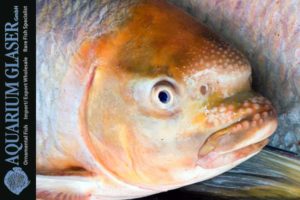
Moema hellneri (= M. cf. ortegai)
We were able to import astonishing large Moema hellneri (formerly: Moema cf. ortegai, see comment below) from Peru. The females are around 8 cm, the males around 12 cm long. This places them among the largest species of killifish known so far. The extremely large pectoral fins of the males are very impressive. However, the […]
-
Chitala blanci
The Asian featherbacks, which have a well developed dorsal fin, have been placed in the genus Notopterus for a long time. Nowadays the genus Notopterus is seen monotypic (it contains only the single species N. notopterus) and the high-backed forms have been placed in another genus, namely Chitala. Currently we have the very attractive species […]
-
Aspidoras taurus
This pretty species of catfish is found only very occasionally in the trade. The species is not allowed to be exported from Brazil currently, so exclusively bred specimens are traded. We just received a small number of the attractive species from one of our breeders. Aspidoras taurus reaches a maximum length of about 5-6 cm. […]
-
Toxotes blythii
This archer fish that lives exclusively in freshwater originates from Burma. It has been discovered as early as 1860 and received its correct scientific name in 1892. Since then it has not been found anymore. Only in 2004 the first specimens appeared in the international trade and were celebrated as a sensation. These first specimens […]
-
Rasbosoma spilocerca
This dwarf rasbora becomes only about 3 cm long. The species is new in our stocklist. The scientific description of the fish was under the name of Rasbora spilocerca, but nowadays it is placed in the monotypic (this means the genus contains only one species) genus Rasbosoma. The natural distribution of the charming fish is […]
-
Rasbora sp. Burmese Yellow Scissortail
We obtained for the first time ever a small number of a new species of Rasbora from Burma. The new fish is without any doubts a close relative of the Indian species Rasbora rasbora but differs in details of the tail fin pattern. Currently our fish are 3-4 cm long. For our customers: the fish […]
-
Sternrachorhynchus from Peru
This week we introduced to you already a species of knifefish from Peru: Brachyhypopomus brevirostris (see http://www.aquariumglaser.de/en/news.php#1122). The odd Sternarchorhynchus, which is theme of this newsletter, originates also from Peru, but belongs to a different family, eg the Apteronotidae. The number of described species of Sternarchorhynchus has risen enormously in the past few years. Up […]
-
Scalare Red Devil Show Size
We received 50 gorgeous, fully grown Red Devil Angels. The fish are German bred ones. Our opinion is: more colour is impossible! For our customers: the fish have code 697565 on our stocklist. Please note the we exclusively supply the wholesale trade. Text & photos: Frank Schäfer
-
Crenicichla regani Alenquer
The pike cichlids (Crenicichla) represent the most species-rich genus of cichlid at all. More than 130 species have been described. How many of them are valid is subject of discussions, but the number for sure increases to over 90. Some species become pretty large, more than 30 cm, but there are also real dwarf cichlids […]
-
Stigmatogobius sadanundio
Most species of goby are ground dwelling fishes. Only few species have a free swimming behaviour. The knight goby is one of these rare exceptions. We can offer this pretty goby from India on a regular basis. Knight gobies live in estuaries and can live both in pure fresh and in pure marine water. However, […]
-
Pseudotropheus crabro
The colorful mouthbrooders from Lake Malawi – the so called mbuna – belong to the most popular aquarium fish over decades already. They are also called the “coralfish of freshwater”, for – like their salty relatives – they unite splendid colours and a rather quarrelsome temper. The latter is due to the very restricted food […]
-
Blind cave tetras
78 years ago a collector of ornamental fish – his name was C. Basil Jordan – discovered a blind species of tetra that lived in a cave in the state of San Louis Potosi in Mexico. Jordan was able to collect 100 specimens of the new fish and managed to bring them to the USA […]
-
Rhodeus ocellatus
When the talk is about bitterlings one initially thinks for the European Bitterling, Rhodeus amarus, which is currently banned in the UK. In fact, there are more than 70 species of these fascinating brood parasites that deposit their eggs in live freshwater mussels. We were able now to import a species of bitterling from Hongkong […]
-
Phantastic wild collected Sahyadria denisionii from Karnataka!
The Red line shark (Sahyadria denisonii, formerly known as Barbus denosonii or Puntius densonii) is a very popular aquarium fish. Currently it is traded almost exclusively as bred specimens from Indonesia. For the first time ever we now received an import of S. denisonii from a new collection area in India. So far the species […]
-
L-numbers: the season starts for species from the Rio Tapajós!
-
Aphyosemion gabunense
We obtained beautiful German bred specimens of this really nice killifish. A. gabunense is the perfect species for all aquarists who like the colorful killifish group but did so far not dare to keep them: A. gabunense is a really hardy fish and pretty easy to keep. The Gabon killi attains a maximum length of […]
-
Semifinal! Brazil vs. Germany
vs. Is it possible to compare discus with guppys? Hardly! Both are wonderful fish, but completely different. A discus, more sailing than swimming through the tank, is fascinating to look at even for non-aquarists, but it is also almost impossible not be excited by the brilliant guppys. So one can say: whoever wins the semifinal […]
-
Luciocephalus aura
The pikeheads (Luciocephalus) are highly specialized labyrinth fish. They live as predators in blackwaters of Southeast Asia. Only two species are known, the “common” pikehead, which occurs on the Malay Peninsula and in Indonesia, and the Peppermint Pikehead, which is known so far only from the Province Jambi on Sumatra. Currently we are able to […]
-
Corydoras pygmaeus
The Dwarf corydoras (Corydoras pygmaeus) belongs without any doubts to the most attractive and interesting aquarium fish for small tanks. This dwarf becomes only 2-3 cm long and is a somewhat untypical member of its genus, for most species of Corydoras are bottom dwellers; C. pygmaeus prefers to swim in the open water column. Interestingly […]
-
Kryptopterus geminus
The glass catfishes of the genus Kryptopterus are close relatives of the Wels catfish (Silurus glanis). However, in contrast to this giant among the freshwater fishes (Wels catfish can attain a length of up to 2 meteres), the glass catfishes stay small. The largest species known so far (K. cheveyi from the Mekong basin) becomes […]
-
Serrasalmus geryi
Once more we were able to import a real top-rarity: Serrasalmlus geryi. This species of piranha is restricted to the basin of the Rio Tocantins in Brazil. According to scientific literature this species becomes around 20 cm long. Thus our specimens that measure between 16 and 22 cm are most probably fully gown already. This […]
-
Zacco platypus – large males arrived!
Currently we can offer large, 12-15 cm long males of this spectacular species of barb that reached us from Hongkong. Zacco are coldwater fish that can be kept either in unheated aquaria or in garden ponds. They love strong current! Smaller specimens (7-10 cm, both sexes) are also in stock. For our customers: the fish […]
-
Traccatichthys taeniatus
For the first time ever we could import this pretty, red-finned loach from Vietnam, which has the popular name “Peppermint Loach” due to the bright green shine on the flanks. The species attains a length of about 12 cm and is very peaceful. One should keep these fish always in groups, for they are very […]
-
Chaca bankanensis
The frogmouth catfishes of the genus Chaca are very unusual fish. Only four species are known. The look quite similar to each other and form a catfish family on their own, the Chacidae. Chaca lie on the bottom without any move for most of the day. They wait for shrimps or small fish that take […]
-
Alestopetersius cf. leopoldianus
Many species of African tetra have never been photographed alive or kept in aquaria. So it is often very difficult to determine a species of that group. We obtained for the first time ever from Lac Mai Ndombe (formerly known as Lake Leopold) a species of tetra that has wonderful shining colours in the right […]
-
Platystomatichthys sturio
Finally we are able again to offer one of the most bizarre species of predatory catfish of Amazonia: Platystomatichthys sturio. Anyone who sees the fish for the first time will think that the animal is distorted; however, the upturned snout-tip is rather species-specific. Nevertheless the grade of this upturn differs individually and depends also a […]
-
Hypostomus luteus
Yesterday the most beautiful of all plecos, Hypostomus luteus from Paraguay, arrived. Only fully grown specimens display the fantastic, reddish-yellow coloration, whereas young fish are black with light spots. All specimens are 35-40 cm long. For our customers: the animals have code 262639 and 262649 on our stocklist. Please note that we exclusively supply the […]
-
Betta smargdina wild
-
Benitochromis riomuniensis
We have some wild collected specimens of Benitochromis riomuniensis from Cameroon in stock. Benitochromis is closely related to the Pelvicachromis species and can be compared regarding the aquarium biology quite good with these peaceful and colorful cichlids. In contrast to Pelvicachromis, which are cave brooders, Benitochromis are biparental, ovophilous mouthbrooders. This means that both parents […]
-
Labeo variegatus
After a long time we were able once again to import this beautiful species of Labeo from the Congo. Scientifically speaking, the name “variegatus” is regarded only as a synonym of Labeo cyclorhynchus nowadays. However, it is pretty difficult to substitute a well known name – like Labeo variegatus – in the aquarium hobby by […]
- « Previous Page
- 1
- …
- 19
- 20
- 21
- 22
- 23
- …
- 32
- Next Page »